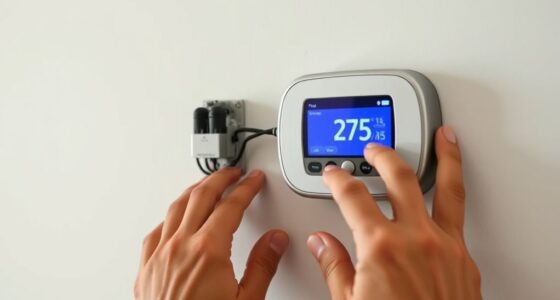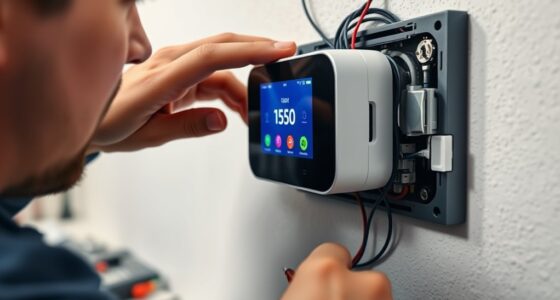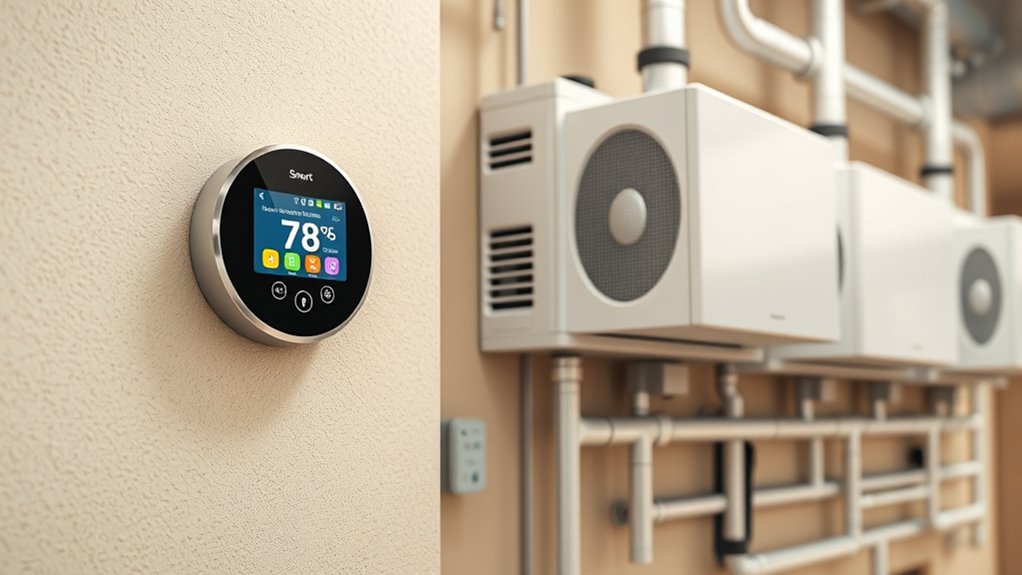

Connecting a smart thermostat to multiple HVAC systems lets you control different zones independently, boosting comfort and saving energy. To do this, guarantee your wiring setup supports multiple systems, including control wires and a common wire if needed. Properly wiring each system and configuring zones helps the thermostat manage each area effectively. If you’re unsure about compatibility or wiring steps, exploring further will help you master the setup and maximize its benefits.
Key Takeaways
- Verify compatibility of your HVAC systems and smart thermostat before attempting multi-system connections.
- Ensure proper wiring, including control wires and common (C) wires, to facilitate communication with multiple units.
- Use a power extender kit if wiring limitations prevent adequate power supply for multiple systems.
- Configure zoning and wiring terminals correctly to enable independent control of each HVAC zone.
- Consult installation guides and HVAC diagrams to troubleshoot wiring issues and optimize multi-system integration.

Connecting a smart thermostat to multiple HVAC systems can considerably enhance your home’s comfort and energy efficiency. When managing different zones within your house, understanding zoning configurations becomes essential. Zoning allows you to control temperatures independently in various areas, so you’re not wasting energy heating or cooling spaces that aren’t in use. A smart thermostat designed for multiple systems can coordinate these zones smoothly, but it depends heavily on your home’s existing wiring compatibility. Before making any connections, you need to verify that your wiring setup can support the additional controls. Some older homes may have limited wiring, which could complicate the installation process. In such cases, you might need to upgrade or modify your wiring to establish proper communication between your thermostat and each HVAC unit.
The key to successful integration lies in understanding the wiring compatibility of your smart thermostat. Most models have specific wiring requirements, such as common (C) wires, which supply continuous power, or multiple control wires that can manage separate systems. If your current wiring doesn’t match these requirements, you could encounter issues like system malfunction or inconsistent temperature control. To avoid this, review your HVAC wiring diagram carefully and consult the thermostat’s installation guide. Sometimes, you might need to add a common wire or use a power extender kit, which can help bridge compatibility gaps without extensive rewiring. Ensuring proper wiring is crucial for optimal operation and to prevent future technical problems.
When connecting multiple HVAC systems, you also want to think about zoning configurations. These setups divide your home into different areas, each with its own damper or vent control, managed by the thermostat. Proper zoning enhances comfort and saves energy, but it requires precise wiring connections to each zone’s damper or control module. Ensure that your smart thermostat supports multi-zone configurations—many models do—and that you have the appropriate wiring terminals available. This setup allows the thermostat to activate specific zones based on your preferences, providing tailored comfort without wasting energy in unoccupied areas.
In addition to wiring compatibility, pay attention to the HVAC systems’ compatibility with smart controls. Not all systems are compatible with smart thermostats, especially older or specialized units. Verify that each system can communicate effectively with your chosen thermostat, either through wired connections or compatible wireless protocols. Making sure that zoning configurations are correctly established and wiring is compatible will help you maximize the benefits of your smart thermostat, providing seamless control over multiple systems and zones within your home.
Frequently Asked Questions
Can a Smart Thermostat Automatically Switch Between Different HVAC Systems?
Yes, a smart thermostat can automatically switch between different HVAC systems through smart HVAC integration. It uses sensors, schedules, and user preferences to determine which system to activate based on temperature, time, or mode. You can set it up so that it automatically manages multiple systems, providing seamless comfort and energy efficiency. Just make certain your smart thermostat supports multi-system control and proper configuration for smooth automatic switching.
What Are the Compatibility Requirements for Connecting Multiple HVAC Units?
You need to guarantee your HVAC units meet compatibility standards, including voltage and system type, for seamless integration. Check that your wiring configurations match the thermostat’s requirements, such as terminal labels and wiring color codes. Some smart thermostats support multi-stage or multi-zone systems, so verify your setup aligns with these features. Proper compatibility and wiring are vital to enable smooth operation across multiple HVAC units.
How Does Zoning Affect Smart Thermostat Installation for Multiple Systems?
Think of zoning as orchestrating a symphony where each section needs perfect harmony. When installing a smart thermostat for multiple systems, zoning challenges can complicate things, especially with wiring complexities. You’ll need to carefully plan each zone’s controls and verify your thermostat can handle multiple zones. Proper zoning allows you to customize comfort, but it requires precise setup and wiring to avoid conflicts and maximize efficiency.
Is Professional Installation Necessary for Multi-System Smart Thermostat Setups?
You don’t necessarily need professional installation for multi-system smart thermostats, but a DIY approach can save you money. However, consider the complexity of your HVAC setup and your technical skills before attempting installation. If wiring or zoning is complicated, professional help guarantees proper setup and avoids costly mistakes. While DIY might cut costs upfront, investing in professional installation could save you time and prevent potential issues later.
Can Smart Thermostats Learn and Adapt to Multiple HVAC System Schedules?
Imagine your smart thermostat as a skilled conductor, seamlessly orchestrating multiple HVAC systems. Yes, it can learn and adapt to your schedules, tuning into your routines like a symphony. This smart conductor boosts energy efficiency and offers user customization, making your home feel just right. With continuous learning, it fine-tunes comfort levels, ensuring your systems work harmoniously while saving you money and energy.
Conclusion
Connecting smart thermostats to multiple HVAC systems is like orchestrating a symphony—you’re the conductor ensuring everything works in harmony. With the right setup, you’ll enjoy seamless climate control, saving energy and money while keeping your home comfortable. Just remember, a little planning goes a long way. Once you master the connections, you’ll have a smart, efficient system that responds to your needs—turning your home into a perfectly tuned orchestra of comfort.