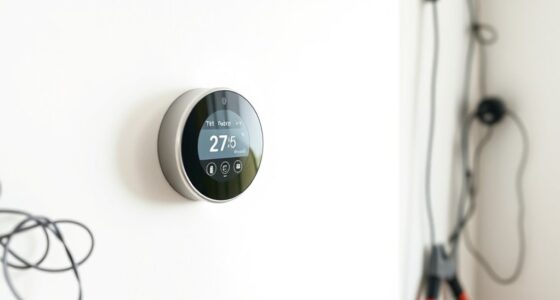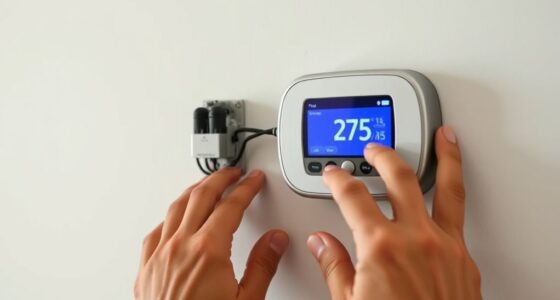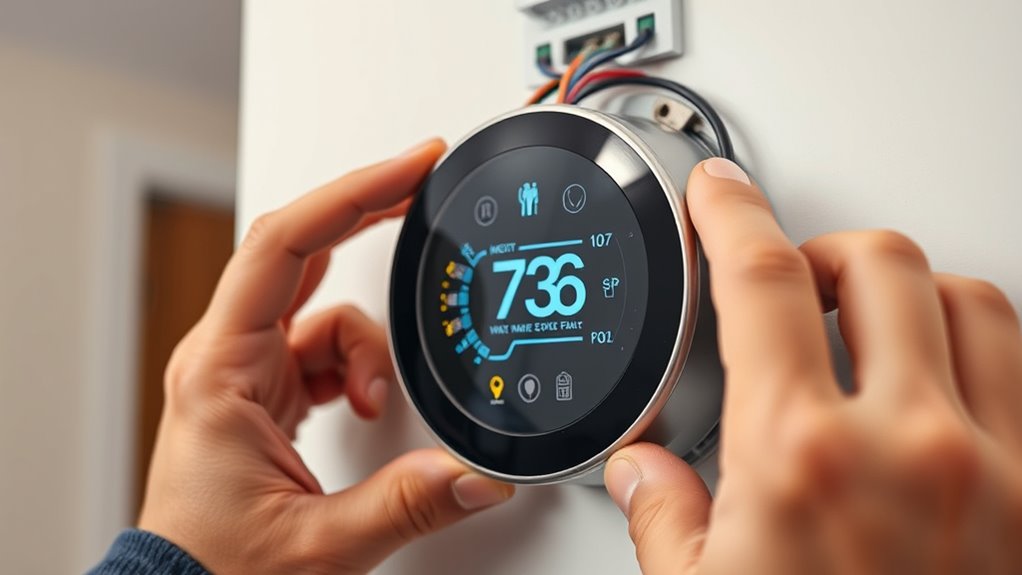

If your home lacks a C-wire, you can still install a smart thermostat by using power extender kits, which connect to your existing wiring to provide continuous power, or choosing models designed to run on limited power with Wi-Fi or Bluetooth. Battery-powered options are also available, offering a simple solution without rewiring. For more tips on configuring your setup without a C-wire, there’s plenty more to explore.
Key Takeaways
- Use a C-wire adapter or power extender kit to provide continuous power without rewiring.
- Choose a smart thermostat compatible with no C-wire setups, often using low-energy Bluetooth or Wi-Fi.
- Consider battery-powered smart thermostats as a wire-free alternative requiring minimal maintenance.
- Verify your HVAC system’s wiring and consult the manufacturer for compatible power solutions.
- Follow installation instructions carefully to ensure reliable operation when installing without a C-wire.
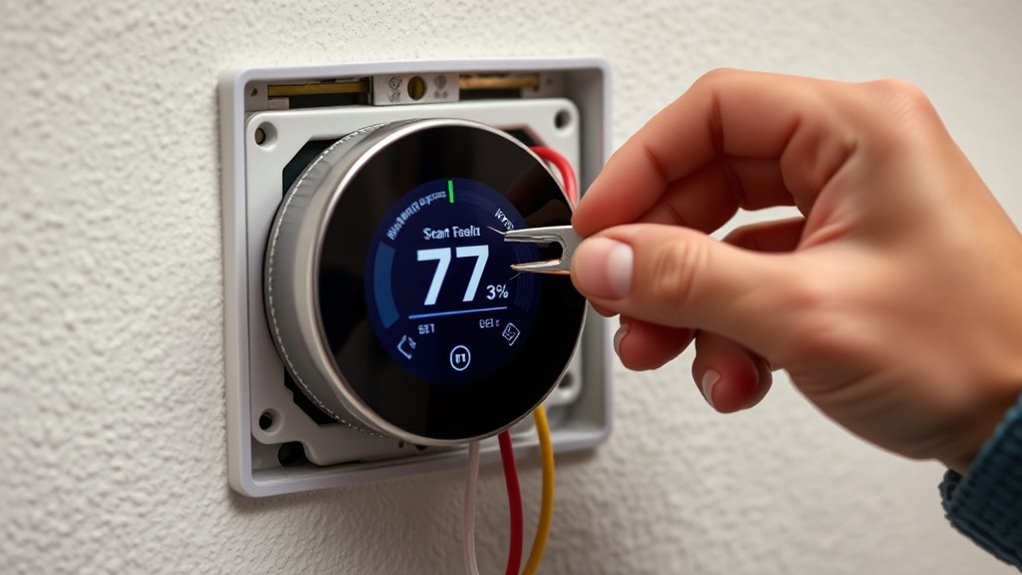
If your home’s thermostat wiring lacks a common C-wire, installing a smart thermostat might seem challenging, but it’s actually quite manageable. Many older homes or simple setups don’t include a dedicated C-wire, which provides continuous power to smart thermostats. Without it, your options might seem limited, but there are effective alternative solutions. One popular approach is to leverage wireless power, which eliminates the need for a dedicated wire by providing power through other means.
Wireless power options involve using devices like power extenders or adapters that can draw power from existing wiring or electrical components. For example, some smart thermostats come with a power extender kit (PEK) that connects to your existing wiring and supplies power wirelessly to the thermostat. These kits act as a bridge, converting the power from other wires or the HVAC system to run your smart thermostat without requiring a C-wire. This setup is straightforward and often involves just a few extra connections, making it a convenient alternative solution.
Power extender kits connect to existing wiring, providing wireless power to thermostats without a C-wire.
Another option involves using a smart thermostat that doesn’t require a C-wire at all. Many newer models are designed to operate on limited power or use low-energy Bluetooth or Wi-Fi connections, thereby reducing or eliminating the need for continuous power. These models often incorporate sleep modes or energy-efficient circuitry that can run on the power supplied through the R (power) and other existing wires. When choosing such a thermostat, ensure it’s compatible with your HVAC system and that it can operate reliably without a dedicated common wire.
Some homeowners opt for a simple workaround by installing a small, rechargeable battery in the thermostat. These batteries can last several months before needing a recharge, but keep in mind that battery-powered thermostats may require occasional maintenance. While this is not a wireless power solution per se, it’s a practical alternative if you’re unable to modify your wiring or add external power sources.
Additionally, there are alternatives to traditional wiring such as using relay modules or power adapters that tap into your HVAC system’s transformer. These devices can supply the necessary power wirelessly or via minimal wiring modifications, providing a clean, effective solution without extensive rewiring. Whichever alternative solution you choose, always ensure compatibility with your existing system and follow manufacturer instructions carefully.
Frequently Asked Questions
Can I Upgrade My Existing Thermostat Without Rewiring?
Yes, you can upgrade your existing thermostat without rewiring by opting for a wireless installation. Many smart thermostats come with power adapters that allow you to connect them without a C-wire. These adapters draw power from your existing wiring or electrical outlets, ensuring your new thermostat functions properly. Just make sure to check compatibility and follow installation instructions carefully to avoid any issues with power or connectivity.
How Do I Ensure Compatibility With My HVAC System?
You can guarantee compatibility with your HVAC system by checking the thermostat’s specifications for wireless connection and power management capabilities. Don’t worry if your system lacks a C-wire; many modern smart thermostats include power sharing features or require a compatible hub. Always verify that your system supports these features, and consult the manufacturer’s guide to confirm it works seamlessly with your existing setup, ensuring reliable operation.
Will Using a C-Wire Adapter Affect System Performance?
Using a C-wire adapter won’t affect your system’s performance if installed correctly. It maintains wireless compatibility by providing a steady power source, ensuring your smart thermostat functions reliably. Additionally, it helps optimize power efficiency, preventing frequent battery replacements and reducing energy waste. Just make sure the adapter matches your HVAC system’s specifications, and you’ll enjoy seamless operation without compromising performance or energy savings.
What Are the Long-Term Costs of Installing a C-Wire Alternative?
Installing a c-wire alternative might seem like a tiny, inexpensive fix, but it can snowball into a mountain of costs over time. You could face ongoing compatibility issues, costly repairs, or replacements if your system struggles. The long-term costs of these alternatives often outweigh initial savings, as you might need extra components or professional help. Be prepared for hidden expenses that could turn your smart upgrade into a financial nightmare.
Are There Any Safety Concerns With Bypassing the C-Wire?
Bypassing the C-wire can pose electrical safety risks if not done correctly, potentially causing shorts or damage. It may also affect system reliability, leading to inconsistent thermostat operation. To stay safe, make certain you follow manufacturer instructions carefully or consult a professional. Properly managing electrical connections minimizes safety hazards and ensures your smart thermostat functions reliably, giving you peace of mind and efficient control of your home’s temperature.
Conclusion
Just like Da Vinci’s brushstrokes brought masterpieces to life without the traditional palette, you can upgrade your home’s comfort without a c-wire. With a little patience and the right tools, you’re transforming your space into a smarter, more efficient haven. Remember, every great artist started with a blank canvas—so go ahead, take control of your thermostat, and paint your perfect indoor climate without limits. Your smart home masterpiece awaits.