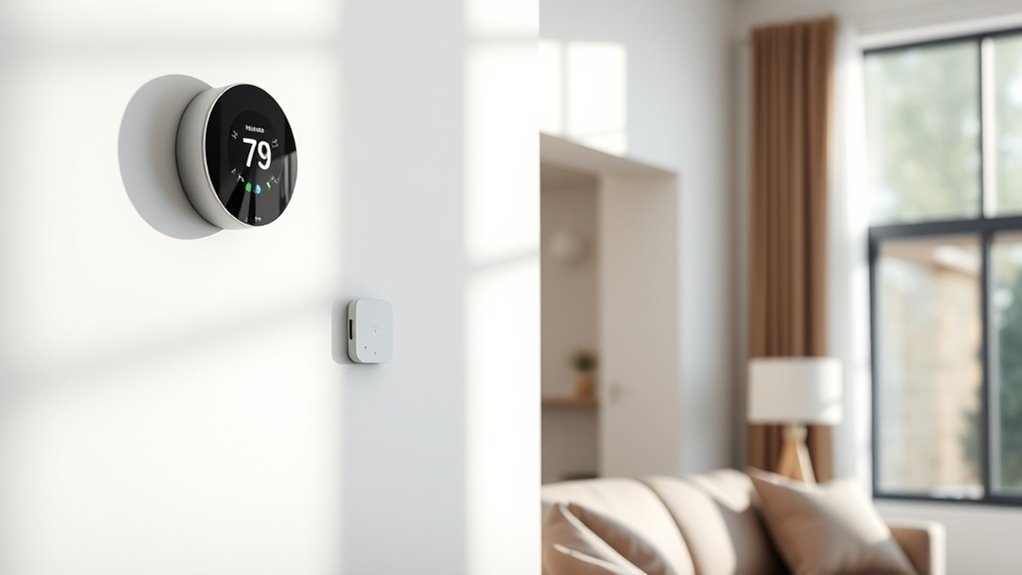

Combining smart thermostats with air quality sensors creates a system that actively monitors your indoor environment, adjusting temperature, humidity, and pollutants to keep your home comfortable and healthy. It automatically responds to changes, reducing manual tweaks and improving air freshness by triggering ventilation or purification when needed. This setup also boosts energy efficiency by optimizing HVAC use based on real-time data. To discover how you can transform your home environment, explore what more this technology has to offer.
Key Takeaways
- Integrating air quality sensors enables smart thermostats to automatically adjust indoor climate for healthier environments.
- Combined systems monitor pollutants, humidity, and temperature to optimize comfort and air quality simultaneously.
- Automated responses from smart thermostats improve energy efficiency by reducing unnecessary HVAC usage based on real-time data.
- Users benefit from centralized control and notifications about air quality issues, enhancing convenience and health awareness.
- The integration fosters a smarter, healthier home by proactively managing indoor air conditions with minimal manual effort.
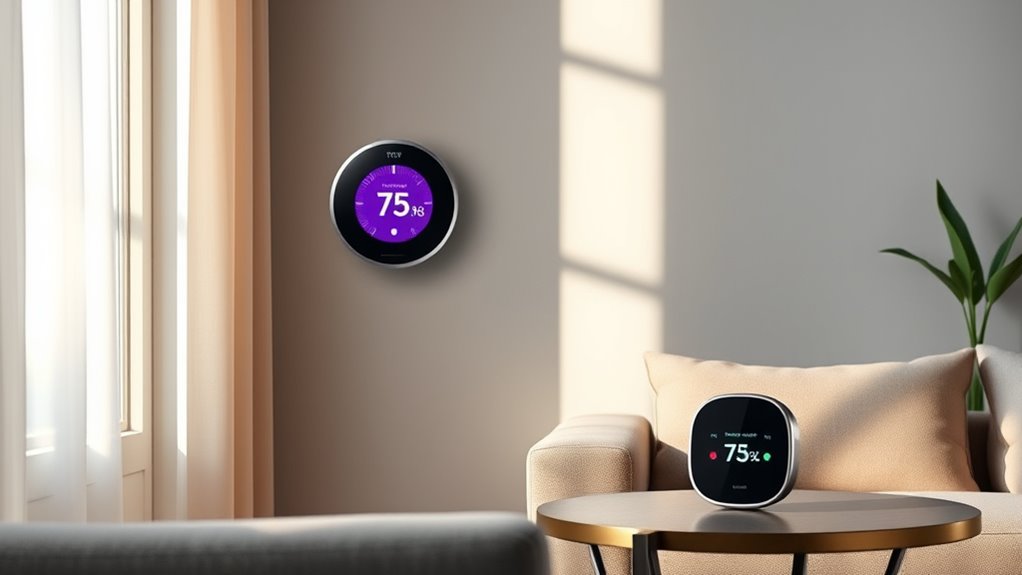
Smart thermostats and air quality sensors are transforming how you manage indoor environments, making it easier to stay comfortable and healthy. When these devices work together, they optimize your home’s climate while also ensuring the air you breathe is clean. This integration not only boosts energy efficiency but also provides unmatched user convenience, giving you more control with less effort. You no longer need to manually adjust settings or guess whether your home is too dry, humid, or polluted. Instead, your smart system automatically responds to changing conditions, maintaining an ideal balance.
By combining smart thermostats with air quality sensors, you create a seamless system that continuously monitors temperature, humidity, and pollutants like VOCs or particulate matter. When air quality drops or humidity levels become uncomfortable, the system adjusts your HVAC settings to improve conditions. For instance, if the air contains high levels of allergens or pollutants, the sensors alert the thermostat to increase ventilation or activate air purification features. Conversely, if the air is too dry or humid, the system can modulate humidity levels to keep your environment comfortable. This dynamic response reduces the need for manual intervention, saving you time and effort.
Seamless air and climate control dynamically adapt to your home’s environment, enhancing comfort and convenience effortlessly.
Energy efficiency gets a significant boost with this setup. Instead of running your heating or cooling systems at a constant or set schedule, the smart system responds precisely to real-time conditions. If the sensors detect a comfortable temperature and clean air, the thermostat can reduce energy consumption by minimizing HVAC activity. On the other hand, if conditions change unexpectedly, the system adjusts promptly, preventing energy waste and ensuring your home remains comfortable without unnecessary operation. Over time, this smart regulation can lead to noticeable savings on your energy bills.
User convenience is at the heart of this technology. You don’t need to constantly check or adjust multiple devices. Instead, you can control everything from a single app on your phone or through voice commands. The system learns your preferences over time, offering personalized comfort settings and notifications about air quality issues. This proactive approach means you stay informed about your home’s environment without constantly monitoring it yourself. Plus, with integration into smart home ecosystems, you can automate responses or sync with other devices, creating a truly intuitive living experience.
In essence, combining smart thermostats with air quality sensors empowers you to maintain an ideal indoor environment effortlessly. You enjoy improved energy efficiency, lower utility costs, and enhanced comfort—all with minimal effort. This technology makes your home smarter, healthier, and more responsive, allowing you to focus on what truly matters while your devices take care of the details.
Frequently Asked Questions
How Do Smart Thermostats Detect Air Quality Issues?
Smart thermostats detect air quality issues through built-in sensors that monitor pollutants, humidity, and CO2 levels. They rely on air quality calibration to guarantee accurate readings and require proper sensor placement for peak performance. When the sensors detect poor air quality, the thermostat can trigger alerts or adjust air circulation. Regular calibration and strategic placement help maintain precise detection, ensuring you stay informed and comfortable in your environment.
Can Air Quality Sensors Be Added to Existing Smart Thermostats?
Sure, you can add air quality sensors to your existing smart thermostat — if you’re willing to wrestle with sensor placement and compatibility issues. Some models support external sensors, but others don’t, making it a game of compatibility roulette. You’ll need to check your thermostat’s specs and verify the sensors can be positioned where they’ll accurately detect pollutants without interference. Good luck, brave smart home enthusiast!
Are There Compatibility Concerns Between Different Brands of Sensors and Thermostats?
You might face brand compatibility issues when integrating sensors with your smart thermostat, as not all brands support seamless sensor integration. Before purchasing, check if your sensors and thermostat are compatible, especially regarding brand compatibility. Some brands offer better integration options, making setup easier. If they aren’t compatible, you may need to contemplate different brands or compatible devices to ensure smooth operation and accurate air quality monitoring alongside your thermostat.
How Does Integrating Sensors Improve Energy Efficiency?
Integrating sensors with your smart thermostat boosts energy conservation by providing real-time data on air quality and occupancy, so you use heating and cooling only when needed. This targeted approach reduces unnecessary energy consumption, leading to significant cost savings. You’ll enjoy a more comfortable environment while minimizing waste. The sensors help your system adapt efficiently, ensuring you’re not wasting energy and money on unoccupied or poorly ventilated spaces.
What Maintenance Is Required for Combined Smart Thermostats and Sensors?
A stitch in time saves nine, so you should regularly check your combined smart thermostat and sensors. You’ll need to calibrate sensors periodically to guarantee accurate readings and keep device updates current for peak performance. Clean the sensors gently to prevent dust buildup, and inspect wiring and connections for wear. Staying proactive with maintenance ensures your system runs smoothly, keeping your home comfortable and air quality excellent.
Conclusion
By integrating smart thermostats with air quality sensors, you enable a future where comfort and health dance in harmony. Imagine your home as a sanctuary, effortlessly adjusting to maintain perfect temperature and pristine air—an orchestra conducted by technology. This synergy isn’t just innovation; it’s a symphony of smarter living, reminding you that the path to wellness is paved with intelligent choices. Embrace this union, and breathe easier knowing your environment works in perfect tandem for you.