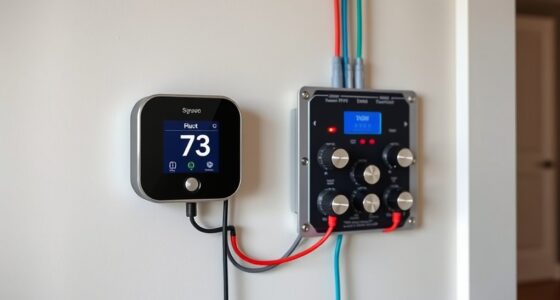
Integrating smart thermostats with building automation systems allows you to control climate settings remotely and automatically, boosting energy efficiency and occupant comfort. You’ll benefit from centralized control, real-time data, and automation that responds to occupancy and outdoor conditions. This connection simplifies management and helps reduce energy waste, lowering costs. If you want to discover how this integration can optimize your building’s performance and sustainability, there’s more to explore below.
Key Takeaways
- Enables centralized control and monitoring of HVAC systems through seamless integration of smart thermostats into building automation platforms.
- Utilizes data analytics and sensors for automatic adjustments, optimizing energy efficiency and occupant comfort.
- Offers intuitive interfaces like apps and dashboards for easy management and real-time system insights.
- Supports automation rules that respond to occupancy and environmental changes, enhancing responsiveness.
- Promotes sustainability and reduces energy costs by enabling predictive and adaptive climate control.

Smart thermostats are transforming how you manage home comfort by allowing you to control your heating and cooling systems remotely and automatically. When integrated with building automation systems (BAS), they become powerful tools that optimize energy efficiency and enhance occupant comfort. This integration enables you to centralize control, making it easier to monitor and adjust climate settings across entire buildings or campuses. You’ll find that with a seamless connection, you can fine-tune temperature zones, schedule operations, and respond to real-time occupancy data—all from a single interface.
One of the biggest advantages of integrating smart thermostats with BAS is the potential for significant energy savings. By leveraging advanced algorithms and data analytics, these systems can identify patterns in usage, predict occupancy, and automatically adjust HVAC settings to reduce waste. For example, during unoccupied hours, the system can lower heating or cooling levels without any manual intervention, cutting down on unnecessary energy consumption. This not only lowers utility bills but also promotes sustainability by reducing your carbon footprint. Over time, the combination of predictive control and automation can lead to consistent energy savings that justify the initial investment.
Integrating smart thermostats with BAS significantly reduces energy waste through predictive control and automation.
The user interface plays a critical role in how effectively you can manage this integrated system. Modern smart thermostats feature intuitive interfaces—touchscreens, mobile apps, or web portals—that allow you to effortlessly view and modify settings. When connected to a building automation system, the user interface becomes a centralized hub where you can access real-time data, generate reports, and configure automation rules. This ease of use means you don’t need to be a tech expert to operate complex HVAC controls; instead, you can rely on clear visuals and straightforward controls to optimize system performance. Moreover, many interfaces provide customizable dashboards, giving you quick insights into energy usage, system alerts, and comfort levels. Integrating smart device protocols ensures smooth communication and enhances system reliability, further streamlining management.
In addition, integration enhances system responsiveness. If a sensor detects a sudden change in occupancy or outdoor conditions, the BAS can automatically communicate with the smart thermostat to adjust temperature settings instantly. This dynamic responsiveness ensures occupant comfort while minimizing energy waste. By streamlining communications between devices through a unified user interface, you gain better control and visibility over your building’s climate management. Ultimately, integrating smart thermostats with building automation systems empowers you to create a more efficient, comfortable, and intelligent environment with minimal effort and maximum impact on energy savings.

Sensi Lite Smart Thermostat, WiFi, Alexa, DIY, Energy Star Certified, ST25
- Easy DIY Installation: Built-in level and step-by-step instructions
- Compatible with Most Systems: Requires common wire for heat pump systems
- Energy Savings: Save approximately 23% on HVAC energy
As an affiliate, we earn on qualifying purchases.
As an affiliate, we earn on qualifying purchases.
Frequently Asked Questions
How Secure Are Smart Thermostats Against Cyber Threats?
Smart thermostats have some cyber vulnerabilities, but if you guarantee proper security measures, they’re relatively safe. You should use strong, unique passwords and keep firmware updated to protect against hacking attempts. Data encryption is essential; it secures your data during transmission, reducing risks. Regularly reviewing device settings and network security helps prevent cyber threats, making your smart thermostat a secure part of your building automation system.
Can Smart Thermostats Be Integrated With Existing Legacy Building Systems?
Imagine fitting a sleek, modern puzzle piece into an old, intricate mosaic — that’s what integrating smart thermostats with legacy building systems feels like. Yes, it’s possible, thanks to legacy compatibility and system interoperability tools. You can connect smart thermostats to existing systems, enabling seamless control and energy efficiency. With the right interfaces, your upgrade becomes smooth, turning your building into a smarter, more responsive environment without replacing the entire infrastructure.
What Is the Average Cost of Integrating Smart Thermostats Into a Building System?
The average cost of integrating smart thermostats into a building system typically ranges from $200 to $500 per unit, depending on various pricing factors. Your cost estimation should consider the complexity of your existing setup, the number of thermostats needed, and compatibility requirements. Additional expenses might include installation, wiring, and system configuration. Budget accordingly to make certain a smooth integration that optimizes energy efficiency and control.
How Do Smart Thermostats Impact Overall Building Energy Efficiency?
Think of your building as a well-tuned orchestra; smart thermostats are the conductor, optimizing energy use. They improve occupant comfort by adjusting temperatures based on usage patterns, reducing waste. Studies show these systems can cut energy costs by up to 15%. By responding to real-time occupancy data, you guarantee efficient heating and cooling, making your building more sustainable while keeping everyone comfortable and satisfied.
What Troubleshooting Steps Are Recommended for Integration Issues?
You should start troubleshooting integration issues by checking for firmware updates on the smart thermostats, as outdated firmware can cause compatibility problems. Next, run network diagnostics to ensure proper connectivity between devices and the building automation system. Verify network settings, signal strength, and firewall configurations. If issues persist, reset the devices and reconfigure the network, then test the integration again to confirm proper communication.
Sensi Lite Smart Thermostat, WiFi, Alexa, DIY, Energy Star Certified, ST25
- Easy DIY Installation: Built-in level and step-by-step instructions
- Compatible with Most Systems: Requires common wire for heat pump systems
- Energy Savings: Save approximately 23% on HVAC energy
As an affiliate, we earn on qualifying purchases.
As an affiliate, we earn on qualifying purchases.
Conclusion
By integrating smart thermostats with building automation systems, you open greater control and energy savings. Think of it as sewing the fabric of efficiency into your building’s DNA, ensuring ideal comfort and performance. Remember, a chain is only as strong as its weakest link—so, when your systems work together seamlessly, you create a resilient, smart environment that’s ready for the future. Embrace this integration, and watch your building thrive effortlessly.
Sensi Lite Smart Thermostat, WiFi, Alexa, DIY, Energy Star Certified, ST25
- Easy DIY Installation: Built-in level and step-by-step instructions
- Compatible with Most Systems: Requires common wire for heat pump systems
- Energy Savings: Save approximately 23% on HVAC energy
As an affiliate, we earn on qualifying purchases.
As an affiliate, we earn on qualifying purchases.

Honeywell Home RTH9585WF Wi-Fi Smart Color Thermostat, 7 Day Programmable, Touch Screen, Energy Star, Alexa Ready, C-Wire Required, Not Compatible with Line Volt Heating Gray
- Color Personalization: Customize to match your decor
- Energy Savings Rewards: Rebates and utility programs available
- Flexible Scheduling: Program according to your schedule or rates
As an affiliate, we earn on qualifying purchases.
As an affiliate, we earn on qualifying purchases.