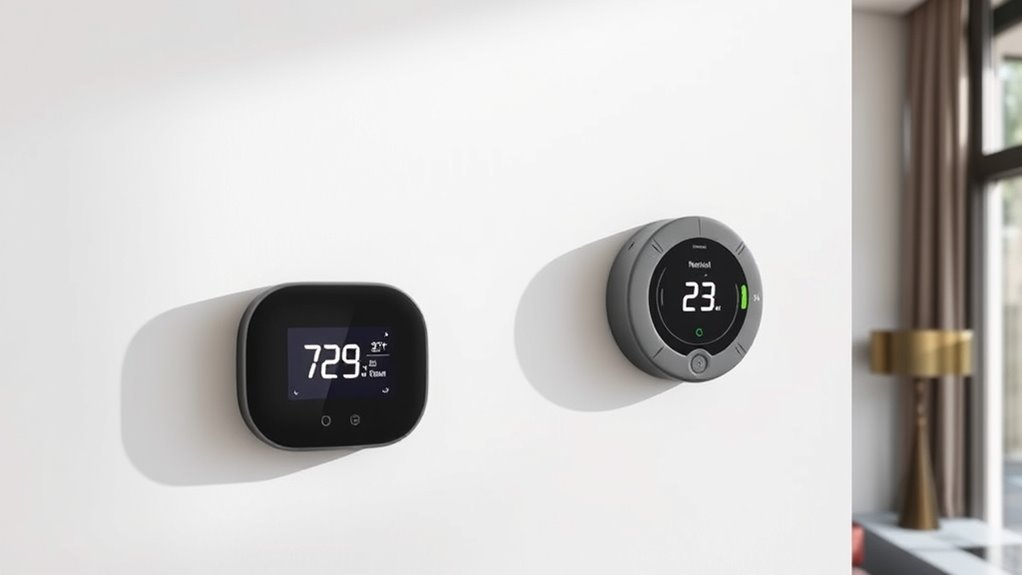
Integrating smart thermostats with carbon monoxide detectors enhances your home’s safety by enabling instant responses to CO alarms. These devices communicate wirelessly, allowing your thermostat to automatically shut off HVAC systems and send alerts to your phone if dangerous CO levels are detected. This seamless setup reduces the risk of exposure and guarantees quick action during emergencies. Keep exploring to discover how this integration can make your home smarter and safer.
Key Takeaways
- Integration enables smart thermostats to respond automatically to CO alarms, shutting off HVAC systems to prevent gas spread.
- Wireless connectivity ensures real-time alerts from CO detectors are instantly communicated to thermostats for immediate action.
- Customizable safety automation allows remote notifications and voice alerts, enhancing safety even when away from home.
- Centralized system updates and fault notifications improve safety device reliability and reduce false alarms.
- Combining temperature control with safety automation creates a smarter, safer home environment with proactive CO risk management.
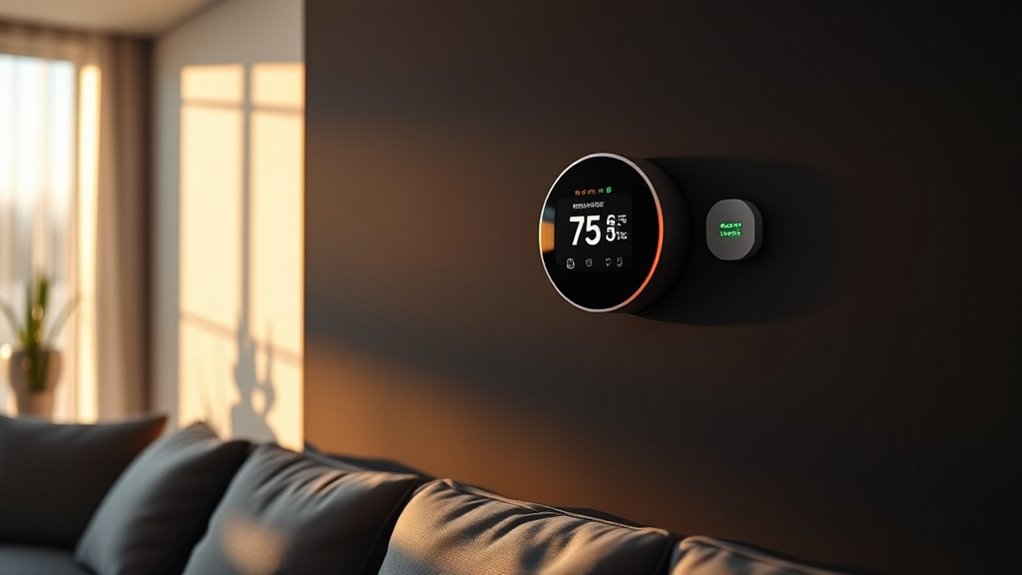
Smart thermostats are revolutionizing home comfort, but their potential goes far beyond temperature control. When you integrate them with carbon monoxide detectors, you access a new level of safety automation that can protect your home and loved ones more effectively. Wireless connectivity plays a vital role here, allowing these devices to communicate seamlessly and respond instantly to emergency situations. Imagine your smart thermostat receiving a CO alarm signal from your detector and automatically adjusting the HVAC system or shutting it off to prevent the spread of harmful gases. This real-time response minimizes risks and guarantees you’re not left guessing about potential dangers.
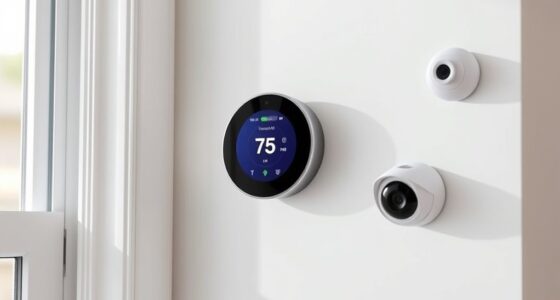
Smart thermostats and CO detectors work together via wireless connectivity for instant home safety responses.
With wireless connectivity, your smart thermostat can be linked directly to your carbon monoxide detector, creating a reliable network that keeps you informed and protected. No longer do you need to rely solely on intrusive alarms or manual checks. Instead, you benefit from automatic safety measures that activate immediately when CO levels become dangerous. For example, when the detector senses elevated carbon monoxide, it can send a wireless alert to your thermostat, which then initiates safety protocols like turning off the furnace or gas water heater. This automation reduces the delay between detection and action, which can be pivotal in preventing poisoning or fire hazards.
Integrating these devices also means you can customize safety automation to fit your lifestyle. You can set your smart thermostat to send alerts to your smartphone, so you’re always in the loop, even if you’re away from home. Some systems enable voice notifications or integration with smart home assistants, adding another layer of immediate awareness. This level of connectivity assures you’re not only alerted but can also take quick action, like ventilating the space or calling emergency services.
Furthermore, the integration simplifies routine safety checks. Instead of manually testing each device, you get updates on their status through a single app. If a sensor detects a fault or battery issue, the thermostat’s app can notify you instantly. Ensuring system reliability**** is crucial for maintaining your safety system’s effectiveness, preventing false alarms and guaranteeing everything functions when needed most.
Frequently Asked Questions
Can Smart Thermostats Detect Carbon Monoxide Levels Directly?
Smart thermostats can’t directly detect carbon monoxide levels because of CO sensor limitations. They primarily control temperature, not air quality. Compatibility issues also mean most don’t support CO detection features. To stay safe, you should install dedicated CO detectors that can alert you to dangerous levels. Relying solely on your thermostat won’t provide reliable CO monitoring, so use specialized detectors for accurate and timely alerts.
Are There Specific Brands of CO Detectors COmpatible With Smart Thermostats?
Yes, certain brands of CO detectors are compatible with smart thermostats, but you should check their brand compatibility first. Look for detectors that meet detection standards like UL2034, ensuring reliable performance. Brands like Nest Protect and First Alert offer smart detectors that work seamlessly with compatible thermostats, allowing you to monitor CO levels remotely and receive alerts. Always verify compatibility and detection standards before making a purchase.
How Often Should Integrated Systems Be Tested for Reliability?
You should test your integrated system monthly to guarantee reliability. Follow a regular maintenance schedule that includes system diagnostics, checking both the smart thermostat and carbon monoxide detector. This routine helps identify issues early and keeps your safety devices functioning correctly. Don’t forget to replace batteries annually and review manufacturer instructions for specific testing procedures. Regular testing maintains system accuracy, giving you peace of mind and protecting your home effectively.
Do Integration Features Require Professional Installation?
Integration features often require professional installation due to installation complexity, especially for seamless user setup. While some smart thermostats and carbon monoxide detectors offer DIY options, ensuring proper connectivity and safety standards are met is essential. Hiring a professional guarantees that the system functions correctly, reduces setup errors, and maintains safety. If you’re comfortable with technical tasks, you might handle basic installation, but professional help is recommended for peak performance and peace of mind.
Will Smart Thermostats Automatically Shut off During CO Detection?
Yes, many smart thermostats are designed to automatically shut off during carbon monoxide detection, following safety protocols. When CO is detected, the system triggers an automated shutdown to prevent further danger, alerting you through notifications. This feature helps protect your home and loved ones by quickly responding to hazardous conditions without requiring manual intervention. Always check your device’s specifications to guarantee it includes this critical safety function.
Conclusion
By connecting your smart thermostat with a carbon monoxide detector, you create a safer, more responsive home. Imagine your system detects CO levels rising and automatically adjusts the heating or triggers an alert, preventing potential danger. For example, a family in Chicago experienced peace of mind when their smart system alerted them to a CO leak, allowing quick action. This integration not only enhances safety but also gives you greater control and confidence in your home environment.