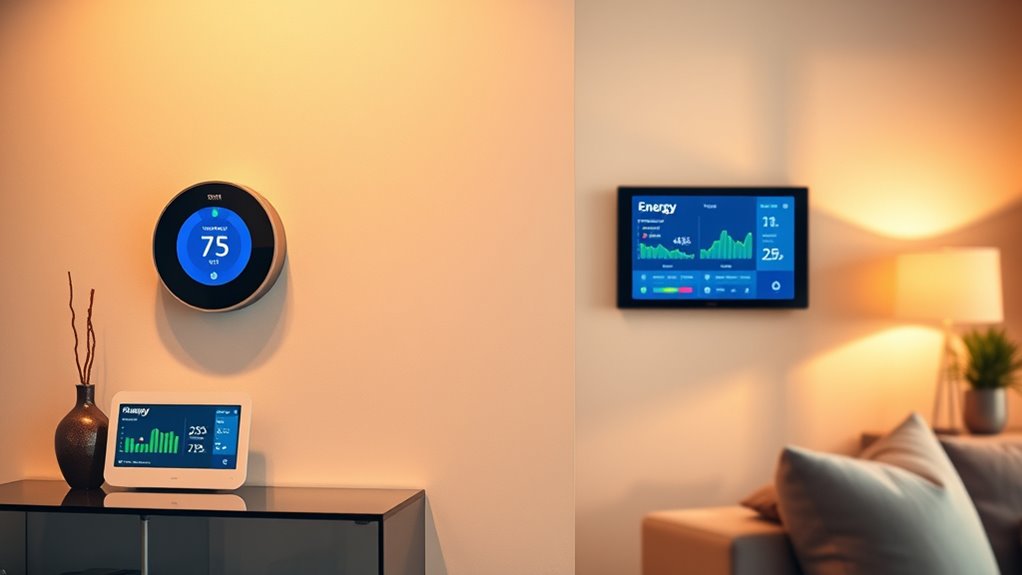
Integrating your smart thermostat with energy monitoring systems lets you manage your home climate more efficiently. By connecting these systems via Wi-Fi or smart hubs, you gain real-time insights into your energy use and patterns. This setup enables automated temperature adjustments, energy-saving recommendations, and remote control through apps or touchscreens. With detailed data and intuitive controls, you can reduce costs and improve comfort—discover more ways to optimize your system as you continue exploring.
Key Takeaways
- Enable seamless Wi-Fi or smart hub connectivity for real-time energy data access.
- Use intuitive dashboards to monitor energy consumption patterns from both systems.
- Leverage automated scheduling features to optimize energy use based on monitored data.
- Enable manual overrides for personalized climate control while tracking energy savings.
- Utilize detailed reports and insights to identify opportunities for cost reduction and sustainability.
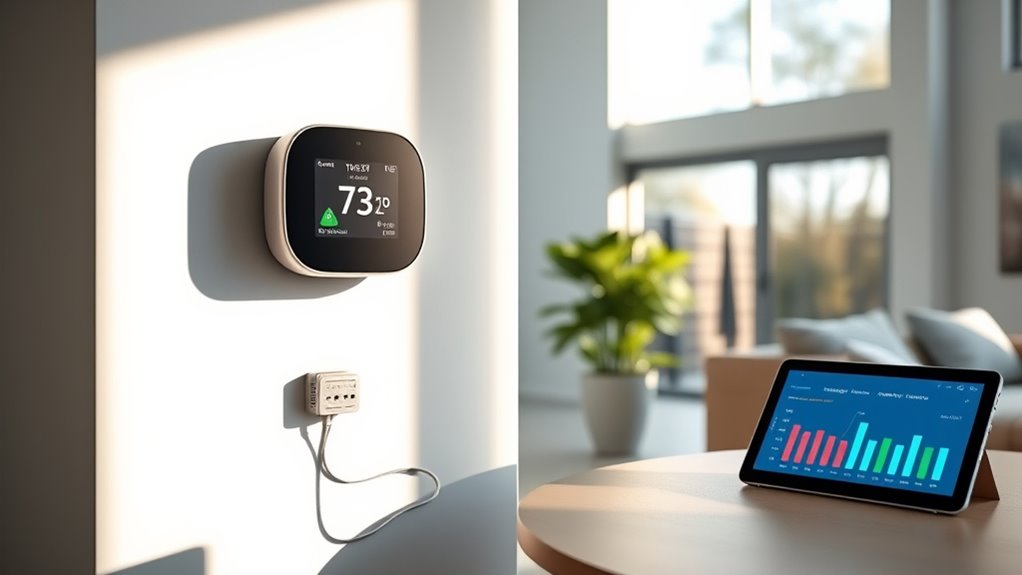
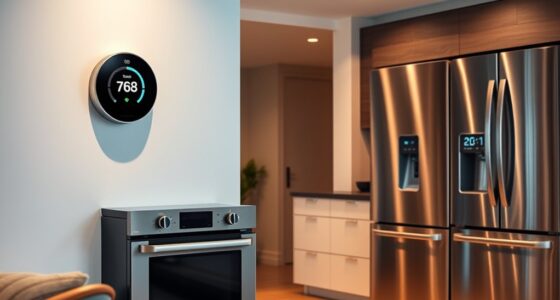
Smart thermostats are transforming the way you manage home comfort by offering seamless integration with your existing climate control systems. One of their key features is automated scheduling, which allows you to set your preferred temperatures at different times of the day. Instead of manually adjusting your thermostat every few hours, you can program it to automatically lower the temperature when you’re away or asleep and raise it before you wake up or return home. This not only keeps your home comfortable but also helps you save energy by avoiding unnecessary heating or cooling when you’re not there. The process of creating these schedules is straightforward, thanks to intuitive user interface design that guides you through setup with clear prompts and simple controls. You can customize schedules for each day of the week, ensuring essential comfort while minimizing energy waste.
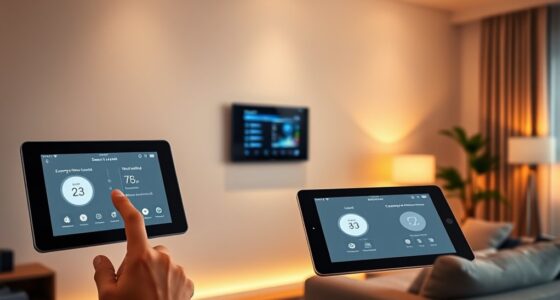
When it comes to integrating your smart thermostat with energy monitoring systems, the user interface design plays a vital role. A well-designed interface makes it easy for you to access real-time data about your energy consumption, identify patterns, and make informed adjustments. Most smart thermostats offer dashboards that display energy usage in simple, understandable graphs, helping you see how your heating and cooling habits impact overall consumption. This transparency enables you to tweak your automated schedules or manually override settings to further maximize efficiency. The interface often includes user-friendly features such as touchscreens or mobile app controls, giving you the flexibility to manage your home climate from anywhere. With clear visuals and intuitive controls, you don’t need to be tech-savvy to understand your energy data and make smarter decisions. Additionally, integrating smart thermostats with energy monitoring systems can help identify energy-saving opportunities, guiding you toward more sustainable habits.
Furthermore, the integration process itself is designed to be seamless. Modern smart thermostats easily connect to energy monitoring systems through Wi-Fi or smart home hubs, requiring minimal setup. Once connected, they work in tandem to provide detailed insights into your energy use, allowing you to see the impact of your automated scheduling choices in real time. This integration enhances your ability to reduce costs and carbon footprint while maintaining comfort. You’ll appreciate how these systems communicate, providing you with detailed reports and recommendations based on your habits. Overall, the combination of automated scheduling and user interface design ensures that managing your home’s climate becomes more efficient, user-friendly, and aligned with your energy-saving goals.
Frequently Asked Questions
Can Smart Thermostats Work With All Energy Monitoring Systems?
Smart thermostats don’t work with all energy monitoring systems, but they often support third party integrations that enhance compatibility. You can customize user settings to connect with various systems, making it easier to monitor energy use. Check the thermostat’s compatibility and available integrations before purchasing. With some effort, you’ll likely find options that suit your setup, allowing you to optimize energy efficiency and enjoy personalized control over your system.
What Security Features Protect Integrated Smart Thermostat Systems?
Did you know that over 60% of smart device breaches involve weak security? Your integrated smart thermostat system is protected through encryption protocols that secure your data and prevent unauthorized access. Additionally, user authentication guarantees only you can control settings. These features work together to safeguard your system from cyber threats, giving you peace of mind while optimizing energy efficiency.
How Much Does Professional Installation of Integrated Systems Typically Cost?
The professional installation of integrated systems usually costs between $100 and $300, depending on factors like the complexity of your setup, the brand of the smart thermostat, and your home’s wiring. The cost factors include installation procedures, such as whether your existing wiring needs upgrades or if additional equipment is required. You’ll want to get a detailed quote from a qualified technician to understand the full scope and expenses involved.
Are There Compatibility Issues With Certain HVAC Brands?
Oh, the charm of brand limitations—your HVAC compatibility might be a bit like trying to fit a square peg in a round hole. Some systems aren’t designed to play nice with certain smart thermostats, causing compatibility issues. Before you get too excited, check your HVAC brand’s compatibility list. If they’re not on it, you may need an adapter or consider switching brands to avoid tech tantrums down the line.
How Does Integration Impact Overall Energy Savings?
Integration boosts your energy efficiency by providing real-time data and precise control over your HVAC system. When your smart thermostat and energy monitoring system work together, you can identify and reduce energy waste, leading to significant cost savings. This seamless connection allows you to optimize your heating and cooling schedules, guarantee efficient usage, and ultimately lower your energy bills while maintaining comfort.
Conclusion
By integrating smart thermostats with energy monitoring systems, you’re opening the door to a world of efficiency and control. Think of it as tuning your home like a finely crafted instrument, where every note is optimized for comfort and savings. With this seamless connection, you can effortlessly manage your energy use, reduce costs, and create a smarter, greener living space. Embrace the future where technology and comfort dance together in perfect harmony.