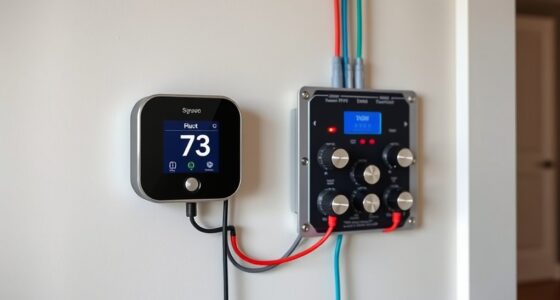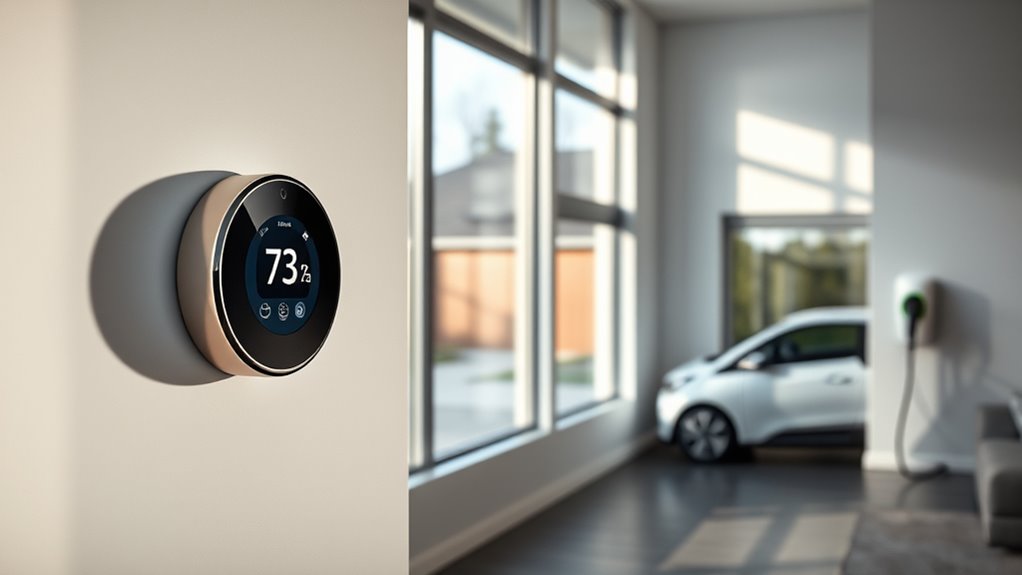

Syncing your smart thermostat with your EV charging schedule allows you to optimize energy use and save money. By coordinating charging times with temperature adjustments, you prevent unnecessary energy consumption during peak periods or when you’re away. This integration also helps create a more comfortable home environment and boosts overall efficiency. To discover how to set up these systems for maximum benefits, keep exploring the smart ways to manage your home and vehicle energy.
Key Takeaways
- Link your smart thermostat and EV charger via compatible apps or automation platforms for seamless coordination.
- Create synchronized schedules that align temperature adjustments with EV charging times.
- Set specific charging and climate control preferences to optimize energy efficiency and comfort.
- Use automation to pre-condition your home before arriving or during EV charging sessions.
- Analyze energy usage data to refine routines and maximize savings through integrated control.
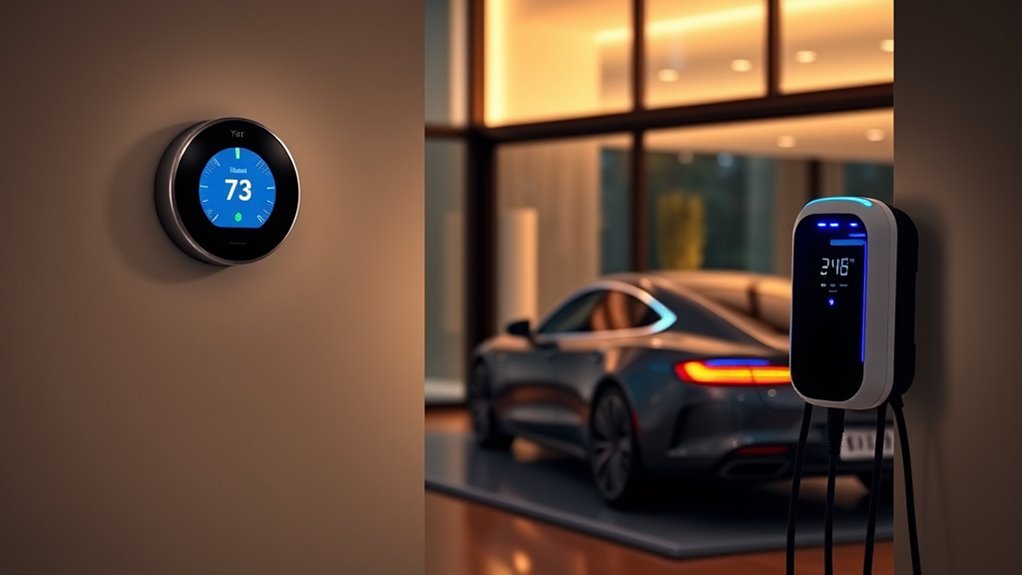
As electric vehicle (EV) ownership grows, syncing your smart thermostat with your charging schedule offers a smart way to save energy and money. When you coordinate these two systems, you optimize energy efficiency by ensuring your home’s climate control aligns with your charging habits. This integration helps prevent unnecessary energy use during peak times or when you’re not home, reducing your overall consumption and lowering utility bills. Plus, the process is straightforward, giving you the ability to tailor your home’s environment to fit your lifestyle seamlessly.
One of the biggest advantages of syncing your smart thermostat with your EV charging schedule is the level of user customization it provides. You can set specific times for charging that correspond with your preferred comfort levels or energy-saving goals. For example, you might program your thermostat to lower the temperature slightly during the day when you’re at work, and then adjust it back to a cozy setting before you arrive home. When your charging session begins, your system can automatically fine-tune your home’s climate, ensuring you’re not wasting energy heating or cooling an empty house. This kind of user customization gives you greater control over your energy use, making your home more responsive to your needs and habits.
Sync your thermostat with EV charging for personalized comfort and energy savings.
Implementing this setup involves linking your smart thermostat to your EV charger through a compatible app or home automation platform. Once connected, you can create schedules that coordinate charging times with temperature adjustments. Many smart thermostats allow you to set different profiles for weekdays and weekends, which can be especially useful if your schedule varies. As your EV charges, your thermostat can operate in a more energy-efficient mode, scaling back heating or cooling when it’s not needed. This synchronization not only enhances energy efficiency but also encourages smarter energy consumption overall. Additionally, understanding the headphone jacks available on various devices can help ensure seamless audio integration if you prefer listening to updates or alerts during your setup process.
Furthermore, by syncing these systems, you gain insights into your energy patterns. Many smart thermostats track usage data, giving you the opportunity to analyze and refine your habits. Over time, you can identify the most cost-effective and energy-efficient routines, making adjustments that further reduce waste. This level of control and data-driven decision-making empowers you to optimize your home environment while supporting sustainability efforts.

ecobee Smart Thermostat Essential – WiFi Thermostat, Energy Star Certified
- Energy Savings: Save up to 23% annually on energy costs
- System Compatibility: Compatible with 85% of HVAC systems
- Easy Temperature Control: Adjust temperature via touchscreen or app
As an affiliate, we earn on qualifying purchases.
As an affiliate, we earn on qualifying purchases.
Frequently Asked Questions
Can Syncing Affect Overall Home Energy Costs?
Yes, syncing your smart thermostat with your EV charging schedule can affect your overall energy costs. Proper device compatibility guarantees you optimize energy savings by coordinating heating, cooling, and charging times. When devices work together seamlessly, you reduce energy waste and lower bills. However, if the devices aren’t compatible, you might miss out on potential savings or even increase your energy consumption, so check compatibility carefully before syncing.
What Are the Privacy Implications of Integrating These Devices?
Coincidentally, integrating these devices raises privacy concerns. You should be aware that data privacy becomes a real issue when your smart thermostat and EV charger share information. Without proper user consent, your personal habits and energy usage could be exposed or misused. Always review privacy policies and confirm you control what data is shared. Being proactive about user consent helps protect your privacy and keeps your home secure.
Are There Specific Brands or Models Recommended for Compatibility?
You should look for smart thermostats that are compatible with your EV charger’s brand and model. Some popular options include Nest Learning Thermostat, Ecobee SmartThermostat, and Honeywell Home T9, which offer broad brand compatibility. Check the manufacturer’s specifications to guarantee the model you choose can seamlessly sync with your EV charging system, providing smooth integration and efficient energy management.
How Secure Is the Data Transfer Between Thermostat and EV Charger?
They say “trust, but verify,” and that’s true here. The data transfer between your thermostat and EV charger is generally secure thanks to data encryption and device authentication. These measures safeguard your information from unauthorized access. While no system is completely foolproof, choosing reputable brands with strong security practices greatly reduces risks. Always keep your firmware updated to ensure you benefit from the latest security features.
Can This Setup Be Automated for Multiple Devices?
Yes, you can automate multi-device synchronization to manage your smart thermostat and EV charger efficiently. Using compatible platforms or smart home hubs, you can set up automation routines that coordinate charging and temperature control seamlessly. However, you may encounter automation challenges, such as device compatibility issues or complex scheduling needs. Overcoming these requires choosing devices with open APIs and investing time to configure rules that guarantee smooth, coordinated operation across all your devices.
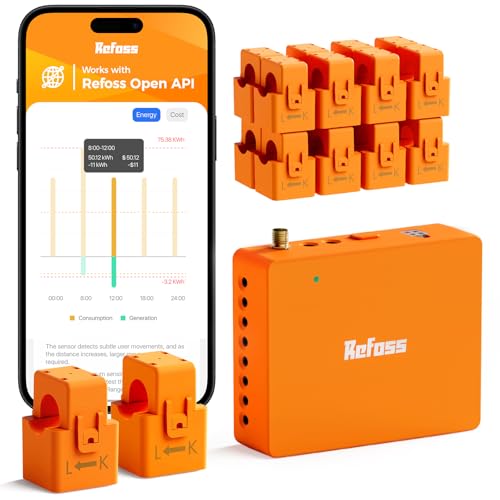
Refoss Smart Home Energy Monitor with 16 60A Circuit Sensor, Local Control
- Precise Circuit Monitoring: Monitors 18 circuits with ±1% accuracy
- Cost Savings: Reduces utility bills by 10-20%
- Local Data Privacy: Stores data locally without cloud dependency
As an affiliate, we earn on qualifying purchases.
As an affiliate, we earn on qualifying purchases.
Conclusion
By syncing your smart thermostat with your EV charging schedule, you’re conducting a symphony of efficiency, where every note plays in harmony. This dance of technology not only saves energy but also paints a future where your home and car work in perfect tandem. Embrace this synergy, and watch as your energy bills shrink and your comfort rises like a sunrise. It’s a smart move, turning everyday routines into a masterpiece of sustainability.

AIMILER Level 2 Electric Vehicle (EV) Charger(WIFI APP/Plug-play), 32A, 25ft Cable ETL Certified, 220V-240V NEMA 14-50P Plug EVSE w/ J1772 Connector, Portable EV Car Charging Stations for Home Level 2
- Power Plug Compatibility: 240V Nema 14-50 plug included
- Universal J1772 Connector: Compatible with most North American EVs
- Fast Charging Capability: Up to 7.68kWh with adjustable amperage
As an affiliate, we earn on qualifying purchases.
As an affiliate, we earn on qualifying purchases.

Honeywell Home T5 Smart Wi-Fi Thermostat
- Energy Savings: Save 8-16% on heating and cooling bills
- Rebate and Rewards: Eligible for energy rebates and utility programs
- Flexible Scheduling: 7-day programmable schedule or location-based control
As an affiliate, we earn on qualifying purchases.
As an affiliate, we earn on qualifying purchases.