Integrating your smart thermostat with your security system streamlines home management by offering seamless control, enhanced safety, and energy efficiency. You can easily automate temperature adjustments based on security alerts or your daily routines, reducing waste and improving comfort. This integration allows you to respond quickly to security events while maintaining ideal climate control. By connecting these systems thoughtfully, you’ll enjoy a safer, smarter home—stay tuned to discover best practices for a smooth setup.
Key Takeaways
- Ensure compatibility between the smart thermostat and security system before integration.
- Use centralized control platforms for seamless management of both devices.
- Automate responses to security alerts to optimize energy use and enhance safety.
- Implement robust security protocols to protect connected devices from cyber threats.
- Regularly update firmware and review system settings for optimal performance and security.

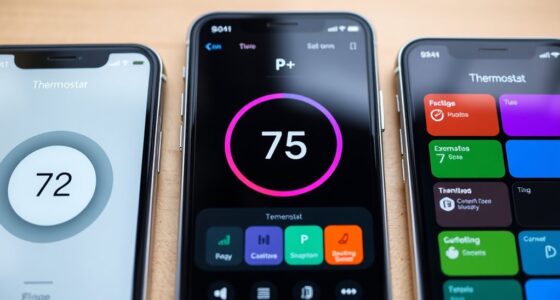
Integrating a smart thermostat into your home can substantially enhance comfort and energy efficiency. When you connect it to your security system, you open a level of convenience and control that’s hard to match with traditional thermostats. This integration allows you to manage your heating and cooling remotely, giving you the ability to adjust settings from anywhere through your smartphone or tablet. Not only does this improve user convenience, but it also helps you optimize energy savings. You can program your system to lower temperatures when you’re away or asleep, reducing unnecessary energy consumption and lowering utility bills. This seamless coordination between your security and climate control systems ensures your home remains comfortable while avoiding wasteful heating or cooling.
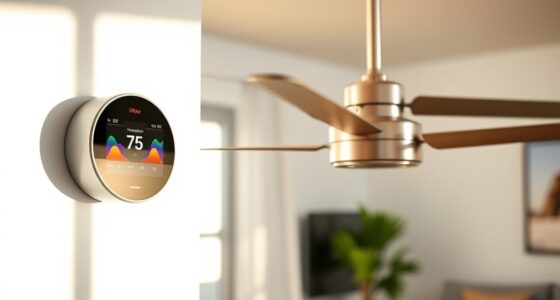
By linking your smart thermostat with your security system, you gain a centralized platform to monitor and control your home environment. Many smart thermostats offer features like geofencing, which detects when you leave or approach your property, automatically adjusting the temperature accordingly. This automation takes the effort out of maintaining an energy-efficient home. As a result, you avoid the common mistake of forgetting to turn down the heat or AC when you’re not home, which can lead to unnecessary energy use. With real-time updates and remote access, you can make quick adjustments if your plans change unexpectedly, guaranteeing your home remains comfortable without wasting energy. Incorporating home automation further enhances the overall efficiency and convenience of your smart home system.
User convenience is further enhanced through integration with security alerts. If your security system detects unusual activity or a potential intrusion, some smart thermostats can be programmed to respond by adjusting the temperature—maybe to conserve energy or to signal an alert. This added layer of automation means your home adapts to security events without requiring manual intervention. Additionally, many systems allow for easy scheduling, so you can set temperature preferences based on your daily routines, maximizing comfort and efficiency. The integration also simplifies troubleshooting; if there’s an issue with your HVAC or security system, notifications are often consolidated into one app, making it easier to diagnose and resolve problems quickly. Security system integration further amplifies the benefits by providing a cohesive smart home experience that enhances safety and energy management. Furthermore, understanding how contrast ratio impacts image quality can help you select the right projector for your needs.
Frequently Asked Questions
How Does Smart Thermostat Integration Impact Energy Savings?
You can substantially boost your energy savings by integrating your smart thermostat with your security system. This setup enables demand response, where your system adjusts heating and cooling during peak times, saving you money. Plus, utility incentives often reward such energy-efficient practices. By automating temperature adjustments based on your daily routine and utility signals, you reduce waste and lower your energy bills effectively.
What Are the Cybersecurity Risks of Integrating Thermostats With Security Systems?
Think of your connected devices as a fortress’s gates; when you integrate thermostats with security systems, those gates open wider. The cybersecurity risks include data privacy breaches and hacking vulnerabilities, which can let intruders access sensitive info or even control your environment. You must fortify your defenses, use strong encryption, and regularly update software to keep your digital fortress secure and prevent unwanted breaches.
Can Integration Cause System Malfunctions or Conflicts?
Integration can cause system malfunctions or conflicts if hardware conflicts or firmware issues arise. You might experience glitches or communication breakdowns between devices, leading to unreliable security or temperature control. To prevent this, verify your hardware is compatible and keep firmware updated regularly. Properly configuring your system and consulting technical support can also reduce the risk of conflicts, ensuring smooth operation and reliable security and thermostat performance.
Is Professional Installation Necessary for Effective Integration?
Think of integrating your smart thermostat as weaving a delicate tapestry; it requires finesse and skill. You might be tempted to DIY, but installation complexity can turn into a tangled mess. Hiring a technician with expertise guarantees a smooth, harmonious connection, avoiding glitches and conflicts. Their knowledge acts as a guiding hand, making sure your system works seamlessly together, so you enjoy comfort and security without the headache of troubleshooting.
How Does Integration Affect Smart Home Automation Routines?
Integration enhances your smart home automation routines by enabling seamless control through voice commands and personalized settings. When your thermostat connects with your security system, you can easily adjust temperatures or activate scenes based on your preferences. This setup allows for greater user customization, making routines more efficient and intuitive. As a result, you enjoy a more responsive, convenient smart home experience, tailored precisely to your lifestyle.
Conclusion
Integrating your smart thermostat with security systems enhances both comfort and safety. By doing so, you can reduce energy costs by up to 12%, according to recent studies. Remember, a seamless connection guarantees you stay in control from anywhere, providing peace of mind. Embrace these best practices to optimize your home’s security and efficiency, making your smart home truly smart and secure. Don’t wait—start your integration journey today for a safer, more efficient home.