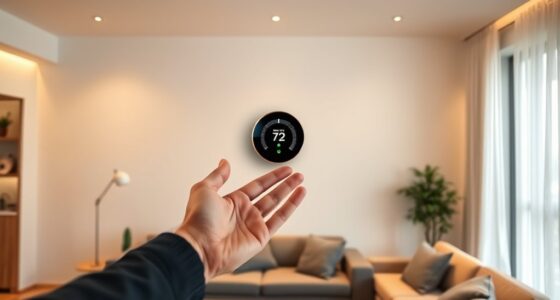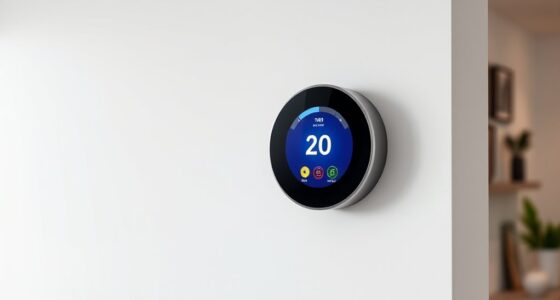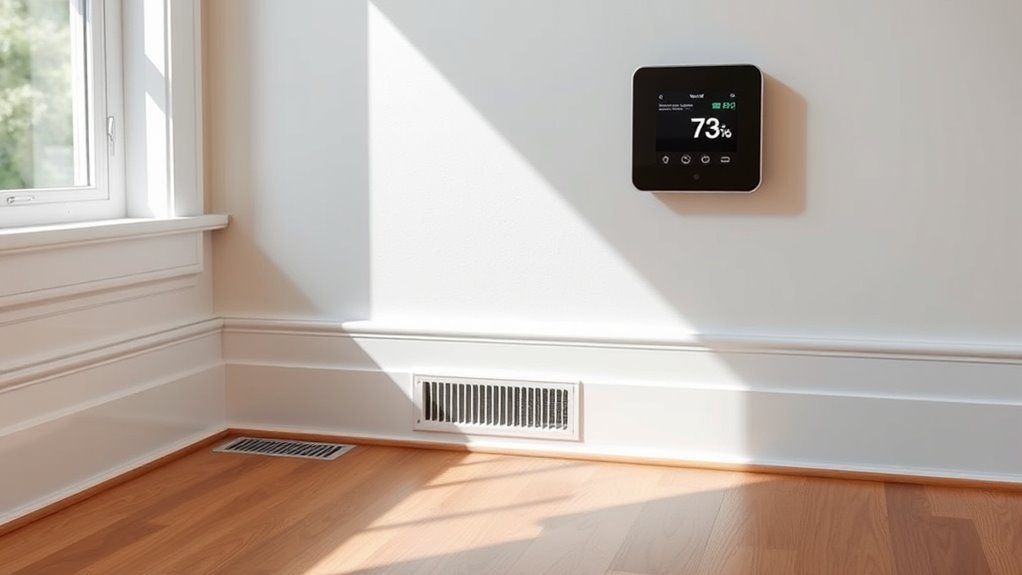

Using your smart thermostat data helps control smart vents more effectively by providing real-time insights into occupancy, temperature, and humidity. You can automatically adjust airflow to different zones based on whether your spaces are occupied or not, saving energy and increasing comfort. The system detects environmental changes and responds accordingly, ensuring each room stays at the right climate levels. Keep exploring how this data can optimize your home environment for better efficiency and comfort.
Key Takeaways
- Smart thermostats collect real-time temperature, humidity, and occupancy data to inform vent control decisions.
- They analyze usage patterns to optimize airflow and prevent energy waste in unoccupied zones.
- Data from thermostats helps smart vents automatically close or open to maintain targeted comfort levels.
- Integrating thermostat insights allows precise adjustments based on room-specific occupancy and environmental conditions.
- Continuous data analysis ensures efficient, personalized climate management by coordinating thermostat settings and vent operations.
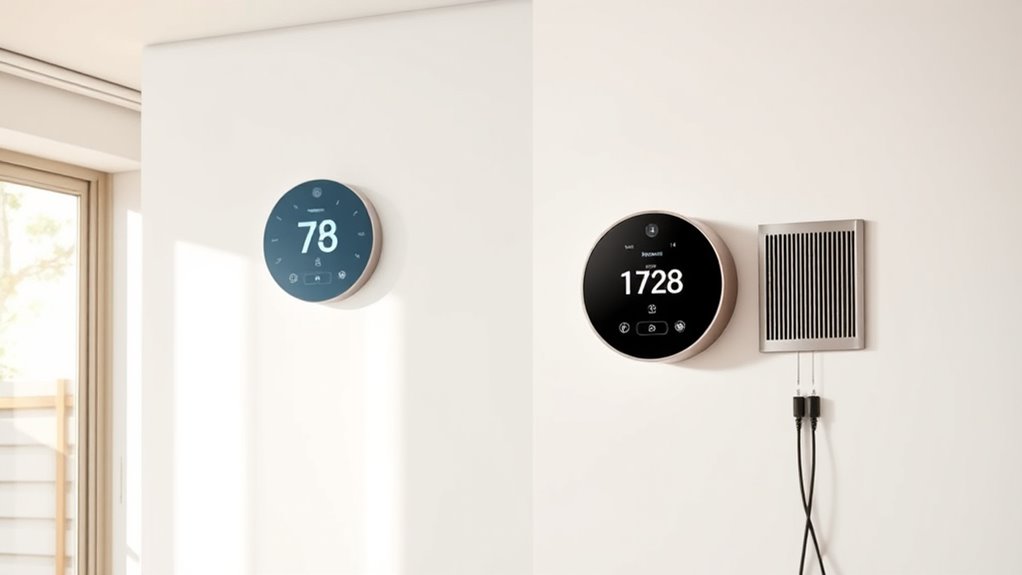
Smart thermostats have revolutionized how you manage your home’s temperature by collecting detailed usage data. This technology isn’t just about setting a schedule; it gathers essential insights into your daily habits, environmental conditions, and energy consumption. By analyzing this data, you can optimize your HVAC system for maximum comfort and efficiency. One key aspect your smart thermostat tracks is occupancy patterns—when and where people are in your home. Knowing these patterns helps you avoid heating or cooling empty rooms, saving energy and reducing costs. For example, if your thermostat detects that certain areas are unoccupied during specific times, it can communicate with smart vents to close off those zones, directing airflow only where it’s needed. This targeted control ensures you’re not wasting energy conditioning spaces that aren’t in use.
Another critical factor your smart thermostat considers is humidity levels. Proper humidity not only enhances comfort but also protects your home from issues like mold and dust buildup. When humidity is too high, it can make your living space feel warmer and more uncomfortable, prompting unnecessary cooling. Conversely, low humidity can cause dry skin and respiratory discomfort. By monitoring humidity data, your smart thermostat can adjust your HVAC settings or communicate with smart vents to balance moisture levels effectively. For instance, if a room’s humidity rises beyond a comfortable threshold, the system might activate dehumidifiers or reduce airflow to that area. This integration ensures your home remains pleasant while using energy wisely. Additionally, understanding air quality helps you maintain a healthier living environment.
Your ability to leverage occupancy patterns and humidity levels with smart thermostat data means you can fine-tune your control over individual rooms. Instead of a one-size-fits-all approach, you get customized climate management that responds dynamically to real-time conditions. If you’re away or asleep, the system can automatically adjust to conserve energy without sacrificing comfort when you’re home. When you’re hosting guests or working from home, it can optimize airflow to keep everyone comfortable. Using data from your smart thermostat, you can also identify trends—like which rooms tend to be warmer or cooler—and adjust your vents accordingly to create a balanced environment. Additionally, understanding occupancy data allows for even more precise and energy-efficient adjustments. Implementing HEPA filters and other advanced filtration options can further improve indoor air quality, complementing the benefits of your smart control system.
Ultimately, the real power of smart thermostat data lies in its ability to inform smarter control of smart vents. By understanding occupancy patterns and humidity levels, you’re equipped to make precise adjustments that enhance comfort, reduce energy use, and lower costs. This intelligent approach transforms your home into a more comfortable, efficient space, all driven by the insights your smart thermostat continuously gathers and analyzes.
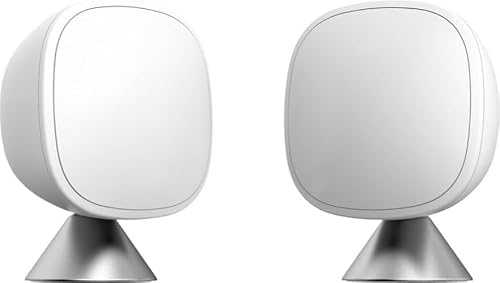
ecobee SmartSensor 2-Pack – Temperature & Occupancy Detection
- Occupancy Detection Range: Up to 60 ft through walls and floors
- Room Temperature Monitoring: Detects occupancy and communicates temperature
- Comfort Optimization: Adjusts thermostat for comfort
As an affiliate, we earn on qualifying purchases.
As an affiliate, we earn on qualifying purchases.
Frequently Asked Questions
Can Smart Vents Be Controlled Manually Without a Thermostat?
You can manually control smart vents without a thermostat by adjusting the vent settings directly. Many smart vents have manual controls or app-based options that let you modify vent positions or open and close them as needed. This vent adjustment allows you to regulate airflow in specific rooms without relying on a thermostat. Just verify your smart vents support manual control features, so you can customize your comfort easily.
How Do Smart Vents Impact Energy Bills Long-Term?
Think of smart vents as the conductors of your home’s HVAC symphony, guiding warmth where it’s needed most. Long-term, they can boost your energy savings and enhance heating efficiency by reducing wasteful heating or cooling. This targeted control minimizes energy use, lowering bills over time. With smart vents, you’re tuning your comfort system to operate smoothly and efficiently, transforming your home into an energy-smart sanctuary.
Are Smart Vent Systems Compatible With All HVAC Brands?
You might wonder if smart vent systems are compatible with all HVAC brands. While many smart vents work with popular brands, HVAC compatibility varies, so you should check your system’s specifications. Be aware of smart vent limitations, like potential installation issues or compatibility with older units. Always verify the smart vent’s compatibility before purchasing to guarantee seamless integration and maximum performance with your HVAC system.
What Are the Security Risks of Smart Vent Integration?
When you integrate smart vents, you should be aware of potential security risks like privacy concerns and hacking vulnerabilities. Hackers could gain access to your home network, potentially controlling your HVAC system or stealing personal data. To protect yourself, verify your devices have strong passwords, keep firmware updated, and use secure Wi-Fi networks. Staying vigilant reduces these risks and helps keep your smart home safe.
How Does Smart Thermostat Data Improve Vent Placement Accuracy?
Smart thermostat data helps you achieve better zone optimization by providing real-time temperature readings from multiple sensors. This information allows you to precisely control smart vents, directing airflow where it’s needed most. As a result, you improve vent placement accuracy, maintaining consistent comfort and reducing energy waste. By analyzing temperature sensor data, you can fine-tune your system, ensuring each zone stays at the desired temperature efficiently.
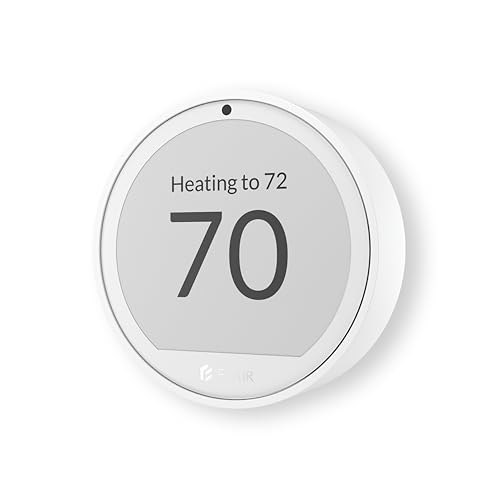
Flair Puck 2 Temperature Sensor & Thermostat – for Flair Smart Vent Systems & Mini Split Control
- Automatic Room Temperature Adjustment: Balances comfort with airflow control
- Compatible with Major Thermostats: Works with ecobee, Honeywell, Nest, Sensi
- Energy Saving Capabilities: Reduces energy use by up to 30%
As an affiliate, we earn on qualifying purchases.
As an affiliate, we earn on qualifying purchases.
Conclusion
By harnessing your smart thermostat data, you can orchestrate a seamless dance of comfort and efficiency. Imagine the cool whisper of vents opening just when warmth is needed, or the gentle hush of them closing as the room chills. With each data-driven adjustment, your home becomes a symphony of perfect temperature, flowing effortlessly like a breeze. Embrace this harmony, and watch your space transform into a cozy, responsive haven you control with a simple tap.
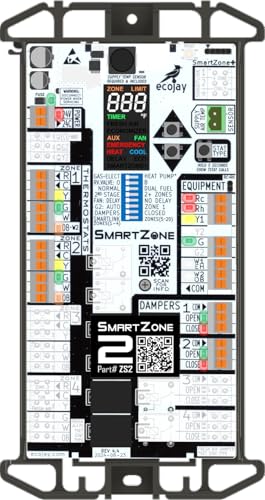
SmartZone-2: Single-Stage, 2-Zone Controller KIT w/ Temperature Sensor – Replace Honewell, ewc, zonefirst HVAC Zone Control Panels
- Number of Zones: 2 zones with temperature sensor
- Compatibility: Single-stage cool, 2-stage heat
- Installation & Use: Easy to install and operate
As an affiliate, we earn on qualifying purchases.
As an affiliate, we earn on qualifying purchases.

GoveeLife 2.0 WiFi Hygrometer Thermometer with Gateway, Mini Sensor 3-Pack
- WiFi Control: Monitor data remotely via WiFi app
- Sensor Compatibility: Pairs with up to 10 sensors
- Long Battery Life: 2-year battery lifespan
As an affiliate, we earn on qualifying purchases.
As an affiliate, we earn on qualifying purchases.