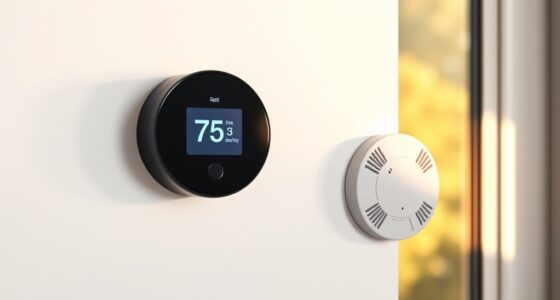
Integrating smart thermostats with HVAC zoning controllers allows you to customize your home’s climate for each zone, boosting comfort and saving energy. By connecting these systems, you can automatically adjust temperatures based on occupancy, weather, or routines through intuitive apps or voice commands. This setup prevents wasted energy by focusing heating or cooling where it’s needed most. If you want to discover how to maximize efficiency and personalize your environment, stay tuned for more insights.
Key Takeaways
- Ensure compatibility between smart thermostats and HVAC zoning controllers before integration.
- Use compatible communication protocols such as Wi-Fi, Zigbee, or Z-Wave for seamless connectivity.
- Configure zoning controllers to work with smart thermostats for independent zone management.
- Leverage automation features for routine-based temperature adjustments and energy savings.
- Monitor and control the integrated system remotely via smartphone apps or voice assistants.

Smart thermostats with HVAC zoning are transforming how you control your home’s climate by allowing you to customize temperature settings for different areas. This advanced setup gives you the power to manage each zone independently, providing a tailored environment that suits your preferences and lifestyle. By dividing your home into multiple zones, you can optimize comfort while reducing energy consumption, leading to significant savings on your utility bills. These systems work seamlessly with smart thermostats, integrating sophisticated controls that adapt to your routines and preferences.
One of the key benefits of integrating smart thermostats with HVAC zoning controllers is enhanced energy efficiency. Instead of heating or cooling the entire house uniformly, you target specific zones that need climate adjustments at particular times. For example, you can lower the temperature in unoccupied rooms or upstairs during the day, while maintaining a comfortable setting in your living areas. This targeted approach minimizes wasteful energy use, helping you lower your carbon footprint and save money. The smart technology automatically adjusts based on occupancy patterns, weather forecasts, and your manual inputs, ensuring your home stays comfortable without unnecessary energy expenditure.
User customization plays an essential role in maximizing the benefits of this system. With smart thermostats, you’re not limited to preset temperature schedules. Instead, you can create personalized settings for each zone, adjusting them on the fly or setting schedules that match your daily routines. Want a warmer bedroom at night or a cooler home office during work hours? You can do that easily through intuitive apps or voice commands. These devices often come with learning capabilities, meaning they adapt over time by recognizing your habits and preferences, further refining comfort and efficiency. This level of customization means you’re always in control, ensuring your indoor climate aligns perfectly with your needs.
Furthermore, integrating smart thermostats with HVAC zoning controllers simplifies the management process. You can monitor and adjust your system remotely via smartphone apps, giving you flexibility whether you’re home or away. Alerts notify you of system issues or maintenance needs, preventing costly repairs and downtime. The system’s compatibility with voice assistants adds an extra layer of convenience, allowing you to control zones with simple voice commands. Additionally, understanding yarn yardage and other technical details can help you select compatible components for your system. Overall, this integration offers a smarter, more efficient way to maintain your home’s comfort, reducing energy waste while delivering personalized climate control that adapts to your lifestyle.
Frequently Asked Questions
Can Smart Thermostats Control Multiple Zones Independently?
Yes, smart thermostats can control multiple zones independently, offering you multi-zone flexibility. With advanced smart thermostat features, you can set different temperatures for each zone, ensuring personalized comfort throughout your home. This independent control helps optimize energy use and saves you money. Keep in mind that for full multi-zone control, your system needs compatible zoning controllers, but many smart thermostats are designed to work seamlessly with these setups, providing convenient and efficient zone management.
What Are the Compatibility Requirements for Integrating These Systems?
Did you know that over 70% of smart home integrations face compatibility issues? For seamless integration, make sure your smart thermostat and zoning controller share compatible wireless connectivity standards like Wi-Fi or Zigbee. Additionally, both devices should support regular firmware updates to maintain security and functionality. Check manufacturer specifications and firmware update options before purchasing to guarantee smooth communication and maximum performance in your HVAC system.
How Do Zoning Controllers Impact Energy Efficiency?
Zoning controllers boost your energy efficiency by allowing you to target heating and cooling precisely where needed, reducing wasted energy. They optimize your system by controlling multiple zones independently, leading to significant energy savings. With zoning controllers, you can set different temperatures for various areas, ensuring comfort and system efficiency. This tailored approach minimizes unnecessary operation, helping you save on energy costs and extend your HVAC system’s lifespan.
Is Professional Installation Necessary for Advanced Zoning Systems?
You should consider professional installation for advanced zoning systems because DIY challenges can be significant, especially with complex wiring and configuration. While it may seem cost-effective initially, improper setup might lead to costly repairs or reduced efficiency. A trained technician ensures everything works seamlessly, maximizing energy savings and comfort. Investing in professional installation helps avoid errors and offers peace of mind, making it well worth the cost considerations.
Can I Upgrade Existing Thermostats to Smart Ones Easily?
You can upgrade your existing thermostats to smart ones, but it depends on your current setup. Check if your thermostat wiring matches the smart model’s requirements and verify your system supports Wi-Fi connectivity. Many smart thermostats are designed for easy installation, often fitting into existing wiring. However, if your wiring is complex or outdated, professional installation might be necessary to ensure proper function and integration with your HVAC zoning system.
Conclusion
By integrating smart thermostats with HVAC zoning controllers, you open a level of home comfort that’s practically unbeatable. Imagine having the power to customize your climate effortlessly, saving energy and money—all at your fingertips. This setup transforms your home into an oasis of perfect temperatures, making traditional systems seem like mere relics. Embrace this technology, and you’ll experience comfort so advanced, it’s like having your own personal climate wizard working tirelessly for you.