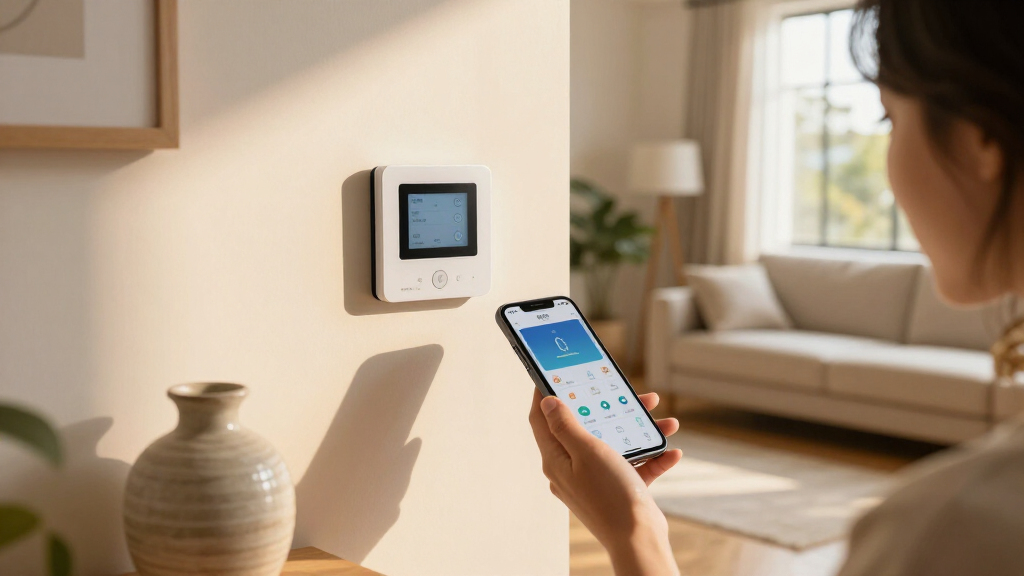

Searching for the best smart home climate systems means balancing automation intelligence against real-world costs and installation complexity. The ecobee Smart Thermostat Premium leads this lineup because it pairs remote room sensors with built-in Siri and Alexa, solving the most common climate complaint: uneven temperatures between rooms. The Google Nest Smart Thermostat stands out for eco-conscious buyers with its learning algorithms and sleek design, while the Sensi Smart Wi-Fi Thermostat wins on straightforward DIY installation and reliable app control. The main tradeoff in this category is between sensor-driven precision (ecobee), ecosystem simplicity (Amazon and Google), and price (Honeywell Lyric T6 Pro and Sensi). Space heaters and through-the-wall units like the Pasapair panel heater and ROVSUN wall AC cover supplemental heating and cooling rather than whole-home control. Keep reading for the full breakdown of all ten systems and which one fits your home.

Get home appliances delivered free with Prime
- Fast, free delivery on millions of items
- Prime Video, Amazon Music and more included
- Member-only deals all year
Complete the kit



Key Takeaways
- Only the ecobee Premium and Enhanced support remote room sensors, which is the single biggest differentiator for homes with hot or cold spots — every other thermostat in this lineup reads temperature from one wall location.
- Three of the ten picks (Honeywell RTH9600WF, Lyric T6 Pro, and Sensi ST55) require or strongly prefer a C-wire, so buyers with older two-wire systems should budget for an adapter or pick the Amazon or Nest options instead.
- Voice assistant choice should drive your shortlist: ecobee Premium uniquely supports both Alexa and Siri on-device, while the Amazon Smart Thermostat only makes full sense inside an Alexa household.
- The ecobee Essential and Enhanced sit close in features — the Premium’s smart speaker functionality and included sensor justify its higher spot, while the Essential is the value play for simpler HVAC setups.
- The Pasapair heater and ROVSUN wall AC are not thermostat replacements; they earned spots as targeted climate solutions for rooms your central system can’t reach, such as garages, additions, and sunrooms.
| Amazon Smart Thermostat with Alexa and Ring Support |  | Best Budget Smart Thermostat | Compatibility: Alexa and Ring | Installation: DIY with Alexa app guidance | Wiring requirement: C-wire required | VIEW LATEST PRICE | See Our Full Breakdown |
| Pasapair 1500W Convection Panel Heater with Remote, WiFi App & Alexa Control |  | Best Smart Space Heater | Heat output: 1500 watts | Coverage: 215 sq.ft | Temperature range: 41°F – 99°F | VIEW LATEST PRICE | See Our Full Breakdown |
| ecobee Smart Thermostat Premium with Wi-Fi, SmartSensor, and Built-In Siri and Alexa |  | Best Overall | Connectivity: Wi-Fi | Voice assistants: Siri and Alexa built in | Included sensor: SmartSensor for occupancy and temperature | VIEW LATEST PRICE | See Our Full Breakdown |
| Honeywell Home RTH9600WF Smart Color Thermostat, ENERGY STAR Wi-Fi Programmable Touchscreen, Alexa Compatible (C-Wire Required) |  | Best for Programmable Scheduling | Connectivity: Wi-Fi | Display: Customizable HD color touchscreen | Voice assistants: Alexa, Google Assistant, Microsoft Cortana | VIEW LATEST PRICE | See Our Full Breakdown |
| ROVSUN 12000 BTU Through-the-Wall Air Conditioner with Heat, Smart Wall AC & Heater Combo with Remote, App & Voice Control |  | Best for Year-Round Room Climate | Cooling capacity: 12000 BTU | Heating capacity: 10600/8600 BTU | Coverage area: 550 sq ft | VIEW LATEST PRICE | See Our Full Breakdown |
| ecobee Smart Thermostat Essential Wi-Fi Thermostat |  | Best Ecosystem Flexibility on a Budget | Connectivity: Wi-Fi | Display: Color touchscreen | Compatibility: 85% of HVAC systems (24 VAC) | VIEW LATEST PRICE | See Our Full Breakdown |
| Honeywell Home Lyric T6 Pro Wi-Fi Programmable Thermostat |  | Best for Multi-Stage HVAC Systems | Brand: Honeywell Home | Model: TH6220WF2006 | Compatibility: Alexa, Apple HomeKit; 2H/1C heat pump or 2H/2C conventional | VIEW LATEST PRICE | See Our Full Breakdown |
| Sensi Smart Wi-Fi Thermostat (ST55) |  | Best for DIY Beginners | Model: ST55 | Connectivity: Wi-Fi | Voice assistant compatibility: Amazon Alexa | VIEW LATEST PRICE | See Our Full Breakdown |
| ecobee Smart Thermostat Enhanced |  | Best Overall Value | Connectivity: Wi-Fi | HVAC compatibility: 90% of HVAC systems | Smart home compatibility: Alexa, Google Assistant, Apple HomeKit, SmartThings | VIEW LATEST PRICE | See Our Full Breakdown |
| Google Nest Smart Thermostat (Fog) |  | Best for Google Home Households | Color: Fog | Connectivity: Wi-Fi | Voice assistant compatibility: Google Assistant, Alexa, Matter-certified assistants | VIEW LATEST PRICE | See Our Full Breakdown |
| smart home climate system | Connectivity | Certification |
|---|---|---|
| Amazon Smart Thermostat with A | — | ENERGY STAR certified |
| Pasapair 1500W Convection Pane | — | — |
| ecobee Smart Thermostat Premiu | Wi-Fi | ENERGY STAR certified |
| Honeywell Home RTH9600WF Smart | Wi-Fi | ENERGY STAR certified |
| ROVSUN 12000 BTU Through-the-W | — | — |
| ecobee Smart Thermostat Essent | Wi-Fi | — |
| Honeywell Home Lyric T6 Pro Wi | Wi-Fi | — |
| Sensi Smart Wi-Fi Thermostat | Wi-Fi | ENERGY STAR |
| ecobee Smart Thermostat Enhanc | Wi-Fi | — |
| Google Nest Smart Thermostat | Wi-Fi | ENERGY STAR |
More Details on Our Top Picks
Amazon Smart Thermostat with Alexa and Ring Support
For buyers who want basic smart climate control without a premium price, this thermostat covers the fundamentals well. It handles schedules, Alexa automation, and remote monitoring through the Alexa app, and the app-guided DIY install keeps setup approachable for first-timers. Compared with the ecobee Smart Thermostat Premium, it skips air quality monitoring, occupancy sensing, and a built-in speaker — but most people buying a budget thermostat don’t need those extras. The Honeywell Home technology inside means it’s a proven platform rather than an untested gadget. The main tradeoff is the C-wire requirement: older homes without one will need an adapter or an electrician, which eats into the savings. Comfort zones also demand additional compatible Alexa hardware, so multi-room setups cost more than the sticker suggests.
Pros:- App-guided DIY installation that beginners can handle
- Schedules, remote control, and Alexa automation in one inexpensive package
- ENERGY STAR certified for real heating and cooling savings
- Built on proven Honeywell Home thermostat technology
Cons:- C-wire required, which older homes often lack
- Comfort zones only work with select additional Alexa devices
Best for: Alexa-household owners on a budget who want reliable scheduling and app control for a single HVAC zone
Not ideal for: Homes without a C-wire or buyers wanting room-by-room temperature sensing, since both require extra hardware or a pricier model like the ecobee Premium
- Compatibility:Alexa and Ring
- Installation:DIY with Alexa app guidance
- Wiring requirement:C-wire required
- Technology:Honeywell Home thermostat technology
- Controls:Schedules, Alexa automation, remote app control
- Certification:ENERGY STAR certified
Our verdict“If you already live in an Alexa home and have a C-wire, this is the cheapest sensible path to smart climate control.”
Pasapair 1500W Convection Panel Heater with Remote, WiFi App & Alexa Control
Not every climate problem needs a thermostat swap — sometimes one room just runs cold. That’s where this 1500W convection panel heater earns its spot. It warms a space in about 10 seconds, covers up to 215 sq.ft., and offers three ways to control it: app, remote, or Alexa and Google Assistant voice. The fanless design runs as quiet as 30dB, making it far better suited to bedrooms than the ROVSUN wall AC unit, which is louder by a wide margin. Its flexibility stands out too: freestanding on casters or wall-mounted, with IP24 splash-proofing that permits bathroom use. The tradeoff is physics — convection heat is slower than fan-forced heat in genuinely large spaces, and 1500W is the ceiling for a standard outlet. Treat it as a room supplement, not a whole-home solution.
Pros:- Fast 10-second warmup from a 1500W element
- App, remote, and Alexa/Google Assistant voice control
- Whisper-quiet fanless operation as low as 30dB with sleep mode
- Freestanding or wall-mounted, with IP24 splash-proofing safe for bathrooms
Cons:- Convection heating lags fan-forced units in larger rooms
- 215 sq.ft. coverage caps it at single-room use
Best for: Renters and homeowners supplementing central heat in a cold bedroom, office, or bathroom up to about 215 sq.ft.
Not ideal for: Buyers heating large open-plan spaces, since convection output can’t match fan-forced or dedicated HVAC equipment
- Heat output:1500 watts
- Coverage:215 sq.ft
- Temperature range:41°F – 99°F
- Noise level:As low as 30dB
- Mounting:Freestanding (wheels) or wall-mounted
- Water resistance:IP24 splash-proof
- Smart compatibility:Alexa, Google Assistant, WiFi app
- Special features:24H timer, ECO mode, sleep mode, child lock, tip-over and overheat protection
Our verdict“A smart pick when one stubborn room needs targeted, quiet heat rather than a whole-home upgrade.”
ecobee Smart Thermostat Premium with Wi-Fi, SmartSensor, and Built-In Siri and Alexa
This is the most complete climate hub in the lineup, and that’s why it sits at the top. The included SmartSensor tracks occupancy and temperature room by room, so the system heats the spaces people actually use instead of averaging the whole house — something neither the Amazon Smart Thermostat nor the Honeywell RTH9600WF can do out of the box. Add built-in air quality monitoring, filter reminders, and a speaker with both Siri and Alexa on-device, and it doubles as a mini smart speaker. Compatibility with 95% of HVAC systems plus an included Power Extender Kit removes the C-wire headache that trips up cheaper rivals. The honest tradeoff: some features hide behind paywalls or hardware — smoke alarm alerts need an ecobee subscription, and Siri requires an Apple home hub. Verify HVAC compatibility before buying, but for most homes this is the ceiling of the category.
Pros:- Occupancy and room-level sensing via included SmartSensor
- Built-in air quality monitoring with filter reminders
- Siri and Alexa voice assistants on-device
- Works with 95% of HVAC systems and includes a Power Extender Kit
Cons:- Smoke alert features require an ecobee Smart Security subscription
- Siri support demands an Apple home hub
- HVAC compatibility should be confirmed before purchase
Best for: Tech-forward homeowners who want occupancy-based comfort, air quality data, and voice control in a single wall device
Not ideal for: Minimalists who just want schedules and app control — the Amazon Smart Thermostat delivers that for far less
- Connectivity:Wi-Fi
- Voice assistants:Siri and Alexa built in
- Included sensor:SmartSensor for occupancy and temperature
- Air quality monitoring:Built in
- HVAC compatibility:95% of HVAC systems
- Installation kit:Power Extender Kit and trim kit included
- Warranty:3 years
- Certification:ENERGY STAR certified
Our verdict“If budget allows and your HVAC is compatible, this is the smart climate system to beat.”
Honeywell Home RTH9600WF Smart Color Thermostat, ENERGY STAR Wi-Fi Programmable Touchscreen, Alexa Compatible (C-Wire Required)
Where the ecobee Premium leans on sensors and AI, this Honeywell doubles down on deterministic programming — you set the schedule, it follows it, and Smart Response learns your home’s heat-up and cool-down cycle times so temperatures land where you want them at the moment you want them. The customizable color touchscreen is a genuine perk for anyone who cares how a wall looks, and its broad voice support (Alexa, Google Assistant, even Cortana) avoids locking you into one ecosystem. Smart alerts for filter changes and connection issues add practical value. The catches are real: a C-wire is mandatory, and it won’t work with 120–240V electric baseboard heat or heating-only oil systems lacking a C-wire. Compared with the Amazon Smart Thermostat, you’re paying more for a nicer display and deeper scheduling — a fair trade for schedule-first buyers.
Pros:- Smart Response technology learns cycle times to hit target temperatures on schedule
- Customizable HD color touchscreen that blends with décor
- Works with Alexa, Google Assistant, and Cortana
- Smart alerts for filter changes, temperature swings, and connectivity issues
Cons:- C-wire required, possibly needing an adapter
- Incompatible with 120–240V electric baseboard heating
- No room-level occupancy sensing like the ecobee Premium offers
Best for: Homeowners who value set-it-and-forget-it programming, energy reports, and a display that matches their décor
Not ideal for: Electric baseboard heat owners or homes without a C-wire, since compatibility fails on both counts
- Connectivity:Wi-Fi
- Display:Customizable HD color touchscreen
- Voice assistants:Alexa, Google Assistant, Microsoft Cortana
- Compatible systems:Forced air (gas, oil, electric), hot water and steam, heat pumps with electric backup
- Incompatible:Electric baseboard heat (120–240V); heating-only oil systems without C-wire
- Power requirement:C-wire required (adapter may be needed)
- Certification:ENERGY STAR certified
Our verdict“The strongest choice for buyers who want rich manual programming and utility-rebate eligibility over sensor-driven automation.”
ROVSUN 12000 BTU Through-the-Wall Air Conditioner with Heat, Smart Wall AC & Heater Combo with Remote, App & Voice Control
Every other pick here manages or supplements a heating system — this one replaces both heating and cooling for a single room. With 12000 BTU of cooling and up to 10600 BTU of supplemental heat across 550 sq.ft., plus five modes (Heat, Auto, Cool, Dry, Fan), it handles a four-season garage, sunroom, or addition on its own. Smart controls span app, remote, and Alexa/Google Assistant voice, matching the Pasapair heater’s flexibility at much higher output. The tradeoffs are installation-shaped: the wall sleeve is not included, the unit needs a dedicated 230V circuit that usually means an electrician, and 63 dB of noise makes it louder than any thermostat-adjacent option here. If you’re cutting a hole in a wall anyway, plan the full project cost — hardware is only part of it.
Pros:- True all-in-one heating and cooling for year-round use
- App, remote, and Alexa/Google Assistant voice control
- Washable filter accessible from the front panel
- Trim kit and back grille included for installation
Cons:- Wall sleeve sold separately, adding cost and complexity
- Requires a 230V outlet that often needs professional wiring
- Runs at 63 dB — noticeably loud for living spaces
Best for: Owners of additions, sunrooms, or converted garages up to 550 sq.ft. who need standalone heating and cooling in one unit
Not ideal for: Renters or anyone unwilling to do 230V wiring and wall-sleeve installation — a plug-in heater like the Pasapair is the simpler route
- Cooling capacity:12000 BTU
- Heating capacity:10600/8600 BTU
- Coverage area:550 sq ft
- Power:230V/60Hz, 1570W
- Modes:Heat, Auto, Cool, Dry, Fan
- Control methods:App, remote, voice
- Installation:Through-the-wall, fits 25.5-inch sleeve (not included)
- Noise level:63 dB
- Warranty:1 year
Our verdict“The right pick when a single room needs permanent, dual-function climate control and you’re ready for a real installation project.”
ecobee Smart Thermostat Essential Wi-Fi Thermostat
The Smart Thermostat Essential covers the three major ecosystems — HomeKit, Google Assistant, and Alexa — which is rare at this tier and makes it a safer bet for households that haven’t settled on one platform. Compared with the Sensi ST55, which is Alexa-only, this model gives you far more voice-control freedom. Its time-of-use preheating and precooling can shift energy consumption to cheaper hours, translating directly into lower bills for homes on variable-rate plans. The tradeoff is that it sits below the ecobee Enhanced in the lineup: no occupancy sensing, no included Power Extender Kit, and no room sensors in the box, so homes without a C-wire pay extra before installation even starts.
Pros:- Works with all three major smart home ecosystems
- Time-of-use preheating and precooling cut costs on variable-rate plans
- Humidity detection improves comfort decisions
- Color touchscreen plus full app control
Cons:- Power Extender Kit and SmartSensor sold separately
- Lacks the occupancy sensing found on the ecobee Enhanced
Best for: Renters and owners in multi-assistant households who want broad platform support without paying for occupancy features
Not ideal for: Homes without a C-wire — the Power Extender Kit is a separate purchase, unlike the ecobee Enhanced which includes one
- Connectivity:Wi-Fi
- Display:Color touchscreen
- Compatibility:85% of HVAC systems (24 VAC)
- Supported systems:Gas, oil, electric, dual fuel, forced air, heat pump, boilers
- Smart home compatibility:Apple HomeKit, Google Assistant, Alexa
- Features:Humidity detection, schedule assistant, time-of-use preheating/precooling
- Energy savings:Up to 23% annually on heating and cooling
Our verdict“This pick makes the most sense for buyers who want ecobee’s scheduling intelligence and multi-platform support at the lowest entry point, provided their HVAC has a C-wire.”
Honeywell Home Lyric T6 Pro Wi-Fi Programmable Thermostat
Where most entries here target standard single-stage setups, the Lyric T6 Pro handles 2 Heat/2 Cool conventional and 2 Heat/1 Cool heat pump systems, which matters if your home runs multi-stage equipment that cheaper thermostats can’t fully control. That makes it more capable than the Nest Thermostat for complex HVAC, even if it’s less polished as a smart device. The app-based remote control works well, and both Alexa and HomeKit are supported — but Google Assistant users are left out entirely, unlike the ecobee models. The button-based interface instead of a touchscreen feels dated next to the ecobee Essential’s color display, and depending on AA batteries means a dead thermostat if you forget to swap them.
Pros:- Supports multi-stage heat pump and conventional systems
- Works with both Alexa and Apple HomeKit
- Wi-Fi app control from anywhere
- Professional-grade build from a long-established HVAC brand
Cons:- No Google Assistant support
- Non-touchscreen interface feels dated
- Runs on 2 AA batteries that need periodic replacement
Best for: Owners of multi-stage or heat pump HVAC systems who need stage control most consumer thermostats lack
Not ideal for: Google Assistant households — there’s no Google integration, so the Nest or ecobee models fit better
- Brand:Honeywell Home
- Model:TH6220WF2006
- Compatibility:Alexa, Apple HomeKit; 2H/1C heat pump or 2H/2C conventional
- Connectivity:Wi-Fi
- Power source:AC/DC, 30 volts, 2 AA batteries
- Dimensions:1.09″D x 4.06″W x 4.06″H
- Weight:4 ounces
Our verdict“Buy this if multi-stage HVAC support is non-negotiable; skip it if you want a modern touchscreen and full ecosystem coverage.”
Sensi Smart Wi-Fi Thermostat (ST55)
Installation anxiety is the biggest barrier to smart thermostat adoption, and the Sensi ST55 tackles it head-on with app-guided setup and a built-in level — no electrician or HVAC tech needed for most homes. Compared with the Nest Thermostat, which also advertises quick install, the Sensi is more forgiving because a common wire usually isn’t required. Its usage reports and maintenance reminders help you catch HVAC issues before they become expensive repairs, and its ENERGY STAR certification backs the efficiency claims. The compromises are real, though: Alexa is the only voice assistant supported, there’s no HomeKit or Google integration like the ecobee Essential offers, and its HVAC compatibility details are thinner, so unusual systems require extra homework.
Pros:- App-guided installation with built-in level for true DIY setup
- C-wire not required in most installations
- Usage reports, system alerts, and maintenance reminders
- ENERGY STAR certified with privacy commitment
Cons:- Alexa-only voice assistant support
- Compatibility details not well documented for unusual HVAC systems
Best for: First-time smart thermostat buyers who want guided DIY installation without hiring a professional
Not ideal for: Smart-home power users — Alexa-only voice control and no HomeKit or Google support limit automation options
- Model:ST55
- Connectivity:Wi-Fi
- Voice assistant compatibility:Amazon Alexa
- Certification:ENERGY STAR
- Installation:DIY with app instructions and built-in level
- Common wire:Not required in most applications
- Features:Remote access, flexible scheduling, usage reports, HVAC alerts
Our verdict“This is the pick for anyone nervous about installation — just accept limited ecosystem support in exchange for the easiest setup in the lineup.”
ecobee Smart Thermostat Enhanced
This option stands out for striking the best balance in the roundup: occupancy sensing, self-learning schedules, and up to 26% annual energy savings — the strongest savings claim here — while costing less than the flagship ecobee Smart Thermostat Premium. Compared with the ecobee Essential, the Enhanced works with 90% of HVAC systems versus 85% and ships with the Power Extender Kit and trim kit in the box, eliminating the extra purchase that Essential owners face in C-wire-less homes. Add a 3-year warranty — longer than most competitors — and support for all four major ecosystems including SmartThings, and the value case is hard to beat. The main gap versus the Premium is the absence of included SmartSensors and built-in voice assistants; room-by-room comfort costs extra.
Pros:- Up to 26% annual energy savings from automatic occupancy-based adjustments
- Power Extender Kit included for C-wire-free homes
- Works with Alexa, Google Assistant, HomeKit, and SmartThings
- 3-year warranty — among the longest in the category
Cons:- SmartSensors for room-level comfort sold separately
- Some HVAC systems still require a compatibility check
Best for: Homeowners who want near-flagship automation and maximum energy savings without paying Premium pricing
Not ideal for: Buyers wanting room-by-room temperature balancing — SmartSensors are a separate purchase
- Connectivity:Wi-Fi
- HVAC compatibility:90% of HVAC systems
- Smart home compatibility:Alexa, Google Assistant, Apple HomeKit, SmartThings
- Sensors:Built-in occupancy sensing
- In the box:Power Extender Kit, trim kit
- Warranty:3 years
- Energy savings:Up to 26% per year on heating and cooling
Our verdict“If you want one thermostat that does nearly everything well — learning, savings, broad compatibility, four ecosystems — this is the one to buy.”
Google Nest Smart Thermostat (Fog)
The Nest Thermostat makes the most sense for buyers already living in the Google ecosystem, since the Google Home app is where it shines — and its Matter certification future-proofs it beyond just Google Assistant and Alexa. Its energy-saving schedule suggestions are a gentler approach than the ecobee Enhanced’s occupancy-driven automation: instead of deciding for you, Nest nudges you toward better habits. HVAC health monitoring with alerts adds peace of mind comparable to the Sensi ST55’s maintenance reminders. Installation typically takes 30 minutes or less, though unlike the Sensi, a C-wire may still be required for some systems, and there’s no included Power Extender Kit like ecobee provides — a genuine friction point for older homes.
Pros:- Deep Google Home integration plus Matter certification
- Energy-saving schedule suggestions learn your habits
- HVAC monitoring sends early problem alerts
- Typical installation in 30 minutes or less
Cons:- C-wire required for some heating and cooling systems
- Remote and voice features depend entirely on compatible devices and connectivity
Best for: Google Home households that want tight ecosystem integration and Matter compatibility
Not ideal for: Older homes without a C-wire — there’s no included power kit, so installation may require extra work or an accessory
- Color:Fog
- Connectivity:Wi-Fi
- Voice assistant compatibility:Google Assistant, Alexa, Matter-certified assistants
- System compatibility:85% of heating and cooling systems
- C-wire requirement:Not required in most homes; may be needed for some systems
- Installation time:Typically 30 minutes or less
- Certification:ENERGY STAR
Our verdict“Choose this if Google Home is your smart-home backbone; otherwise the ecobee Enhanced offers broader compatibility and included installation hardware.”

How We Picked
I ranked these climate systems by weighing automation intelligence first — how well each device senses conditions, adapts to routines, and maintains comfort without constant input. That means remote sensor support, geofencing, learning behavior, and scheduling flexibility carried more weight than raw feature counts. Second, I evaluated ecosystem compatibility: whether a device works smoothly with Alexa, Google Home, Siri, and Matter, because a smart thermostat that fights your existing setup is a daily frustration.
Installation reality was the third filter — I favored options that a typical homeowner can wire in under an hour, and flagged every model with a C-wire requirement. Finally, I judged build quality and long-term usability, including app design, display quality, and how each brand handles firmware updates. Products serving different jobs — supplemental heaters and through-the-wall AC units — were judged on heating or cooling output and control options rather than compared directly against thermostats, which is why they occupy the lower slots despite being solid at their specific jobs.
| smart home climate system | Certification |
|---|---|
| Amazon Smart Thermostat with A | ENERGY STAR certified |
| Pasapair 1500W Convection Pane | — |
| ecobee Smart Thermostat Premiu | ENERGY STAR certified |
| Honeywell Home RTH9600WF Smart | ENERGY STAR certified |
| ROVSUN 12000 BTU Through-the-W | — |
| ecobee Smart Thermostat Essent | — |
| Honeywell Home Lyric T6 Pro Wi | — |
| Sensi Smart Wi-Fi Thermostat | ENERGY STAR |
| ecobee Smart Thermostat Enhanc | — |
| Google Nest Smart Thermostat | ENERGY STAR |
Factors to Consider When Choosing Best Smart Home Climate Systems
Before choosing a smart climate system, it helps to understand the factors that separate a purchase you’ll forget about (in a good way) from one you’ll fight with for years. These are the considerations I weighed while ranking the ten products above.HVAC Compatibility and the C-Wire Question
The most common mistake buyers make is ordering a thermostat before checking their wiring. Many smart thermostats, including the Honeywell RTH9600WF and Lyric T6 Pro in this lineup, require a C-wire (common wire) to power their displays and Wi-Fi radios continuously — without one, screens go blank or Wi-Fi drops intermittently. Homes built before the mid-2000s often lack this wire, and running a new one can turn a DIY project into an electrician visit. Some brands mitigate this with power-stealing circuitry or included power extenders, so check the compatibility checker on the manufacturer’s site before buying. If your system is older and you want to avoid wiring work entirely, battery-assisted models or plug-in supplemental heaters sidestep the issue altogether.
Ecosystem Lock-In: Match the Thermostat to Your Assistant
A smart thermostat only pays off if it actually cooperates with the rest of your home. If you run Amazon Echo devices throughout the house, the Amazon Smart Thermostat integrates natively and keeps everything in one app. Google households get the smoothest experience from the Nest, which also shows up in the Google Home dashboard alongside cameras and speakers. The ecobee Premium is the most flexible pick, carrying both Alexa and Siri on-device, which effectively turns it into a small smart speaker on your wall. Apple Home users have the narrowest selection, so that constraint alone may decide the purchase. Buying against your ecosystem means relying on clunky third-party integrations that break with updates.
Room Sensors Versus Single-Point Sensing
Every thermostat reads temperature where it’s mounted — usually a hallway that nobody sleeps in. That’s fine in a small, open home, but in a two-story house it means the bedroom can be five degrees off from what the display claims. Remote room sensors solve this by letting the system average readings or prioritize specific rooms at scheduled times, like the nursery at night. Only ecobee offers this among the picks here, which is a genuine category gap worth knowing about before you compare prices. If sensors aren’t in the budget, placement of the thermostat itself becomes more important: avoid exterior walls, direct sunlight, and spots near supply vents.
Whole-Home Versus Supplemental Climate Control
Buyers often conflate two different product categories, and mixing them up leads to disappointment. A smart thermostat controls equipment you already own — it can’t heat or cool anything by itself. A convection panel heater or through-the-wall AC unit is the equipment, with smart features layered on top for scheduling and voice control. If your problem is a cold garage office or a sweltering sunroom, a thermostat will do nothing; the Pasapair or ROVSUN units address those spaces directly. Conversely, if your central system runs fine but your energy bills are high, supplemental units will make bills worse, not better. Diagnose the actual problem before choosing a category.
Energy Savings Claims: What to Actually Expect
Manufactakers advertise savings from smart scheduling, geofencing, and occupancy detection, but the real-world results depend heavily on your starting habits. If you already program a basic thermostat diligently, a smart model’s savings come mostly from geofencing and remote sensors, not the schedule itself. If you currently leave one temperature setting year-round, automation will deliver a much bigger drop. Look for ENERGY STAR certification as a floor, not a promise — every thermostat in this lineup carries it. One honest caveat: homes with heat pumps benefit most from thermostats that understand auxiliary heat logic, because a badly configured smart thermostat can actually increase heat pump bills by triggering expensive resistive backup heat.
Installation Effort and Ongoing Maintenance
Most smart thermostats are marketed as DIY, and most reasonably handy people can install one in 30 to 45 minutes — turn off the breaker, label the wires, snap a photo before disconnecting anything. The failure points are older wiring, high-voltage systems (which should never be connected to low-voltage smart thermostats), and systems with more stages than the thermostat supports. Sensi built its brand on installation ease, with in-app wiring guidance that walks you through terminal by terminal. Beyond installation, consider maintenance reality: smart thermostats get firmware updates for years, but brands do eventually drop support for older models, so a thermostat from a company with a long track record is a safer long-term bet than an unknown label.
Frequently Asked Questions
Do I need a C-wire for a smart thermostat, and what happens if I don’t have one?
A C-wire provides continuous power to a smart thermostat’s display and Wi-Fi radio, and several models in this lineup — including the Honeywell RTH9600WF and Lyric T6 Pro — require it outright. Without one, you may see blank screens, random Wi-Fi disconnects, or a thermostat that drains its backup batteries within weeks. Some models compensate: ecobee includes a power-extender kit that works with most four-wire systems, and Amazon’s Smart Thermostat is designed to run on two wires in many configurations. If you have an older home with no C-wire and no easy way to add one, either choose a power-stealing model or plan on roughly twenty dollars for an adapter. The wiring check takes five minutes: pop off your current thermostat’s cover and photograph the terminals before you buy anything.
Is the ecobee Smart Thermostat Premium worth it over the Enhanced or Essential?
The Premium earns its top ranking through three things the cheaper ecobee models lack: an included SmartSensor, built-in Alexa and Siri speakers, and air quality monitoring. If your home has uneven temperatures — a common complaint in two-story houses — the remote sensor alone justifies the upgrade, because the Essential and Enhanced can only read temperature at the wall unit. The Enhanced is the sensible middle ground if you want ecobee’s scheduling and app but already own smart speakers and don’t need air quality data. The Essential is best for smaller homes with simple, single-stage HVAC systems where sensor averaging would be overkill. Paying for the Premium only makes sense if you’ll actually use the sensor and voice features; otherwise you’re buying hardware that sits idle.
Can a smart thermostat actually lower my energy bill, or is that just marketing?
The savings are real but unevenly distributed, and your current habits determine most of the outcome. If you already adjust temperatures manually or run a programmed schedule, expect modest savings — perhaps five to eight percent — mostly from geofencing that heats and cools only when someone is home. If you currently set one temperature and forget it, the same thermostat can cut heating and cooling costs more dramatically by automatically setting back temperatures overnight and during work hours. Remote sensors add further savings by letting the system stop over-conditioning rooms nobody occupies. One genuine caution: heat pump owners should confirm the thermostat supports heat pump auxiliary heat logic, because a poorly configured smart thermostat can trigger expensive electric backup heat and erase any savings.
Should I buy a smart thermostat or a smart heater/AC unit for a room that’s always too hot or cold?
This depends entirely on whether the problem is the whole system or one room. A smart thermostat controls your existing HVAC and will do nothing for a garage office or sunroom that has no ducts or radiators — for those spaces, a targeted unit like the Pasapair convection panel or the ROVSUN through-the-wall AC with heat is the correct tool. If the uncomfortable room does have supply vents but still lags behind the rest of the house, the better fix is usually a thermostat with a remote room sensor, like the ecobee Premium, which can prioritize that room’s temperature in the control logic. Adding a space heater to solve a whole-system imbalance just masks the issue and inflates your electric bill. A quick test: if the problem room is the only bad one, go supplemental; if the whole house struggles, address the central system.
Which smart climate system works best if I have both Alexa and Apple Home devices?
This mixed-ecosystem situation is more common than manufacturers admit, and most thermostats handle it poorly by picking one assistant as primary. The ecobee Smart Thermostat Premium is the standout answer here because it has both Alexa and Siri built directly into the unit, responding to either assistant without routing through a separate speaker. The Google Nest works with both ecosystems but offers its deepest scheduling intelligence only through the Google Home app, so Alexa and Siri users get more basic control. Sensi and the Honeywell models support Alexa well but treat Apple Home as a secondary integration, if they support it at all. Before buying, check the current integration list rather than marketing claims, since assistant support changes with software updates and Matter adoption is still uneven across thermostat brands.
Conclusion
Matching the right system to your situation matters more than any single spec sheet. For best overall, the ecobee Smart Thermostat Premium is the clear choice — its remote sensor, dual built-in voice assistants, and air quality monitoring cover nearly every climate-control scenario. The Amazon Smart Thermostat takes best value for Alexa households that want reliable smart control without paying for features they won’t use, with the Sensi ST55 as the value alternative for buyers who prize easy DIY installation. For best for beginners, the ecobee Essential and Google Nest offer the gentlest setup and simplest apps, with the Nest’s learning schedule doing the work for you. The best premium pick beyond the ecobee is the Honeywell RTH9600WF, which brings a color touchscreen and deep scheduling for buyers in complex systems. For specific needs: choose the ROVSUN through-the-wall unit for rooms needing both heating and cooling, the Pasapair panel heater for quiet supplemental warmth, and the Lyric T6 Pro for professional-grade reliability in larger homes. Whatever your pick, verify your wiring and ecosystem first — those two checks prevent nearly every smart thermostat regret.