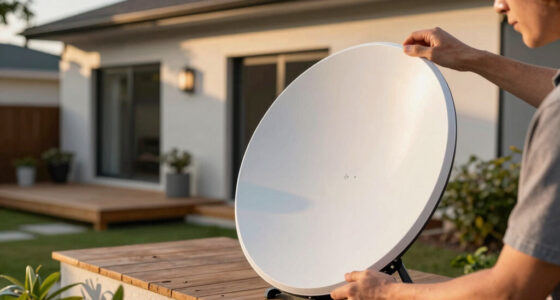
When selecting the best solar generators for emergency climate support, reliability and power capacity are key. The Westinghouse iGen400s stands out for its robust 400W output, making it suitable for powering critical devices during outages. The Jackery Explorer 300 offers portability and ease of use for quick setups, while the Jackery Solar Generator 1000 v2 provides larger capacity with solar compatibility for longer-term support. All options involve tradeoffs between size, power, and cost, so understanding your specific needs is essential. Keep reading for a detailed comparison to find the best fit for your emergency preparedness plan.

Get home appliances delivered free with Prime
- Fast, free delivery on millions of items
- Prime Video, Amazon Music and more included
- Member-only deals all year
Complete the kit


Key Takeaways
- The top picks balance power capacity with portability, ensuring reliable support without excess bulk.
- Solar panel compatibility and recharge speed are critical for long-term emergency scenarios.
- Higher capacity units tend to be larger and more expensive but provide more sustained power.
- Budget-friendly options often sacrifice some capacity or convenience but still deliver essential backup power.
- Ease of use and setup are important factors for quick deployment during emergencies.
| Westinghouse iGen400s 400W Portable Power Station, 183Wh |  | Best Compact Power for Indoor and Outdoor Use | Battery capacity: 183Wh | Running output: 200W | Peak output: 400W | VIEW LATEST PRICE | See Our Full Breakdown |
| Jackery Explorer 300 Portable Power Station, 292Wh |  | Best Value for Portable Power with Long Cycle Life | Capacity: 292Wh | Peak Surge: 600W | Weight: 7.5 lbs | VIEW LATEST PRICE | See Our Full Breakdown |
| Jackery Solar Generator 1000 v2 with 200W Solar Panel |  | Best for High Capacity and Fast Charging | Battery capacity: 1,070Wh | AC output: 1,500W | Surge peak: 3,000W | VIEW LATEST PRICE | See Our Full Breakdown |
| DaranEner 300W Portable Power Station with 30W Solar Panel |  | Best Lightweight Choice for Camping and Short-Term Emergency Use | Battery capacity: 192Wh | Continuous output: 300W | Surge: 600W | VIEW LATEST PRICE | See Our Full Breakdown |
| ZeroKor 300W Portable Power Station with 60W Solar Panel | 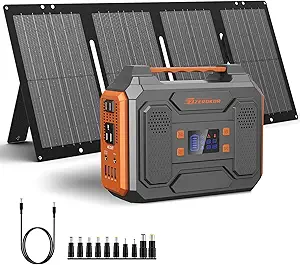 | Best Budget-Friendly Solar Power for Small Devices | Maximum output: 300W | Solar panel output: 60W | Battery type: LiFePO4 | VIEW LATEST PRICE | See Our Full Breakdown |
| Jackery HomePower 3600 Plus Portable Power Station with Two 200W Solar Panels |  | Best Overall for Large-Scale Emergency Power Backup | Battery capacity: 3,584Wh | AC output: 3,600W | Expandable capacity: Up to 21kWh | VIEW LATEST PRICE | See Our Full Breakdown |
| Jackery Explorer 300 Portable Power Station with 40W Solar Panel |  | Best for Portability and Lightweight Emergency Use | Battery capacity: 292Wh | Peak output: 600W | Battery chemistry: LiFePO4 | VIEW LATEST PRICE | See Our Full Breakdown |
| HOWEASY H120 Portable Power Station with 30W Solar Panel |  | Best for Ultra-Lightweight Emergency Power on the Go | Capacity: 88Wh | Maximum output: 120W | Ports: 2 AC, 1 USB-C, 2 USB-A, 1 DC | VIEW LATEST PRICE | See Our Full Breakdown |
| EnginStar 300W Portable Power Station with 60W Foldable Solar Panel |  | Best for Versatile, Moderate Power in Emergency Settings | Battery capacity: 296Wh | AC output: 300W | Solar panel: 60W | VIEW LATEST PRICE | See Our Full Breakdown |
| MARBERO M823 237Wh Portable Power Station with 60W Solar Panel |  | Best for Budget-Conscious Emergency Power with Multiple Outputs | Battery capacity: 237Wh | Peak output: 375W | Solar panel: 60W | VIEW LATEST PRICE | See Our Full Breakdown |
| MARBERO 155Wh Portable Power Station with 30W Solar Panel |  | Best Compact and Lightweight Emergency Power Solution | Battery capacity: 155Wh | Battery type: Lithium-ion | Solar panel output: 30W | VIEW LATEST PRICE | See Our Full Breakdown |
| solar generators for emergency climate support | Battery capacity | Weight |
|---|---|---|
| Westinghouse iGen400s 400W Por | 183Wh | 5 lb |
| Jackery Explorer 300 Portable | — | 7.5 lbs |
| Jackery Solar Generator 1000 v | 1,070Wh | 23.8 lbs |
| DaranEner 300W Portable Power | 192Wh | 5.84 lbs |
| ZeroKor 300W Portable Power St | Not specified | — |
| Jackery HomePower 3600 Plus Po | 3,584Wh | 77.2 pounds |
| Jackery Explorer 300 Portable | 292Wh | 12.9 lbs |
| HOWEASY H120 Portable Power St | — | 2.3 lbs |
| EnginStar 300W Portable Power | 296Wh | 6.5 lbs |
| MARBERO M823 237Wh Portable Po | 237Wh | 2.76 lbs |
| MARBERO 155Wh Portable Power S | 155Wh | — |
More Details on Our Top Picks
Westinghouse iGen400s 400W Portable Power Station, 183Wh
This lightweight, 5-pound power station excels in portability and quiet operation, making it ideal for emergency support where space and noise matter. Compared with larger units like the Jackery Explorer 300, it offers less capacity but is significantly easier to carry and store. Its multiple outlet types and built-in flashlight enhance versatility, yet the absence of an included solar panel or AC adapter limits immediate off-grid use. The small battery capacity (183Wh) means it’s best suited for charging essential devices rather than powering larger appliances during extended outages.
Pros:- Quiet, fume-free operation for indoor and outdoor environments
- Multiple outlet types including USB-C and USB-A for versatile device charging
- Built-in display and tri-mode flashlight enhance usability
Cons:- AC power adapter is not included, requiring additional purchase
- Solar panel is sold separately, limiting immediate off-grid capability
Best for: Individuals needing a portable, quiet backup for small devices during short-term emergencies or camping trips
Not ideal for: Users requiring high-capacity power or running appliances for extended periods, due to its limited 183Wh capacity
- Battery capacity:183Wh
- Running output:200W
- Peak output:400W
- Outlets:2 AC, 4 USB-C, 2 USB-A, 1 12V DC
- Voltage:120V
- Weight:5 lb
Our verdict“This pick is best for those who prioritize portability and quiet operation over high capacity or all-in-one functionality.”
Jackery Explorer 300 Portable Power Station, 292Wh
The Jackery Explorer 300 strikes a balance between capacity and portability, weighing about 7.5 pounds and supporting over 4,000 charge cycles thanks to its LiFePO4 chemistry. While it trails the Jackery Explorer 1000 in raw power, it offers sufficient capacity for small appliances and multiple device charging during emergencies. Its multiple ports, including a USB-C PD output, make it versatile, but the absence of a included solar panel means you’ll need to purchase one separately. The conflicting weight and capacity figures can be confusing, but overall, this model provides reliable, long-term portable power for those on a budget.
Pros:- LiFePO4 battery rated for over 4,000 charge cycles ensures longevity
- Portable design with an integrated handle for easy carrying
- Supports solar charging, expanding off-grid potential
Cons:- Solar panel is not included, adding extra cost
- Conflicting weight and capacity info may cause confusion
Best for: Preppers or campers seeking a durable, long-lasting portable station for short-term emergencies and daily use
Not ideal for: Those needing to power larger appliances or run devices for extended periods, due to its limited capacity compared to bigger units
- Capacity:292Wh
- Peak Surge:600W
- Weight:7.5 lbs
- Ports:2 AC, 1 USB-C PD, 2 USB-A, 1 car port
- Battery chemistry:LiFePO4
- Charge cycles:Over 4,000
Our verdict“Ideal for users seeking a long-lasting, portable power solution for small devices and short-term emergencies.”
Jackery Solar Generator 1000 v2 with 200W Solar Panel
The Jackery Solar Generator 1000 v2 offers a substantial 1,070Wh capacity and 1,500W AC output, making it suitable for powering larger appliances during emergencies. Its inclusion of a 200W solar panel and app controls set it apart from smaller models like the Explorer 300. However, the one-hour fast charge is only accessible when activating emergency mode via the app, which may delay quick recharging in some situations. Despite the higher weight at nearly 24 pounds, its high capacity and fast recharge options make it well-suited for longer outages or camping where power needs are substantial.
Pros:- High 1,070Wh capacity supports prolonged use
- Includes a 200W solar panel for off-grid charging
- Multiple AC and USB ports with app control for convenience
Cons:- One-hour fast charging requires emergency mode activation, which may complicate quick recharges
- Compared to smaller units, its weight and size are less portable
Best for: Preparedness-minded users who need a high-capacity, versatile system capable of powering multiple devices or appliances during extended outages
Not ideal for: Individuals seeking a lightweight, ultra-portable solution for short-term or minimal device needs
- Battery capacity:1,070Wh
- AC output:1,500W
- Surge peak:3,000W
- Weight:23.8 lbs
- Solar panel:200W
- Battery lifespan:Over 70% after 4,000 cycles
Our verdict“Best for those requiring a large, versatile power station capable of handling multiple devices over longer periods, despite added weight and complexity.”
DaranEner 300W Portable Power Station with 30W Solar Panel
The DaranEner 300W station combines a modest 192Wh LiFePO4 battery with a compact 30W solar panel, making it highly portable for quick trips or emergency backup where minimal power is needed. Its multiple USB, DC, and AC outlets support charging several small devices, and its lightweight design at under 6 pounds enhances mobility. The 300W continuous output limits its ability to run larger appliances, but for charging phones, lights, and small gadgets, it performs reliably. The limited solar input and relatively small battery capacity mean it’s best suited for short-term or low-demand scenarios rather than extended outages.
Pros:- Very lightweight and compact for easy transport
- Supports multiple recharging methods including solar, car, and AC
- Includes a flashlight with SOS and reading modes
Cons:- Limited to devices drawing 300W or less, restricting larger appliances
- Solar panel is not waterproof, limiting outdoor durability
Best for: Hikers, campers, or preppers needing a lightweight, reliable power source for small devices and quick recharges
Not ideal for: Power users needing to run high-wattage appliances or sustain longer outages, due to its limited capacity and output
- Battery capacity:192Wh
- Continuous output:300W
- Surge:600W
- Weight:5.84 lbs
- Recharge methods:AC, car, solar
- LED flashlight:Yes
Our verdict“Ideal for light, portable power needs where weight and size are primary concerns, but not suitable for heavy or prolonged power demands.”
ZeroKor 300W Portable Power Station with 60W Solar Panel
The ZeroKor 300W station includes a 60W monocrystalline solar panel and offers a maximum 300W output, making it suitable for small device charging and light camping needs. Its multiple ports—including USB, AC, and DC—along with a battery management system with extensive protections, add to its appeal for emergency situations. Compared to the DaranEner, this model’s larger battery capacity (though the exact figure isn’t specified) and integrated solar panel streamline setup. However, its limited 60W solar input and the lack of waterproof features on the panel restrict outdoor resilience, and its capacity caps use to small devices only.
Pros:- Includes a 60W solar panel for off-grid recharging
- Multiple charging options including USB, AC, and DC
- Battery protections against common electrical issues
Cons:- Limited to devices drawing 300W or less, restricting larger appliances
- Solar panel is not waterproof, limiting outdoor durability
Best for: Budget-conscious users seeking a compact, solar-capable backup for small electronics and occasional outdoor use
Not ideal for: Users needing to power larger appliances or expecting prolonged outages, due to limited capacity and solar input
- Maximum output:300W
- Solar panel output:60W
- Battery type:LiFePO4
- Safety features:Short-circuit, over-current, over-voltage, overload, overheating
- Included accessories:AC adapter, solar panel, car charging cable
- Battery capacity:Not specified
Our verdict“A good entry-level solar generator for small device charging, with portability and budget in mind, but not for high-demand or rugged outdoor applications.”
Jackery HomePower 3600 Plus Portable Power Station with Two 200W Solar Panels
This model stands out for its impressive 3,584Wh capacity and 3,600W continuous output, making it well-suited for running essential home appliances during extended power outages. Compared with the smaller Jackery Explorer 300, the HomePower 3600 Plus offers significantly more energy, but it comes with increased weight and bulk, weighing over 77 pounds. Its support for multiple charging methods—including hybrid AC+DC, gas generator, and solar—adds flexibility that is crucial in emergency scenarios. While the two included 200W solar panels help harness renewable energy, they may arrive separately, potentially delaying setup. The expandable capacity up to 21kWh makes this an excellent choice for households needing substantial backup power, though portability is limited by its size. This pick makes the most sense for large families or small businesses seeking reliable, scalable emergency power.
Pros:- High capacity of 3,584Wh supports multiple devices for extended periods
- Supports hybrid charging and expansion up to 21kWh for scalability
- Wheeled design with telescopic handle improves mobility despite weight
Cons:- Heavy at over 77 pounds, limiting portability
- Power station and solar panels may arrive separately, delaying full setup
Best for: Homeowners, small businesses, or community centers needing extended backup power with renewable options
Not ideal for: Individuals seeking a portable, lightweight solution for camping or short-term outdoor use
- Battery capacity:3,584Wh
- AC output:3,600W
- Expandable capacity:Up to 21kWh
- Solar panels included:2 × 200W
- Battery type:LFP
- Charging options:Hybrid AC+DC, AC, solar, gas generator
- Weight:77.2 pounds
Our verdict“Best suited for those needing a high-capacity, scalable emergency power system with ample renewable charging options.”
Jackery Explorer 300 Portable Power Station with 40W Solar Panel
This compact power station provides 292Wh of capacity with a 300W rated output, making it ideal for small-scale emergency needs and outdoor activities. Unlike the larger HomePower 3600 Plus, it is lightweight at just under 13 pounds, and its LiFePO4 battery chemistry ensures over 4,000 charge cycles for long-term reliability. The included 40W solar panel allows off-grid recharging, but it takes approximately 7.5 hours to reach 80% charge, which may be slow in urgent situations. Its multiple outlets—including USB-C, USB-A, and AC—support a variety of devices, but its limited capacity means it can’t power high-wattage appliances or run multiple devices for extended periods. This makes it best for minimal, quick-charging needs during emergencies or outdoor trips, especially when portability is a priority.
Pros:- Lightweight at under 13 pounds for easy portability
- Includes a 40W solar panel for off-grid charging
- LiFePO4 battery rated for over 4,000 charge cycles
Cons:- Limited capacity restricts use to small devices and short durations
- Charging time from solar can be lengthy in emergency scenarios
Best for: Campers, solo travelers, or small households needing a lightweight, portable backup
Not ideal for: Large families or those requiring long-term power support for multiple devices
- Battery capacity:292Wh
- Peak output:600W
- Battery chemistry:LiFePO4
- Solar panel:40W
- Weight:12.9 lbs
- Charge cycles:Over 4,000
Our verdict“Best suited for those needing a compact, portable power source for minimal emergency or outdoor use.”
HOWEASY H120 Portable Power Station with 30W Solar Panel
The HOWEASY H120 offers a modest 88Wh capacity with a maximum output of 120W, making it suitable for very light emergency needs or short outdoor outings. Its compact design—just over 2.3 pounds—stands out for portability, especially with the included foldable 30W solar panel. While the 8 output ports—including AC, USB-C, USB-A, and DC—support multiple device types, the limited 120W output restricts use to small gadgets, phone charging, or LED lights. Compared with the Jackery Explorer 300, it’s even smaller and lighter but provides less power, meaning it can’t run higher-wattage appliances or sustain devices over long periods. This pick is best for ultralight backpackers or emergency kits where minimal weight and size matter most.
Pros:- Extremely lightweight at just over 2.3 pounds
- Includes a foldable 30W solar panel for off-grid recharging
- Multiple ports support diverse small devices
Cons:- Limited to 120W maximum output, restricting device size
- Small capacity limits extended use or powering larger appliances
Best for: Backpackers, ultralight campers, or emergency kits requiring ultra-portability
Not ideal for: Users needing to power larger devices or run appliances for extended periods
- Capacity:88Wh
- Maximum output:120W
- Ports:2 AC, 1 USB-C, 2 USB-A, 1 DC
- Solar panel output:30W
- Weight:2.3 lbs
- Cycle life:More than 1,500 cycles
Our verdict“Best for ultralight, short-term emergency power needs where size and weight are critical.”
EnginStar 300W Portable Power Station with 60W Foldable Solar Panel
The EnginStar 300W offers 296Wh capacity and a 300W continuous AC output, making it suitable for small appliances and multiple device charging. Its foldable 60W solar panel enables recharging in sunny conditions, which is faster and more flexible than smaller panels like the Howeasy H120. The device includes 8 output ports, covering USB-C, USB-A, and DC options, plus two pure sine wave AC outlets, which is ideal for sensitive electronics. Compared to the Jackery Explorer 300, it provides a similar capacity but with slightly higher output potential and faster charging via its 65W max input. The main tradeoff is its moderate size and weight—around 6.5 pounds—still quite portable but less so than ultra-light options. It fits best for users wanting a balance of portability and moderate power during outages or outdoor adventures.
Pros:- Includes a foldable 60W solar panel for faster recharging
- Supports multiple device types with 8 output ports
- Pure sine wave AC outlets ensure safe operation of sensitive electronics
Cons:- Limited to 300W output, restricting use with high-power devices
- Solar panel inclusion varies in descriptions, causing potential confusion
Best for: Preppers, outdoor enthusiasts, or emergency users needing versatile device support
Not ideal for: Those requiring high-capacity backup or running high-wattage appliances
- Battery capacity:296Wh
- AC output:300W
- Solar panel:60W
- Charge speed:About 3 hours
- Ports:2 AC, USB-C, USB-A, DC
- Weight:6.5 lbs
Our verdict“Best for moderate, versatile emergency power with flexible solar recharging options.”
MARBERO M823 237Wh Portable Power Station with 60W Solar Panel
The MARBERO M823 offers 237Wh of capacity and a 300W peak output, making it suitable for charging small devices during short-term emergencies or camping. Its foldable 60W solar panel supports off-grid recharging, although its 21.5–23.5% conversion efficiency means longer solar input times compared to higher-efficiency panels. With 2 pure sine wave AC outlets, multiple USB-A, USB-C, and DC ports, it supports a wide variety of gadgets. Compared to the EnginStar, it offers slightly less capacity but remains capable of powering essentials in a pinch. The device weighs around 2.7 pounds, emphasizing portability, but it’s limited to low-wattage appliances due to its 300W maximum output. It’s ideal for users prioritizing affordability and portability in basic emergency scenarios.
Pros:- Affordable price point with multiple output options
- Includes a foldable solar panel for off-grid charging
- Pure sine wave AC outlets protect sensitive electronics
Cons:- Limited to 300W maximum, restricting larger device use
- Solar charging can be slow and weather-dependent
Best for: Budget-conscious campers, occasional emergency users, or minimalist prepper kits
Not ideal for: Users needing to run higher-wattage appliances or extended power support
- Battery capacity:237Wh
- Peak output:375W
- Solar panel:60W
- Charge cycles:Over 1,000
- Ports:2 AC, USB-A, USB-C, DC
- Weight:2.76 lbs
Our verdict“Best for budget-minded users seeking basic, portable emergency power with solar recharging capability.”
MARBERO 155Wh Portable Power Station with 30W Solar Panel
This MARBERO 155Wh Portable Power Station stands out for its impressive portability, making it ideal for quick, on-the-go emergency support. Compared with larger units like the Jackery Explorer 300, it offers a lower capacity but excels in weight and size, weighing just 2.8 pounds total. Its foldable 30W solar panel is simple to carry and deploy, making it well-suited for camping or short-term power needs. However, the limited AC output of 100W means it can’t run larger devices, and the 7–8 hour recharge time from an AC outlet might be slow during prolonged outages. This pick is perfect for individuals who prioritize portability and moderate power, but it’s less suitable for powering high-demand appliances. The multiple USB and DC ports provide versatile charging options, and its protection features add peace of mind during emergency use.
Pros:- Very lightweight and compact, easy to carry in a backpack or car
- Includes foldable 30W solar panel for on-the-go recharging
- Multiple USB, DC, and AC outputs for versatile device charging
- Supports recharging via AC, solar, or car outlet
Cons:- Limited AC power output (100W continuous), unsuitable for larger devices
- Relatively slow AC recharge time of 7–8 hours
- Battery capacity is modest at 155Wh, limiting runtime for longer outages
Best for: Hikers, campers, or emergency prepper who need a lightweight, portable backup for small devices and quick recharges
Not ideal for: Home users seeking to power larger appliances or run essential electronics for extended periods
- Battery capacity:155Wh
- Battery type:Lithium-ion
- Solar panel output:30W
- AC output:110V, 100W (150W peak)
- USB ports:4; supports QC 18W fast charging
- Power station weight:2.8 lbs
- Recharge time (AC):7–8 hours
- Dimensions:7.2 × 4.6 × 4.3 in
Our verdict“This model is ideal for those who need a highly portable, moderate-capacity solar generator for quick emergency power on the move.”

How We Picked
Products were evaluated based on their power output, battery capacity, portability, solar compatibility, build quality, and ease of use. We prioritized units that reliably support essential devices like phones, radios, and small appliances during power outages, while also considering value for money. The ranking reflects a balance between performance, versatility, and user-friendly features. We aimed to highlight options suited for different emergency scenarios, from quick portable backups to more substantial, solar-optimized systems.Factors to Consider When Choosing Best Solar Generators For Emergency Climate Support
Choosing the right solar generator for emergency climate support involves understanding several key factors. Not all units offer the same balance of power, portability, and solar recharge capabilities, so weighing these differences against your specific needs is vital. A thoughtful selection ensures you’re prepared without paying for unnecessary features or sacrificing critical power capacity. Here are the most important considerations to guide your purchase.Power Capacity and Output
Assess what devices you need to power during an emergency. Units with higher wattage output can support larger appliances or multiple devices simultaneously, but they tend to be bulkier and more expensive. For basic needs like charging phones or running small radios, a lower-capacity generator suffices. Matching your power requirements with the generator’s capacity prevents overpaying for unused power while ensuring your essentials stay operational.
Portability and Size
Consider how easy it is to transport and store the solar generator. Smaller, lighter units excel for quick deployment and for use in mobile scenarios like camping or evacuations. Larger systems with greater capacity often come with handles or wheels but can be cumbersome. Think about where and how you’ll use the generator to strike the right balance between capacity and portability.
Solar Panel Compatibility and Recharge Speed
Solar panels are crucial for recharging in extended outages, so check compatibility and wattage. Higher wattage panels can recharge your unit faster, reducing downtime. Some generators come with integrated panels or specific compatible panels, which simplifies setup. Be wary of units that have slow recharge times or require specialized panels, as this can limit usefulness when power is scarce.
Build Quality and Durability
Emergency scenarios demand resilient equipment. Look for units made with sturdy materials and protective features like shock resistance or weatherproofing. Budget models may cut corners on durability, risking damage during transport or adverse conditions. Investing in a well-built generator can save money and frustration over time, especially if you plan to store it for long periods.
Ease of Use and Setup
Simple controls, clear indicators, and straightforward setup are vital during stressful emergency situations. Some models offer one-touch operation or quick start features, which can be lifesavers. Complex systems with multiple inputs and settings may require more time and technical know-how, potentially delaying critical power during an outage. Prioritize user-friendly options that can be quickly activated.
Frequently Asked Questions
How long can a solar generator power my essential devices during an outage?
The runtime depends on the generator’s battery capacity and the power draw of your devices. For example, a generator with 300Wh capacity powering a 50W device can run approximately 6 hours. Larger units with higher capacities can extend this time significantly. Keep in mind that powering multiple devices simultaneously will reduce overall runtime, so prioritize your most critical electronics for emergency use.
Can I rely solely on solar panels to recharge my generator during a prolonged outage?
While solar panels provide a renewable recharge method, their effectiveness depends on sunlight conditions and panel wattage. Smaller panels may take days to fully recharge a large capacity generator, which might not be practical in extended outages. It’s wise to consider a generator with a combination of solar and AC/DC charging options for more flexible and faster recharging, especially when sunlight is limited.
What should I look for in a solar generator if I want to power small appliances like a fridge or microwave?
Powering small appliances requires a generator with a high continuous wattage rating and surge capacity. Look for units that specify peak or surge wattage, which is necessary for appliances with motors. Ensure the generator’s inverter can handle the startup power of devices like refrigerators or microwaves. Larger, high-capacity models are usually better suited for these needs, but always verify the specifications first.
Are portable solar generators suitable for long-term emergency support?
Yes, portable solar generators can support long-term scenarios if they have sufficient capacity and are recharged regularly via solar panels. However, their effectiveness hinges on panel size, sunlight availability, and recharge speed. For extended outages, systems with larger batteries, higher wattage solar inputs, and multiple recharging options are preferable. Proper maintenance and storage also extend their lifespan.
How do I maintain my solar generator to ensure it’s ready when needed?
Regular maintenance includes keeping the battery charged (if not in use), inspecting solar panels for dirt or damage, and storing the unit in a dry, cool place. Following the manufacturer’s guidelines for charging and storage prolongs battery life. Periodic testing helps confirm it’s operational, and avoiding over-discharge or deep cycling preserves overall health. Proper care ensures your generator remains a reliable backup during emergencies.
Conclusion
For those seeking a reliable emergency power backup, the Westinghouse iGen400s represents the best overall choice thanks to its balance of capacity, portability, and build quality. Budget-conscious buyers might prefer the MARBERO 155Wh for basic needs, while individuals planning for longer outages or supporting larger appliances may find the Jackery Solar Generator 1000 v2 the most suitable. Beginners will appreciate the simplicity of smaller units like the Jackery Explorer 300, whereas advanced users aiming for versatility should consider systems with larger solar inputs and higher capacities. Your choice depends on your specific power needs, mobility requirements, and budget constraints.
As an affiliate, we earn on qualifying purchases.Black Friday Picks

Sonos Era 100 SL Wireless Speakers, Black, Pack of 2