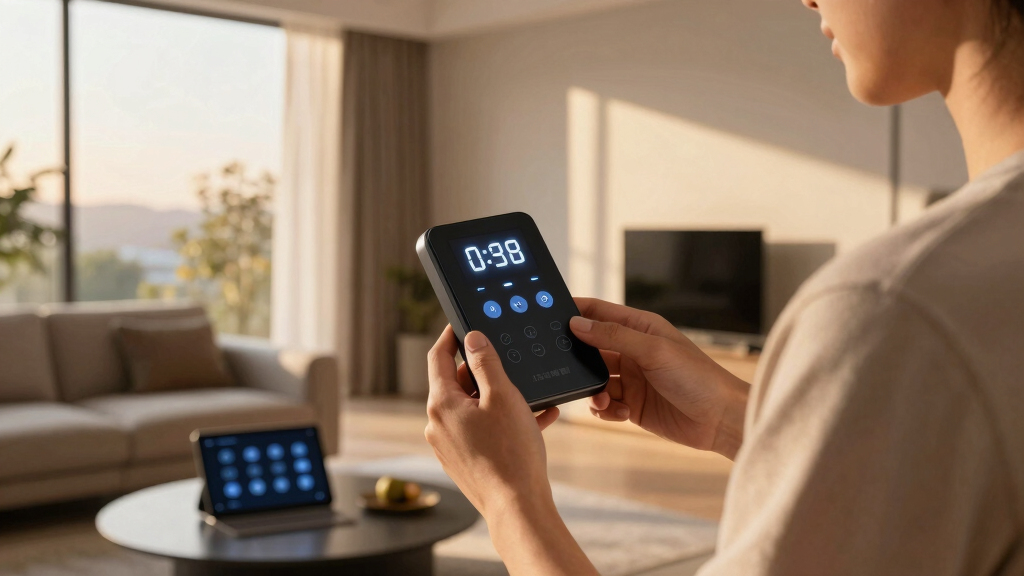
For homeowners seeking the highest quality electricity monitoring, premium models offer advanced features like detailed circuit-level data, seamless smart home integration, and robust data security. The Emporia Vue 3 stands out as the best overall due to its comprehensive data and automation support, while the Refoss Smart Home Energy Monitor offers open API access for custom setups. The main tradeoffs in this category include higher costs and complexity versus feature richness and accuracy. Continue reading for a detailed comparison that helps you find the perfect fit for your smart home needs.

Get home appliances delivered free with Prime
- Fast, free delivery on millions of items
- Prime Video, Amazon Music and more included
- Member-only deals all year
Key Takeaways
- Top picks combine detailed circuit monitoring with strong smart home integration, making them ideal for tech-savvy users.
- Open API and local data storage are common features among the most premium options, enabling custom automation and security.
- Higher price points generally correlate with more comprehensive features like multi-phase monitoring and advanced reporting.
- Ease of installation varies; models with plug-and-play designs are better for less technical users, but may lack some advanced features.
- Compatibility with popular smart home platforms like Home Assistant, Tuya, and MQTT is a key differentiator among premium options.


More Details on Our Top Picks
Emporia Vue 3 Home Energy Monitor – Smart Home Automation Module and Real Time Electricity Usage Monitor, Power Consumption Meter, Solar and Net Metering for UL Certified Safe Energy Monitoring
The Emporia Vue 3 stands out for its UL certification, offering peace of mind that safety standards are met, unlike some alternatives like the Refoss Energy Monitor which lacks UL listing. Its installation in the circuit panel supports most single-phase and multi-wire systems, with optional accessories for 3-phase setups, making it versatile for different homes. Compared to the SIEMENS Inhab, Vue 3 provides detailed real-time data and automation features that can help reduce energy costs through customizable settings. However, the setup requires working inside the breaker panel, which might be intimidating for some users, and the sensor clutter can be visually overwhelming. This device is ideal for homeowners seeking a reliable, safety-certified, all-in-one energy management solution, willing to handle panel installation or work with an electrician.
Pros:- UL certified for home safety and reliability
- Supports a wide range of electrical systems, including complex setups
- Includes sixteen branch sensors for detailed load monitoring
- Automates energy management with customizable settings
Cons:- Requires professional installation inside the breaker panel
- Sensor wiring can appear cluttered and may need trimming
- Higher price point compared to less certified monitors
Best for: Homeowners who prioritize safety, reliable data, and advanced automation in a comprehensive energy monitoring system
Not ideal for: Renters or those uncomfortable with electrical panel work or installing multiple sensors in a panel
- Certification:UL Listed
- Supported Systems:Single-phase, Split-phase, 3-phase Wye
- Sensors:16 branch sensors, additional sensors sold separately
- Connection:Circuit panel installation
- Monitoring:Real-time, 24/7 energy data
- App Compatibility:iPhone, Android, Web
Bottom line: This pick is best suited for homeowners seeking a safe, comprehensive, and automated energy management system willing to invest in professional setup.
Meross Smart Energy Consumption Monitor with 18 Circuit Monitoring, Electricity Usage Monitor, Real-Time Power Usage Monitor, Home Assistant Support, Smart Alerts, No Subscriptions, 2-Year Warranty
Compared to the Emporia Vue 3, the Meross offers circuit-level monitoring for 18 circuits with a straightforward clamp-on installation, making it accessible for DIY enthusiasts. Its support for Home Assistant and local data storage provides a privacy advantage over cloud-dependent options, similar to the Refoss. While it doesn’t have UL certification like the Vue 3, it is ETL-certified and supports detailed usage tracking with a 2-year warranty. Its app allows real-time alerts and historical data review, but the setup may be less flexible in supporting complex multi-wire systems without additional accessories. This monitor suits tech-savvy users wanting detailed circuit data with a focus on privacy and affordability, especially in solar or backup power scenarios.
Pros:- Supports 18 circuits with clamp-on sensors
- Supports Home Assistant integration and open API
- Local data storage for privacy and security
- No subscription fees, with a 2-year warranty
Cons:- Installation can be cluttered with wires in the panel
- Limited to 18 circuits, less scalable for large homes
- Less certification oversight compared to UL-listed products
Best for: Tech-savvy homeowners with solar systems or backup power who want local data control and circuit-level insights
Not ideal for: Homeowners seeking UL certification or professional installation support without DIY setup
- Number of Circuits:18
- Supported Systems:Single-phase, 2-wire, 3-wire, 4-wire Wye
- Certifications:ETL
- Connectivity:Wi-Fi, Home Assistant, Open API
- Warranty:2 years
- Monitoring:Real-time, historical, alerts
Bottom line: Ideal for DIY enthusiasts who want detailed circuit insights with privacy and automation support, accepting some installation messiness.
Refoss Smart Home Energy Monitor Real-Time Electricity Usage Monitor with 16x60A Circuit Sensor, Energy Meter, Local Data Storage with Open API & Web UI, Home Assistant, Solar Metering, ETL Certified
The Refoss Energy Monitor excels in privacy-conscious households by offering local data storage via Web UI, Open API, and MQTT, unlike the Emporia Vue 3 which relies on cloud reporting. Its 16 sensors support detailed monitoring of circuits, with professional installation recommended due to working inside the electrical panel, similar to the Vue but with a focus on local control. Its 5-year data storage and no subscription model make it appealing for users who want long-term analytics without cloud dependency. However, setup can be complex and requires technical knowledge, and it lacks UL certification, which may concern safety-focused buyers. It makes the most sense for security-minded users wanting detailed, private energy data and solar integration in a DIY setup.
Pros:- Supports local web UI, API, MQTT, no cloud needed
- Supports 16 circuits with 60A sensors
- 5-year data storage with CSV export
- Supports solar surplus management
Cons:- Installation requires working inside the breaker panel
- Complex setup for non-technical users
- No UL certification, safety concerns for some
Best for: Privacy-focused users wanting detailed local control and long-term data without cloud reliance
Not ideal for: Less technical users or those requiring UL certification and simpler plug-and-play installation
- Circuits Supported:16
- Sensor Rating:60A
- Data Storage:5 years
- Connectivity:Web UI, API, MQTT
- Monitoring:Real-time, long-term
- Certifications:ETL
Bottom line: Best suited for users prioritizing privacy, long-term data, and DIY installation over ease of use or UL certification.
Smart Home Energy Monitor 2×120A, Dual-Channel Real-Time Electricity Usage Monitoring for Household Power, WiFi Energy Meter with App Control, Compatible with Tuya/Smart Life
Compared to the Emporia Vue 3 and Refoss, the Smart Home Energy Monitor offers a simplified external clamp installation with dual independent channels, suitable for monitoring high-power appliances like EV chargers or HVAC systems. Its compatibility with Tuya and Smart Life apps makes setup straightforward and user-friendly, especially for those who prefer app-based control over panel work. While it doesn’t provide the same level of circuit granularity as the Vue 3, its bi-directional power tracking supports solar and grid flow, similar to the SIEMENS Inhab. Its main limitation is that it supports only two circuits, which may not suffice for larger homes, but it’s ideal for users seeking quick, external circuit monitoring with app control and easy installation.
Pros:- External clamp-style installation, no panel work needed
- Supports bi-directional power flow for solar or backup systems
- Compatible with Tuya and Smart Life apps for easy setup
- Supports high-power loads up to 120A per channel
Cons:- Limited to two circuits, less scalable for large homes
- No UL certification, safety considerations for some users
- Does not support detailed circuit-level automation
Best for: Homeowners needing quick, external, dual-circuit monitoring with app control for high-power appliances
Not ideal for: Users wanting detailed multi-circuit monitoring or UL certification for safety
- Channels:2
- Maximum Current:120A per channel
- Connectivity:Wi-Fi, Tuya/Smart Life app
- Monitoring:Real-time, bi-directional
- Installation:Clamp-on, external
- Supported Loads:High-power appliances
Bottom line: This monitor is perfect for users wanting quick, dual high-power circuit monitoring with simple app setup, accepting limited circuit coverage.
SIEMENS Inhab Smart Home Energy Monitor with 16-50Amp Circuit Level Sensors and 2-200Amp Main Sensors for Real Time Electricity Monitoring and Metering
The SIEMENS Inhab offers robust, professional-grade monitoring with circuit sensors supporting 16-50A and main sensors up to 200A, making it suitable for larger or more complex electrical setups. Unlike the Emporia Vue, which provides extensive automation options, Inhab focuses on precise, real-time data with a straightforward installation in the panel, ideal for those with higher capacity or commercial needs. Its CE and UL certification assure safety standards, but setup is more technical, and it requires working inside the electrical panel. It’s best for users who need highly accurate, high-capacity monitoring with professional installation support, rather than DIY simplicity.
Pros:- Supports circuits up to 50A, main sensors up to 200A
- CE and UL certified for safety and reliability
- Real-time monitoring with detailed data
- Supports load management and energy optimization
Cons:- Requires professional installation inside the electrical panel
- Less user-friendly for DIY setup
- Less automation features compared to consumer-grade monitors
Best for: Professionals or advanced homeowners with large or complex electrical systems needing precise, certified monitoring
Not ideal for: DIY homeowners seeking simple plug-and-play solutions or those with smaller homes
- Circuit Rating:16-50A
- Main Sensor:2 x 200A
- Certifications:CE, UL
- Monitoring Type:Real-time, precise
- Installation:Panel-internal, professional
- Supported Loads:High capacity, complex systems
Bottom line: Ideal for users requiring high-capacity, certified, professional-grade monitoring in complex or larger electrical systems.
Refoss Smart Home Energy Monitor, Native Open API & Web UI (No Cloud Required), Real Time Electricity Usage Monitor, Power Consumption Meter Works with Home Assistant & MQTT, Solar Net Metering, ETL
The Refoss Smart Home Energy Monitor excels in providing full local control through its open API, Web UI, and MQTT support, making it ideal for users who prioritize privacy and seamless integration with platforms like Home Assistant. Unlike the Emporia Vue 3, which relies on cloud services for remote access, Refoss keeps your data on your local network, offering enhanced security. Setup was straightforward, with native support for Home Assistant without complex firmware flashing. Its circuit-level monitoring supports up to 16 branch sensors, suitable for detailed home energy analysis. The ability to automate surplus solar energy usage and receive instant circuit alerts makes it perfect for solar homes. However, its manual configuration may be daunting for non-technical users, and it requires a dedicated MQTT setup for automation, which could be a barrier for some. Overall, this pick makes the most sense for tech-savvy homeowners who want privacy and deep control without cloud dependency.
Pros:- Full local control via Web UI, Open API, and MQTT, ensuring data privacy
- Supports extensive circuit monitoring with up to 16 branch sensors
- Seamless native integration with Home Assistant for automation
Cons:- Requires some technical knowledge to set up MQTT and API integrations
- No cloud-based remote access, limiting convenience for non-technical users
Best for: Homeowners with technical skills who value privacy and custom automation, especially those using Home Assistant.
Not ideal for: Users seeking plug-and-play solutions with minimal setup or those uncomfortable with configuring local APIs and MQTT.
- Supports Circuits:16 branch sensors
- Communication Protocols:Open API, MQTT
- Monitoring Accuracy:±1%
- Voltage Support:Up to 240VAC
- Data Storage:Up to 5 years
- Certifications:ETL
Bottom line: Ideal for tech-savvy homeowners who prioritize privacy and want detailed, customizable energy monitoring.
The SEM-Meter stands out for its ability to monitor multiple circuits in rental homes or shared apartments, making billing and energy management transparent. Compared to the Emporia Vue 3, which is more suited for whole-home monitoring, SEM-Meter’s circuit-level sensors allow precise tracking of individual rooms or tenants, ideal for landlords. Its support for Home Assistant and MQTT enables automation and historical data analysis, with detailed app logs. Setup involves clamp-on installation and configuration of current transformers, which is straightforward for those familiar with electrical systems. Still, the device’s complexity can be overwhelming for casual users and demands some knowledge of automation platforms. A tradeoff is the limited number of main sensors, which may restrict monitoring in large or complex systems. This product makes the most sense for property managers seeking fair energy billing and detailed circuit insights.
Pros:- Supports multiple circuits with 16 sensors for detailed energy allocation
- Native support for Home Assistant and MQTT for automation and data access
- Supports solar net metering and historical data storage up to 5 years
Cons:- Installation requires electrical knowledge and proper clamp setup
- Limited to 2 main sensors, which may not cover large systems
Best for: Landlords, property managers, or shared housing residents needing circuit-specific energy tracking and billing.
Not ideal for: Homeowners seeking simple, whole-house monitoring without the need for circuit-level detail or automation setup.
- Number of Sensors:16 branch sensors, 2 main sensors
- Communication:WiFi, MQTT, Open API
- Power Support:Up to 200A per sensor
- Monitoring Accuracy:±1%
- App Support:Home Assistant compatible
- Certifications:ETL
Bottom line: Best suited for rental property owners or shared homes needing detailed circuit-level energy data for billing and efficiency.
Upgraded Watt Power Meter Plug Home Electrical Usage Monitor Consumption, Energy Voltage Amps Kill Tester with Backlight, Overload Protection, 7 Modes Display
The Upgraded Watt Power Meter is a versatile plug-in device that provides real-time parameter monitoring such as wattage, voltage, amps, and power factor across seven display modes, making it ideal for basic appliance tracking. Compared to more comprehensive systems like the Refoss or Emporia Vue, this model focuses on individual outlets, offering a straightforward way to identify energy hogs. Its large, backlit LCD with adjustable timeout ensures visibility day or night, and overload warning helps prevent appliance damage. The device’s main tradeoff is its limited scope: it only monitors individual outlets rather than whole-home circuits, and it doesn’t provide detailed historical data or automation support. This makes it best for users wanting quick insights into specific devices without complex setup. If you need detailed circuit-level data, this isn’t the right choice, but for simple appliance testing, it’s highly effective.
Pros:- Real-time parameter monitoring with 7 display modes
- Large, backlit LCD for easy reading in any lighting conditions
- Overload protection and adjustable overload threshold
Cons:- Limited to individual outlets, not whole-home monitoring
- No long-term data logging or automation features
Best for: Home users who want easy, individual appliance energy tracking without complex setup or automation.
Not ideal for: Smart home enthusiasts requiring circuit-level data, automation, or long-term analysis.
- Display Modes:7 modes
- Overload Warning:Yes
- Backlight:Yes, adjustable timeout
- Max Load:3680W
- Measurement Accuracy:Not specified but comprehensive
- Connectivity:Plug-in
Bottom line: Best for users seeking simple, immediate insights into specific appliance energy consumption without the need for complex integration.
Emporia Energy Monitoring Smart Plug, WiFi Smart Outlet Plug Works with Alexa and Google Home – 15a WiFi Outlet with Timer, Mobile App, Home Energy Monitor, Scheduling – 2.4ghz WiFi Only (4 Pack)
The Emporia Smart Plug offers a convenient way to control and schedule individual appliances remotely via WiFi, making it a good choice for those who want to automate lights, fans, or small electronics. Compared with the Refoss or Emporia Vue, which focus on circuit or whole-home monitoring, this plug emphasizes ease of use and integration with Alexa and Google Home. Its built-in scheduling and timer functions allow for basic automation without complex setup, perfect for beginners or casual users. The main tradeoff is its limited load capacity at 10A continuous (15A peak), which restricts its use to smaller appliances. It doesn’t provide energy usage data directly, so it’s not suitable for detailed energy management but excels in simple remote control and automation tasks. This pick makes the most sense for users wanting quick, smart control over specific devices.
Pros:- Works with Alexa and Google Home for voice control
- Built-in scheduling and timer features
- Easy to install and control via mobile app
Cons:- Limited to 10A load, not suitable for high-power appliances
- No direct energy consumption monitoring
Best for: Smart home beginners or users wanting remote control and scheduling for individual outlets.
Not ideal for: Users seeking circuit-level energy data or comprehensive home energy monitoring.
- Max Load:15A (1200W)
- Connectivity:WiFi 2.4GHz
- Compatibility:Alexa, Google Assistant
- Timers:Yes
- Control Method:Mobile App, Voice
- Number of Plugs:4-pack
Bottom line: Ideal for users who want simple, remote control and scheduling for individual devices without needing detailed energy data.
Emporia Vue 3 Home Energy Monitor – Smart Home Automation Module and Real Time Electricity Usage Monitor, Power Consumption Meter, Solar and Net Metering for UL Certified Safe Energy Monitoring
The Emporia Vue 3 stands out for its comprehensive safety certification, being UL Listed, which surpasses many competitors like the Refoss model that lacks such certification. Its installation inside the circuit panel supports multiple wiring systems, making it versatile for most homes, while its real-time data and automation capabilities enable proactive energy management. Compared to the Eyedro monitor, it offers deeper integration with home automation platforms, but this comes with a tradeoff: a more complex setup process. The Vue’s app provides instantaneous alerts and automation, which makes it ideal for tech-savvy users wanting detailed control. However, its higher price and the need for Wi-Fi connection may deter those with simpler setups or limited budgets.
Best for homeowners seeking safety and deep smart home integration, willing to handle a slightly more involved installation and configuration process.Pros:- UL Listed for safety, meeting rigorous electrical standards
- Supports complex wiring systems including 3-phase setups
- Enables advanced automation and real-time monitoring
Cons:- Higher price point compared to simpler monitors
- Requires stable Wi-Fi connection and app setup
Best for: Tech-savvy homeowners who want a reliable, UL-certified energy monitor with automation features.
Not ideal for: Renters or users with limited technical skills seeking a plug-and-play device without extensive setup.
- Certification:UL Listed
- Installation:Circuit panel, supports multiple wiring systems
- Monitoring:Real-time, ±2% accuracy
- Connectivity:2.4 GHz Wi-Fi
- Data Retention:Cloud, 7 days of 1-minute data
- App Support:iPhone, Android, web
Bottom line: Ideal for homeowners prioritizing safety, safety certification, and integration with smart home systems, despite a more complex setup.
Eyedro Home Energy Monitor – Real-Time Electricity Usage Monitor with Solar Net Metering-Whole House Power Consumption Monitor–WiFi/Ethernet Smart Energy Meter with Reports & History, 2 Sensors
The Eyedro Home Energy Monitor excels in providing accurate, real-time data on power consumption and production, making it perfect for solar users or those managing off-grid systems. Its two sensors allow for detailed monitoring of grid and solar energy, which surpasses the single-sensor setup of the Refoss model. Unlike the Emporia Vue 3, it doesn’t require complex setup but offers excellent local data storage and no subscription fees, giving it a clear advantage for budget-conscious DIYers. The Ethernet and Wi-Fi support ensure flexible installation options, but it may lack some automation integrations compared to the Vue, limiting its use for users wanting deep smart home control. Its straightforward interface makes it accessible for most, but advanced automation features are limited.
Best suited for solar homeowners and DIYers seeking precise, reliable data without subscription costs, who prefer a simple yet powerful setup.Pros:- Highly accurate real-time data for consumption and generation
- Supports both Wi-Fi and Ethernet connections
- No subscription fees, with local data storage
Cons:- Limited automation integration compared to Vue 3
- Requires two sensors for complete grid and solar monitoring
Best for: Solar homeowners, off-grid living enthusiasts, and DIYers who want accurate energy data without ongoing fees.
Not ideal for: Users looking for deep smart home automation or those who prefer plug-and-play devices with minimal setup.
- Sensors:2 x 200A sensors
- Connectivity:WiFi and Ethernet
- Data Storage:Local with MyEyedro cloud, no subscription
- Supported Systems:Grid, Solar, Net metering
- Monitoring:Real-time, accurate power data
- Standards:North American safety standards
Bottom line: Perfect for DIY and solar users needing precise, cost-effective energy monitoring without complex smart home features.
Smart Home Energy Monitor 2×120A, Dual-Channel Real-Time Electricity Usage Monitoring for Household Power, WiFi Energy Meter with App Control, Compatible with Tuya/Smart Life
The Smart Home Energy Monitor 2×120A offers a balanced mix of real-time data and user-friendly app control, making it suitable for those new to energy monitoring but wanting a premium feel. Its dual-channel design provides detailed power monitoring across two circuits, which is more straightforward than installing multiple sensors or complex panel devices like the Emporia Vue 3. Its compatibility with popular platforms like Tuya and Smart Life simplifies setup and integration, but it lacks the safety certifications and deep automation features of the Vue, which could be a concern for safety-conscious users. Additionally, while the app is intuitive, it offers fewer automation options compared to higher-end models, which may limit advanced control. This pick makes the most sense for beginners or users seeking a trustworthy, app-controlled monitor at a reasonable price.
Best for beginners or those wanting simple app control with reliable real-time data, without the complexity of advanced automation.Pros:- Dual-channel power monitoring for two circuits
- Compatible with Tuya and Smart Life platforms
- Easy to set up and operate via app
Cons:- Lacks UL safety certification
- Limited automation and integration compared to higher-end monitors
Best for: Entry-level premium users looking for reliable app control and circuit monitoring without complicated setup.
Not ideal for: Homeowners seeking advanced automation, safety certifications, or multi-phase support.
- Channels:2 circuits
- Connectivity:WiFi compatible with Tuya/Smart Life
- Monitoring:Real-time power use
- Support:Home automation platforms
- Dimensions:Compact, easy to install
- Safety:No UL certification
Bottom line: Best suited for beginners wanting a straightforward, app-controlled energy monitor with reliable real-time data.

How We Picked
The evaluation focused on performance, build quality, ease of installation, and smart home compatibility. We prioritized models that offer circuit-level monitoring, real-time data accuracy, and flexible data access options like local storage or open APIs. Additional considerations included user interface design, software stability, and customer support. Our ranking favors products that balance high functionality with user-friendly setup, ensuring both technical and casual users can benefit from their investments.Factors to Consider When Choosing Best Premium Electricity Monitors For Smart Homes
Choosing a premium electricity monitor requires considering several critical factors that impact usability, data accuracy, and integration. Beyond just features, understanding your home’s specific needs and technical comfort level will help narrow down options. The right monitor can significantly enhance your energy management, but choosing poorly may lead to frustration or underutilization. Here are key considerations to help you make an informed decision.Circuit Monitoring Capabilities
Premium monitors vary in the number of circuits they support and the level of detail they provide. If you want comprehensive insights into your entire home, look for models that support multiple circuits and phases. However, more circuits typically mean higher costs and more complex installation. Consider your home’s wiring and whether detailed sub-metering is worth the extra investment, especially if you plan to automate or optimize specific zones.
Smart Home Integration
Compatibility with platforms like Home Assistant, Tuya, or MQTT can greatly enhance the monitor’s utility, allowing seamless automation and remote control. Be cautious, though—some models tout broad compatibility but have limited integrations or require complex setup. Determine which smart home ecosystem you already use or plan to adopt, and verify that the monitor supports it fully to avoid costly workarounds or limited functionality.
Data Access and Security
Premium monitors often feature local data storage or open APIs, giving you control over your energy data without relying solely on cloud services. This approach enhances privacy and allows custom automation. However, it can increase setup complexity. Decide if you need open data access for advanced automation or if cloud-based solutions suffice, balancing convenience versus control and security.
Installation Complexity
While some models are designed for straightforward installation, others require professional wiring or technical expertise. Consider your comfort level with electrical work or whether you’ll need professional help. Plug-and-play models are easier for most homeowners but may sacrifice some features, whereas more advanced setups offer richer data at the cost of higher complexity and expense.
Price and Future Scalability
Premium energy monitors vary significantly in price, often reflecting their feature set. Think about your long-term goals—if you plan to expand your smart home or add more detailed monitoring later, investing in a scalable model makes sense. Conversely, if you only need basic insights, a less expensive option may suffice. Balance your current needs with potential future upgrades to avoid costly replacements down the line.
Frequently Asked Questions
Can I install a premium energy monitor myself, or do I need a professional?
While some premium monitors are designed for DIY installation, many require electrical knowledge and possibly professional wiring, especially if they involve circuit-level monitoring or multi-phase systems. Carefully review the installation instructions and your technical comfort level. For complex setups, hiring an electrician can ensure safety and proper function, preventing potential damage or inaccurate readings.
Will a premium monitor work with my existing smart home system?
Most premium monitors support popular platforms like Home Assistant, Tuya, or MQTT, but compatibility varies. Checking the product specifications and community support is essential. If seamless integration is a priority, choose a model explicitly compatible with your existing smart home devices to avoid frustrating setup issues or limited automation possibilities.
How accurate are these high-end energy monitors?
Premium models typically offer high accuracy, often within a few percentage points of your actual energy consumption. They use advanced sensors and calibration processes to ensure reliable data, which is critical for making informed decisions about energy use. However, installation quality and proper configuration are equally important; improper wiring or setup can reduce measurement accuracy.
Are open API options worth the extra cost?
Open API access provides significant flexibility, allowing custom automation, data analysis, and enhanced privacy by avoiding reliance on cloud services. If you enjoy tinkering or require detailed, real-time data for complex automation, the extra investment is justified. For casual users, cloud-based models with app control may be sufficient and simpler to manage.
What features should I prioritize if I want future-proofing?
Look for models that support multiple circuits and phases, offer open API or local data storage, and are compatible with a range of smart home platforms. Scalability is essential if you plan to expand your system later. Choosing a monitor with firmware update support ensures ongoing improvements and security patches, extending its useful life.
Conclusion
For those seeking the best overall experience, the Emporia Vue 3 offers comprehensive features and robust integration at a reasonable price. If you prioritize customization and data privacy, the Refoss Smart Home Energy Monitor with open API support is ideal. Beginners or homeowners with simpler setups may prefer plug-and-play options like the Emporia Energy Monitoring Smart Plug. For advanced users demanding detailed, multi-phase monitoring, the Emporia Vue 3 Commercial or the SIEMENS Inhab Smart Home Energy Monitor stand out. Tailor your choice based on your technical comfort, budget, and future plans to make the most of your smart home’s energy management system.