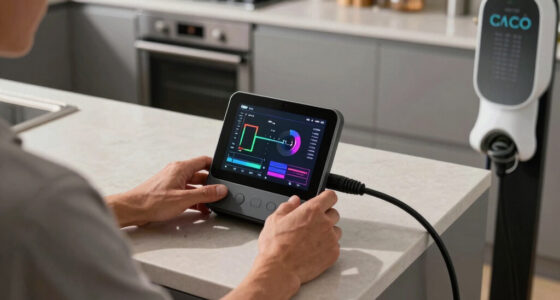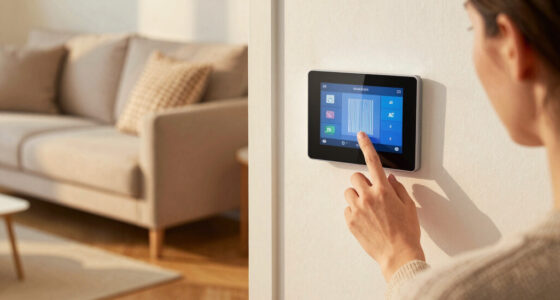
For anyone looking to centralize their smart home devices, choosing the right hub can make or break your setup. The Amazon Echo Hub stands out as the best overall choice, thanks to its seamless Alexa integration and broad device compatibility. Meanwhile, the Home Assistant Green offers advanced automation for tech-savvy users, and the Aqara M3 excels in Matter support and affordability. The main challenge is balancing ease of use, compatibility, and budget—some hubs are better for beginners, while others cater to more complex automations. Continue reading to see how each option stacks up and find the one that fits your needs best.
Complete the kit


Key Takeaways
- The top hubs combine broad compatibility with ease of use, but tradeoffs exist between simplicity and advanced features.
- Matter support is becoming a key factor, with newer hubs prioritizing this standard for future-proofing.
- Local control-focused hubs like Hubitat appeal to those seeking privacy and faster automations, but may require more setup effort.
- Built-in voice assistants vary, with some hubs integrating Alexa or Google Assistant directly, while others rely on external devices.
- Price ranges are wide; the most expensive models often add automation complexity, but budget options can lack advanced features.
| Amazon Echo Hub (latest model), 8-inch Smart Home Control Panel with Alexa+ and Compatibility with Thousands of Devices |  | Best Overall Smart Home Hub for Versatility and Integration | Display: 8-inch touch screen, 1280 x 800 resolution | Power Requirements: USB-C PD support, 5V/2.4A and 9V/3A ratings, supports PoE with converter | Audio: Stereo speakers, full-range, ported | VIEW LATEST PRICE | See Our Full Breakdown |
| Aqara Smart Home Hub M3 with Matter Controller and IR |  | Best for Local Protocol Support and Device Flexibility | Protocols Supported: Zigbee, Thread, Matter | Device Capacity: 127 Zigbee and 127 Thread devices | Connectivity: Wi-Fi 2.4/5 GHz, PoE, USB-C | VIEW LATEST PRICE | See Our Full Breakdown |
| Home Assistant Green – Official Smart Home Hub with Advanced Automation |  | Best for Tech-Savvy Automators and Power Users | RAM: 4 GB | Storage Capacity: 32 GB | Connectivity Technology: Ethernet, USB | VIEW LATEST PRICE | See Our Full Breakdown |
| Smart Multi-Mode Gateway: ZigBee 3.0 & Bluetooth & Mesh Hub, App Remote Control, Voice Control via Alexa/Google Home |  | Best for Versatile Protocol Support and Remote Management | Modes: ZigBee 3.0, Bluetooth Mesh | Connectivity: Wi-Fi 2.4GHz | Device Capacity: Up to 128 devices | VIEW LATEST PRICE | See Our Full Breakdown |
| Hubitat Elevation C-8 Pro Smart Home Hub, Local Control and Automations |  | Best for Local Processing and Automation without Subscription Fees | Product Dimensions: 2.95 x 3.23 x 0.67 inches | Item Weight: 2.56 ounces | Supported Protocols: Matter 1.5, Z-Wave 800 Series, Zigbee 3.0, Bluetooth | VIEW LATEST PRICE | See Our Full Breakdown |
| SwitchBot Hub 2 (2nd Gen) – WiFi Thermometer, Hygrometer, IR Remote, Smart Home Hub |  | Best for Environmental Monitoring and Simple Automation | Weight: 36 g | Color: White | Supports HomeKit via Matter: Yes | VIEW LATEST PRICE | See Our Full Breakdown |
| Aeotec Smart Home Hub – Works as a SmartThings Hub with Z-Wave, Zigbee, Matter, Wi-Fi, and Voice Assistant Compatibility |  | Best for Protocol Versatility and Larger Automation Systems | Weight: 1.1 pounds | Connectivity Technology: Ethernet, Wi-Fi, Z-Wave, ZigBee, Matter | Supported Protocols: Matter, Z-Wave, Zigbee | VIEW LATEST PRICE | See Our Full Breakdown |
| Tapo Smart Hub with Built-in Chime H200, 2.4GHz Wi-Fi Required |  | Best for Large Device Ecosystems and Local Storage | Device Capacity: 64 switches, sensors, or buttons + 4 cameras or doorbells | Wi-Fi Frequency: 2.4GHz | MicroSD Storage: Up to 512 GB | VIEW LATEST PRICE | See Our Full Breakdown |
| Aqara Smart Hub M200, Matter Controller with Zigbee, Wi-Fi, IR, PoE Support |  | Best for Protocol Integration and Local Automation | Protocols Supported: Zigbee, Thread, Wi-Fi, IR | Device Capacity: 40 Zigbee, 40 Thread | Connectivity: Wi-Fi 2.4/5 GHz, PoE, USB-C | VIEW LATEST PRICE | See Our Full Breakdown |
| Philips Hue Bridge Pro Smart Lighting Hub |  | Best for Advanced Lighting and Security Integration | Processor: Quad-core Cortex-A35 1.7 GHz | Memory: 4 GB DDR4 SDRAM | Supported Lights: 150+ | VIEW LATEST PRICE | See Our Full Breakdown |
| SONOFF Bridge Max Smart Home Hub (Bridge-M) |  | Best for Ecosystem Flexibility and Local Control | Compatible Devices: Smart Home Hub | Antenna Location: Home | Connectivity Technology: Wi-Fi, Ethernet, Zigbee | VIEW LATEST PRICE | See Our Full Breakdown |
| Aqara Hub M1S Gen 2 Smart Home Bridge for Alarm System and Home Automation |  | Best for Ecosystem Integration with Apple HomeKit | Power Source: Corded Electric | Compatible Devices: Various smart home ecosystems including Apple HomeKit, Google, Alexa | Connectivity Technology: Wireless | VIEW LATEST PRICE | See Our Full Breakdown |
More Details on Our Top Picks
Amazon Echo Hub (latest model), 8-inch Smart Home Control Panel with Alexa+ and Compatibility with Thousands of Devices
The Amazon Echo Hub stands out for its large 8-inch touch screen and extensive compatibility, supporting WiFi, Zigbee, Thread, and Matter. Unlike the Hubitat Elevation C-8 Pro, which primarily focuses on local control without a display, the Echo Hub combines a user-friendly interface with Alexa+ integration, making device management more intuitive. However, its reliance on accessories for wall mounting and absence of portable use are tradeoffs for its versatility. It’s ideal for homeowners who want a central, customizable control panel integrated with Amazon Alexa’s ecosystem. While it excels in device compatibility and ease of use, advanced automation enthusiasts may find it limited without additional subscriptions or accessories.
Pros:- Customizable dashboard for quick device access
- Supports a wide range of protocols including Zigbee, Thread, and Matter
- Easy to mount on wall or place on a stand
- Privacy controls with mic off button
Cons:- Requires separate accessories for wall mounting and cable management
- No support for handheld or portable use
- Some advanced features may need additional subscriptions
Best for: Homeowners seeking a flexible, all-in-one smart home control panel with voice assistant integration
Not ideal for: Technically inclined users wanting entirely local control without cloud dependency or those preferring portable hubs
- Display:8-inch touch screen, 1280 x 800 resolution
- Power Requirements:USB-C PD support, 5V/2.4A and 9V/3A ratings, supports PoE with converter
- Audio:Stereo speakers, full-range, ported
- Sensors:Passive infrared (PIR), ambient light sensor (ALS)
- Connectivity:Dual-band WiFi 802.11a/b/g/n/ac, Bluetooth A2DP and AVRCP
- Compatibility:WiFi, Bluetooth Low Energy Mesh, Zigbee, Thread, Matter, Sidewalk
Our verdict“This pick makes the most sense for users wanting a large, integrated control panel with broad device compatibility.”
Aqara Smart Home Hub M3 with Matter Controller and IR
The Aqara M3 excels in supporting Zigbee, Thread, and Matter protocols, making it a strong choice for those prioritizing local automation and device compatibility. Unlike the Home Assistant Green, which is more suited for tech-savvy users comfortable with DIY setups, the Aqara M3 offers a plug-and-play experience with a built-in IR blaster for controlling air conditioners. Its support for 127 Zigbee and Thread devices positions it well for comprehensive smart home ecosystems. However, its need to be placed within a specific range from the router and the absence of an included power adapter mean some setup considerations. It’s best for users who want a versatile, privacy-focused hub that handles multiple protocols without relying heavily on cloud services.
Pros:- Supports Zigbee, Thread, and Matter for broad device compatibility
- Local control and automation for privacy and reliability
- Includes a smart IR blaster for air conditioning control
- Flexible mounting options and wired/wireless connectivity
Cons:- Placement within 6-19 feet of router needed for optimal connection
- Power adapter not included, adding to initial setup cost
- Some cloud features depend on internet connectivity
Best for: Users seeking a flexible, protocol-rich hub with local control and IR capabilities
Not ideal for: Casual users or those who prefer cloud-based automation with minimal setup complexity
- Protocols Supported:Zigbee, Thread, Matter
- Device Capacity:127 Zigbee and 127 Thread devices
- Connectivity:Wi-Fi 2.4/5 GHz, PoE, USB-C
- Storage:8GB encrypted local storage
- IR Blaster:360° IR with feedback and learning
- Power:Wired (PoE), USB-C port
Our verdict“Ideal for users who want a multi-protocol hub with IR control and local automation, prioritizing privacy and flexibility.”
Home Assistant Green – Official Smart Home Hub with Advanced Automation
The Home Assistant Green provides a robust platform for those comfortable with DIY and advanced automation. Its fanless design and power-efficient hardware make it suitable for always-on operation, but its reliance on Ethernet and limited internal storage mean it’s less convenient for casual users. Compared to the Hubitat Elevation C-8 Pro, which offers local control without requiring user configuration, the Green demands some technical setup but rewards with extensive protocol support and customizability. Its 32GB storage and flexible USB options support a broad range of integrations, but power users should be aware of its limited internal storage and need for Ethernet connection for optimal performance. It’s perfect for those who want a dedicated, customizable home automation hub with local processing.
Pros:- Supports Z-Wave, Zigbee, and Thread USB devices
- Power-efficient and silent operation
- Pre-installed with Home Assistant OS for easy setup
- Supports multiple connectivity options including Ethernet and Bluetooth
Cons:- Limited internal storage for extensive device data
- Requires Ethernet connection for best performance
- No built-in Wi-Fi, relies on USB expandability
Best for: Experienced users seeking a customizable, local-control-centric hub with powerful automation capabilities
Not ideal for: Beginners or users preferring plug-and-play solutions without technical setup
- RAM:4 GB
- Storage Capacity:32 GB
- Connectivity Technology:Ethernet, USB
- Operating System:Home Assistant OS
- Wireless Compatibility:Bluetooth
- Device Support:Z-Wave, Zigbee, Thread USB devices
Our verdict“This hub suits users who want a flexible, locally-controlled automation system with extensive protocol support and are comfortable with setup complexity.”
Smart Multi-Mode Gateway: ZigBee 3.0 & Bluetooth & Mesh Hub, App Remote Control, Voice Control via Alexa/Google Home
This Multi-Mode Gateway offers a compact solution for connecting ZigBee, Bluetooth Mesh, and Wi-Fi devices, making it suitable for users with a broad range of smart gadgets. Its support for up to 128 devices and compatibility with Tuya Smart/SmartLife platforms make it appealing for those invested in Tuya-compatible ecosystems. Compared with the Aqara M3, which offers more protocol versatility and local control, this hub is more limited to Tuya/SmartLife devices, but it excels in remote app and voice control across multiple protocols. Its small size makes it easy to place anywhere, but the lack of detailed security features and reliance on app setup are points to consider. It’s designed for users who want a straightforward, remote-managed gateway for numerous smart devices.
Pros:- Supports ZigBee 3.0, Bluetooth Mesh, and Wi-Fi
- Remote control via app and voice commands
- Supports up to 128 devices for comprehensive automation
- Compact size fits easily in any space
Cons:- Limited to Tuya/SmartLife device compatibility
- Requires app setup for full functionality
- Security features not clearly documented
Best for: Homeowners who need a compact, multi-protocol hub compatible with Tuya/SmartLife devices and remote control
Not ideal for: Users seeking an open ecosystem or with devices outside Tuya/SmartLife platform
- Modes:ZigBee 3.0, Bluetooth Mesh
- Connectivity:Wi-Fi 2.4GHz
- Device Capacity:Up to 128 devices
- Supported Devices:ZigBee sensors, BLE devices, smart plugs
- Dimensions:1.93 x 1.93 x 0.51 inches
- Weight:1.76 ounces
Our verdict“Best suited for users with Tuya-compatible devices seeking remote management and multi-protocol connectivity in a small form factor.”
Hubitat Elevation C-8 Pro Smart Home Hub, Local Control and Automations
The Hubitat Elevation C-8 Pro prioritizes local control, providing faster response times and enhanced privacy for home automation. Its support for Matter, Z-Wave, Zigbee, and Bluetooth makes it highly compatible with a wide range of devices, surpassing some cloud-dependent hubs like the Aqara M3 in terms of autonomy. Unlike the Home Assistant Green, which requires more technical setup, the Hubitat is designed for users comfortable with configuring automations but offers a more straightforward interface. Its active community and continuous updates make it ideal for those who want a reliable, subscription-free platform. The main tradeoff is that setup can be complex for beginners, and some device compatibility may require troubleshooting.
Pros:- Fast local processing for near-instant automations
- Supports Matter, Z-Wave, Zigbee, and Bluetooth
- No subscription fees with ongoing free updates
- Active user community for support and custom automations
Cons:- Setup and configuration may require technical knowledge
- Compatibility with certain devices can vary
- Initial learning curve for automations
Best for: Tech-savvy users who want fast, local automations with broad protocol support and no ongoing fees
Not ideal for: Beginners or those preferring plug-and-play solutions without much setup
- Product Dimensions:2.95 x 3.23 x 0.67 inches
- Item Weight:2.56 ounces
- Supported Protocols:Matter 1.5, Z-Wave 800 Series, Zigbee 3.0, Bluetooth
- First Available:December 28, 2023
Our verdict“Ideal for experienced users seeking a flexible, local-control platform with broad device support and no subscription costs.”
SwitchBot Hub 2 (2nd Gen) – WiFi Thermometer, Hygrometer, IR Remote, Smart Home Hub
This option stands out for its environmental sensors and support for multiple ecosystems, including Alexa, Google, and Apple via Matter. Compared with the Aeotec Hub, it offers built-in temperature, humidity, and light sensors, making it ideal for those who want environmental data at a glance. However, its limited device support—up to 6 devices—means it’s less suited for larger setups. Its smart buttons add quick automation triggers, but the reliance on Wi-Fi 2.4GHz and no battery backup are notable tradeoffs.
Pros:- Supports multiple ecosystems including Alexa, Google, and Apple Home via Matter
- Built-in thermometer, hygrometer, and light sensors for environmental monitoring
- Supports automation scenes and geo-fencing for smart device control
- Includes smart buttons for easy automation setup
Cons:- Limited to supporting up to 6 devices simultaneously
- Requires Wi-Fi 2.4GHz network; no 5GHz support
Best for: Homeowners who prioritize environmental awareness and simple automation scenes within small setups.
Not ideal for: Power users with extensive smart device collections or requiring 5GHz Wi-Fi support.
- Weight:36 g
- Color:White
- Supports HomeKit via Matter:Yes
- Maximum Supported Devices:6
- Connectivity Technology:Wi-Fi, Bluetooth
- Maximum Range:10 meters
Our verdict“This hub is perfect for those seeking environmental data and basic automation in small smart homes.”
Aeotec Smart Home Hub – Works as a SmartThings Hub with Z-Wave, Zigbee, Matter, Wi-Fi, and Voice Assistant Compatibility
This pick excels for users who need to bridge many different devices across protocols, especially compared with the Tapo H200, which is more ecosystem-specific. Its support for Z-Wave, Zigbee, and Matter makes it ideal for expanding a smart home with a mix of device types. Setup via Wi-Fi or Ethernet is straightforward, and compatibility with Alexa and Google Assistant adds voice control. The main tradeoff is its limited international availability and the need for a compatible app for full control, which can complicate initial setup.
Pros:- Supports multiple protocols including Z-Wave, Zigbee, and Matter
- Easy setup with Wi-Fi or Ethernet connection
- Compatible with Alexa and Google Assistant for voice control
- Enables extensive automation and device management via the SmartThings app
Cons:- Limited availability outside North America
- Requires compatible smart devices or apps for full functionality
Best for: Enthusiasts building a complex, protocol-diverse smart home with multiple device brands.
Not ideal for: Casual users or those in regions outside North America, due to limited availability and support.
- Weight:1.1 pounds
- Connectivity Technology:Ethernet, Wi-Fi, Z-Wave, ZigBee, Matter
- Supported Protocols:Matter, Z-Wave, Zigbee
- Control Method:App, Voice
- Frequency:908.42 MHz
- Color:White
Our verdict“This hub is best suited for advanced users who need broad protocol support and extensive device compatibility.”
Tapo Smart Hub with Built-in Chime H200, 2.4GHz Wi-Fi Required
This hub shines for its capacity to connect up to 64 devices, making it ideal for large, integrated smart homes. Unlike the Aeotec Hub, which focuses on protocol support, the Tapo H200 emphasizes extensive device management within a single ecosystem, including cameras and sensors. Its local microSD storage for recordings and support for Alexa and Google Home add to its appeal. The main tradeoff is its reliance on 2.4GHz Wi-Fi and the need to purchase microSD cards separately, which could limit seamless integration in some setups.
Pros:- Supports up to 64 connected devices, including cameras and sensors
- Works with Alexa and Google Home for voice control
- Local microSD storage for recordings (up to 512GB)
- Includes built-in chime and alarm features
Cons:- Requires 2.4GHz Wi-Fi; not compatible with 5GHz networks
- MicroSD card sold separately
Best for: Homeowners who want a large connected device ecosystem with local video storage capabilities.
Not ideal for: Users seeking protocol flexibility or who operate solely on 5GHz Wi-Fi networks.
- Device Capacity:64 switches, sensors, or buttons + 4 cameras or doorbells
- Wi-Fi Frequency:2.4GHz
- MicroSD Storage:Up to 512 GB
- Compatibility:Tapo C420, D230, and others
- Power Protocol:Ultra-low power wireless
- Control Method:App, Voice
Our verdict“This hub is well-suited for large device setups with a focus on local video storage and extensive device integration.”
Aqara Smart Hub M200, Matter Controller with Zigbee, Wi-Fi, IR, PoE Support
Compared with the Philips Hue Bridge Pro, the Aqara M200 offers broader protocol support, including Zigbee, Thread, Wi-Fi, and IR, appealing to those who want a truly versatile hub. Its local automation capabilities, supported by a built-in speaker and PoE, make it a standout for reliable, on-site control. However, some features depend heavily on specific app integration, and IR functionality might be limited when used with Matter, which could affect universal device control.
Pros:- Supports Zigbee, Thread, Wi-Fi, and IR for comprehensive device integration
- Local automation execution for high reliability
- PoE support and USB-C port for flexible power options
- Built-in speaker for alerts and feedback
Cons:- Requires external power adapter for USB-C (not included)
- IR functionality may be limited when used with Matter
Best for: Tech-savvy users seeking multi-protocol support and robust local automation options.
Not ideal for: Casual smart home users who only need basic lighting or voice control, or those without POE infrastructure.
- Protocols Supported:Zigbee, Thread, Wi-Fi, IR
- Device Capacity:40 Zigbee, 40 Thread
- Connectivity:Wi-Fi 2.4/5 GHz, PoE, USB-C
- IR Blaster:360° with learning
- Automation:Local execution
- Power:PoE, USB-C (adapter not included)
Our verdict“This hub is best for users who want multi-protocol, reliable automation with flexible power options and local control.”
Philips Hue Bridge Pro Smart Lighting Hub
This hub is a strong choice for dedicated Philips Hue ecosystems, supporting over 150 lights and 50 accessories with high-speed processing. It offers motion sensing through Hue MotionAware, making it ideal for lighting automation and security. While the Hue Bridge Pro excels in speed and security, it’s limited outside the Hue ecosystem, and motion sensing requires additional compatible devices. Compared to the other hubs, this one is designed specifically for lighting, not general smart home devices.
Pros:- Supports over 150 lights and 50 accessories
- Fast processing with a quad-core CPU
- Includes motion sensing capabilities with Hue MotionAware
- Enhanced security with Zigbee Trust Center
Cons:- Requires compatible Hue devices for motion sensing
- Limited to Philips Hue ecosystem
Best for: Owners of extensive Philips Hue lighting systems seeking advanced automation and security features.
Not ideal for: Smart home builders who want protocol flexibility or control over non-Hue devices.
- Processor:Quad-core Cortex-A35 1.7 GHz
- Memory:4 GB DDR4 SDRAM
- Supported Lights:150+
- Supported Accessories:50+
- Motion Sensing:Hue MotionAware
- Security:Zigbee Trust Center
Our verdict“Ideal for serious Philips Hue users seeking high-speed, secure lighting automation with motion sensing.”
SONOFF Bridge Max Smart Home Hub (Bridge-M)
The SONOFF Bridge Max stands out for supporting multiple protocols like Zigbee, BTHome, and eWeLink, making it a versatile choice for users who want to integrate devices from various ecosystems. Compared to the Aqara Hub M1S Gen 2, which emphasizes seamless integration with Apple HomeKit and built-in security features, the SONOFF offers broader protocol support but requires some technical setup for proper integration. Its local web console is a major advantage in maintaining data privacy and security, especially over cloud-dependent options. However, this flexibility comes with the tradeoff that setup can be complex for less tech-savvy users, and there’s limited feedback on long-term reliability or expandability. This hub makes the most sense for DIY enthusiasts or those managing diverse device ecosystems who prioritize local control over seamless out-of-the-box experience.
Pros:- Supports multiple ecosystems including Zigbee, BTHome, and eWeLink for broad device compatibility
- Local web console enhances privacy and security without relying on cloud services
- Compatible with a wide range of Zigbee sensors and smart home devices
- Includes security features like alarms and notifications
Cons:- Requires technical knowledge to set up and configure integrations
- Limited user reviews make reliability and support less clear
- No additional accessories or expandability options mentioned
Best for: Tech-savvy homeowners seeking a highly customizable, protocol-agnostic hub for diverse smart devices
Not ideal for: Casual users or those preferring plug-and-play solutions with minimal setup and maintenance
- Compatible Devices:Smart Home Hub
- Antenna Location:Home
- Connectivity Technology:Wi-Fi, Ethernet, Zigbee
- Voltage:5 volts
- Network Type:hybrid
- Connectivity Protocol:IEEE 802.11a/b/g/n/ac/ax, IEEE 802.15.4 (Zigbee)
Our verdict“This hub is ideal for advanced users who need flexible protocol support and local control, despite the setup complexity.”
Aqara Hub M1S Gen 2 Smart Home Bridge for Alarm System and Home Automation
The Aqara Hub M1S Gen 2 excels in seamless integration with Apple HomeKit, making it a top choice for users invested in the Apple ecosystem. Unlike the SONOFF Bridge Max, which supports multiple protocols but requires more technical setup, the Aqara Hub offers straightforward compatibility with Apple devices and other voice assistants like Google and Alexa, thanks to Zigbee 3.0. Its built-in RGB lighting and alarm speaker add ambiance and security features that appeal to those wanting a combined automation and security hub. However, its reliance on Zigbee and limited third-party device support might be restrictive for users with diverse ecosystems or those wanting broader protocol support. This makes it ideal for Apple users or those seeking a stylish, integrated solution for smart automation and alarm functionalities.
Pros:- Supports multiple smart home ecosystems including Apple HomeKit, Google Assistant, and Alexa
- Built-in RGB lighting and illumination sensor for automation and ambiance
- Includes a speaker that functions as an alarm or doorbell with customizable ringtones
- Utilizes Zigbee 3.0 for stable, energy-efficient connections
Cons:- Requires a 2.4 GHz Wi-Fi network, limiting compatibility with newer Wi-Fi standards
- Limited to Aqara devices for full functionality, restricting third-party Zigbee device support
- Full features may depend on additional compatible hubs or setup complexity
Best for: Apple HomeKit users looking for a stylish, reliable hub with integrated security features
Not ideal for: Users who want extensive protocol support beyond Zigbee or plan to use non-Aqara Zigbee devices without additional hubs
- Power Source:Corded Electric
- Compatible Devices:Various smart home ecosystems including Apple HomeKit, Google, Alexa
- Connectivity Technology:Wireless
- Alert Type:Motion
- Voltage:5 volts
- Maximum Range:33 feet
- Sensor Technology:Zigbee
- Item Dimensions:3.14 x 3.14 x 1.63 inches
Our verdict“This hub is perfect for Apple-centric households seeking reliable automation with integrated security, but less suited for those with diverse device ecosystems.”
How We Picked
We evaluated each smart home hub based on several core criteria: device compatibility, ease of setup, automation capabilities, local versus cloud control, and overall value. Devices that support multiple protocols like Z-Wave, Zigbee, and Matter scored higher, as they offer flexibility in device choices. Usability was another priority—hubs should cater to both beginners and experienced users, balancing intuitive interfaces with advanced options. Cost was considered relative to features, ensuring that each pick offers a clear value proposition. The ranking reflects a combination of these factors, favoring hubs that deliver robust performance without unnecessary complexity.Factors to Consider When Choosing Best Smart Home Hubs
Choosing the best smart home hub involves balancing several factors to match your automation goals, budget, and technical comfort level. Not all hubs are created equal; some excel at simplicity, while others offer extensive customization and device support. Understanding key considerations will help you avoid common pitfalls and select a hub that grows with your smart home system.Compatibility and Protocol Support
Ensure your chosen hub supports the protocols and devices you already own or plan to buy. Popular standards like Z-Wave, Zigbee, and Matter are vital for broad device compatibility. A hub that supports multiple protocols can simplify your setup by reducing the need for multiple controllers, but it might come at a higher cost. Be cautious of hubs that only support one protocol if you anticipate expanding your system later.
Ease of Use and Setup
Consider how user-friendly the hub is. For beginners, a plug-and-play interface with clear instructions and app support is essential. Advanced users might prefer hubs with customizable automations and local control options, even if setup is more complex. Keep in mind that some hubs require technical skills or additional hardware to unlock full potential, which can be a barrier for casual users.
Automation and Smart Features
The value of a hub often lies in its automation capabilities. Look for options that support routines, scripting, and integrations with voice assistants. Some hubs excel at local automation, offering faster response times and enhanced privacy, while others rely heavily on cloud services. Consider your automation needs carefully—if you want complex, multi-device routines, prioritize hubs with advanced scripting and rule support.
Privacy and Data Control
Local control can be critical for privacy-conscious users. Hubs that operate primarily offline or on local networks reduce dependency on cloud servers, minimizing data exposure. However, local hubs may require more technical knowledge to configure. Balance your privacy priorities with convenience—if ease of setup is more important, a cloud-reliant hub might suffice, but with some compromises.
Cost and Future-Proofing
Price ranges significantly among these hubs, but investing in a slightly more expensive model can provide better long-term value through expanded device support and features like Matter compatibility. Cheaper hubs may lack updates or advanced automation options, leading to potential obsolescence. Consider your long-term plans—buying a more capable hub now can save time and money later as your smart home grows.
Frequently Asked Questions
Can I use multiple smart home hubs together?
Yes, you can use multiple hubs in your smart home, especially if they support different protocols or serve different zones. Many users deploy a primary hub for core automation and secondary hubs for specific device types or areas. However, managing multiple hubs can increase complexity, so it’s best to plan your setup carefully to avoid conflicts and ensure smooth operation.
Is Matter support essential in a smart home hub?
Matter support is increasingly important because it promotes interoperability among devices from different brands, simplifying setup and future expansion. Hubs supporting Matter can work more seamlessly with a broader range of products, reducing the need for multiple apps or controllers. If you’re planning a long-term smart home, prioritizing Matter compatibility can provide greater flexibility and device longevity.
Should I prioritize local control over cloud-based hubs?
Local control offers faster response times and more privacy, making it ideal for users concerned about data security or internet outages. However, local hubs can be more complex to set up and may lack some cloud-based features like remote access or automatic updates. Your choice depends on whether you value privacy and speed more than remote convenience and ease of use.
How much should I expect to spend on a good smart home hub?
Entry-level hubs can cost as little as $50, offering basic compatibility and automation. Mid-range options typically fall between $100 and $200, providing broader protocols and more advanced features. Premium hubs with extensive automation, local control, and future-proofing can cost $200 or more. Your budget should reflect your current needs and plans for expanding your smart home system.
Are hubs necessary if I only have a few smart devices?
If your smart devices are compatible with your smartphone or voice assistant directly, a dedicated hub may not be necessary. However, hubs can simplify management, enable more complex automations, and support multiple device protocols. For a small setup, a hub might be a convenient addition, but not a requirement—consider your automation ambitions before deciding.
Conclusion
For most users, the Amazon Echo Hub offers the best balance of ease of use, compatibility, and features—ideal for those starting out or seeking a straightforward setup. The Home Assistant Green appeals to tech enthusiasts who want advanced automation and local control, while the Aqara M3 provides a budget-friendly, future-proof option supporting the Matter standard. Budget-conscious buyers can find solid value in options like the SONOFF Bridge Max, whereas smart home veterans seeking maximum customization might prefer hubs like Hubitat Elevation. Ultimately, your choice should align with your current device ecosystem, automation needs, and comfort with technology.