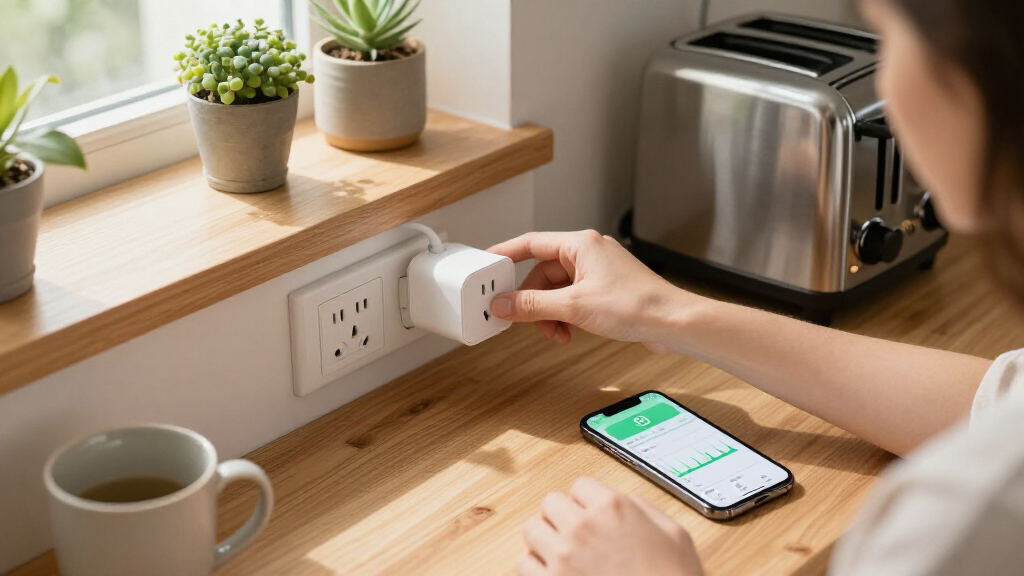
Smart plugs with energy monitoring do more than turn appliances on and off remotely — they show you exactly how much power each device draws, so you can spot energy-hogging equipment and cut your electric bill. After comparing 12 of the most popular options, the TP-Link Tapo P115 stands out as the best overall pick thanks to its accurate real-time tracking, polished app, and reliable 15A capacity. The Kasa KP125M is the strongest choice if Matter compatibility and multi-ecosystem support matter to you, while the Emporia Energy Monitoring Smart Plug makes the most sense for buyers building a whole-home energy tracking setup. The main tradeoff in this category is between app depth and ecosystem flexibility: plugs with the richest energy dashboards tend to lock you into a single brand’s app, while Matter-certified options play nicely with Apple Home, Alexa, and Google Home but sometimes offer shallower power data. Keep reading for the full breakdown, including which budget four-packs are actually worth it and which ones cut corners on accuracy.

Get home appliances delivered free with Prime
- Fast, free delivery on millions of items
- Prime Video, Amazon Music and more included
- Member-only deals all year
Key Takeaways
- The Tapo and Kasa families dominated the top of the ranking because their apps present historical energy data (daily, monthly, and yearly totals) clearly — several budget four-packs technically monitor energy but bury the data behind clunky interfaces.
- Matter compatibility was the clearest dividing line in this lineup: the Kasa KP125M, Tapo P125M, and Tapo P110M work across Apple Home, Alexa, and Google Home, but buyers should know that Matter platforms sometimes display less detailed energy data than each brand’s native app.
- Multi-pack pricing per plug varied widely even among similar 15A models, and the Govee 4-pack and generic ‘Smart Plug Outlet’ 4-pack landed as value plays rather than accuracy leaders — fine for casual monitoring, weaker for precise tracking.
- The THIRDREALITY Gen3 is the only pick in this lineup that doubles as a Zigbee repeater, which changes the math entirely for buyers running a SmartThings or Home Assistant hub versus Wi-Fi-only households.
- The Emporia plug fills a niche the others don’t: it feeds data into a broader whole-home energy monitoring ecosystem, making it the pick for system builders rather than someone who just wants one plug for a space heater.



| smart plugs with energy monitoring | Pack size | Connectivity | Energy monitoring | Model |
|---|---|---|---|---|
| Govee Smart Plug with Energy M | 4 | Wi-Fi and Bluetooth | Power, current, and voltage | — |
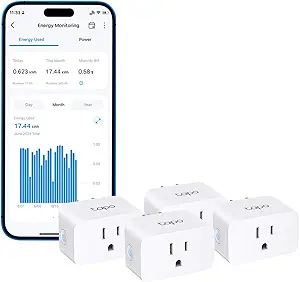
| TP-Link Tapo P115 Wi-Fi Smart | 4 | Wi-Fi | Yes, with statistics and charts | P115 |
| Kasa Smart Plug Mini with Ener | — | — | — | KP125MP2 |
| TP-Link Tapo Matter Supported | 3 | Matter, Wi-Fi (2.4 GHz only), Bluetooth onboarding | No | Tapo P125M |
| Kasa Smart Plug Mini with Ener | — | — | Yes, via Kasa app | KP115 |
| AiSeek Pro Energy Monitoring S | 4 plugs | 2.4GHz Wi-Fi, Bluetooth pairing | Real-time power, voltage, current, kWh | — |
| Tapo Smart Plug | 4 plugs | Matter over Wi-Fi (2.4GHz) | Statistics, bill estimation, off-peak scheduling | Tapo P110M |
| THIRDREALITY Smart Plug Gen3 | 4 plugs | Zigbee 3.0 (hub required) | — | — |
| Kasa Matter Smart Plug with En | — | Matter over Wi-Fi | Yes, with usage history | Kasa KP125M |
| Tapo P115 Wi-Fi Smart Plug wit | 2 plugs | Wi-Fi | Statistics, charts, off-peak scheduling | Tapo P115 |
| Emporia Energy Monitoring Smar | 4 | Wi-Fi (2.4GHz only) | — | — |
| Smart Plug Outlet with Energy | 4 | — | Real-time power and energy tracking | — |
More Details on Our Top Picks
Govee Smart Plug with Energy Monitoring, Wi-Fi and Bluetooth, 4-Pack
This four-pack from Govee makes the most sense for buyers who want to instrument several rooms at once without paying a premium per outlet. The Govee Home app tracks power, current, and voltage, and retains up to a full year of usage history — a longer lookback window than the Tapo P115 offers out of the box, which matters if your goal is spotting seasonal drift in appliance consumption rather than just checking yesterday’s totals. Bluetooth onboarding also makes first-time setup less painful than Wi-Fi-only rivals. Compared with the single-unit Kasa KP115, you trade away the polished Kasa app experience, but you gain four monitoring points for the price of roughly one and a half. The tradeoff is connectivity: 2.4 GHz Wi-Fi only, so households running mesh networks need to confirm their router broadcasts that band before committing.
Pros:- Four monitored outlets in one package keeps per-outlet cost low
- Up to one year of daily, weekly, and monthly usage history
- Bluetooth makes initial pairing quicker than Wi-Fi-only competitors
- FCC and ETL certified with fire-resistant housing
Cons:- No 5 GHz Wi-Fi support, which complicates setup on some modern mesh routers
- Govee Home app is less refined than the Kasa and Tapo apps for energy visualization
Best for: Budget-conscious homeowners who want to monitor multiple appliances across several rooms at once
Not ideal for: Households with 5 GHz-only mesh networks, since the plugs can’t join that band
- Pack size:4
- Connectivity:Wi-Fi and Bluetooth
- Wi-Fi compatibility:2.4 GHz only (no 5 GHz)
- Voice assistants:Amazon Alexa, Google Assistant
- Energy monitoring:Power, current, and voltage
- Usage history:Daily, weekly, monthly, up to 1 year
- Certifications:FCC, ETL
- Material:Fire-resistant
Our verdict“Buy this pack if you want broad energy-monitoring coverage on a budget and your network still broadcasts 2.4 GHz.”
TP-Link Tapo P115 Wi-Fi Smart Plug with Energy Monitoring, 4-Pack, 15A
The Tapo P115 stands out for turning raw consumption data into decisions. Its app presents usage in statistics and charts, and you can schedule heavy loads — space heaters, dehumidifiers, EV chargers — to run during off-peak hours, something the Govee four-pack handles more crudely with basic schedules. Two safety features separate it further: smart charging cutoff stops devices like e-bike batteries once they’re full, and automatic overload shutoff kills power before a circuit is stressed. That combination makes this the pick for buyers whose monitoring goal is actually cutting a bill, not just watching numbers. The main limitation is cost visualization — converting kilowatt-hours into dollars requires hooking the app into billing integrations, whereas dedicated platforms like Emporia handle that natively. If you want turnkey dollar figures, look elsewhere; if you want control and safety logic, this is the stronger tool.
Pros:- Detailed energy statistics and charting in the Tapo app
- Off-peak scheduling shifts expensive loads to cheaper rate windows
- Smart charging cutoff protects batteries and electronics from overcharging
- Automatic overload shutoff adds a safety layer most rivals lack
Cons:- Cost visualization depends on billing-system integrations rather than working out of the box
- Wi-Fi only — no Bluetooth fallback to simplify onboarding like the Govee pack
Best for: Owners of high-draw appliances who want off-peak scheduling and automatic shutoff protection alongside usage data
Not ideal for: Buyers who want plug-and-play cost estimates in dollars without setting up billing integrations
- Model:P115
- Pack size:4
- Connectivity:Wi-Fi
- Maximum current:15A
- Energy monitoring:Yes, with statistics and charts
- Voice assistants:Amazon Alexa, Google Assistant
- App control:Tapo app
- Safety features:Smart charging power cutoff, overload auto-shutoff
Our verdict“This is the pick for anyone who wants energy data paired with active scheduling and protective shutoff logic, not just passive tracking.”
Kasa Smart Plug Mini with Energy Monitoring (2-Pack, KP125MP2)
The Kasa KP125MP2 earns its spot through Matter compatibility, which means one plug works natively with Apple Home, Alexa, Google Home, and SmartThings — no choosing a platform for life. That’s a genuine step up from the Wi-Fi-only Kasa KP115, which locks you into the Kasa app and two voice assistants. Even better for reliability-minded buyers, Matter enables local LAN control: plugs keep responding to schedules and automations even when your internet drops, because commands travel across your network rather than through a cloud server. The compact housing leaves the second outlet free, unlike bulkier monitoring plugs whose depth crowds a duplex. Two caveats temper the enthusiasm: full Matter integration demands a compatible hub or controller, and there’s no physical button on the unit, so a Wi-Fi outage combined with a dead hub leaves you unplugging things the old-fashioned way.
Pros:- Matter support covers Apple Home, Alexa, Google Home, and SmartThings from a single plug
- Local LAN control keeps automations running during internet outages
- Slim housing avoids blocking the adjacent outlet
- UL-certified flame-retardant build with a 2-year warranty
Cons:- Full Matter integration requires a compatible hub or ecosystem controller
- No physical button for manual on/off control
Best for: Apple Home or SmartThings users, and anyone building a cross-platform setup that should survive internet outages
Not ideal for: Buyers without a Matter controller or hub, who would be paying for ecosystem flexibility they can’t use
- Model:KP125MP2
- Max current:15A
- Max power:1800W
- Compatibility:Matter, Apple Home, Amazon Alexa, Google Home, Samsung SmartThings
- Features:Energy monitoring, local LAN control, voice control
- Certification:UL certified flame retardant
- Warranty:2-year limited
Our verdict“If you’ve committed to a serious smart home platform — especially Apple Home — this is the energy-monitoring plug that fits without compromise.”
TP-Link Tapo Matter Supported Smart Plug Mini P125M (3-Pack)
This option is better suited to buyers prioritizing size and setup simplicity over data depth. The P125M’s genuinely mini housing disappears into a duplex outlet and works with every major Matter platform — Apple Home, Alexa, Google Home, SmartThings — while Bluetooth onboarding makes first configuration faster than fumbling with Wi-Fi passwords, a nicety the Tapo P115 skips. Local LAN control means schedules survive internet outages, matching the Kasa KP125MP2’s resilience. But here’s the honest tradeoff for this roundup: the P125M does not include energy monitoring, unlike its sibling P115 and the Kasa KP125MP2. If your entire reason for buying is tracking kilowatt-hours, this is the wrong plug — it’s here because some buyers need compact, reliable switched outlets now and can add metered plugs selectively later. Treat it as the ecosystem-and-form-factor play, not the analytics play.
Pros:- Matter support across Apple Home, Alexa, Google Home, and SmartThings
- Ultra-compact body leaves adjacent outlets free
- Bluetooth onboarding makes setup fast and forgiving
- Local LAN control continues working during internet outages
Cons:- No energy monitoring, despite sitting in a monitoring-focused lineup
- 2.4 GHz Wi-Fi only, a hassle on some modern mesh networks
Best for: Buyers who want the smallest possible Matter-compatible outlet for lamps and small devices across multiple ecosystems
Not ideal for: Anyone buying specifically to measure consumption — this model lacks energy monitoring entirely
- Model:Tapo P125M
- Pack size:3
- Connectivity:Matter, Wi-Fi (2.4 GHz only), Bluetooth onboarding
- Compatible platforms:Apple Home, Amazon Alexa, Google Home, Samsung SmartThings
- Certification:UL certified flame retardant
- Energy monitoring:No
- Warranty:2-year limited
Our verdict“Choose this three-pack for compact, cross-platform switching — but pick the Tapo P115 or Kasa KP125MP2 if metering is the whole point.”
Kasa Smart Plug Mini with Energy Monitoring (KP115)
The Kasa KP115 remains the easiest on-ramp into energy monitoring, and that simplicity is its whole argument. The Kasa app is among the most approachable in the category — pairing, naming, scheduling, and reading usage stats all happen without the learning curve of the Tapo P115’s deeper analytics. Where the P115 is aimed at tinkerers chasing off-peak savings, this model suits someone who simply wants to know what the living-room amplifier costs per month. Safety engineering is a quiet strength: a UL-certified fireproof shell, overheating protection, and a child-safe sliding cover over the unused outlet holes — that last feature is genuinely rare among rivals and worth noting for parents. The compromises are ones beginners can live with: 2.4 GHz Wi-Fi only, no Matter support, and no local control, so an internet outage takes remote access down with it. It’s a single plug, too, so multi-room projects should look at the four-packs.
Pros:- Kasa app is the friendliest setup and monitoring experience for newcomers
- Built-in energy monitoring with easy-to-read usage stats
- Child-safe sliding outlet cover is unusual in this category
- UL-certified fireproof shell plus overheating protection
Cons:- 2.4 GHz Wi-Fi only — incompatible with 5 GHz-only router setups
- No Matter support or local control, so internet outages disable remote features
- Sold as a single unit, making whole-home coverage expensive
Best for: First-time smart plug buyers, especially parents, who want dead-simple setup and one clearly explained energy readout
Not ideal for: Power users wanting Matter, local control, or multi-room coverage — the newer KP125MP2 or a four-pack serves them better
- Model:KP115
- Wi-Fi:2.4 GHz
- Energy monitoring:Yes, via Kasa app
- Voice assistants:Amazon Alexa, Google Assistant
- Safety features:Overheating protection, fireproof shell, child safety cover
- Certification:UL certified
- Warranty:2 years
Our verdict“For a first smart plug that simply tells you what an appliance costs, this is the least intimidating option on the list.”
AiSeek Pro Energy Monitoring Smart Plug Outlet, 15A 2.4 GHz Wi-Fi, 4-Pack
This option stands out for handing you four energy-monitoring plugs at a per-unit cost that undercuts most name-brand rivals, which is why it earns the budget slot over the Kasa KP125M and Tapo P115. The Tuya/Smart Life app delivers the full monitoring toolkit — real-time watts, voltage, current, and cumulative kWh — plus schedules and overload protection, so a household can instrument several appliances at once without cherry-picking which ones to track. The tradeoff is software polish: Tuya is functional but less refined than the Kasa and Tapo apps, and cloud dependence means remote control can lag if the servers do. Compared with the THIRDREALITY Gen3, setup here is simpler because no hub is required, but the ecosystem is far less flexible for serious smart-home builders.
Pros:- Four plugs with full energy monitoring at a low per-unit cost
- Tracks watts, voltage, current, and cumulative kWh in the app
- ETL and FCC certified with overload protection and fire-retardant housing
- Hub-free setup with Alexa and Google Assistant support
Cons:- Tuya app is less polished and more cloud-dependent than Kasa or Tapo apps
- No Matter, HomeKit, or local-control options
- 2.4GHz-only Wi-Fi can complicate setup on modern dual-band routers
Best for: Budget-conscious households who want to monitor four or more appliances simultaneously without buying into a hub or premium ecosystem
Not ideal for: Apple Home users and smart-home tinkerers — there’s no Matter or HomeKit support, and Tuya’s cloud reliance frustrates local-control fans
- Connectivity:2.4GHz Wi-Fi, Bluetooth pairing
- App:Tuya / Smart Life
- Voice Control:Alexa, Google Assistant
- Energy Monitoring:Real-time power, voltage, current, kWh
- Certification:ETL, FCC
- Pack Size:4 plugs
- Warranty:2 years
Our verdict“This pick makes the most sense for buyers who prioritize whole-room energy tracking on a budget and can accept a less refined app experience.”
Tapo Smart Plug, Matter Compatible, Energy Monitoring, P110M (4-Pack), 15A
The P110M earns the top spot because it refuses to compromise: Matter certification means it plugs cleanly into Apple Home, Alexa, Google Home, and SmartThings, while the Tapo app delivers the most actionable energy data in this lineup — not just charts, but bill estimation and off-peak scheduling that shifts heavy loads to cheaper rate windows. Its overcharge-prevention thresholds go a step further than the Kasa KP125M by letting you cap both power and duration, which protects devices like e-bike chargers. Compared with the budget AiSeek 4-pack, the software gap is immediately obvious: Tapo is faster, clearer, and better organized. The tradeoffs are real, though — Matter over Wi-Fi still requires a 2.4GHz network, and energy data lives in the Tapo app rather than fully surfacing inside every platform’s dashboard.
Pros:- Matter-certified for Apple Home, Alexa, Google Home, and SmartThings
- Energy bill estimation plus off-peak scheduling for real cost savings
- Configurable power and duration thresholds prevent overcharging
- Polished Tapo app with clear visual statistics
Cons:- 2.4GHz-only Wi-Fi requirement
- Detailed energy insights stay inside the Tapo app rather than your platform of choice
- Four-plug pack costs more upfront than budget alternatives
Best for: Multi-platform smart-home owners who want bill-aware energy management and future-proof interoperability in one package
Not ideal for: Buyers who want a single cheap plug to trial energy monitoring — the 4-pack is overkill and pricier than the 2-pack Tapo P115
- Model:Tapo P110M
- Connectivity:Matter over Wi-Fi (2.4GHz)
- Compatible Platforms:Alexa, Google Home, Apple HomeKit, SmartThings
- Energy Monitoring:Statistics, bill estimation, off-peak scheduling
- Safety Features:Overcharge cutoff, overcurrent shutoff
- Pack Size:4 plugs
Our verdict“If you want one purchase that balances ecosystem flexibility, deep energy analytics, and device protection, this is the plug to beat.”
THIRDREALITY Smart Plug Gen3 (4 Pack) with Real-Time Power Meter, 15A, Zigbee Repeater, ETL Certified
This model plays a completely different game from the Wi-Fi plugs here. Its ±1% measurement accuracy is the tightest in the roundup — the Tapo P110M and Kasa KP125M don’t publish comparable figures — making it the right instrument when the numbers need to be trustworthy, not just indicative. Better still, every plug doubles as a Zigbee repeater, strengthening your mesh with each outlet you add, something no Wi-Fi option can do. The catch is structural: it requires a Zigbee hub, so anyone without an Echo, SmartThings, Hubitat, or Home Assistant setup gets a paperweight. Compared with the AiSeek 4-pack, this is far less plug-and-play, but for Home Assistant users the local control and repeater benefit outweigh the friction.
Pros:- ±1% power monitoring accuracy, the most precise in this lineup
- Each plug extends Zigbee mesh coverage as a repeater
- Local control via Home Assistant, SmartThings, Hubitat, and Echo devices
- Compact housing avoids blocking adjacent outlets
Cons:- Hub required — no standalone operation
- Advanced safety settings limited to THIRDREALITY Hub Gen2 and Home Assistant
- Adds Zigbee device-count overhead on constrained hubs
Best for: Home Assistant, Hubitat, or SmartThings users building a local Zigbee mesh who want lab-grade power readings
Not ideal for: Renters or casual users without a Zigbee hub — it simply won’t function standalone over Wi-Fi
- Connectivity:Zigbee 3.0 (hub required)
- Operating Voltage:110V
- Power Monitoring Accuracy:±1%
- Compatibility:Echo devices, Home Assistant, SmartThings, Hubitat
- Certification:ETL Certified
- Pack Size:4 plugs
Our verdict“This is the builder’s pick: buy it if you already run Zigbee and want accuracy plus mesh reinforcement, skip it if you don’t own a hub.”
Kasa Matter Smart Plug with Energy Monitoring, KP125M, 15A/1800W
Where the Tapo P110M leans into the Tapo app, the KP125M leans into your platform: native Apple Home support with Matter means iPhone owners get energy readings and control inside the app they already live in — a rarity among monitoring plugs, since most HomeKit options skip metering entirely. Local network control is the other standout; when the internet drops, automations keep firing, which the cloud-reliant AiSeek plugs can’t match. The Kasa app itself is nearly as capable as Tapo’s for usage history, and the UL-certified flame-retardant build with a 2-year warranty signals quality control that budget brands don’t match. The honest tradeoff: it’s a single plug, so outfitting a whole room costs more per outlet than any 4-pack here, and Matter’s benefits only materialize if you actually run a compatible platform.
Pros:- Native Matter support including Apple Home, Alexa, Google Home, and SmartThings
- Local control keeps automations working without internet
- UL-certified flame-retardant design with 2-year limited warranty
- Compact body leaves adjacent outlets free
Cons:- Single-plug packaging makes multi-outlet projects expensive
- Full ecosystem integration requires a Matter-compatible platform
- Energy analytics are less granular than Tapo’s bill-estimation features
Best for: Apple Home households and reliability-focused buyers who want energy data inside their main platform and control that survives internet outages
Not ideal for: Buyers needing multiple monitored outlets cheaply — a single unit costs far more per plug than the AiSeek or THIRDREALITY 4-packs
- Model:Kasa KP125M
- Maximum Current:15A
- Maximum Power:1800W
- Connectivity:Matter over Wi-Fi
- Compatible Platforms:Apple Home, Alexa, Google Home, SmartThings
- Energy Monitoring:Yes, with usage history
- Certification:UL-certified flame-retardant design
- Warranty:2-year limited
Our verdict“This model is better suited to Apple-centric or reliability-minded buyers who value platform-native control and local operation over per-outlet value.”
Tapo P115 Wi-Fi Smart Plug with Energy Monitoring, 2-Pack, 15A
Think of the P115 as the low-commitment entry point into energy monitoring: two plugs, the same capable Tapo app as the flagship P110M, and configurable charging limits with automatic overload shutoff — features that matter for anything with a battery. It shares the P110M’s scheduling for off-peak operation, so you can shift a water heater or EV charger’s timing toward cheaper rates. The differences from its sibling are deliberate: no Matter certification, so Apple Home users should buy the Kasa KP125M instead, and cost visualization requires linking a billing integration rather than arriving out of the box. Against the generic Wi-Fi 4-packs in this guide, the P115 wins on app quality but loses on sheer quantity — you’re paying partly for software.
Pros:- Polished Tapo app with clear energy statistics and charts
- Configurable charging limits and automatic overload shutoff
- Off-peak scheduling shifts usage to cheaper rate windows
- Voice control via Alexa and Google Assistant with remote app access
Cons:- No Matter support, ruling out native Apple Home integration
- Energy cost visualization requires billing-system integration
- Two plugs cost more per outlet than 4-pack alternatives
Best for: First-time buyers who want to trial energy monitoring on two high-draw devices before committing to a full multi-pack
Not ideal for: Apple Home users and anyone outfitting four or more outlets — the 2-pack format and lack of Matter make pricier per-plug economics
- Model:Tapo P115
- Pack Size:2 plugs
- Connectivity:Wi-Fi
- Voice Assistants:Amazon Alexa, Google Assistant
- Energy Monitoring:Statistics, charts, off-peak scheduling
- Safety Features:Charging limits, automatic overload shutoff
Our verdict“This pick makes the most sense for buyers testing the energy-monitoring waters on a couple of appliances with top-tier software, then scaling up later.”
Emporia Energy Monitoring Smart Plug (4 Pack)
Emporia’s 4-pack stands out for anyone who wants to audit an entire home rather than automate a single lamp. The plugs pair with Emporia’s broader energy ecosystem, so you can track consumption across multiple outlets side by side and hunt down vampire standby power room by room. Scheduling and voice control through Alexa and Google Home work smoothly, and the app presents usage data in a way that makes identifying wasteful appliances straightforward.
The tradeoff is capacity. With a 10A continuous limit (1200W), it trails the Tapo P115 and the 15A generic packs here, which means space heaters, some AC units, and high-draw kitchen gear are off the table except for brief 15A bursts. Compared with the Kasa KP115, you get four plugs for system-wide tracking instead of two, but each one handles less. The 2.4GHz-only requirement is standard for the category, though worth confirming before buying.
Pros:- Four plugs with energy monitoring for tracking multiple appliances at once
- Clean, data-focused app that makes spotting standby power waste easy
- Reliable Alexa and Google Home voice control
- Flexible scheduling helps cut wasted electricity and extend appliance life
Cons:- 10A continuous load limit — noticeably lower than 15A rivals like the Tapo P115
- No 5GHz Wi-Fi support, which complicates setup on modern mesh networks
Best for: Homeowners running a whole-house energy audit who want to track many low-to-medium-draw devices in one app
Not ideal for: Anyone planning to monitor high-wattage appliances like space heaters or air conditioners — the 10A continuous cap rules them out
- Pack Size:4
- Connectivity:Wi-Fi (2.4GHz only)
- Compatibility:Alexa, Google Home, iOS, Android
- Max Continuous Load:10A
- Max Peak Load:15A (up to 1 hr/day)
- Max Wattage:1200W
- Operating Voltage:120V
- Temperature Range:14°F to 140°F
Our verdict“Buy this if you want to measure energy use across many outlets at once; skip it if any monitored device pulls more than 1200W.”
Smart Plug Outlet with Energy Monitoring, 15A, 2.4 GHz Wi-Fi, 4-Pack
This 4-pack’s main selling point is simple: full 15A / 1800W capacity at a multi-pack price, which puts it in the same power class as the Tapo P115 while covering twice as many outlets. If your energy-monitoring goal includes a space heater, a large air fryer, or a hair dryer, these plugs handle it, and the built-in short-circuit and overload protection adds a layer of reassurance the Emporia pack can’t match at its lower amperage.
The compromises are on the software side. Voice control runs through the SmartLife app, so you’ll need to create an account and link skills before Alexa or Google Assistant respond — a clunkier path than the native integrations Kasa and Tapo offer. Real-time tracking works, but the interface is less polished than Emporia’s energy-focused dashboard. Compared with the Govee 4-pack, you trade Bluetooth-assisted setup for higher current handling.
Pros:- Full 15A / 1800W rating supports high-draw appliances
- Real-time power and energy tracking across all four plugs
- Schedules, timers, and group control for coordinated automation
- Short-circuit and overload protection with fire-resistant housing
Cons:- SmartLife account and app linking required before voice control works
- App experience is less polished than Kasa, Tapo, or Emporia alternatives
- 2.4GHz Wi-Fi only, with no Bluetooth fallback for setup
Best for: Budget-minded buyers who want to monitor and schedule four high-wattage appliances like heaters or kitchen equipment
Not ideal for: Buyers who want plug-and-play voice control or a refined app experience — SmartLife setup adds friction Kasa and Tapo avoid
- Pack Size:4
- Maximum Current:15A
- Maximum Power:1800W
- Wi-Fi:2.4 GHz
- App:SmartLife
- Voice Assistant Compatibility:Alexa and Google Assistant (via SmartLife app)
- Energy Monitoring:Real-time power and energy tracking
- Safety Features:Short-circuit and overload protection; fire-resistant materials
- Certification:FCC
Our verdict“A sensible pick if you need four 15A-capable monitored outlets without paying brand-name prices, as long as you tolerate a clunkier app.”

How We Picked
My ranking logic starts with the reason you’re shopping for these plugs at all: energy monitoring quality. I weighed how each plug reports real-time wattage, whether it stores historical data (daily, weekly, monthly), and how clearly its app presents that information, because accurate numbers buried behind a confusing interface don’t help anyone lower a power bill. From there, I evaluated connectivity and ecosystem support — Wi-Fi reliability on the 2.4GHz band, Bluetooth setup, Matter certification, and Zigbee capability — since a plug that drops offline stops monitoring entirely.
The second tier of criteria covered practical usability and value: physical size (whether a two-plug outlet stays usable), max load at 15A/1800W, scheduling and automation features, safety certifications like UL and ETL, and the per-plug cost when bought in multi-packs. Plugs that paired strong hardware with a mature, well-maintained app ranked above plugs with similar specs but rougher software. Finally, I favored options with distinct strengths for distinct buyers rather than crowning twelve near-identical winners — which is why a Zigbee repeater pick and a whole-home energy system plug both earned places near the top for specific audiences.
| smart plugs with energy monitoring | Certification |
|---|---|
| Govee Smart Plug with Energy M | — |
| TP-Link Tapo P115 Wi-Fi Smart | — |
| Kasa Smart Plug Mini with Ener | UL certified flame retardant |
| TP-Link Tapo Matter Supported | UL certified flame retardant |
| Kasa Smart Plug Mini with Ener | UL certified |
| AiSeek Pro Energy Monitoring S | ETL, FCC |
| Tapo Smart Plug | — |
| THIRDREALITY Smart Plug Gen3 | ETL Certified |
| Kasa Matter Smart Plug with En | UL-certified flame-retardant design |
| Tapo P115 Wi-Fi Smart Plug wit | — |
| Emporia Energy Monitoring Smar | — |
| Smart Plug Outlet with Energy | FCC |
Factors to Consider When Choosing Smart Plugs With Energy Monitoring
Before picking a specific plug, it helps to understand what actually separates a useful energy-monitoring smart plug from a gadget that just adds a wattage number to an app. These are the factors that shaped my ranking — and the mistakes I see buyers make most often.Energy Data Depth: Real-Time vs. Historical
The single biggest differentiator is what happens to the data after the plug collects it. Some plugs only show live wattage, which tells you what a device draws right now but nothing about accumulated cost over a week or month. Better options log daily, weekly, monthly, and yearly consumption, and the strongest apps let you export or chart that history so you can compare a fridge’s usage before and after maintenance, or estimate what a space heater adds to a winter bill. A common mistake is buying a cheap multi-pack, checking the live wattage once, and never returning to the app — at which point any plug would have done the job. If your goal is genuinely changing habits or auditing appliances, prioritize plugs whose native app keeps long-term history rather than assuming every ‘energy monitoring’ label means the same thing. Also check whether the app estimates cost in your currency from your actual electricity rate, since manual math kills the convenience factor fast.
Ecosystem Lock-In and Matter Support
This is where the category splits into two camps, and choosing wrong means rebuying plugs later. Matter-certified plugs — like the Kasa KP125M and Tapo P110M — work across Apple Home, Alexa, Google Home, and other Matter controllers, so you’re not trapped if you switch voice assistants or phones. The catch: Matter’s energy reporting standard is still maturing, so some platforms show less granular power data than the manufacturer’s own app, meaning you may end up running the native app anyway for full history. Non-Matter plugs often have richer first-party experiences but tie you to that brand’s ecosystem indefinitely. My advice: if you already live in one ecosystem and love it, native plugs are fine; if you’re mixing devices or planning a smart home that outlives any single assistant, Matter support is worth the small data tradeoff. Buyers deep in Zigbee setups via SmartThings or Home Assistant should look at the THIRDREALITY instead, since Wi-Fi plugs won’t join that mesh at all.
Accuracy and Measurement Consistency
Not all monitoring circuits are equal, and this is where budget plugs quietly cut corners. Lower-cost four-packs frequently round readings aggressively or drift over time, which matters when you’re trying to distinguish a device drawing 8 watts from one drawing 12 watts in standby. Small inaccuracies compound: a 10% error on a always-on appliance skews your monthly cost estimate by that same margin all year. The more established brands tend to publish tighter measurement tolerances and patch firmware when users report discrepancies, while generic rebrand plugs rarely receive any updates. If you’re comparing two appliances against each other, consistency between plugs in the same pack matters more than absolute accuracy — two plugs reading slightly high but identically are more useful than two plugs reading randomly. For casual curiosity, any plug works; for decisions like ‘should I replace this old freezer,’ stick to the accuracy leaders in this lineup.
Load Rating and Physical Design
Every plug in this roundup handles 15A/1800W, which covers space heaters, air conditioners, and most kitchen appliances — but that rating assumes you trust the plug’s build quality, which is why UL and ETL certifications appear throughout my rankings. Physically, compact designs like the Tapo P125M matter more than buyers expect: a chunky plug blocks the second outlet on a standard wall receptacle, and a four-pack of oversized plugs can make a power strip unusable. Wall-mounted vs. power-strip placement also affects heat dissipation, and high-draw devices on poorly ventilated plugs are a real safety concern, not a theoretical one. Check whether the plug’s housing covers your outlet fully and whether its buttons are reachable if you need a manual override when Wi-Fi goes down. Finally, consider indoor-only ratings — none of these are designed for outdoor use, and treating them as such voids any safety margin the certification provides.
Multi-Pack Math and App Account Requirements
Almost every option here ships as a two- or four-pack, and the smart move is calculating cost per plug against software quality per plug — a cheap four-pack with a mediocre app is worse value than a pricier pack you’ll actually enjoy using. Another overlooked factor: each brand requires its own account and cloud connection. Four different brands means four apps, four logins, and four sets of firmware updates, which is why I’d recommend sticking to one ecosystem even if a competitor’s single plug looks tempting. Account requirements also raise a privacy consideration — your energy data reveals your daily schedule, so check whether the app allows local control or data deletion if that concerns you. Some brands limit how many plugs a single account supports or throttle how frequently data syncs to the cloud, which degrades the experience as your plug count grows. Buying one two-pack first to test the app, then expanding, is a lower-risk path than committing to four plugs of an unfamiliar brand.
Frequently Asked Questions
Do I need Matter support, or is it a gimmick for energy monitoring?
Matter support matters if you use or plan to use Apple Home, since Apple’s ecosystem historically had limited smart plug options — the Kasa KP125M and Tapo P110M solve that directly. It also future-proofs your setup if you switch between Alexa, Google Home, and other platforms, because the plug pairs with whichever Matter controller you choose without a factory reset. The honest caveat is that Matter’s energy reporting is less mature than native apps: some platforms show on/off state and basic consumption but not the detailed daily and yearly history the manufacturer’s app provides. The practical pattern most households settle into is using Matter for automation and voice control while occasionally opening the brand’s app for deep energy analysis. If you’re firmly a single-assistant household and happy there, non-Matter plugs with richer first-party apps serve you just as well. Treat Matter as insurance against ecosystem changes, not as a better monitoring experience.
How accurate are cheap energy-monitoring plugs compared to brand-name ones?
Brand-name plugs from TP-Link, Kasa, Govee, and Emporia generally publish measurement tolerances and maintain firmware that fixes reported inaccuracies, while generic rebrand plugs often don’t specify accuracy at all. In practice, budget plugs tend to give a reasonable ballpark for high-draw devices like heaters but get noticeably less reliable at low standby wattages, where rounding errors of a few watts can represent a large percentage of the actual draw. For most decisions — ‘which appliance costs me the most per month’ — even imperfect plugs are directionally useful because errors are usually consistent within a unit. The trap is cross-brand comparison: readings from two different manufacturers’ plugs aren’t directly comparable, so measure all your appliances with the same plug or same brand whenever possible. If you’re auditing for a specific purchase decision, like replacing an old freezer, move one trusted plug around the house over several days rather than trusting a mixed bag of cheap units. Consistency beats precision for almost every home use case.
Can these smart plugs handle space heaters and air conditioners?
Yes — every plug in this roundup is rated for 15A/1800W, which covers virtually all 120V space heaters and window air conditioners sold in the US. What separates the plugs is sustained-load behavior: high-quality units like the Tapo and Kasa models are UL or ETL certified and designed to carry their full rated load continuously, while marginal plugs may heat up or degrade over months of heavy cycling. Energy monitoring is especially valuable on these devices because heating and cooling are usually a home’s biggest plug-in expenses, and seeing the accumulated cost per day often changes how people use them. One caution: never plug a plug-in surge protector or another adapter between the smart plug and the appliance, and avoid using them on GFCI-protected circuits in damp areas like bathrooms, where nuisance trips are common. Also confirm your heater doesn’t exceed 1500W on its high setting, since anything drawing near the plug’s ceiling leaves no safety margin. Used correctly, these plugs are one of the best ways to quantify and control heating costs.
Do energy-monitoring smart plugs work without a subscription or cloud service?
All twelve plugs in this lineup provide their core energy monitoring through a free manufacturer app with no subscription, and that’s the norm for the category — you shouldn’t pay recurring fees for basic wattage and history. What varies is how dependent the plugs are on the cloud: Tapo and Kasa apps function well for local scheduling, but their full historical logging generally syncs through the manufacturer’s servers, which means an extended internet outage can leave gaps in your data. Buyers who want fully local operation typically gravitate toward Home Assistant setups, where some of these plugs can be integrated without cloud accounts at all, though sometimes at the cost of the brand’s nicer dashboards. It’s also worth checking each app’s data retention policy, since a few brands only keep detailed readings for a limited window before aggregating them. For the average household, the free-app model works fine — just don’t assume your years of history will live on the plug itself. If data ownership is a priority, the Zigbee-based THIRDREALITY paired with a local hub gives you the most control.
Is a Zigbee or Wi-Fi plug better for a growing smart home?
Wi-Fi plugs like most of this lineup are the easiest starting point — no hub required, quick setup, and they work with any router — but each one adds traffic to your home network, and households with fifteen or twenty Wi-Fi devices can start seeing congestion and dropped connections. Zigbee plugs like the THIRDREALITY Gen3 form a mesh where each powered plug repeats the signal, making the network stronger as you add devices, and the bonus here is that its energy-monitoring plug doubles as a repeater for other Zigbee sensors in your home. The tradeoff is that Zigbee requires a coordinator — a SmartThings hub, Home Assistant stick, or similar — which is an upfront cost and complexity Wi-Fi avoids. A common pattern is starting with Wi-Fi plugs, then adopting Zigbee or Matter-over-Thread as the home grows and network reliability becomes the bottleneck. If you already own a hub, the repeater function alone makes the Zigbee route attractive. If your smart home is one or two plugs and a speaker, Wi-Fi remains the simpler, cheaper path.
Conclusion
After comparing all twelve, the right choice comes down to what you’re actually monitoring and which ecosystem you live in. For best overall, the TP-Link Tapo P115 earns the top spot with its dependable accuracy, mature app with long-term energy history, and 15A capacity at a sensible multi-pack price. The Kasa KP125M is my best pick for multi-platform households — Matter support means it works whether you’re team Alexa, Google, or Apple, and the two-pack KP125MP2 format suits smaller setups. For best value, the Govee 4-pack delivers functional energy monitoring at the lowest per-plug cost, ideal for buyers covering many appliances at once who can tolerate a simpler app.
For beginners, the Tapo P125M is the gentlest entry point — its setup process is famously painless and the compact body won’t block your second outlet, though its energy data is lighter than the P115’s. The Emporia 4-pack is the clear pick for whole-home energy nerds building toward a complete monitoring system rather than tracking a single device. Finally, the THIRDREALITY Gen3 is the specialist choice for Zigbee hub owners, where its repeater function adds value no Wi-Fi plug can match. Whatever you choose, buy one pack first, live with the app for a week, and expand from there — the best energy monitoring system is the one you’ll actually keep checking.