When selecting the best 12-well culture plates, researchers face the challenge of balancing durability, sterility, and cost. The top overall pick, the Nest Scientific 712001 Polystyrene 12 Well Cell Culture Plate, offers excellent tissue culture treatment and clarity. Meanwhile, the WATSON-BIO-LAB 197-12CPS-min stands out for its Japanese manufacturing quality, and the Cell Treat Scientific Products 12-Well Plate provides great value for bulk orders. Each option has tradeoffs, such as price versus quality or treatment type versus versatility. Continue reading for a detailed breakdown of these options to find the best fit for your lab needs.

Get home appliances delivered free with Prime
- Fast, free delivery on millions of items
- Prime Video, Amazon Music and more included
- Member-only deals all year
Key Takeaways
- The most critical factor for selection was tissue culture treatment, impacting cell adhesion and growth.
- Sterility and packaging play a key role in reducing contamination risks, especially for sensitive experiments.
- Price varies significantly, with bulk options offering better value but potentially sacrificing individual quality.
- Flat bottom designs were preferred for microscopy and imaging, while non-treated surfaces suited bacterial cultures.
- Manufacturing origin and material quality influence durability and consistency across batches.
| 12 Well Cell Culture Plate, Non-TC Treated Cell Culture Plates, Clear Sterile Tissue Culture Plate, Individually Wrapped, 50Pcs/Case |  | Best Overall for Versatility and Reliability | Wells per Plate: 12 | Material: Polystyrene | Sterility: Sterile | VIEW LATEST PRICE | See Our Full Breakdown |
| SPL Culture Plate 12 Wells – Non-Treated Flat Bottom Sterile (50/Case) | 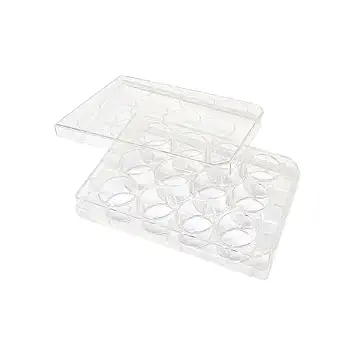 | Best Budget-Friendly Non-Treated Option | Wells per Plate: 12 | Surface Treatment: Non-Treated | Bottom Type: Flat Bottom | VIEW LATEST PRICE | See Our Full Breakdown |
| 12-Well Tissue Culture Plate with Lid – Flat Bottom, Individually Wrapped (Pack of 10) |  | Best for Observation and Identification | Number of Wells: 12 | Material: Polystyrene | Pack Size: 10 units | VIEW LATEST PRICE | See Our Full Breakdown |
| Nest Scientific 712001 Polystyrene 12 Well Cell Culture Plate, Flat Bottom, Tissue Culture Treated, Sterile, Clear, 1 per Pack, 50 per Case |  | Best for Consistent Surface Treatment and Traceability | Material: Polystyrene | Surface Treatment: Vacuum Plasma TCT | Sterility: Sterile | VIEW LATEST PRICE | See Our Full Breakdown |
| CryoKing 12-Well Polystyrene Cell Culture Plates with Lids (Case of 50) |  | Best for Cryogenic and Sealed Cultures | Package Dimensions: 23.62 x 9.84 x 6.89 inches | Item Weight: 12 pounds | Quantity per Case: 50 | VIEW LATEST PRICE | See Our Full Breakdown |
| Cell Culture Plates, 12-Well |  | Best Overall for Versatile Laboratory Use | Manufacturer: Biofargo | Item model number: BIOLOGIX0000P076012PCS1 | Date First Available: April 11, 2025 | VIEW LATEST PRICE | See Our Full Breakdown |
| 4E’s USA 12-Well Cell Culture Plate with Lid, Sterile Pack of 5 |  | Best for Sterile, Ready-to-Use Packaged Experiments | Wells per Plate: 12 | Surface Treatment: Tissue Culture Treated (TC) | Sterility: Sterilized | VIEW LATEST PRICE | See Our Full Breakdown |
| Cell Treat Scientific Products 12-Well Cell Culture Plate with Lid (100 per Case) |  | Best for Large-Scale Suspended Cell Cultures | Number of Wells: 12 | Working Volume Range (mL): 2-4 | Material: Polystyrene | VIEW LATEST PRICE | See Our Full Breakdown |
| 12-Well Bacterial Culture Dishes with Lids – 10-Pack |  | Best for Bacterial and Microbial Lab Experiments | Wells per Dish: 12 | Quantity: 10-Pack | Material: Polystyrene | VIEW LATEST PRICE | See Our Full Breakdown |
| 12 Well Culture Plate with Lid and Flat Bottom – Individual Pack (Pack of 10) |  | Best for Precise Handling and Culture Stability | Material: High-quality PS | Package Dimensions: 10.91 x 5.51 x 3.74 inches | Item Weight: 1.52 pounds | VIEW LATEST PRICE | See Our Full Breakdown |
| WATSON-BIO-LAB 197-12CPS-min Cell Culture Plate, 12-Well, 5pcs, Individual Packing, Perimeter Groove, Made in Japan/Kobe |  | Best for Reliable, Reproducible Cell Growth in Research | Package Dimensions: 7.09 x 5.91 x 5.12 inches | Item Weight: 11.6 ounces | Manufacturer: Fukae Kasei Co., Ltd – Kobe, Japan | VIEW LATEST PRICE | See Our Full Breakdown |
| 12-Well Cell Culture Plates, Pack of 50 – Tissue Culture Treated & Sterile |  | Best for Bulk, Consistent Cell Growth in Research and Education | Package Dimensions: 20 x 11 x 7 inches | Item Weight: 10 pounds | Manufacturer: Zhejiang Yigao Biotechnology | VIEW LATEST PRICE | See Our Full Breakdown |
| 12-Well Cell Culture Plate (Lab Grade) – Pack of 1 for Research and Education | | Best for High-Quality, Single-Use Research and Educational Labs | ASIN: B0FT724JSV | Wells: 12 | Pack Quantity: 1 | VIEW LATEST PRICE | See Our Full Breakdown |
More Details on Our Top Picks
12 Well Cell Culture Plate, Non-TC Treated Cell Culture Plates, Clear Sterile Tissue Culture Plate, Individually Wrapped, 50Pcs/Case
This plate stands out for its high-quality polystyrene construction, providing excellent transparency for visual cell inspection. Its sterilization and optional tissue culture treatment make it adaptable for both adherent and non-adherent cell types. Compared with the SPL Culture Plate 12 Wells, it offers a broader selection of well configurations and user-friendly features like raised edges and contact-reducing feet. The main tradeoff is that its complexity and variety come at a higher price per unit, and some users may find the non-treated version less ideal for specialized attachment needs. This pick makes the most sense for labs requiring a reliable, multipurpose plate that balances quality with flexibility.
Pros:- Premium-grade, transparent polystyrene enhances visual inspection.
- Sterile and available with tissue culture treatment for adherent cell growth.
- Variety of well configurations and user-friendly design features.
Cons:- Higher cost compared to simpler or non-treated options.
- Complexity may be unnecessary for basic cell culture needs.
Best for: Research laboratories needing a durable, versatile plate suitable for multiple cell culture applications.
Not ideal for: Labs focused solely on specialized adherent cell culture requiring specific surface modifications or budget-conscious setups.
- Wells per Plate:12
- Material:Polystyrene
- Sterility:Sterile
- Surface Treatment:Tissue Culture Treated / Untreated
- Design Features:Raised lid edges, contact-reducing feet
- Application:Research, high-throughput screening, stem cell studies
Bottom line: This plate is ideal for labs seeking an all-around reliable, well-designed culture platform with flexible options.
SPL Culture Plate 12 Wells – Non-Treated Flat Bottom Sterile (50/Case)
The SPL Culture Plate 12 Wells offers a straightforward, sterile, non-treated surface ideal for general cell culture tasks. Its flat bottom ensures uniform cell growth and easy imaging, making it suitable for standard laboratory procedures. Compared to the Nest Scientific 712001, it lacks tissue culture treatment, which means it may require additional surface coating for adherent cells, but it compensates with a lower price point. The non-treated surface limits its use for highly specialized attachment-dependent experiments, and the absence of surface modifications might necessitate extra preparation steps. This product makes the most sense for labs conducting routine cell culture where cost efficiency is a priority.
Pros:- Sterile and non-toxic, ensuring reliable basic cell culture.
- Flat bottom design promotes homogeneous cell distribution.
- Cost-effective for large-scale or routine applications.
Cons:- Lacks surface treatment, limiting use with adherent cells without additional coating.
- Non-treated surface may require extra preparation for some protocols.
- Limited to standard applications without specialized features.
Best for: Budget-conscious labs performing basic cell culture without the need for surface treatment.
Not ideal for: Research requiring adherent cell experiments or specialized surface modifications.
- Wells per Plate:12
- Surface Treatment:Non-Treated
- Bottom Type:Flat Bottom
- Sterility:Sterile
- Quantity per Case:50
Bottom line: This plate is a solid choice for basic, cost-efficient cell culture needs where surface treatment isn’t critical.
12-Well Tissue Culture Plate with Lid – Flat Bottom, Individually Wrapped (Pack of 10)
This tissue culture plate emphasizes optical clarity and ease of identification, with high-transparency polystyrene and letter-marked wells. Its unique lid with condensation ring and vent hole helps minimize evaporation, making it ideal for experiments requiring prolonged observation. When compared to the Nest Scientific 712001, it offers better visual access but in a smaller pack size, limiting its use for large-scale studies. The thin walls, while facilitating observation, demand careful handling to prevent damage. This product suits labs prioritizing clear imaging and straightforward well identification, especially for educational or diagnostic applications.
Pros:- High transparency supports clear observation of cell growth.
- Letter-marked wells simplify sample tracking.
- Lid with condensation ring and vent hole reduces evaporation.
Cons:- Limited pack size (only 10 units), less suited for large experiments.
- Thin walls may be prone to damage if mishandled.
- Not designed for high-volume use.
Best for: Laboratories focused on imaging, microscopy, or experiments that require easy well identification and minimal evaporation.
Not ideal for: High-throughput or large-scale production environments due to its small pack size and fragile walls.
- Number of Wells:12
- Material:Polystyrene
- Pack Size:10 units
- Lid Features:Condensation ring, vent hole
- Application:Imaging, microscopy, cell observation
Bottom line: This plate is best suited for observation-focused tasks requiring excellent clarity and identification convenience.
Nest Scientific 712001 Polystyrene 12 Well Cell Culture Plate, Flat Bottom, Tissue Culture Treated, Sterile, Clear, 1 per Pack, 50 per Case
The Nest Scientific 712001 offers a high-clarity, sterile environment with tissue culture treatment suitable for adherent cells. Its individual sterilized packaging ensures contamination-free use, and the vacuum plasma treatment enhances cell attachment. Compared with the CryoKing 12-Well Plates, it provides a more reliable, consistently treated surface for sensitive experiments. Its main drawback lies in its higher cost and possibly limited flexibility for non-adherent cell types. This plate is ideal for labs requiring precise surface treatment and batch traceability for quality control.
Pros:- High clarity and sterilization for visual and contamination control.
- Vacuum plasma tissue culture treatment promotes cell attachment.
- Individually wrapped for traceability and contamination prevention.
Cons:- Higher price point compared to non-treated options.
- Limited to adherent cell applications.
- Bulk purchase necessary to justify cost.
Best for: Research teams needing reliable, well-traced tissue culture plates with consistent surface treatment.
Not ideal for: labs doing non-adherent cell cultures or those on a tight budget without surface treatment needs.
- Material:Polystyrene
- Surface Treatment:Vacuum Plasma TCT
- Sterility:Sterile
- Pack Size:50 units
- Application:Adherent cell culture, consistent results
Bottom line: This plate is perfect for precise, quality-controlled adherent cell culture with traceability needs.
CryoKing 12-Well Polystyrene Cell Culture Plates with Lids (Case of 50)
The CryoKing 12-Well Plates excel in providing a sterile, gamma-irradiated environment with a raised rim for secure sealing. Their flat well bottoms allow for excellent microscopic examination, and the tissue culture treatment supports cell adhesion. When compared to the Ucallm Plates, they are more suitable for cryogenic storage and long-term experiments due to their robust sealing and sterile packaging. However, their single-use design and lack of surface treatment options limit flexibility for some applications. This product is especially suited for labs needing contamination-free, sealed plates for storage or sensitive cell handling.
Pros:- Gamma-irradiated sterile packaging guarantees contamination-free use.
- Raised rim prevents evaporation during long-term experiments.
- Flat bottom design enhances microscopic observation.
Cons:- Single-use design limits reuse and increases cost over time.
- Lack of surface treatment may necessitate additional coating.
- Price and packaging may not suit all budgets.
Best for: Laboratories requiring sterile, sealed plates for cryogenic storage or experiments demanding minimal evaporation.
Not ideal for: High-volume cell culture expansion where reusability or surface treatment is a priority.
- Package Dimensions:23.62 x 9.84 x 6.89 inches
- Item Weight:12 pounds
- Quantity per Case:50
- Well Bottom:Flat
- Sterility:Gamma-irradiated
- Application:Cryogenic storage, sterile experiments
Bottom line: This plate is ideal for secure storage and experiments needing a sealed, sterile environment with minimal evaporation risk.
Cell Culture Plates, 12-Well
This 12-well plate from Biofargo stands out for its high-quality virgin polystyrene construction with a TC-treated surface, making it ideal for maximizing cell adhesion and growth. Its flat-bottom design ensures excellent thermal uniformity and clarity under the microscope, making it especially suitable for detailed microscopic analysis. Compared with the 4E’s USA plates, which are sterile and feature a non-pyrogenic surface but lack a lid, this option offers greater versatility with its reusable design and included lid for contamination control. However, the single-piece packaging might not meet the demands of larger labs needing bulk supplies. This product balances quality and practicality, making it a strong choice for research labs requiring reliable cell culture conditions.
Pros:- TC-treated surface promotes optimal cell attachment
- Flat-bottom enhances thermal consistency and microscopic clarity
- Includes lid for contamination prevention
Cons:- Limited to single-piece use, less cost-effective for bulk needs
- Not designed for high-volume, large-scale experiments
Best for: Research laboratories needing dependable, high-quality plates with good thermal and optical properties.
Not ideal for: Large-scale industrial facilities requiring bulk quantities for high-throughput experiments.
- Manufacturer:Biofargo
- Item model number:BIOLOGIX0000P076012PCS1
- Date First Available:April 11, 2025
Bottom line: This plate is ideal for labs prioritizing cell adhesion and clarity in individual experiments, with moderate scalability limitations.
4E’s USA 12-Well Cell Culture Plate with Lid, Sterile Pack of 5
This set of 5 sterile 12-well plates from 4E’s USA is designed for convenience, with tissue culture-treated, high-clarity surfaces that are DNase/RNase-free, making them ideal for sensitive tissue experiments. Compared to the Cell Treat Scientific plates, which come in bulk and feature raised rims for evaporation control, these are more suited for small-scale or multi-step procedures requiring sterile, ready-to-go plates. The absence of individual lids on each plate could pose contamination risks if not handled carefully. While the smaller pack size limits use for larger projects, this product is perfect for labs needing sterilized, disposable plates for short-term or sensitive applications. This pick is best for small labs or clinical settings needing ready-to-use sterile plates with high observation clarity.
Pros:- Sterilized for contamination-free experiments
- High clarity for easy microscopic observation
- DNase/RNase-free material prevents enzyme interference
Cons:- No individual lid per plate, increasing contamination risk
- Limited pack size may require frequent repurchase for larger projects
Best for: Small research teams or clinical labs with limited throughput needing sterile, pre-treated plates.
Not ideal for: High-throughput or large-scale experiments where bulk, cost-effective options are preferable.
- Wells per Plate:12
- Surface Treatment:Tissue Culture Treated (TC)
- Sterility:Sterilized
- Pack Quantity:5 Plates
Bottom line: This set suits small-scale, sterile cell culture needs where convenience and observation clarity are priorities.
Cell Treat Scientific Products 12-Well Cell Culture Plate with Lid (100 per Case)
Designed with suspension cell cultures in mind, the Cell Treat Scientific 12-well plates feature raised rims to minimize evaporation and cross-contamination, along with clear polystyrene for easy sample viewing. The gamma sterilization process guarantees a sterile environment, and the stacking ring improves handling stability during large experiments. Compared to the individual-packaged 12-well plates, this bulk case offers excellent value for high-volume labs. However, the untreated surface may not support all adherent cell types, limiting its versatility. This product is best suited for labs working with suspension cells where evaporation control and stability are crucial. It is less ideal for adherent cell cultures due to the untreated surface.
Pros:- Raised rim reduces evaporation and cross-contamination
- Gamma sterilization for reliable sterility
- Stacking ring enhances stability during handling
Cons:- Surface untreated for cell attachment, limiting use with adherent cells
- Bulk package may be excessive for small or short-term projects
Best for: High-volume labs conducting suspension cell experiments needing stability and sterility.
Not ideal for: Research involving adherent cell lines requiring surface treatment for attachment.
- Number of Wells:12
- Working Volume Range (mL):2-4
- Material:Polystyrene
- Sterilization Method:Gamma Irradiation
- Lid Included:Yes
- Package Quantity:100 per case
Bottom line: This plate excels in large-scale suspension cell experiments where evaporation and contamination control are priorities.
12-Well Bacterial Culture Dishes with Lids – 10-Pack
This set of 10 sterile polystyrene petri dishes features a sturdy, flat-bottom design ideal for bacterial culture experiments. The thick construction offers stability, and the individually packaged lids provide contamination protection. Compared with the cell culture-specific plates, these are better suited for microbial work, especially with their labeling options for tracking samples. The limited well size options mean they’re less adaptable for mammalian cell culture but excel in microbiology settings. The 10-pack format is convenient for small labs or initial testing phases, though it might not meet the needs of larger microbiology labs requiring higher quantities. This product is tailored for microbial experiments rather than mammalian cell culture.
Pros:- Durable, thick polystyrene construction
- Sterile and individually packaged for easy use
- Marked with labels for sample tracking
Cons:- Limited to microbial applications, not suitable for adherent cells
- Only 10-pack, less suited for large-scale or ongoing experiments
Best for: Microbiology labs focused on bacterial or microbial testing needing durable, sterile petri dishes.
Not ideal for: Research or applications requiring mammalian cell adhesion or specific tissue culture conditions.
- Wells per Dish:12
- Quantity:10-Pack
- Material:Polystyrene
- Sterilization Method:Ethylene Oxide
- Package Dimensions:7.48 x 6.29 x 5.11 inches
- Item Weight:1.43 pounds
Bottom line: This dish set is perfect for microbiology labs needing reliable, sterile containers for bacterial culture work.
12 Well Culture Plate with Lid and Flat Bottom – Individual Pack (Pack of 10)
This high-quality polystyrene 12-well plate from Scienfocus Lab offers a transparent, flat-bottom design with beveled corners, making it easy to handle and compatible with most lab equipment. Its individual gamma-irradiated packaging ensures sterility for sensitive experiments, while the condensation ring helps prevent evaporation, maintaining culture integrity. Compared with the 4E’s USA plates, which are also sterile but lack a condensation ring, this product provides added evaporation control, making it ideal for longer cultures. The 10-pack is suitable for small to medium labs that prioritize precision and ease of handling. However, its specific compatibility with certain equipment could limit use in some settings. This plate is best suited for experiments demanding reliable handling and evaporation prevention.
Pros:- High-quality, transparent PS for visual monitoring
- Individual gamma-irradiated sterile packaging
- Condensation ring prevents evaporation
Cons:- Limited to specific lab equipment compatibility
- Pack of 10 may be too many for small-scale users
Best for: Labs requiring precise culture handling and stability, especially in longer or sensitive experiments.
Not ideal for: High-throughput labs with large needs or those working with adherent cell types needing surface treatment.
- Material:High-quality PS
- Package Dimensions:10.91 x 5.51 x 3.74 inches
- Item Weight:1.52 pounds
- Well Capacity (mL):6.9
- Hole Diameter (mm):22.5
- Depth (mm):17.4
Bottom line: This plate provides enhanced handling and evaporation control, ideal for precise, longer-term cultures in small to mid-sized labs.
WATSON-BIO-LAB 197-12CPS-min Cell Culture Plate, 12-Well, 5pcs, Individual Packing, Perimeter Groove, Made in Japan/Kobe
This plate stands out for its high optical clarity and well-designed perimeter grooves, which significantly improve visibility and handling during delicate cell observations. Compared with bulkier options like the B0GRWQS14Z set, it offers a more precise handling experience, especially for labs prioritizing microscopy. The frosted perimeter groove enhances ease of use, while stackable lids save space in incubators. However, its limited pack size to 5 pieces and the upcoming availability date (June 2025) could restrict immediate bulk purchases. This pick makes the most sense for research labs needing consistent, high-quality observation conditions without sacrificing space efficiency.
Pros:- Frosted perimeter groove improves visibility and handling precision
- Stackable lids maximize incubator space
- High optical clarity enhances microscope observation
- Made in Japan ensures quality manufacturing
Cons:- Limited to 5-piece pack, which may be inconvenient for large-scale use
- Future release date (June 2025) may delay immediate procurement
Best for: Research laboratories that require precise cell handling and high optical clarity for microscopy.
Not ideal for: Large-scale educational labs or facilities needing bulk supplies at lower cost, due to its limited pack size.
- Package Dimensions:7.09 x 5.91 x 5.12 inches
- Item Weight:11.6 ounces
- Manufacturer:Fukae Kasei Co., Ltd – Kobe, Japan
- Model Number:197-12CPS-min
- Availability Date:June 2025
Bottom line: Ideal for research settings prioritizing clarity and handling over bulk volume.
12-Well Cell Culture Plates, Pack of 50 – Tissue Culture Treated & Sterile
This set offers a cost-effective solution for labs needing large quantities, with each plate being tissue culture treated and individually sterile-packed to prevent contamination. Compared to the single-pack B0FT724JSV, the 50-pack provides better value for high-volume needs, although it is substantially heavier at 10 pounds, which requires careful handling. The uniform well structure ensures reproducible results, making it suitable for consistent experimental setups. However, its weight and bulk can be cumbersome, and it’s not designed for diagnostic or therapeutic use. This product makes the most sense for busy labs or educational institutions prioritizing quantity and safety.
Pros:- Sterile, individually packed for contamination control
- Bulk package offers value for large-scale use
- Uniform well structure for reproducibility
- Standard dimensions compatible with common lab equipment
Cons:- Heavy weight (10 lbs) makes handling more challenging
- Not suitable for diagnostic or therapeutic applications
Best for: Large research facilities or educational labs that need a high volume of sterile plates at an affordable price.
Not ideal for: Smaller labs or startups with limited storage space or infrequent use, due to its heaviness and bulk.
- Package Dimensions:20 x 11 x 7 inches
- Item Weight:10 pounds
- Manufacturer:Zhejiang Yigao Biotechnology
- ASIN:B0GRWQS14Z
Bottom line: Best suited for high-volume research or educational environments needing reliable, sterile plates in bulk.
12-Well Cell Culture Plate (Lab Grade) – Pack of 1 for Research and Education
This single-pack lab-grade plate offers high sterility and quality, making it suitable for specific scientific experiments, biotech startups, or classroom demonstrations. Compared with the larger B0GRWQS14Z set, it provides a more flexible, smaller-scale option, though at a higher per-unit cost. Its sterile, high-grade standards ensure reliable results, but it is not intended for diagnostic or therapeutic procedures, limiting its application scope. The convenience of a single pack benefits those needing occasional use or testing small batches. This product suits labs or educational programs that value quality over quantity and focus on research accuracy.
Pros:- Sterile, lab-grade quality ensures reliable research results
- Suitable for scientific experiments and educational demonstrations
- Convenient single-pack for flexible use
- Meets high standards for research applications
Cons:- Limited to one plate per purchase, less economical for high-volume needs
- Not approved for diagnostics or therapeutic applications
Best for: Small research groups, biotech startups, or educational institutions requiring high-quality, single-use plates for experiments.
Not ideal for: Large laboratories or facilities needing bulk supplies, due to its single-pack format and higher cost per plate.
- ASIN:B0FT724JSV
- Wells:12
- Pack Quantity:1
- Sterile:Yes
- Grade:Laboratory
Bottom line: Perfect for targeted, high-quality experiments where flexibility and precision are more important than volume.

How We Picked
Products were evaluated based on a combination of performance, build quality, sterility, and value. We examined customer reviews, manufacturer specifications, and sample reports to assess each plate’s suitability for various laboratory applications. Priority was given to plates that offered consistent tissue culture treatment, reliable packaging, and compatibility with standard lab equipment. The ranking reflects these factors, balancing cost against durability and functionality to recommend options for different user needs and budgets.Factors to Consider When Choosing Best 12-well Culture Plates
Choosing the right 12-well culture plate involves considering several key factors that impact usability, reliability, and experiment outcomes. Understanding these considerations can prevent common mistakes, such as opting for plates that aren’t compatible with your incubation methods or that lack proper sterility. The right choice depends on your specific application, whether cell culture, bacterial growth, or educational purposes, and your budget constraints.Material and Surface Treatment
The material of the plate, typically polystyrene, influences cell adhesion and optical clarity. Tissue culture-treated surfaces promote better cell growth, making them essential for mammalian cell experiments. Non-treated plates are suitable for bacterial cultures or applications where cell attachment isn’t needed. Keep in mind that higher-quality treatment often comes at a higher price, but it can significantly improve experimental results.
Sterility and Packaging
Ensuring plates are sterile and properly packaged reduces contamination risks, which is critical for sensitive research. Individually wrapped plates help maintain sterility during storage and handling. Bulk packaging can be cost-effective but may increase the risk of contamination if not stored correctly. Consider your lab’s sterilization protocols and storage conditions when selecting packaging options.
Design and Compatibility
The flat-bottom design is preferred for microscopy and imaging, providing a clear view of cell growth. Round or different bottom shapes can influence how well cultures adhere or how media distributes. Compatibility with incubators, microscopes, and plate readers is also vital—look for standardized dimensions and features that fit your existing equipment.
Price and Bulk Options
Prices vary widely, with bulk packs offering better per-unit value, especially for high-volume labs or educational settings. However, lower-cost plates may compromise on surface treatment quality or packaging standards. Weigh your budget against the importance of reliability and consistency—sometimes paying a bit more yields better long-term results.
Intended Use and Specific Needs
Your specific application determines which features matter most. For example, cell culture experiments require tissue-treated surfaces with high optical clarity, while bacterial studies may prioritize non-treated, sterile options. Consider whether you need plates for short-term experiments or ongoing research, as this influences material durability and cost-effectiveness.
Frequently Asked Questions
Are tissue culture-treated plates necessary for bacterial cultures?
Generally, tissue culture-treated plates are not necessary for bacterial cultures, as bacteria do not require adhesion-promoting surfaces. Non-treated, sterile plates are typically sufficient and more cost-effective for bacterial growth. However, if your bacterial experiments involve biofilm formation or other specialized processes that benefit from adhesion, then treated surfaces might be advantageous. Always match the plate treatment to your specific bacterial strain and experimental needs.
Can I use these plates for both cell culture and bacterial work?
Yes, but with caution. Plates with tissue culture treatment excel for mammalian cells, providing optimal adhesion and growth conditions. For bacterial work, non-treated and sterile plates are usually better since they prevent unnecessary cell attachment that could interfere with bacterial cultures. Always verify the surface treatment and sterility standards to ensure compatibility with your specific organisms and protocols.
How important is the material quality of the plates for long-term storage?
The quality of the material impacts the plates’ durability and chemical stability over time. High-quality polystyrene resists cracking and warping, especially under repeated sterilization cycles or extended storage. Cheaper materials may degrade or become brittle, risking contamination or damage during handling. Investing in well-made plates can save costs associated with replacements and compromised experiments later.
What should I consider if I need plates for microscopy?
For microscopy, optical clarity and flatness are essential. Plates with a clear, flat bottom provide the best imaging results, ensuring uniform focus and minimal distortion. Look for plates specifically designed for microscopy, often marked as ‘optical-quality’ or with high transparency. Compatibility with your microscope stage and imaging system is also vital to avoid fit issues.
Is it worth paying more for plates made in Japan or other specific countries?
Manufacturing origin can influence quality, consistency, and manufacturing standards. Plates made in Japan, for example, are often recognized for high precision and material consistency, which can be beneficial for sensitive experiments. However, higher cost may not always correlate with better performance for all applications. Balance your budget with the need for reliability, and consider reviews and certifications as additional indicators of quality.
Conclusion
For most researchers, the Nest Scientific 712001 Polystyrene 12 Well Cell Culture Plate offers a well-rounded balance of quality, treatment, and price, making it the best overall choice. Labs prioritizing budget should consider bulk options like the 12-Well Cell Culture Plates, Pack of 50, which provide reliable performance at a lower cost. Those working with microscopy or requiring high optical clarity will find the 12-Well Cell Culture Plates with Flat Bottom ideal. For beginners or educational settings, simpler, individually wrapped options such as the 4E’s USA 12-Well Plate deliver straightforward usability. Finally, labs with specialized needs, like bacterial cultures or long-term storage, should focus on plates with specific surface treatments and material properties as highlighted in this guide.