
Choosing the right smart thermostats with occupancy sensors can transform how your home manages energy, but not all models handle presence detection equally well. The ecobee Smart Thermostat Premium stands out as the best overall pick due to its superior SmartSensor accuracy and air quality monitoring, while the Google Nest Learning Thermostat offers unmatched learning algorithms for those who prefer automation over manual schedules. Buyers often face a tradeoff between ecosystem lock-in and sensor versatility; many premium units require proprietary remote sensors that increase the total cost significantly. If you rely on Alexa or Google Home, compatibility is just as important as the sensor technology itself. Continue reading to see which of these fourteen models aligns with your specific heating needs and smart home setup.

Get home appliances delivered free with Prime
- Fast, free delivery on millions of items
- Prime Video, Amazon Music and more included
- Member-only deals all year
Complete the kit


Key Takeaways
- Remote sensors are the primary differentiator for comfort in multi-story homes, but they often require additional purchases beyond the base thermostat price.
- Ecosystem integration matters more than raw hardware specs; models like the Amazon Smart Thermostat offer deep Alexa integration that standalone units cannot match.
- Occupancy detection methods vary widely, with some models using infrared motion while others rely on Wi-Fi presence or smartphone location data, affecting reliability.
- Installation complexity ranges from simple wall swaps to requiring a C-wire adapter, which can deter renters or DIY beginners without electrical experience.
- Premium models justify their cost through additional features like air quality monitoring and voice assistants, while budget options focus strictly on temperature regulation.
| LUX TQX Matter Wi-Fi Thermostat with Occupancy Detection and Remote Sensor |  | Best for Flexible Smart-Home Setups | Model: TQX-BL | Connectivity: Matter, Wi-Fi, Bluetooth, Zigbee | Smart-home compatibility: Amazon Alexa, Apple HomeKit, Google Assistant, Home Assistant, Samsung SmartThings | VIEW LATEST PRICE | See Our Full Breakdown |
| Honeywell Home T9 Wi-Fi Smart Thermostat |  | Best for Multi-Room Sensor Control | Connectivity: Wi-Fi | Display: Graphical LCD touchscreen | Power: Electric; C-wire required | VIEW LATEST PRICE | See Our Full Breakdown |
| Sensi ST55 Wi-Fi Smart Thermostat |  | Best for Straightforward DIY Setup | Model: ST55 | Connectivity: Wi-Fi | Compatible platforms: Amazon Alexa, Apple HomeKit, Google Assistant, SmartThings, Vera | VIEW LATEST PRICE | See Our Full Breakdown |
| Amazon Smart Thermostat with Alexa and Ring Compatibility |  | Best for Alexa Presence Automation | Model: S6ED3R | Dimensions: 3.56 × 3.56 × 0.84 in | Compatibility: Most 24 V HVAC systems; not compatible with 110–240 V systems | VIEW LATEST PRICE | See Our Full Breakdown |
| Aqara Smart Thermostat W200 with Apple Adaptive Temperature |  | Best Premium Presence-Sensing Hub | HVAC compatibility: About 85% of HVAC systems, including furnaces, air conditioners, heat pumps, boilers, and PTAC units | Display: 4-inch full-color touchscreen | Connectivity: Dual-band Wi-Fi (2.4/5 GHz), Zigbee, Matter 1.4, Thread | VIEW LATEST PRICE | See Our Full Breakdown |
| ecobee Smart Thermostat Enhanced |  | Best for Flexible Installation | Connectivity: Wi-Fi | Display: 4-inch LCD | Voltage: 24 volts | VIEW LATEST PRICE | See Our Full Breakdown |
| Honeywell Home X7S Smart Wi-Fi Programmable Thermostat |  | Best for Touchscreen Scheduling | Display: 4.3-inch customizable touchscreen | Connectivity: Wi-Fi, 2.4 or 5 GHz | Wiring: C-wire required; C-wire adapter voucher included | VIEW LATEST PRICE | See Our Full Breakdown |
| Google Nest Learning Thermostat (4th Gen) with Nest Temperature Sensor (2nd Gen), Obsidian |  | Best for Learning Routines and Room Comfort | Connectivity: Wi-Fi | Display: Touchscreen | Control: Buttons and app | VIEW LATEST PRICE | See Our Full Breakdown |
| Honeywell Home X8S Smart Wi-Fi Thermostat with Room Sensor |  | Best for Included Room Sensing | Display: 5-inch customizable touchscreen | Connectivity: Wi-Fi and Matter | Included sensor: Wireless room sensor, range up to 200 feet | VIEW LATEST PRICE | See Our Full Breakdown |
| Honeywell Home X8S Smart Wi-Fi Thermostat, White |  | Best for a Large Screen and Smart-Home Integration | Display: 5-inch touchscreen | Connectivity: Wi-Fi, 2.4 or 5 GHz | Smart home compatibility: Matter, Amazon Alexa, Google Assistant, and Apple Home | VIEW LATEST PRICE | See Our Full Breakdown |
| ecobee Smart Thermostat Essential |  | Best Entry-Level ecobee | Display: 3.74-inch LCD touchscreen | Connectivity: Wi-Fi | Smart Home Compatibility: Apple HomeKit, Google Assistant, Amazon Alexa | VIEW LATEST PRICE | See Our Full Breakdown |
| Google Nest Smart Thermostat, Charcoal | 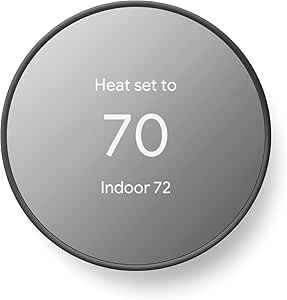 | Best for Minimalist Design | Display: 2-inch LCD | Connectivity: Wi-Fi (2.4/5 GHz), Bluetooth Low Energy | Color: Charcoal | VIEW LATEST PRICE | See Our Full Breakdown |
| ecobee Smart Thermostat Premium with Wi-Fi, Siri, Alexa, and SmartSensor |  | Best Premium Feature Set | Included Sensor: SmartSensor | Voice Assistants: Siri and Alexa | Air Quality Monitor: Built-in | VIEW LATEST PRICE | See Our Full Breakdown |
| Sensi Touch 2 Smart Wi-Fi Thermostat (ST76) |  | Best for Sensor Scalability | Model: Touch 2 ST76 | Room Sensor Support: Up to 15 (sold separately) | Power Source: Common wire (C-wire) | VIEW LATEST PRICE | See Our Full Breakdown |
| smart thermostats with occupancy sensor | Connectivity | Display |
|---|---|---|
| LUX TQX Matter Wi-Fi Thermosta | Matter, Wi-Fi, Bluetooth, Zigbee | — |
| Honeywell Home T9 Wi-Fi Smart | Wi-Fi | Graphical LCD touchscreen |
| Sensi ST55 Wi-Fi Smart Thermos | Wi-Fi | 5-inch LED screen |
| Amazon Smart Thermostat with A | — | — |
| Aqara Smart Thermostat W200 wi | Dual-band Wi-Fi (2.4/5 GHz), Zigbee, Matter 1.4, Thread | 4-inch full-color touchscreen |
| ecobee Smart Thermostat Enhanc | Wi-Fi | 4-inch LCD |
| Honeywell Home X7S Smart Wi-Fi | Wi-Fi, 2.4 or 5 GHz | 4.3-inch customizable touchscreen |
| Google Nest Learning Thermosta | Wi-Fi | Touchscreen |
| Honeywell Home X8S Smart Wi-Fi | Wi-Fi and Matter | 5-inch customizable touchscreen |
| Honeywell Home X8S Smart Wi-Fi | Wi-Fi, 2.4 or 5 GHz | 5-inch touchscreen |
| ecobee Smart Thermostat Essent | Wi-Fi | 3.74-inch LCD touchscreen |
| Google Nest Smart Thermostat | Wi-Fi (2.4/5 GHz), Bluetooth Low Energy | 2-inch LCD |
| ecobee Smart Thermostat Premiu | Wi-Fi | — |
| Sensi Touch 2 Smart Wi-Fi Ther | Wi-Fi (2.4/5.0 GHz) | LCD touchscreen |
More Details on Our Top Picks
LUX TQX Matter Wi-Fi Thermostat with Occupancy Detection and Remote Sensor
The LUX TQX is a strong fit if occupancy-aware display behavior and broad smart-home compatibility matter as much as temperature control. It works with several major platforms, and its occupancy detection can change the screen’s brightness and behavior when someone is nearby. Pair up to five QSZ sensors to blend readings for whole-home comfort, though they cannot control rooms independently. Compared with the Amazon Smart Thermostat, the TQX offers more platform flexibility and more sensor inputs, but its internet connection depends on a Matter-enabled smart-home speaker. It also supports varied systems, including some fan coils and PTAC units, a useful distinction for homes outside standard forced-air setups. Skip it if you want each room regulated on its own or have line-voltage heating.
Pros:- Occupancy detection can adjust display brightness and behavior
- Works with several smart-home ecosystems and control methods
- Can combine thermostat readings with data from up to five QSZ sensors
- Supports conventional, heat-pump, PTAC, and some fan-coil systems
Cons:- Internet connectivity requires a Matter-enabled smart-home speaker
- Remote sensors inform whole-home control rather than regulating rooms independently
- Not compatible with 120 V or 240 V line-voltage systems
Best for: Homeowners with compatible low-voltage HVAC, a Matter-enabled smart-home speaker, and several rooms whose temperatures they want represented in one control strategy.
Not ideal for: People with 120 V or 240 V line-voltage heating, or buyers who need remote sensors to set separate temperatures for individual rooms.
- Model:TQX-BL
- Connectivity:Matter, Wi-Fi, Bluetooth, Zigbee
- Smart-home compatibility:Amazon Alexa, Apple HomeKit, Google Assistant, Home Assistant, Samsung SmartThings
- Power:24 V AC; C-wire
- Supported systems:Conventional up to 2 heat/2 cool; heat pump up to 4 heat/2 cool; PTAC; 2-pipe or 4-pipe fan coil
- Remote sensors:Pairs with up to 5 QSZ sensors; sensors do not control rooms independently
- Auxiliary outputs:Up to 2 for humidification, dehumidification, or mechanical ventilation
- Dimensions:1.1 × 3.5 × 3.5 in
Our verdict“Choose the LUX TQX if you want occupancy-aware display behavior and broad ecosystem support, and can accept speaker-dependent connectivity and whole-home rather than room-by-room sensor control.”
Honeywell Home T9 Wi-Fi Smart Thermostat
The Honeywell Home T9 is the clearest choice here for buyers who want optional room sensors to shape multi-room temperature control. Its Smart Room Sensor support gives it a different emphasis from the LUX TQX, whose remote sensors contribute to whole-home readings but do not regulate rooms independently. The T9 adds Wi-Fi control, scheduling, geofencing, and alerts for temperature and filter changes, so it can suit households with shifting routines. Its touchscreen is a more direct control point than the button-led Sensi ST55, while the ST55 is the more compelling pick when easier DIY setup and avoiding a C-wire are priorities. The T9’s room sensors are optional and sold separately, and the thermostat requires a C-wire. It also does not support electric baseboard heat.
Pros:- Supports optional Smart Room Sensors for multi-room temperature control
- Combines smart scheduling with geofencing
- Provides temperature and filter alerts
- Works with Alexa and Google Assistant voice control
Cons:- Requires a C-wire
- Room sensors are sold separately
- Does not work with electric baseboard heat
Best for: Households with uneven temperatures between rooms that are willing to add separate Smart Room Sensors and have compatible forced-air, hydronic, or heat-pump equipment.
Not ideal for: Buyers without a C-wire, households using electric baseboard heat, or anyone who wants room sensors included in the box.
- Connectivity:Wi-Fi
- Display:Graphical LCD touchscreen
- Power:Electric; C-wire required
- Compatible systems:Forced air (gas, oil, or electric), hot water, steam, and heat pumps with electric backup
- Room sensors:Smart Room Sensor ready; sensors sold separately
- Voice control:Amazon Alexa and Google Assistant
- Mounting:Wall mount
- Certification:ENERGY STAR certified
Our verdict“Pick the T9 if multi-room sensor control is your priority and your HVAC system and wiring are compatible.”
Sensi ST55 Wi-Fi Smart Thermostat
The Sensi ST55 earns its place for buyers who want app-guided installation and everyday smart scheduling without making occupancy sensing the center of the system. The supplied information does not list a built-in occupancy sensor or compatible room sensor, so it is less suited to presence-based automation than the Amazon Smart Thermostat or Aqara W200. In return, it offers step-by-step installation guidance, a built-in level, and no C-wire requirement for most installations—advantages for people replacing a basic thermostat. Its app, button, and voice controls cover the core remote-control needs, while usage reports and maintenance reminders help track routine upkeep. Wiring needs can still vary by HVAC setup, and the listed compatibility does not spell out every system. Choose another model if occupancy-driven adjustments or sensor-based room control are must-haves.
Pros:- App guidance and a built-in level support DIY installation
- C-wire is not required for most installations
- Offers scheduling, remote access, and usage reports
- Supports several voice assistants and smart-home platforms
Cons:- Occupancy detection and room-sensor support are not specified
- C-wire needs vary by HVAC setup
- The listed compatibility does not confirm support for every system
Best for: DIY-minded homeowners replacing a compatible 24 V thermostat who want guided setup, remote access, scheduling, and maintenance reminders.
Not ideal for: Buyers who specifically need occupancy detection, room sensors, or guaranteed compatibility with an unusual HVAC configuration.
- Model:ST55
- Connectivity:Wi-Fi
- Compatible platforms:Amazon Alexa, Apple HomeKit, Google Assistant, SmartThings, Vera
- HVAC compatibility:Air conditioner, boiler, furnace, heat pump
- Power:24 V AC; C-wire not required for most installations
- Display:5-inch LED screen
- Controls:Buttons, app, touch, voice
- Energy certification:ENERGY STAR
Our verdict“Choose the Sensi ST55 for practical DIY smart control, but not if occupancy sensing is the reason you are shopping.”
Amazon Smart Thermostat with Alexa and Ring Compatibility
The Amazon Smart Thermostat makes the most sense for an Alexa-centered home where presence and activity can trigger temperature changes. That puts it closer to the occupancy-focused brief than the Sensi ST55, whose supplied details emphasize scheduling and remote access rather than presence detection. It supports schedules and app control through Alexa or Ring, and a compatible Echo device enables voice commands. The tradeoff is ecosystem dependence: buyers need Alexa hardware for voice control, and the product’s stated Wi-Fi support is limited to 2.4 GHz. It also needs a C-wire or a separately sold power adapter. Compared with the broader-platform LUX TQX, this is a more focused choice for Alexa households, not the better fit for someone seeking wide smart-home compatibility or remote room sensors.
Pros:- Can adjust temperature based on presence and activity through Alexa
- Supports schedules and control in the Alexa or Ring app
- Compatible with most 24 V HVAC systems
- Alexa app provides guided installation
Cons:- Requires a C-wire or separately sold power adapter
- Does not support 5 GHz Wi-Fi
- Voice control requires a compatible Alexa device
Best for: Alexa households that want presence-based temperature changes, app scheduling, and compatibility with most 24 V HVAC systems.
Not ideal for: People using 5 GHz-only Wi-Fi, homes without a C-wire or power adapter, and buyers seeking cross-platform presence control or room sensors.
- Model:S6ED3R
- Dimensions:3.56 × 3.56 × 0.84 in
- Compatibility:Most 24 V HVAC systems; not compatible with 110–240 V systems
- Power:C-wire or separately sold power adapter kit
- Wi-Fi:2.4 GHz, 802.11 b/g/n; no 5 GHz support
- Controls:Three touch buttons, Alexa app, Ring app, compatible Echo device
- Features:Indoor humidity sensing, schedules, emergency heat mode, vacation mode, energy dashboard
- Certifications:ENERGY STAR, ECOLOGO Gold
Our verdict“Pick the Amazon Smart Thermostat if Alexa presence automation is your priority and your Wi-Fi and wiring meet its requirements.”
Aqara Smart Thermostat W200 with Apple Adaptive Temperature
The Aqara W200 is the most feature-rich presence-sensing pick in this group, pairing a 4-inch touchscreen with mmWave detection and broad smart-home support through Matter 1.4. Its included Zigbee hub, Matter controller, and Thread border router give it a wider connected-home role than the more thermostat-focused Honeywell Home T9, whose standout feature is optional room-sensor control. The W200 is better for buyers building around smart-home devices and compatible Apple features, including Adaptive Temperature; some functions require Apple hardware or other separately sold accessories. Its stated HVAC coverage is broad but not universal, and an Aqara C-wire adapter may be needed. Compared with the LUX TQX, it brings mmWave presence detection and more built-in hub functions, but asks buyers to check compatibility and accessory needs more carefully.
Pros:- mmWave radar provides built-in presence detection
- Supports Apple Home, Google Home, Alexa, SmartThings, and Home Assistant through Matter
- Includes a Zigbee hub, Matter controller, and Thread border router
- 4-inch full-color touchscreen provides a large local control surface
Cons:- C-wire adapter is sold separately if needed
- Some features require compatible Apple devices and a home hub
- Wireless sensor is sold separately, and stated HVAC coverage is not universal
Best for: Smart-home enthusiasts with compatible HVAC who want mmWave presence detection, Matter connectivity, and built-in Zigbee and Thread hub functions.
Not ideal for: Buyers seeking a simple thermostat setup, guaranteed compatibility across all HVAC systems, or Apple-specific features without the required Apple devices and home hub.
- HVAC compatibility:About 85% of HVAC systems, including furnaces, air conditioners, heat pumps, boilers, and PTAC units
- Display:4-inch full-color touchscreen
- Connectivity:Dual-band Wi-Fi (2.4/5 GHz), Zigbee, Matter 1.4, Thread
- Presence detection:mmWave radar
- Smart-home platforms:Apple Home, Google Home, Amazon Alexa, Samsung SmartThings, Home Assistant
- Additional functions:Apple Adaptive Temperature, Apple Clean Energy Guidance, compatible Aqara doorbell and lock display
- C-wire:Aqara C-Wire Adapter sold separately if needed
- Included hub functions:Zigbee hub, Matter controller, Thread border router
Our verdict“Choose the Aqara W200 if you want a presence-sensing thermostat that also serves as a smart-home hub, and are prepared to verify HVAC and accessory compatibility.”
ecobee Smart Thermostat Enhanced
The ecobee Smart Thermostat Enhanced pairs occupancy-based temperature adjustments with schedules, making it a practical choice for homes where routines change during the day. Its standout advantage over the Honeywell Home X7S is installation flexibility: the included Power Extender Kit can help in homes without a C-wire, while the X7S requires one. Compatibility with Alexa, Google Assistant, and Apple HomeKit also gives it broad smart-home reach.
The tradeoff is that occupancy at the thermostat does not provide the same room-by-room comfort targeting as a separate sensor. SmartSensors are sold separately, so buyers seeking a ready-made multiroom setup may prefer the Google Nest Learning Thermostat, which includes a temperature sensor. Check HVAC compatibility before buying, even though ecobee states it works with most systems.
Pros:- Adjusts temperature based on occupancy and schedules
- Power Extender Kit is included for homes without a C-wire
- Supports Alexa, Google Assistant, and Apple HomeKit
- App provides remote control and energy monitoring
Cons:- Room-by-room comfort requires separately purchased SmartSensors
- HVAC compatibility needs to be checked before installation
Best for: Homeowners who want occupancy-based scheduling, broad smart-home compatibility, and a way to address missing C-wire wiring.
Not ideal for: Buyers who want included room-by-room sensing or have not confirmed that their HVAC system is compatible.
- Connectivity:Wi-Fi
- Display:4-inch LCD
- Voltage:24 volts
- HVAC compatibility:Air conditioner, boiler, furnace, heat pump, and humidifier
- Smart home compatibility:Amazon Alexa, Android, Apple HomeKit, Google Assistant, and iOS
- Included accessories:Power Extender Kit and Trim Kit
- Warranty:3 years
Our verdict“Choose the ecobee Enhanced if you want occupancy-based control and flexible wiring support, but plan on extra sensors if you need room-level comfort.”
Honeywell Home X7S Smart Wi-Fi Programmable Thermostat
The Honeywell Home X7S suits buyers who want occupancy sensing and programmable routines presented through a large, customizable 4.3-inch touchscreen. It adds humidity monitoring and supports Matter, Alexa, Google Assistant, and Apple Home, so it can fit into several smart-home setups. Compared with the ecobee Smart Thermostat Enhanced, the X7S puts more emphasis on its screen and humidity data, but it gives up the ecobee’s included Power Extender Kit for no-C-wire installations.
That wiring difference matters: the X7S requires a C-wire, although a C-wire adapter voucher is included. It also cannot control 120–240V electric baseboard heat, and some humidity functions may depend on additional HVAC equipment. The Honeywell Home X8S offers a larger screen and an included room sensor; choose the X7S if you prefer a simpler sensor setup and its smaller display fits your needs.
Pros:- Customizable 4.3-inch touchscreen
- Occupancy sensing works alongside programmable schedules
- Supports Matter, Alexa, Google Assistant, and Apple Home
- Includes a C-wire adapter voucher if needed
Cons:- Requires a C-wire for installation
- Not compatible with 120–240V electric baseboard heat
- Some humidity monitoring features may require additional HVAC equipment or accessories
Best for: Households with a compatible 24-volt HVAC system and C-wire that want occupancy sensing, humidity monitoring, and hands-on touchscreen scheduling.
Not ideal for: Homes with electric baseboard heat or no suitable C-wire who need an included room sensor.
- Display:4.3-inch customizable touchscreen
- Connectivity:Wi-Fi, 2.4 or 5 GHz
- Wiring:C-wire required; C-wire adapter voucher included
- Occupancy and scheduling:Occupancy sensing and auto-scheduling
- Humidity:Humidity monitoring
- Heat pump compatibility:Up to 3 heat/2 cool with electric backup
- Conventional system compatibility:Up to 2 heat/2 cool
- Smart home compatibility:Matter, Amazon Alexa, Google Assistant, and Apple Home
Our verdict“Pick the X7S if your wiring and HVAC fit and you want a touchscreen-first thermostat with occupancy sensing, but skip it if you need baseboard support or an included room sensor.”
Google Nest Learning Thermostat (4th Gen) with Nest Temperature Sensor (2nd Gen), Obsidian
The Google Nest Learning Thermostat (4th Gen) is the strongest fit here for buyers who want temperature control to adapt to learned routines and who also need a separate sensor for another room. Its included Nest Temperature Sensor (2nd Gen) gives it an advantage over the ecobee Smart Thermostat Enhanced, which requires a separate SmartSensor purchase for room-by-room comfort. Auto Away Mode adds occupancy-aware control, while app and voice control make adjustments accessible beyond the thermostat itself.
This is a better match for people comfortable with Google’s app-led setup than for buyers seeking the X7S’s large, customizable touchscreen. The round touchscreen and button controls create a different interface, and some features require the Google Home app. The product description says it works with most 24V systems, but compatibility can vary; check your system before installation. Its included sensor measures room temperature, so do not assume it provides every kind of presence detection.
Pros:- Learns preferred temperatures and schedules
- Includes a second-generation Nest Temperature Sensor
- Auto Away Mode supports occupancy-aware temperature control
- Supports app, voice, and Matter smart-home control
Cons:- Compatibility varies by heating and cooling system
- Some features require the Google Home app
Best for: Households with a compatible 24V system that want learned schedules and an included sensor to address temperature differences between rooms.
Not ideal for: Buyers who want a large rectangular touchscreen, prefer to avoid Google Home app features, or need unverified HVAC compatibility.
- Connectivity:Wi-Fi
- Display:Touchscreen
- Control:Buttons and app
- Power:Battery powered; 1 CR2 battery included
- System voltage:24 volts
- Occupancy and scheduling:Auto Away Mode and auto scheduling
- Included sensor:Nest Temperature Sensor (2nd Gen)
- Smart home compatibility:Amazon Alexa, Android, Apple HomeKit, Google Assistant, and iOS
- Finish and shape:Polished Obsidian; round aluminum design
Our verdict“Choose this Nest if learned routines and an included room sensor matter more than the X7S’s large touchscreen interface.”
Honeywell Home X8S Smart Wi-Fi Thermostat with Room Sensor
The Honeywell Home X8S with Room Sensor is the clearest pick for households that want a sensor included in the box rather than adding one later. Its wireless room sensor has a stated range of up to 200 feet, helping the thermostat target comfort beyond the wall where it is mounted. Compared with the Google Nest Learning Thermostat, which also includes a temperature sensor and learns routines, the X8S leans more on its large touchscreen, humidity and ventilation controls, and smart-home integrations.
That feature set comes with installation limits. A C-wire is required, and this model does not support 120–240V electric baseboard heat. Its 5-inch screen is larger than the X7S display, while the X7S may suit buyers who do not need an included room sensor. Doorbell integration also depends on compatible equipment, so it is not a reason to choose the thermostat if you lack a supported Ring or First Alert device.
Pros:- Includes a wireless room sensor with range up to 200 feet
- Customizable 5-inch touchscreen
- Supports Matter, Alexa, Google Assistant, and Apple Home
- Offers humidity and ventilation controls
Cons:- Requires a C-wire; an adapter voucher is included if needed
- Not compatible with 120–240V electric baseboard heat
- Video doorbell and some air-quality functions depend on separate compatible equipment
Best for: Households with a compatible 24-volt HVAC system that want included wireless room sensing and a prominent touchscreen.
Not ideal for: Homes without a C-wire, homes with electric baseboard heat, or buyers who do not need room sensing and prefer a simpler thermostat.
- Display:5-inch customizable touchscreen
- Connectivity:Wi-Fi and Matter
- Included sensor:Wireless room sensor, range up to 200 feet
- Wiring:C-wire required
- Heat pump compatibility:Up to 3 heat/2 cool
- Conventional system compatibility:Up to 2 heat/2 cool
- Smart home compatibility:Amazon Alexa, Google Assistant, and Apple Home
- Mounting:Wall mount
- Color:White
Our verdict“Choose the X8S with Room Sensor if you want room-targeted comfort included, provided your wiring and HVAC system are compatible.”
Honeywell Home X8S Smart Wi-Fi Thermostat, White
The Honeywell Home X8S Smart Wi-Fi Thermostat makes the most sense for buyers drawn to a large display and connected-home controls, rather than a bundled room sensor. Its 5-inch touchscreen, app access, and Matter, Alexa, Google Assistant, and Apple Home support give it a broad control setup. It can also work with compatible First Alert VX1 and Ring streaming doorbells for visitor viewing and two-way conversation. Compared with the X8S with Room Sensor, this version’s supplied details do not list an included room sensor, so it is a weaker choice for targeted room comfort.
Both X8S versions require a C-wire and exclude 120–240V electric baseboard heat. Some air-quality functions may need additional HVAC equipment or accessories, which can add complexity if monitoring is the main reason for buying. The Honeywell Home X7S offers a smaller touchscreen and occupancy sensing; choose this X8S when its larger screen and doorbell features matter more than an explicitly listed occupancy feature or bundled sensor.
Pros:- Customizable 5-inch touchscreen
- Supports Matter, Alexa, Google Assistant, and Apple Home
- Offers remote app control and indoor air-quality monitoring and control
- Can connect with compatible First Alert VX1 and Ring streaming doorbells
Cons:- Requires a C-wire; an adapter voucher is available if needed
- Not compatible with 120–240V electric baseboard heat
- Some features require additional HVAC equipment or accessories
Best for: Owners of compatible 24V HVAC systems who want a large touchscreen, broad smart-home support, and integration with a compatible video doorbell.
Not ideal for: Buyers who need an included room sensor, rely on electric baseboard heat, or want occupancy sensing clearly specified in the product details.
- Display:5-inch touchscreen
- Connectivity:Wi-Fi, 2.4 or 5 GHz
- Smart home compatibility:Matter, Amazon Alexa, Google Assistant, and Apple Home
- Heat pump compatibility:Up to 3 heat/2 cool with electric backup
- Conventional system compatibility:Up to 2 heat/2 cool
- Wiring:C-wire required; C-wire adapter voucher included if needed
- Doorbell compatibility:First Alert VX1 and Ring streaming doorbells
- Power and voltage:Corded electric; 28 volts
- Certification:ENERGY STAR
Our verdict“Pick this X8S for its large touchscreen and compatible doorbell integrations, but choose the room-sensor version if targeted room comfort is your priority.”
ecobee Smart Thermostat Essential
This model serves as the gateway to the ecobee ecosystem for buyers who want smart features without the premium price tag of the Premium line. While it lacks the built-in air quality monitor found in the ecobee Smart Thermostat Premium, it retains the core Auto-Away detection and remote control capabilities that define the brand. I find this option makes the most sense for users who already own Apple HomeKit or Alexa devices and want seamless integration. However, the tradeoff is significant: you must purchase the Power Extender Kit separately if your home lacks a C-wire, unlike some competitors that bundle installation accessories. Compared to the Google Nest, the Essential offers a larger, more detailed touchscreen, though its interface is less minimalist. It is a solid choice for those prioritizing ecosystem compatibility over all-in-one hardware completeness.Pros:- Seamless integration with Apple HomeKit, Google Assistant, and Alexa
- Large 3.74-inch color touchscreen for easy manual adjustments
- Effective Auto-Away feature reduces energy waste when you leave
- Designed for straightforward DIY installation
Cons:- Power Extender Kit for homes without C-wires is sold separately
- Room sensors are not included in the base package
- Lacks built-in air quality monitoring present in higher-end models
Best for: Apple HomeKit users or Alexa owners seeking affordable smart thermostat functionality.
Not ideal for: Renters or DIYers without a C-wire, as the required Power Extender Kit is sold separately.
- Display:3.74-inch LCD touchscreen
- Connectivity:Wi-Fi
- Smart Home Compatibility:Apple HomeKit, Google Assistant, Amazon Alexa
- Power Source:Battery powered
- HVAC Compatibility:Most 24 VAC systems (gas, oil, electric, heat pumps)
- Key Features:Auto-away, auto-scheduling, humidity detection
- Energy Savings Claim:Up to 23%
- C-Wire Requirement:Power Extender Kit required if missing (sold separately)
Our verdict“Choose this if you want ecobee’s smart scheduling and ecosystem integration at a lower entry point, but budget for extra accessories.”
Google Nest Smart Thermostat, Charcoal
This thermostat stands out for its distinctive dial design and focus on simplicity, contrasting sharply with the screen-heavy interfaces of the ecobee Smart Thermostat Essential. Its Auto-Away function uses geolocation to shift to eco mode when your phone leaves the house, a feature that works seamlessly if you are already embedded in the Google Home ecosystem. I note that the 2-inch display is significantly smaller than competitors, which reduces visual clutter but requires the app for detailed schedule management. Unlike the Google Nest Learning Thermostat, this model does not auto-schedule, requiring manual setup, yet it remains more affordable. It is best suited for users who value aesthetic minimalism and reliable remote control over complex on-device customization. The Charcoal finish blends well with modern interiors, though the plastic build feels less premium than metal-bodied alternatives.Pros:- Clean, minimalist dial design fits modern decor
- Reliable geolocation-based Auto-Away feature
- Simple 30-minute DIY installation process
- Strong integration with Google Home and Android devices
Cons:- Small 2-inch display limits on-device control visibility
- Does not automatically learn schedules like the Nest Learning Thermostat
- Some HVAC systems require a C-wire or power accessory
Best for: Minimalists and Google Home users who prefer a clean, dial-based interface over complex screens.
Not ideal for: Users who want detailed on-device scheduling without pulling out their phone, due to the tiny display.
- Display:2-inch LCD
- Connectivity:Wi-Fi (2.4/5 GHz), Bluetooth Low Energy
- Color:Charcoal
- Power Source:Battery powered (2 included)
- Voltage:24 volts
- Control Methods:App, remote, voice control
- Certification:ENERGY STAR
- Material:Plastic
Our verdict“Ideal for those who want a stylish, set-and-forget thermostat that prioritizes app-based control over on-device complexity.”
ecobee Smart Thermostat Premium with Wi-Fi, Siri, Alexa, and SmartSensor
This unit is the most complete package in the ecobee lineup, justifying its higher cost by including a SmartSensor and a Power Extender Kit right out of the box. Unlike the ecobee Smart Thermostat Essential, which forces you to buy these add-ons separately, the Premium handles multi-room temperature balancing and installation compatibility immediately. I consider this the best choice for larger homes where room-to-room temperature variations are a common complaint. The built-in air quality monitor adds a layer of health awareness that competitors like the Google Nest lack. However, the reliance on a subscription for certain security features and the requirement of an Apple home hub for full Siri integration are notable drawbacks. It is a robust, long-term investment for tech-savvy homeowners who want comprehensive environmental control without hidden accessory costs.Pros:- Includes SmartSensor for multi-room temperature balancing
- Built-in air quality monitor with filter reminders
- Bundled Power Extender Kit simplifies installation
- 3-year warranty offers better long-term support
Cons:- Full Siri integration requires an Apple Home Hub
- Certain security features require a paid subscription
- Higher upfront cost compared to basic models
Best for: Homeowners with uneven heating/cooling who want bundled sensors and air quality monitoring.
Not ideal for: Android-only users who do not own an Apple Home Hub, as Siri features are limited.
- Included Sensor:SmartSensor
- Voice Assistants:Siri and Alexa
- Air Quality Monitor:Built-in
- Installation Accessories:Power Extender Kit and trim kit
- Warranty:3 years
- HVAC Compatibility:95% of systems
- Certification:ENERGY STAR
- Connectivity:Wi-Fi
Our verdict“The definitive choice for those who want everything included—sensors, power kits, and air quality tracking—in one premium device.”
Sensi Touch 2 Smart Wi-Fi Thermostat (ST76)
This model distinguishes itself by supporting up to 15 optional room sensors, far exceeding the capacity of standard competitors like the Google Nest or basic ecobee units. While the sensors are sold separately, the ability to scale coverage makes it a powerful option for multi-story homes or large open layouts. I find the touchscreen interface responsive and clear, offering a good balance between manual control and app-based management. However, the strict C-wire requirement is a significant barrier for older homes lacking this common wire, unlike battery-friendly options such as the ecobee Smart Thermostat Essential. It is best suited for tech-savvy users who plan to build a custom sensor network to eliminate hot and cold spots. The energy usage reports provide actionable data, though the lack of bundled sensors means the initial value proposition depends heavily on your willingness to buy accessories.Pros:- Supports up to 15 room sensors for extensive zoning
- Detailed energy usage reports and HVAC alerts
- Compatible with Amazon Alexa, Google Assistant, and SmartThings
- Clear LCD touchscreen for easy manual adjustments
Cons:- Strictly requires a C-wire for installation
- Room sensors are not included and must be bought separately
- Lacks built-in air quality or humidity monitoring
Best for: Users in large or multi-story homes who plan to deploy multiple room sensors for precise zoning.
Not ideal for: Homes without an existing C-wire, as this model does not support battery-only operation.
- Model:Touch 2 ST76
- Room Sensor Support:Up to 15 (sold separately)
- Power Source:Common wire (C-wire)
- Connectivity:Wi-Fi (2.4/5.0 GHz)
- Display:LCD touchscreen
- Dimensions:5.6 x 3.25 x 0.77 in
- Compatibility:Alexa, Google Assistant, SmartThings
- Energy Savings Claim:Approximately 23%
Our verdict“Pick this if you have a C-wire and need the flexibility to expand sensor coverage across a large property.”

How We Picked
I evaluated these fourteen models by prioritizing the accuracy and responsiveness of their occupancy sensors, as this is the core feature driving energy savings and comfort. I compared how each device detects presence—whether through dedicated remote sensors, built-in motion detectors, or smartphone geofencing—and how quickly the thermostat adjusts temperatures based on that data. Reliability was a key factor; I looked for models that avoid ‘ghost heating’ where empty rooms are unnecessarily conditioned due to sensor errors.
I also weighed the balance between hardware quality and software ecosystem compatibility. A thermostat might have excellent sensors, but if it lacks integration with your existing smart home hub or requires a complex wiring setup, it fails as a practical solution for many users. I ranked the products based on this combination of sensor performance, ease of installation, and long-term value, ensuring that both budget-conscious buyers and tech enthusiasts found suitable options.
Factors to Consider When Choosing Smart Thermostats With Occupancy Sensors
Selecting a thermostat with occupancy sensing requires looking beyond the base unit to understand how the system interacts with your home’s layout and your daily habits.Sensor Type and Coverage Area
Not all occupancy sensors work the same way, and this distinction dictates where you can place them. Infrared motion sensors detect movement directly, which is great for active rooms but may miss someone sitting still on a couch. Wi-Fi presence sensing uses device connections to infer occupancy, which can be less intrusive but may fail if you leave your phone behind. Consider the square footage each sensor covers; some remote sensors have a limited range of 20 feet, meaning larger open-plan areas might need multiple units. If your home has thick walls or multiple floors, verify the signal strength specifications before committing to a single-sensor setup.
Ecosystem Lock-In vs. Open Standards
Many manufacturers design their thermostats to work best within their own ecosystem, creating a form of lock-in. Google Nest and Amazon models integrate seamlessly with their respective voice assistants and smart hubs, offering features like presence detection via smart speakers. Conversely, Matter-compatible devices like the LUX TQX offer more flexibility if you plan to switch platforms in the future. If you already own a significant number of devices from one brand, sticking with their thermostat often provides a smoother setup experience and fewer connectivity issues, even if a competitor offers slightly better hardware.
Installation Requirements and C-Wire Availability
A common mistake is purchasing a smart thermostat without checking for a C-wire (common wire), which provides continuous power. While some models offer battery backups or adapter kits, these solutions can be unreliable for devices that actively communicate with remote sensors. If your home lacks a C-wire, you may need to hire an electrician or purchase a proprietary adapter, adding to the total cost. Models like the Honeywell Home X8S often include detailed installation guides, but the physical wiring process remains a barrier for many renters or those uncomfortable with electrical work.
Data Privacy and Local Processing
Occupancy sensors collect data about your movements, raising valid privacy concerns. Some thermostats process this data locally on the device, meaning your movement patterns never leave your home network. Others send data to the cloud for more advanced learning algorithms and remote access. If privacy is a priority, look for models that emphasize local processing or offer clear data deletion policies. Understanding where your data goes helps you decide whether the convenience of cloud-based learning is worth the potential exposure of your daily routine.
Long-Term Maintenance and Sensor Battery Life
Remote sensors are wireless components that require periodic maintenance, primarily battery replacements. CR2032 coin cell batteries are common, but their lifespan varies from six months to two years depending on reporting frequency. Some premium models use rechargeable batteries or USB charging, which can be more convenient but adds a different type of maintenance chore. Factor in the cost and availability of replacement batteries when calculating the long-term ownership cost. A thermostat that requires frequent sensor maintenance might become a nuisance, leading to neglected sensors and reduced energy efficiency over time.
Frequently Asked Questions
Do I really need remote occupancy sensors if I have a single-story home?
For a small, single-story home with an open floor plan, the built-in sensors in the main thermostat unit are often sufficient. Remote sensors provide the most benefit in multi-story homes or houses with closed doors between rooms, where temperature stratification occurs. If your HVAC system struggles to heat the upstairs while keeping the downstairs comfortable, a remote sensor on the upper floor can help the system run longer to meet the demand. However, if your home is compact and temperatures are relatively uniform, you can save money by skipping the extra sensors.
How do occupancy sensors affect my energy bill compared to a standard programmable thermostat?
Occupancy sensors add a layer of automation that reduces the need for manual adjustments, which is where most energy waste happens. A standard programmable thermostat relies on you setting a schedule that matches your life; if you change your routine, you must update the schedule manually. Smart thermostats with occupancy sensors automatically detect when you are away or asleep and adjust the temperature accordingly. This dynamic adjustment typically results in 10-15% savings on heating and cooling costs, provided the sensors are placed correctly and the system is configured to use presence data rather than just time-based schedules.
Can I use third-party sensors with any smart thermostat that supports occupancy detection?
Generally, no. Most manufacturers use proprietary protocols for their remote sensors to ensure low power consumption and reliable connectivity. A Google Nest thermostat requires Nest Temperature Sensors, while an ecobee requires its specific SmartSensors. Mixing brands usually results in connectivity failures or lack of support. There are rare exceptions with open-protocol devices, but they are uncommon in the current market. You must commit to the sensor ecosystem of the thermostat manufacturer you choose, which is a significant factor in long-term flexibility.
What happens if my Wi-Fi goes down? Do the occupancy sensors still work?
Most smart thermostats will continue to operate locally even if your internet connection is lost. The thermostat will maintain its current schedule and respond to local sensor data, such as motion detection, to adjust temperatures. However, you will lose remote control via your smartphone app and cloud-based features like geofencing or weather-based adjustments. Once the Wi-Fi is restored, the device usually reconnects automatically. It is vital to ensure your thermostat has a robust local processing capability so that your home comfort is not entirely dependent on your internet service provider’s reliability.
Are smart thermostats with occupancy sensors compatible with all heating systems?
No, compatibility varies by system type. While most standard forced-air systems (gas, electric, heat pump) are compatible, older systems like millivolt systems (common in older gas fireplaces) or high-voltage line-voltage systems often require specific models or adapters. Always check the manufacturer’s compatibility checker before purchasing. Some models, like the Honeywell Home T9, are designed specifically for multi-stage heating and cooling systems. If you have a dual-fuel system or a boiler, verify that the specific thermostat model supports those configurations to avoid damaging your HVAC equipment or losing warranty coverage.
Conclusion
To choose the right smart thermostats with occupancy sensors, match the model to your home’s layout and your existing tech ecosystem. The ecobee Smart Thermostat Premium is the best overall choice for most users, offering the best balance of sensor accuracy, air quality features, and broad compatibility. For those deeply embedded in the Google ecosystem, the Google Nest Learning Thermostat remains the premium standard for automation. Budget-conscious buyers should consider the Amazon Smart Thermostat for its low entry price and Alexa integration, while Honeywell offers solid traditional reliability for those wary of cloud-dependent features. Evaluate your wiring situation and sensor needs carefully, as the right choice depends less on brand prestige and more on how well the device fits your specific living environment.