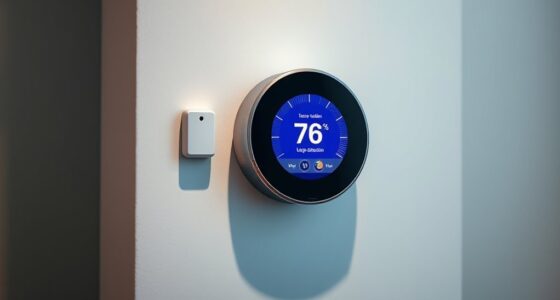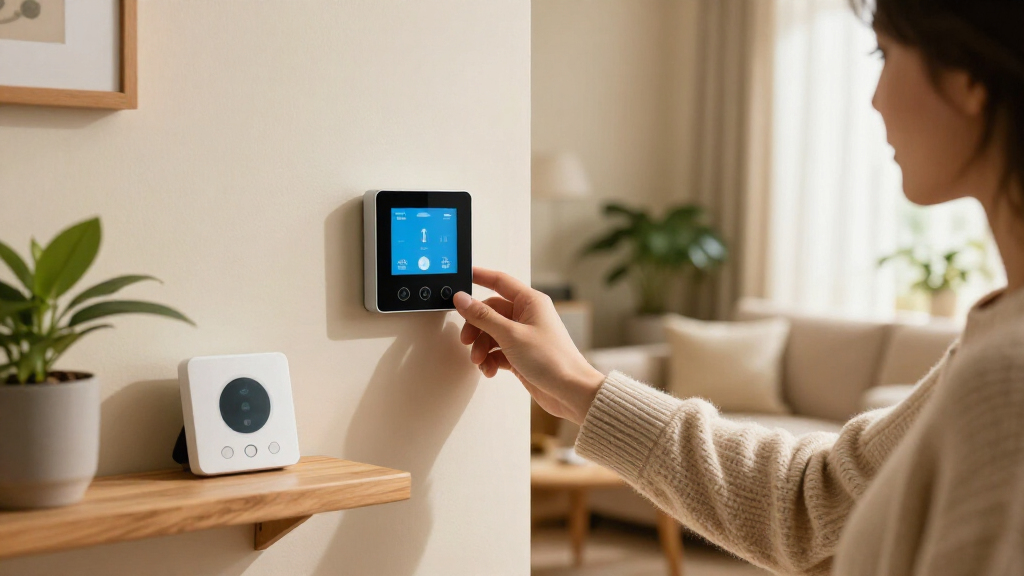
Smart thermostats with room sensors can help address uneven temperatures by using readings from rooms beyond the thermostat’s location. My best overall pick is the Google Nest Learning Thermostat (4th Gen) with Nest Temperature Sensor (2nd Gen), while the ecobee Smart Thermostat Premium stands out for its broader smart-home features and the Honeywell Home T9 for a straightforward sensor-focused setup. The main tradeoffs are sensor coverage and scheduling, compatibility with your HVAC system, and how much app or voice-assistant functionality you want. Some options bundle a sensor, while others may require separate accessories or use a distinct ecosystem. Read on for the full comparison and help matching a thermostat to your home.

Get home appliances delivered free with Prime
- Fast, free delivery on millions of items
- Prime Video, Amazon Music and more included
- Member-only deals all year
Complete the kit



Key Takeaways
- The 4th-generation Nest bundle leads this comparison for shoppers who want a current Nest thermostat paired with a room sensor; the 3rd-generation bundle is a different route for homes already considering that older thermostat generation.
- ecobee offers the widest range of roles in this lineup: Premium is the feature-rich pick, Essential favors a simpler setup, and the ecobee3, ecobee4, and Lite bundles give buyers distinct older-model and sensor-package options.
- Honeywell’s T9, X8S, ElitePRO S1200, and T10+ Pro are not interchangeable. Their differences in product line, sensor approach, and features make model-specific compatibility checks more useful than choosing by brand alone.
- A bundled room sensor can simplify the first setup, but it does not guarantee coverage for every room; sensor count, placement, and the thermostat’s ability to use readings for comfort control still matter.
- The Sensi Touch 2 and TQX Matter thermostat widen the choice beyond Nest, ecobee, and Honeywell, but buyers should give extra attention to sensor support, smart-home compatibility, and the details of their own HVAC system.
| Google Nest Learning Smart Thermostat (3rd Generation, Stainless Steel) Bundle with Temperature Sensor and Matte White Wall Plate |  | Best for Automatic Scheduling | Model: Nest Learning Smart Thermostat, 3rd Generation | Thermostat color: Stainless steel | Connectivity: Wi-Fi | VIEW LATEST PRICE | See Our Full Breakdown |
| Honeywell Home X8S Smart Wi-Fi Thermostat with Room Sensor, Black |  | Best for Smart-Home Platform Flexibility | Display: 5-inch touchscreen | Connectivity: Wi-Fi, 2.4 or 5 GHz | Included sensor: Wireless room sensor, range up to 200 ft | VIEW LATEST PRICE | See Our Full Breakdown |
| Honeywell Home ElitePRO S1200 Wi-Fi Smart Thermostat with Wireless Room Sensor |  | Best for HVAC System Flexibility | Model: YTHX1200W5 | Display: 5-inch capacitive touchscreen, 800 x 400 | Connectivity: Wi-Fi | VIEW LATEST PRICE | See Our Full Breakdown |
| Honeywell Home T9 Wi-Fi Smart Thermostat |  | Best for Adding Sensors Over Time | Connectivity: Wi-Fi | Display: Graphical LCD touchscreen | Room sensors: Ready for optional Smart Room Sensors; sold separately | VIEW LATEST PRICE | See Our Full Breakdown |
| Google Nest Learning Thermostat (4th Gen) with Nest Temperature Sensor (2nd Gen), Silver |  | Best Premium Nest Sensor Bundle | Generation: 4th generation | Color: Polished silver | Display: 3.5-inch touchscreen | VIEW LATEST PRICE | See Our Full Breakdown |
| Honeywell T10+ Pro Smart Thermostat with RedLINK 3.0 and Indoor Air Sensor |  | Best for Multi-Sensor Comfort Control | Model: THX321WFS3001W | System compatibility: Compatible 24 VAC heating and cooling systems | Connectivity: RedLINK 3.0 | VIEW LATEST PRICE | See Our Full Breakdown |
| ecobee Smart Thermostat Essential Wi-Fi Thermostat |  | Best for ecobee Sensor-System Shoppers | Connectivity: Wi-Fi | Display: 3.74-inch LCD touchscreen | Power: Battery powered; Power Extender Kit sold separately for homes without a C-wire | VIEW LATEST PRICE | See Our Full Breakdown |
| TQX Matter Wi-Fi Thermostat with Occupancy Detection and Remote Sensor |  | Best for Matter Homes | Model: TQX-BL | Connectivity: Matter, Wi-Fi, Bluetooth, and Zigbee | Power: 24 V AC; C-wire system power | VIEW LATEST PRICE | See Our Full Breakdown |
| Sensi Touch 2 Smart Thermostat, Wi-Fi, Alexa Compatible, Energy Star Certified, ST76 |  | Best for DIY Sensor Expansion | Model: Touch 2 ST76 | Connectivity: Wi-Fi, 2.4 GHz and 5.0 GHz | Display: LCD touchscreen | VIEW LATEST PRICE | See Our Full Breakdown |
| Honeywell Home ElitePRO S1200 Smart Thermostat with Room Sensor |  | Best for Large-Screen Smart-Home Control | Model: YTHX1200B6/U | Display: 5-inch capacitive touchscreen, 800 × 400 | Connectivity: Dual-band Wi-Fi, Bluetooth BLE, RedLINK 3.0, and Matter | VIEW LATEST PRICE | See Our Full Breakdown |
| ecobee Smart Thermostat Premium with Wi-Fi, Siri and Alexa, and SmartSensor |  | Best Overall for Sensor-Led Comfort | Connectivity: Wi-Fi | Included sensor: SmartSensor | Voice assistants: Siri and Alexa built in | VIEW LATEST PRICE | See Our Full Breakdown |
| ecobee3 Smart Wi-Fi Thermostat with Remote Sensor, 2nd Generation |  | Best for Multi-Room Sensor Expansion | Connectivity: Wi-Fi | Included sensor: 1 remote temperature and occupancy sensor | Maximum sensors: 32 | VIEW LATEST PRICE | See Our Full Breakdown |
| ecobee4 Smart Thermostat with Built-in Alexa and Room Sensor |  | Best for Alexa-First Homes | Connectivity: Wi-Fi | Included component: Room sensor | Power and voltage: Hardwired; 24 volts | VIEW LATEST PRICE | See Our Full Breakdown |
| ecobee3 Lite Smart Thermostat with Whole Home Sensors Bundle |  | Best Sensor Bundle for Door-Aware Control | Model: EB-STATE3LTVP2-01 | Connectivity: Wi-Fi | Included sensors: 1 SmartSensor and 1 door-and-window sensor | VIEW LATEST PRICE | See Our Full Breakdown |
| smart thermostats with room sensor | Connectivity | Display | Included sensor | Model |
|---|---|---|---|---|
| Google Nest Learning Smart The | Wi-Fi | LCD | Google Nest Temperature Sensor T5000SF | Nest Learning Smart Thermostat, 3rd Generation |
| Honeywell Home X8S Smart Wi-Fi | Wi-Fi, 2.4 or 5 GHz | 5-inch touchscreen | Wireless room sensor, range up to 200 ft | — |
| Honeywell Home ElitePRO S1200 | Wi-Fi | 5-inch capacitive touchscreen, 800 x 400 | Wireless RedLINK sensor for temperature, humidity, and motion | YTHX1200W5 |
| Honeywell Home T9 Wi-Fi Smart | Wi-Fi | Graphical LCD touchscreen | — | — |
| Google Nest Learning Thermosta | Wi-Fi | 3.5-inch touchscreen | Nest Temperature Sensor, 2nd generation | — |
| Honeywell T10+ Pro Smart Therm | RedLINK 3.0 | — | — | THX321WFS3001W |
| ecobee Smart Thermostat Essent | Wi-Fi | 3.74-inch LCD touchscreen | — | — |
| TQX Matter Wi-Fi Thermostat wi | Matter, Wi-Fi, Bluetooth, and Zigbee | — | One remote sensor; supports up to five QSZ remote sensors | TQX-BL |
| Sensi Touch 2 Smart Thermostat | Wi-Fi, 2.4 GHz and 5.0 GHz | LCD touchscreen | — | Touch 2 ST76 |
| Honeywell Home ElitePRO S1200 | Dual-band Wi-Fi, Bluetooth BLE, RedLINK 3.0, and Matter | 5-inch capacitive touchscreen, 800 × 400 | Wireless room sensor | YTHX1200B6/U |
| ecobee Smart Thermostat Premiu | Wi-Fi | — | SmartSensor | — |
| ecobee3 Smart Wi-Fi Thermostat | Wi-Fi | 2-inch touchscreen | 1 remote temperature and occupancy sensor | — |
| ecobee4 Smart Thermostat with | Wi-Fi | Digital | — | — |
| ecobee3 Lite Smart Thermostat | Wi-Fi | — | — | EB-STATE3LTVP2-01 |
More Details on Our Top Picks
Google Nest Learning Smart Thermostat (3rd Generation, Stainless Steel) Bundle with Temperature Sensor and Matte White Wall Plate
The third-generation Nest Learning Thermostat suits buyers who want the thermostat to build a routine rather than rely on a manually created schedule. Its included Nest Temperature Sensor lets you prioritize a chosen room, which can help when the thermostat’s location does not reflect comfort in a bedroom or other frequently used space. Compared with the newer Nest Learning Thermostat (4th Gen), this bundle includes an earlier-generation sensor and thermostat, but adds a matte white wall plate alongside its stainless-steel control. Home/Away Assist can adjust settings when the home is empty, and the listed compatibility covers many common systems. The tradeoff is that the sensor depends on a compatible Nest thermostat, and buyers seeking the newer model’s Matter support should look at the fourth-generation Nest instead.
Pros:- Learns preferred temperatures and creates a schedule automatically
- Included Nest Temperature Sensor supports temperature focus in a selected room
- Home/Away Assist can adjust settings when the home is unoccupied
- Listed as compatible with 95% of heating and cooling systems
Cons:- The room sensor requires a compatible Nest thermostat
- It is an older-generation Nest option compared with the included-sensor 4th Gen model
- The stainless thermostat and matte white wall plate have different finishes
Best for: Households with a compatible HVAC system that want automatic schedule learning and a sensor for one room that often feels warmer or cooler than the thermostat area.
Not ideal for: Buyers who need broad platform flexibility or a room sensor that works independently of a Nest thermostat; the included sensor is tied to the compatible Nest setup.
- Model:Nest Learning Smart Thermostat, 3rd Generation
- Thermostat color:Stainless steel
- Connectivity:Wi-Fi
- Control:App, Google Assistant, Nest
- Display:LCD
- Compatible systems:95% of heating and cooling systems
- Included sensor:Google Nest Temperature Sensor T5000SF
- Included wall plate:elago matte white wall plate
Our verdict“Choose this bundle if you want Nest’s automatic scheduling and a room sensor in one package, but pick the 4th Gen Nest if newer smart-home compatibility matters more.”
Honeywell Home X8S Smart Wi-Fi Thermostat with Room Sensor, Black
The Honeywell Home X8S is the most platform-flexible pick here: it supports Matter, Alexa, Google Assistant, and Apple Home while including a wireless room sensor. That mix makes it a strong fit for households whose devices span different ecosystems. Its 5-inch touchscreen and app controls offer a more direct interface than the learning-focused Google Nest Learning Thermostat (3rd Gen), while humidity and indoor air-quality controls broaden its role beyond room temperature. The sensor’s listed range of up to 200 feet can help place it away from the thermostat, subject to the home layout. There are practical limits: installation requires a C-wire, and the thermostat does not support 120–240V electric baseboard heat. Doorbell video viewing is also an add-on feature that requires a compatible camera sold separately.
Pros:- Included wireless room sensor has a stated range of up to 200 feet
- Supports Matter, Alexa, Google Assistant, and Apple Home
- 5-inch touchscreen plus app and voice controls
- Includes indoor air-quality and humidity controls
Cons:- Requires a C-wire for installation
- Does not work with 120–240V electric baseboard heat
- Compatible doorbell video features require a separately purchased camera
Best for: Homeowners with a C-wire who want an included room sensor and a thermostat that can fit into a mixed Matter, Apple, Google, or Alexa smart-home setup.
Not ideal for: Renters or owners of homes without a C-wire, and households heated by 120–240V electric baseboards.
- Display:5-inch touchscreen
- Connectivity:Wi-Fi, 2.4 or 5 GHz
- Included sensor:Wireless room sensor, range up to 200 ft
- Heat pump compatibility:Up to 3 heat/2 cool
- Conventional system compatibility:Up to 2 heat/2 cool
- Wiring:C-wire required
- Smart-home compatibility:Matter, Amazon Alexa, Google Assistant, Apple Home
- Color:Black
Our verdict“Pick the X8S if broad smart-home compatibility and an included sensor matter more than avoiding a C-wire installation requirement.”
Honeywell Home ElitePRO S1200 Wi-Fi Smart Thermostat with Wireless Room Sensor
The ElitePRO S1200 stands out for its support of a wide range of heating and cooling configurations, including up to 4H/2C heat pump or 3H/3C conventional systems. That makes it a stronger match than the more limited X8S for some complex residential setups, while its included RedLINK room sensor measures temperature, humidity, and motion. A 5-inch capacitive touchscreen and indoor readings for humidity, VOCs, and estimated CO2 give this model more monitoring detail than the room-focused Honeywell Home T9. Those extras come with real compromises: a C-wire is required, and the supplied product information lists no warranty. Its doorbell video capability also depends on a compatible First Alert or Ring device sold separately, so I would favor a simpler thermostat if those monitoring features are not useful.
Pros:- Supports up to 4H/2C heat pump or 3H/3C conventional configurations
- Included RedLINK sensor tracks temperature, humidity, and motion
- 5-inch touchscreen and indoor humidity, VOC, and estimated CO2 monitoring
- Supports residential and light commercial systems
Cons:- Requires a C-wire
- Manufacturer product data lists no warranty
- Doorbell video requires a compatible First Alert or Ring device sold separately
Best for: Owners of more complex residential or light commercial HVAC systems who want an included sensor with temperature, humidity, and motion readings.
Not ideal for: Buyers who want a clearly stated warranty, lack a C-wire, or need a thermostat centered on simple room-temperature scheduling rather than extra monitoring.
- Model:YTHX1200W5
- Display:5-inch capacitive touchscreen, 800 x 400
- Connectivity:Wi-Fi
- Power:24 VAC, 60 Hz, 0.11 A; C-wire required
- System compatibility:Up to 4H/2C heat pump or 3H/3C conventional
- Included sensor:Wireless RedLINK sensor for temperature, humidity, and motion
- Air-quality monitoring:Indoor humidity, VOC, and estimated CO2
- Warranty:No warranty listed
Our verdict“Choose the ElitePRO S1200 for complex HVAC configurations and richer sensor data, but favor the T9 if you want a simpler room-sensor setup.”
Honeywell Home T9 Wi-Fi Smart Thermostat
The Honeywell Home T9 makes sense for buyers who want to start with a thermostat and add room coverage later: it is ready for optional Smart Room Sensors, which are sold separately. That modular approach contrasts with the Nest bundles and Honeywell X8S, which include a sensor from the outset. The T9 pairs remote app control with geofencing, schedules, energy reports, and alerts, so its value is in straightforward whole-home management rather than the X8S’s broader Matter support or the ElitePRO S1200’s air-quality monitoring. Compatibility covers several common forced-air, hot-water, steam, and heat-pump systems, but not 120–240V electric baseboard heat. A C-wire is required, and buyers who need room-based temperature focus immediately must budget for compatible sensors separately.
Pros:- Supports optional Smart Room Sensors for room-by-room temperature focus
- Geofencing and schedules can automate heating and cooling adjustments
- Provides energy reports plus filter and temperature alerts
- Works with Alexa and Google Assistant
Cons:- Smart Room Sensors are sold separately
- Requires a C-wire
- Incompatible with 120–240V electric baseboard heat
Best for: Homeowners with compatible HVAC who want app control and scheduling now, with the option to add room sensors as comfort needs become clearer.
Not ideal for: Buyers who want an included room sensor, lack a C-wire, or use 120–240V electric baseboard heating.
- Connectivity:Wi-Fi
- Display:Graphical LCD touchscreen
- Room sensors:Ready for optional Smart Room Sensors; sold separately
- Voice control:Alexa and Google Assistant
- Compatible systems:Forced air, hot water, steam, and heat pumps with electric backup
- Incompatible systems:120–240V electric baseboard heat
- Wiring:C-wire required
- Mounting:Wall mount
Our verdict“Choose the T9 if you prefer to expand room sensing gradually, but select a Nest or X8S bundle if you want a sensor included upfront.”
Google Nest Learning Thermostat (4th Gen) with Nest Temperature Sensor (2nd Gen), Silver
This 4th-generation Nest bundle is the strongest fit for buyers who want an included room sensor and a newer Nest platform. The second-generation Nest Temperature Sensor targets hot and cold spots, while the thermostat learns preferences and adjusts its schedule. Compared with the third-generation Nest bundle, this model adds listed Matter compatibility and works with Apple HomeKit as well as Google Assistant and Alexa-compatible setups. It also does not require a C-wire in most homes, which may simplify installation compared with the Honeywell X8S and T9. Compatibility still depends on the home’s HVAC equipment, and some smart-home controls require compatible devices or apps. Buyers who want the most detailed air-quality readings should look to the ElitePRO S1200 instead; the Nest prioritizes learning and room comfort rather than broader environmental monitoring.
Pros:- Includes a second-generation Nest Temperature Sensor
- Learns temperature preferences and adjusts its schedule
- Matter compatibility and support for common voice platforms
- C-wire is not required in most homes
Cons:- Compatibility depends on the home’s heating and cooling system
- Some smart-home controls require compatible devices or apps
- Does not list the indoor air-quality measurements offered by the ElitePRO S1200
Best for: Nest-focused households with a compatible 24V system that want automatic scheduling, a current-generation included room sensor, and Matter support.
Not ideal for: Buyers who need detailed VOC or estimated CO2 monitoring, or whose heating system is not compatible with a 24V thermostat.
- Generation:4th generation
- Color:Polished silver
- Display:3.5-inch touchscreen
- Connectivity:Wi-Fi
- System compatibility:Most 24V heating and cooling systems
- C-wire:Not required in most homes
- Smart-home compatibility:Matter, Amazon Alexa, Apple HomeKit, Google Assistant
- Included sensor:Nest Temperature Sensor, 2nd generation
Our verdict“Choose the 4th Gen Nest for a newer learning thermostat with an included sensor and Matter support, unless air-quality monitoring is your priority.”
Honeywell T10+ Pro Smart Thermostat with RedLINK 3.0 and Indoor Air Sensor
The Honeywell T10+ Pro is a strong fit for buyers who want room sensors to do more than report temperature: its compatible RedLINK 3.0 sensors can also detect humidity and motion. That gives it a broader sensing approach than the Sensi Touch 2, whose room-sensor setup is centered on balancing temperatures. The included indoor air sensor and support for scheduled or location-based control add flexibility for homes where comfort needs shift during the day. It also supports compatible humidification, dehumidification, and ventilation equipment. The tradeoff is a more involved setup: some system functions require a compatible equipment interface module, and buyers should confirm their HVAC configuration before choosing it. I’d pick this over simpler options when sensor data and accessory control matter more than a quick, basic installation.
Pros:- RedLINK 3.0 sensors can monitor temperature, humidity, and motion
- Includes an indoor air sensor
- Supports seven-day programming and location-based temperature control
- Can manage compatible humidification, dehumidification, and ventilation equipment
Cons:- Some system functions require a compatible equipment interface module
- Sensor and accessory compatibility needs checking against the installed HVAC system
- Available product details do not fully specify smart scheduling behavior
Best for: Homeowners with compatible 24 VAC HVAC equipment who want room sensing for temperature, humidity, and occupancy alongside control of indoor-air accessories.
Not ideal for: Buyers seeking a straightforward sensor thermostat with clearly documented setup, or homes whose equipment requires an interface module they do not plan to add.
- Model:THX321WFS3001W
- System compatibility:Compatible 24 VAC heating and cooling systems
- Connectivity:RedLINK 3.0
- Sensor functions:Temperature, humidity, and motion with compatible indoor sensors
- Scheduling:7-day programmable; location-based control
- Controller:Touchscreen
- Smart assistants:Amazon Alexa and Google Assistant
- Dimensions:6 × 2.5 × 5.5 in
Our verdict“Choose the T10+ Pro if you want multi-function RedLINK sensing and compatible air-quality accessory control, and can handle a more involved system check.”
ecobee Smart Thermostat Essential Wi-Fi Thermostat
The ecobee Smart Thermostat Essential makes sense for buyers who want accessible app and touchscreen control, then may add room sensing later. Its scheduling, auto-away mode, and broad smart-home support provide a useful base, but the SmartSensor is sold separately; unlike the TQX Matter Wi-Fi Thermostat, this package does not include a remote sensor. That distinction matters if your main reason for buying is to address a cold bedroom or warm upstairs room right away. The Essential supports many 24 VAC system types and works with Apple HomeKit, Google Assistant, and Alexa, though compatibility still needs checking. Homes without a C-wire may need the separately sold Power Extender Kit. I’d choose it for a flexible ecobee starting point, not for an out-of-box room-sensor setup.
Pros:- Supports Apple HomeKit, Google Assistant, and Amazon Alexa
- Auto-away and auto-scheduling support hands-off temperature management
- Compatible with a wide range of 24 VAC HVAC equipment
- Offers both app controls and a color touchscreen
Cons:- SmartSensor is sold separately
- Homes without a C-wire may need a separately sold Power Extender Kit
- System compatibility should be checked before installation
Best for: Smart-home owners who want an ecobee thermostat with scheduling and auto-away, and are comfortable buying a compatible SmartSensor separately.
Not ideal for: Buyers who need a room sensor included in the box or want to avoid checking C-wire and HVAC compatibility before installation.
- Connectivity:Wi-Fi
- Display:3.74-inch LCD touchscreen
- Power:Battery powered; Power Extender Kit sold separately for homes without a C-wire
- Compatible systems:Most 24 VAC HVAC equipment, including furnaces, boilers, heat pumps, and dual-fuel systems
- Smart-home compatibility:Apple HomeKit, Google Assistant, and Amazon Alexa
- Features:Auto-away, auto-scheduling, fan control, programmable schedules, and indoor humidity detection
- Mounting:Wall mount
- Room sensor:SmartSensor sold separately
Our verdict“Pick the ecobee Essential if you want its app, scheduling, and smart-home support and are willing to add room sensing separately.”
TQX Matter Wi-Fi Thermostat with Occupancy Detection and Remote Sensor
The LUX TQX is the clearest match here for buyers building around Matter: it supports major smart-home platforms and includes one remote sensor, unlike the ecobee Essential, which requires a separate SmartSensor purchase. Its occupancy detection and learning can support responsive automation, while the included Lux Power Bridge addresses homes without a C-wire. There is a key limitation, though: readings from its sensors adjust the overall home temperature; they do not independently regulate each room. That makes the TQX better for influencing which conditions guide the thermostat than for room-by-room zoning. It supports up to five QSZ sensors, but requires a compatible 24 V system and cannot be used with line-voltage heating. I’d favor it for Matter integration and included sensing, not independent room control.
Pros:- Supports Matter and major smart-home platforms
- Includes one remote sensor and pairs with up to five QSZ sensors
- Occupancy detection and learning can inform automation
- Includes a Lux Power Bridge for C-wire replacement
Cons:- Remote sensors adjust the overall home temperature rather than controlling rooms independently
- Not compatible with 120 V or 240 V line-voltage systems
- Requires a compatible 24 V HVAC system
Best for: Matter-focused smart-home owners with compatible 24 V HVAC who want an included remote sensor and occupancy-based automation.
Not ideal for: People who need separate room-by-room temperature control or have 120 V or 240 V line-voltage heating.
- Model:TQX-BL
- Connectivity:Matter, Wi-Fi, Bluetooth, and Zigbee
- Power:24 V AC; C-wire system power
- Included sensor:One remote sensor; supports up to five QSZ remote sensors
- Sensor behavior:Combined readings adjust overall home temperature; rooms are not controlled independently
- System capacity:Up to 2 heat and 2 cool conventional; up to 4 heat and 2 cool heat pump
- Auxiliary outputs:Up to 2 for humidification, dehumidification, or mechanical ventilation
- Display and control:LED; app, remote, touch, and voice control
Our verdict“Choose the TQX for Matter compatibility and an included remote sensor if whole-home temperature adjustment meets your needs.”
Sensi Touch 2 Smart Thermostat, Wi-Fi, Alexa Compatible, Energy Star Certified, ST76
The Sensi Touch 2 suits homeowners who want a guided DIY installation and the option to build a larger room-sensor network later. It can pair with up to 15 Sensi Room Sensors, giving it more stated sensor capacity than the TQX, which supports up to five QSZ sensors. But the Sensi sensors are sold separately, so the thermostat alone does not address uneven room temperatures. App access, schedules, usage reports, and maintenance reminders give buyers practical tools for managing the system; Alexa and Google Assistant add voice control. Compared with the Honeywell T10+ Pro, the Sensi has a simpler stated sensor role and less emphasis on humidity and motion sensing. Its main installation constraint is firm: it requires a C-wire. I’d choose it for DIY setup and room-sensor expansion, provided that wiring requirement is met.
Pros:- App-guided DIY installation
- Pairs with up to 15 Sensi Room Sensors
- Provides schedules, remote access, usage reports, and maintenance reminders
- Works with Amazon Alexa and Google Assistant
Cons:- Requires a C-wire
- Room sensors are sold separately
- HVAC compatibility should be verified before installation
Best for: DIY-minded homeowners with a C-wire who want app-guided setup and the option to add multiple Sensi Room Sensors over time.
Not ideal for: Households without a C-wire or buyers who want room sensors included with the thermostat.
- Model:Touch 2 ST76
- Connectivity:Wi-Fi, 2.4 GHz and 5.0 GHz
- Display:LCD touchscreen
- Power:Common wire (C-wire required)
- Compatible systems:Air conditioner, boiler, furnace, and heat pump
- Room sensor support:Up to 15 Sensi Room Sensors, sold separately
- Voice assistants:Amazon Alexa and Google Assistant
- Dimensions:5.6 × 3.25 × 0.77 in
Our verdict“Pick the Sensi Touch 2 if you have a C-wire and want a DIY-friendly thermostat that can expand to many separately purchased room sensors.”
Honeywell Home ElitePRO S1200 Smart Thermostat with Room Sensor
The Honeywell Home ElitePRO S1200 pairs an included wireless room sensor with a 5-inch touchscreen, making it the pick for buyers who want sensor hardware and a generous on-wall control surface in one setup. Its Matter support and compatibility with Alexa, Google Home, and Apple Home make it more platform-flexible than the Sensi Touch 2, which lists Alexa and Google Assistant. The S1200 also has an unusual extra: it can stream video from compatible First Alert and Ring doorbells. That feature may appeal to buyers already using those devices, but it is not a substitute for room-sensor capability. The tradeoff is its wiring requirement: it needs a C-wire, and the product data lists no manufacturer warranty. I’d choose it for the screen, included sensor, and connected-device features—not for a wiring-light installation.
Pros:- Includes a wireless room sensor
- Large 5-inch capacitive touchscreen with customizable idle screen
- Supports Matter, Alexa, Google Home, and Apple Home
- Can stream video from compatible First Alert and Ring doorbells
Cons:- Requires a C-wire
- Doorbell video features require a compatible doorbell, sold separately
- Manufacturer warranty is listed as none
Best for: Homeowners with a C-wire who want an included wireless room sensor, a large touchscreen, and Matter support across major smart-home platforms.
Not ideal for: Buyers without a C-wire, households uninterested in its connected-device features, or anyone who wants a stated manufacturer warranty.
- Model:YTHX1200B6/U
- Display:5-inch capacitive touchscreen, 800 × 400
- Connectivity:Dual-band Wi-Fi, Bluetooth BLE, RedLINK 3.0, and Matter
- Power:24 VAC, 60 Hz, 0.11 A; C-wire required
- Included sensor:Wireless room sensor
- Control:App, touch, and voice
- Mounting:Hardwired; wall or 2 × 4 junction box
- Dimensions:0.96 × 5.24 × 3.54 in
Our verdict“Choose the ElitePRO S1200 if you have a C-wire and value its included sensor, large display, and Matter-enabled smart-home features.”
ecobee Smart Thermostat Premium with Wi-Fi, Siri and Alexa, and SmartSensor
I’d put the ecobee Smart Thermostat Premium first for buyers who want a room sensor to do more than report a temperature. Its included SmartSensor can factor room occupancy into comfort adjustments, while the thermostat adds an air-quality monitor and built-in voice control through Siri or Alexa. Compared with the older ecobee4, it brings air-quality monitoring and a more complete comfort-and-home-awareness package; the ecobee4 may suit buyers who mainly want Alexa built into the thermostat. The Premium’s tradeoffs are platform dependence and extra services: Siri requires an Apple home hub, and some security features need an ecobee subscription. I’d choose it when sensor-based comfort and indoor-air information matter more than keeping the setup simple.
Pros:- Includes a SmartSensor for room occupancy and temperature-based comfort adjustments
- Built-in air-quality monitoring and filter reminders add useful indoor-air information
- Built-in Siri and Alexa provide hands-free control
- Includes a Power Extender Kit and installation materials for homes without a C-wire
Cons:- Siri features require an Apple home hub
- Some security features require an ecobee Smart Security subscription
Best for: Households with rooms that run too warm or cool, especially buyers who also want air-quality information and built-in voice control.
Not ideal for: Buyers who want Siri without an Apple home hub or who prefer a room-sensor thermostat without subscription-linked security features.
- Connectivity:Wi-Fi
- Included sensor:SmartSensor
- Voice assistants:Siri and Alexa built in
- HVAC compatibility:Compatible with 95% of HVAC systems
- Energy certification:ENERGY STAR certified
- Installation accessories:Power Extender Kit, Trim Kit, and installation materials included
- Warranty:3 years
- Additional features:Air-quality monitor, occupancy sensor, and built-in smart speaker
Our verdict“Choose this ecobee if you want an included room sensor alongside air-quality monitoring and voice control in one thermostat.”
ecobee3 Smart Wi-Fi Thermostat with Remote Sensor, 2nd Generation
The ecobee3 is the pick I’d favor for buyers planning to build out room coverage over time: it includes one remote sensor and supports up to 32 sensors. That capacity makes it a stronger fit for a larger home with several comfort zones than the single-sensor setup described for the ecobee4. It also combines room temperature and occupancy readings with weather and learning algorithms, so the sensor can help the system respond to whether a room is being used rather than relying only on the thermostat’s location. The tradeoff is that this model is less self-contained for voice control: Alexa requires a separate device, unlike the ecobee4’s built-in Alexa service. I’d pick it for sensor scalability, not for an all-in-one speaker experience.
Pros:- Includes a remote sensor for room temperature and occupancy detection
- Supports expansion to as many as 32 sensors
- Works with Alexa, Apple HomeKit, SmartThings, and Vera
- Occupancy sensing can help limit heating or cooling when the home is unoccupied
Cons:- Alexa voice control requires a separately sold Alexa device
- The 2-inch touchscreen and older model design offer a more basic interface than newer options such as the ecobee Smart Thermostat Premium
Best for: Owners of larger homes who want to start with one room sensor and add more to address uneven temperatures across multiple rooms.
Not ideal for: Buyers seeking built-in voice control or a newer all-in-one feature set; Alexa control needs a separate Alexa device.
- Connectivity:Wi-Fi
- Included sensor:1 remote temperature and occupancy sensor
- Maximum sensors:32
- Compatible platforms:Amazon Alexa, Apple HomeKit, SmartThings, and Vera
- Display:2-inch touchscreen
- Mounting type:Wall mount
- Power and voltage:AC/DC; 110 volts
- Warranty:3-year limited warranty
Our verdict“Choose the ecobee3 if adding sensors across many rooms matters more than having voice control built into the thermostat.”
ecobee4 Smart Thermostat with Built-in Alexa and Room Sensor
For Alexa households that want room sensing without placing a separate voice device nearby, the ecobee4 has a clear advantage: Alexa voice service is built into the thermostat, and a room sensor is included. That makes it a more direct voice-control choice than the ecobee3, where Alexa needs a separate device. The sensor gives buyers a way to account for conditions beyond the thermostat’s own location, while broad support for Alexa, Apple HomeKit, Google Assistant, IFTTT, and SmartThings suits mixed smart-home setups. The compromises are power and connectivity: it is hardwired and requires Wi-Fi, so it is not a fit for homes without compatible wiring or reliable network access. Compared with the Premium model, it lacks the listed built-in air-quality monitor, making it a narrower, voice-focused pick.
Pros:- Built-in Alexa voice service avoids needing a separate Alexa device for voice control
- Includes a room sensor for comfort beyond the thermostat’s location
- Supports Alexa, Android, Apple HomeKit, Google Assistant, IFTTT, and SmartThings
- Offers app, button, and voice control
Cons:- Requires hardwired power at 24 volts
- Requires Wi-Fi connectivity for its connected features
- Does not list the air-quality monitor included with the ecobee Smart Thermostat Premium
Best for: Alexa-centered households that want a thermostat with its own voice service and an included room sensor.
Not ideal for: Buyers without suitable hardwired power or dependable Wi-Fi, or those seeking the Premium’s air-quality monitoring features.
- Connectivity:Wi-Fi
- Included component:Room sensor
- Power and voltage:Hardwired; 24 volts
- Display:Digital
- Control:Button, app, and voice
- Compatible platforms:Amazon Alexa, Android, Apple HomeKit, Google Assistant, IFTTT, SmartThings, and iOS
- Dimensions:3.23 in D × 7.56 in W × 7.64 in H
- Color and shape:White; rectangular
Our verdict“Pick the ecobee4 if built-in Alexa and a room sensor are your priorities and your home has compatible wiring and Wi-Fi.”
ecobee3 Lite Smart Thermostat with Whole Home Sensors Bundle
This ecobee3 Lite bundle stands out for pairing a SmartSensor with a door-and-window sensor, giving buyers two different ways to shape home comfort. The SmartSensor addresses room temperature, while the contact sensor can support pausing heating or cooling when a window or door is left open—if the setup has a compatible sensor and subscription. That extra household-use angle separates it from the ecobee3, whose strength is the ability to expand to many remote temperature and occupancy sensors. Here, the appeal is a focused bundle rather than a stated 32-sensor capacity. It also has app control, scheduling, energy reports, and humidity detection. The main limitation is system fit: listed compatibility is 85% of systems, so I’d check the HVAC requirements before choosing it.
Pros:- Bundle includes one SmartSensor and one door-and-window sensor
- Energy reports and scheduling support routine-based control
- Wi-Fi and app access allow remote control
- ENERGY STAR certified and includes indoor humidity detection
Cons:- Pausing heating or cooling when a door or window is open requires a compatible sensor and subscription
- Listed compatibility covers 85% of systems, so HVAC fit needs checking
- The bundle is less focused on large-scale room-sensor expansion than the ecobee3, which supports up to 32 sensors
Best for: Buyers who want a room sensor plus a door-or-window sensor and plan to use app scheduling and remote control.
Not ideal for: Homes with HVAC systems outside its stated compatibility range, or buyers who do not want subscription-dependent open-door pause features.
- Model:EB-STATE3LTVP2-01
- Connectivity:Wi-Fi
- Included sensors:1 SmartSensor and 1 door-and-window sensor
- HVAC compatibility:Compatible with 85% of systems
- Power and voltage:AC/DC; 24 volts
- Display and control:LCD; app and buttons
- System type:Programmable smart thermostat
- Energy certification:ENERGY STAR
Our verdict“Choose this bundle if you want both room-temperature sensing and door-or-window awareness, after confirming HVAC compatibility and subscription needs.”
How We Picked
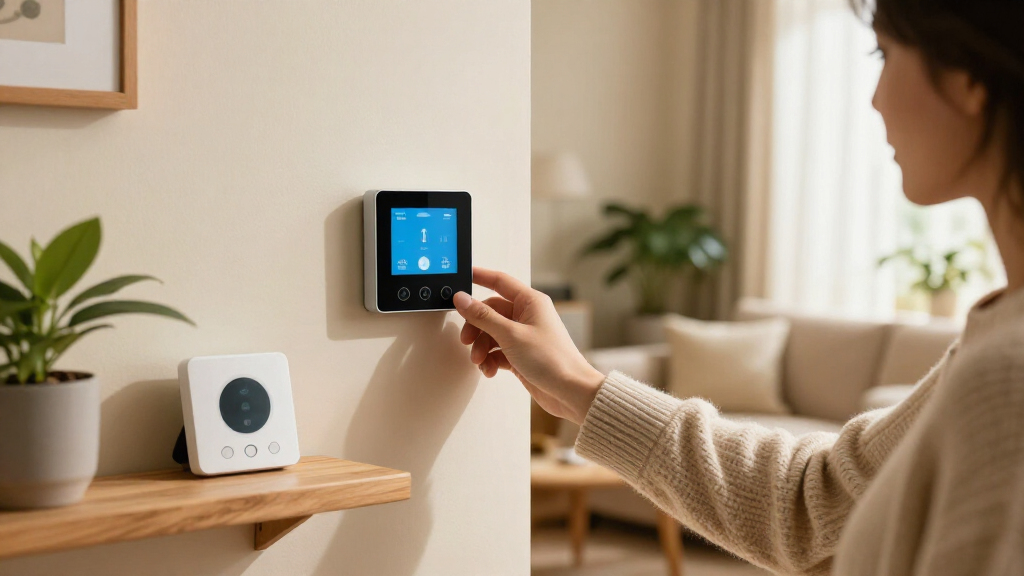
I ranked these smart thermostats with room sensors by how clearly each option can address temperature differences between rooms, how practical its sensor setup appears, and how much flexibility it offers for scheduling and smart-home control. I also weighed HVAC compatibility, ease of setup, and whether the listed bundle includes a remote sensor or requires buyers to check accessory availability. A thermostat’s extra features mattered only when they added a useful distinction for a particular type of household.
The order reflects the balance of those factors rather than a claim that every home will get the same results. Models with a clear thermostat-and-sensor pairing and a broadly useful feature set rank ahead of more specialized, older-generation, or less fully specified choices. I also compared products within their own brand families: ecobee Premium is not the same proposition as Essential or the older ecobee models, and Honeywell’s T9, X8S, ElitePRO S1200, and T10+ Pro each warrant separate compatibility and feature checks. Exact HVAC wiring support and sensor behavior can vary by system, so I treat those as buyer checks rather than universal promises.
| smart thermostats with room sensor | Connectivity |
|---|---|
| Google Nest Learning Smart The | Wi-Fi |
| Honeywell Home X8S Smart Wi-Fi | Wi-Fi, 2.4 or 5 GHz |
| Honeywell Home ElitePRO S1200 | Wi-Fi |
| Honeywell Home T9 Wi-Fi Smart | Wi-Fi |
| Google Nest Learning Thermosta | Wi-Fi |
| Honeywell T10+ Pro Smart Therm | RedLINK 3.0 |
| ecobee Smart Thermostat Essent | Wi-Fi |
| TQX Matter Wi-Fi Thermostat wi | Matter, Wi-Fi, Bluetooth, and Zigbee |
| Sensi Touch 2 Smart Thermostat | Wi-Fi, 2.4 GHz and 5.0 GHz |
| Honeywell Home ElitePRO S1200 | Dual-band Wi-Fi, Bluetooth BLE, RedLINK 3.0, and Matter |
| ecobee Smart Thermostat Premiu | Wi-Fi |
| ecobee3 Smart Wi-Fi Thermostat | Wi-Fi |
| ecobee4 Smart Thermostat with | Wi-Fi |
| ecobee3 Lite Smart Thermostat | Wi-Fi |
Factors to Consider When Choosing Smart Thermostats With Room Sensors
Choosing a thermostat with room sensors is less about collecting sensors and more about deciding which rooms should influence comfort control. I’d start with the rooms that feel inconsistent, then check system compatibility and how each thermostat uses remote readings before comparing voice features or design.
Decide Which Rooms Should Influence Heating and Cooling
Make a short list of rooms that regularly feel too warm or cold, such as a bedroom upstairs or a living area with strong afternoon sun. A sensor is most useful when it measures a room that the thermostat cannot represent well from its own wall location. Think about whether you want a bedroom prioritized at night, a shared room during the day, or readings averaged across several spaces. Not every system gives you the same scheduling or room-selection controls, so verify how sensor readings affect temperature decisions rather than assuming each sensor simply adds coverage. Buying more sensors than you can place thoughtfully may add setup work without solving the room that bothers you most. Start with a package that covers your priority room and expand only if the thermostat supports the control pattern you need.
Check HVAC Compatibility Before Comparing Features
Thermostat compatibility depends on your equipment and wiring, not just the brand name or the presence of Wi-Fi. Identify whether your home has conventional heating and cooling, a heat pump, multiple stages, or other equipment before selecting a model. Some systems need a common wire or an included power solution, while others may use terminals that a particular thermostat does not support. Read the manufacturer’s compatibility guidance and compare it with the wiring at the existing thermostat; when the wiring is unclear, a qualified installer can help avoid a costly mismatch. Smart-home features cannot compensate for a thermostat that does not control your system correctly. This check is especially useful when comparing several generations or specialist product lines from the same manufacturer.
Understand Sensor Scheduling and Comfort Control
A remote sensor’s value depends on what the thermostat does with its reading. Some setups let you choose which rooms matter at different times, while others may use room readings in a more limited way. Decide whether you want one room favored at bedtime or a broader view of temperature across occupied spaces. Also check whether occupancy sensing is part of the product and how it interacts with your schedule; a sensor that detects presence is not automatically a substitute for a room-temperature sensor. A common mistake is assuming that adding a sensor will make every room reach the same temperature, even when airflow, insulation, or closed doors are the underlying issue. Use sensors to guide control, but treat persistent imbalance as a possible HVAC or building issue too.
Compare Ecosystem Fit, Not Just Voice Assistant Names
Voice control can be convenient, but the thermostat’s everyday app and smart-home connections are more likely to shape your routine. Check whether the device works with the platform you already use and whether remote sensor readings appear in the controls you expect. Matter support, Alexa, Siri, and Google integrations may differ in scope, so confirm the specific functions available rather than relying on a logo or assistant name. If other household members need to change schedules, consider how easy it is to share access and understand the app. A thermostat with a long feature list may be a poor fit if its controls feel disconnected from your existing setup. Favor the ecosystem that makes sensor adjustments and schedule changes straightforward for the people who will use it.
Choose a Sensor Bundle That Matches Your Floor Plan
Bundles can reduce the effort of finding a compatible sensor, but the included quantity may not match the layout of a larger or multi-level home. Count the rooms where temperature readings would change your decisions, then compare that number with the sensors supplied and the system’s supported expansion options. Placement matters: a sensor near a draft, direct sunlight, or a heat source may give a misleading reading. Check whether the sensor needs batteries, how it mounts, and whether the thermostat reports low battery or connection problems. A spare room sensor is not useful if its reading cannot be assigned to a schedule or room priority. For a small home, one carefully placed sensor may be more practical than a larger bundle; a spread-out home may call for an expandable system.
Know When Premium Features Are Worth the Extra Complexity
Premium models can add broader smart-home functions, richer controls, or built-in features beyond room sensing, but those extras matter only if you will use them. If your main goal is to balance one chilly bedroom, a simpler thermostat with compatible remote sensors may cover the need without adding features to manage. A more capable model makes better sense when several household members share controls or you want the thermostat to play a larger role in a connected home. Compare what is included in the box with what requires separate sensors or other equipment, and account for installation needs as part of the decision. Avoid paying for a feature set based only on future possibilities; choose it when it solves a current need. The best fit is the one whose sensor controls and system compatibility justify its added complexity.
Frequently Asked Questions
Will a room sensor make every room in my home the same temperature?
No. A room sensor reports conditions in a chosen location, and the thermostat may use that reading to adjust heating or cooling, but it does not directly balance airflow between rooms. Results depend on how the thermostat schedules or prioritizes sensor readings, as well as your ductwork, insulation, and room layout. If one room remains uncomfortable, closed doors, blocked vents, or equipment balancing may be part of the problem. Check the thermostat’s sensor-control options before expecting a particular room to take priority. A sensor can help guide comfort control, but it cannot fix every cause of uneven temperatures.
Do I need to buy a thermostat and room sensor as a bundle?
A bundle is convenient when it includes a sensor that is compatible with the thermostat and gives you an immediate way to use remote readings. It is not automatically the best choice if you already own compatible sensors or only need to monitor one room. Compare the included sensor count with the rooms you want to prioritize, and confirm whether additional sensors can be added later. Check that the bundle’s thermostat generation and sensor version work together; similarly named products may differ. If the listing does not make sensor compatibility clear, verify it with the manufacturer before choosing.
Can I use a room sensor with a thermostat from a different brand?
Usually, a room sensor is designed to work with a specific thermostat family or ecosystem, so a sensor from one brand may not connect to another brand’s thermostat. Even within a brand, different generations can have different sensor support. Do not assume that Wi-Fi, Matter, or a shared voice assistant makes a sensor interchangeable for temperature control. Check the thermostat’s supported sensor models and the sensor’s compatibility list before buying either item. If you are replacing an existing thermostat, confirm whether your current sensors can be reused or whether the new system needs its own accessories.
How many room sensors should I plan for?
Base the number on rooms whose temperatures would change how you run the system, not on the number of rooms in your home. Many households can start with a sensor in one frequently uncomfortable bedroom or living space and add more only if the thermostat supports useful scheduling across several rooms. A multi-story home or a layout with far-apart rooms may benefit from broader coverage, but extra sensors add placement and battery upkeep. Check whether the thermostat can prioritize different rooms at different times or only use a fixed group of readings. A small, deliberate setup is often easier to manage than sensors placed throughout the house without a clear purpose.
What should I check before replacing my current thermostat?
Start by identifying your heating and cooling equipment, the wires connected to the existing thermostat, and any special controls your system uses. Then check the exact thermostat model’s compatibility guidance, including support for heat pumps, multiple stages, and a common wire or power adapter if needed. Confirm whether the remote sensor is included, sold separately, or limited to a particular model generation. If the wiring labels are unfamiliar or the system is more involved than a basic furnace and air conditioner, ask a qualified installer to review it. These checks can prevent choosing a thermostat that has attractive sensor features but does not fit your equipment.
Conclusion
For most shoppers who want a current thermostat-and-sensor pairing, I’d choose the Google Nest Learning Thermostat (4th Gen) with Nest Temperature Sensor (2nd Gen) as the best overall option in this lineup. For a premium smart-home feature set, the ecobee Smart Thermostat Premium is the stronger fit; for a simpler starting point, compare the ecobee Smart Thermostat Essential and Honeywell Home T9 against your sensor needs and HVAC compatibility. The best value depends on which bundle includes the sensor coverage you actually need, so I would not choose on the thermostat alone. Buyers with specific Honeywell system needs should investigate the T10+ Pro or ElitePRO models, while shoppers considering the Sensi Touch 2 or TQX Matter model should confirm sensor support and smart-home functions before deciding. In every case, match the sensor setup to your priority rooms and verify system compatibility before buying.