
The best air conditioners and heat pumps depend on whether you need to cool one room or condition a whole home. My best overall pick is the Senville 3-Ton Central Air Conditioner and Heat Pump with Inverter, which pairs central-system coverage with inverter operation. The Midea 10,000 BTU U-Shaped Window Air Conditioner is a standout for room cooling, while the Midea Duo 14,000 BTU Inverter Portable Air Conditioner with Heat suits renters who need a movable unit with heating. The main tradeoffs are installation complexity, room coverage, heating capability, and the convenience of a fixed versus portable system. Read on for the full breakdown of all 15 options and guidance on choosing the right fit.

Get home appliances delivered free with Prime
- Fast, free delivery on millions of items
- Prime Video, Amazon Music and more included
- Member-only deals all year
Complete the kit


Key Takeaways
System type matters more than a headline BTU figure: Goodman and Senville central or split systems serve a different purpose from portable and window units built for individual rooms.
The Senville 3-Ton central inverter system leads for whole-home versatility, while the Goodman systems offer several capacity and configuration choices for buyers planning a conventional installed system.
Window units offer a middle ground for fixed room cooling: Midea‘s U-shaped model prioritizes window integration, while the ROVSUN and Midea supplemental-heat models add heating functions.
Portable heat-and-cool models trade installation simplicity for room-level limits: the BLACK+DECKER, Westinghouse, and Midea Duo options are easier to relocate than central systems but still need a suitable window setup.
Do not choose capacity by product name alone: room layout, insulation, climate, and installation conditions can change whether a given tonnage or BTU rating is appropriate.
| Goodman 2.5 Ton 14.5 SEER2 Heat Pump System with Air Handler AMST30BU1300 |  | Best for Whole-Home Replacement | Capacity: 2.5 tons; 30,000 BTU/h cooling | Efficiency: 14.5 SEER2 | System type: Central split system | VIEW LATEST PRICE | See Our Full Breakdown |
| BLACK+DECKER Smart Portable Air Conditioner with Heat, 14,000 BTU |  | Best Portable Four-Function Pick | Cooling capacity: 14,000 BTU ASHRAE; 10,200 BTU SACC | Heating capacity: Conflicting supplied details: 10,000 BTU and 12,000 BTU | Functions: Cooling, heating, dehumidifying, and fan | VIEW LATEST PRICE | See Our Full Breakdown |
| Midea 10,000 BTU U-Shaped Window Air Conditioner |  | Best for Quiet Bedroom Cooling | Cooling capacity: 10,000 BTU | Coverage: Up to 450 sq. ft. | Noise level: As low as 32 dBA | VIEW LATEST PRICE | See Our Full Breakdown |
| Midea 8,000 BTU Smart Inverter Window Air Conditioner with Supplemental Heat |  | Best Small-Room Window Heat Pump | Cooling capacity: 8,000 BTU | Coverage: Up to 350 sq. ft. | Heating limit: Heat pump operates above 41°F outdoor temperature | VIEW LATEST PRICE | See Our Full Breakdown |
| Senville 3-Ton Central Air Conditioner and Heat Pump with Inverter | 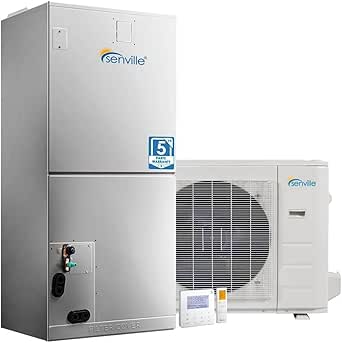 | Best for Cold-Climate Central Heating | Cooling capacity: 36,000 BTU | Coverage: Up to 2,000 sq. ft. | System type: Central split system | VIEW LATEST PRICE | See Our Full Breakdown |
| ROVSUN 8000 BTU Window Air Conditioner with Heater, Dehumidifier, Fan and Remote (up to 350 sq ft) |  | Best Compact Window Unit | Cooling capacity: 8000 BTU/hr | Heating capacity: 4000 BTU/hr | Recommended coverage: 250–350 sq ft | VIEW LATEST PRICE | See Our Full Breakdown |
| Goodman 1.5 Ton 14.3 SEER R32 Heat Pump Split System GLZS4BA1810 & AMST24BU1300 Air Handler |  | Best for Flexible Ducted Installation | Capacity: 1.5 ton | SEER: 14.3 | HSPF: 8.2 | VIEW LATEST PRICE | See Our Full Breakdown |
| 2 Ton 15.2 SEER2 Central Air Conditioner Heat Pump System 10kW |  | Best for a 2-Ton Central-System Upgrade | Capacity: 24,000 BTU/h (2 tons) | Efficiency: 15.2 SEER2 | Sound level: 74 dBA | VIEW LATEST PRICE | See Our Full Breakdown |
| Westinghouse 14,000 BTU Portable Air Conditioner with Heat Mode, WiFi, Remote Control, Dehumidifier, 3-Speed Fan, Programmable Timer, Window Kit |  | Best Portable Pick for Large Rooms | Cooling capacity: 14,000 BTU | Coverage area: Up to 700 sq ft | Noise level: 51 dBA | VIEW LATEST PRICE | See Our Full Breakdown |
| Senville LETO 24,000 BTU Mini Split Air Conditioner and Heat Pump |  | Best Ductless Option for Quiet, Efficient Room Control | Cooling and heating capacity: 24,000 BTU | Heating operation: Down to 5°F (-15°C) | Refrigerant: R-454B | VIEW LATEST PRICE | See Our Full Breakdown |
| ROVSUN 8000 BTU Window Air Conditioner with Heat, Wi-Fi and Voice Control |  | Best Smart Window Unit for Smaller Rooms | Cooling capacity: 8,000 BTU | Heating capacity: 4,000 BTU | Coverage area: Up to 350 sq ft | VIEW LATEST PRICE | See Our Full Breakdown |
| Midea Duo 14,000 BTU Inverter Portable Air Conditioner with Heat | 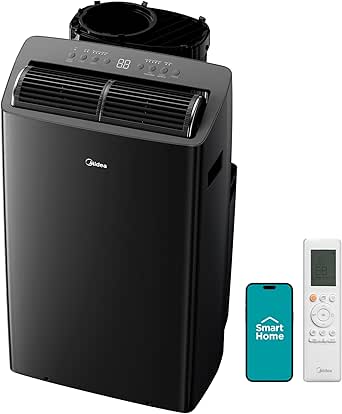 | Best Portable Option for Larger Rooms | Cooling capacity: 14,000 BTU (12,000 BTU SACC) | Coverage area: Up to 550 sq ft | Functions: Cooling and heating | VIEW LATEST PRICE | See Our Full Breakdown |
| Goodman 2.5 Ton 14.3 SEER2 R-32 Heat Pump Split System GLZS4BA3010 & AMST30BU1300 |  | Best for Flexible Split-System Installation | Capacity: 2.5 tons | Efficiency: 14.3 SEER2 | Refrigerant: R-32 | VIEW LATEST PRICE | See Our Full Breakdown |
| Goodman 3-Ton 15 SEER2 R-32 Heat Pump System with Air Handler |  | Best for Higher-Capacity Ducted Heating and Cooling | Capacity: 3 tons | Heating and cooling output: 36,000 BTU | Efficiency: 15 SEER2 | VIEW LATEST PRICE | See Our Full Breakdown |
| Soleus Air 12,000 BTU Window Air Conditioner with 10,000 BTU Heater, Wi-Fi, Saddle Mount, White |  | Best Saddle-Mount Window Heat Pump | Cooling capacity: 12,000 BTU | Heating capacity: 10,000 BTU | Voltage: 115 V | VIEW LATEST PRICE | See Our Full Breakdown |
| air conditioners and heat pump | Refrigerant | Noise level | Cooling capacity |
|---|---|---|---|
| Goodman 2.5 Ton 14.5 SEER2 Hea | R-32 | — | — |
| BLACK+DECKER Smart Portable Ai | — | 54 dB | 14,000 BTU ASHRAE; 10,200 BTU SACC |
| Midea 10,000 BTU U-Shaped Wind | R-32 | As low as 32 dBA | 10,000 BTU |
| Midea 8,000 BTU Smart Inverter | — | As low as 45 dBA | 8,000 BTU |
| Senville 3-Ton Central Air Con | R-454B | — | 36,000 BTU |
| ROVSUN 8000 BTU Window Air Con | R-32 | 52 dB | 8000 BTU/hr |
| Goodman 1.5 Ton 14.3 SEER R32 | R-32 | — | — |
| 2 Ton 15.2 SEER2 Central Air C | R-32 | — | — |
| Westinghouse 14,000 BTU Portab | R-32 | 51 dBA | 14,000 BTU |
| Senville LETO 24,000 BTU Mini | R-454B | 27 dB | — |
| ROVSUN 8000 BTU Window Air Con | — | 57 dB | 8,000 BTU |
| Midea Duo 14,000 BTU Inverter | — | As low as 42 dB | 14,000 BTU (12,000 BTU SACC) |
| Goodman 2.5 Ton 14.3 SEER2 R-3 | R-32 | — | — |
| Goodman 3-Ton 15 SEER2 R-32 He | R-32 | 75 dB | — |
| Soleus Air 12,000 BTU Window A | R-32 | 48 dB | 12,000 BTU |
More Details on Our Top Picks
Goodman 2.5 Ton 14.5 SEER2 Heat Pump System with Air Handler AMST30BU1300
This Goodman pairing suits homeowners replacing central equipment who want both heating and cooling in one 2.5-ton split system. Its 14.5 SEER2 rating and nine-speed ECM blower support efficient airflow, while the multi-position air handler can be mounted upflow or horizontally to fit different mechanical-room layouts. Compared with the Senville 3-Ton Central Air Conditioner and Heat Pump, this Goodman has less capacity and no listed low-temperature heating range, but it offers a smaller system size for homes that do not need 36,000 BTU of cooling. The pre-charged refrigerant lines and service valves may simplify parts of a professional installation; they do not make this a DIY project. A separate heat kit may be needed in colder climates, and the 303-pound shipment makes handling more demanding.
Pros:- Provides 30,000 BTU/h of central heating and cooling.
- 14.5 SEER2 rating and a nine-speed ECM blower support efficient operation and adjustable airflow.
- Multi-position air handler supports upflow and horizontal-left or horizontal-right installation.
- Pre-charged refrigerant lines and a 10-year parts warranty when installed by a qualified professional.
Cons:- Professional installation is needed, and the system weighs 303 pounds.
- A separate heat kit is required for cold-climate installations.
- Downflow installation requires an optional kit.
Best for: Homeowners replacing a central system who need roughly 30,000 BTU of capacity and flexible air-handler positioning.
Not ideal for: DIY installers or buyers in cold climates who want included backup heat or a stated low-temperature heating range.
- Capacity:2.5 tons; 30,000 BTU/h cooling
- Efficiency:14.5 SEER2
- System type:Central split system
- Refrigerant:R-32
- Electrical:240 V
- Blower:Direct-drive, nine-speed ECM
- Weight:303 lb
- Warranty:10-year parts warranty with qualified professional installation
Our verdict“Choose this Goodman for a professionally installed, mid-capacity central system when flexible air-handler placement matters more than built-in cold-climate backup heat.”
BLACK+DECKER Smart Portable Air Conditioner with Heat, 14,000 BTU
This BLACK+DECKER is the flexible room-by-room choice for renters or households that need cooling, heating, dehumidifying, and fan modes without installing a window unit. Its Wi-Fi and voice controls add convenience, while the Follow Me remote measures temperature near the remote rather than only at the appliance. The included window kit makes setup more accessible than the professional installation required by the Senville 3-Ton Central Air Conditioner and Heat Pump, though the portable format needs floor space and a window opening for its exhaust. Product information conflicts on coverage, heating capacity, and refrigerant, so I would not size it around the larger advertised coverage figure or treat it as a dependable cold-weather heat source. Its stated cooling capacity is 10,200 BTU SACC, a more useful comparison point than the 14,000 BTU ASHRAE figure.
Pros:- Combines air conditioning, heating, dehumidifying, and fan functions in one portable unit.
- Wi-Fi, app, Alexa, Google Assistant, and remote controls provide several operating options.
- Follow Me remote can use the temperature near the remote for control.
- Includes a window kit and washable filter.
Cons:- Coverage figures conflict between 375 and 700 square feet, and heating-capacity details also differ.
- The supplied product information lists both R-32 and R410a refrigerant.
- Portable operation requires window venting and occupies indoor floor space.
Best for: Renters or households needing movable room cooling, shoulder-season heat, and app or voice control without a permanent installation.
Not ideal for: Buyers needing quiet operation, whole-home conditioning, or clearly documented heating and room coverage.
- Cooling capacity:14,000 BTU ASHRAE; 10,200 BTU SACC
- Heating capacity:Conflicting supplied details: 10,000 BTU and 12,000 BTU
- Functions:Cooling, heating, dehumidifying, and fan
- Voltage:115 V
- Noise level:54 dB
- Controls:Wi-Fi, mobile app, Alexa, Google Assistant, and remote
- Window kit:Included
- Warranty:1 year
Our verdict“Pick this BLACK+DECKER when portability and four operating modes matter more than quiet performance or unambiguous capacity claims.”
Midea 10,000 BTU U-Shaped Window Air Conditioner
The Midea U-shaped unit stands apart from the more conventional Midea 8,000 BTU Smart Inverter Window Air Conditioner with Supplemental Heat: this model focuses on quiet, efficient cooling rather than adding a heating mode. Its inverter compressor adjusts output instead of relying only on repeated full-power cycling, and the claimed 32 dBA operation makes it a stronger fit for bedrooms or living spaces where noise matters. The U-shaped frame also lets the window remain partly open, preserving a view and a route for fresh air. That design comes with a more specific fit: the window needs to be 23–36 inches wide with at least 13.75 inches of vertical opening. At 54 pounds, it is also less convenient to lift and install than a simpler window unit, and it does not provide heat.
Pros:- Inverter cooling is rated as low as 32 dBA for a quieter room.
- 10,000 BTU capacity is listed for spaces up to 450 square feet.
- U-shaped design allows the window to remain partly open.
- Wi-Fi and voice-assistant controls support remote operation.
Cons:- The required window dimensions limit where it can be installed.
- At 54 pounds, lifting and mounting are more challenging than with lighter units.
- Provides cooling only, unlike the Midea 8,000 BTU model with supplemental heat.
Best for: Light sleepers and occupants of rooms up to 450 square feet who have compatible double-hung or single-hung windows.
Not ideal for: Buyers who need supplemental heat, have non-compatible window dimensions, or want an easy one-person installation.
- Cooling capacity:10,000 BTU
- Coverage:Up to 450 sq. ft.
- Noise level:As low as 32 dBA
- Compressor:Inverter rotary
- Refrigerant:R-32
- Electrical:115 V; 890 W
- Window fit:23–36 in. wide; minimum 13.75 in. opening height
- Weight:54 lb
Our verdict“Choose the Midea U-shaped unit for quiet cooling in a compatible bedroom or living room, but skip it if heating or simple installation is a priority.”
Midea 8,000 BTU Smart Inverter Window Air Conditioner with Supplemental Heat
For a smaller room that needs cooling plus some shoulder-season warmth, this Midea adds a useful function the 10,000 BTU Midea U-shaped window air conditioner lacks: supplemental heat. Its 8,000 BTU cooling capacity is aimed at spaces up to 350 square feet, and inverter operation, ECO mode, and app or voice control give it more flexibility than a basic window air conditioner. The key limitation is its heating boundary: the heat pump function operates only when outdoor temperatures are above 41°F, so it cannot replace a cold-weather heating system. Compared with the BLACK+DECKER portable unit, this model has a more defined window-unit fit and room capacity, but it is not movable between rooms and only fits double-hung windows within specified dimensions. Treat its heat as a mild-weather supplement, not winter coverage.
Pros:- Combines 8,000 BTU cooling with supplemental heat, dry, fan, and auto modes.
- Inverter operation and ECO mode support more controlled energy use.
- App, Alexa, Google Assistant, remote, and panel controls offer flexible operation.
- Washable front-access filter is straightforward to maintain.
Cons:- Heat pump operation is unavailable at outdoor temperatures of 41°F or below.
- Fits only double-hung windows within the specified opening dimensions.
- Its 350-square-foot coverage is more limited than the 450-square-foot Midea U-shaped cooling model.
Best for: Apartment dwellers or homeowners with a compatible double-hung window who want cooling and mild-weather supplemental heat in a room up to 350 square feet.
Not ideal for: Buyers in cold climates who need primary winter heat, or anyone with a window outside the listed fit range.
- Cooling capacity:8,000 BTU
- Coverage:Up to 350 sq. ft.
- Heating limit:Heat pump operates above 41°F outdoor temperature
- Efficiency:CEER 13.3; Energy Star certified
- Noise level:As low as 45 dBA
- Electrical:115 V
- Window fit:Double-hung; 24–38.5 in. wide; minimum 14.5 in. opening
- Controls:LED panel, remote, SmartHome app, Alexa, and Google Assistant
Our verdict“Choose this Midea for a compatible small room that needs cooling and above-freezing supplemental heat, not as a cold-weather heating replacement.”
Senville 3-Ton Central Air Conditioner and Heat Pump with Inverter
This Senville is the most cold-weather-focused central system in this group: its 36,000 BTU capacity and stated operation down to -22°F make it a better fit for larger homes and colder regions than the Goodman 2.5-ton system, whose supplied details call for a separate heat kit in cold climates. A variable-speed inverter compressor can adjust output to demand, while the package includes an indoor air handler, outdoor condenser, wired remote, and 16-foot installation kit. That is a broader heating range than either window heat pump here, but the system is not a quick replacement appliance: a licensed professional must install it, and the 356.2-pound equipment adds handling demands. Its 5-year parts and 10-year compressor coverage do not include labor, so service costs remain a homeowner responsibility.
Pros:- 36,000 BTU cooling capacity is specified for spaces up to 2,000 square feet.
- Heating is rated to operate down to -22°F (-30°C).
- Variable-speed inverter compressor adjusts operation to demand.
- Includes an indoor air handler, outdoor condenser, wired remote, and 16-foot installation kit.
Cons:- Licensed professional installation is required; it is not a DIY system.
- The 356.2-pound equipment creates substantial handling and installation demands.
- Warranty coverage excludes labor.
Best for: Owners of larger homes seeking a professionally installed central heat pump with a stated heating range down to -22°F.
Not ideal for: Renters, DIY installers, or buyers unwilling to plan for professional labor and a new outdoor unit.
- Cooling capacity:36,000 BTU
- Coverage:Up to 2,000 sq. ft.
- System type:Central split system
- Compressor:Variable-speed inverter
- Refrigerant:R-454B
- Heating operating temperature:As low as -22°F (-30°C)
- Electrical:208/230 V
- Warranty:5 years on parts; 10 years on compressor; labor not covered
Our verdict“Choose the Senville for professionally installed, large-area heating and cooling where its stated low-temperature operation is more useful than a simpler window or smaller central unit.”
ROVSUN 8000 BTU Window Air Conditioner with Heater, Dehumidifier, Fan and Remote (up to 350 sq ft)
The ROVSUN 8000 BTU is a practical pick for a bedroom or modest living space where one window unit needs to handle both cooling and supplemental heat. Its 4000 BTU heating function adds shoulder-season flexibility, while cool, dry, fan, ECO, and sleep modes let you adapt operation without adding a separate appliance. Compared with the Westinghouse 14,000 BTU Portable Air Conditioner, this unit takes up less floor space and avoids a portable exhaust hose, but its 250–350-square-foot coverage is far narrower.
The tradeoff is that this is not a highly efficient inverter model, and the specific window fit rules out some installations. I’d choose it for straightforward room-by-room comfort, not whole-home heating or cooling.
Pros:- Combines 8000 BTU cooling with 4000 BTU supplemental heating.
- Offers cool, heat, dry, fan, ECO, and sleep modes.
- Washable filter and included window kit simplify routine upkeep and setup.
- 52 dB noise specification suits buyers who want a unit for a bedroom or TV room.
Cons:- Coverage is limited to rooms around 250–350 square feet.
- No inverter technology, so it may be less energy-efficient than inverter alternatives.
- Requires a compatible window measuring 26–36 inches wide and 16 inches high.
Best for: People cooling a 250–350-square-foot bedroom or office who want supplemental heat without giving up floor space.
Not ideal for: Buyers with windows outside the 26–36-inch width and 16-inch height requirements, or those seeking inverter efficiency or whole-home heating.
- Cooling capacity:8000 BTU/hr
- Heating capacity:4000 BTU/hr
- Recommended coverage:250–350 sq ft
- Power supply:115V/60Hz, single phase
- Noise level:52 dB
- Window requirements:26–36 in. wide; 16 in. high
- Refrigerant:R-32
- Filter:Washable
Our verdict“Choose this ROVSUN for compact, dual-season comfort in a suitably sized room, but skip it if you need broader coverage or inverter efficiency.”
Goodman 1.5 Ton 14.3 SEER R32 Heat Pump Split System GLZS4BA1810 & AMST24BU1300 Air Handler
This Goodman 1.5-ton split system is aimed at homeowners replacing or building a ducted setup who need an air handler that can fit more than one orientation. The AMST24BU1300 supports upflow, downflow, and horizontal installation, giving contractors more options than a window or portable unit—and more flexibility than buyers get from a single-position setup. Its 14.3 SEER rating and 8.2 HSPF suit year-round heating and cooling, while the 10-year parts and compressor warranty adds a long-term ownership benefit.
Compared with the 2-ton 15.2 SEER2 system in this roundup, this Goodman has lower stated capacity and efficiency, so it better fits a smaller load than a larger home. The tradeoff is installation complexity: it needs professional fitting, and cold-climate use may require a separate heat kit. Downflow installation also calls for an optional kit.
Pros:- Multi-position air handler supports upflow, downflow, and horizontal configurations.
- 14.3 SEER and 8.2 HSPF ratings support both cooling and heating operation.
- Uses R-32 refrigerant.
- Includes a 10-year parts and compressor warranty.
Cons:- Professional installation is required.
- A separate heat kit may be needed for cold-climate operation.
- Downflow installation requires an optional kit that is not included.
Best for: Homeowners replacing a ducted system who need a 1.5-ton heat pump and an air handler that can accommodate different installation orientations.
Not ideal for: DIY buyers, homes needing greater capacity, or cold-climate households that expect the listed system alone to cover low-temperature heating.
- Capacity:1.5 ton
- SEER:14.3
- HSPF:8.2
- EER:12.0
- Refrigerant:R-32
- Electrical supply:208/240 V, single phase, 60 Hz
- Compressor:Rotary scroll
- Warranty:10 years on parts and compressor
Our verdict“Pick this Goodman when a smaller ducted system and flexible air-handler orientation matter more than higher capacity or a simpler installation.”
2 Ton 15.2 SEER2 Central Air Conditioner Heat Pump System 10kW
For a home that needs a 2-ton ducted heat pump, this system pairs a split condenser and air handler with an ECM blower and an all-aluminum evaporator. Its 15.2 SEER2 rating is higher than the 14.3 SEER rating listed for the Goodman 1.5-ton system, though the two figures use different rating labels and should not be treated as a direct like-for-like comparison. The included non-programmable thermostat gets the system running without requiring a separate control purchase.
This is a whole-system choice, not a room appliance like the ROVSUN 8000 BTU window unit; it requires compatible ductwork and professional installation. That installation can be demanding: the condenser weighs 165 pounds and the air handler 112 pounds. The thermostat also lacks programmable scheduling, so buyers seeking automated routines may prefer a more capable control. Check the system’s sizing and installation requirements with a qualified contractor.
Pros:- 2-ton capacity suits whole-house applications sized for that load.
- 15.2 SEER2 rating and ECM blower are specified for the system.
- Includes a non-programmable thermostat with memory retention and compressor protection.
- AHRI-certified and ETL-listed components.
Cons:- Professional installation is required, and the product data ties the 10-year parts warranty to professional installation.
- Included thermostat does not provide programmable scheduling.
- Heavy condenser and air handler can complicate handling during installation.
Best for: Homeowners replacing or installing a ducted system sized for 2 tons who want a bundled heat pump, air handler, and basic thermostat.
Not ideal for: Renters, DIY installers, homes without compatible ductwork, or buyers who require programmable thermostat schedules.
- Capacity:24,000 BTU/h (2 tons)
- Efficiency:15.2 SEER2
- Sound level:74 dBA
- Refrigerant:R-32
- Electrical supply:208/230 V, single phase
- Condenser dimensions:32.5 × 29.0 × 29.0 in. (H × W × D)
- Condenser weight:165 lb
- Included control:Non-programmable thermostat
Our verdict“Choose this system for a professionally installed 2-ton ducted upgrade with a bundled basic thermostat, not for DIY or schedule-focused buyers.”
Westinghouse 14,000 BTU Portable Air Conditioner with Heat Mode, WiFi, Remote Control, Dehumidifier, 3-Speed Fan, Programmable Timer, Window Kit
The Westinghouse 14,000 BTU portable unit suits larger rooms where a fixed window air conditioner is impractical and app control is useful. It combines cooling and heating with dehumidifying, a three-speed fan, and Wi-Fi control, so it offers more operating flexibility than the compact ROVSUN window unit. The listed coverage reaches 700 square feet, and its dehumidifier is rated for up to 90 pints per day—features that may appeal in a spacious, humid room.
Portability still comes with a setup constraint: hot air must vent through a compatible window using the included kit. The listed window opening dimensions are unusually restrictive at 39.5 inches, so I’d confirm fit before buying. At 1250 W and without an inverter compressor, it may also be less energy-efficient than inverter options such as the Senville LETO mini split. Its 34.1-inch height takes up floor space, too.
Pros:- Combines 14,000 BTU cooling and heat mode in a portable format.
- Wi-Fi, app, remote, and panel controls offer multiple ways to adjust operation.
- Dehumidifier capacity is specified at up to 90 pints per day.
- Washable filter and included window vent kit are specified.
Cons:- Requires window venting, limiting where it can be installed.
- The listed window-opening dimensions of 39.5 inches should be checked against the actual window.
- No inverter compressor, unlike the Senville LETO mini split.
Best for: People who need portable cooling and heating for a large room, want app control, and have a suitable window for the exhaust kit.
Not ideal for: Buyers without a compatible venting window, those with limited floor space, or households prioritizing inverter operation.
- Cooling capacity:14,000 BTU
- Coverage area:Up to 700 sq ft
- Noise level:51 dBA
- Dehumidifier capacity:Up to 90 pints per day
- Power supply:115 V
- Wattage:1250 W
- Refrigerant:R-32
- Dimensions:15.6 × 18.1 × 34.1 in. (L × W × H)
Our verdict“Choose the Westinghouse when a large room needs portable heat and cooling with app control and the window vent kit fits.”
Senville LETO 24,000 BTU Mini Split Air Conditioner and Heat Pump
The Senville LETO 24,000 BTU mini split is the strongest fit here for buyers who want ductless heating and cooling rather than a floor-standing portable unit or a full ducted system. Its inverter technology adjusts output to meet demand, while a listed 27 dB noise level offers a quieter indoor option than the Westinghouse portable’s 51 dBA specification. App and Alexa controls add convenient adjustment, and the heat pump is specified to operate down to 5°F (-15°C).
That lower noise and inverter control come with a more involved purchase: the LETO needs professional installation, and labor is not covered by its warranty. The included 16-foot line set is useful but does not remove the need for a qualified installation. Its 24,000 BTU capacity also makes proper sizing important; this is not a better choice simply because it has more capacity than the 1.5-ton Goodman split system.
Pros:- Inverter technology adjusts output to changing heating and cooling demand.
- Provides cooling, heating, dehumidifying, and air-circulation modes.
- App, Alexa, and remote controls are included.
- Heating operation is specified down to 5°F (-15°C).
Cons:- Professional installation is required.
- The five-year parts and compressor warranty does not include labor.
- Correct capacity matching matters; 24,000 BTU may not suit smaller spaces.
Best for: Homeowners seeking a ductless 24,000 BTU heat pump with inverter operation, smart controls, and heating specified down to 5°F.
Not ideal for: Renters, DIY installers, buyers who need labor coverage, or households whose heating and cooling load is smaller than this system’s capacity.
- Cooling and heating capacity:24,000 BTU
- Heating operation:Down to 5°F (-15°C)
- Refrigerant:R-454B
- Noise level:27 dB
- Voltage:220 V
- Wattage:2500 W
- Controls:App, Alexa, and remote
- Warranty:5 years on parts and compressor; labor not included
Our verdict“Pick the Senville LETO for a properly sized ductless home installation where inverter control and quiet operation outweigh installation and labor costs.”
ROVSUN 8000 BTU Window Air Conditioner with Heat, Wi-Fi and Voice Control
The ROVSUN 8000 BTU is a practical choice for a bedroom or other room up to 350 square feet when you want cooling, supplemental heat, and app-based control in one window unit. Its Alexa and Google Assistant compatibility, remote, and 24-hour timer make routine adjustments easier than on a basic window model. It also adds dry and fan modes, a washable filter, and ECO mode, giving it more seasonal flexibility than a cooling-only unit such as the Midea 10,000 BTU U-Shaped Window Air Conditioner.
The tradeoff is its 4,000 BTU heating capacity, which is better suited to supplemental warmth than replacing a central heating system. It also lacks an inverter, while the Soleus Air 12,000 BTU saddle-mount model offers inverter operation and more heating capacity. Check the ROVSUN’s specific window fit—26–36 inches wide and 16 inches high—before choosing it.
Pros:- Combines cooling, supplemental heat, dehumidifying, and fan modes.
- App and voice control work with Alexa and Google Assistant.
- Washable filter, ECO mode, and 24-hour timer support routine use.
- Installation panels and hardware are included.
Cons:- The 4,000 BTU heating capacity is limited compared with the Soleus Air 12,000 BTU model’s 10,000 BTU heater.
- No inverter for variable-speed operation.
- Requires a window within the stated size range.
Best for: People furnishing a room up to 350 square feet who want app and voice control plus cooling and supplemental heat from one window unit.
Not ideal for: Buyers who need strong primary heating, inverter operation, or a window outside the listed 26–36-inch width and 16-inch height range.
- Cooling capacity:8,000 BTU
- Heating capacity:4,000 BTU
- Coverage area:Up to 350 sq ft
- Voltage:115 V
- Modes:Heat, Auto, Cool, Dry, Fan
- Controls:App, voice, remote, touch
- Noise level:57 dB
- Window dimensions:26–36 in wide; 16 in high
Our verdict“Choose this ROVSUN for a smaller room where smart controls and several operating modes matter more than high heating output or inverter efficiency.”
Midea Duo 14,000 BTU Inverter Portable Air Conditioner with Heat
For renters or homeowners who cannot install a window unit, the Midea Duo brings cooling and heat-pump operation to spaces up to 550 square feet. Its dual hose-in-hose design helps reduce the outdoor-air intrusion associated with simpler single-hose portable setups, while inverter technology adjusts operation rather than relying only on repeated full-power cycles. The listed noise level starts at 42 dB, and app, voice, and remote controls give it more flexible operation than the ROVSUN 8000 BTU window unit.
Portability still comes with compromises: the Midea weighs 77.2 pounds, occupies floor space, and needs a window connection for its hose. Its heat pump operates only from 41°F to 86°F, so it is not a stand-in for cold-weather heating. Compared with the Soleus Air saddle-mount unit, it avoids a conventional window-unit footprint but is much bulkier inside the room.
Pros:- Rated for spaces up to 550 square feet with cooling and heating functions.
- Inverter technology and dual hose-in-hose design support more controlled operation.
- Listed noise level starts at 42 dB.
- App, voice, push-button, and remote controls provide several ways to operate it.
Cons:- Heat pump operating range is limited to 41°F–86°F.
- At 77.2 pounds, moving and positioning the unit can be difficult.
- Needs floor space and a window connection for the exhaust hose.
Best for: Renters and households needing portable cooling and heat-pump operation for a larger room, with app control and lower-noise operation.
Not ideal for: People who need heat-pump performance below 41°F, want a compact appliance, or cannot accommodate a hose and a 77.2-pound unit.
- Cooling capacity:14,000 BTU (12,000 BTU SACC)
- Coverage area:Up to 550 sq ft
- Functions:Cooling and heating
- Noise level:As low as 42 dB
- Energy technology:Inverter
- Heat pump operating temperature:41°F–86°F
- Dimensions:16.73 x 19.53 x 34.48 in (D x W x H)
- Weight:77.2 lb
Our verdict“Pick the Midea Duo if you need a portable, inverter-equipped unit for a larger room and can work within its temperature range and floor-space demands.”
Goodman 2.5 Ton 14.3 SEER2 R-32 Heat Pump Split System GLZS4BA3010 & AMST30BU1300
This Goodman 2.5-ton split system suits buyers replacing or planning a ducted system who need a heat pump and air handler that support upflow or horizontal installation. The included AMST30BU1300 air handler offers more placement flexibility than a window or portable unit, while R-32 refrigerant and a 14.3 SEER2 rating define its efficiency and refrigerant profile. A free digital thermostat and 10-year parts warranty add useful ownership details.
Its main limitation is that this is a conventional, non-inverter system, unlike the inverter-driven Senville 3-Ton central heat pump mentioned elsewhere in the roundup. Buyers in colder climates also need to plan for a separate heat kit; downflow installation calls for an optional kit as well. This is a system-level purchase, not a ready-to-plug-in room appliance, so installation and compatibility with the home’s ductwork matter.
Pros:- 2.5-ton split-system format includes both the outdoor heat pump and air handler.
- Air handler supports upflow and horizontal installation.
- Uses R-32 refrigerant and has a 14.3 SEER2 rating.
- Includes a digital thermostat and a 10-year parts warranty.
Cons:- No inverter technology for variable-speed operation.
- A separate heat kit is needed for colder climates.
- Downflow installation requires an optional kit.
Best for: Homeowners replacing a ducted system who need a 2.5-ton heat pump with upflow or horizontal air-handler installation options.
Not ideal for: Buyers seeking a DIY room unit, inverter-based variable-speed operation, or a complete cold-climate setup without separately selecting a heat kit.
- Capacity:2.5 tons
- Efficiency:14.3 SEER2
- Refrigerant:R-32
- System type:Split system
- Heat pump model:GLZS4BA3010
- Air handler model:AMST30BU1300
- Power voltage:240 V
- Warranty:10-year parts warranty
Our verdict“Choose this Goodman for a ducted 2.5-ton replacement where flexible air-handler orientation matters more than inverter operation.”
Goodman 3-Ton 15 SEER2 R-32 Heat Pump System with Air Handler
With 3 tons of capacity and 36,000 BTU of listed heating and cooling output, this Goodman is the higher-capacity ducted option in this batch. It includes both the outdoor heat pump and an air handler, making it a more complete system package than a room-focused model like the Midea Duo portable unit. Its 15 SEER2 rating is also higher than the 2.5-ton Goodman’s 14.3 SEER2 figure, though the right choice still depends on the home and a proper system match.
The package has real add-on requirements: linesets, thermostat, and other accessories are sold separately, and heat kits are also separate. Compatibility is specific—the unit supports HKSC/HKSX heat kits, not HKR series kits. At 361 pounds and a listed 75 dB noise level, it is a substantial fixed installation, not an unobtrusive alternative to a window unit.
Pros:- Provides 36,000 BTU of listed heating and cooling capacity.
- Includes both the heat pump and air handler.
- 15 SEER2 rating is higher than the 2.5-ton Goodman model in this batch.
- Uses R-32 refrigerant and supports HKSC/HKSX heat kits.
Cons:- Lineset, thermostat, heat kits, and other accessories are sold separately.
- Does not support HKR-series heat kits.
- The 361-pound system and listed 75 dB noise level make it a substantial fixed installation.
Best for: Homeowners with a ducted system who need a 3-ton heat pump and air handler, and have a contractor to confirm sizing and compatible accessories.
Not ideal for: Buyers needing a portable or window-mounted appliance, a complete kit with accessories included, or compatibility with HKR-series heat kits.
- Capacity:3 tons
- Heating and cooling output:36,000 BTU
- Efficiency:15 SEER2
- Refrigerant:R-32
- System type:Split system
- Voltage:240 V
- Noise level:75 dB
- Weight:361 lb
Our verdict“Select this Goodman when a ducted home needs the higher capacity and you can verify system sizing and accessory compatibility before installation.”
Soleus Air 12,000 BTU Window Air Conditioner with 10,000 BTU Heater, Wi-Fi, Saddle Mount, White
The Soleus Air 12,000 BTU stands out for combining a saddle-mount installation with stronger listed heating than the ROVSUN 8000 BTU window unit. Its design fits walls up to 12.5 inches thick, which can suit buyers who want a window-mounted appliance without placing a conventional unit across the full window opening. The inverter compressor varies its output, and Wi-Fi app control offers remote adjustments; together with 12,000 BTU cooling and 10,000 BTU heating, those features make it a more capable year-round room option than the ROVSUN.
That extra capability comes with a specific installation requirement: it still needs a suitable window, and its saddle mount is not a universal fit for every opening or wall. The listed 48 dB noise level may also matter in quiet rooms. Unlike the Midea Duo portable unit, the Soleus does not take up the same kind of floor space, but it cannot be moved from room to room as readily.
Pros:- Provides 12,000 BTU cooling and 10,000 BTU heating.
- Inverter compressor supports variable-speed operation.
- Saddle mount accommodates walls up to 12.5 inches thick.
- Wi-Fi app control and a washable filter add everyday convenience.
Cons:- Requires a suitable window for installation despite the saddle-mount design.
- The listed noise level is 48 dB, which may be noticeable in quiet spaces.
- Its fixed installation is less flexible to relocate than the Midea Duo portable unit.
Best for: People who want higher-capacity window cooling and heating, inverter operation, and a saddle-mount design for a compatible window and wall.
Not ideal for: Renters or homeowners without a suitable window, buyers needing a portable unit, or anyone expecting the unit to operate silently.
- Cooling capacity:12,000 BTU
- Heating capacity:10,000 BTU
- Voltage:115 V
- Compressor:Inverter
- Wall compatibility:Up to 12.5 in thick
- Noise level:48 dB
- Refrigerant:R-32
- Control:Wi-Fi app
Our verdict“Choose the Soleus if you have a compatible window and want a stronger-heating, inverter-equipped alternative to a conventional room air conditioner.”
How We Picked
I compared the 15 products by intended coverage, system type, heating and cooling versatility, and installation demands. Central and split heat pumps were judged as whole-home candidates, while window and portable models were compared as room-focused options; I did not treat their capacity figures as directly interchangeable. I also considered controls, stated inverter features, included installation components, maintenance needs, and how clearly each unit’s role can be matched to a buyer’s space.
The ranking favors options with a strong match between their design and likely use, rather than rewarding a single spec in isolation. The Senville 3-ton inverter system ranks first for combining central coverage with variable operation, while the Goodman systems follow as a range of conventional installed choices. Room units are ranked for their distinct advantages—window fit, portability, smart controls, or supplemental heat—but sit below whole-home systems for buyers seeking coverage across multiple rooms. Exact suitability depends on home sizing, electrical requirements, climate, and professional installation details, so buyers should confirm those before purchase.
Factors to Consider When Choosing Best Air Conditioners And Heat Pumps
Before choosing among these air conditioners and heat pumps, decide what space needs conditioning and how permanent the installation can be. The largest differences in this roundup are not just capacity or controls: they are the boundary between a room appliance and a system designed for a home.
Match the System Type to the Space
Start by deciding whether you need one room, a specific zone, or whole-home conditioning. Window and portable units generally target a single room, while central and split systems are designed around a broader installed setup. A high-capacity portable unit does not automatically replace a central system: air distribution, room layout, and installation all differ. For open-plan spaces or multiple rooms, ask an HVAC professional to assess the load and duct or zone plan. For a bedroom or rental, a room unit may avoid a larger project, but check window access, noise tolerance, and where the unit can sit. Choosing by the largest advertised capacity alone can leave some areas uncomfortable while wasting energy elsewhere.
Size for the Room and Local Climate
BTU and tonnage figures are starting points, not sizing instructions. Ceiling height, sun exposure, insulation, air leakage, and occupancy all affect the cooling load, and heating needs vary with local winter conditions. An oversized unit may cool quickly without managing humidity as well, while an undersized one may run for long periods and struggle in extreme weather. Window-unit capacity should be matched to the actual room and its conditions; central equipment calls for a proper load calculation. Ask whether the heating capacity suits your coldest typical weather, not just mild days. This step is especially useful when comparing room appliances with the 1.5-, 2-, 2.5-, and 3-ton systems in this roundup.
Check Heating Performance, Not Just Heat Mode
A product description that includes heat or supplemental heat does not tell you how well it will warm a space in every climate. Some room units are intended to add comfort in a limited area, while a central heat pump is selected as part of a home heating plan. Confirm the heating method, stated operating limits, and whether backup heat is needed for local winter temperatures. For a window or portable model, think of heat mode as room-scale unless the manufacturer specifies otherwise. For a whole-home system, ask an installer to evaluate climate performance, existing equipment compatibility, and backup requirements before selecting capacity. This avoids paying for a heat feature that cannot meet your real heating needs.
Plan for Installation Before Comparing Convenience
Portable does not mean setup-free: portable units typically need a window connection for exhaust, and their placement can affect usable floor space. Window units require compatible window dimensions, support, and access to an electrical circuit that meets the manual’s requirements. Central and split heat pumps involve a more involved installation, and the equipment listed here may require professional sizing, refrigerant work, and system connections. Check what is included and what must be sourced or installed separately. Renters should confirm landlord approval and whether the chosen window configuration is allowed. Buyers replacing existing equipment should verify that the new system matches the home’s air handler, ductwork, and electrical setup.
Weigh Inverter Operation Against Upfront Complexity
Inverter-driven equipment can vary its output rather than operating only at full capacity or off, which may support steadier room conditions when correctly sized. Several Senville and Midea models in this lineup call out inverter operation, but that label alone does not establish the right choice for every home. Compare the system’s intended coverage, installation needs, service access, and warranty terms alongside efficiency information. Conventional fixed-capacity equipment may be a better fit for buyers prioritizing a familiar system configuration or replacing like-for-like equipment. Do not assume that an inverter model will deliver the same benefit in every climate or installation. Ask for the model’s full efficiency and operating specifications before comparing it with another unit.
Look Beyond Smart Controls and Convenience Features
Wi-Fi, voice control, timers, and remotes can make daily use easier, but they do not fix poor sizing or a bad installation. Smart functions matter most when you will actually use schedules, remote adjustments, or voice commands; otherwise, prioritize controls you can operate easily at the unit. For portable and window models, also check filter access, condensate handling, and cleaning instructions, since maintenance affects day-to-day ownership. Central systems need a service plan suited to the equipment and the home’s existing setup. Consider noise, airflow direction, and the unit’s physical footprint before focusing on app features. A simpler model can be the better choice if its capacity, fit, and maintenance routine suit your space.
Frequently Asked Questions
Can a portable air conditioner with heat replace a central heat pump?
Usually not for a whole home. Portable models in this roundup are room-oriented appliances, while central heat pumps distribute conditioned air through a home system. A portable unit can be useful for a room that needs targeted cooling or supplemental warmth, especially where permanent installation is not practical. Its performance depends on the room, window exhaust setup, and the unit’s stated heating method. If you need consistent heating and cooling across multiple rooms, compare installed central or split systems and get a professional load assessment.
How do I choose between a window unit and a portable unit?
Choose based on window fit, floor space, and how often you need to move the appliance. A window unit occupies the window opening but keeps most of the appliance outside the room. A portable unit stays indoors and typically uses an exhaust hose through a window, taking up floor space and requiring a clear route for the hose. Check the installation instructions and your window dimensions before ordering either type. If you rent, also confirm what alterations your landlord permits and whether the setup can be removed without damage.
Are the heat functions on window and portable units enough for winter?
That depends on the unit, room, and climate. Heat mode on a room appliance is not automatically equivalent to a whole-home heat pump, and some products describe heat as supplemental. Review the manufacturer’s heating specifications and operating limits, then compare them with the cold conditions in your area. Consider whether another heat source is available during colder weather or if the unit will be expected to heat the space on its own. For primary home heating, have a qualified installer assess a correctly sized system and any backup heat needs.
Should I choose a 1.5-ton or 3-ton heat pump?
Do not select tonnage from home size alone or use the roundup’s capacities as a substitute for a load calculation. A home’s insulation, layout, windows, climate, and ductwork all affect the needed capacity. Too much capacity can create comfort and humidity problems, while too little can leave the system struggling during demanding weather. The 1.5-ton Goodman systems and 3-ton options serve different sizing needs, not simple quality tiers. Ask a qualified HVAC professional to size the equipment and check compatibility with your existing system.
What should I verify before buying a central heat pump online?
Confirm the complete system configuration before placing an order. Check that the outdoor unit and air handler are compatible, and verify voltage, electrical requirements, refrigerant details, duct connections, and what installation materials are included. Ask whether local permits or a licensed installer are required and how the installation affects warranty coverage. Also confirm that the capacity matches a professional load calculation and that the unit’s heating performance suits your climate. These checks matter more than choosing between similar-looking tonnage or efficiency labels.
Conclusion
For most buyers planning a whole-home installation, my best overall pick is the Senville 3-Ton Central Air Conditioner and Heat Pump with Inverter, provided its capacity and installation plan fit the home. For best value within a conventional installed-system shortlist, compare the Goodman options by the capacity and configuration your HVAC professional specifies rather than choosing by tonnage alone. The best premium direction is an inverter system such as the Senville central unit or Midea Duo portable, depending on whether you need whole-home or room-level coverage. For beginners and renters, a window or portable model is often the simpler starting point; the Midea U-shaped unit favors room cooling, while the Midea Duo adds portable heating. For specific needs, consider the ROVSUN window options for smart controls, the Soleus saddle-mount model for its window configuration, or a Goodman system when replacing installed central equipment. Match the product to your space and installation constraints, then confirm sizing and requirements before buying.