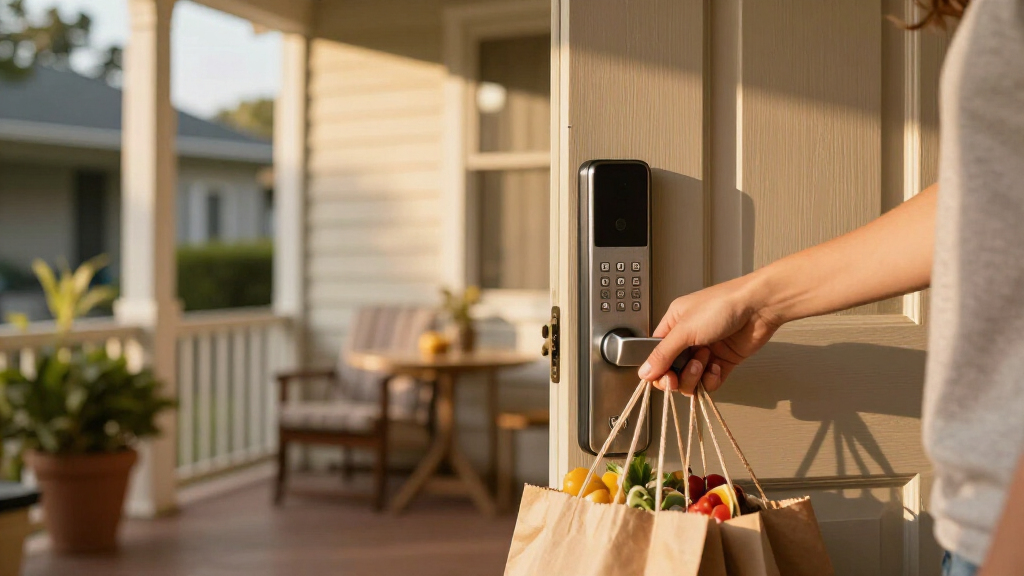
For easier keyless entry, the eufy Security Smart Lock C220 is my best overall pick for its fingerprint access and smart features, while the TEEHO TE001 is a simpler choice for buyers who mainly want keypad entry. The Philips 4200 Series stands out for households seeking several ways to unlock, including fingerprint and keypad access. The biggest tradeoffs are how much app and Wi-Fi functionality you need, whether you want a full handle set or a deadbolt replacement, and how many access methods you’ll actually use. A lock with more features can add setup and upkeep, while a basic keypad model may be easier to live with but less flexible. Read on for the full breakdown of 15 smart locks with keypads and how their differences can guide your choice.

Get home appliances delivered free with Prime
- Fast, free delivery on millions of items
- Prime Video, Amazon Music and more included
- Member-only deals all year
Complete the kit


Key Takeaways
- Multiple access methods separate the feature-rich picks: the eufy C220 and Philips 4200 Series pair keypad entry with fingerprint access, while simpler models center on PIN codes.
- Deadbolt-only and handle-set designs serve different jobs: check whether you’re replacing just the deadbolt or changing the lock and handles before comparing features.
- Wi-Fi connectivity is not the same as keypad convenience: remote app features matter most when you want to manage access away from home; local keypad entry can be enough for routine use.
- Fingerprint options appear across several brands and form factors: compare where the sensor sits and whether the lock’s shape suits your door and household, rather than choosing by feature count alone.
- The lineup favors different levels of simplicity: models such as the TEEHO TE001 and Kwikset Powerbolt 250 suit buyers prioritizing keypad operation, while app-connected and multi-method locks trade a simpler setup for broader control.
| Veise VE012W WiFi Fingerprint Smart Lock, Satin Nickel |  | Best for Hub-Free Remote Access | Unlock methods: App, fingerprint, PIN codes, physical keys, voice commands | Connectivity: Built-in 2.4 GHz Wi-Fi; no hub required | Fingerprint capacity: 20 fingerprints | VIEW ON AMAZON | See Our Full Breakdown |
| Yamiry Keypad Smart Door Knob Lock with Fingerprint Access |  | Best for Flexible Door-Knob Entry | Model: YR05 | Unlock methods: App, passcode, key fob, fingerprint, physical key | Connectivity: Bluetooth; remote control requires a separately sold Wi-Fi gateway | VIEW ON AMAZON | See Our Full Breakdown |
| Veise KS01B Keypad Door Lock with Lever Handles, Satin Nickel |  | Best for Simple Code-Based Household Access | Access codes: 1 master code, 20 permanent user codes, and one-time guest passwords | Handles: Two ergonomic lever handles | Auto-lock: Adjustable from 10 to 99 seconds | VIEW ON AMAZON | See Our Full Breakdown |
| Veise VE017 Fingerprint Smart Door Lock with App Control, Matte Black |  | Best for Flexible Guest-Code Scheduling | Access methods: Fingerprint, app, authorized access, fob card, keypad code, shared codes, mechanical key; optional voice assistant access | Password modes: One-time, duration, permanent, recurring | Connectivity: Veise G1 Gateway required for remote access and voice assistant features; sold separately | VIEW ON AMAZON | See Our Full Breakdown |
| Philips Wi-Fi Smart Deadbolt Lock with Keyless Entry |  | Best for Hub-Free Scheduled Codes | Model: DDL242X-1HW | Unlock methods: App, passcode, fingerprint, physical key, Alexa, Google Assistant | Wi-Fi: Built-in 2.4 GHz; no hub required | VIEW ON AMAZON | See Our Full Breakdown |
| Veise VE06-H Smart Front Door Lock Handle Set |  | Best for a Complete Handleset | Access methods: App, code, fob, mechanical key, thumb turn | User codes: 250+ | Door thickness: 1-3/8 to 2 inches | VIEW ON AMAZON | See Our Full Breakdown |
| Ulecoce U68 Fingerprint Keypad Deadbolt with Knob Set, Matte Black | 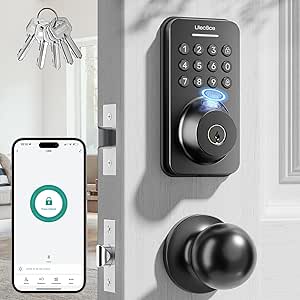 | Best for Fingerprint Capacity | Unlock methods: Fingerprint, keypad passcode, app, one-touch, physical key | Fingerprint capacity: Up to 512 sets | Auto-lock delay: 5–60 seconds | VIEW ON AMAZON | See Our Full Breakdown |
| eufy Security Smart Lock C220 with Fingerprint Keyless Entry |  | Best for Built-In Remote Access | Lock type: Deadbolt | Unlock methods: Fingerprint, app, keypad, physical key, Apple Watch, voice control | Connectivity: Built-in Wi-Fi | VIEW ON AMAZON | See Our Full Breakdown |
| NICE DIGI Keypad Door Lock with Handle |  | Best for App-Free Simplicity | Access codes: Up to 20 personalized 4–8 digit codes | Auto-lock delay: 5–99 seconds | Backup keys: 2 | VIEW ON AMAZON | See Our Full Breakdown |
| Veise KS02A Fingerprint Keypad Deadbolt, Matte Black |  | Best for a Compact Fingerprint Deadbolt | Unlock methods: Fingerprint, password, one-time code, backup key | Fingerprint capacity: Up to 20 | Password capacity: Up to 20 user passwords | VIEW ON AMAZON | See Our Full Breakdown |
| Philips 4200 Series WiFi Smart Deadbolt with Handle, Fingerprint and Keypad Entry, Satin Nickel |  | Best for Connected Fingerprint Entry | Model: DDL242X-1HW | Connectivity: 2.4 GHz WiFi; no hub required | Entry methods: Fingerprint, PIN code, app, voice assistant | VIEW ON AMAZON | See Our Full Breakdown |
| TEEHO TE001 Keyless Entry Deadbolt with Keypad, Satin Nickel |  | Best for Simple Guest Access | Model: TE001 | Access codes: Up to 20 user codes and one one-time guest code | Auto-lock: Adjustable from 10 to 99 seconds; off by default | VIEW ON AMAZON | See Our Full Breakdown |
| Yamiry Keypad Smart Door Knob Lock with Handle | 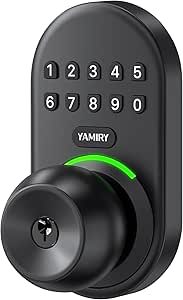 | Best for a Keypad Knob Replacement | Model: YR04 | Lock type: Keypad door knob | Material: Aluminum alloy | VIEW ON AMAZON | See Our Full Breakdown |
| Kwikset Powerbolt 250 Keyless Entry Keypad Deadbolt, Satin Nickel |  | Best for Flexible Code Management | Model: Powerbolt 250 | Entry method: 10-button illuminated keypad; 2 included keys | User codes: Up to 25 user codes and 5 one-time codes | VIEW ON AMAZON | See Our Full Breakdown |
| Veise VE06-L Smart Deadbolt Lock with Two Lever Handles, Matte Black |  | Best for Multiple Credential Types | Model: VE06-L | Construction: Zinc alloy | Unlock methods: App, passcode, web portal, IC card, e-key, physical key, Apple Watch | VIEW ON AMAZON | See Our Full Breakdown |
More Details on Our Top Picks
Veise VE012W WiFi Fingerprint Smart Lock, Satin Nickel
The Veise VE012W suits buyers who want keypad entry but also expect to manage the door remotely without adding a separate hub. Its built-in 2.4 GHz Wi-Fi connects app control, alerts, and access logs, while fingerprint entry gives household members a quick alternative to remembering a code. With 100 custom PINs and support for Alexa and Google Assistant, it offers more connected access options than the Bluetooth-only Yamiry YR05, whose remote control needs an extra gateway.
The tradeoff is power and capacity: this model takes eight AA batteries, not included, and stores only 20 fingerprints. That makes it less appealing for a large group that relies on biometrics. For a smaller household wanting direct remote access, its broad entry choices and standard-door fit make it a strong keypad-centered pick.
Pros:- Built-in Wi-Fi supports remote app control without a separate hub
- Combines PIN, fingerprint, physical-key, app, and voice access
- Access logs and real-time alerts help track entry
- Fits standard U.S. doors from 1⅜ to 2 inches thick
Cons:- Requires eight AA batteries, which are not included
- Fingerprint capacity is limited to 20 users
- Wi-Fi operates on 2.4 GHz
Best for: Households that want remote app control and alerts without buying a separate Wi-Fi gateway, alongside PIN and fingerprint entry.
Not ideal for: Large households that want fingerprint access for more than 20 people or buyers who prefer a lock requiring fewer batteries.
- Unlock methods:App, fingerprint, PIN codes, physical keys, voice commands
- Connectivity:Built-in 2.4 GHz Wi-Fi; no hub required
- Fingerprint capacity:20 fingerprints
- PIN capacity:100 custom PINs
- Door compatibility:Standard U.S. doors, 1⅜–2 inches thick; left- or right-handed
- Water resistance:IP55
- Power:8 AA/LR6 alkaline batteries, not included
- Finish:Satin nickel
Our verdict“Choose the VE012W if you want direct Wi-Fi access and several entry methods, but not if a large fingerprint roster or lower battery count is a priority.”
Yamiry Keypad Smart Door Knob Lock with Fingerprint Access
The Yamiry YR05 is the choice here for buyers who specifically want a keypad-equipped door knob rather than a deadbolt. It accepts app access, passcodes, a key fob, fingerprints, and a physical key, and its stated capacity of 50 passwords and fingerprints gives it room for more users than the Veise VE012W’s 20-fingerprint limit. Passage mode can also suit an interior door or a household that sometimes wants the door to remain unlocked.
Its main compromise is connectivity: app control is Bluetooth-based, and remote access requires a separately sold Wi-Fi gateway. The product details also do not specify battery life or power source, making upkeep harder to plan than with the four-AA Veise VE017. It is a more focused fit for local, flexible entry than for buyers who want clear remote-control capability out of the box.
Pros:- Offers app, passcode, key-fob, fingerprint, and physical-key entry
- Stores up to 50 passwords and fingerprints
- Includes auto-lock and passage mode
- Designed for screwdriver installation on most American standard doors
Cons:- Remote control requires a separately sold Wi-Fi gateway
- Bluetooth connectivity alone does not provide stated remote access
- Power source and battery life are not specified in the supplied product details
Best for: Buyers replacing a compatible standard door knob who want several local entry methods and passage mode.
Not ideal for: People who need remote access without extra hardware or who want clearly stated battery and runtime details before buying.
- Model:YR05
- Unlock methods:App, passcode, key fob, fingerprint, physical key
- Connectivity:Bluetooth; remote control requires a separately sold Wi-Fi gateway
- Storage capacity:Up to 50 passwords and fingerprints
- Door compatibility:Most American standard doors
- Dimensions:5.62 × 2.69 × 3 inches
- Material and color:Aluminum, matte black
- Included backup access:Two physical keys and two key fobs
Our verdict“Pick the YR05 if a keypad smart knob with multiple local access methods fits your door, and skip it if hub-free remote control is a must.”
Veise KS01B Keypad Door Lock with Lever Handles, Satin Nickel
The Veise KS01B prioritizes straightforward keypad use over app-connected features. Its backlit keypad, one-touch locking, and one-time guest passwords make it a practical choice for households that want to give visitors temporary access without managing a smart-home connection. It also includes two lever handles and backup keys, so it provides a complete handle-and-lock setup rather than the deadbolt-only format of the Veise VE012W.
This simpler approach has limits: the supplied details list no app or Wi-Fi control, and the lock needs four AA batteries that are not included. Its IP54 protection is also lower than the IP55 ratings listed for the VE012W and VE017, so buyers should keep water away from the keyhole and interior. For code-focused entry on a standard door, it offers useful guest access without requiring a connected setup.
Pros:- Supports a master code, 20 permanent user codes, and one-time guest passwords
- Backlit keypad and one-touch locking simplify everyday operation
- Includes two lever handles and backup keys
- Adjustable auto-lock and anti-peeping protection add practical entry controls
Cons:- No app or Wi-Fi connectivity is listed in the supplied product details
- Four AA batteries are required and not included
- IP54 protection does not remove the need to keep liquids away from the keyhole and interior
Best for: Households that want a keypad and lever handles, with permanent household codes and temporary guest codes but no need for app control.
Not ideal for: Buyers who need remote access, activity alerts, or higher stated water resistance for a more exposed installation.
- Access codes:1 master code, 20 permanent user codes, and one-time guest passwords
- Handles:Two ergonomic lever handles
- Auto-lock:Adjustable from 10 to 99 seconds
- Ingress protection:IP54 water and dust resistance
- Door thickness:1⅜–2 inches
- Power:4 AA/LR6 alkaline batteries, not included
- Battery life:Over 1 year
- Finish:Satin nickel
Our verdict“Choose the KS01B for code-based access with matching lever handles, but look to the VE012W if remote app control matters more.”
Veise VE017 Fingerprint Smart Door Lock with App Control, Matte Black
The Veise VE017 stands out for buyers who need more than a permanent keypad code: it supports one-time, duration-based, permanent, and recurring passwords. That flexibility makes it easier to grant access to a guest or service provider for a defined period, while app-based user management and activity logs help owners keep track. Compared with the keypad-only Veise KS01B, the VE017 adds fingerprint, fob, app, and shared-code entry.
There is a connectivity catch: remote access and Alexa or Google Assistant features require the separately sold Veise G1 Gateway. Without it, the lock still offers multiple entry methods, but not the full remote-control experience some shoppers expect from an app-enabled model. Four AA batteries are not included; an emergency USB-C port provides a backup power route, not a replacement for routine battery changes.
Pros:- Supports one-time, duration, permanent, and recurring password types
- Combines fingerprint, keypad, app, fob, shared-code, and mechanical-key access
- On-device AES-128 encryption and activity logs support managed access
- Emergency USB-C port provides a backup power option
Cons:- Remote access and voice assistant features require a separately sold gateway
- Four AA batteries are not included, and runtime varies with use
- Full smart-home functionality depends on additional hardware
Best for: Owners who want varied temporary and recurring access codes, activity logs, and fingerprint entry, and are willing to add a gateway for remote control.
Not ideal for: Buyers who want built-in Wi-Fi remote access without extra hardware or a lock supplied with its batteries.
- Access methods:Fingerprint, app, authorized access, fob card, keypad code, shared codes, mechanical key; optional voice assistant access
- Password modes:One-time, duration, permanent, recurring
- Connectivity:Veise G1 Gateway required for remote access and voice assistant features; sold separately
- Data security:AES-128 encryption; data stored on the lock
- Auto-lock delay:0–180 seconds
- Power and emergency access:4 AA/LR6 alkaline batteries, not included; emergency USB-C port
- Water resistance:IP55
- Installation:DIY installation with a screwdriver; detects door handing
Our verdict“Choose the VE017 if scheduled guest access and varied entry methods matter, but favor the VE012W or Philips DDL242X-1HW for built-in Wi-Fi without a gateway.”
Philips Wi-Fi Smart Deadbolt Lock with Keyless Entry
The Philips DDL242X-1HW combines keypad entry with built-in Wi-Fi, fingerprint access, app control, and physical-key backup. Its 100 custom passcodes can include one-time and scheduled codes, giving it a useful balance for households that host visitors or arrange recurring access. Unlike the gateway-dependent Veise VE017, Philips provides 2.4 GHz remote connectivity without a separate hub; it also offers voice control through Alexa and Google Assistant.
The tradeoffs are less suited to buyers seeking a complete door-monitoring setup: a door sensor is not included, so the lock does not provide that separate open-or-closed signal. It also uses AA alkaline batteries that are not supplied and supports only 2.4 GHz Wi-Fi. Compared with the VE012W, it offers the same general hub-free approach but pairs it with scheduled passcodes and Away Mode.
Pros:- Built-in 2.4 GHz Wi-Fi enables remote access without a separate hub
- Supports up to 100 passcodes, including one-time and scheduled codes
- Offers app, fingerprint, physical-key, Alexa, and Google Assistant access
- Adjustable auto-lock and Away Mode add useful locking controls
Cons:- Door sensor is not included
- AA alkaline batteries are not included
- Wi-Fi support is limited to 2.4 GHz
Best for: Households that want built-in Wi-Fi, fingerprint entry, and scheduled or one-time keypad codes without purchasing a gateway.
Not ideal for: Buyers who need a door sensor in the box, use only a non-2.4 GHz network, or want supplied batteries.
- Model:DDL242X-1HW
- Unlock methods:App, passcode, fingerprint, physical key, Alexa, Google Assistant
- Wi-Fi:Built-in 2.4 GHz; no hub required
- Passcodes:Up to 100 custom codes; one-time and scheduled codes supported
- Auto-lock:Adjustable from 10 to 180 seconds
- Door thickness:1⅜–2 inches (38–50 mm)
- Batteries:AA alkaline (LR6), not included
- Door sensor:Not included
Our verdict“Pick the Philips DDL242X-1HW for hub-free Wi-Fi and scheduled keypad access, but choose another setup if a door sensor is part of your requirements.”
Veise VE06-H Smart Front Door Lock Handle Set
The VE06-H makes the most sense for buyers replacing a front-door handleset who want keypad entry without giving up other ways in. Its five access methods include codes, fobs, app control, a mechanical key, and a thumb turn; the included fobs are especially handy for household members who would rather not remember a code. Compared with the Veise KS02A, this model arrives with exterior handleset hardware and supports far more user codes, but it needs three existing door holes with compatible spacing. App features cover remote sharing and activity records, while Alexa and Google Home support requires a separately sold gateway. I’d choose it for a full hardware refresh, not for a simple deadbolt swap where preserving the existing handle is the priority.
Pros:- Five access methods give household members alternatives to keypad codes.
- Supports remote code sharing, user management, and activity records.
- Includes two fobs and two mechanical backup keys.
- Auto-lock, privacy mode, and passage mode support different door-use routines.
Cons:- Alexa and Google Home integration requires a separately sold Veise G2 gateway.
- Installation depends on three pre-drilled holes with compatible spacing.
Best for: Homeowners replacing a compatible front-door handleset who want codes, fobs, keys, and app-managed access for a larger household.
Not ideal for: Buyers with a basic deadbolt-only setup, mismatched pre-drilled holes, or a requirement for voice control without buying an additional gateway.
- Access methods:App, code, fob, mechanical key, thumb turn
- User codes:250+
- Door thickness:1-3/8 to 2 inches
- Smart home support:Alexa and Google Home with separately sold Veise G2 gateway
- Included backup access:2 mechanical keys and 2 fobs
- Finish:Matte black
- Warranty:1 year, with a free 1-year extension after registration
Our verdict“Choose the VE06-H if you are replacing a compatible handleset and want several convenient entry options; skip it for a straightforward deadbolt replacement.”
Ulecoce U68 Fingerprint Keypad Deadbolt with Knob Set, Matte Black
The U68 is the pick here for households that want fingerprint entry to work for a crowd: it stores up to 512 fingerprint sets, far more than the Veise KS02A, which supports up to 20. Keypad codes, an app, one-touch controls, and a physical key give residents alternatives if a fingerprint does not suit them. Its 5–60-second auto-lock setting also lets buyers tune the relocking delay to their routine. The catch is that this is not a fully connected lock out of the box: remote management and voice control need an optional gateway, and app unlocking is listed for use within five meters. Compared with the Wi-Fi-equipped eufy Security Smart Lock C220, the U68 is more compelling for fingerprint capacity than for remote access convenience.
Pros:- Stores up to 512 fingerprint sets, substantially more than the Veise KS02A.
- Offers fingerprint, passcode, app, one-touch, and physical-key entry.
- Auto-lock delay is adjustable from 5 to 60 seconds.
- Includes five backup keys and a three-year warranty.
Cons:- Remote access management and voice control require a separately sold gateway.
- App unlocking is listed for use within five meters.
Best for: Large households or shared homes where many residents need fingerprint access and a three-year warranty is appealing.
Not ideal for: Buyers who need reliable remote unlocking or voice control without adding a gateway, or who expect app unlocking from beyond the stated five-meter range.
- Unlock methods:Fingerprint, keypad passcode, app, one-touch, physical key
- Fingerprint capacity:Up to 512 sets
- Auto-lock delay:5–60 seconds
- App unlocking range:5 meters
- Backup keys:5
- Included hardware:Lock with 2 knobs, latch, strike, mounting plate, screw kit
- Warranty:3 years
Our verdict“Pick the U68 for high-capacity fingerprint entry and flexible local unlocking, but choose a built-in Wi-Fi model for easier remote control.”
eufy Security Smart Lock C220 with Fingerprint Keyless Entry
The C220 stands out for buyers who want a keypad lock that can be managed remotely without a separate bridge. Its built-in Wi-Fi supports remote access, while fingerprint, keypad, app, physical key, Apple Watch, and voice control provide six ways to get inside. That makes it more connected out of the box than the Ulecoce U68, whose remote and voice features require an optional gateway. The tradeoff is power: the C220 takes eight AA batteries and is specified for up to eight months, with actual life varying by use. IP53 water resistance and BHMA Grade 3 certification add useful context for an exposed entry door, though buyers seeking a handleset should look at the Veise VE06-H instead; this is a deadbolt.
Pros:- Built-in Wi-Fi enables remote access without a separate bridge.
- Six unlocking methods include keypad, fingerprint, Apple Watch, and voice control.
- IP53 water resistance and BHMA Grade 3 certification are specified.
- Installation is described as taking about 15 minutes with no drilling required.
Cons:- Uses eight AA batteries, which may mean replacing more cells at once.
- Battery life is specified as up to eight months and varies with use.
Best for: Homeowners who want remote access and several entry methods without buying a separate connectivity bridge.
Not ideal for: Buyers who want a complete handleset, dislike replacing a larger battery set, or prefer a lock with longer stated battery life.
- Lock type:Deadbolt
- Unlock methods:Fingerprint, app, keypad, physical key, Apple Watch, voice control
- Connectivity:Built-in Wi-Fi
- Battery:8 AA batteries
- Stated battery life:Up to 8 months
- Certification:BHMA Grade 3
- Water resistance:IP53
- Operating temperature:-22°F to 158°F (-30°C to 70°C)
Our verdict“Choose the C220 if built-in remote control matters more than minimizing battery changes or getting a handleset.”
NICE DIGI Keypad Door Lock with Handle
The NICE DIGI Z1A is for buyers who want keypad entry and a handle without adding an app, Wi-Fi, or Bluetooth to the setup. Its up to 20 personalized codes, including temporary one-time codes, cover common household and guest access needs, while the backlit keypad helps at night. Compared with the app-managed Veise VE06-H, the Z1A gives up remote sharing and activity records but avoids gateways and connected-device setup. Auto-lock timing is adjustable, and passage mode suits times when the door should stay unlocked. The boundaries are clear: it is designed for standard US and Canadian wooden doors, runs on four AA batteries that are not included, and has no app-based remote access. I’d favor it when simple local keypad operation is the goal.
Pros:- Works without an app, Wi-Fi, or Bluetooth.
- Supports up to 20 personalized 4–8 digit codes, including temporary one-time codes.
- Adjustable auto-lock delay and passage mode suit different entry routines.
- Reversible handle fits left- and right-handed doors.
Cons:- Four AA batteries are required and are not included.
- Designed for standard US and Canadian wooden doors rather than a broad range of door types.
Best for: Renters or homeowners with a compatible wooden door who want keypad codes and a handle without app or network setup.
Not ideal for: Buyers who need remote code management, connected-home integration, or a lock suited to doors outside its stated wooden-door compatibility.
- Access codes:Up to 20 personalized 4–8 digit codes
- Auto-lock delay:5–99 seconds
- Backup keys:2
- Battery requirement:4 AA batteries, not included
- Stated battery life:Up to 8–12 months
- Weather resistance:IP54
- Door compatibility:Standard US and Canadian wooden doors
- Warranty:2 years
Our verdict“Choose the Z1A for straightforward keypad-and-handle entry on a compatible wooden door, but pick the VE06-H if remote access management matters.”
Veise KS02A Fingerprint Keypad Deadbolt, Matte Black
The KS02A keeps the feature set focused: a fingerprint reader and keypad handle everyday entry, while one-time codes and a backup key cover guests and contingencies. It stores up to 20 fingerprints and 20 user passwords, making it a better fit for a household-sized group than the high-capacity Ulecoce U68, which supports up to 512 fingerprint sets. The KS02A’s ANSI Grade 3, BHMA certification and IP54 water resistance give buyers concrete durability details, and its stated battery life is up to 365 days or more. Unlike the Veise VE06-H, it is a deadbolt without a handle, so existing door hardware stays in place. Installation has a specific alignment demand: the front and back panels must be perfectly vertical.
Pros:- Combines fingerprint, password, one-time code, and backup-key entry.
- Stores up to 20 fingerprints and 20 user passwords.
- Supports auto-lock, one-touch locking, and passage mode.
- IP54 water resistance and ANSI Grade 3, BHMA certification are specified.
Cons:- Does not include a door handle.
- Requires careful installation so the front and back panels sit perfectly vertical.
- Four AA alkaline batteries are required but not included.
Best for: Households seeking a standalone fingerprint-and-keypad deadbolt for a standard door, without replacing the existing handle.
Not ideal for: Large shared properties that need fingerprint capacity beyond 20 users, or buyers who want a handle included or prefer a simpler alignment-sensitive installation.
- Unlock methods:Fingerprint, password, one-time code, backup key
- Fingerprint capacity:Up to 20
- Password capacity:Up to 20 user passwords
- Auto-lock timer:10–99 seconds
- Battery:4 AA alkaline batteries, not included
- Stated battery life:Up to 365+ days
- Certification and water resistance:ANSI Grade 3, BHMA certified; IP54
- Door thickness compatibility:1-3/8 to 2 inches (35–50 mm)
Our verdict“Choose the KS02A for a certified, fingerprint-capable deadbolt that keeps your existing handle, but look to the U68 for substantially more fingerprint capacity.”
Philips 4200 Series WiFi Smart Deadbolt with Handle, Fingerprint and Keypad Entry, Satin Nickel
The Philips 4200 Series is the most connected choice in this group for buyers who want a keypad without giving up fingerprint entry or remote access. It connects to 2.4 GHz WiFi without a hub, so you can check access activity and control the lock in the Philips app, or use Alexa and Google Assistant. Its included handle set also makes it a more complete door-hardware replacement than the TEEHO TE001, which is a keypad deadbolt with backup keys rather than a matched lever set.
The tradeoff is power and network flexibility: it needs eight AA batteries, not included, and it only supports 2.4 GHz WiFi. Choose it for app access and quick fingerprint unlocking; skip it if you want a simpler battery setup or a lock that works without WiFi.
Pros:- Fingerprint, PIN, app, and voice-assistant entry give household members several ways to unlock.
- Direct 2.4 GHz WiFi connection supports remote control and access monitoring without a separate hub.
- Includes two door levers for a coordinated hardware replacement.
- Adjustable auto-lock delay can be set from 0 to 180 seconds.
Cons:- Requires eight AA alkaline batteries, which are not included.
- Works with 2.4 GHz WiFi only.
Best for: Households that want fingerprint and PIN entry, app-based access monitoring, and a matching deadbolt-and-handle set.
Not ideal for: Buyers with only 5 GHz WiFi available or anyone who prefers a lock that uses fewer batteries and does not depend on a network for remote features.
- Model:DDL242X-1HW
- Connectivity:2.4 GHz WiFi; no hub required
- Entry methods:Fingerprint, PIN code, app, voice assistant
- Fingerprint unlock speed:0.3 seconds
- Auto-lock delay:0–180 seconds
- Door thickness compatibility:1 3/8–1 3/4 inches (38–50 mm)
- Battery requirement:8 AA alkaline batteries; not included
- Finish:Satin nickel
Our verdict“Choose the Philips 4200 Series if fingerprint access and direct app control matter more than minimizing battery use.”
TEEHO TE001 Keyless Entry Deadbolt with Keypad, Satin Nickel
The TEEHO TE001 keeps keyless entry straightforward: program up to 20 user codes, issue a one-time code for a guest, and retain two physical keys as backup. Its adjustable auto-lock and one-touch locking cover the everyday basics without adding app or WiFi setup. Compared with the Philips 4200 Series, it gives up fingerprint and remote control, but it also avoids the more connected model’s network requirements and eight-battery power pack.
IP54 weather resistance and a low-battery alert make it a practical keypad option for an exposed entry, while screwdriver installation keeps the setup approachable. Fit is the main caveat: this lock requires a 2-1/8-inch door hole and will not fit 38 mm holes. Check the existing bore before choosing it.
Pros:- Stores up to 20 user codes and supports a one-time guest code.
- One-touch locking and adjustable auto-lock reduce the chance of leaving the door unsecured.
- IP54 weather resistance and a low-battery alert suit routine exterior-door use.
- Includes two backup keys and is designed for screwdriver installation.
Cons:- Does not list app, WiFi, or remote access features.
- Fits 2-1/8-inch (54 mm) door holes only, not 38 mm holes.
- Four AA batteries are required and are not included.
Best for: Renters or homeowners who want a basic keypad deadbolt with separate household codes and a temporary guest code.
Not ideal for: Buyers who need remote app control, fingerprint entry, or compatibility with a 38 mm door hole.
- Model:TE001
- Access codes:Up to 20 user codes and one one-time guest code
- Auto-lock:Adjustable from 10 to 99 seconds; off by default
- Power:4 AA batteries; not included
- Battery life:Up to 365 days
- Weather resistance:IP54
- Door hole compatibility:2-1/8 inches (54 mm); not compatible with 38 mm holes
- Finish:Satin nickel
- Warranty:2 years
Our verdict“Pick the TEEHO TE001 for uncomplicated shared PIN access, provided your door has the required 2-1/8-inch hole.”
Yamiry Keypad Smart Door Knob Lock with Handle
The Yamiry YR04 is the distinct choice here for someone replacing a keyed door knob rather than adding a connected deadbolt. Its backlit keypad supports up to 20 codes, and the adjustable auto-lock can be set from 5 to 99 seconds or disabled. That makes it more flexible at the door than the TEEHO TE001 on timing, while both provide physical backup keys and IP54 weather resistance.
This is a local-entry product, not a smart-home lock: no WiFi or app control is listed. Its anti-prying code feature adds a keypad privacy measure, but the physical keys are described as duplicable. Buyers should also confirm that a knob-style lock suits their door and security needs; unlike the Philips 4200 Series, this is not a fingerprint-enabled deadbolt with remote access.
Pros:- Backlit keypad supports easier code entry in low light.
- Stores up to 20 user codes and includes two physical backup keys.
- Auto-lock timing adjusts from 5 to 99 seconds and can be disabled.
- IP54 weather resistance and anti-prying code feature add practical keypad protections.
Cons:- No WiFi or app connectivity is listed, so remote access and activity logs are unavailable.
- Physical keys are described as duplicable.
- A knob lock may not suit buyers seeking the deadbolt format offered by the Philips 4200 Series.
Best for: People replacing a door knob who want backlit PIN entry, several user codes, and a simple screwdriver installation.
Not ideal for: Buyers seeking a deadbolt, fingerprint unlocking, app-based monitoring, or remote smart-home control.
- Model:YR04
- Lock type:Keypad door knob
- Material:Aluminum alloy
- User codes:Up to 20; 4–8 digits
- Auto-lock timer:5–99 seconds; can be disabled
- Weather resistance:IP54
- Backup keys:2
- Dimensions:5.62 x 2.7 x 3 inches
- Finish:Matte black
Our verdict“Choose the Yamiry YR04 when you specifically want a keypad-equipped knob and do not need connected features.”
Kwikset Powerbolt 250 Keyless Entry Keypad Deadbolt, Satin Nickel
The Kwikset Powerbolt 250 suits households that need a larger roster of PINs than basic keypad deadbolts provide: it holds up to 25 user codes and five one-time codes. Its illuminated keypad helps with night-time entry, while Vacation Mode and an intrusion alert offer useful controls beyond simply locking and unlocking. Compared with the TEEHO TE001, the Powerbolt 250 allows more user codes and gives one-time codes a defined capacity; the TEEHO is the alternative to weigh if IP54 weather resistance is a priority.
SmartKey re-keying lets owners change the physical key configuration themselves, and installation uses a screwdriver. This is still a keypad deadbolt rather than an app-connected lock, and it needs four AA batteries. A further limitation: the keypad temporarily disables after three incorrect code entries, which can interrupt repeated attempts.
Pros:- Supports up to 25 user codes and five one-time codes.
- Illuminated keypad makes PIN entry easier in low light.
- Vacation Mode, auto-lock, and an intrusion alert add useful access controls.
- SmartKey allows owners to re-key the lock themselves.
Cons:- No app or WiFi control is listed.
- Four AA alkaline batteries are required and not included.
- Keypad temporarily disables after three incorrect code entries.
Best for: Families, shared homes, or property managers who want many personal PINs, temporary codes, and a re-keyable physical key.
Not ideal for: Buyers who require app control, or anyone who wants a keypad that will not temporarily disable after repeated incorrect entries.
- Model:Powerbolt 250
- Entry method:10-button illuminated keypad; 2 included keys
- User codes:Up to 25 user codes and 5 one-time codes
- Auto-lock intervals:30 seconds, 1 minute, 3 minutes, 5 minutes, or 10 minutes
- Battery:4 AA alkaline batteries; not included
- Battery life:At least 12 months
- Installation:Screwdriver required
- Finish:Satin nickel
Our verdict“Choose the Powerbolt 250 if you need generous PIN capacity and self-service re-keying more than remote access.”
Veise VE06-L Smart Deadbolt Lock with Two Lever Handles, Matte Black
The Veise VE06-L is the most varied entry system in this batch: residents can use passcodes, IC cards, e-keys, a physical key, or the app and web portal. Its capacity—250+ passcodes and 1,000+ IC cards—makes it a stronger fit for managed access than the Kwikset Powerbolt 250, which centers on keypad codes and a conventional key. Access logs and adjustable auto-lock add control, while the included levers make this a full hardware set rather than a deadbolt-only replacement.
The compromise is that smart-home integration is not self-contained. Alexa and Google Assistant require a separately sold G2 gateway, and app or web features depend on the service. With IP54 resistance and Grade 3 certification, it has useful protection credentials, but buyers wanting a simple standalone keypad should favor the TEEHO or Kwikset instead.
Pros:- Supports app, web portal, passcode, IC card, e-key, physical key, and Apple Watch access.
- High stated capacity for passcodes and IC cards suits shared access.
- Access logs and adjustable auto-lock support day-to-day oversight.
- IP54 weather resistance, Grade 3 certification, and included lever handles add practical value.
Cons:- Alexa and Google Assistant require a separately sold G2 gateway.
- App and web features depend on the associated digital services.
- The one-year warranty extension requires registration.
Best for: Busy households, shared properties, or small access-managed spaces that benefit from cards, e-keys, codes, and access logs.
Not ideal for: Buyers who want voice control without extra hardware or prefer a straightforward keypad deadbolt with minimal app dependence.
- Model:VE06-L
- Construction:Zinc alloy
- Unlock methods:App, passcode, web portal, IC card, e-key, physical key, Apple Watch
- IC card capacity:1,000+
- Passcode capacity:250+
- Auto-lock delay:5–900 seconds
- Weather resistance:IP54
- Door compatibility:Door thickness 1-3/8–2 inches (35–50 mm); hole diameter 1-1/2 or 2-1/8 inches (38 or 54 mm)
- Smart-home compatibility:Alexa and Google Assistant with separately sold G2 gateway
Our verdict“Pick the Veise VE06-L if varied credentials and access logs matter more than keeping setup and smart-home control self-contained.”

How We Picked
I ranked these 15 locks around the promise of easier keypad-based entry, not the number of features listed on a product page. I compared access methods, the practical role of keypad entry, connectivity, lock format, and how well each design appears suited to everyday household use. I also weighed the difference between a deadbolt replacement and a full handle set, since buying the wrong form factor can make an otherwise attractive option unsuitable.
The higher positions go to products that offer a useful blend of straightforward entry, access flexibility, and smart control without making buyers pay attention to features they may not need. Locks with fingerprint access or app connectivity can suit households seeking more ways to manage entry, but added capability does not automatically make a lock the best fit. Simpler keypad-focused models rank well for ease of use and a narrower job, while their limited access options keep them below more versatile picks. Installation fit and the buyer’s existing door hardware remain essential checks across the lineup.
Factors to Consider When Choosing 15 Best Smart Locks With Keypads For Easier Keyless Entry
Before choosing a model, I’d match the lock to the door and the household’s daily routine. A keypad is the shared starting point in this roundup, but installation format, connectivity, and backup access can change how convenient a lock feels after setup.
Choose the right lock format before comparing features
A deadbolt-only lock replaces the deadbolt, while a handle set or knob-and-lock combination changes more of the door hardware. Those formats are not interchangeable, even when product names sound similar. Check your existing door preparation, handle layout, and whether the deadbolt and handle are separate before ordering. A mismatch can mean extra installation work or hardware that does not suit the door. If your current handles are in good condition, a deadbolt-only model may avoid replacing parts you do not need. For a coordinated entry set, a handle model may be a better match, but verify its dimensions and installation requirements carefully.
Decide whether remote access is worth the extra setup
A keypad works at the door without asking you to carry a key, but app features address a different need: managing the lock when you are away. Think about whether you need to check lock status or handle access remotely, or whether changing codes at home is enough. Wi-Fi-enabled options can add convenience, yet they may call for account setup, app permissions, and reliable network coverage near the door. Do not assume that every smart feature works the same way across models or without additional setup. If your main goal is a PIN for family members, a simpler keypad lock may be easier to maintain. Choose connectivity for a specific routine, not just because it appears on the feature list.
Treat fingerprint entry as an alternative, not a replacement for planning
Fingerprint access can speed up entry for people who prefer not to enter a code each time, and several picks in this lineup combine it with a keypad. The keypad remains useful when a fingerprint is inconvenient or another person needs a separate way in. Consider who will use the lock and whether each person is comfortable relying on biometric access. A household with frequent visitors may benefit more from a code-based routine than from adding another method to manage. Check how the manufacturer describes enrollment and everyday access before assuming fingerprint use will suit everyone. More methods can improve flexibility, but they can also make setup and household instructions more involved.
Plan for power, backup entry, and ongoing upkeep
Keypad and smart locks depend on battery power, so battery replacement becomes part of ownership. Review the product instructions for battery type, low-power alerts, and the stated backup options before committing. A physical key can provide reassurance, while other models may rely on different fallback procedures; do not assume all locks offer the same safeguard. Decide who in the household will notice alerts and replace batteries before they become a problem. If you rent or manage a home for others, clear instructions matter as much as the lock’s feature set. A small amount of planning can prevent a convenient keyless routine from becoming a maintenance surprise.
Check code management against your household’s actual needs
Some households need only one shared PIN; others may want separate access for family, guests, or service providers. Before buying, confirm how codes are created, removed, and managed, and whether those tasks require an app. A shared code is simple but harder to manage when someone no longer needs access. Individual codes can make access changes easier to handle, though they may add setup steps. Avoid choosing a lock based on a large list of possible users unless you will use that capacity. For occasional visitors, straightforward code changes may matter more than advanced activity tools.
Compare total convenience, not the feature count
A lock with keypad, fingerprint, app, and Wi-Fi access can cover more situations, but each feature brings another setup path to understand. A more basic model can be the better daily choice if everyone uses the keypad and no one needs remote controls. Consider the habits that cause friction now: carrying keys, letting someone in while away, or managing access for multiple people. Then prioritize only the features that address those problems. Also account for how much of your existing hardware you’ll need to replace. The right choice is the one whose access methods and installation fit your home, rather than the one with the longest feature list.
Frequently Asked Questions
Should I choose a keypad-only lock or one with fingerprint access?
Choose keypad entry when you want a straightforward routine that works for several household members without relying on biometric access. Fingerprint entry can make sense when you want a faster alternative to entering a code, and models such as the eufy C220 and Philips 4200 Series combine both methods. A fingerprint option does not make the keypad redundant: the code can still help when another person needs access or biometric entry is inconvenient. Think about who will use the lock and how comfortable they are with each method. If nobody in your household wants fingerprint access, a simpler keypad model may be a better fit.
Do I need Wi-Fi to use a smart lock keypad?
No: keypad entry and Wi-Fi serve different purposes. A keypad lets someone enter a code at the door, while Wi-Fi can support remote app functions depending on the specific lock. If you mainly want to stop carrying keys or provide a code to household members, remote access may not be necessary. If you expect to manage the lock while away, check the model’s connectivity requirements and app capabilities before buying. Also confirm that your home network reaches the door area. Do not choose a Wi-Fi model on the assumption that every remote feature is included or works identically across brands.
How can I tell whether I need a deadbolt-only model or a handle set?
Start by looking at the hardware already installed on your door. A deadbolt-only model replaces the deadbolt, whereas a handle set or combined knob-and-lock design changes additional hardware. Measure and inspect the door preparation, including the spacing and layout of the existing lock and handle, then compare those details with the manufacturer’s fit information. If you want to keep a working handle, a deadbolt-only option may avoid unnecessary replacement. If you want the entry hardware to match, a handle-set pick may suit the project better. When the fit is unclear, confirm compatibility before ordering rather than relying on the product title alone.
Is a physical key still useful if I buy a keypad lock?
A physical key can provide a backup route, but availability and backup procedures vary by model. Check the exact product documentation to learn whether it includes a key override and what happens if the batteries run low. Do not assume that every keypad lock has the same fallback method. If backup access is important to your household, make that a deciding feature rather than an afterthought. Keep any physical backup accessible to the people who may need it, without leaving it in an obvious place near the door. A clear battery-check routine also helps reduce the chance of relying on an emergency workaround.
What should I prioritize if different people need access at different times?
Look at how the lock handles creating and removing codes, and whether code management happens at the keypad or through an app. A single shared PIN is easy to explain but may be awkward when one visitor’s access should end. Separate codes can make changes more manageable, though they bring extra setup and record-keeping. If access needs change often, investigate the model’s code-management process before making a choice. For a household with only a few regular users, simple keypad operation may matter more than advanced controls. Match the lock’s access management to how often you actually add or remove users.
Conclusion
For most buyers seeking a balance of keypad convenience and flexible entry, I’d start with the eufy Security Smart Lock C220 as the best overall pick. The TEEHO TE001 is my best value-style choice for people who want a more focused keypad lock, while the Philips 4200 Series is the premium-leaning option for households drawn to fingerprint, keypad, and handle-set access in one product. For beginners, I’d favor a keypad-first model with a form factor that matches the existing door, rather than starting with every connected feature. If your specific need is a coordinated handle replacement, compare the Veise handle-set models and the Philips 4200 Series against your door dimensions; if you want remote control, focus on the Wi-Fi models and verify their app requirements. Choose by installation fit and the access methods you will use, not by feature count alone.
Black Friday Picks

Sonos Era 100 SL Wireless Speakers, Black, Pack of 2
As an affiliate, we earn on qualifying purchases.