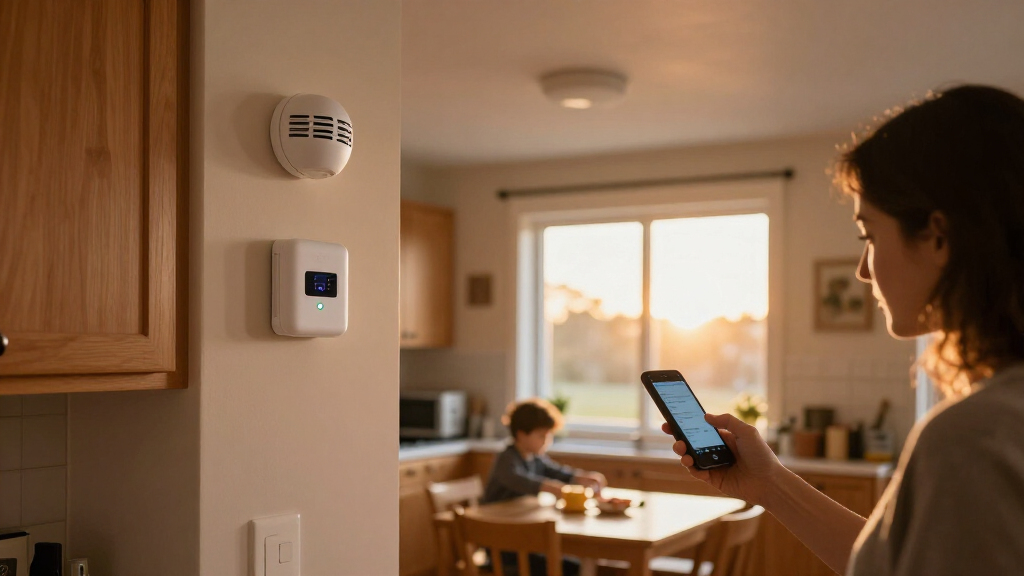

When I compare smart smoke and carbon monoxide detectors, the key choice is whether phone alerts and connected services matter more than a simple whole-home alarm network or a hardwired setup. The Kidde RGCUDR-RW is my pick for app-connected protection without changing existing wiring, while the Kidde RGCUAR-RW is a stronger fit where a hardwired alarm is needed and Ring alerts are desirable. For buyers who want several alarms to sound together without relying on Wi-Fi, the X-Sense XP0H-WN three-pack offers a different kind of connected coverage.

Get home appliances delivered free with Prime
- Fast, free delivery on millions of items
- Prime Video, Amazon Music and more included
- Member-only deals all year
These models are not interchangeable. The Kidde detectors send notifications through Ring and can work with Alexa-enabled devices, while the X-Sense units use wireless radio frequency to link compatible alarms but do not offer app or smart-home alerts. Power and installation matter just as much: one Kidde is battery powered, the other needs hardwiring, and X-Sense uses sealed batteries. I rank them by how well their connection method, power arrangement, and detection features suit distinct household needs—not by treating every use of the word “smart” as the same thing.
Complete the kit



Key Takeaways
- Kidde RGCUDR-RW: choose the battery-powered model if Ring app notifications and low-level CO warnings matter but running alarm wiring is not practical.
- Kidde RGCUAR-RW: the hardwired model makes more sense when your home already supports hardwired alarms and you want Ring and Alexa notifications.
- X-Sense XP0H-WN: its three-pack and wireless RF interconnection suit buyers who want alarms to sound together without Wi-Fi or an app.
- The two Kidde options offer Ring-connected alerts; X-Sense’s wireless link only connects compatible X-Sense alarms, so it does not provide phone notifications.
- Check local code, existing wiring, compatible interconnection requirements, and mounting fit before choosing; a feature-rich alarm is not a substitute for an installation that meets requirements.
| Kidde Smart Smoke and Carbon Monoxide Detector with Ring, Battery Powered, RGCUDR-RW |  | Best Overall for Ring App Alerts Without Wiring | Detection: Smoke and carbon monoxide | Power: Two AA alkaline batteries | Connectivity: Ring app notifications and wireless interconnection with compatible Kidde alarms | VIEW LATEST PRICE | See Our Full Breakdown |
| Kidde Smart Smoke & CO Detector with Ring, Hardwire & AA Battery (RGCUAR-RW) |  | Best for Hardwired Homes With Ring | Detection: Smoke and carbon monoxide | Power: Hardwired with AA battery backup | Connectivity: Ring app alerts and Alexa-enabled device notifications | VIEW LATEST PRICE | See Our Full Breakdown |
| X-Sense Wireless Combination Smoke and CO Detector, XP0H-WN, 3-Pack |  | Best Multi-Alarm Set Without Wi-Fi | Brand and model: X-Sense XP0H-WN | Pack size: Three detectors | Detection: Photoelectric smoke and electrochemical carbon monoxide | VIEW LATEST PRICE | See Our Full Breakdown |
| smart smoke and carbon monoxide detector | Detection | Power | Certifications | Connectivity |
|---|---|---|---|---|
| Kidde Smart Smoke and Carbon M | Smoke and carbon monoxide | Two AA alkaline batteries | UL 217 and FCC standards | Ring app notifications and wireless interconnection with compatible Kidde alarms |
| Kidde Smart Smoke & CO Detecto | Smoke and carbon monoxide | Hardwired with AA battery backup | UL 217 and FCC | Ring app alerts and Alexa-enabled device notifications |
| X-Sense Wireless Combination S | Photoelectric smoke and electrochemical carbon monoxide | Sealed 10-year lithium battery | UL 217, UL 2034, and ETL listed | — |
More Details on Our Top Picks
Kidde Smart Smoke and Carbon Monoxide Detector with Ring, Battery Powered, RGCUDR-RW
The Kidde RGCUDR-RW is my lead pick for a buyer who wants a smoke and CO alarm that can send notifications to the Ring app but does not want to add hardwiring. It runs on two AA alkaline batteries, so installation is not tied to an existing alarm circuit. That flexibility gives it a broader fit than the hardwired Kidde RGCUAR-RW, particularly in homes where adding wiring would be inconvenient or outside the scope of a simple detector replacement.
Its smart features are more directly useful to an app-centered household than X-Sense’s RF-only connection. The Kidde can send Ring notifications for smoke and carbon monoxide, including low-level CO and low-battery warnings, and it supports Alexa-enabled device notifications. Those details give someone away from home more information than a siren alone. Basic app alerts and optional professional monitoring should not be conflated, however: the latter requires a separate Ring subscription.
There is a second kind of connectivity here as well. This detector can wirelessly interconnect with compatible Kidde alarms, so it may fit a wider alarm setup than a single stand-alone unit. Compatibility is not universal: it should not be assumed to join X-Sense units or alarms from other brands. X-Sense may be a better fit for a household seeking a ready-made three-unit RF network, while this Kidde makes more sense when Ring notifications are the priority.
Kidde lists sensing designed to reduce nuisance alarms and claims faster smoke detection, but the faster-detection claim is based on internal testing. I would treat those claims as supporting details rather than a decisive reason to choose it. The main compromise is that battery power means maintaining replaceable cells, unlike X-Sense’s sealed 10-year battery. Choose this model when Ring alerts and flexible battery installation matter more than a sealed battery or hardwired power.
Pros:- Sends smoke, CO, low-level CO, and low-battery notifications through the Ring app.
- Battery-powered design avoids the hardwired installation required by the other Kidde model.
- Supports wireless interconnection with compatible Kidde alarms.
- Can provide notifications on Alexa-enabled devices.
Cons:- Uses two AA alkaline batteries rather than a sealed 10-year battery.
- Optional 24/7 professional monitoring requires a separate Ring subscription.
- Wireless interconnection is limited to compatible Kidde alarms, not a universal alarm network.
Best for: Households that want Ring app and Alexa notifications, low-level CO alerts, and a battery-powered installation without adding alarm wiring.
Not ideal for: Buyers who want a sealed long-life battery, do not use Ring, need a hardwired detector, or expect professional monitoring without a separate subscription.
- Detection:Smoke and carbon monoxide
- Power:Two AA alkaline batteries
- Connectivity:Ring app notifications and wireless interconnection with compatible Kidde alarms
- Voice assistant:Notifications through Alexa-enabled devices
- Monitoring:Optional 24/7 smoke and CO monitoring requires a separate subscription
- Model:RGCUDR-RW
- Certifications:UL 217 and FCC standards
Our verdict“I recommend the RGCUDR-RW for Ring households seeking smart smoke and CO alerts without hardwiring, provided they are comfortable maintaining AA batteries and using compatible devices.”
Kidde Smart Smoke & CO Detector with Ring, Hardwire & AA Battery (RGCUAR-RW)
The Kidde RGCUAR-RW is the better match when an existing alarm location has hardwired power and the homeowner wants connected alerts as well. It combines smoke and CO detection with Ring app notifications and Alexa-enabled device notifications, then adds AA battery backup for a power interruption. Compared with the battery-powered RGCUDR-RW, the defining difference is not the app experience; it is the installation and power arrangement.
For a hardwired home, using a detector designed for that setup may be a cleaner replacement path than switching to a fully battery-powered unit. But this is not the more convenient option for every buyer: installation requires hardwiring, and a buyer should verify the existing alarm circuit, connector compatibility, and applicable code before choosing it. If there is no suitable wiring or the installation needs to stay simple, the RGCUDR-RW is the more flexible Kidde choice. If a buyer wants several alarms without app dependence, the X-Sense XP0H-WN instead prioritizes RF interconnection.
Like its battery-powered sibling, this model is presented as reducing nuisance alarms and detecting smoke faster than many competitors. I would not rank it on those performance claims alone: the provided faster-detection statement does not include an independent test result. Its more concrete advantage is the combination of hardwired power, battery backup, and Ring connectivity. Basic Ring alerts do not require the optional monitoring plan, but full 24/7 professional monitoring does.
The tradeoff is a less flexible installation than either alternative. A hardwired detector can suit a home already set up for it, yet it may call for electrical work or a compatible existing connection. Its backup batteries also remain a maintenance item, unlike X-Sense’s sealed battery design. I place it second because it is a strong, clearly targeted choice rather than the easiest fit across different homes: choose it when wired installation is a requirement or preference, not simply because it offers more connectivity than the battery model.
Pros:- Combines smoke and carbon monoxide detection in one unit.
- Provides real-time Ring app alerts without requiring the optional monitoring plan.
- Uses hardwired power with AA battery backup.
- Supports notifications on Alexa-enabled devices.
Cons:- Requires hardwired installation, limiting where it can be placed or used as a replacement.
- Optional 24/7 professional monitoring requires a separate subscription.
- AA backup batteries need attention and replacement.
Best for: Owners replacing a compatible hardwired alarm who want Ring app alerts, Alexa notifications, and AA battery backup.
Not ideal for: Renters or homeowners without a suitable wired alarm connection, and buyers who want sealed batteries or a no-subscription professional monitoring service.
- Detection:Smoke and carbon monoxide
- Power:Hardwired with AA battery backup
- Connectivity:Ring app alerts and Alexa-enabled device notifications
- Monitoring:Optional 24/7 monitoring requires a separate subscription
- Model:RGCUAR-RW
- Certifications:UL 217 and FCC
- Detection claims:Manufacturer states faster smoke detection and reduced nuisance alarms
Our verdict“I would choose the RGCUAR-RW over the battery-powered Kidde only when compatible hardwiring is already available or specifically required.”
X-Sense Wireless Combination Smoke and CO Detector, XP0H-WN, 3-Pack
The X-Sense XP0H-WN three-pack is for a buyer whose definition of connected protection is that alarms around the home sound together—not that a phone receives a message. Its wireless RF interconnection links compatible X-Sense alarms, so a detected smoke or CO event can trigger the other units. That is a different strength from both Kidde picks: the Kidde models connect to Ring for app notifications, while X-Sense does not offer Wi-Fi, Ring, or smart-home integration.
As a package, three combination detectors can help a buyer plan coverage across several locations without choosing separate smoke-only and CO-only devices for each one. Each unit uses photoelectric and electrochemical sensing, and the listed certifications include UL 217 and UL 2034, with ETL listing. Those specifications make it a distinct option for households that want linked local alarms and combined detection. They do not remove the need to follow placement instructions or local requirements for detector count and location.
The sealed 10-year lithium battery is the clearest day-to-day advantage over the AA-powered Kidde detectors: there are no routine cell changes during the stated battery life. The tradeoff is that the battery is sealed rather than a simple replaceable power source, and there is no hardwired connection. That may rule it out where local code or an existing system calls for hardwired alarms. The Kidde RGCUAR-RW is the more relevant comparison for wired homes, while the battery-powered RGCUDR-RW is preferable to someone who values remote app alerts.
Installation deserves a closer look, too. The XP0H-WN has a 5.7-inch mounting bracket, which is intended to provide a clean, patch-free installation but may not fit every existing mounting spot. Check the bracket footprint before replacing another detector. Its RF connection is also brand-specific, so a mixed-brand household should not assume that alarms will interconnect. I rank X-Sense third for a smart-detector roundup because it lacks the app connectivity many buyers mean by “smart”; it earns its place for people who value a multi-unit alarm network and long-life sealed batteries over remote notifications.
Pros:- Three combination alarms use photoelectric smoke and electrochemical CO sensing.
- Wireless RF interconnection makes compatible units sound together.
- Sealed 10-year lithium battery avoids routine battery changes.
- Listed to UL 217 and UL 2034 and ETL listed.
Cons:- No Wi-Fi, app alerts, or smart-home integration.
- Wireless interconnection works only with compatible X-Sense units.
- Not hardwired, which may not meet local requirements for some installations.
- The large 5.7-inch bracket may not fit an existing mounting location.
Best for: Buyers outfitting several locations who want smoke and CO detection, alarms that sound together over wireless RF, and a sealed long-life battery without Wi-Fi.
Not ideal for: Anyone who wants phone notifications, Ring or Alexa integration, hardwired power, or compatibility with alarms from other brands.
- Brand and model:X-Sense XP0H-WN
- Pack size:Three detectors
- Detection:Photoelectric smoke and electrochemical carbon monoxide
- Power:Sealed 10-year lithium battery
- Interconnection:Wireless RF with compatible X-Sense alarms; no Wi-Fi
- Certifications:UL 217, UL 2034, and ETL listed
- Mounting bracket:5.7 inches (145 mm)
- Warranty and support:Five-year quality warranty and lifetime technical support; 60-day money-back period listed
Our verdict“I recommend the XP0H-WN three-pack when linked local alarms and sealed batteries matter more than app alerts, after checking wiring rules and bracket fit.”

How We Picked
I ranked these three models around the decisions that shape an actual smoke and CO alarm purchase: how an alert reaches people, how the detector is powered, and what is required to connect it to the rest of a home. All three combine smoke and carbon monoxide detection, but they solve different household problems. I gave the most weight to clear, useful distinctions between local alarm interconnection, Ring app notifications, and hardwired installation.
I also compared what each model can do without a paid monitoring plan. The Kidde detectors list Ring app notifications as a feature, while optional 24/7 professional monitoring requires a separate subscription. That distinction matters: phone alerts are not the same service as professional monitoring. The X-Sense three-pack, by contrast, is built around wireless RF interconnection among compatible units and has no listed Wi-Fi or smart-home connection.
Power and installation needs affect who can use each pick. The battery-powered Kidde avoids wiring, though it relies on two AA alkaline batteries. The hardwired Kidde includes AA backup but requires a compatible wired installation. X-Sense uses a sealed 10-year lithium battery and a relatively large mounting bracket; that battery arrangement reduces routine replacement, but the device is not hardwired and its bracket needs a fit check. I treated the listed UL and other certifications as product specifications, not as a reason to ignore local code or installation instructions.
Finally, I considered practical tradeoffs rather than repeating performance claims as proven outcomes. Kidde describes faster smoke detection and reduced nuisance alarms, but the supplied details do not establish an independent comparison for those claims. I mention them as manufacturer-stated features, not as a reason to rank one model ahead of every alternative. The order reflects the breadth of household use each option can serve, followed by more specific picks for wired homes and non-Wi-Fi alarm networks.
| smart smoke and carbon monoxide detector | Detection | Power | Connectivity | Monitoring |
|---|---|---|---|---|
| Kidde Smart Smoke and Carbon M | Smoke and carbon monoxide | Two AA alkaline batteries | Ring app notifications and wireless interconnection with compatible Kidde alarms | Optional 24/7 smoke and CO monitoring requires a separate subscription |
| Kidde Smart Smoke & CO Detecto | Smoke and carbon monoxide | Hardwired with AA battery backup | Ring app alerts and Alexa-enabled device notifications | Optional 24/7 monitoring requires a separate subscription |
| X-Sense Wireless Combination S | Photoelectric smoke and electrochemical carbon monoxide | Sealed 10-year lithium battery | — | — |
Factors to Consider When Choosing Smart Smoke And Carbon Monoxide Detectors
I would start by deciding what you expect “smart” to mean in a life-safety alarm: a notification on your phone, multiple alarms sounding together, or integration with a home’s existing wired system. These three detectors divide along those lines, so the right choice depends less on a single feature list and more on how you want the alarm to behave when you are home, away, or without power.Phone notifications are not the same as alarms sounding together
The two Kidde Ring models are the picks here for app connectivity. They can send alerts through Ring, and they support Alexa notifications; the battery-powered model also lists low-level CO and low-battery warnings. That can help someone know an alarm needs attention when they are away or not close enough to hear it. But receiving a notification depends on the detector’s supported connection and the household’s app setup, so I would read the product instructions and service requirements before relying on any remote alert.
The X-Sense XP0H-WN uses wireless RF to connect compatible alarms. Its purpose is to make linked units sound together, not to send messages to a phone. This can be valuable in a home where an alarm in one area should be audible elsewhere, but it is not a substitute for app access. Also check compatibility before mixing brands: the X-Sense listing specifies X-Sense units, and the Kidde models specify compatible Kidde alarms.
Match the power source to your home and maintenance preferences
The battery-powered Kidde RGCUDR-RW avoids a wired installation, but its two AA alkaline cells will need maintenance. The hardwired RGCUAR-RW is designed for homes with an appropriate wired alarm connection and adds AA backup. It is not a plug-in alternative for a location without the right wiring. I would confirm the existing detector type, connector, and manufacturer instructions before treating it as a direct replacement.
X-Sense takes a different route with a sealed 10-year lithium battery. That reduces routine battery changes, but the unit is not hardwired and the sealed power source is not the same as a replaceable battery. A long-life battery does not settle whether the model meets a particular building’s requirements. Check local code and the instructions for the building type, especially if you are replacing a hardwired alarm or live in a rental or multi-unit property.
Treat optional monitoring as a separate service
Both Kidde models can send Ring app notifications, while optional 24/7 professional monitoring requires a separate subscription. Those are distinct functions: an app alert goes to the user, while a professional monitoring service is an additional arrangement. Do not assume that buying the detector alone includes monitoring, or that a phone notification guarantees someone else will respond.
X-Sense’s listed feature set is different: it provides local alarm interconnection and does not list Ring app or professional monitoring. If remote notification is a firm requirement, the Kidde choices are the better match from this lineup. If the goal is linked audible alarms without a subscription-based service, X-Sense may be more suitable, provided its lack of app alerts is acceptable.
Check the installation details before ordering
A smoke and CO detector has to fit both the location and the installation rules. For the Kidde hardwired model, verify that the existing wiring arrangement and mounting location support it. For the X-Sense, measure against the 5.7-inch mounting bracket and confirm that the larger footprint works where the old detector sits. For any model, use the manufacturer’s placement instructions and check local rules about required detector type, number, placement, and interconnection.
Tenants should check with a landlord or building manager before changing hardwired equipment or altering a safety system. Owners replacing a detector should not assume that matching the room or mounting plate is enough: voltage, connector, alarm-system compatibility, and code can matter. When requirements are unclear, consult a qualified installer or local authority rather than relying on a product comparison alone.
Choose sensing claims with a careful eye
Each model combines smoke and CO detection, but the listed technical details differ. X-Sense specifies photoelectric smoke and electrochemical CO sensors, while the supplied Kidde information emphasizes detection and connected alerts without the same sensor-type detail. Kidde also describes faster smoke detection and fewer nuisance alarms. The faster-detection claim is identified as based on internal testing, so I would not treat it as an independent head-to-head result.
All three options list certifications or standards, including UL 217 for smoke detection; X-Sense also lists UL 2034 for CO and ETL listing. Certifications are useful specification points, but they do not replace checking the exact model, the installation instructions, or local code. I would make connectivity, power, and fit the deciding factors once the chosen model meets the needs of the intended location.
Frequently Asked Questions
Which of these detectors sends alerts to a phone?
The two Kidde models connect to the Ring app and can send smoke and CO notifications; the battery-powered RGCUDR-RW also lists low-level CO and low-battery warnings. The X-Sense XP0H-WN has wireless RF interconnection between compatible alarms but does not offer Wi-Fi or phone notifications. Ring app alerts are separate from optional 24/7 professional monitoring, which requires a subscription.
Does the X-Sense three-pack work with the Kidde alarms?
The supplied product information does not list cross-brand interconnection. X-Sense specifies wireless RF linking with compatible X-Sense units, while Kidde specifies interconnection with compatible Kidde alarms. I would not plan a mixed-brand system around the assumption that every detector will sound together; check the manufacturer’s compatibility list and local requirements before combining alarms.
Which model is easiest to install without changing wiring?
The Kidde RGCUDR-RW is battery powered, and the X-Sense XP0H-WN is also not hardwired, so neither requires the hardwired connection specified for the RGCUAR-RW. Their other tradeoffs differ: Kidde uses two AA batteries and provides Ring alerts, while X-Sense has a sealed 10-year battery and local RF interconnection but no app connection. Check the mounting instructions and your local alarm rules even when wiring is not needed.
Do I need a Ring subscription to receive basic alerts?
The supplied information describes Ring app alerts as a feature of both Kidde detectors and says the optional subscription is for 24/7 smoke and CO monitoring. That means basic notifications and professional monitoring are separate offerings. I would check Ring’s current service terms and the detector setup requirements before purchase, since the app experience, compatible equipment, and monitoring availability depend on the applicable service.
Which model should replace a hardwired alarm?
The Kidde RGCUAR-RW is the only model in this comparison specified as hardwired, with AA battery backup. That does not automatically make it a direct replacement for every wired alarm: confirm connector and circuit compatibility, installation instructions, and local code first. If you are unsure, ask a qualified installer or building manager. The battery-powered Kidde and non-hardwired X-Sense may not satisfy requirements for a location that calls for a wired detector.
Conclusion
I would choose the Kidde RGCUDR-RW for a Ring-connected home that needs a battery-powered detector and useful phone alerts without hardwiring. For a home with compatible alarm wiring, the Kidde RGCUAR-RW adds hardwired power and backup batteries while keeping Ring and Alexa notifications; it is the more specific choice, not the more flexible one. If you are outfitting several locations and care most about alarms sounding together with minimal battery maintenance, the X-Sense XP0H-WN three-pack is the better fit, as long as you do not need Wi-Fi alerts or hardwired installation.
Before buying, I would verify the detector’s installation requirements, interconnection compatibility, mounting footprint, and fit with local code. The deciding question is simple: do you want remote Ring alerts, hardwired power, or a linked RF alarm group? Match the model to that need, then confirm that it can be installed correctly where protection is required.