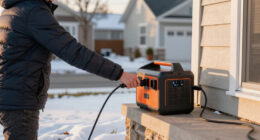
Searching for the best Danfoss heating controllers starts with a distinction that can be easy to miss: these five products do not all control the same kind of heating. For a straightforward radiator upgrade, I put the Danfoss RA/VL2960 thermostatic head first because it offers manual room-temperature control, frost protection, and a lockable adjustment on compatible RA/VL valve bodies. If a radiator is hidden behind a curtain or its built-in sensor cannot read room air well, the RA 2000 wall-mount remote sensor is the more targeted choice. For an entirely different job, the RX1200 automates compatible roof and gutter de-icing cable when cold and wet conditions coincide.

Get home appliances delivered free with Prime
- Fast, free delivery on millions of items
- Prime Video, Amazon Music and more included
- Member-only deals all year
The main tradeoff is application rather than a simple feature ladder. The RA/VL2960 is a direct, manually adjusted radiator head, while the remote-sensor RA 2000 products move the sensing or adjustment point away from the valve. The UT 72 is a capillary thermostat with electrical switching contacts, not a typical radiator head; the RX1200 is a dedicated de-icing controller. I rank the options by how clearly each fits its stated use, how much useful control it provides, and how carefully a buyer can match it to an existing system. I would check valve compatibility, wiring requirements, and the intended heating application before choosing.
Complete the kit


Key Takeaways
- The RA/VL2960 is my clearest all-around radiator pick, but its 34 mm clamping-ring connection is specified for compatible RA/VL bodies, not every radiator valve.
- The RA2000 wall-mount operator with a combined remote sensor suits setups needing wall-mounted control; its description gives fewer installation and range details than the separate 013G8562 sensor.
- The 013G8562 adds a 6 ft capillary tube, a stated 46–82°F range, frost protection, and temperature limitation, but it has no shut-off function and uses a liquid sensor.
- The RX1200 is for compatible roof and gutter de-icing cable, not room heating; it activates only when low temperature and a wet sensor condition coincide.
- The UT 72 offers a -22 to 86°F range, a 3 m copper capillary tube, and SPDT contacts, making it a different control component from a radiator thermostatic head.
| Danfoss Thermostatic Head RA/VL2960, White (RAL 9016), 34mm Neck |  | Best Overall for Compatible Radiators | Model: 013G2960 | Control type: Manual thermostatic head | Neck inner diameter: 34 mm | VIEW LATEST PRICE | See Our Full Breakdown |
| Danfoss RA2000 Thermostatic Operator, Wall Mount with Remote-Mounted Sensor |  | Best Wall-Mounted Remote-Sensor Operator | Model: 013G8565 | Product type: Thermostatic operator | Mounting: Wall mount | VIEW LATEST PRICE | See Our Full Breakdown |
| Danfoss 013G8562 RA 2000 Wall-Mount Remote Radiator Temperature Sensor |  | Best for Remote Radiator Adjustment | Model: 013G8562 | Sensor medium: Liquid | Capillary length: 6 ft (1.8 m) | VIEW LATEST PRICE | See Our Full Breakdown |
| Danfoss RX1200 Roof and Gutter De-Icing Controller |  | Best for Automatic Roof and Gutter De-Icing | Model: RX1200 | Application: Roof and gutter de-icing | Voltage: 120 V | VIEW LATEST PRICE | See Our Full Breakdown |
| Danfoss 060H1708 UT 72 Thermostat, -22 to 86°F, 3 m Capillary Tube, Auto Reset, SPDT, IP20 |  | Best Capillary Thermostat for Electrical Control Applications | Model: 060H1708 | Temperature range: -30 to 30°C (-22 to 86°F) | Reset function: Automatic | VIEW LATEST PRICE | See Our Full Breakdown |
| Danfoss heating controller | Model |
|---|---|
| Danfoss Thermostatic Head RA/V | 013G2960 |
| Danfoss RA2000 Thermostatic Op | 013G8565 |
| Danfoss 013G8562 RA 2000 Wall- | 013G8562 |
| Danfoss RX1200 Roof and Gutter | RX1200 |
| Danfoss 060H1708 UT 72 Thermos | 060H1708 |
More Details on Our Top Picks
Danfoss Thermostatic Head RA/VL2960, White (RAL 9016), 34mm Neck
I rank the RA/VL2960 first because its role is the easiest to understand and match: it is a manual thermostatic head for compatible Danfoss RA/VL valve bodies. The specified 34 mm inner diameter neck and clamping-ring connection give buyers a concrete compatibility check before installation. That makes it a more direct choice for a standard radiator upgrade than the RA 2000 remote-sensor options, which are intended for cases where the sensing or adjustment point needs to sit away from the valve.
For everyday radiator use, the useful combination is manual adjustment, frost protection, and a lockable setting. Frost protection can help guard against excessively low temperatures at the controlled radiator, while locking can limit unintended changes in shared or accessible spaces. The matte white RAL 9016 finish is a practical visual match for many standard fixtures, though appearance should come after valve fit. Compared with the 013G8562, this head is simpler and has no stated remote tube or explicit temperature range; choose it for a direct valve-mounted control rather than remote room sensing.
The tradeoff is that this is not a programmable controller. It offers no stated digital schedule, remote operation, or precise temperature display, so buyers seeking timed heating routines should look elsewhere in a broader control system. Its compatibility is also narrow: the listed connection is for RA/VL series bodies, not a universal radiator fitting. I would make it my first pick when the existing valve body matches and straightforward local control is the goal, but I would skip it if the valve type is uncertain or the radiator is poorly positioned for its own sensor.
Pros:- Specified 34 mm neck and clamping-ring connection for compatible RA/VL bodies
- Built-in frost protection function
- Lockable design can deter accidental or unauthorized adjustment
- Matte white RAL 9016 finish suits many standard radiator fixtures
Cons:- Manual control has no stated digital precision or programmable schedule
- Compatibility is limited to the specified RA/VL series bodies
- A valve-mounted sensor may be a poor fit when the radiator is enclosed or airflow is obstructed
Best for: Owners of radiators with compatible Danfoss RA/VL valve bodies who want a straightforward manual thermostatic head with frost protection and a lockable adjustment.
Not ideal for: Buyers needing programmable schedules, digital temperature control, remote sensing, or a head for a valve body outside the specified RA/VL fit.
- Model:013G2960
- Control type:Manual thermostatic head
- Neck inner diameter:34 mm
- Connection:Clamping ring
- Compatibility:RA/VL series valve bodies
- Frost protection:Yes
- Finish:Matte white, RAL 9016
- Weight:150 g
Our verdict“I recommend the RA/VL2960 as the most straightforward radiator pick when the valve-body fit is confirmed and manual control is enough.”
Danfoss RA2000 Thermostatic Operator, Wall Mount with Remote-Mounted Sensor
The RA2000 wall-mount operator earns a separate place because it is designed for a radiator-control arrangement where the control is wall mounted and paired with a remote-mounted sensor. That can make more sense than the RA/VL2960 when a radiator is screened, covered, or otherwise unable to read room temperature accurately from a valve-mounted position. Rather than selecting this for extra programmability—the supplied details do not establish any—the reason to choose it is the remote sensing and wall-mounted layout.
Compared with the separate 013G8562 remote temperature adjuster, this product is described as a thermostatic operator with a combined remote-mounted sensor, while the 013G8562 specifies a liquid sensor, 6 ft capillary, manual dial, and 46–82°F range. The added details on the 013G8562 make it easier to judge the adjustment range and installation reach. The RA2000 operator may suit a buyer seeking the combined wall-mount arrangement, but the supplied description does not state its tube length, temperature range, or precise connection details. I would verify those points with the product documentation and existing valve before ordering.
That limited specification detail is the main drawback, not a reason to assume the product lacks a feature. The listed package dimensions and weight do little to answer the key fit questions. By contrast, the RA/VL2960 spells out its connection but places control at the radiator. I would choose this RA2000 option when wall mounting is central to the installation and the compatible system has been confirmed; I would skip it when I need a clearly stated range, a defined capillary length, or a simple, directly specified valve-head replacement.
Pros:- Wall-mount format places the control away from the radiator
- Description specifies a combined remote-mounted sensor
- Offers an alternative to the valve-mounted RA/VL2960 for awkward radiator locations
Cons:- Supplied details do not specify temperature range or capillary length
- Connection and compatibility details should be checked against the installation
- The listing gives less information for comparison than the 013G8562 remote sensor
Best for: Buyers planning a Danfoss RA2000 wall-mounted control arrangement with a remote-mounted sensor, especially where a valve-mounted sensing position is unsuitable.
Not ideal for: Buyers who need published details for the temperature range, capillary length, or connection before deciding, or who simply need a direct RA/VL valve-mounted head.
- Model:013G8565
- Product type:Thermostatic operator
- Mounting:Wall mount
- Sensor:Combined remote-mounted sensor
- Series:RA2000
- Package dimensions:3 × 3 × 3 inches
- Item weight:1 lb
Our verdict“I would choose this RA2000 operator for a confirmed wall-mounted remote-sensor setup, but only after checking the missing fit and range details.”
Danfoss 013G8562 RA 2000 Wall-Mount Remote Radiator Temperature Sensor
The 013G8562 RA 2000 is the more clearly documented remote radiator choice in this lineup. Its wall-mounted manual dial connects to the valve through a 6 ft liquid-filled capillary tube, letting the user adjust temperature away from the radiator. That separation is helpful where direct access is inconvenient or the radiator’s local environment could distort temperature sensing. It also states a setting range of 46–82°F, giving buyers more useful control information than the RA2000 operator listing, which does not provide a range.
It includes frost protection and temperature limitation, and its RA adaptor is designed for a click connection. The stated response to 1°C room-temperature changes gives a sense of its mechanical control behavior, although it is not a digital thermostat or a scheduled system. Compared with the RA/VL2960, this is a better fit when the dial should sit on a wall; compared with the 013G8565, it offers more explicit details for checking the range and tube length. Buyers should still verify that the RA adaptor suits their valve and that a 6 ft tube reaches the intended mounting location.
The principal compromise is the liquid sensor, described as slower to respond than the gas-sensor alternative, along with the lack of a shut-off function. That makes it less suitable when fast response or a complete valve shutoff is a requirement. Its manual dial also cannot provide schedules or remote app control. I would choose it for a practical, mechanically controlled radiator where moving the adjustment point matters and the stated range fits the room; I would favor the RA/VL2960 for a simpler compatible valve-mounted installation.
Pros:- Wall-mounted dial allows temperature adjustment away from the radiator
- 6 ft capillary tube provides remote placement options
- Includes frost protection and temperature limitation
- Stated 46–82°F setting range and RA adaptor connection
Cons:- Liquid sensor responds more slowly than the described gas-sensor alternative
- No shut-off function
- Manual control does not provide programming or digital adjustment
Best for: Buyers who want a wall-mounted manual radiator dial with a defined 6 ft remote tube, frost protection, and a stated adjustment range.
Not ideal for: Anyone requiring digital scheduling, a fast-responding gas sensor, a shut-off function, or a capillary run longer than the stated 6 ft.
- Model:013G8562
- Sensor medium:Liquid
- Capillary length:6 ft (1.8 m)
- Mounting:Wall mount
- Valve connection:RA adaptor
- Control type:Manual dial
- Setting range:46–82°F (8–28°C)
- Frost protection:Yes
- Shut-off function:No
Our verdict“I recommend the 013G8562 when remote manual adjustment and clearly stated range matter more than rapid sensing or a shut-off feature.”
Danfoss RX1200 Roof and Gutter De-Icing Controller
The RX1200 is the specialist pick in this roundup, not an alternative radiator thermostat. It controls compatible roof and gutter de-icing cable, activating when the temperature falls below approximately 39°F and its moisture sensor detects wet conditions. That two-part condition is the point: it is designed to run the connected cable when cold weather and moisture occur together, rather than heating continuously. Its stated off temperature is 44.6°F, which gives the controller a defined operating threshold for this particular outdoor task.
Compared with every radiator product here, the RX1200 shifts the decision from valve fit and room sensing to cable compatibility, electrical load, and sensor placement. It arrives pre-assembled with a grounded power cord, probe lead, moisture sensor wire, and six shingle clips, so buyers can see what is included when planning the installation. The 120 V, 10.2 A, 1225 W ratings are key checks against the connected cable and intended circuit. Its automatic operation is more hands-off than the manual RA/VL2960 or RA 2000 radiator controls, but it does not regulate indoor room temperature.
The main limitation is clear: the RX1200 requires compatible de-icing cable, which is not listed among the included components. It also activates only when both low temperature and a wet sensor wire are present, so it is not a simple temperature-only switch. I would pick it for a roof or gutter system that needs this conditional automatic control and whose cable and electrical setup match. Buyers looking to control radiators should skip it entirely and choose one of the RA-series options instead.
Pros:- Automatically responds to low temperature and moisture at the sensor
- Pre-assembled package includes power cord, probe lead, moisture wire, and six shingle clips
- Specified on and off thresholds clarify the activation behavior
- Electrical ratings are provided for compatibility checks
Cons:- Requires compatible roof and gutter de-icing cable, which is not listed as included
- Activation requires both cold conditions and a wet sensor wire
- Not a room-heating or radiator controller
Best for: Homeowners or installers controlling compatible 120 V roof and gutter de-icing cable with temperature-and-moisture activation.
Not ideal for: Anyone seeking indoor radiator or room-temperature control, or buyers without compatible de-icing cable and a suitable electrical setup.
- Model:RX1200
- Application:Roof and gutter de-icing
- Voltage:120 V
- Current:10.2 A
- Power:1225 W
- On temperature:39.2°F
- Off temperature:44.6°F
- Power cord:4.9 ft, 16 AWG, grounded plug
- Included clips:6 sensor shingle clips
Our verdict“I recommend the RX1200 only for a compatible roof or gutter de-icing system, where its automatic moisture-and-temperature logic matches the job.”
Danfoss 060H1708 UT 72 Thermostat, -22 to 86°F, 3 m Capillary Tube, Auto Reset, SPDT, IP20
The UT 72 thermostat rounds out the list as a different kind of Danfoss control component. It has a temperature range of -22 to 86°F, a 3 m copper capillary tube, automatic reset, and an SPDT contact function. Those details make it more relevant to a heating or control circuit that needs a mechanical temperature input and switching contacts than to a homeowner replacing a radiator head. I place it below the RA-series products for a general heating-controller search because its intended circuit and installation requirements need to be matched more carefully.
Compared with the RA/VL2960, the UT 72 does not attach to a radiator valve as a manual thermostatic head. Compared with the 013G8562, it offers a much longer stated capillary tube and electrical contacts, but its listing does not describe a wall-mounted user dial or a radiator RA adaptor. The SPDT output and automatic reset are meaningful when a compatible control design needs switching behavior and automatic return, but they do not by themselves confirm that it can directly control a particular appliance. Buyers should check the wiring diagram, load, and system design before treating it as a drop-in replacement.
The stated IP20 enclosure rating is an important boundary: this is not presented as a weatherproof unit, so the installation environment matters. The 3 m copper tube offers placement flexibility, but it also requires suitable routing and protection during installation. I would choose the UT 72 for a compatible technical control application where its range, contact function, reset mode, and enclosure rating all fit. For ordinary radiator adjustment, the simpler RA/VL2960 or a remote RA 2000 model is a much more direct match.
Pros:- Wide stated operating range from -22 to 86°F
- 3 m copper capillary tube allows remote temperature sensing
- SPDT contact function supports compatible switching designs
- Automatic reset is included
Cons:- IP20 enclosure is not specified for exposed or wet locations
- Requires a compatible electrical control circuit and careful wiring checks
- Not a direct replacement for an RA-series radiator thermostatic head
Best for: Installers or technically informed buyers who need a capillary thermostat with a -22 to 86°F range, 3 m tube, automatic reset, and SPDT contacts in a compatible control circuit.
Not ideal for: Buyers seeking a direct radiator valve head, a simple wall thermostat, a weatherproof control, or a product they can connect without checking the circuit requirements.
- Model:060H1708
- Temperature range:-30 to 30°C (-22 to 86°F)
- Reset function:Automatic
- Capillary tube length:3 m
- Capillary tube material:Copper
- Contact function:SPDT
- Weight:0.83 lb (13.28 oz)
- Replaces:060H1306, 060H1301, 060H1101, 060H1508, 060H1708, 060H1701
Our verdict“I would choose the UT 72 for a verified capillary-thermostat control circuit, not as a general-purpose radiator controller.”
How We Picked
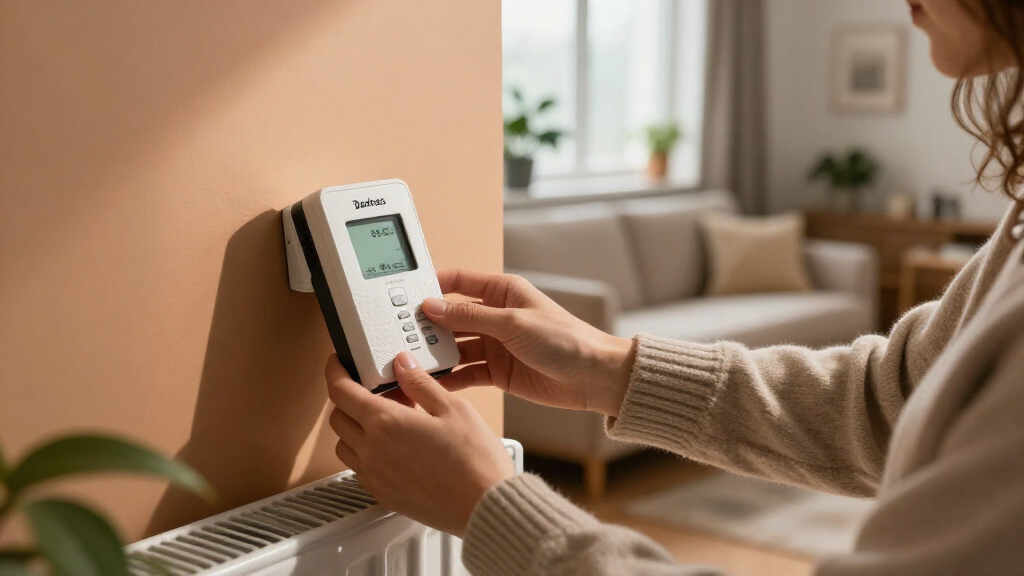
I ranked these five Danfoss products by what they actually control, not by treating every thermostat or controller as interchangeable. The list spans manual radiator heads, remote radiator sensing, a roof and gutter de-icing controller, and a capillary thermostat with electrical contacts. A buyer choosing among them should start with the appliance or system being controlled; an option that is well suited to a radiator may be entirely wrong for de-icing or an electrical control circuit.
Next, I compared the usefulness of the stated control details. A defined temperature range, sensor arrangement, connection, and control mode make a product easier to match to a particular installation. The RA/VL2960 provides a clear valve-body fit and manual operation. The 013G8562 supplies a 6 ft remote sensor tube and a stated adjustment range. The RX1200 lists its activation logic and electrical ratings. Where the supplied details are sparse, as with the wall-mount RA2000 operator, I avoid assuming specifications that are not given.
I also weighed practical tradeoffs: compatibility limits, whether adjustment is manual or automatic, and whether the item is a complete control or one component in a larger setup. The RX1200 requires compatible de-icing cable, while the RA/VL2960 only fits the specified RA/VL series bodies. The UT 72 has an IP20 enclosure, which is a relevant boundary when planning where it can be installed. These distinctions matter more than a generic claim that one model is the most advanced.
Finally, I gave the strongest positions to products with a clearly described role and enough information to judge their fit. That puts the RA/VL2960 first for common compatible radiator control, the remote-sensor models next for installations that need a displaced sensing or adjustment point, and the specialized RX1200 and UT 72 in their narrower applications. This ranking is application-led, not universal: the best choice for a roof cable is the RX1200, even though it is not a room-heating controller.
Factors to Consider When Choosing Best Danfoss Heating Controllers
I would start by identifying the equipment that needs control, then check how the product senses temperature and connects to that equipment. These Danfoss options cover different jobs, so comparing them by application prevents a mismatch.Match the controller to the heating job
For a radiator, compare the RA/VL2960 and RA 2000 products. The RA/VL2960 is a valve-mounted manual head for compatible RA/VL bodies. The two RA 2000 options are aimed at remote sensing or wall-mounted adjustment. The RX1200 instead controls compatible outdoor de-icing cable, and the UT 72 is a capillary thermostat with electrical contacts. Neither of those is a normal radiator-head substitute.
Before buying, identify whether the task is room heating, radiator control, or outdoor ice prevention. If the product role does not match the system, features such as a broad temperature range or automatic operation will not make it a suitable replacement.
Check valve and connection compatibility
Connection details are often the first practical filter. The RA/VL2960 specifies a 34 mm inner-diameter neck and clamping-ring connection for RA/VL bodies. The 013G8562 lists an RA adaptor, while the RA2000 wall-mount operator listing provides less connection information. Do not infer that these fittings are interchangeable simply because each product carries the Danfoss name.
Check the marking or documentation for the existing valve body, then compare it with the exact model’s installation information. If you cannot confirm the fit, ask a heating professional or supplier before ordering. This matters especially when replacing a component rather than outfitting a new compatible system.
Choose where temperature is sensed and adjusted
A valve-mounted head is simple, but its sensor position can be affected by a radiator cover, curtains, furniture, or limited airflow. A remote sensor or wall-mounted dial can place the control in a more useful location. The 013G8562 specifies a 6 ft capillary tube; the other RA2000 listing confirms a combined remote-mounted sensor but does not state its tube length in the supplied details.
Think about both placement and function: a remote sensor measures or responds away from the valve, while a wall-mounted control also moves the adjustment point. Confirm the capillary reach and mounting instructions before selecting a location. A longer tube is useful only if it can be routed safely and suits the system.
Decide whether manual control is enough
The RA/VL2960 and 013G8562 use manual adjustment; neither is described as offering a programmable schedule or app control. Their appeal is straightforward mechanical operation and, in the RA/VL2960’s case, a lockable setting. The 013G8565 is also a thermostatic operator, but its listing does not establish a programmable feature set. I would not assume digital control based on the word “controller.”
If you need heating to follow different schedules through the day, check for a separate compatible programmer or a system designed for that use. A manual radiator head can still be appropriate for a room with a stable routine, but it will not provide time-based automation on its own.
Read the thresholds and electrical ratings
The RX1200’s temperature-and-moisture activation is specific to roof and gutter de-icing. Its stated on and off thresholds, voltage, current, and power help determine whether the controller suits the cable and circuit. The de-icing cable is required separately according to the product description, so verify compatibility and installation requirements rather than treating the included sensor parts as a complete heating system.
The UT 72 also needs careful electrical matching: its SPDT contacts and IP20 enclosure rating must fit the intended circuit and location. The listed range and capillary length are only part of the specification. Wiring, load, mounting, and the equipment being controlled should be checked against the applicable documentation.
Weigh protection features against limitations
Frost protection appears on the RA/VL2960 and 013G8562 descriptions, but that does not make their other functions identical. The RA/VL2960 adds a lockable manual setting, while the 013G8562 includes temperature limitation but has no shut-off function. Decide which of these details matters for the room and how the radiator is used.
Also take stated limits seriously. The 013G8562 uses a liquid sensor, described as slower than the gas-sensor alternative; the UT 72 is rated IP20; and the RX1200 only activates when both its low-temperature and moisture conditions are met. These tradeoffs distinguish the products more usefully than a feature checklist alone.
Frequently Asked Questions
Which Danfoss controller is the best general choice for a radiator?
I would start with the RA/VL2960 if the radiator has a compatible RA/VL valve body and manual adjustment is suitable. It has a defined clamping-ring connection, frost protection, and a lockable setting. If the radiator’s sensing position is obstructed or you want the control on a wall, compare the RA2000 remote-sensor options instead; they solve a different placement problem.
Are the RA/VL2960 and RA 2000 products interchangeable?
I would not assume they are interchangeable. The RA/VL2960 specifies a 34 mm clamping-ring fit for RA/VL bodies, while the remote RA 2000 products have different descriptions and connection details. Check the exact valve model and the installation documentation for the particular thermostatic head or sensor before ordering. A shared manufacturer does not establish a shared connection.
What is the difference between the two RA 2000 remote options?
The 013G8565 wall-mount operator is described as having a combined remote-mounted sensor, but its supplied details do not state a temperature range or capillary length. The 013G8562 is described as a wall-mounted manual radiator temperature adjuster with a 6 ft liquid capillary, a 46–82°F range, frost protection, temperature limitation, and no shut-off function. I would favor the 013G8562 when those stated details matter; I would verify the 013G8565’s fit and specifications before buying.
Can I use the RX1200 to control radiator heating?
No, the RX1200 is described for compatible roof and gutter de-icing cable, not radiator or room-temperature control. Its operation depends on both low temperatures and a wet moisture sensor, and the de-icing cable must be compatible with its electrical ratings. For a radiator, I would compare the RA/VL2960 and the RA 2000 products instead.
Is the UT 72 a direct replacement for a radiator thermostat?
The supplied specifications describe the UT 72 as a capillary thermostat with a 3 m copper tube, SPDT contacts, automatic reset, and an IP20 enclosure, not as a radiator valve head. It may fit a compatible technical control circuit, but that requires checking the wiring, load, system design, and installation environment. For direct manual radiator adjustment, an RA-series product is the more appropriate category.
Conclusion
My recommendation depends on the job. For a compatible RA/VL radiator valve and simple manual control, I would choose the RA/VL2960. For a radiator where the sensor or dial should sit away from the valve, I would compare the two RA 2000 options: the 013G8562 offers more explicit range and capillary details, while the 013G8565 is described as a combined remote-sensor wall-mount operator but needs closer specification checks. For roof and gutter de-icing, the RX1200 is the relevant pick if the cable and electrical setup match. For a technical circuit requiring a capillary thermostat with SPDT contacts, the UT 72 may fit after its wiring and IP20 location limits are confirmed.
I would not choose by product name alone. Match the controller to the equipment, confirm the valve or circuit connection, and check sensor placement before committing. Those steps separate a practical Danfoss fit from a control that simply belongs to a different application.