Choosing among the best high temperature heat pumps depends on what you need heated: a whole home, one room, or domestic hot water. My strongest central-system pick is the ACiQ Essentials 3-ton system, which includes a 10 kW backup heat kit and lists heat pump operation down to 5°F. The Goodman 3-ton split system is a more conventional whole-home option with a multi-position air handler, while the Senville hybrid water heater is the relevant choice if your goal is efficient hot water rather than space heating.

Get home appliances delivered free with Prime
- Fast, free delivery on millions of items
- Prime Video, Amazon Music and more included
- Member-only deals all year
These products are not direct substitutes. Two are central split systems, one is a packaged unit, one is a ductless mini split, and one heats water only. I rank them by how clearly their supplied specifications support a buyer seeking higher-temperature or colder-weather heating, while also weighing system completeness and practical limitations. The central tradeoff is clear: backup heat and a specified low-temperature operating limit can help in cold conditions, but neither a high efficiency figure nor the label “heat pump” proves that a unit can deliver useful heat at very low outdoor temperatures.
Complete the kit


Key Takeaways
- The ACiQ split system is my strongest central-heating match because its listed heat pump heating range reaches 5°F and a 10 kW backup heat kit is included.
- Goodman’s 3-ton split system has a multi-position air handler and a nine-speed ECM blower, but its product details do not state a low-temperature heating limit or include a heat kit.
- The Goodman packaged unit combines heating and cooling in one outdoor cabinet and includes a thermostat and installation accessories, but the supplied 5 kW heat strip may not suit every home.
- The COSTWAY mini split serves a single zone up to 750 square feet and offers Wi-Fi controls, but its provided specifications do not state a minimum outdoor heating temperature.
- The Senville is a heat-pump water heater, not a space-heating system; its 50-gallon tank and 69-gallon first-hour rating address household hot water.
| ACiQ Essentials 3-Ton 17 SEER2 Central AC and Heat Pump System with 10 kW Backup Heat Kit |  | Best Overall Central-System Match | Capacity: 3 tons | Efficiency: 17 SEER2 | System type: Central AC and heat pump split system | VIEW LATEST PRICE | See Our Full Breakdown |
| Goodman 3-Ton 15 SEER2 Heat Pump and Multi-Position Air Handler |  | Best for Flexible Ducted Installations | Cooling capacity: 36,000 BTU | System capacity: 3 tons | Efficiency: 15 SEER2 | VIEW LATEST PRICE | See Our Full Breakdown |
| Goodman 3-Ton 14 SEER Packaged Heat Pump Unit with Accessories |  | Best Packaged System with Included Accessories | Manufacturer: Goodman | Model: GPH1436H41 | Capacity: 3 tons | VIEW LATEST PRICE | See Our Full Breakdown |
| COSTWAY 12,000 BTU Mini Split Air Conditioner and Heater, 20 SEER2, 115V | 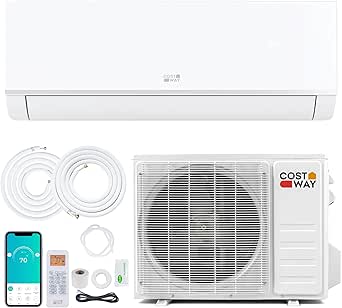 | Best Ductless Choice for One Zone | Cooling capacity: 12,000 BTU | Heating capacity: 12,000 BTU | Coverage area: Up to 750 sq. ft. | VIEW LATEST PRICE | See Our Full Breakdown |
| Senville SENWH-HP50US 50-Gallon Hybrid Heat Pump Water Heater |  | Best for Efficient Household Hot Water | Model: SENWH-HP50US | Capacity: 50 gallons | Uniform Energy Factor: 3.75 UEF | VIEW LATEST PRICE | See Our Full Breakdown |
| high temperature heat pump | Efficiency | Capacity | Refrigerant |
|---|---|---|---|
| ACiQ Essentials 3-Ton 17 SEER2 | 17 SEER2 | 3 tons | R32 |
| Goodman 3-Ton 15 SEER2 Heat Pu | 15 SEER2 | — | R-32 |
| Goodman 3-Ton 14 SEER Packaged | 14 SEER | 3 tons | — |
| COSTWAY 12,000 BTU Mini Split | 20 SEER2 | — | R-32 |
| Senville SENWH-HP50US 50-Gallo | — | 50 gallons | — |
More Details on Our Top Picks
ACiQ Essentials 3-Ton 17 SEER2 Central AC and Heat Pump System with 10 kW Backup Heat Kit
The ACiQ earns my top spot among these five for buyers seeking a central heat pump with a stated cold-weather operating point. Its listed heat pump heating range begins at 5°F, and the package includes a 10 kW backup heat kit. That pairing gives shoppers more concrete information than the Goodman split system or packaged Goodman, whose supplied details do not specify a minimum outdoor heating temperature. It is still not a guarantee of capacity or comfort at that temperature, so I would ask the installer for performance data at the home’s local design temperature.
Unlike a simple single-stage system, this ACiQ uses inverter technology to vary operation with demand. In principle, that helps match output to changing heating and cooling loads instead of relying only on full-on or full-off operation. The system also includes indoor and outdoor units and a thermostat, reducing some of the separate-component decisions attached to the Goodman split-system listing. Its 17 SEER2 rating describes cooling efficiency, not its ability to heat at very low outdoor temperatures.
The limitation is right in the stated range: heat-pump heating is listed only through 75°F outdoors, and the details do not give heating capacity at 5°F or specify how the 10 kW backup heat is controlled. The warranty also requires technician installation and online registration, with four years of parts coverage and six years for the compressor. Compared with the ductless COSTWAY, this is a whole-home central system rather than a single-zone solution; compared with Goodman’s split set, it is the more complete package for shoppers prioritizing a documented low-end operating point.
I would choose it when central ductwork and a backup-heat strategy are part of the plan, but I would not treat the listing alone as proof that it can meet a high-temperature radiator requirement. Get written confirmation of supply-water compatibility if the home uses hydronic emitters, and check whether its air-handler configuration fits the installation.
Pros:- Lists heat pump heating operation down to 5°F.
- Includes a 10 kW backup heat kit and thermostat.
- Inverter operation adjusts output to demand.
- Includes indoor and outdoor units for a central split system.
Cons:- Listed heat pump heating range ends at 75°F outdoors.
- The supplied details do not state heating capacity at 5°F.
- Warranty coverage requires technician installation and online registration.
Best for: Homeowners replacing a central system who want a listed 5°F heat-pump operating limit and included backup heat.
Not ideal for: Buyers who need verified high-temperature water delivery for radiators, or who want performance capacity data at low outdoor temperatures before contacting an installer.
- Capacity:3 tons
- Efficiency:17 SEER2
- System type:Central AC and heat pump split system
- Refrigerant:R32
- Backup heat:10 kW
- Heat pump heating range:5°F–75°F
- Cooling operating range:5°F–125°F
- Warranty:4 years parts and 6 years compressor with online registration
Our verdict“I rank the ACiQ first for central heating because it combines a stated 5°F operating limit with included backup heat, but I would verify its low-temperature capacity and emitter compatibility before buying.”
Goodman 3-Ton 15 SEER2 Heat Pump and Multi-Position Air Handler
This Goodman set is a straightforward choice for someone replacing a ducted residential system and needing both the outdoor heat pump and an air handler. The air handler supports upflow and horizontal orientations, a practical advantage when a mechanical space has limited layout options. Its nine-speed ECM blower is designed to manage airflow efficiently, while the aluminum coil and 240-volt power specification make the package easier to compare with other standard residential systems.
Against the ACiQ, the Goodman offers useful installation flexibility but less information for a shopper focused on cold-weather performance. Its listing does not state a minimum outdoor heating temperature, and it says a heat kit may be needed in cold climates but is sold separately. The ACiQ includes a 10 kW kit and identifies a 5°F heating limit, so it is the more transparent selection for that specific concern. Goodman does offer a stated 10-year parts warranty when a qualified installer installs the system and it is registered within 60 days.
This is not a complete accessories package. A thermostat and other items are sold separately, and downflow installation needs an optional kit. The listed 75 dB noise level is also worth checking against placement and household expectations. Compared with the packaged Goodman, this split-system set separates the outdoor unit and air handler, which may suit an existing ducted layout but calls for careful matching and installation planning.
I see this as a sensible option when the buyer values a multi-position air handler and a long conditional parts warranty more than a clearly stated low-temperature operating range. I would skip it if the purchase decision depends on proof of performance below freezing or if the installer cannot confirm the right heat-kit capacity and accessory list.
Pros:- Includes both the heat pump and air handler.
- Air handler supports upflow and horizontal installation.
- Nine-speed ECM blower is designed for efficient airflow.
- 10-year parts warranty is available with qualifying installation and registration.
Cons:- Heat kit may be required in cold climates and is sold separately.
- Thermostat and other accessories are not included.
- No minimum outdoor heating temperature is stated in the supplied details.
Best for: Owners of ducted homes who need a 3-ton split system with multiple air-handler installation positions.
Not ideal for: Buyers who need a listed low-temperature operating limit, an included cold-weather heat kit, or a fully accessorized package.
- Cooling capacity:36,000 BTU
- System capacity:3 tons
- Efficiency:15 SEER2
- Refrigerant:R-32
- Voltage:240 volts
- Air-handler positions:Upflow, horizontal right, or horizontal left
- Blower:Direct-drive, 9-speed ECM
- Warranty:10-year parts warranty with qualified installation and registration within 60 days
Our verdict“I would pick this Goodman for a flexible ducted installation, but not over the ACiQ when a documented cold-weather operating limit is the priority.”
Goodman 3-Ton 14 SEER Packaged Heat Pump Unit with Accessories
The packaged Goodman puts the heating and cooling equipment in one unit, rather than pairing a separate outdoor heat pump with an indoor air handler as the other central options do. That can make it a fit for homes designed around packaged equipment, especially when the buyer wants a programmable thermostat, square-to-round adapters, and equipment pad supplied with the listing. Its 3-ton capacity is in the same broad class as the ACiQ and Goodman split set, though a proper load calculation matters more than matching another system’s nominal tonnage.
For high-temperature or cold-weather shoppers, the major question is its heater arrangement. The unit ships with a 5 kW heat strip unless another size is requested, and the heater is listed without a breaker. That makes it less ready-to-specify than the ACiQ, which includes a 10 kW backup kit and states a 5°F heating limit. Buyers should confirm whether the default strip is adequate for their home and what electrical components are required before ordering.
The supplied 14 SEER rating is lower than the 15 SEER2 Goodman split system’s stated rating and the ACiQ’s 17 SEER2 figure. These ratings use different labels, so I would not compare the numbers as a precise apples-to-apples efficiency test. The product details do describe year-round heating and cooling, but do not specify a low outdoor heating threshold or a high-temperature water output. It is an air-source packaged system, not a hydronic heat pump for radiator water.
This pick makes more sense when a packaged format and bundled accessories simplify the equipment list. Compared with the Goodman split unit, it avoids choosing a separate air-handler orientation, but gives less flexibility for separating indoor and outdoor components. I would pass if cold-climate sizing, included electrical protection, or verified high supply-water temperatures are central requirements.
Pros:- Packaged design combines heating and cooling equipment in one unit.
- Includes a programmable thermostat, adapters, and equipment pad.
- Designed for year-round heating and cooling.
- 3-ton capacity suits homes sized for that output.
Cons:- Ships with a 5 kW heat strip unless another size is requested.
- Heater is listed without a breaker.
- No minimum outdoor heating temperature is provided.
Best for: Buyers replacing an existing packaged HVAC unit who want a thermostat and basic installation accessories in the listing.
Not ideal for: Homes needing confirmed low-temperature heat-pump operation, a specified high-temperature water supply, or a larger included heat strip with electrical protection.
- Manufacturer:Goodman
- Model:GPH1436H41
- Capacity:3 tons
- Efficiency:14 SEER
- System type:Packaged heat pump
- Included accessories:Programmable thermostat, square-to-round adapters, and plastic equipment pad
- Included heater:5 kW heat strip unless another size is specified
Our verdict“I would choose the packaged Goodman for a compatible packaged-unit replacement, while asking the installer to confirm heat-strip sizing and electrical requirements.”
COSTWAY 12,000 BTU Mini Split Air Conditioner and Heater, 20 SEER2, 115V
The COSTWAY is the clear single-zone option in this lineup. At 12,000 BTU and 1 ton, it is intended for spaces up to 750 square feet, not as a like-for-like replacement for a 3-ton central system. Its ductless indoor unit avoids extending ductwork into an addition, converted room, or other zone that is difficult to serve. It also runs on 115 volts and includes a 16.4-foot copper connection pipe, though a professional installation is recommended.
Its inverter operation, eight fan speeds, washable filters, and self-clean function make it a feature-rich room system. Wi-Fi app control and compatibility with Alexa and Google Assistant offer more control options than either Goodman central listing. The stated noise level reaches as low as 28 dB, a helpful detail for a bedroom or quiet workspace. Those convenience features do not tell me how well it will heat in severe cold: the supplied information gives no minimum outdoor heating temperature or low-temperature capacity.
That missing operating limit is the key tradeoff when comparing this mini split with the ACiQ. The ACiQ has a stated 5°F heating floor and backup heat, so it is a stronger candidate for whole-home cold-weather planning. COSTWAY is instead better suited to a single space where ductless installation and independent control matter. Its 20 SEER2 figure is a cooling-efficiency rating, not evidence that the unit supplies high-temperature water or maintains full output at very low temperatures.
I would select it for a well-sized zone after confirming local heating performance and installation requirements. I would skip it as a whole-home system for a large property, and I would not use it as a substitute for a hydronic high-temperature heat pump. A new outdoor unit is required, so it is not a simple add-on to an existing conventional furnace or central system.
Pros:- Ductless 12,000 BTU heating and cooling for a single zone.
- Wi-Fi app control and Alexa and Google Assistant support.
- Eight fan speeds, washable filters, and self-clean function.
- 115V operation and a low stated noise level of 28 dB.
Cons:- Professional installation is recommended.
- Requires a new outdoor unit.
- Provided specifications do not state a minimum outdoor heating temperature.
Best for: A homeowner or landlord heating and cooling one room or zone up to the stated 750-square-foot coverage area.
Not ideal for: Buyers seeking whole-home central heating, a stated low-temperature operating limit, or hot water for radiators.
- Cooling capacity:12,000 BTU
- Heating capacity:12,000 BTU
- Coverage area:Up to 750 sq. ft.
- Voltage:115V
- Efficiency:20 SEER2
- Refrigerant:R-32
- Noise level:As low as 28 dB
- Controls:Wi-Fi app, Alexa, Google Assistant, and remote
Our verdict“I recommend the COSTWAY for a properly sized single room, not for whole-home high-temperature heating or a cold-climate system without verified performance data.”
Senville SENWH-HP50US 50-Gallon Hybrid Heat Pump Water Heater
The Senville belongs in this roundup for a specific reason: it is a heat-pump water heater, not a space-heating heat pump. It draws heat from surrounding air to heat a 50-gallon tank, making it relevant to households looking to reduce electricity use for domestic hot water. Its stated 3.75 UEF and ENERGY STAR certification give buyers useful efficiency and certification details for the water-heating job.
The 69-gallon first-hour rating helps describe how much hot water the unit can provide during a period of heavy use, beyond the tank’s nominal 50-gallon storage capacity. The listing states electricity-use reduction of up to 70% compared with standard electric models; actual savings depend on use and site conditions, so I would treat that as a product claim rather than a guaranteed household result. A 7-year parts warranty and 10-year compressor warranty are also specified.
Compared with the ACiQ or either Goodman, this product cannot heat a home’s air or supply central ductwork. It should not be ranked as an alternative for radiators or whole-home space heat, despite sharing heat-pump technology. Its surrounding-air requirement also affects where it can be installed, and the unit weighs 218 pounds. I would confirm the room’s air conditions, clearance, electrical setup, and the installer’s requirements before deciding whether the location is suitable.
For a shopper whose actual goal is domestic hot water, the Senville is the only direct match here and offers more relevant tank and first-hour information than the space-heating products. For someone searching specifically for high-temperature space heating, it is the wrong category. I include it with a separate role so buyers can distinguish a hot-water heat pump from a central heating system rather than assume the products do the same job.
Pros:- 50-gallon tank with a stated 69-gallon first-hour rating.
- 3.75 UEF and ENERGY STAR certification.
- UL and AHRI certifications are listed.
- Seven-year parts and 10-year compressor warranties are specified.
Cons:- Heats domestic water only, not household space.
- Requires suitable surrounding air for heat-pump operation.
- Weighs 218 pounds and needs a suitable installation location.
Best for: Households comparing heat-pump technology for domestic hot water and needing a 50-gallon tank.
Not ideal for: Anyone seeking a heat pump for space heating, radiator supply water, or central air conditioning.
- Model:SENWH-HP50US
- Capacity:50 gallons
- Uniform Energy Factor:3.75 UEF
- Power:4.5 kW
- Dimensions:21.4 in W × 66.5 in H
- Weight:218 lb
- Certifications:ENERGY STAR, UL, and AHRI
Our verdict“I would choose the Senville for household hot water efficiency, but exclude it from any shortlist for space-heating performance.”

How We Picked
I ranked these options by how well their stated capabilities answer the specific question behind a search for a high temperature heat pump. That phrase can mean a heat pump intended to supply hotter water to radiators, a system able to keep heating in cold weather, or simply a heat-pump product for a particular household need. The supplied product details do not give a high-temperature water-supply rating for any space-heating model, so I do not claim that any one is a verified high-temperature radiator heat pump.
For space-heating options, I gave weight to a stated heating operating range, included backup heat, system type, and information that helps a buyer judge installation fit. That makes the ACiQ the leading central-system choice here: it gives a low-end heating limit and includes backup heat, though its listed heat-pump heating range stops at 75°F outdoors. Goodman’s split system follows for buyers who need a standard ducted set with flexible air-handler positions, but its provided description leaves cold-weather capability and heat-kit selection unresolved.
I also included the packaged Goodman and COSTWAY mini split because each can meet a different kind of heating need. A packaged unit may simplify equipment matching, while a ductless system can heat one zone without ducts. Neither should be mistaken for proof of high-temperature delivery. The Senville appears because many shoppers comparing heat pumps also want to reduce water-heating energy use; I rank it for that distinct job, not as a home-heating alternative.
I treated missing specifications as unknown rather than filling gaps with assumptions. Efficiency ratings, refrigerant type, smart controls, and warranty terms can help with comparisons, but they do not establish heating output at a particular outdoor temperature. Before choosing, I would ask a qualified installer to confirm the required capacity, local design conditions, compatibility, and whether the system can meet the temperature needs of the existing emitters. I also account for included equipment: a system that needs separate accessories or a heat kit can require more coordination than one supplied with those parts.
| high temperature heat pump | Refrigerant |
|---|---|
| ACiQ Essentials 3-Ton 17 SEER2 | R32 |
| Goodman 3-Ton 15 SEER2 Heat Pu | R-32 |
| Goodman 3-Ton 14 SEER Packaged | — |
| COSTWAY 12,000 BTU Mini Split | R-32 |
| Senville SENWH-HP50US 50-Gallo | — |
Factors to Consider When Choosing Best High Temperature Heat Pumps
Before choosing a product, I would pin down what “high temperature” means for the property. These listings cover air-source space heating, a ductless room system, and domestic hot water, but none of the supplied details confirms a high-temperature hydronic output. I would use the checks below to separate heating needs from product labels.Clarify whether you need space heat or hot water
A heat pump can heat indoor air, a water tank, or water circulating through hydronic emitters. Those are different applications. The Senville heats household water in a tank; it does not heat rooms. The Goodman and ACiQ units are central air-source systems, while the COSTWAY serves a single ductless zone. If the goal is to run existing radiators or a high-temperature hydronic circuit, ask for a system explicitly rated for that water temperature and for output data at your expected outdoor conditions. None of the space-heating specifications supplied here gives a maximum water-supply temperature.
Check cold-weather capacity, not just the lowest listed temperature
A listed operating limit tells you a unit can operate within a stated range, but it does not tell you how much heat it can deliver at the low end. ACiQ lists heat-pump heating operation from 5°F to 75°F, which makes it the most transparent central option here. Its supplied details still do not show heating capacity at 5°F. The Goodman systems and COSTWAY mini split lack a stated low outdoor heating limit in the provided descriptions. Ask the installer or manufacturer for capacity tables at your local design temperature and confirm whether supplemental heat will be needed.
Treat backup heat as part of the system plan
Backup heat can cover demand when outdoor conditions reduce heat-pump output, but its size and electrical requirements matter. ACiQ includes a 10 kW backup heat kit. The packaged Goodman typically ships with a 5 kW heat strip unless another size is requested, and its description notes that a breaker is not included. The Goodman split system may need a separately purchased heat kit in cold climates. I would ask a qualified installer to check the home’s electrical service, size the backup heat, and explain when it will run rather than assuming the included kit suits every property.
Match capacity to the building and installation layout
Nominal tonnage is not a substitute for a load calculation. The two Goodman central listings and the ACiQ are all 3-ton systems, while COSTWAY is a 1-ton, 12,000 BTU mini split intended for a zone up to 750 square feet. A ducted split system needs compatible indoor and outdoor equipment, correctly sized ducts, and a suitable air-handler position. Goodman’s air handler supports upflow and horizontal placement; the packaged Goodman is a different format intended for homes set up for packaged equipment. I would confirm the installer’s measurements and equipment compatibility before ordering.
Compare included parts and qualification requirements
Package contents can change the work and accessories still needed. The ACiQ includes a thermostat and backup heat kit. The packaged Goodman includes a thermostat, adapters, and an equipment pad, but its heater and breaker details need attention. Goodman’s split-system thermostat and accessories are sold separately, and downflow installation requires an optional kit. COSTWAY includes a copper connection pipe but recommends professional installation and needs a new outdoor unit. Warranty terms also vary: Goodman’s stated 10-year parts coverage requires qualified installation and registration within 60 days, while ACiQ registration and technician installation are required for its listed warranty.
Read efficiency ratings in their proper context
SEER and SEER2 figures describe cooling efficiency, not the amount of heat a system supplies in cold weather or the water temperature it can reach. The product entries include different rating labels, so I would avoid treating their numbers as a direct ranking without matching test conditions and rating standards. For the Senville, UEF is a water-heater efficiency measure and applies to domestic hot water, not home heating. Use efficiency figures alongside heating performance data, climate, usage, and installer estimates rather than as a stand-alone reason to choose a unit.
Frequently Asked Questions
What does “high temperature heat pump” mean?
The phrase can refer to a heat pump that supplies hotter water for radiators or other hydronic emitters, or it may be used broadly for a heat pump expected to keep providing space heat in cold weather. Those are not the same specification. I would confirm whether a product gives a maximum water-supply temperature, a low outdoor operating limit, and heating capacity at that outdoor temperature. The supplied space-heating listings here do not state a high-temperature water output.
Which product in this roundup has the clearest cold-weather heating specification?
The ACiQ is the clearest central-system option in the supplied information because its heat-pump heating range is listed as 5°F–75°F and it includes a 10 kW backup heat kit. That does not establish how much heat it produces at 5°F. I would request performance data at the home’s design temperature and confirm the backup-heat controls with the installer before making a final selection.
Can I use the Senville water heater to heat my home?
No. The Senville SENWH-HP50US is a hybrid heat-pump water heater designed to heat water for household taps and appliances. It does not function as a central space-heating system for ductwork or radiators. Its 50-gallon tank, 3.75 UEF, and first-hour rating help compare water-heating needs, but they do not describe room-heating performance.
Is a heat strip the same as a heat pump?
No. A heat pump transfers heat from outside air, while an electric heat strip provides resistance heat as supplemental or backup heating. The packaged Goodman listing includes a 5 kW heat strip by default unless a different size is requested, and the ACiQ package includes a 10 kW backup heat kit. The strip rating does not tell you the heat pump’s cold-weather capacity, and the right backup size depends on the home and its electrical service.
Do I need a professional installer for these systems?
These products involve equipment matching, electrical connections, refrigerant circuits, drainage, and local code requirements. The COSTWAY description recommends professional installation, and the warranty terms listed for Goodman and ACiQ also rely on qualified or technician installation and registration. I would ask a licensed HVAC professional to confirm sizing, installation location, accessories, permits, warranty conditions, and whether the selected system can meet the home’s heating needs.
Conclusion
For a central system where cold-weather information matters most, I would start with the ACiQ because it states a 5°F heat-pump heating limit and includes backup heat. For a ducted replacement where air-handler positioning is the bigger constraint, the Goodman split system is a better fit, provided the installer selects any needed heat kit and confirms its cold-weather performance. The packaged Goodman suits an existing packaged-unit setup, especially when its included accessories are useful, but I would resolve the heat-strip and breaker details before purchase.
For one room or a separate zone, I would shortlist the COSTWAY after checking local heating performance and having the space sized properly. For domestic hot water—not heating rooms—the Senville is the dedicated choice. If the home needs hot water at radiator-level temperatures, none of these listings provides the high-temperature water-output data I would require. I would ask a qualified installer to identify a system designed for that application and verify its output against the property’s requirements.