
Smart home learning thermostats go beyond simple scheduling by tracking your habits and adjusting temperature automatically, and the gap between the best and the merely adequate is wider than most buyers expect. The Google Nest Learning Thermostat (4th gen) takes the top spot because it learns routines in about a week, supports remote temperature sensors, and now works with Matter for broader smart home integration. The ecobee Smart Thermostat Essential is the strongest challenger thanks to its energy monitoring and compatibility with more HVAC systems, while the Amazon Smart Thermostat proves you don’t need to spend much to get app control and basic automation. The main tradeoff in this category is price versus true learning ability: many models labeled “smart” are really just programmable thermostats with Wi-Fi. Keep reading for the full breakdown of what each model actually learns, what it doesn’t, and which one fits your home and budget.
Complete the kit



Key Takeaways
- Only the Nest Learning Thermostat (4th gen) truly learns routines automatically — the other eight picks rely on schedules, geofencing, or manual programming, so buyers should not assume “amazon.com/dp/B0G346LFXS?tag=smartthermostathub-20&ascsubtag=dc-611270″ target=”_blank” rel=”nofollow sponsored noopener”>smart” means “learning.”
- Remote temperature sensors are the biggest differentiator for multi-story homes: only the Nest Learning Thermostat bundles a sensor in the box, while ecobee supports sensors but sells them separately.
- The Amazon Smart Thermostat delivers roughly 80% of the daily-use experience at a third of the price of premium picks, but it lacks learning, sensors, and advanced HVAC support like multi-stage systems.
- C-wire requirements tripped up more installs than any other issue in this lineup — budget models especially need one, so verify your wiring before buying or budget for a power extender kit.
- The generic “Smart Thermostat for Home” budget pick supports up to 4 Heat/2 Cool systems, making it a surprise fit for complex HVAC setups where name-brand budget models fall short.
| Google Nest Learning Thermostat (4th gen) + Nest Temperature Sensor (2nd gen) – Silver |  | Best Overall | Model: 4th generation | Includes: Nest Temperature Sensor (2nd gen) | Display: 60% larger than previous generation, dynamic Farsight | VIEW LATEST PRICE | See Our Full Breakdown |
| Google Nest Thermostat – Smart Wi-Fi Programmable Thermostat for Home – Snow |  | Best Value Smart Pick | Connectivity: Wi-Fi | Energy Star Certified: Yes | C-Wire: Works without one in most homes | VIEW LATEST PRICE | See Our Full Breakdown |
| ecobee Smart Thermostat Essential – WiFi Thermostat, Energy Star Certified |  | Best for Multi-Platform Homes | Energy Star Certified: Yes | Compatibility: Most 24VAC systems: gas, oil, electric, dual fuel, heat pump, boilers | Display: Color touchscreen | VIEW LATEST PRICE | See Our Full Breakdown |
| Honeywell Home RTH9585WF Wi-Fi Smart Color Thermostat |  | Best Classic Programmable Option | Programmable: 7-day scheduling | Display: Touchscreen with customizable colors | Energy Star: Yes | VIEW LATEST PRICE | See Our Full Breakdown |
| Smart Thermostat for Home, Programmable WiFi Thermostat, Saving Thermostat – Up to 4 Heat/2 Cool, Easy DIY Install |  | Best Budget Pick for Complex HVAC | Compatibility: 4 Heat / 2 Cool multi-stage HVAC systems | Wi-Fi: 2.4GHz | Control: Smart Life / Tuya Smart app remote control | VIEW LATEST PRICE | See Our Full Breakdown |
| ecobee Smart Thermostat Enhanced, Programmable Wi-Fi Thermostat |  | Best for Occupancy-Based Savings | Compatibility: Most 24 VAC HVAC systems including gas, oil, electric, dual fuel, heat pumps, and boilers | Power: Hardwired with Power Extender Kit included | Occupancy Sensing: Yes, built-in | VIEW LATEST PRICE | See Our Full Breakdown |
| Amazon Smart Thermostat |  | Best Budget Pick | Ecosystem: Amazon Alexa and Ring | C-Wire Required: Yes | Energy Savings: Average of $90 annually | VIEW LATEST PRICE | See Our Full Breakdown |
| Google Nest Thermostat – Smart Thermostat for Home – Programmable Wi-Fi Thermostat – Charcoal | 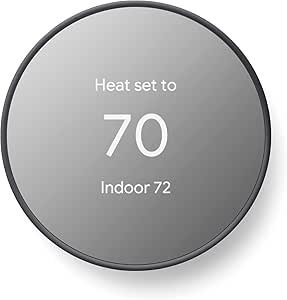 | Best for Google Homes | Connectivity: Wi-Fi 802.11 b/g/n 2.4 GHz, 802.11 a/n 5 GHz; Bluetooth Low Energy | C-Wire: Works without C-wire in most homes | Energy Certification: ENERGY STAR certified | VIEW LATEST PRICE | See Our Full Breakdown |
| Google Nest Learning Thermostat (4th Gen, 2024) with Nest Temperature Sensor – Polished Gold |  | Best Premium Learning Thermostat | Model: 4th Gen, 2024 | Color: Polished Gold | Learning Capability: Self-learning schedule adjustment | VIEW LATEST PRICE | See Our Full Breakdown |
| smart home learning thermostat | Compatibility |
|---|---|
| Google Nest Learning Thermosta | Most 24V systems: gas, electric, oil, heat pump, radiant |
| Google Nest Thermostat | — |
| ecobee Smart Thermostat Essent | Most 24VAC systems: gas, oil, electric, dual fuel, heat pump, boilers |
| Honeywell Home RTH9585WF Wi-Fi | Forced air, hot water, steam, heat pumps with electric backup |
| Smart Thermostat for Home | 4 Heat / 2 Cool multi-stage HVAC systems |
| ecobee Smart Thermostat Enhanc | Most 24 VAC HVAC systems including gas, oil, electric, dual fuel, heat pumps, and boilers |
| Amazon Smart Thermostat | — |
| Google Nest Thermostat | — |
| Google Nest Learning Thermosta | Alexa, Apple HomeKit, Google Home, Matter |
More Details on Our Top Picks
Google Nest Learning Thermostat (4th gen) + Nest Temperature Sensor (2nd gen) – Silver
Google’s fourth-generation Learning Thermostat is the pick that best fulfills the promise of a learning thermostat: it builds a schedule from your habits instead of asking you to program one. Compared with the cheaper Google Nest Thermostat, this model genuinely learns over time, adds Siri and Matter support, and its 60% larger display with dynamic Farsight makes checking the temperature from across the room effortless. The bundled second-generation Temperature Sensor is what elevates it — unlike the ecobee Smart Thermostat Essential, which sells its SmartSensors separately, room-specific comfort comes in the box here.
The tradeoff is price and friction. It costs noticeably more than every budget option in this lineup, and full functionality depends on a reliable Wi-Fi connection. Setup can frustrate first-timers, especially on older 24V systems that may need a C-wire adapter.
Pros:- Genuinely learns your schedule, saving up to 31% on heating and cooling bills
- Includes a room temperature sensor in the box rather than selling it separately
- Largest, most readable display in this lineup with dynamic Farsight
- Broadest voice assistant support: Google Assistant, Alexa, and Siri
Cons:- Highest price point in the roundup, a real stretch for budget-conscious buyers
- Setup can be complex on older or multi-wire HVAC systems
- Requires constant Wi-Fi for full smart features
Best for: Homeowners who want true self-programming behavior and whole-home comfort via room sensors, and who don’t mind paying a premium for it
Not ideal for: Budget buyers or renters — the price is hard to justify if you only need basic scheduling, which the cheaper Nest Thermostat handles fine
- Model:4th generation
- Includes:Nest Temperature Sensor (2nd gen)
- Display:60% larger than previous generation, dynamic Farsight
- Compatibility:Most 24V systems: gas, electric, oil, heat pump, radiant
- Connectivity:Wi-Fi, Matter compatible
- Control:Google Home app, Google Assistant, Alexa, Siri
- Energy Savings:Up to 31% on heating and cooling
Our verdict“If you want one thermostat that learns, saves, and covers multiple rooms out of the box, this is the one to buy despite the premium price.”
Google Nest Thermostat – Smart Wi-Fi Programmable Thermostat for Home – Snow
This is the Nest for people who want the ecosystem without the flagship price. Compared with the Nest Learning Thermostat (4th gen), you give up true auto-scheduling and the larger display, but you keep ENERGY STAR certified savings, HVAC monitoring, and full Google Home and Alexa integration at a much friendlier price. Where the Honeywell RTH9585WF demands a C-wire outright, this model works without one in most homes, which quietly removes the most common installation headache.
The compromise: this is a programmable thermostat with savings suggestions, not a self-teaching one. You’ll do more of the scheduling yourself. There’s also no temperature lock feature, so households with adjustment-happy kids or guests lose a guardrail other models offer.
Pros:- Works without a C-wire in most homes, simplifying installation
- ENERGY STAR certified with HVAC monitoring and energy suggestions
- Full Google Home, Alexa, and Matter support at an accessible price
- Nest Renew support for prioritizing clean energy
Cons:- Not a true learning thermostat — scheduling requires user input
- No temperature lock to prevent unwanted adjustments
- Some HVAC systems need add-on accessories for compatibility
Best for: First-time smart thermostat buyers in the Google Home ecosystem who want reliable energy savings at a mid-range price
Not ideal for: Buyers who want hands-off automation — without true learning, you’ll be manually refining schedules the Learning Thermostat would build itself
- Connectivity:Wi-Fi
- Energy Star Certified:Yes
- C-Wire:Works without one in most homes
- Voice Control:Google Assistant, Alexa
- Smart Home Integration:Google Home, Matter-certified devices
- Additional Features:HVAC monitoring, savings suggestions, Nest Renew
Our verdict“The smart middle ground: most of the Nest experience at a fraction of the Learning model’s price, as long as you’re willing to set your own schedule.”
ecobee Smart Thermostat Essential – WiFi Thermostat, Energy Star Certified
The ecobee Smart Thermostat Essential earns its place by refusing to pick sides: Apple HomeKit, Google Assistant, and Alexa all work natively, which no Nest model can claim. Its headline number — up to 23% annual energy savings — comes from Schedule Assistant adapting to your routine, a lighter-touch approach than the Nest Learning Thermostat’s full auto-learning but more automated than the standard Nest Thermostat’s manual scheduling. The color touchscreen is responsive, and DIY installation is genuinely easy when the optional Power Extender Kit covers homes without a C-wire.
The catch is the SmartSensor tax. Room-based comfort, the feature ecobee is known for, requires a SmartSensor 2-pack sold separately — a cost the Nest Learning 4th gen bundles in. Compatibility checks are also wise for unusual HVAC setups.
Pros:- Native support for Apple HomeKit, Google Assistant, and Alexa
- Up to 23% annual energy savings with adaptive Schedule Assistant
- Very wide HVAC compatibility: gas, oil, electric, dual fuel, heat pump, boilers
- Easy DIY install with Power Extender Kit for C-wire-less homes
Cons:- SmartSensor room sensors sold separately, adding hidden cost
- Some setups still need the Power Extender Kit and a compatibility check
- Learns your schedule more passively than the Nest Learning Thermostat
Best for: Households mixing Apple, Google, and Amazon devices, or anyone who wants strong energy savings without committing to one ecosystem
Not ideal for: Buyers wanting multi-room temperature control on day one — the sensors cost extra, and the bundled-sensor Nest undercuts it there
- Energy Star Certified:Yes
- Compatibility:Most 24VAC systems: gas, oil, electric, dual fuel, heat pump, boilers
- Display:Color touchscreen
- SmartSensor Support:Yes (2-pack sold separately)
- Indoor Humidity Detection:Yes
- Works With:Apple HomeKit, Google Assistant, Alexa
- WiFi:Yes
Our verdict“The best pick if your smart home spans Apple and Google ecosystems and you want solid savings without ecosystem lock-in.”
Honeywell Home RTH9585WF Wi-Fi Smart Color Thermostat
Honeywell’s RTH9585WF takes a different philosophy from every other pick here: instead of learning or adaptive algorithms, it offers a dependable 7-day programmable schedule with energy reports that show where you’re wasting money. For buyers who distrust auto-scheduling or want predictable, explicit control, this is the strongest argument in the lineup. The customizable color touchscreen that matches your decor is a nice touch the Snow Nest and ecobee Essential don’t offer. It also handles hot water, steam, and forced air systems — coverage that matters in older homes.
The tradeoffs are structural. Unlike the Google Nest Thermostat, it hard-requires a C-wire, so many homes need an electrician or a power adapter. It’s also a poor fit for electric baseboard heating, and its ecosystem support stops at Alexa and Google Home — no HomeKit, no Matter.
Pros:- Familiar, predictable 7-day programming with energy reports and tips
- Uncommon compatibility with hot water and steam heating systems
- Customizable color touchscreen blends with wall decor
- Straightforward Alexa and Google Home integration
Cons:- C-wire strictly required, adding cost or complexity for many homes
- No learning capability — you program everything yourself
- Incompatible with electric baseboard heat; limited ecosystem support
Best for: Owners of older homes with steam, hot water, or forced-air systems who want explicit 7-day programming rather than learning algorithms
Not ideal for: Homes without a C-wire or with electric baseboard heat — installation friction and incompatibility make other picks better fits
- Programmable:7-day scheduling
- Display:Touchscreen with customizable colors
- Energy Star:Yes
- Compatibility:Forced air, hot water, steam, heat pumps with electric backup
- C-Wire Required:Yes
- Smart Home Compatibility:Amazon Alexa, Google Home
Our verdict“Choose this if you value hands-on scheduling and older-home heating compatibility over learning smarts and modern protocols.”
Smart Thermostat for Home, Programmable WiFi Thermostat, Saving Thermostat – Up to 4 Heat/2 Cool, Easy DIY Install
This unbranded option solves a specific problem the big names handle awkwardly at the price: multi-stage HVAC support up to 4 Heat / 2 Cool. If you have a two-stage furnace or a zoned system, this handles it for far less than a Nest Learning Thermostat, which is otherwise the go-to for complex setups. Through the Smart Life / Tuya app, it delivers remote control and auto-adjusting temperature routines that approach basic learning behavior, and the included wiring diagrams make DIY install realistic for a confident homeowner.
The tradeoffs are what you’d expect at this price. A dedicated 24V C-wire is mandatory — no power-sharing tricks like the Nest Thermostat — and there’s no native HomeKit or Matter support, just the Tuya ecosystem. Brand-name polish, customer support, and long-term firmware updates are also thinner than what Google, ecobee, or Honeywell offer.
Pros:- Supports up to 4 Heat / 2 Cool multi-stage HVAC systems at a budget price
- Auto-adjusting routines provide basic learning-like savings
- Clear wiring diagrams make DIY installation approachable
- Works with popular Tuya/Smart Life smart home setups
Cons:- Dedicated 24V C-wire required with no workaround
- Limited brand support, app polish, and no HomeKit or Matter
- Compatibility must be verified before purchase — no baseboard or line-voltage support
Best for: Cost-conscious owners of multi-stage or zoned HVAC systems who are comfortable verifying wiring themselves
Not ideal for: Buyers wanting established app ecosystems, HomeKit support, or responsive customer service — the major brands win clearly on those fronts
- Compatibility:4 Heat / 2 Cool multi-stage HVAC systems
- Wi-Fi:2.4GHz
- Control:Smart Life / Tuya Smart app remote control
- Installation:DIY with standard wiring diagrams
- Energy Saving:Auto-adjust temperature routines
- Power:Requires dedicated 24V C-wire
Our verdict“A pragmatic budget choice for complex multi-stage systems, provided you have a C-wire and don’t need a big-brand app experience.”
ecobee Smart Thermostat Enhanced, Programmable Wi-Fi Thermostat
What sets the ecobee Smart Thermostat Enhanced apart from the cheaper options in this lineup is its occupancy sensing — it detects when rooms are empty and adjusts the temperature automatically, rather than relying purely on a fixed schedule like the Amazon Smart Thermostat. That translates to up to 26% annual savings on heating and cooling, a figure driven by behavior, not guesswork. The included Power Extender Kit and Trim Kit make DIY installation realistic for most homes without an electrician, something the Amazon option can’t claim since it demands a C-wire outright. Compared with the standard Google Nest Thermostat, ecobee also handles humidity control, which matters in muggy climates where comfort isn’t just about temperature. The tradeoff is a busier setup process, and Wi-Fi outages disable its remote intelligence.
Pros:- Up to 26% annual energy savings from occupancy-based learning
- Includes Power Extender Kit and Trim Kit for genuine DIY installation
- Built-in humidity control improves comfort beyond temperature alone
- Remote control via smartphone, tablet, or Apple Watch
Cons:- Setup can feel complex for first-time smart thermostat owners
- Remote features and learning depend entirely on a stable Wi-Fi connection
- Requires an HVAC compatibility check before purchase
Best for: Homeowners with variable schedules who want savings driven by occupancy detection rather than rigid programming
Not ideal for: Buyers who want a plug-and-play budget option — setup is more involved than the Amazon Smart Thermostat’s guided install
- Compatibility:Most 24 VAC HVAC systems including gas, oil, electric, dual fuel, heat pumps, and boilers
- Power:Hardwired with Power Extender Kit included
- Occupancy Sensing:Yes, built-in
- Learning:Learns schedule and user preferences automatically
- Humidity Control:Yes
- Remote Control:Smartphone, tablet, or Apple Watch app
- Installation:DIY with included PEK and Trim Kit
Our verdict“This pick makes the most sense for households whose schedules shift day to day and who want the thermostat to figure it out on its own.”
Amazon Smart Thermostat
If the Google Nest Learning Thermostat (4th Gen) costs more than your heating bill, the Amazon Smart Thermostat is the honest alternative. It doesn’t learn your habits — you program schedules manually or let Alexa routines handle it — but it still trims an average of $90 per year off energy bills. Where the ecobee Enhanced wins on sensing and automation, this model wins on simplicity and price: the Alexa app walks you through installation step by step, and it pairs naturally with Alexa and Ring devices you may already own. The catch is real, though: a C-wire is required, so older homes without one will need an adapter or an electrician, which erodes the price advantage. Integration outside the Amazon ecosystem is essentially nonexistent.
Pros:- Lowest-cost entry point into smart thermostat savings in this lineup
- Guided installation through the Alexa app is genuinely beginner-friendly
- Average of $90 in annual energy savings
- Seamless control through Alexa and Ring devices
Cons:- C-wire requirement rules out many older homes without extra hardware
- No genuine learning — schedules must be programmed or driven by Alexa routines
- Locked almost entirely into the Amazon ecosystem
Best for: Alexa households on a budget who want app control and basic scheduling without paying for learning features
Not ideal for: Homes without a C-wire, or anyone invested in Google Home or Apple HomeKit ecosystems
- Ecosystem:Amazon Alexa and Ring
- C-Wire Required:Yes
- Energy Savings:Average of $90 annually
- Connectivity:Wi-Fi
- Programming:Programmable schedules via Alexa app
- Installation:DIY with guided app instructions
Our verdict“This option stands out for Alexa-centric buyers who want dependable energy savings at the lowest possible price, provided their wiring cooperates.”
Google Nest Thermostat – Smart Thermostat for Home – Programmable Wi-Fi Thermostat – Charcoal
The Google Nest Thermostat occupies a smart middle ground: more refined than the Amazon Smart Thermostat, far cheaper than the Nest Learning Thermostat (4th Gen). Its biggest practical advantage is that it works without a C-wire in most homes, removing the single biggest installation headache the Amazon option imposes. Its Home/Away Assist uses your phone’s location to trim heating and cooling when nobody’s home, and HVAC monitoring sends alerts before small problems become expensive ones — a feature the ecobee Enhanced matches, but the Amazon thermostat lacks entirely. Unlike its pricier Nest sibling, it doesn’t actively learn your schedule, so expect to do more manual programming. It also skips a lock feature, which matters if you’re installing it in a rental or a house with curious kids.
Pros:- Works without a C-wire in most homes, simplifying installation
- HVAC monitoring with maintenance and system-issue alerts
- ENERGY STAR certified automatic scheduling and away detection
- Works with Google Assistant and Matter-enabled platforms
Cons:- No lock feature to prevent unwanted temperature changes
- Doesn’t learn schedules — programming is largely manual
- Full functionality requires a constant Wi-Fi connection
Best for: Google Home users in homes without a C-wire who want energy savings and HVAC alerts without the premium price
Not ideal for: Rental property owners or parents who need a lock feature to prevent tampering
- Connectivity:Wi-Fi 802.11 b/g/n 2.4 GHz, 802.11 a/n 5 GHz; Bluetooth Low Energy
- C-Wire:Works without C-wire in most homes
- Energy Certification:ENERGY STAR certified
- HVAC Monitoring:Yes, with system issue alerts
- Voice Assistant Support:Google Assistant and Matter-enabled assistants
- Lock Feature:No
- Color:Charcoal
Our verdict“This model is better suited to Google-centric households that want solid energy savings and diagnostics at a mid-range price, not full automation.”
Google Nest Learning Thermostat (4th Gen, 2024) with Nest Temperature Sensor – Polished Gold
This is the thermostat the roundup’s title is really about. The Nest Learning Thermostat (4th Gen) genuinely learns your routine within days and programs itself — no manual schedules, no Alexa routines, unlike the Amazon Smart Thermostat or the standard Nest. The bundled 2nd-gen Nest Temperature Sensor solves a problem most competitors ignore: it reads the temperature in the room that actually matters, so a cold bedroom stops being dictated by a warm hallway. Compared with the ecobee Enhanced, its 60% larger display and multi-platform support — Alexa, Apple HomeKit, Google Home, and Matter — give it broader appeal and stronger design presence. The tradeoff is straightforward: it’s the most expensive option here, and much of that money buys polish rather than proportionally more savings.
Pros:- Actively learns your schedule and programs itself within days
- Includes 2nd-gen Nest Temperature Sensor for room-specific comfort
- 60% larger, highly readable display in an eye-catching Polished Gold finish
- Works with Alexa, Apple HomeKit, Google Home, and Matter
Cons:- Highest price in this lineup by a wide margin
- Installation still requires an HVAC compatibility check
- Learning and remote features depend on stable Wi-Fi
Best for: Buyers who want true self-programming automation, whole-room temperature balance, and the widest smart home compatibility
Not ideal for: Budget-focused buyers or those content with basic scheduling — the learning features won’t justify the premium for everyone
- Model:4th Gen, 2024
- Color:Polished Gold
- Learning Capability:Self-learning schedule adjustment
- Display:60% larger than previous generation
- Included Sensor:Nest Temperature Sensor (2nd gen)
- Compatibility:Alexa, Apple HomeKit, Google Home, Matter
- Voice Control:Yes, via compatible voice assistants
Our verdict“The pick for homeowners who want the thermostat to do the thinking — and who are willing to pay for genuine automation plus room-level sensing.”
How We Picked
I evaluated these nine thermostats against what actually separates a genuine learning thermostat from a Wi-Fi programmable one. The criteria I weighted most heavily: learning capability (does it build a schedule on its own or just accept one?), HVAC compatibility (single-stage versus multi-stage, heat pump, humidifier, and dehumidifier support), smart home ecosystem integration (Alexa, Google Home, HomeKit, and Matter), remote sensor support, and total cost of ownership including required accessories like C-wire kits and add-on sensors.
Ranking followed usability evidence as much as specs. Models with polished apps, clear energy reporting, and low-friction DIY installation ranked higher than feature-stuffed options with clunky software. Price was judged on value rather than absolute cost — a $250 thermostat that replaces a sensor purchase and cuts energy bills meaningfully can outrank a $70 model that needs workarounds to function. Where two products were nearly identical, as with the Nest Learning Thermostat color variants, I treated them as one pick and noted the differences rather than padding the list.
Factors to Consider When Choosing Smart Home Learning Thermostats
Choosing a learning thermostat involves more than picking the most popular brand. Before committing to any model in this roundup, weigh these factors against your home’s wiring, your HVAC equipment, and how much automation you actually want day to day.
True Learning Versus Programmable Smart Features
The most common mistake in this category is buying a thermostat expecting it to learn your routine, only to discover you still have to build a schedule manually. Genuine learning models observe when you leave, sleep, and adjust the temperature, then generate their own program within one to two weeks. Programmable smart thermostats, which make up most of this list, still deliver remote control and geofencing but require you to do the planning. If your schedule varies wildly week to week, a learning model earns its premium quickly. If your routine is predictable, a cheaper programmable unit paired with geofencing gets you nearly the same savings. Be honest about which type of buyer you are before spending $250 on automation you may never activate.
Wiring and C-Wire Compatibility
More installs fail over wiring than over any software issue, and this is where budget buyers get burned. Most smart thermostats need a C-wire (common wire) to power their display and Wi-Fi radio continuously, and many older homes simply don’t have one. Premium models like the ecobee units include a power extender kit in the box that solves this without an electrician. Cheaper options like the Amazon Smart Thermostat often require you to already have a C-wire or buy a kit separately, adding cost and installation complexity. Before buying anything, photograph your current thermostat’s wiring plate and check the manufacturer’s online compatibility checker — it takes five minutes and prevents the most common return in this category.
HVAC System Complexity
Not every thermostat can control every system, and mismatches here are expensive to discover after installation. Single-stage furnaces and AC units work with virtually everything on this list, but multi-stage systems, dual-fuel setups, heat pumps with auxiliary heat, and whole-home humidifiers need models with the right terminal count and software support. The Honeywell Home RTH9585WF and the generic budget pick handle more configurations than their prices suggest, while some entry-level models quietly drop multi-stage support. If your current thermostat has more than four or five wires, treat compatibility as a gate, not a footnote. Homeowners with zoned systems should also confirm whether the model supports multiple zones or whether they’d need one unit per zone.
Ecosystem Lock-In and Voice Assistant Support
A thermostat is one of the most integrated devices in a smart home, so ecosystem choice matters more here than with a smart bulb. Nest thermostats work best inside Google Home, ecobee plays well with Alexa, Google, and Apple HomeKit, and the Amazon Smart Thermostat is designed around Alexa first. Matter support, which the newest Nest offers, is gradually loosening these walls, but voice control, routines, and sensor integrations still work best within a brand’s native ecosystem. If your household mixes assistants or you plan to change platforms in a few years, prioritize cross-platform models like the ecobee units. Locking yourself into an ecosystem you later abandon means losing the automation features you paid a premium for.
Remote Sensors and Multi-Room Comfort
A thermostat only knows the temperature where it’s mounted, which is usually a hallway — rarely the room where you actually feel too hot or cold. Remote sensors solve this by letting the thermostat average readings across rooms or prioritize the room you’re occupying. This is the single biggest comfort upgrade in the category, and it’s why the Nest Learning Thermostat bundle ranks so highly despite its price. Ecobee supports even more sensors per system but sells them separately, which adds up for larger homes. If you live in a single-story apartment with even temperatures, skip the sensors and save. In a two-story house with a cold upstairs bedroom, sensors matter more than learning algorithms ever will.
Energy Reporting and Real Savings
Savings claims on thermostat packaging tend to be optimistic, but the reporting tools behind them vary enormously in usefulness. Models with detailed energy history and monthly reports — a strength of both Nest and ecobee — let you see whether your automation is actually reducing runtime or just moving it around. Budget models often show only current setpoints and basic history, which makes it impossible to verify savings. Over a heating season, the difference between a well-tuned smart thermostat and a dumb one can be $100 or more in many climates, which reframes the price gap between a $70 and $250 unit. Check whether your utility offers rebates too — many will subsidize Energy Star certified models, sometimes cutting the effective price in half.
Frequently Asked Questions
Is the Nest Learning Thermostat worth double the price of the regular Nest Thermostat?
It depends entirely on whether you want the thermostat to build its own schedule. The regular Nest Thermostat is a well-designed programmable model with basic home/away assistance, and for people with fixed routines it does nearly everything the Learning model does for half the price. The Learning Thermostat justifies its premium with genuine automatic scheduling, remote sensor support for balancing multi-room temperatures, a metal build, and Matter compatibility — plus it handles more complex HVAC systems. If you have a two-story home or an unpredictable schedule, the Learning model pays off. If you live in an apartment with a steady routine, the cheaper Nest is the smarter buy.
Do I need a C-wire to install any of these thermostats?
Most Wi-Fi thermostats perform best with a C-wire because their displays and radios draw constant power, and without one you can get short-cycling, dead batteries, or Wi-Fi dropouts. The ecobee models include a power extender kit that works around a missing C-wire in most systems, which is a real advantage for older homes. The Amazon Smart Thermostat and most generic budget picks generally require an existing C-wire or a separately purchased adapter. Before ordering, pull your current thermostat off the wall and check for a wire on the C terminal, then run the manufacturer’s compatibility checker. Discovering a missing C-wire after unboxing is the most common installation headache in this category.
Will a learning thermostat actually lower my energy bill?
It can, but the size of the savings depends more on your starting habits than the thermostat itself. If you currently leave the heat at one setting all day, automated setbacks can cut heating and cooling runtime meaningfully — often around 10% on heating, which compounds over a season. If you already adjust your thermostat manually and diligently, the incremental savings will be modest, and you’re mostly paying for convenience. Learning models tend to save more than programmable ones because they adapt to exceptions, like a day you stayed home sick, instead of forcing you into a rigid schedule. Check for utility rebates on Energy Star certified models, which can offset a large share of the purchase price regardless of your usage pattern.
Which thermostat works best if my household uses both Alexa and Google Assistant?
The ecobee models are the safest cross-platform choice, since they support Alexa, Google Assistant, and Apple HomeKit natively, and the built-in Alexa on higher-end ecobees means you get voice control even without a separate speaker. The Nest thermostats work with Google Home most deeply, with Alexa support available but less fully featured, so mixed households may notice asymmetric functionality. The newest Nest Learning Thermostat’s Matter support helps, though Matter currently covers basic control rather than every advanced feature. The Amazon Smart Thermostat technically works with Google Assistant but is clearly optimized for Alexa households. If ecosystem neutrality matters to you, ecobee is the brand to start with.
Are the generic budget thermostats worth the risk compared to brand-name options?
Generic models are a reasonable bet only if your priority is HVAC compatibility on a tight budget — the one reviewed here supports up to 4 Heat/2 Cool stages, which beats several name-brand budget models. The tradeoffs are software and support: companion apps tend to be less polished, updates are infrequent, and if the cloud service shuts down, remote features can stop working entirely. Brand-name models carry longer track records, better warranty support, and ecosystems that will still exist in five years. If you rent, plan to move soon, or have a complex HVAC system the big brands don’t cover, a generic unit is defensible. For a long-term install in a home you own, the extra $30 to $50 for a recognized brand buys real peace of mind.
Conclusion
After comparing all nine models, the right choice comes down to matching the thermostat’s strengths to your home rather than chasing the most features. For the best overall pick, the Google Nest Learning Thermostat (4th gen) stands apart with genuine automatic learning, a bundled remote sensor, and Matter support — it’s the model this category is named after. For best value, the Amazon Smart Thermostat delivers dependable app control and basic automation at a price that pays for itself within a season. For best premium setup, the ecobee Smart Thermostat Essential pairs strong energy reporting with the broadest ecosystem and HVAC compatibility, making it the smarter splurge for complex homes.
For beginners and renters, the standard Google Nest Thermostat (Snow or Charcoal) offers the friendliest app and a painless install. For specific needs, the Honeywell Home RTH9585WF suits buyers who want a colorful, customizable display and multi-stage support without a subscription-driven ecosystem, while the generic Smart Thermostat pick covers 4 Heat/2 Cool systems that budget name-brands can’t handle. Whatever you choose, verify your wiring and HVAC compatibility first — the best learning thermostat is the one that installs cleanly on your wall and matches how you actually live.