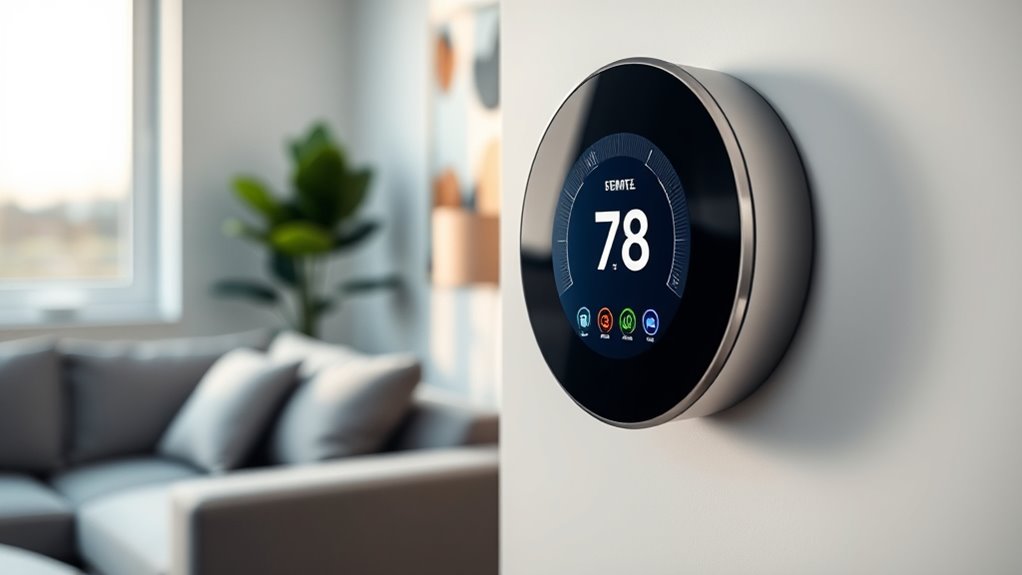

If you’re looking for a smart thermostat that seamlessly integrates with Google Home, you’re likely weighing ease of setup, features, and compatibility. The Google Nest Thermostat stands out as the best overall due to its intuitive learning capabilities and smooth Google Home integration. For those seeking a budget-friendly yet reliable option, the Sensi Lite offers solid performance with straightforward installation. Meanwhile, the ecobee Smart Thermostat Premium appeals to users wanting advanced features like air quality monitoring and multiple sensors. The main tradeoffs involve balancing cost, feature set, and ease of use, so continue reading for a detailed breakdown of these top choices.
Complete the kit



Key Takeaways
- The top choices balance ease of installation, smart features, and compatibility with Google Home, with most supporting voice control and automation.
- Premium models like ecobee offer advanced features such as air quality sensors, but come at a higher price point, while budget options like Sensi Lite prioritize simplicity.
- Many thermostats require a C-wire for proper installation; those without it may need additional adapters or wiring upgrades.
- Most products include scheduling and energy-saving modes, but the level of customization and automation varies widely.
- Compatibility with other smart home ecosystems (like Alexa or Apple Home) is common, but make sure to prioritize Google Assistant features if that’s your main voice platform.
| Google Nest Thermostat with Trim Kit Bundle, White |  | Best Overall Bundle | Color: White | Smart-home ecosystem: Google Nest and Google Home | Mobile app: Nest app | VIEW ON AMAZON | See Our Full Breakdown |
| Sensi Lite Smart Thermostat ST25 | 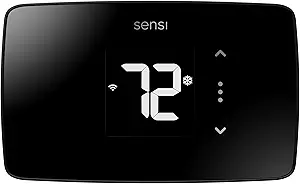 | Best Privacy-Focused Value | Model: ST25 | Connectivity: Wi-Fi | Voice compatibility: Google Assistant and Amazon Alexa | VIEW ON AMAZON | See Our Full Breakdown |
| ecobee Smart Thermostat Premium with SmartSensor |  | Best Premium Comfort Control | Voice compatibility: Google Assistant, Amazon Alexa, and Siri | Built-in voice assistant: Alexa or Siri; Apple home hub required for Siri | Included sensor: ecobee SmartSensor | VIEW ON AMAZON | See Our Full Breakdown |
| Google Nest Thermostat, Charcoal (Renewed) |  | Best Renewed Bargain | Condition: Renewed | Color: Charcoal | Product type: Programmable smart thermostat | VIEW ON AMAZON | See Our Full Breakdown |
| Honeywell Home RTH9585WF1004 Wi-Fi Smart Color Thermostat |  | Best for On-Wall Scheduling | Model: RTH9585WF1004 | Display: Customizable color touchscreen | Programming: Seven-day programmable | VIEW ON AMAZON | See Our Full Breakdown |
| Vine Smart Thermostat TJ-919T V2.0 |  | Best Large-Screen Controls | Model: TJ-919T-V2 | System compatibility: Approximately 90% of 24V AC HVAC systems | HVAC support: Conventional 2H/2C; heat pump 2H/2C with auxiliary or emergency heat; heat-only and cool-only systems | VIEW ON AMAZON | See Our Full Breakdown |
| ecobee Smart Thermostat Essential |  | Best Entry-Level Ecobee | Certification: Energy Star certified | Claimed energy savings: Up to 23% annually | System compatibility: Claimed compatibility with 85% of systems, including selected 24 VAC conventional, heat-pump, and boiler equipment | VIEW ON AMAZON | See Our Full Breakdown |
| Google Nest Learning Thermostat (4th Gen) with Nest Temperature Sensor |  | Best Overall for Google Home | Generation: Google Nest Learning Thermostat, 4th generation | Included sensor: One Nest Temperature Sensor, 2nd generation | System compatibility: Most 24V gas, electric, oil, forced-air, heat-pump, and radiant systems | VIEW ON AMAZON | See Our Full Breakdown |
| Google Nest Thermostat Snow (Renewed) |  | Best Renewed Value | Condition: Amazon Renewed | Certification: Energy Star certified | System compatibility: Compatible with many 24V HVAC systems; pre-purchase checking recommended | VIEW ON AMAZON | See Our Full Breakdown |
| ecobee Smart Thermostat Enhanced |  | Best C-Wire Workaround | Certification: Energy Star certified | Claimed energy savings: Up to 26% annually | System compatibility: Most 24 VAC gas, oil, electric, dual-fuel, heat-pump, and boiler systems | VIEW ON AMAZON | See Our Full Breakdown |
| meross Smart Thermostat MTS300 |  | Best for Matter Homes | Model: MTS300 | Operating voltage: 24V | Power requirement: C-wire required; not included | VIEW ON AMAZON | See Our Full Breakdown |
| Sensi Smart Thermostat ST55 |  | Best for DIY Installation | Model: ST55 | Connectivity: Wi-Fi | Voice control: Google Assistant and Alexa | VIEW ON AMAZON | See Our Full Breakdown |
| Google Nest Thermostat | | Best Native Google Home Fit | Certification: ENERGY STAR certified | Wi-Fi: 802.11b/g/n 2.4 GHz and 802.11a/n 5 GHz | Additional wireless connectivity: Bluetooth Low Energy | VIEW ON AMAZON | See Our Full Breakdown |
| vine Smart Thermostat for House |  | Best for Detailed Scheduling | System voltage: 24V AC HVAC systems | C-wire requirement: Required for all installations | HVAC compatibility: Stated 90% coverage | VIEW ON AMAZON | See Our Full Breakdown |
| smart thermostat compatible with google home | Connectivity | Certification | C-wire requirement |
|---|---|---|---|
| Google Nest Thermostat with Tr | Wi-Fi internet connection | — | — |
| Sensi Lite Smart Thermostat ST | Wi-Fi | ENERGY STAR certified | Required for heat-pump and heat/cool-only systems; not required on most other systems |
| ecobee Smart Thermostat Premiu | — | — | — |
| Google Nest Thermostat | Wi-Fi | — | May be required depending on existing wiring and HVAC system |
| Honeywell Home RTH9585WF1004 W | — | ENERGY STAR certified | Required |
| Vine Smart Thermostat TJ-919T | Wi-Fi | — | — |
| ecobee Smart Thermostat Essent | Wi-Fi | Energy Star certified | — |
| Google Nest Learning Thermosta | — | — | Not required in most homes |
| Google Nest Thermostat Snow | Dual-band Wi-Fi and Bluetooth | Energy Star certified | — |
| ecobee Smart Thermostat Enhanc | Wi-Fi | Energy Star certified | — |
| meross Smart Thermostat MTS300 | Wi-Fi and Matter | — | — |
| Sensi Smart Thermostat ST55 | Wi-Fi | ENERGY STAR certified | Not required in many installations |
| Google Nest Thermostat | — | ENERGY STAR certified | Not required in most homes; system compatibility varies |
| vine Smart Thermostat for Hous | — | — | Required for all installations |
More Details on Our Top Picks
Google Nest Thermostat with Trim Kit Bundle, White
I rank the Google Nest Thermostat White Bundle first because its native fit with Google Home keeps voice commands, routines, and remote adjustments within one ecosystem. The included trim kit also covers the wall marks that can make a DIY replacement look unfinished, while claimed compatibility with 95% of HVAC systems lowers installation friction. Compared with the ecobee Smart Thermostat Premium, it is simpler and less feature-heavy: there is no included room sensor or air-quality monitor, but buyers avoid paying for extras they may not use. Home/Away Assist can reduce wasted heating or cooling after everyone leaves. My main reservation is the listing’s mixed identity: it calls this a learning thermostat while also describing manual scheduling, so buyers should verify the exact model. For a Google-centered setup, it is the most balanced package.
Pros:- Native integration with the Google Nest ecosystem
- Trim kit creates a cleaner-looking installation
- Home/Away Assist can reduce heating and cooling in an empty home
- Claimed compatibility with 95% of HVAC systems
Cons:- No remote room sensor included
- No built-in air-quality monitor
- Listing language is unclear about the exact learning capabilities
Best for: Google Home households replacing an older thermostat that left visible holes or paint marks on the wall
Not ideal for: Buyers who need room-by-room temperature balancing or indoor air-quality readings
- Color:White
- Smart-home ecosystem:Google Nest and Google Home
- Mobile app:Nest app
- Connectivity:Wi-Fi internet connection
- Mobile platforms:iOS and Android
- HVAC compatibility:Claimed compatibility with 95% of heating and cooling systems
- Included accessory:Trim kit
- Occupancy feature:Home/Away Assist with Eco Temperature
Our verdict“I recommend this bundle for buyers who want the cleanest balance of Google Home integration, approachable installation, and finished wall appearance.”
Sensi Lite Smart Thermostat ST25
I place the Sensi Lite ST25 in the privacy-focused value slot because it combines affordable DIY setup with a stated policy against selling thermostat activity for targeted advertising. For a Google Home household, Google Assistant voice control, remote access, and geofencing cover the everyday jobs without the cost of the ecobee Smart Thermostat Premium. It also claims about 23% HVAC energy savings and supplies usage reports, giving budget-minded buyers useful feedback. Compared with the fuller Sensi ST55, this Lite model is the leaner choice and carries more wiring caveats. A C-wire is required on heat-pump and heat/cool-only systems, and there is no bundled room sensor or air-quality monitor. I would choose it for straightforward scheduling and privacy rather than a rich wall interface; its plain hardware puts function ahead of visual polish.
Pros:- Works with Google Assistant for Google Home voice commands
- Manufacturer states that thermostat activity is not sold for targeted advertising
- Flexible scheduling, geofencing, remote access, and usage reports
- Built-in level and guided instructions support DIY installation
Cons:- C-wire is required for heat-pump and heat/cool-only systems
- No room sensor or air-quality monitoring
- Basic wall interface is less capable than premium touchscreen models
Best for: Budget-conscious Google Home users who want app control, geofencing, and stronger privacy commitments
Not ideal for: Heat-pump owners without a C-wire or households that need remote sensors for uneven rooms
- Model:ST25
- Connectivity:Wi-Fi
- Voice compatibility:Google Assistant and Amazon Alexa
- Certification:ENERGY STAR certified
- Energy-savings claim:About 23% on HVAC energy
- Automation:Flexible scheduling and geofencing
- Mobile platforms:Android and iOS
- Installation aid:Built-in level and step-by-step instructions
- C-wire requirement:Required for heat-pump and heat/cool-only systems; not required on most other systems
Our verdict“I recommend the Sensi Lite to privacy-minded buyers who want inexpensive Google Home control and can satisfy its wiring requirements.”
ecobee Smart Thermostat Premium with SmartSensor
I rank the ecobee Smart Thermostat Premium as the premium pick because the included SmartSensor addresses a problem basic thermostats ignore: the hallway temperature may not represent the room being occupied. Compared with the Google Nest Thermostat White Bundle, it costs more and presents a busier interface, but room-based temperature adjustment makes it better suited to homes with hot and cold spots. The air-quality monitor, occupancy radar, and large display add useful context beyond Google Home voice commands. One limitation matters for Google-centered buyers: it works with Google Assistant, yet its built-in speaker supports Alexa or Siri, not Google Assistant, so Google voice control needs a separate compatible device. The included Power Extender Kit helps homes without a C-wire. I see this as the feature-rich choice, not the simplest one.
Pros:- Included SmartSensor supports temperature control based on an occupied room
- Built-in air-quality monitor provides alerts and filter reminders
- Power Extender Kit supports many homes without a C-wire
- Works with Google Assistant and a broad range of 24VAC systems
Cons:- Pricier and more complex than the standard Google Nest Thermostat
- Built-in voice speaker supports Alexa or Siri rather than Google Assistant
- Advanced features may be excessive for small homes with even temperatures
Best for: Google Home households with uneven temperatures that want room sensing, air-quality alerts, and a premium display
Not ideal for: Minimalists who only need basic scheduling or buyers expecting Google Assistant to be built into the thermostat speaker
- Voice compatibility:Google Assistant, Amazon Alexa, and Siri
- Built-in voice assistant:Alexa or Siri; Apple home hub required for Siri
- Included sensor:ecobee SmartSensor
- Air-quality feature:Built-in monitor with alerts and filter reminders
- HVAC compatibility:Most 24VAC systems; claimed 95% system compatibility
- Supported conventional stages:Up to 2 heat and 2 cool
- Supported heat-pump stages:Up to 2 heat, 2 cool, and 2-stage auxiliary heat
- Included installation accessories:Power Extender Kit and trim kit
- Energy-savings claim:Up to 26% per year on heating and cooling costs
Our verdict“I recommend this ecobee for buyers who will benefit from room sensing and air-quality data enough to justify the premium price.”
Google Nest Thermostat, Charcoal (Renewed)
I give the renewed Google Nest Thermostat the bargain role because it offers direct Google ecosystem control without making buyers pay the usual new-product price. Compared with the new Google Nest Thermostat Charcoal elsewhere in the lineup, its core appeal is value rather than extra functionality; compared with the Sensi Lite ST25, its native Google Home relationship makes it the cleaner choice for households already using Nest routines and devices. The tradeoff is condition uncertainty. A renewed unit can have cosmetic wear, a shorter or seller-dependent warranty, and accessory contents that differ from a factory-sealed package. The supplied listing also warns that a C-wire may be required, so wiring must be checked before purchase. I would treat this as a price-led purchase, especially since no trim kit or remote sensor is listed.
Pros:- Native fit for a Google Home and Nest household
- Renewed pricing can undercut a factory-new Nest thermostat
- Programmable Wi-Fi control supports remote temperature changes
- Charcoal finish suits darker interiors
Cons:- Condition, warranty coverage, and accessory completeness may vary by renewed seller
- C-wire may be required depending on the HVAC system
- No trim kit or remote temperature sensor is specified
Best for: Existing Google Home users seeking a lower-cost Nest thermostat and comfortable buying renewed electronics
Not ideal for: Buyers who want factory-new condition, guaranteed accessory contents, or a room sensor in the box
- Condition:Renewed
- Color:Charcoal
- Product type:Programmable smart thermostat
- Connectivity:Wi-Fi
- Smart-home ecosystem:Google Nest and Google Home
- C-wire requirement:May be required depending on existing wiring and HVAC system
- Installation guidance:Existing wiring should be checked before purchase
Our verdict“I recommend this renewed Nest only when its price advantage outweighs the uncertainty around condition, warranty, and included accessories.”
Honeywell Home RTH9585WF1004 Wi-Fi Smart Color Thermostat
I choose the Honeywell Home RTH9585WF1004 for buyers who prefer managing schedules on the thermostat rather than relying mainly on an app. Its bright color touchscreen and seven-day programming make recurring changes easier to see at the wall, while Google Home support still adds voice and remote control. Compared with the standard Google Nest Thermostat, it offers a more information-dense display and stronger manual scheduling controls, but it lacks Nest’s understated design. Against the ecobee Smart Thermostat Premium, it costs less by omitting room sensing and air-quality monitoring. The biggest installation barrier is the mandatory C-wire. It also cannot control 120–240V electric baseboard heat, and heating-only oil systems need suitable C-wire power. I favor it for schedule-driven households, especially where utility demand-response rewards are available.
Pros:- Bright customizable color touchscreen supports easy on-wall operation
- Seven-day programming suits households with changing daily routines
- Works with Google Home, Alexa, and Honeywell Home mobile control
- Energy reports and eligible utility demand-response programs can support savings
Cons:- C-wire is required
- Does not support 120–240V electric baseboard heating
- No remote room sensor or built-in air-quality monitor
Best for: Homeowners who want detailed seven-day programming and a large touchscreen while retaining Google Home voice control
Not ideal for: Electric-baseboard homes, installations without a C-wire, or households needing room-by-room sensing
- Model:RTH9585WF1004
- Display:Customizable color touchscreen
- Programming:Seven-day programmable
- Voice compatibility:Google Home and Amazon Alexa
- Certification:ENERGY STAR certified
- C-wire requirement:Required
- Compatible systems:Forced air, hot water, steam, and heat pumps with electric backup
- Unsupported system:120–240V electric baseboard heat
- Fan modes:On, Automatic, and Circulate
Our verdict“I recommend this Honeywell for buyers who value visible touchscreen scheduling more than minimalist design or room-level sensing.”
Vine Smart Thermostat TJ-919T V2.0
I rank the Vine TJ-919T V2.0 as the Best Large-Screen Controls pick because its 4.3-inch touchscreen and gentle nightlight make temperature changes easier in dim hallways or for buyers who dislike tiny interfaces. Google Home voice control, remote app access, and eight scheduling periods per day give it more hands-on flexibility than the simpler Google Nest Thermostat (Renewed). It also covers a broad range of conventional and heat-pump systems. The catch is firm: a C-wire is mandatory, while the ecobee Smart Thermostat Enhanced includes a Power Extender Kit and the Nest model can often work without one. I also give established app ecosystems an advantage over Vine’s choice between Vine Thermostat and Smart Life apps. This model earns its place for visibility and granular scheduling, not for the cleanest installation path.
Pros:- Large 4.3-inch touchscreen is easy to read and operate
- Nightlight improves visibility in dark hallways
- Eight scheduling periods per day allow detailed temperature planning
- Supports Google Assistant, remote app control, conventional systems, and heat pumps
Cons:- Requires a C-wire for every installation
- No included power-extender solution for homes lacking a common wire
- Wide housing is less discreet than compact Nest models
Best for: Buyers with an existing C-wire who want a large, illuminated touchscreen and detailed daily scheduling alongside Google Home voice control
Not ideal for: Homes without a C-wire or buyers who want a small, discreet thermostat with the most established software ecosystem
- Model:TJ-919T-V2
- System compatibility:Approximately 90% of 24V AC HVAC systems
- HVAC support:Conventional 2H/2C; heat pump 2H/2C with auxiliary or emergency heat; heat-only and cool-only systems
- Power requirement:Hardwired; C-wire required
- Display:4.3-inch LCD touchscreen with nightlight
- Connectivity:Wi-Fi
- Smart-home support:Google Assistant and Amazon Alexa
- Scheduling:7 days with 8 periods per day
- Dimensions:1.02 x 4.84 x 3.35 inches
Our verdict“I recommend this Vine model for C-wire-equipped homes where display visibility and detailed scheduling matter more than compact design.”
ecobee Smart Thermostat Essential
I rank the ecobee Smart Thermostat Essential as the Best Entry-Level Ecobee because it keeps the core Google Home experience focused: voice changes, app control, a color touchscreen, schedules, and energy tracking. Compared with the ecobee Smart Thermostat Enhanced, its claimed savings are lower at 23% versus 26%, and the Power Extender Kit is sold separately rather than included. That makes the Essential better suited to straightforward systems with an existing C-wire, especially for buyers who want ecobee’s eco+ tools without paying for a more advanced thermostat. Its 85% compatibility claim also trails broader options in this group, so I would check the HVAC configuration carefully. Optional SmartSensors can address room-to-room temperature gaps, but they add cost. I place it below the Enhanced for installation flexibility, yet its simple controls and cross-platform support make it a sensible starting point.
Pros:- Direct control through Google Assistant and the ecobee app
- Color touchscreen keeps wall controls approachable
- eco+ features include humidity detection, schedule assistance, and time-of-use adjustments
- Optional SmartSensors can extend temperature monitoring to selected rooms
Cons:- Power Extender Kit is sold separately
- Claimed 85% system compatibility trails broader-coverage rivals
- Room sensors require an additional purchase
Best for: Google Home households with a compatible HVAC system and existing C-wire that want ecobee scheduling, energy reports, and eco+ features
Not ideal for: Homes needing a bundled C-wire workaround or room sensors, since the Power Extender Kit and SmartSensors cost extra
- Certification:Energy Star certified
- Claimed energy savings:Up to 23% annually
- System compatibility:Claimed compatibility with 85% of systems, including selected 24 VAC conventional, heat-pump, and boiler equipment
- Power options:C-wire or separately sold ecobee Power Extender Kit
- Connectivity:Wi-Fi
- Controls:Color touchscreen, ecobee app, and voice
- Smart-home support:Google Assistant, Amazon Alexa, and Apple HomeKit
- Smart features:eco+ humidity detection, schedule assistant, and time-of-use adjustments
- Remote sensor support:Compatible with separately sold ecobee SmartSensors
Our verdict“I recommend the Essential for buyers who want an accessible route into ecobee’s Google-compatible ecosystem and already have suitable thermostat wiring.”
Google Nest Learning Thermostat (4th Gen) with Nest Temperature Sensor
I rank the Google Nest Learning Thermostat (4th gen) as Best Overall for Google Home because it pairs the most direct app integration here with Matter support, polished voice control, and an included second-generation temperature sensor. That sensor lets one chosen room drive comfort at set times, a clear advantage over the ecobee Smart Thermostat Enhanced, which does not include a remote sensor. The Nest also learns how outdoor conditions affect indoor temperature and can pause heating or cooling when natural gains will do the work. Its large Dynamic Farsight display is easier to read across a room than the renewed basic Nest model. I rank it first for capability, but buyers pay for sophistication they may not need; compatibility still needs checking, and some systems require a C-wire or accessory. Schedule-change approvals also favor user control over fully invisible automation.
Pros:- Direct Google Home app integration with Google Assistant voice control
- Included second-generation sensor targets comfort in a selected room
- Matter support broadens smart-home interoperability
- Dynamic Farsight display is designed for across-the-room readability
Cons:- Advanced feature set may be excessive for simple schedules
- A C-wire or power accessory can still be needed with some systems
- Additional rooms require separately purchased temperature sensors
Best for: Google Home users who want advanced learning, room-specific temperature control, Matter integration, and a prominent wall display
Not ideal for: Buyers who need only basic scheduling or who would rather avoid paying for advanced automation and an included room sensor
- Generation:Google Nest Learning Thermostat, 4th generation
- Included sensor:One Nest Temperature Sensor, 2nd generation
- System compatibility:Most 24V gas, electric, oil, forced-air, heat-pump, and radiant systems
- C-wire requirement:Not required in most homes
- Primary app:Google Home
- Voice support:Google Assistant, Amazon Alexa, and Siri through compatible speakers
- Smart-home protocol:Matter compatible
- Display:60% larger display with Dynamic Farsight
- Claimed energy savings:Up to 31% on heating and cooling bills
Our verdict“I recommend the fourth-generation Nest as the strongest all-around choice for buyers building their climate controls around Google Home.”
Google Nest Thermostat Snow (Renewed)
I rank the Google Nest Thermostat (Renewed) as the Best Renewed Value for buyers who want Google Home control without paying for the fourth-generation Learning model. It supports app scheduling, voice commands, away-based temperature setbacks, and manual control during an internet outage. Compared with the Nest Learning Thermostat (4th gen), though, it lacks an included room sensor, the larger Dynamic Farsight display, and the richer learning features. The renewed condition is the main tradeoff: Amazon-qualified suppliers inspect the unit, but cosmetic consistency and remaining lifespan can be less predictable than with a new thermostat, and the listed limited warranty is only 90 days. Some HVAC arrangements also need a C-wire or compatible power accessory. I would choose it when low entry cost outweighs premium extras, but not when long warranty coverage or room-specific control drives the decision.
Pros:- Native Google Home control and Google Assistant compatibility
- Energy Star certified with automatic away setbacks
- Designed to work without a C-wire in many homes
- Manual temperature control remains available when internet service fails
Cons:- Renewed condition can bring cosmetic or lifespan variation
- Listed limited warranty lasts only 90 days
- Some heat-only, cool-only, zoned, and heat-pump systems need extra power hardware
Best for: Cost-conscious Google Home users comfortable buying renewed hardware and satisfied with scheduling, voice control, and away detection
Not ideal for: Buyers who want a long warranty, predictable cosmetic condition, learning features, or an included room sensor
- Condition:Amazon Renewed
- Certification:Energy Star certified
- System compatibility:Compatible with many 24V HVAC systems; pre-purchase checking recommended
- Power:24V AC/DC; C-wire unnecessary in most homes but required for some configurations
- Connectivity:Dual-band Wi-Fi and Bluetooth
- Controls:Google Home or Nest app depending on version, voice commands, and manual offline control
- Automation:Programmable schedules and automatic away temperature setbacks
- Dimensions:3.31 x 3.31 x 1.07 inches
- Listed warranty:90-day limited warranty
Our verdict“I recommend this renewed Nest when affordability and Google Home integration outweigh warranty length and premium learning features.”
ecobee Smart Thermostat Enhanced
I rank the ecobee Smart Thermostat Enhanced as the Best C-Wire Workaround because its included Power Extender Kit gives compatible homes a defined installation route when no common wire reaches the wall. The ecobee Essential can solve the same problem only with a separately purchased kit, while the Google Nest Learning Thermostat (4th gen) often operates without a C-wire at all. Beyond installation, the Enhanced adjusts around occupancy and preferences and carries a higher claimed savings figure than the Essential, 26% versus 23%. I favor it for buyers who want strong automation without the Premium model’s extras. Still, installing the extender at the HVAC equipment is more involved than a simple thermostat swap, and compatibility should be checked before purchase. It also omits the bundled sensor and air-quality monitor found with ecobee Premium, making midrange value its strength rather than maximum hardware.
Pros:- Included Power Extender Kit supports many installations without a thermostat C-wire
- Claimed annual heating and cooling savings reach 26%
- Adjusts temperature around occupancy, schedules, and preferences
- Supports Google Assistant, mobile devices, Apple Watch, Alexa, and Siri
Cons:- Power Extender Kit installation requires access to HVAC wiring
- System compatibility still needs checking before purchase
- No bundled remote sensor or air-quality monitor
Best for: Google Home households that lack a thermostat C-wire and want an included power solution plus occupancy-responsive temperature control
Not ideal for: Buyers uncomfortable wiring a Power Extender Kit at their HVAC equipment or those wanting a bundled room sensor and air-quality monitor
- Certification:Energy Star certified
- Claimed energy savings:Up to 26% annually
- System compatibility:Most 24 VAC gas, oil, electric, dual-fuel, heat-pump, and boiler systems
- Power:Hardwired with Power Extender Kit included
- Connectivity:Wi-Fi
- Controls:Smartphone, tablet, Apple Watch, app, and voice
- Voice-assistant support:Google Assistant, Amazon Alexa, and Siri
- Automation:Schedule learning and occupancy-based temperature adjustments
Our verdict“I recommend the Enhanced for buyers who want ecobee automation and a bundled answer to missing C-wire problems without moving up to the Premium model.”
meross Smart Thermostat MTS300
I rank the meross MTS300 as the best option for Matter-based homes because its local integration gives Google Home users broad platform flexibility without making Google the only control route. 24/7 scheduling and HVAC usage tracking can reduce unnecessary runtime, while filter, fault, and extended-operation alerts help owners spot maintenance needs. Compared with the Google Nest Thermostat, Meross makes more sense for households divided among Google Home, Apple Home, SmartThings, or Home Assistant; Nest remains the cleaner Google-first choice. Meross also supports a wide range of 24V equipment. The catch is installation: a C-wire is required but not included, and the thermostat cannot operate line-voltage baseboards, millivolt equipment, or two-wire systems. Buyers wanting remote room sensors should favor an ecobee instead.
Pros:- Matter support provides broad smart-home platform compatibility
- Flexible 24/7 schedules and HVAC usage tracking
- Alerts cover filter life, system faults, and extended operation
- Supports a stated 95% of common 24V HVAC systems
Cons:- Requires a C-wire, and one is not supplied
- Incompatible with line-voltage baseboards, millivolt systems, and two-wire setups
- Does not include the remote room sensors offered with some ecobee packages
Best for: Matter users who want one 24V thermostat shared across Google Home, Apple Home, SmartThings, or Home Assistant
Not ideal for: Homes with electric baseboard heating, millivolt equipment, two-wire systems, or no available C-wire
- Model:MTS300
- Operating voltage:24V
- Power requirement:C-wire required; not included
- Connectivity:Wi-Fi and Matter
- Smart-home support:Google Home, Google Assistant, Apple Home, Alexa, SmartThings, and Home Assistant
- HVAC compatibility:Stated 95% coverage, including furnaces, boilers, heat pumps, air conditioners, humidifiers, and dehumidifiers
- Scheduling:Flexible 24/7 schedules
- Display:LED glass-panel display
- Dimensions:3.6 x 3.6 x 0.9 inches
Our verdict“I recommend the meross MTS300 for Google Home users who value Matter flexibility and already have compatible C-wire-equipped HVAC.”
Sensi Smart Thermostat ST55
I give the Sensi ST55 the DIY role because its built-in level, app-guided wiring instructions, and familiar button layout lower the barrier for first-time smart-thermostat buyers. Unlike the meross MTS300 and vine Smart Thermostat, it can operate without a C-wire in many HVAC installations, potentially avoiding extra wiring work. Google Home voice control and Wi-Fi access cover everyday remote adjustments, while maintenance alerts, usage reports, and an ENERGY STAR estimate of roughly 23% HVAC-energy savings add practical value. The compromise is a more conventional design and less ambitious automation than the Google Nest Thermostat or premium ecobee models. Full remote control depends on Wi-Fi, and certain systems or advanced functions may still need additional wiring. I rank it for uncomplicated ownership rather than the richest feature set.
Pros:- Built-in level and guided instructions simplify DIY installation
- Works without a C-wire in many HVAC configurations
- Usage reports and maintenance alerts aid system monitoring
- ENERGY STAR certified with a stated HVAC-energy saving estimate of about 23%
Cons:- Remote access and reporting depend on a working Wi-Fi connection
- Some HVAC systems and advanced functions still require extra wiring
- Automation and display design are plainer than Nest and premium ecobee options
Best for: DIY homeowners replacing a traditional thermostat who may not have a C-wire and prefer physical buttons
Not ideal for: Smart-home enthusiasts seeking remote sensors, premium automation, or a modern full-screen interface
- Model:ST55
- Connectivity:Wi-Fi
- Voice control:Google Assistant and Alexa
- HVAC compatibility:Works with most common HVAC systems
- C-wire requirement:Not required in many installations
- Certification:ENERGY STAR certified
- Estimated energy savings:Approximately 23% on HVAC energy use
- Installation features:Built-in level and app-guided instructions
- Controls:Physical buttons, mobile app, and voice commands
Our verdict“I recommend the Sensi ST55 for practical DIY buyers who want Google Home control without automatically committing to C-wire installation.”
Google Nest Thermostat
I rank the Google Nest Thermostat as the strongest native Google Home fit because Assistant voice commands, remote adjustments, schedules, and HVAC monitoring sit inside Google’s own ecosystem. Compared with the meross MTS300, Nest favors a focused Google-centered setup over broad multi-platform flexibility, though Matter supplies another control route. It often works without a C-wire, giving it an installation advantage over the vine Smart Thermostat, which always requires one. Dual-band Wi-Fi also offers more network flexibility than thermostats limited to 2.4 GHz. Tradeoffs remain: buyers must check HVAC compatibility, some systems still need a C-wire or power accessory, and there is no thermostat lock. I place it ahead for direct Google integration, but households wanting included room sensors or deeper HVAC controls should choose an ecobee model.
Pros:- Direct integration with Google Home and Google Assistant
- Often operates without a C-wire
- Dual-band Wi-Fi supports both 2.4 GHz and 5 GHz networks
- HVAC monitoring can flag possible heating or cooling problems
Cons:- Some HVAC configurations need a C-wire or separate power accessory
- No thermostat lock feature
- Remote sensors are not included
Best for: Google Home households that want direct Assistant integration, app scheduling, and a clean wall-mounted design
Not ideal for: Homes needing a thermostat lock, included remote room sensors, or guaranteed operation without added power hardware
- Certification:ENERGY STAR certified
- Wi-Fi:802.11b/g/n 2.4 GHz and 802.11a/n 5 GHz
- Additional wireless connectivity:Bluetooth Low Energy
- Smart-home support:Google Assistant and Matter
- C-wire requirement:Not required in most homes; system compatibility varies
- Programming:Energy-saving schedules
- System monitoring:HVAC monitoring with mobile notifications
- Color:Charcoal
Our verdict“I recommend the Google Nest Thermostat when smooth Google Home control matters more than remote sensors or advanced equipment management.”
vine Smart Thermostat for House
I assign the vine Smart Thermostat the detailed-scheduling role because its seven-day, eight-period programming gives routine-driven households more daily control than simpler schedule systems. Auto Home/Away, Vine and Smart Life app access, and Google Assistant commands provide useful automation without moving into premium pricing. Compared with the Sensi ST55, Vine supplies denser scheduling and a child lock, but Sensi is friendlier to homes without a C-wire. It also trails the meross MTS300 in platform breadth because Vine lists Google and Alexa rather than Matter, Apple Home, and SmartThings. A C-wire is mandatory, and its stated 90% coverage is narrower than Meross’s 95% claim. I rank Vine for buyers who will use its schedule depth, while households wanting simpler installation or wider ecosystem support should choose another model.
Pros:- Seven-day schedules support eight temperature periods per day
- Auto Home/Away mode can reduce heating and cooling during absences
- Child lock, temperature alerts, and filter reminders add household safeguards
- Works with Google Assistant through Google Home
Cons:- A C-wire is required for every installation
- Stated 90% HVAC compatibility leaves more systems excluded than Meross’s stated coverage
- No listed Matter, Apple Home, or SmartThings integration
Best for: Households with predictable weekday and weekend routines that want several scheduled temperature changes each day
Not ideal for: Renters or homeowners without a C-wire, or mixed-platform homes that need Matter or Apple Home support
- System voltage:24V AC HVAC systems
- C-wire requirement:Required for all installations
- HVAC compatibility:Stated 90% coverage
- Supported equipment:Conventional 2H/2C, boilers, heat-only, cool-only, and multistage heat-pump systems
- Scheduling:Seven days with eight programmable periods per day
- Smart-home support:Google Assistant and Alexa
- Mobile apps:Vine Thermostat App and Smart Life App
- Automation:Auto Home/Away mode
- Safety and maintenance:Child lock, temperature alerts, and filter-change reminders
Our verdict“I recommend the vine thermostat for C-wire-equipped homes that value granular scheduling more than broad smart-home compatibility.”

How We Picked
These products were evaluated based on compatibility with Google Home, ease of installation, feature set, build quality, and overall value. We prioritized models with proven integration capabilities, straightforward setup processes, and reliable performance. Cost was also a factor, but not at the expense of core functionality; premium options had to offer meaningful added features. The ranking reflects a balance between affordability and advanced features, ensuring that both casual users and tech enthusiasts find suitable choices. Our selection aims to highlight products that are genuinely compatible, user-friendly, and versatile for different home setups.| smart thermostat compatible with google home | Connectivity |
|---|---|
| Google Nest Thermostat with Tr | Wi-Fi internet connection |
| Sensi Lite Smart Thermostat ST | Wi-Fi |
| ecobee Smart Thermostat Premiu | — |
| Google Nest Thermostat | Wi-Fi |
| Honeywell Home RTH9585WF1004 W | — |
| Vine Smart Thermostat TJ-919T | Wi-Fi |
| ecobee Smart Thermostat Essent | Wi-Fi |
| Google Nest Learning Thermosta | — |
| Google Nest Thermostat Snow | Dual-band Wi-Fi and Bluetooth |
| ecobee Smart Thermostat Enhanc | Wi-Fi |
| meross Smart Thermostat MTS300 | Wi-Fi and Matter |
| Sensi Smart Thermostat ST55 | Wi-Fi |
| Google Nest Thermostat | — |
| vine Smart Thermostat for Hous | — |
Factors to Consider When Choosing Smart Thermostat Compatible With Google Home
When choosing a smart thermostat compatible with Google Home, it’s important to consider several key factors that impact usability, performance, and integration. Recognizing the importance of proper wiring, user interface, and automation options can help you avoid common pitfalls and make a more informed decision suited to your needs.Compatibility and Ecosystem Integration
While focusing on Google Home compatibility is essential, check whether the thermostat also supports other voice assistants or smart home platforms you might use, like Alexa or Apple HomeKit. Some models offer broader ecosystem support, providing flexibility for future upgrades or integrations. Compatibility issues can lead to frustrating setup experiences or limited functionality, so verifying the supported platforms beforehand is a wise step.
Wiring Requirements and Power Source
Many smart thermostats need a C-wire (common wire) for consistent power. If your current setup lacks this, you might face difficulties during installation or need to purchase additional adapters. Some models, like ecobee, include Power Extenders that eliminate the need for a C-wire, but not all do. Correct wiring is critical for reliable operation, especially if you plan to use advanced features like remote sensors or HVAC control.
Ease of Installation and User Interface
Selecting a model that offers clear, guided installation can save time and reduce errors. Touchscreen interfaces, mobile apps, and setup wizards play a significant role in making configuration straightforward. Keep in mind that more complex systems with extensive features may require a learning curve, whereas simpler designs are better suited for those who want quick setup and basic control.
Features and Automation Capabilities
Beyond basic temperature control, consider features like learning algorithms, occupancy sensing, scheduling, and air quality monitoring. Premium models tend to offer more extensive automation, which can lead to energy savings and increased comfort. However, more features often mean higher costs and complexity, so match these capabilities to your comfort priorities and technical comfort level.
Price and Long-Term Value
While budget models provide essential smart features at a lower price, they might lack durability or advanced automation. Conversely, investing in a premium model can offer longer-term savings through better energy management and more reliable performance. Assess your willingness to pay upfront versus potential savings and convenience over time, ensuring the choice aligns with your budget and home automation goals.
Frequently Asked Questions
Do I need a C-wire for a smart thermostat compatible with Google Home?
Most smart thermostats require a C-wire for consistent power, especially those with advanced features like sensors or displays. If your current wiring lacks a C-wire, some models like ecobee include Power Extenders that enable installation without one. Before purchasing, verify your existing wiring setup and whether the thermostat supports power stabilization options to avoid installation issues.
Can I control my Google Home-compatible thermostat remotely?
Yes, most compatible thermostats come with dedicated apps and integration that allow remote control via your smartphone or voice commands through Google Home. This capability provides convenience for adjusting temperatures from anywhere and automating routines, making it a core feature of modern smart thermostats. Just ensure your device is connected to Wi-Fi and set up correctly for remote access.
Are more expensive smart thermostats worth the investment?
Higher-priced models often include advanced features like air quality sensors, multiple zones, and learning algorithms, which can improve energy efficiency and comfort. If you have a complex HVAC system or want detailed automation, investing in a premium model can provide added value. However, for basic control and budget-conscious setups, a more affordable option may suffice without sacrificing essential functionality.
How important is compatibility with other smart home devices?
Compatibility can significantly enhance your automation experience, allowing you to coordinate your thermostat with lighting, security, and other devices. If you primarily use Google Assistant, selecting a thermostat that integrates seamlessly with Google Home will streamline control and routines. Consider your existing smart home ecosystem to ensure compatibility and avoid frustrating mismatches.
What should I consider if I want a thermostat with energy-saving features?
Look for models that support scheduling, learning algorithms, and occupancy sensors, as these features can optimize energy use. Many premium thermostats also provide detailed energy reports and adaptive temperature adjustments. Keep in mind that setting up these features correctly maximizes savings, so choose a device with user-friendly automation options if you’re new to smart home tech.
Conclusion
For the average homeowner seeking reliable Google Home compatibility, the Google Nest Thermostat stands out as the best overall choice thanks to its seamless integration and smart learning features. Budget-conscious users will appreciate the Sensi Lite for straightforward functionality without breaking the bank. Tech enthusiasts desiring advanced controls and sensors should consider the ecobee Smart Thermostat Premium for a feature-rich experience. Beginners or those upgrading existing systems will find models like the Nest Thermostat a hassle-free entry point, while homeowners with complex HVAC setups might prioritize premium features or wiring flexibility. Tailor your choice to your budget, technical comfort, and automation needs to get the best fit for your home.