
A smart thermostat with eco mode can reduce heating and cooling when you are away, but the way each model handles schedules, sensors, and HVAC compatibility varies. I rank the ecobee Smart Thermostat Enhanced as the best overall for balancing automated savings features with flexible controls. The Google Nest Learning Thermostat (4th Gen) stands out for learning routines, while the Amazon Smart Thermostat is a simpler choice for Alexa households. The main tradeoffs are how much setup and automation you want, whether your system is supported, and whether room sensors or heat-pump-specific controls matter. Read on for the full breakdown and guidance on matching an eco mode to your home.

Get home appliances delivered free with Prime
- Fast, free delivery on millions of items
- Prime Video, Amazon Music and more included
- Member-only deals all year
Complete the kit


Key Takeaways
- Ecobee Enhanced leads on balance: It pairs eco-minded controls with a broader feature set than the entry-level ecobee Essential, making it the strongest all-round fit for buyers who want flexibility without moving to the Premium model.
- Learning and straightforward control are different priorities: Google Nest Learning Thermostat is the more adaptive pick, while Amazon Smart Thermostat favors simpler Alexa-centered routines.
- Compatibility can outweigh smart features: The YoLink YS4003 is aimed at heat-pump systems, so its system fit matters more than a general-purpose model’s broader appeal.
- Honeywell’s lineup favors choice over a single standout: The T5, RTH9600WF, RTH9585WF1004, and TH9320WF5003 span different control styles, so buyers should compare wiring, interface, and app needs rather than assume they behave alike.
- Room comfort is not the same as whole-home savings: Nest’s included Temperature Sensor and ecobee’s sensor-oriented ecosystem can help address uneven rooms, but sensor placement and HVAC runtime still shape results.
| Honeywell TH9320WF5003 Wi-Fi Programmable Touchscreen Thermostat |  | Best for Detailed Manual Scheduling | Model: TH9320WF5003 | Connectivity: Wi-Fi | Control: Touchscreen | VIEW ON AMAZON | See Our Full Breakdown |
| ecobee Smart Thermostat Enhanced |  | Best Overall for Adaptive Eco Scheduling | HVAC compatibility: Compatible with 90% of HVAC systems | Connectivity: Wi-Fi | Controls: App, Alexa, Google Assistant, Apple HomeKit, SmartThings | VIEW ON AMAZON | See Our Full Breakdown |
| Honeywell Home RTH9600WF Wi-Fi Smart Color Thermostat |  | Best for Energy Reports and On-Screen Readouts | Model: RTH9600WF | Connectivity: Wi-Fi | Display: Customizable color LCD touchscreen | VIEW ON AMAZON | See Our Full Breakdown |
| Sensi Lite Wi-Fi Smart Thermostat, Alexa Compatible, Energy Star Certified, ST25 | 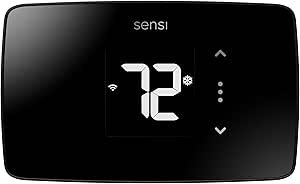 | Best Value for DIY Eco Scheduling | Model: ST25 | Connectivity: 2.4 GHz Wi-Fi | Controls: App, touch, voice | VIEW ON AMAZON | See Our Full Breakdown |
| Honeywell Home RTH9585WF1004 Wi-Fi Smart Color Thermostat |  | Best for Customizable On-Wall Controls | Connectivity: Wi-Fi | Display: Customizable color touchscreen | Programming: Flexible seven-day scheduling | VIEW ON AMAZON | See Our Full Breakdown |
| Google Nest Learning Thermostat (4th Gen) with Nest Temperature Sensor (2nd Gen), Obsidian |  | Best for Room-to-Room Comfort | Temperature control: Heating and cooling | Connectivity: Wi-Fi | System voltage: 24 volts | VIEW ON AMAZON | See Our Full Breakdown |
| Google Nest Smart Thermostat, Charcoal | 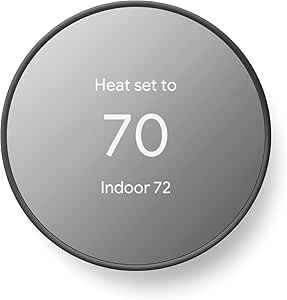 | Best for Beginners | Temperature control: Heating and cooling | Connectivity: Wi-Fi, 2.4 GHz and 5 GHz; Bluetooth Low Energy | Display: 2-inch LCD | VIEW ON AMAZON | See Our Full Breakdown |
| Honeywell Home T5 Smart Wi-Fi Thermostat |  | Best for Geofencing and Set Schedules | Model: RTH8800WF2022 | Temperature control: Heating and cooling | Compatible systems: Air conditioner, furnace, and heat pump | VIEW ON AMAZON | See Our Full Breakdown |
| Sensi Touch 2 Smart Thermostat (Wi-Fi, Alexa, Energy Star Certified) |  | Best for Adding Room Sensors | Temperature control: Heating and cooling | Compatible systems: Air conditioner, boiler, furnace, and heat pump | Connectivity: Wi-Fi | VIEW ON AMAZON | See Our Full Breakdown |
| Amazon Smart Thermostat |  | Best for Alexa Households | Model: S6ED3R | HVAC compatibility: Most 24V systems, including conventional forced air, heat pump, and radiant boiler | Wi-Fi: 2.4 GHz, 802.11 b/g/n; no 5 GHz support | VIEW ON AMAZON | See Our Full Breakdown |
| ecobee Smart Thermostat Essential |  | Best for Flexible Smart-Home Compatibility | Connectivity: Wi-Fi | Display: LCD touchscreen, 3.74 inches | Mounting: Wall mount | VIEW ON AMAZON | See Our Full Breakdown |
| Sensi ST55 Wi-Fi Smart Thermostat |  | Best for Straightforward Scheduling and Controls | Model: ST55 | Connectivity: Wi-Fi | Compatible platforms: Amazon Alexa, Apple HomeKit, Google Assistant, SmartThings, Vera | VIEW ON AMAZON | See Our Full Breakdown |
| YoLink Smart Thermostat for Heat Pumps, YS4003 |  | Best Dedicated ECO Mode for Heat Pumps | Model: YS4003 | Compatible system: Heat pump | Power and voltage: 24 VAC, 24 volts | VIEW ON AMAZON | See Our Full Breakdown |
| ecobee Smart Thermostat Premium with Wi-Fi, Siri and Alexa |  | Best Premium for Room-by-Room Comfort | Connectivity: Wi-Fi | Voice assistants: Siri and Alexa built in | Included accessory: SmartSensor | VIEW ON AMAZON | See Our Full Breakdown |
| smart thermostat with eco mode | Connectivity | Display | Power | Model |
|---|---|---|---|---|
| Honeywell TH9320WF5003 Wi-Fi P | Wi-Fi | 4.5-inch touchscreen | Hardwired, 24 volts | TH9320WF5003 |
| ecobee Smart Thermostat Enhanc | Wi-Fi | 4-inch LCD screen | Corded electric, 24 volts | — |
| Honeywell Home RTH9600WF Wi-Fi | Wi-Fi | Customizable color LCD touchscreen | 24 volts; one AAA battery required | RTH9600WF |
| Sensi Lite Wi-Fi Smart Thermos | 2.4 GHz Wi-Fi | — | Battery or C wire; 24 volts | ST25 |
| Honeywell Home RTH9585WF1004 W | Wi-Fi | Customizable color touchscreen | AC power supply | — |
| Google Nest Learning Thermosta | Wi-Fi | Touchscreen | Battery powered; one CR2 battery included | — |
| Google Nest Smart Thermostat | Wi-Fi, 2.4 GHz and 5 GHz; Bluetooth Low Energy | 2-inch LCD | Battery powered; two batteries included | — |
| Honeywell Home T5 Smart Wi-Fi | Wi-Fi | 4.95-inch LCD touchscreen | — | RTH8800WF2022 |
| Sensi Touch 2 Smart Thermostat | Wi-Fi | LCD touchscreen | — | — |
| Amazon Smart Thermostat | — | — | — | S6ED3R |
| ecobee Smart Thermostat Essent | Wi-Fi | LCD touchscreen, 3.74 inches | — | — |
| Sensi ST55 Wi-Fi Smart Thermos | Wi-Fi | 5-inch LED screen | 24 V AC; C-wire not required in most applications | ST55 |
| YoLink Smart Thermostat for He | YoLink LoRa | — | — | YS4003 |
| ecobee Smart Thermostat Premiu | Wi-Fi | — | — | — |
More Details on Our Top Picks
Honeywell TH9320WF5003 Wi-Fi Programmable Touchscreen Thermostat
The TH9320WF5003 suits households that want an explicit weekly plan and a dedicated energy-saving mode, rather than relying mainly on occupancy-based adjustments. Its seven-day programming lets you set different routines for each day, while Wi-Fi control through the Total Connect Comfort app makes it possible to change settings when plans shift. Compared with the ecobee Smart Thermostat Enhanced, it puts more emphasis on touchscreen controls, alerts, and scheduled temperature changes than on adapting to occupancy and humidity. That makes it a clearer fit for people who prefer predictable settings, but less compelling for those who want the thermostat to react automatically to who is home. A C wire is required, and professional installation is recommended; buyers should also check dual-fuel heat-pump compatibility before choosing it.
Pros:- Seven-day programming supports different weekday and weekend routines.
- Energy-saving mode gives schedule-focused households a direct way to limit heating and cooling.
- Wi-Fi app control and Alexa compatibility allow remote adjustments.
- Touchscreen displays comfort information, alerts, and reminders.
Cons:- Requires a C wire, which can add wiring work for some homes.
- Professional installation is recommended, making it less suited to a quick DIY replacement.
- Some dual-fuel heat pumps may require a fossil fuel kit.
Best for: Households with a C wire that want a wall touchscreen, Alexa control, and a distinct seven-day schedule with energy-saving settings.
Not ideal for: DIY installers seeking a simple setup, homes without a C wire, and owners of dual-fuel heat pumps who have not confirmed kit compatibility.
- Model:TH9320WF5003
- Connectivity:Wi-Fi
- Control:Touchscreen
- Display:4.5-inch touchscreen
- Programming:Seven-day
- Power:Hardwired, 24 volts
- Mounting:Wall mount
- Wiring requirement:C wire required
Our verdict“Choose this Honeywell if you want hands-on weekly scheduling and a clear energy-saving mode, and your wiring and HVAC setup are compatible.”
ecobee Smart Thermostat Enhanced
The ecobee Smart Thermostat Enhanced earns the leading spot for buyers who want eco-minded temperature control to respond to daily life, not just a fixed timetable. It adjusts settings around occupancy, schedules, preferences, and humidity, which can reduce unnecessary heating or cooling while accounting for comfort. Compared with the Honeywell TH9320WF5003, its approach is more adaptive and its smart-home support spans Alexa, Google Assistant, Apple HomeKit, and SmartThings. The included Power Extender Kit can also help in homes without a C wire, giving it a setup advantage over several Honeywell options here. The tradeoff is that room-by-room balancing requires separately purchased SmartSensors, and HVAC compatibility still needs checking. I’d pick it for broad automation and ecosystem flexibility, but not for buyers who want every room sensor included.
Pros:- Adjusts temperature based on occupancy, schedule, preferences, and humidity.
- Works with Alexa, Google Assistant, Apple HomeKit, and SmartThings.
- Includes a Power Extender Kit for some installations without a C wire.
- ENERGY STAR certified and compatible with a broad range of HVAC systems.
Cons:- SmartSensors for room-by-room comfort are sold separately.
- Homeowners need to confirm compatibility with their specific HVAC system.
- Adaptive features may be more than needed for buyers who prefer simple manual scheduling.
Best for: Homeowners seeking occupancy-aware energy saving, broad smart-home compatibility, and a way to install in some homes without a C wire.
Not ideal for: Buyers who need included room sensors for multi-room temperature balancing or want to skip HVAC compatibility checks.
- HVAC compatibility:Compatible with 90% of HVAC systems
- Connectivity:Wi-Fi
- Controls:App, Alexa, Google Assistant, Apple HomeKit, SmartThings
- Display:4-inch LCD screen
- Power:Corded electric, 24 volts
- Installation accessories:Power Extender Kit and Trim Kit included
- Certification:ENERGY STAR
- Warranty:3 years
Our verdict“Pick the ecobee Enhanced if you want occupancy-aware energy management and wide smart-home support, and are comfortable buying room sensors separately if needed.”
Honeywell Home RTH9600WF Wi-Fi Smart Color Thermostat
The RTH9600WF is a good match for buyers who want eco-minded scheduling supported by visible feedback. Its ENERGY STAR certification, energy tracking, and personalized tips make energy use part of the thermostat experience, while flexible programming and smart alerts help keep daily control in your hands. The customizable color touchscreen also displays indoor and outdoor temperature and humidity, giving it a more information-forward feel than the simpler LCD on the Sensi Lite ST25. It supports Alexa and Google Assistant, though the listed compatibility also includes Cortana and IFTTT. The main limitation is installation and system fit: it requires a C wire or compatible power adapter and does not work with 120–240V electric baseboard heat. I’d choose it for useful on-device information, not for homes that need baseboard compatibility or C-wire-free setup.
Pros:- ENERGY STAR certified with energy tracking and personalized tips.
- Customizable color touchscreen shows indoor and outdoor temperature and humidity.
- Flexible schedules and smart alerts support routine-based energy management.
- Remote app control and compatibility with Alexa and Google Assistant.
Cons:- Requires a C wire or compatible power adapter.
- Does not support 120–240V electric baseboard heat.
- Heating-only oil furnace systems require a C wire.
Best for: Homeowners with compatible forced-air, hot-water, steam, or heat-pump systems who want energy tips and temperature information on the thermostat itself.
Not ideal for: People with 120–240V electric baseboard heating, or households without a C wire or compatible power adapter.
- Model:RTH9600WF
- Connectivity:Wi-Fi
- Display:Customizable color LCD touchscreen
- Power:24 volts; one AAA battery required
- Wiring requirement:C wire required
- Compatible systems:Forced-air, hot water, steam, and heat pumps with electric backup
- Smart-home compatibility:Alexa, Google Assistant, Microsoft Cortana, IFTTT
- Mounting:Wall mount
Our verdict“Choose the RTH9600WF if on-screen climate details and energy guidance matter more to you than broad wiring flexibility.”
Sensi Lite Wi-Fi Smart Thermostat, Alexa Compatible, Energy Star Certified, ST25
The Sensi Lite is the straightforward pick for buyers who want core eco-oriented controls without a feature-heavy interface. Its flexible scheduling, geofencing, remote access, and energy usage reports give you several ways to limit heating or cooling when the home is empty. Compared with the ecobee Smart Thermostat Enhanced, it offers a more basic control experience and lacks the same occupancy-and-humidity-driven adjustments, but its built-in level and step-by-step instructions make it friendlier for DIY installation. The privacy commitment—that Sensi says it does not sell personal information or use thermostat activity for targeted advertising—may also appeal to data-conscious households. Check the wiring rules carefully: heat pumps and heat/cool-only systems need a C wire, and the thermostat uses 2.4 GHz Wi-Fi.
Pros:- DIY installation includes a built-in level and step-by-step instructions.
- Scheduling, geofencing, and remote app control support energy-conscious routines.
- ENERGY STAR certified with energy usage reports.
- Compatible with Alexa, Google Assistant, and SmartThings.
Cons:- Requires a C wire for heat pumps and heat/cool-only systems.
- Connects to 2.4 GHz Wi-Fi, which may not suit every network setup.
- Offers less adaptive occupancy and humidity control than the ecobee Smart Thermostat Enhanced.
Best for: DIY-minded homeowners who want app scheduling, geofencing, usage reports, and a simple setup for a compatible 24-volt system.
Not ideal for: Homes with heat pumps or heat/cool-only systems lacking a C wire, and households using only 5 GHz Wi-Fi.
- Model:ST25
- Connectivity:2.4 GHz Wi-Fi
- Controls:App, touch, voice
- Compatible assistants:Alexa, Google Assistant, SmartThings
- Power:Battery or C wire; 24 volts
- Batteries:Two AAA batteries included
- Compatible HVAC systems:Air conditioner, boiler, furnace, heat pump
- Warranty:3 years
Our verdict“Choose the Sensi Lite if you want DIY-friendly scheduling and geofencing rather than advanced adaptive temperature control.”
Honeywell Home RTH9585WF1004 Wi-Fi Smart Color Thermostat
The RTH9585WF1004 is for buyers who want a configurable touchscreen and detailed scheduling to anchor their energy-saving routine. Its seven-day programming, vacation holds, and monthly energy reports support deliberate changes at home or away, while Smart Response Technology and automatic heat-to-cool switching help manage comfort without constant manual changes. Compared with the Honeywell Home RTH9600WF, this model’s listed strengths lean more toward vacation scheduling and demand-response programs than personalized energy tips. Its customizable color screen can match a room, but that visual flexibility does not remove the wiring constraints: a C wire is required, and installation can be more involved than a basic thermostat swap. It also does not support electric baseboard heat. I’d favor it over the RTH9600WF when vacation holds and schedule control are priorities.
Pros:- Seven-day schedules and vacation holds support planned energy savings.
- Monthly energy reports provide feedback on usage.
- Customizable color touchscreen can be matched to home décor.
- Works with Alexa, Google Home, and the Honeywell app.
Cons:- Requires a C wire and may need an adapter in homes without one.
- Not compatible with 120–240V electric baseboard heating.
- Installation can be more complex than a plug-and-play thermostat.
Best for: Households with compatible forced-air, hot-water, steam, or heat-pump systems that want a customizable touchscreen, vacation holds, and scheduled energy management.
Not ideal for: Homes using 120–240V electric baseboard heat, or buyers seeking an easy installation without a C wire.
- Connectivity:Wi-Fi
- Display:Customizable color touchscreen
- Programming:Flexible seven-day scheduling
- Power:AC power supply
- Wiring requirement:C wire required
- Smart-home compatibility:Alexa, Google Home, Honeywell app
- Heating and cooling:Heating and cooling control
- Certification:ENERGY STAR
Our verdict“Pick the RTH9585WF1004 if you want a customizable touchscreen and vacation-focused scheduling, provided your system has compatible wiring.”
Google Nest Learning Thermostat (4th Gen) with Nest Temperature Sensor (2nd Gen), Obsidian
I’d choose this Nest when an eco mode needs to account for more than the temperature near the thermostat. Its learning schedule adapts to household preferences, while the included second-generation temperature sensor can help address rooms that run warmer or cooler than others. That gives it a practical advantage over the Google Nest Smart Thermostat, which relies on its own built-in temperature reading. App and voice control, plus broad 24V system support, make everyday adjustments convenient. The tradeoff is that learning behavior may take time to match a household’s routine, and HVAC compatibility still depends on the system and wiring. I’d pick this over the Honeywell Home T5 if room-to-room comfort matters more than setting a fixed seven-day schedule.
Pros:- Learns temperature preferences and adjusts schedules over time
- Includes a sensor to help manage hot and cold spots
- Works with most 24V heating and cooling systems
- Supports app and voice control
Cons:- Compatibility depends on the home’s HVAC system and wiring
- Adaptive scheduling may not suit buyers who prefer a fully fixed routine
- Room sensor benefits are limited in homes with even temperatures
Best for: Households with uneven temperatures between rooms that want an adaptive schedule and an included room sensor.
Not ideal for: Buyers who want a straightforward programmable schedule, have an incompatible HVAC setup, or do not need room-level temperature monitoring.
- Temperature control:Heating and cooling
- Connectivity:Wi-Fi
- System voltage:24 volts
- Display:Touchscreen
- Mounting:Wall mount
- Included sensor:Nest Temperature Sensor (2nd gen)
- Power:Battery powered; one CR2 battery included
- Color and material:Obsidian; aluminum
Our verdict“Choose this Nest if adaptive scheduling and an included sensor are more useful to you than a simpler, fixed schedule.”
Google Nest Smart Thermostat, Charcoal
This is the simpler Nest choice for buyers who want away-from-home temperature adjustments without paying attention to an adaptive learning routine. Its Google Home app scheduling and away adjustments provide a clear route to reducing heating or cooling when the house is empty, while DIY installation typically takes 30 minutes or less. Compared with the Nest Learning Thermostat, it skips the included room sensor and learning schedule, so it suits homes where a basic schedule is enough. The ENERGY STAR certification supports its energy-saving focus, but some heat pumps, zone-controlled systems, and other setups may need a C wire or power accessory. I’d favor the Honeywell Home T5 instead for buyers who want geofencing and a seven-day schedule.
Pros:- Adjusts temperature when household members are away
- Scheduling and remote control are available through the Google Home app
- DIY installation typically takes 30 minutes or less
- ENERGY STAR certified
Cons:- Some systems require a C wire or compatible power accessory
- No included room sensor for addressing hot and cold spots
- Remote features and notifications depend on working internet and Wi-Fi
Best for: First-time smart thermostat buyers with a compatible system who want app scheduling and away adjustments without extra room sensors.
Not ideal for: Households with significant room-to-room temperature differences or HVAC systems that need a C wire they do not have.
- Temperature control:Heating and cooling
- Connectivity:Wi-Fi, 2.4 GHz and 5 GHz; Bluetooth Low Energy
- Display:2-inch LCD
- System voltage:24 volts
- Mounting:Wall mount
- Compatible assistants:Google Assistant and Matter-certified voice assistants
- Power:Battery powered; two batteries included
- Color and material:Charcoal; plastic
Our verdict“Pick this Nest for uncomplicated app-based schedules and away settings, but choose the Learning Thermostat if adaptive routines or room sensing matter more.”
Honeywell Home T5 Smart Wi-Fi Thermostat
I’d put the Honeywell Home T5 on the shortlist for buyers who want eco-minded behavior tied to both a planned week and whether anyone is home. Its seven-day scheduling gives precise control over daily routines, while geofencing and auto home/away modes can adjust settings as household members come and go. That makes its approach more explicitly schedule-driven than the Google Nest Learning Thermostat, which adapts based on preferences. The T5 also supports Alexa, Google Assistant, and Apple HomeKit, giving it broader listed platform options than the Amazon Smart Thermostat. The catch is power and system fit: a C wire or adapter may be needed, and heating-only oil furnace systems without a C wire are not supported. Its touchscreen is useful, but it is not a substitute for checking wiring first.
Pros:- Combines seven-day programming with geofencing and auto home/away modes
- Supports Alexa, Google Assistant, and Apple HomeKit
- ENERGY STAR certified
- Touchscreen provides direct control at the wall
Cons:- A C wire or power adapter may be required
- Not compatible with heating-only oil furnace systems without a C wire
- Geofencing-based adjustments may not suit households with unpredictable routines
Best for: Households with regular weekly routines that want geofencing, explicit seven-day schedules, and Apple HomeKit support.
Not ideal for: Owners of heating-only oil furnace systems without a C wire, or anyone unwilling to check wiring and system compatibility before installation.
- Model:RTH8800WF2022
- Temperature control:Heating and cooling
- Compatible systems:Air conditioner, furnace, and heat pump
- Connectivity:Wi-Fi
- Scheduling:7-day programmable
- Smart features:Geofencing and auto home/away mode
- Display:4.95-inch LCD touchscreen
- Power and wiring:24 volts; C wire or power adapter may be required
- Certification:ENERGY STAR
Our verdict“Choose the T5 if you want scheduled energy control with geofencing and your wiring and HVAC system meet its requirements.”
Sensi Touch 2 Smart Thermostat (Wi-Fi, Alexa, Energy Star Certified)
The Sensi Touch 2 makes the most sense for buyers who want to build toward more even temperatures rather than rely on a single thermostat reading. It can connect with up to 15 optional room sensors, giving it greater expansion potential than the Google Nest Learning Thermostat package, which includes one sensor. Its privacy-focused approach and app-guided DIY installation are other reasons to shortlist it, while ENERGY STAR certification and programmable controls support energy-conscious routines. The key compromise is the C-wire requirement: unlike some alternatives that may work with an accessory, this model requires a common wire. Sensors are also sold separately, so room-by-room coverage takes additional planning. I’d choose it over the Honeywell Home T5 when sensor expansion and privacy carry more weight than geofencing.
Pros:- Can integrate with up to 15 optional room sensors
- Supports Alexa, Google Assistant, and SmartThings
- App-guided DIY installation
- Privacy policy states personal information is not sold to third parties
Cons:- Requires a C wire for installation
- Room sensors are sold separately
- Sensor expansion adds setup and compatibility decisions
Best for: Homeowners with a C wire who want privacy-conscious app control and the option to add multiple room sensors.
Not ideal for: Renters or owners without a C wire, and buyers who want room sensors included rather than purchased separately.
- Temperature control:Heating and cooling
- Compatible systems:Air conditioner, boiler, furnace, and heat pump
- Connectivity:Wi-Fi
- Power requirement:Common wire (C wire) required
- Display:LCD touchscreen
- Control methods:App, touchscreen, and voice
- Compatible controllers:Amazon Alexa, Google Assistant, and SmartThings
- Dimensions:5.6 x 3.25 x 0.77 inches
- Mounting:Wall mount
Our verdict“Pick the Sensi Touch 2 if you have a C wire and value privacy with the option to expand room sensing over time.”
Amazon Smart Thermostat
For a home already organized around Alexa, this thermostat keeps eco-minded temperature control close to existing routines: schedules, vacation mode, and remote settings are managed through the Alexa app. Its humidity sensing and energy dashboard add useful context beyond basic temperature changes, while emergency heat mode suits compatible systems that need it. Compared with the Google Nest Smart Thermostat, this is a more Alexa-centered option and does not list the same broad voice-platform support. It also lacks the room-sensor expansion offered by the Sensi Touch 2. Wiring can be a barrier: it requires a C wire or a separately sold power adapter, and its Wi-Fi supports 2.4 GHz only. Alexa voice control also needs a separate compatible device.
Pros:- Supports schedules and vacation mode for planned energy-conscious settings
- Alexa app allows remote control
- Includes humidity sensing, emergency heat mode, and an energy dashboard
- Supports most 24V systems, including forced air, heat pumps, and radiant boilers
Cons:- Requires a C wire or separately sold power adapter
- Does not support 5 GHz Wi-Fi
- Voice control requires a separate Alexa-enabled device
Best for: Alexa households with a compatible 24V HVAC system, 2.4 GHz Wi-Fi, and a C wire or power adapter.
Not ideal for: Homes using 5 GHz-only Wi-Fi, buyers without an Alexa device for voice control, or people seeking included room sensors.
- Model:S6ED3R
- HVAC compatibility:Most 24V systems, including conventional forced air, heat pump, and radiant boiler
- Wi-Fi:2.4 GHz, 802.11 b/g/n; no 5 GHz support
- Power requirement:C wire or separately sold power adapter kit
- Controls:Three touch buttons, Alexa app, and compatible Alexa devices
- Features:Schedules, humidity sensing, emergency heat mode, vacation mode, energy dashboard, and automatic air filter ordering
- Dimensions:3.56 x 3.56 x 0.84 inches
- Certifications:ENERGY STAR and ECOLOGO Gold
- Included items:Thermostat, installation tool, wall plate, cosmetic plate, and quick start guide
Our verdict“Choose the Amazon Smart Thermostat if Alexa is already central to your home and its wiring and Wi-Fi requirements match your setup.”
ecobee Smart Thermostat Essential
The ecobee Smart Thermostat Essential suits buyers who want eco-minded scheduling without committing to a more feature-heavy model. Its eco+ features, auto-away adjustments, and auto-scheduling can reduce unnecessary heating or cooling, while humidity detection and fan control add useful comfort options. It works with Apple HomeKit, Google Assistant, and Alexa, giving it broader platform flexibility than the heat-pump-only YoLink YS4003. Compared with the ecobee Smart Thermostat Premium, this Essential model skips the included SmartSensor, built-in air-quality monitor, and smart speaker, so it is a simpler choice rather than a whole-home sensing hub. DIY installation is part of its appeal, but check HVAC compatibility first: a Power Extender Kit and trim kit are sold separately, and the SmartSensor is an extra purchase.
Pros:- Eco+ features, auto-away, and auto-scheduling can limit heating or cooling when it is not needed.
- Supports Apple HomeKit, Google Assistant, and Amazon Alexa.
- Color touchscreen combines local control with app-based management.
- Designed for DIY installation and compatible with most 24 VAC HVAC systems.
Cons:- HVAC compatibility needs checking before purchase.
- Power Extender Kit and trim kit are sold separately.
- SmartSensor is not included.
Best for: DIY-minded homeowners with a compatible 24 VAC system who want eco scheduling and broad voice-platform support without premium sensing features.
Not ideal for: Buyers who need an included room sensor, built-in air-quality monitoring, or installation accessories in the box; those seeking those extras should compare the ecobee Smart Thermostat Premium.
- Connectivity:Wi-Fi
- Display:LCD touchscreen, 3.74 inches
- Mounting:Wall mount
- Power source:Battery powered
- Compatible systems:Most 24 VAC HVAC systems
- Smart-home compatibility:Apple HomeKit, Google Assistant, Amazon Alexa
- Energy savings claim:Up to 23% compared with a hold of 72°F/22°C
- Additional features:Auto-away mode, auto-scheduling, fan control, indoor humidity detection
Our verdict“Choose the Essential for eco scheduling and wide smart-home compatibility, but pick the ecobee Premium if included room sensing and air-quality features matter more.”
Sensi ST55 Wi-Fi Smart Thermostat
The Sensi ST55 is a practical pick for households that want scheduled temperature changes and remote access without relying on a touchscreen-first setup. Its button, app, and voice controls give occupants several ways to adjust settings, while usage reports, equipment alerts, and filter reminders help connect everyday operation with maintenance. Compared with the ecobee Smart Thermostat Essential, the Sensi puts more emphasis on familiar physical controls and reports than on named eco+ and auto-away features. It supports several platforms, including SmartThings and Vera, and its installation guide and built-in level can make a DIY replacement less fiddly. The tradeoff is that C-wire needs depend on the existing HVAC setup, so “not required in most applications” is not a guarantee for every home; check the wiring before choosing it.
Pros:- Flexible scheduling and remote access support temperature management away from home.
- Button, app, touch, and voice controls offer several ways to make adjustments.
- Usage reports, equipment alerts, and filter reminders add practical operating feedback.
- DIY guide and built-in level support a more manageable installation.
Cons:- C-wire requirements vary by system despite not being needed in most applications.
- The product data does not specify a dedicated ECO mode or automatic away feature.
- Its 24 V AC power requirement means system compatibility should be checked.
Best for: Homeowners replacing a compatible thermostat who want physical buttons, flexible schedules, remote control, and maintenance reminders across several smart-home platforms.
Not ideal for: Buyers who want a dedicated ECO mode or are unwilling to check wiring; the C-wire requirement can vary by HVAC installation.
- Model:ST55
- Connectivity:Wi-Fi
- Compatible platforms:Amazon Alexa, Apple HomeKit, Google Assistant, SmartThings, Vera
- Supported HVAC equipment:Air conditioner, boiler, furnace, heat pump
- Power:24 V AC; C-wire not required in most applications
- Display:5-inch LED screen
- Controls:Buttons, app, touch, voice
- Mounting:Wall mount
- Included batteries:2 AA batteries
Our verdict“Pick the ST55 if you value familiar controls, reports, and broad platform support more than a clearly specified dedicated eco mode.”
YoLink Smart Thermostat for Heat Pumps, YS4003
The YoLink YS4003 earns its place for buyers with a heat pump who want an explicitly named ECO mode alongside programmable schedules. App control lets users check or change temperature and operating mode remotely, while the thermostat’s buttons provide a local alternative. Its focus is narrower than the Sensi ST55, which supports several types of HVAC equipment and more smart-home platforms; YoLink is designed for heat pumps and uses the YoLink LoRa connection. That specialization can make it a fit for the right system, but it rules out many buyers. The included YoLink Hub is required, as is an internet connection, so this is not a standalone thermostat purchase. Choose it for the dedicated away-oriented ECO feature, not for broad HVAC compatibility or a hub-free setup.
Pros:- Dedicated ECO mode can adjust temperatures when the home is unoccupied.
- Auto-scheduling supports programmed temperature changes.
- App control works with Android and iOS for remote adjustments.
- Includes a YoLink Hub, lithium battery, and quick start guide.
Cons:- Designed for heat-pump systems only.
- Requires the YoLink Hub and an internet connection.
- Uses YoLink LoRa connectivity rather than the Wi-Fi connection listed for options such as the Sensi ST55.
Best for: Heat-pump owners who want app-based temperature changes, programmable schedules, and an ECO mode for away periods.
Not ideal for: Homes with furnaces, boilers, or other non-heat-pump systems, and buyers who do not want to depend on a YoLink Hub and internet connection.
- Model:YS4003
- Compatible system:Heat pump
- Power and voltage:24 VAC, 24 volts
- Connectivity:YoLink LoRa
- Control methods:App and buttons
- Mobile compatibility:Android, iOS
- Features:Auto-scheduling, ECO mode
- Display and mounting:LED display; wall mount
- Hub requirement:YoLink Hub and internet connection required
Our verdict“Choose the YS4003 if you have a compatible heat pump and want a dedicated ECO mode, but skip it if you need wider HVAC support or a hub-free setup.”
ecobee Smart Thermostat Premium with Wi-Fi, Siri and Alexa
The ecobee Smart Thermostat Premium is the most feature-rich choice here for households where one hallway temperature reading does not reflect comfort across the home. Its included SmartSensor helps account for room occupancy, while radar sensing can learn routines and preheat or precool; that goes beyond the simpler scheduling and ECO controls of the YoLink YS4003. The built-in air-quality monitor, Siri and Alexa speaker, and support for compatible ecobee doorbell camera features make it a broader home device, not just a thermostat. It also comes with a Power Extender Kit and trim kit, unlike the ecobee Essential, and lists compatibility with 95% of HVAC systems. The tradeoffs are feature complexity and dependencies: Siri requires an Apple home hub, and some security features require a subscription.
Pros:- Included SmartSensor can help address room-to-room temperature differences.
- Radar occupancy sensing can learn routines and support preheating or precooling.
- Built-in air-quality monitoring provides alerts and filter reminders.
- Power Extender Kit and trim kit are included, with a three-year warranty listed.
Cons:- Siri requires an Apple home hub.
- Some security features require an ecobee Smart Security subscription.
- Its speaker, sensing, and air-quality functions may be more than buyers wanting basic eco scheduling need.
Best for: Households with uneven room temperatures that want an included room sensor, air-quality alerts, voice control, and broader ecobee functions.
Not ideal for: Buyers seeking a simple thermostat focused mainly on eco scheduling, or those who do not want Apple home-hub or subscription requirements tied to some features.
- Connectivity:Wi-Fi
- Voice assistants:Siri and Alexa built in
- Included accessory:SmartSensor
- Air-quality monitor:Built in
- HVAC compatibility:Compatible with 95% of HVAC systems
- Installation accessories:Power Extender Kit and trim kit included
- Warranty:3 years
- Energy certification:ENERGY STAR certified
Our verdict“Choose the Premium for room-aware comfort and built-in monitoring, while the ecobee Essential is a simpler fit if eco scheduling is your main priority.”

How We Picked
I judged these thermostats by how clearly their eco features support practical energy management, including away behavior, scheduling, learning, and room sensing where applicable. I also weighed HVAC compatibility, setup demands, control usability, and the value of extra hardware such as sensors. A thermostat can only help if it works with the home’s wiring and heating or cooling system, so specialized fit counts more than a long feature list.
The ranking favors models that combine useful energy-saving controls with a manageable ownership experience for a broad range of households. That puts ecobee Smart Thermostat Enhanced first for balance, while the Nest Learning model ranks highly for buyers who favor adaptive routines. Simpler or more specialized picks rank lower for general use but may be the better choice for Alexa-first homes, basic installations, or compatible heat pumps. I treat eco mode as one part of a system: none of these models can promise a specific bill reduction across different homes and habits.
Factors to Consider When Choosing Smart Thermostat With Eco Mode
Eco mode is not a uniform feature name or a guarantee of savings. I would choose by first matching the thermostat to the HVAC system, then deciding how much automation and room-level control the household will actually use.
Match the Thermostat to Your HVAC System
Check the system type and wiring before comparing app features. A conventional furnace-and-air-conditioner setup has different requirements from a heat pump, multi-stage equipment, or a system with separate heating and cooling zones. Some installations also need a C-wire or an approved power adapter, and skipping that check can lead to extra work or unreliable operation. Do not assume a thermostat marketed as smart supports every configuration. If you rent, live in a condo, or have a less common system, confirm compatibility with the manufacturer’s checker or an HVAC professional before buying.
Decide What Eco Mode Should Do
Eco behavior may mean using a preset away temperature, following a schedule, or adjusting settings based on occupancy or learned routines. Those approaches suit different households: fixed schedules are predictable, while adaptive behavior can help when daily plans change. Check what happens when someone stays home unexpectedly, returns early, or overrides the setting at the wall. A mode that is too aggressive may trade comfort for energy reduction, prompting frequent manual corrections. Choose controls you can understand and adjust, rather than relying on a label alone.
Consider Room Sensors Only If They Solve a Real Problem
A thermostat in a hallway may not reflect conditions in a sunny bedroom or a frequently used living room. Remote sensors can give a system more information about selected rooms, but they do not create separate HVAC zones or direct airflow to a cold room. Check whether sensors are included, sold separately, or limited to particular models and ecosystems. Decide which rooms matter at the times you use them; a sensor in an unused space may add little value. If the home has persistent hot and cold spots, also investigate insulation, vents, and duct balance.
Choose Between Learning and Manual Scheduling
Learning thermostats can adapt routines, but their behavior may take time to match a household and can feel less predictable than a schedule set by hand. Manual schedules put the owner in control and can suit people with regular workdays or shared homes. Before paying for more automation, ask whether occupants will maintain a schedule and whether everyone can access the controls. For households with irregular shifts, frequent visitors, or changing occupancy, occupancy-aware features may be more useful than a rigid timetable. The best choice is the one whose behavior people will leave enabled.
Check App, Voice, and Privacy Expectations
Remote control and voice assistance can make temperature changes easier, but they also tie daily use to an app, account, network, or smart-home platform. Confirm which assistants and services are supported if your household already relies on Alexa, Google Home, or Siri. Think about who needs access: family members, guests, or a property manager may need different levels of control. Review the setup and data settings before linking a thermostat to other services. A dependable wall interface remains useful if the internet is down or a phone is unavailable.
Weigh Installation Effort Against Long-Term Convenience
Some buyers can install a thermostat themselves, while others may need wiring changes or professional help, especially with complex equipment. Read the installation requirements before selecting a model based on appearance or automation. A simpler unit can be the better fit if it avoids added hardware and supports the household’s actual system. Paying more makes sense when a premium feature addresses a specific need, such as sensing a distant room or managing a compatible heat pump. Do not count on savings alone to justify a more complex setup; compare comfort, control, and installation demands too.
Frequently Asked Questions
Does every smart thermostat on this list have a dedicated eco mode?
No. Models can use different names and methods for energy-saving behavior, such as away settings, schedules, learning, or occupancy-related adjustments. Those functions are not interchangeable, and a product’s use of the word “smart” does not confirm it has a specific eco preset. Check the exact model’s current feature documentation and app controls before choosing. If you want a fixed away temperature rather than adaptive behavior, verify that exact workflow.
How can I tell whether one of these thermostats will work with my heat pump?
Start with the thermostat’s compatibility information for your specific heat-pump configuration, including auxiliary or emergency heat and the wiring terminals in use. Heat pumps can require settings that differ from conventional furnace systems, so a general compatibility claim may not answer every question. The YoLink YS4003 is positioned for heat-pump use, but you should still confirm its support for your equipment. Photograph the existing wiring and consult the manufacturer’s checker or an installer if the labels are unclear. Do not buy based only on the thermostat’s appearance or smart-home features.
Is a learning thermostat better than a scheduled thermostat for an irregular routine?
It can be, if the model’s adaptive features match how the household comes and goes and occupants are comfortable with automatic changes. A learning system may need time to interpret routines, while a schedule follows settings you choose and can be easier to predict. For a household with changing shifts or frequent guests, look closely at how away behavior is triggered and how easy it is to override. If several people use the home, shared habits may be less consistent than a thermostat expects. The best fit depends on whether convenience or direct control matters more.
Will adding a room sensor fix uneven temperatures throughout my home?
A sensor can help a compatible thermostat respond to temperatures in a selected room, which may improve comfort when the main thermostat sits in a poor location. It cannot make a single-zone HVAC system deliver different temperatures independently to separate rooms. Persistent temperature differences may come from ductwork, insulation, sun exposure, or airflow restrictions. Check whether the sensor is included with the thermostat you are considering and how the system uses its readings. Treat it as a way to inform control, not a substitute for correcting building or HVAC problems.
Should I choose a thermostat with more features if my main goal is energy savings?
Not automatically. Extra sensors, voice controls, or automation are useful only when they address a real household need and remain configured correctly. A straightforward thermostat with a schedule that occupants follow may serve some homes better than a feature-rich model whose settings are rarely used. Focus on compatibility, the eco controls you will keep active, and how easily household members can adjust them. If a premium feature solves a specific comfort or system-control problem, it may justify the added complexity. Avoid assuming that a longer feature list guarantees lower energy use.
Conclusion
For most households seeking a capable smart thermostat with eco mode, I recommend the ecobee Smart Thermostat Enhanced as the best overall balance of energy-minded controls and flexibility. Buyers who want a more adaptive routine should look at the Google Nest Learning Thermostat (4th Gen), while the Amazon Smart Thermostat is the best value-style fit for homes already centered on Alexa and simple controls. For beginners, I would prioritize an easy-to-understand schedule and confirmed wiring compatibility; the Sensi Lite is a sensible place to start. Choose the ecobee Smart Thermostat Premium as the best premium option when its added capabilities matter to your household, and consider the YoLink YS4003 for specific heat-pump needs after checking system support. In every case, let HVAC compatibility and the way your household lives outrank the number of smart features.
Black Friday Picks

Sonos Era 100 SL Wireless Speakers, Black, Pack of 2
As an affiliate, we earn on qualifying purchases.