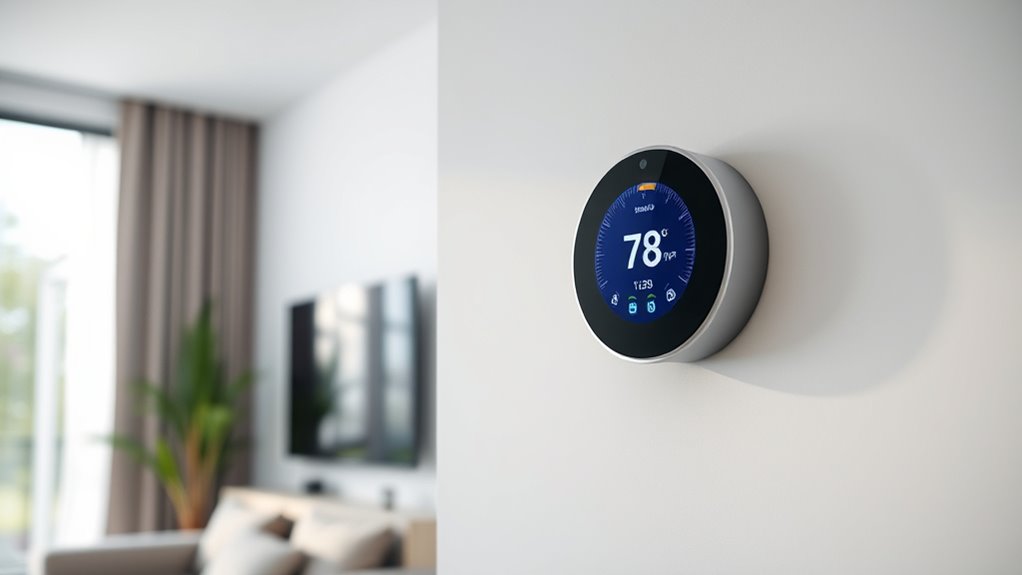

If you’re searching for a smart thermostat with occupancy sensors, you’re likely looking to boost energy efficiency and comfort. The ecobee Smart Thermostat Premium stands out as the best overall choice for its advanced sensor array and air quality features. The Google Nest Learning Thermostat offers seamless integration with existing smart home systems, while the Honeywell Home T9 provides great value with flexible room sensors. These options highlight the main tradeoffs: higher-end models offer more sensors and smarter features but come at a premium, while budget-friendly picks may lack advanced automation. Continue reading for a detailed comparison and help finding the best fit for your home setup.

Get home appliances delivered free with Prime
- Fast, free delivery on millions of items
- Prime Video, Amazon Music and more included
- Member-only deals all year
Key Takeaways
- The most effective occupancy sensors are those integrated with smart home ecosystems, offering better automation and responsiveness.
- Higher-priced models generally include more sensors, broader compatibility, and additional features like air quality monitoring.
- Budget options can still deliver essential occupancy detection but may lack advanced automation or multi-room sensing capabilities.
- Compatibility with voice assistants and existing smart home platforms is vital for seamless integration and control.
- Sensor placement and calibration impact the effectiveness of occupancy detection, making setup an important consideration.
| ecobee Smart Thermostat Premium with Smart Sensor and Air Quality Monitor |  | Best Overall | Occupancy sensing: Built-in radar technology plus included SmartSensor | Room sensor: ecobee SmartSensor included | Energy certification: ENERGY STAR certified | VIEW ON AMAZON | See Our Full Breakdown |
| Honeywell Home T9 WiFi Smart Thermostat with 1 Smart Room Sensor |  | Best Multi-Room Value | Included sensor: 1 battery-powered Smart Room Sensor | Sensor capability: Detects occupied rooms and can focus comfort where people are | Sensor range: Up to 200 ft stated range, depending on home construction | VIEW ON AMAZON | See Our Full Breakdown |
| Aqara Smart Thermostat W200 with Apple Adaptive Temperature and Built-in Radar Sensor |  | Best for Apple Home and Matter | Occupancy sensing: Built-in mmWave radar presence detection | Display: 4-inch full-color touchscreen with curved glass | Smart-home standard: Matter 1.4 | VIEW ON AMAZON | See Our Full Breakdown |
| Honeywell Home X7S Smart Programmable Wi-Fi Thermostat with Humidity Monitoring |  | Best Large-Screen Honeywell Pick | Occupancy sensing: Advanced occupancy and presence detection with Auto Away enablement | Display: 4.3-inch customizable touchscreen | Energy certification: ENERGY STAR certified | VIEW ON AMAZON | See Our Full Breakdown |
| Sensi Touch 2 Smart Thermostat with Touchscreen Color Display |  | Best Budget-Friendly Sensor-Ready Pick | Sensor compatibility: Works with Sensi Room Sensors | Connectivity: Wi-Fi | Display: Color touchscreen | VIEW ON AMAZON | See Our Full Breakdown |
| ecobee Smart Thermostat Essential – Energy Star Certified programmable Wi-Fi Thermostat – Works with Siri, Alexa, and Google Assistant |  | Best Overall for Versatile Occupancy Sensing and Energy Savings | Compatibility: Most 85% of HVAC systems | Wi-Fi: Yes | C-wire requirement: No (with optional PEK) | VIEW ON AMAZON | See Our Full Breakdown |
| Honeywell Home X8S Premium Smart Wi-Fi Thermostat with Sensor and Video Doorbell Access |  | Best for Customizable Display and Integrated Video Features | Display: 5-inch touchscreen | Connectivity: Wi-Fi 2.4/5 GHz, 802.11ax | Compatibility: Up to 3 heat/2 cool systems | VIEW ON AMAZON | See Our Full Breakdown |
| ecobee Smart Thermostat Enhanced – Programmable Wifi Thermostat – Works with Siri, Alexa, Google Assistant – Energy Star Certified – Smart Home |  | Best for Advanced Learning and Room-Specific Comfort | Compatibility: Most 90% of HVAC systems | Wi-Fi: Yes | C-wire: Included or required | VIEW ON AMAZON | See Our Full Breakdown |
| Honeywell Home X7S Smart Programmable Wi-Fi Thermostat with Humidity Monitoring, 4.3″ Customizable Touchscreen Display, Sensor Feature, Energy Star – Works w/Alexa, Matter, Apple, Google |  | Best for Humidity Monitoring and Auto Occupancy Adjustment | Display: 4.3-inch touchscreen | Connectivity: Wi-Fi, Alexa, Matter, Apple, Google | Compatibility: Up to 3 heat/2 cool systems | VIEW ON AMAZON | See Our Full Breakdown |
| Google Nest Learning Thermostat (4th gen) + Nest Temperature Sensor (2nd gen) – Obsidian |  | Best for Learning and Adaptive Comfort in a Sleek Design | Compatibility: Most 24V systems | Display Size: 60% larger | Sensors: Nest Temperature Sensor included | VIEW ON AMAZON | See Our Full Breakdown |
| smart thermostat with occupancy sensor | Energy certification | Display | Compatibility | C-wire |
|---|---|---|---|---|
| ecobee Smart Thermostat Premiu | ENERGY STAR certified | Large LCD display with metal-sided design | Compatible with most 24VAC HVAC systems, including furnaces, AC, heat pumps, boilers, PTACs, and fan coil units | — |
| Honeywell Home T9 WiFi Smart T | ENERGY STAR certified | — | — | — |
| Aqara Smart Thermostat W200 wi | — | 4-inch full-color touchscreen with curved glass | — | Aqara C-Wire Adapter sold separately for systems without a C-wire |
| Honeywell Home X7S Smart Progr | ENERGY STAR certified | 4.3-inch customizable touchscreen | — | — |
| Sensi Touch 2 Smart Thermostat | ENERGY STAR certified | Color touchscreen | — | — |
| ecobee Smart Thermostat Essent | Energy Star | Color touchscreen | Most 85% of HVAC systems | — |
| Honeywell Home X8S Premium Sma | ENERGY STAR | 5-inch touchscreen | Up to 3 heat/2 cool systems | Required |
| ecobee Smart Thermostat Enhanc | Energy Star | — | Most 90% of HVAC systems | Included or required |
| Honeywell Home X7S Smart Progr | Energy Star | 4.3-inch touchscreen | Up to 3 heat/2 cool systems | Required |
| Google Nest Learning Thermosta | — | — | Most 24V systems | Most homes, no in most cases |
More Details on Our Top Picks
ecobee Smart Thermostat Premium with Smart Sensor and Air Quality Monitor
ecobee Smart Thermostat Premium earns my top spot because it treats occupancy as both a thermostat feature and a room-comfort feature. The included SmartSensor gives it an advantage over the Sensi Touch 2, which needs separate sensor purchases before it can manage rooms as well. Compared with the Honeywell Home T9, ecobee adds a richer screen, built-in air quality monitoring, voice assistant support, and radar-based occupancy at the thermostat. That broader feature set makes it better for homes where comfort, alerts, and automation all matter. The tradeoff is complexity: it costs more, has more settings to sort through, and some Apple features need a home hub. I would rank it highest for buyers who want strong sensor-driven comfort without building the system piece by piece.
Pros:- Includes a SmartSensor for room-based comfort out of the box
- Built-in radar occupancy sensing at the thermostat
- Air quality monitor and filter reminders add practical home-health context
- Works with Siri, Alexa, Google Assistant, HomeKit, and SmartThings
Cons:- More expensive and more complex than simpler sensor-ready thermostats
- Siri support requires an Apple home hub
- Some users may not need the speaker, doorbell view, or air quality extras
Best for: Households with uneven room temperatures that want an included room sensor, broad smart-home support, and extra monitoring features in one thermostat.
Not ideal for: Buyers who only want simple app scheduling, since the feature set and price are more than a basic occupancy setup requires.
- Occupancy sensing:Built-in radar technology plus included SmartSensor
- Room sensor:ecobee SmartSensor included
- Energy certification:ENERGY STAR certified
- Estimated savings:Up to 26% per year on heating and cooling costs
- Compatibility:Compatible with most 24VAC HVAC systems, including furnaces, AC, heat pumps, boilers, PTACs, and fan coil units
- C-wire support:Power Extender Kit included for homes without a C-wire
- Smart assistants:Works with Siri, Alexa, Google Assistant, HomeKit, and SmartThings
- Display:Large LCD display with metal-sided design
- Warranty:3-year manufacturer warranty
Our verdict“This is my pick for buyers who want the strongest all-around occupancy-sensing thermostat package without adding sensors later.”
Honeywell Home T9 WiFi Smart Thermostat with 1 Smart Room Sensor
Honeywell Home T9 is the value play for buyers who care most about room occupancy and room priority. It includes one Smart Room Sensor, so it starts ahead of the Sensi Touch 2, which needs sensors bought separately. It is less feature-packed than the ecobee Smart Thermostat Premium, since it skips air quality monitoring, built-in speaker features, and the more polished premium interface. What it does well is practical: the sensor can detect where people are and help the thermostat focus comfort there, with a long stated range of up to 200 feet. The catch is that a C-wire is required, electric baseboard heat is out, and more rooms mean buying more sensors. I would choose it when room comfort matters more than having the flashiest control panel.
Pros:- Includes one Smart Room Sensor for occupancy-aware room focus
- Sensor range is rated up to 200 feet depending on construction
- Supports multi-room focus with added sensors
- Works with Alexa, Apple HomeKit, Google Assistant, and the Resideo app
Cons:- Requires a C-wire or the included power adapter setup
- Additional rooms require additional sensor purchases
- Does not work with electric baseboard heat
Best for: Families who want the thermostat to prioritize bedrooms, living rooms, or other occupied spaces without paying for a premium all-in-one model.
Not ideal for: Homes with electric baseboard heat or buyers who want built-in air quality monitoring and premium display features.
- Included sensor:1 battery-powered Smart Room Sensor
- Sensor capability:Detects occupied rooms and can focus comfort where people are
- Sensor range:Up to 200 ft stated range, depending on home construction
- Energy certification:ENERGY STAR certified
- Smart assistants:Amazon Alexa, Apple HomeKit, Google Assistant, and more
- Compatible systems:Forced air, hot water and steam, and heat pumps with electric backup
- Not compatible with:Electric baseboard heat, 120-240V
- Power requirement:C-wire required; low-voltage power adapter included
- Control method:Resideo app, touchscreen, and voice assistants
Our verdict“The T9 is the practical buy for multi-room occupancy comfort at a lower commitment than a premium thermostat.”
Aqara Smart Thermostat W200 with Apple Adaptive Temperature and Built-in Radar Sensor
Aqara Smart Thermostat W200 is the most automation-heavy pick here, and its built-in mmWave radar gives it a different occupancy profile than sensor-dependent models like the Sensi Touch 2 or Honeywell Home T9. Instead of relying only on remote room sensors, it can detect real presence near the thermostat and feed that into automations. It also stands apart from the ecobee Smart Thermostat Premium by acting as a Matter controller, Thread border router, and Zigbee hub, which makes it more of a smart-home control point than a thermostat alone. The downside is ecosystem dependence: Apple Adaptive Temperature needs newer Apple hardware and software, Clean Energy Guidance is limited to the contiguous U.S., and some controls need optional Aqara accessories. This is powerful, but only for buyers who will use the platform depth.
Pros:- Built-in mmWave radar detects presence rather than basic motion
- Matter 1.4 support enables local control across major platforms
- Works as a Zigbee hub, Matter controller, and Thread border router
- Large 4-inch touchscreen can also show compatible Aqara doorbell and lock controls
Cons:- Apple Adaptive Temperature requires Apple TV or HomePod plus current Apple devices
- Clean Energy Guidance is limited to the contiguous U.S.
- C-wire adapter and W100 wireless sensor are sold separately
Best for: Apple Home or Matter-focused smart-home owners who want presence sensing, local control, and hub features built into the thermostat.
Not ideal for: Buyers who want the simplest thermostat-and-sensor setup, since many of its best features depend on Apple, Aqara, or Matter ecosystems.
- Occupancy sensing:Built-in mmWave radar presence detection
- Display:4-inch full-color touchscreen with curved glass
- Smart-home standard:Matter 1.4
- Hub features:Built-in Zigbee hub, Matter controller, and Thread border router
- Wi-Fi:Dual-band 2.4 GHz and 5 GHz
- Platform support:Apple Home, Siri, Google Home, Amazon Alexa, Samsung SmartThings, and Home Assistant via Aqara bridge features
- HVAC compatibility:Designed for about 85% of HVAC systems, including furnaces, air conditioners, heat pumps, boilers, and PTAC units
- C-wire:Aqara C-Wire Adapter sold separately for systems without a C-wire
- Apple energy features:Adaptive Temperature and Clean Energy Guidance through Apple Home with stated requirements
Our verdict“The W200 is best for smart-home builders who want occupancy sensing tied into Apple Home, Matter, Thread, and Aqara gear.”
Honeywell Home X7S Smart Programmable Wi-Fi Thermostat with Humidity Monitoring
Honeywell Home X7S makes the list because it blends advanced occupancy and presence detection with a large, customizable 4.3-inch touchscreen. Compared with the Honeywell Home T9, it feels more modern on the wall and adds humidity monitoring, Matter support, and dual-band Wi-Fi. Compared with the ecobee Smart Thermostat Premium, though, it is less clearly centered on remote room sensing because the product data emphasizes built-in presence behavior rather than an included room sensor. That makes it better for buyers who want the thermostat itself to react to home and away status, not those trying to solve one cold bedroom. The tradeoffs are familiar for Honeywell: C-wire power is required, electric baseboard heat is excluded, and air-quality benefits may require extra HVAC equipment or accessories.
Pros:- Advanced occupancy and presence detection supports Auto Away behavior
- Large 4.3-inch customizable touchscreen is easy to read
- Humidity monitoring adds comfort context beyond temperature
- Matter support plus Alexa, Apple Home, and Google compatibility
Cons:- C-wire required, even though a C-wire adapter voucher is included
- Does not work with electric baseboard heat
- Humidity and IAQ improvements may need additional HVAC equipment or accessories
Best for: Homeowners who want a big touchscreen thermostat with built-in presence features, humidity awareness, Matter support, and broad HVAC compatibility.
Not ideal for: People trying to balance temperatures across several rooms, since the T9 or ecobee Premium is a stronger sensor-room comfort choice.
- Occupancy sensing:Advanced occupancy and presence detection with Auto Away enablement
- Display:4.3-inch customizable touchscreen
- Energy certification:ENERGY STAR certified
- Air comfort feature:Humidity monitoring
- Smart-home support:Matter certified; works with Amazon Alexa, Apple Home, and Google
- Wi-Fi:2.4 GHz or 5.0 GHz Wi-Fi with 802.11ax/ac/a/b/g/n router support
- HVAC compatibility:Up to 3 heat/2 cool heat pump with electric backup or 2 heat/2 cool conventional systems
- Other compatible systems:Hot water heat and forced air gas, oil, or electric
- Power requirement:C-wire required; voucher for Honeywell Home C-Wire Adapter included
Our verdict“The X7S fits buyers who want a modern Honeywell thermostat that reacts to presence and gives more wall-screen control than the T9.”
Sensi Touch 2 Smart Thermostat with Touchscreen Color Display
Sensi Touch 2 is the sensor-ready pick I would place below the models with stronger occupancy hardware in the box. Its biggest appeal is the clean color touchscreen, app-guided DIY installation, ENERGY STAR rating, and broad platform support. Compared with the ecobee Smart Thermostat Premium and Honeywell Home T9, though, it asks buyers to purchase room sensors separately, so the occupancy-sensor value is less immediate. That makes it a better match for someone who wants to start with a straightforward Wi-Fi thermostat and add room sensing later. It also requires a C-wire, which can complicate older systems. The estimated 23% energy savings claim is appealing, but I would not rank it above models that include a sensor or built-in presence detection from day one.
Pros:- Compatible with Sensi Room Sensors for future room-based control
- Color touchscreen gives it a more modern feel than basic app-only models
- ENERGY STAR certified with stated savings of about 23%
- Works with Alexa, Google Assistant, and Samsung SmartThings
Cons:- Room sensors must be purchased separately for fuller sensor functionality
- C-wire is required
- Setup can be harder in homes without the right existing wiring
Best for: Budget-minded smart-home users who want a touchscreen thermostat now and plan to add compatible room sensors later.
Not ideal for: Homes that need occupancy-based room comfort immediately, because sensors are sold separately and a C-wire is required.
- Sensor compatibility:Works with Sensi Room Sensors
- Connectivity:Wi-Fi
- Display:Color touchscreen
- Energy certification:ENERGY STAR certified
- Estimated savings:Approximately 23%
- Power requirement:C-wire required
- Installation:DIY installation with app guidance
- Smart-home support:Amazon Alexa, Google Assistant, and Samsung SmartThings
Our verdict“Sensi Touch 2 is the sensible starter choice when sensor expansion matters, but included occupancy hardware is not a must-have on day one.”
ecobee Smart Thermostat Essential – Energy Star Certified programmable Wi-Fi Thermostat – Works with Siri, Alexa, and Google Assistant
This model stands out for its balance of affordability and smart features, including occupancy sensing, which helps it optimize comfort and energy efficiency effectively. Compared with the ecobee Smart Thermostat Enhanced, it offers similar scheduling and sensor integration but with slightly fewer advanced learning capabilities. Its compatibility with most HVAC systems and no need for a C-wire make installation straightforward, especially for DIY enthusiasts. The SmartSensor (sold separately) enables room-specific temperature control, enhancing comfort in key areas. However, it doesn’t feature built-in occupancy preheating like the Enhanced, which can limit pre-emptive comfort adjustments. The ecobee Essential is ideal for homeowners seeking reliable occupancy sensing without the premium price tag, but those wanting the most advanced learning features might prefer the enhanced version. Its eco+ smart features promote ongoing savings and eco-conscious operation, making it a well-rounded choice for many households.
Pros:- Affordable price point with reliable occupancy sensing
- Compatible with 85% of HVAC systems without requiring a C-wire
- Supports major voice assistants and smart home platforms
- Energy-saving features including eco+ smart modes
Cons:- Lacks built-in occupancy preheating like higher-end models
- SmartSensor must be purchased separately, adding to cost
- Limited advanced learning and customization options
Best for: Homeowners wanting an affordable, versatile smart thermostat with occupancy sensing that integrates easily with existing smart home ecosystems.
Not ideal for: Users seeking the most advanced learning capabilities or in-depth automation features—this model prioritizes simplicity and core smart functions.
- Compatibility:Most 85% of HVAC systems
- Wi-Fi:Yes
- C-wire requirement:No (with optional PEK)
- Energy certification:Energy Star
- Display:Color touchscreen
- Sensors:SmartSensor compatible (sold separately)
Our verdict“This thermostat makes the most sense for users seeking a budget-friendly, easy-to-install smart sensor-enabled thermostat that covers basic occupancy and energy savings needs.”
Honeywell Home X8S Premium Smart Wi-Fi Thermostat with Sensor and Video Doorbell Access
The Honeywell X8S elevates home comfort with a vibrant 5-inch touchscreen and integrated occupancy detection, making it highly adaptable to individual preferences. Unlike the ecobee Essential, it offers a more customizable visual interface, which can be appealing for design-conscious users. Its occupancy sensors are effective over a range of up to 200 feet, allowing for better zone control and comfort targeting, similar to ecobee’s SmartSensors. However, it requires a C-wire, which might complicate installation in older homes. The added benefit of integrating with video doorbells provides a security edge, distinguishing it from most thermostats. This model is especially suitable for homeowners who want a stylish, all-in-one smart home device with occupancy sensing, but it’s less ideal for those with incompatible wiring or seeking more advanced learning algorithms. Its energy certification supports efficiency, but users should be prepared for a more involved setup process.
Pros:- Large, customizable touchscreen display
- Supports remote control via app and voice assistants
- Occupancy detection and sensor-based comfort control
- Built-in video doorbell compatibility enhances security
Cons:- Requires C-wire for installation, which can complicate setup
- Higher price point due to advanced features and security integrations
- Complex configuration may be daunting for some users
Best for: Homeowners looking for a visually appealing, multi-functional thermostat that combines occupancy sensing with home security integration.
Not ideal for: Those with older wiring setups lacking a C-wire or who prefer simple, straightforward thermostats without security features.
- Display:5-inch touchscreen
- Connectivity:Wi-Fi 2.4/5 GHz, 802.11ax
- Compatibility:Up to 3 heat/2 cool systems
- Sensor Range:Up to 200 feet
- C-wire:Required
- Energy Certification:ENERGY STAR
Our verdict“This thermostat is ideal for owners seeking a stylish, feature-rich device that combines occupancy sensing with home security capabilities, but it’s not suited for wiring-challenged installations.”
ecobee Smart Thermostat Enhanced – Programmable Wifi Thermostat – Works with Siri, Alexa, Google Assistant – Energy Star Certified – Smart Home
Compared with the Essential model, the ecobee Smart Thermostat Enhanced offers a more sophisticated set of features, including built-in occupancy preheating and precooling, which anticipates your arrival for superior comfort. Its ability to learn your schedule and preferences makes it more hands-off, especially for tech-savvy users who want precise control over multiple rooms. Its compatibility with SmartSensors provides room-specific temperature adjustments, much like the Essential, but with more integrated AI-driven automation. The included Power Extender Kit simplifies installation in homes without a C-wire, similar to the Essential. The tradeoff is a higher price, which might be less attractive for budget-conscious buyers. This model is best suited for those who prioritize intelligent automation, higher energy savings, and detailed room control, but it can be overkill for simple setups or those who prefer plug-and-play solutions.
Pros:- Built-in occupancy preheating and precooling
- Learns user preferences for automatic adjustments
- Supports multiple SmartSensors for room-specific control
- Easy DIY installation with included Power Extender Kit
Cons:- Higher price compared to basic models
- More complex setup may challenge less experienced users
- Over-featured for simple home environments
Best for: Tech-savvy homeowners seeking a highly intelligent thermostat with occupancy preheating and granular room control.
Not ideal for: Users with basic needs or limited DIY skills, who may find the setup and higher cost unnecessary.
- Compatibility:Most 90% of HVAC systems
- Wi-Fi:Yes
- C-wire:Included or required
- Energy certification:Energy Star
- Sensors:SmartSensors compatible
- Features:Preheating, learning algorithms
Our verdict“This thermostat is perfect for users who want a smart, automated system that learns and adapts, but it might be too complex or costly for casual users.”
Honeywell Home X7S Smart Programmable Wi-Fi Thermostat with Humidity Monitoring, 4.3″ Customizable Touchscreen Display, Sensor Feature, Energy Star – Works w/Alexa, Matter, Apple, Google
The Honeywell X7S offers a sleek 4.3-inch touchscreen with customizable styles, making it attractive for modern homes. Its advanced occupancy and presence detection enable automatic adjustments, similar to ecobee’s occupancy sensors, but with added humidity monitoring for better air quality management. Support for Matter, Alexa, Apple, and Google ensures broad compatibility, making it a flexible choice. Its occupancy detection helps reduce energy waste by adjusting settings when no one is home, yet it requires a C-wire for installation, which could complicate setup in some homes. The humidity feature is a bonus for maintaining indoor air quality, but those without compatible HVAC systems or who prefer simpler interfaces may find it too complex. This model suits those who value air quality alongside occupancy sensing and want a customizable display with broad ecosystem support.
Pros:- Customizable display with style options
- Supports multiple voice assistants and Matter protocol
- Occupancy detection for energy savings
- Humidity monitoring improves air quality
Cons:- Requires C-wire for installation
- More complex setup due to additional features
- Higher price point with added sensors
Best for: Homeowners prioritizing humidity control and auto occupancy adjustments in a stylish, compatible device.
Not ideal for: Users with limited wiring options or those seeking a basic, straightforward thermostat without humidity features.
- Display:4.3-inch touchscreen
- Connectivity:Wi-Fi, Alexa, Matter, Apple, Google
- Compatibility:Up to 3 heat/2 cool systems
- Humidity Monitoring:Yes
- C-wire:Required
- Energy Certification:Energy Star
Our verdict“This thermostat is well-suited for those who care about humidity and auto occupancy adjustments, but wiring limitations could be a barrier for some.”
Google Nest Learning Thermostat (4th gen) + Nest Temperature Sensor (2nd gen) – Obsidian
The Nest Learning Thermostat is renowned for its ability to adapt to your schedule and optimize energy use, helping save up to 31%. Its larger display and voice control make daily operation intuitive. Unlike the ecobee models, it relies more heavily on learning algorithms rather than manual occupancy sensors, which may appeal to users who prefer automation based on habits over active sensor placement. The included Nest Temperature Sensor enhances zone control, but setup can be more complex, especially for users unfamiliar with Nest’s ecosystem. The absence of built-in occupancy sensors limits its real-time room detection compared to ecobee or Honeywell models. It’s a strong choice for those who prioritize learning automation over active occupancy detection, but less ideal for homes needing precise room-by-room sensing or immediate occupancy adjustments.
Pros:- Learns your schedule for automatic adjustments
- Helps reduce energy bills by up to 31%
- Large, customizable display and voice control
- Includes additional sensor for zone support
Cons:- Limited real-time occupancy detection compared to active sensors
- Setup can be complex for some users
- Requires Wi-Fi for full functionality
Best for: Tech-savvy homeowners who want a smart thermostat that learns habits and minimizes manual adjustments over time.
Not ideal for: Users who prefer real-time occupancy detection or need precise room-level control without relying on learning algorithms.
- Compatibility:Most 24V systems
- Display Size:60% larger
- Sensors:Nest Temperature Sensor included
- Connectivity:Wi-Fi, Alexa, Google Assistant, Siri, Matter
- Learning:Adaptive heating/cooling patterns
- C-wire:Most homes, no in most cases
Our verdict“Ideal for those who want a smart thermostat that adapts over time through learning, rather than relying solely on occupancy sensors.”

How We Picked
To evaluate these smart thermostats with occupancy sensors, I focused on key factors that influence real-world usefulness: sensor accuracy and placement, compatibility with smart home ecosystems, ease of installation, user interface, and additional features like air quality monitoring. I compared models based on their sensor technology, integration options, and overall value for different budgets. The ranking prioritizes products that balance advanced sensing with user-friendly controls and broad smart home compatibility, ensuring versatility for various home configurations and user needs.| smart thermostat with occupancy sensor | Energy certification | Compatibility | C-wire |
|---|---|---|---|
| ecobee Smart Thermostat Premiu | ENERGY STAR certified | Compatible with most 24VAC HVAC systems, including furnaces, AC, heat pumps, boilers, PTACs, and fan coil units | — |
| Honeywell Home T9 WiFi Smart T | ENERGY STAR certified | — | — |
| Aqara Smart Thermostat W200 wi | — | — | Aqara C-Wire Adapter sold separately for systems without a C-wire |
| Honeywell Home X7S Smart Progr | ENERGY STAR certified | — | — |
| Sensi Touch 2 Smart Thermostat | ENERGY STAR certified | — | — |
| ecobee Smart Thermostat Essent | Energy Star | Most 85% of HVAC systems | — |
| Honeywell Home X8S Premium Sma | ENERGY STAR | Up to 3 heat/2 cool systems | Required |
| ecobee Smart Thermostat Enhanc | Energy Star | Most 90% of HVAC systems | Included or required |
| Honeywell Home X7S Smart Progr | Energy Star | Up to 3 heat/2 cool systems | Required |
| Google Nest Learning Thermosta | — | Most 24V systems | Most homes, no in most cases |
Factors to Consider When Choosing Smart Thermostat With Occupancy Sensors
Choosing a smart thermostat with occupancy sensors involves weighing several important factors. First, consider sensor accuracy and placement, as these determine how well the thermostat detects room occupancy and adjusts heating or cooling accordingly. Compatibility with your existing smart home ecosystem, such as Alexa, Google Assistant, or Apple HomeKit, can streamline control and automation. Budget is another key factor—more sensors and advanced features typically come at a higher cost, but may deliver better energy savings. Ease of installation and user interface also matter, especially if you’re a beginner or prefer simple setup. Lastly, think about additional features like air quality monitoring or multi-room sensing, which can enhance overall home comfort and efficiency.Sensor Technology and Placement
The effectiveness of occupancy detection depends heavily on sensor quality and placement. Higher-end models often use radar or multiple sensors to improve accuracy, especially in multi-room setups. Proper placement, such as at doorways or central locations, is essential for reliable detection. Poorly placed sensors may lead to false positives or missed occupancy, reducing energy savings. Consider whether the thermostat allows flexible sensor placement or if additional sensors are compatible, to tailor the system to your home’s layout.
Smart Home Compatibility
Smart thermostats with occupancy sensors are most useful when they can integrate seamlessly with your existing smart home devices. Compatibility with platforms like Apple HomeKit, Google Home, or Alexa ensures you can incorporate the thermostat into routines, voice commands, and automation rules. Some models, like the ecobee or Nest, excel in this area, providing a smoother user experience. Incompatibility can lead to frustration or limited functionality, especially if you rely on specific voice assistants or ecosystems.
Budget and Value
While premium models offer more sensors and smarter features, they come at a higher price. If your primary goal is energy saving and basic automation, mid-range options often provide excellent value. Be wary of models with few sensors or limited automation if you have a multi-room home, as this can limit effectiveness. Conversely, spending more on a model with comprehensive sensors and air quality features can pay off in long-term energy and comfort savings, especially in larger or more complex homes.
Ease of Installation and Use
Ease of setup varies widely. Many modern thermostats are designed for DIY installation, but some require professional help, especially if connecting multiple sensors or integrating with complex systems. A clear, intuitive user interface is also important, particularly for users new to smart home tech. Look for models with straightforward setup guides, mobile apps, and responsive customer support to prevent frustration and ensure your system works as intended.
Additional Features and Future-Proofing
Beyond occupancy detection, consider features like air quality sensors, humidity monitoring, or voice control capabilities. These can enhance comfort and health, especially in homes with specific needs. Also, check whether the thermostat supports firmware updates or smart home standards, helping it stay current as technology evolves. Investing in a versatile model can reduce the need for replacements or upgrades in the near future.
Frequently Asked Questions
How accurate are occupancy sensors in smart thermostats?
Occupancy sensors in smart thermostats have improved significantly, especially those using radar or multiple sensors. Accuracy depends on sensor quality, placement, and calibration. Properly installed sensors can reliably detect movement and presence, adjusting temperature settings accordingly to save energy without sacrificing comfort. However, factors like pets, small movements, or sensor blind spots can occasionally lead to false positives or negatives, so choosing a model with adaptive features and multiple sensors can mitigate these issues.
Can I install a smart thermostat with occupancy sensors myself?
Many modern models are designed for DIY installation, with clear instructions and mobile app guidance. However, if your home has a complex wiring setup or if you plan to integrate multiple sensors into a smart home system, professional installation might be advisable. Proper placement of sensors and wiring is crucial for optimal performance. Ultimately, your comfort with electrical work and smart home setup will determine whether you can handle installation yourself or need expert help.
Do occupancy sensors work well in large or multi-room homes?
Occupancy sensors can be effective in large or multi-room homes, but their performance depends on sensor placement and the number of sensors used. Models with multiple sensors or radar technology tend to perform better in detecting occupancy across different rooms. Proper placement—such as near doorways or central locations—can improve detection accuracy. For very large homes, a system with several sensors and smart zoning features will provide the best results, rather than relying on a single device.
Are there privacy concerns with occupancy sensors?
Most occupancy sensors in smart thermostats use motion detection, radar, or infrared to sense presence, and do not capture visual data or record images. These sensors generally pose minimal privacy risks, especially compared to cameras. However, it’s always wise to review the privacy policies of your chosen device and ensure data is encrypted and stored securely. If privacy is a top concern, selecting models without cameras or with transparent data practices is advisable.
How do occupancy sensors impact energy savings?
Occupancy sensors can significantly reduce energy waste by turning off or adjusting heating and cooling in unoccupied rooms. The more accurately sensors detect real occupancy, the more effective the savings. Proper placement and calibration are key—poor sensor performance can lead to unnecessary energy use or discomfort. When combined with automation routines and learning algorithms, occupancy sensors can optimize home energy use without manual intervention, often leading to noticeable savings over time.
Conclusion
For those seeking the best overall performance with advanced features, the ecobee Smart Thermostat Premium offers comprehensive sensing and air quality monitoring. Homeowners on a budget or with simpler needs will find the Honeywell Home T9 provides solid value with flexible room sensors. New users or those prioritizing ease of setup should consider models like the Google Nest Learning Thermostat for seamless integration and learning capabilities. Finally, households with larger or multi-room layouts benefit from systems supporting multiple sensors and zoning, making models like ecobee or Honeywell X8S ideal choices for specific needs.Halloween Picks
halloween
As an affiliate, we earn on qualifying purchases.