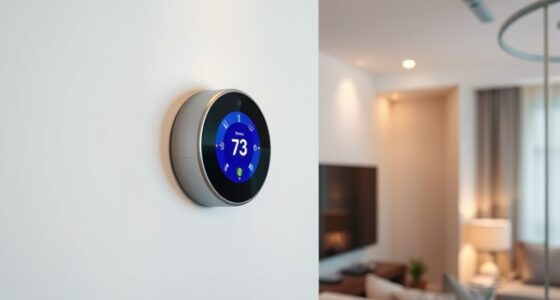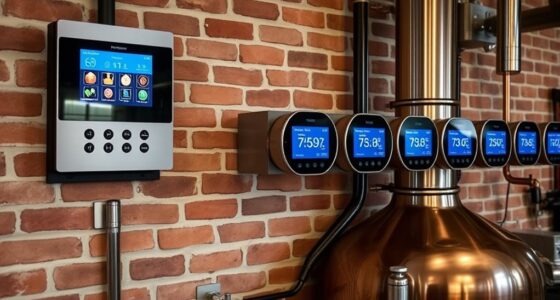
A smart thermostat with remote lockout can limit local temperature changes while letting an owner or administrator manage settings remotely—but lockout controls vary by model, app, and system setup. I’d put the ecobee Smart Thermostat Enhanced first for its mix of remote controls, scheduling, and broader smart-home features; the Sensi Touch 2 stands out for a clear touchscreen interface, while the Amazon Smart Thermostat is a simpler option for Alexa-centered homes. The main tradeoff is between straightforward controls and more advanced automation, with compatibility and the exact kind of lockout also shaping the choice. Some models offer stronger control over setpoint changes than others, so buyers should verify the specific lockout behavior they need. Read on for the full comparison and guidance on choosing a thermostat that fits your household and HVAC system.

Get home appliances delivered free with Prime
- Fast, free delivery on millions of items
- Prime Video, Amazon Music and more included
- Member-only deals all year
Complete the kit



Key Takeaways
- Remote access is not the same as remote lockout: App control alone does not confirm that a model can restrict local temperature adjustments; check its documented lockout settings before buying.
- The ecobee Enhanced is the strongest all-rounder in this group: It balances remote management and added smart-home capability, while the simpler Amazon and Sensi Lite options make more sense when fewer controls are enough.
- Similar-looking models may differ in practical fit: Sensi ST55 and Sensi Touch 2 offer different interface experiences, while the Nest Thermostat and Nest Learning Thermostat target different levels of automation.
- Color screens and premium sensors are not lockout substitutes: Honeywell’s color-screen models and the Nest Learning bundle may offer appealing interfaces or sensing features, but buyers still need to confirm the access restrictions they require.
- System compatibility can outweigh feature lists: The Aqara W200, the single-stage Wi-Fi model, and the XuLuaba thermostat call for especially careful checks of HVAC wiring, platform support, and lockout documentation before selection.
| Amazon Smart Thermostat |  | Best for Alexa-First Homes | Model: S6ED3R | Dimensions: 3.56 x 3.56 x 0.84 in | HVAC compatibility: Most 24V systems, including forced air, heat pumps, and radiant boilers | VIEW ON AMAZON | See Our Full Breakdown |
| Honeywell Home RTH9585WF1004 Wi-Fi Smart Color Thermostat |  | Best for On-Wall Controls and Alerts | Model: RTH9585WF1004 | Display: Customizable color touchscreen | Connectivity: Wi-Fi | VIEW ON AMAZON | See Our Full Breakdown |
| ecobee Smart Thermostat Essential, Wi-Fi, Energy Star Certified |  | Best for Cross-Platform Homes | Display: 3.74-inch LCD touchscreen | Connectivity: Wi-Fi | Smart home compatibility: Amazon Alexa, Apple HomeKit, Google Assistant | VIEW ON AMAZON | See Our Full Breakdown |
| Sensi ST55 Wi-Fi Smart Thermostat |  | Best for Flexible DIY Installation | Model: ST55 | Display: 5-inch LED screen | Power: 24 V AC; two AA batteries included | VIEW ON AMAZON | See Our Full Breakdown |
| Google Nest Smart Thermostat, Charcoal | 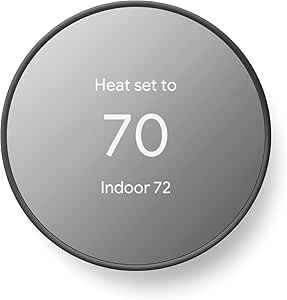 | Best for Google Home and Away Routines | Color: Charcoal | Display: 2-inch LCD | Connectivity: 2.4 GHz and 5 GHz Wi-Fi; Bluetooth Low Energy | VIEW ON AMAZON | See Our Full Breakdown |
| Sensi Lite Smart Thermostat (ST25) | 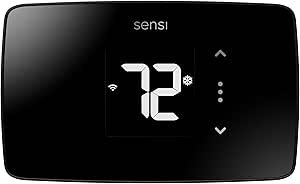 | Best for DIY Installation | Model: ST25 | Connectivity: Wi-Fi, 2.4 GHz | Voice assistants: Amazon Alexa, Google Assistant | VIEW ON AMAZON | See Our Full Breakdown |
| ecobee Smart Thermostat Enhanced, Programmable Wi-Fi Thermostat |  | Best for Multi-Platform Smart Homes | Connectivity: Wi-Fi | Compatible HVAC systems: Up to 90% of systems | Display: 4-inch LCD | VIEW ON AMAZON | See Our Full Breakdown |
| Google Nest Smart Thermostat, Fog |  | Best for Google Home Households | Color: Fog | Connectivity: Wi-Fi | HVAC compatibility: Compatible with 85% of heating and cooling systems | VIEW ON AMAZON | See Our Full Breakdown |
| Honeywell Home RTH9600WF Wi-Fi Smart Color Thermostat |  | Best for On-Device Schedule Visibility | Model: RTH9600WF | Connectivity: Wi-Fi | Display: Selectable-color LCD touchscreen | VIEW ON AMAZON | See Our Full Breakdown |
| Sensi Touch 2 Smart Wi-Fi Thermostat (ST76) |  | Best for Room-Sensor Expansion | Model: ST76 | Connectivity: Wi-Fi, 2.4 and 5.0 GHz | Display and controls: LCD touchscreen; app, touch, and voice | VIEW ON AMAZON | See Our Full Breakdown |
| Aqara Smart Thermostat W200 with Apple Adaptive Temperature |  | Best for Multi-Platform Smart Homes | HVAC compatibility: Works with about 85% of systems, including furnaces, air conditioners, heat pumps, boilers, and PTAC units | Display: 4-inch full-color touchscreen | Smart-home protocols: Matter 1.4, Zigbee, Thread | VIEW ON AMAZON | See Our Full Breakdown |
| Google Nest Learning Thermostat (4th Gen) with Nest Temperature Sensor (2nd Gen), Silver |  | Best for Learning Schedules and Room Balancing | System compatibility: Most 24V systems, including gas, electric, oil, forced air, heat pump, and radiant | Display: 3.5-inch touchscreen | Connectivity: Wi-Fi; Matter compatible | VIEW ON AMAZON | See Our Full Breakdown |
| Wi-Fi Smart Thermostat for Single-Stage Heating and Cooling |  | Best for Straightforward Single-Stage Setups | System compatibility: Conventional single-stage, 1 heat/1 cool | Power: 24V AC; C-wire required; no battery operation | Wi-Fi: 2.4 GHz only | VIEW ON AMAZON | See Our Full Breakdown |
| XuLuaba Smart Wi-Fi Programmable Thermostat |  | Best for Flexible Weekly Scheduling on a Basic System | Model: STN705W-Blue | System compatibility: Single-stage 1 heat/1 cool; select gas, oil, electric, heat pump without auxiliary or emergency heat, and heat-only systems | Power requirement: 24V AC with C-wire; battery power is not supported | VIEW ON AMAZON | See Our Full Breakdown |
| smart thermostat with remote lockout | Connectivity | Power | Display | Model |
|---|---|---|---|---|
| Amazon Smart Thermostat | — | C-wire or separately sold power adapter kit | — | S6ED3R |
| Honeywell Home RTH9585WF1004 W | Wi-Fi | AC power; C-wire required | Customizable color touchscreen | RTH9585WF1004 |
| ecobee Smart Thermostat Essent | Wi-Fi | Battery powered; Power Extender Kit may be needed without a C-wire | 3.74-inch LCD touchscreen | — |
| Sensi ST55 Wi-Fi Smart Thermos | — | 24 V AC; two AA batteries included | 5-inch LED screen | ST55 |
| Google Nest Smart Thermostat | 2.4 GHz and 5 GHz Wi-Fi; Bluetooth Low Energy | Two included A batteries; some systems need a C-wire or compatible power accessory | 2-inch LCD | — |
| Sensi Lite Smart Thermostat | Wi-Fi, 2.4 GHz | Battery or C-wire; two AAA batteries included | — | ST25 |
| ecobee Smart Thermostat Enhanc | Wi-Fi | Corded electric; Power Extender Kit included | 4-inch LCD | — |
| Google Nest Smart Thermostat | Wi-Fi | — | — | — |
| Honeywell Home RTH9600WF Wi-Fi | Wi-Fi | 24 volts; C-wire required | Selectable-color LCD touchscreen | RTH9600WF |
| Sensi Touch 2 Smart Wi-Fi Ther | Wi-Fi, 2.4 and 5.0 GHz | — | — | ST76 |
| Aqara Smart Thermostat W200 wi | Dual-band Wi-Fi, 2.4 GHz and 5 GHz | — | 4-inch full-color touchscreen | — |
| Google Nest Learning Thermosta | Wi-Fi; Matter compatible | — | 3.5-inch touchscreen | — |
| Wi-Fi Smart Thermostat for Sin | — | 24V AC; C-wire required; no battery operation | — | — |
| XuLuaba Smart Wi-Fi Programmab | Wi-Fi | — | — | STN705W-Blue |
More Details on Our Top Picks
Amazon Smart Thermostat
For households already built around Alexa, the Amazon Smart Thermostat offers a straightforward route to app-based remote control and schedules. That can help limit household changes from the Alexa app, though the provided details do not specify a dedicated remote lockout feature or parental controls. Compared with the Google Nest Smart Thermostat, it fits most 24V systems and supports humidity sensing, but only connects to 2.4 GHz Wi-Fi; Nest also supports 5 GHz. Emergency heat and vacation modes add useful options, while the three touch buttons keep on-device control simple rather than feature-rich. The main setup caveat is power: a C-wire or separately sold adapter is required. Alexa voice control also needs a separate compatible device, so this is less self-contained than its app control may suggest.
Pros:- Alexa app supports remote control and schedules
- Works with most 24V systems, including heat pumps and radiant boilers
- Includes humidity sensing, vacation mode, and emergency heat mode
- Guided installation is available in the Alexa app
Cons:- Requires a C-wire or separately sold power adapter kit
- Supports 2.4 GHz Wi-Fi only
- Alexa voice control requires a separate Alexa-enabled device
Best for: Alexa households with compatible 24V HVAC that want app scheduling and remote temperature changes
Not ideal for: Homes on 5 GHz-only Wi-Fi, systems without a C-wire when an extra adapter is not wanted, or buyers specifically seeking a documented thermostat lockout
- Model:S6ED3R
- Dimensions:3.56 x 3.56 x 0.84 in
- HVAC compatibility:Most 24V systems, including forced air, heat pumps, and radiant boilers
- Power:C-wire or separately sold power adapter kit
- Wi-Fi:2.4 GHz, 802.11 b/g/n; no 5 GHz support
- Controls:Three touch buttons, Alexa app, and compatible Alexa devices
- Features:Humidity sensing, schedules, emergency heat, vacation mode, energy dashboard
- Certifications:ENERGY STAR and ECOLOGO Gold
Our verdict“Choose it for convenient remote scheduling in an Alexa-centered home, but do not treat the supplied details as confirmation of a remote lockout feature.”
Honeywell Home RTH9585WF1004 Wi-Fi Smart Color Thermostat
The Honeywell Home RTH9585WF1004 suits buyers who want a substantial touchscreen and local access to settings, rather than relying mainly on a phone. Its customizable color display, flexible schedules, energy reports, and equipment alerts offer more on-device information than the simpler three-button Amazon Smart Thermostat. App and voice control through Alexa and Google Home provide remote adjustments, but the product details do not confirm a remote lockout function, so buyers needing restricted access should verify that separately. Its broad support for forced air, hot water, steam, and certain heat pumps makes it versatile, though it excludes 120–240V electric baseboard heat. A C-wire is mandatory, making installation less flexible than the Sensi ST55, which does not require one in most applications.
Pros:- Customizable color touchscreen keeps controls and status visible at the wall
- Remote control works through the Honeywell app and supported voice assistants
- Flexible scheduling and energy reports help track heating and cooling patterns
- Equipment and temperature alerts provide useful system updates
Cons:- Requires a C-wire
- Does not support 120–240V electric baseboard heat
- Remote lockout is not specified in the supplied product details
Best for: Households that want an easy-to-read wall touchscreen, equipment alerts, and app control across common forced-air or hydronic systems
Not ideal for: Homes with electric baseboard heating, installations without a C-wire, or buyers who need a verified remote-access lockout
- Model:RTH9585WF1004
- Display:Customizable color touchscreen
- Connectivity:Wi-Fi
- Controls:Touchscreen and voice control
- Scheduling:Flexible scheduling
- HVAC compatibility:Forced air, hot water, steam, and heat pumps with electric backup
- Smart home compatibility:Amazon Alexa and Google Home
- Power:AC power; C-wire required
- Certification:ENERGY STAR
Our verdict“Pick this Honeywell for its informative touchscreen and alerts if your system is compatible and already has a C-wire.”
ecobee Smart Thermostat Essential, Wi-Fi, Energy Star Certified
The ecobee Smart Thermostat Essential is the most flexible pick here for households mixing Apple, Google, and Alexa devices: it supports HomeKit, Google Assistant, and Alexa alongside app control and a color touchscreen. That makes it a stronger cross-platform fit than the Amazon Smart Thermostat, which centers on Alexa. Auto-away, auto-scheduling, and time-of-use preheating or precooling can adapt comfort routines, but none of the supplied details establish a remote lockout feature. Buyers who need restricted temperature changes should confirm that capability before choosing. Its compatibility spans many 24 VAC systems, including boilers and dual fuel, while installation may call for a separately sold Power Extender Kit if there is no C-wire. SmartSensor and trim kit are also separate, so this option can require extra components to match a particular setup.
Pros:- Supports Apple HomeKit, Google Assistant, and Alexa
- App controls, auto-scheduling, and auto-away support flexible routines
- Works with many 24 VAC systems, including boilers, heat pumps, and dual fuel
- Time-of-use preheating and precooling can shift comfort adjustments to suit energy plans
Cons:- A Power Extender Kit may be needed without a C-wire and is sold separately
- SmartSensor and trim kit are separate accessories
- Supplied details do not confirm remote lockout capability
Best for: Households using a mix of Apple HomeKit, Google Assistant, and Alexa that want app scheduling across a broad range of 24 VAC systems
Not ideal for: Buyers who need a verified remote lockout out of the box, or homes that need a C-wire adapter or SmartSensor without purchasing separate accessories
- Display:3.74-inch LCD touchscreen
- Connectivity:Wi-Fi
- Smart home compatibility:Amazon Alexa, Apple HomeKit, Google Assistant
- HVAC compatibility:Most 24 VAC systems, including gas, oil, electric, dual fuel, forced air, heat pumps, and boilers
- Power:Battery powered; Power Extender Kit may be needed without a C-wire
- Mounting:Wall mount
- Scheduling features:Auto-away and auto-scheduling
- Additional features:Fan control and indoor humidity detection
Our verdict“Choose ecobee for broad smart-home compatibility and adaptive scheduling, after checking wiring and whether its lockout controls meet your needs.”
Sensi ST55 Wi-Fi Smart Thermostat
The Sensi ST55 earns its place for buyers who want remote app control without making a C-wire an automatic barrier: a common wire is not required in most installations. Guided DIY setup, including a built-in level, also makes it more approachable than the Honeywell Home RTH9585WF1004, which requires a C-wire. Sensi works with Alexa, Apple HomeKit, Google Assistant, SmartThings, and Vera, so it suits homes with varied smart-home equipment. Its schedules, usage reports, and maintenance alerts cover everyday management, but the supplied details do not identify a remote lockout feature. Wiring needs still depend on the HVAC system, so compatibility checks matter before installation. The physical controls and 5-inch LED screen offer a more conventional interface than the smaller Google Nest Smart Thermostat, though the design provides fewer specified adaptive features.
Pros:- Common wire is not required in most applications
- Guided DIY installation includes a built-in level
- Supports Alexa, Apple HomeKit, Google Assistant, SmartThings, and Vera
- Offers schedules, usage reports, and maintenance alerts
Cons:- Common-wire requirements vary by HVAC installation
- Specific system compatibility should be checked before purchase
- Supplied details do not confirm a remote lockout feature
Best for: DIY-minded homeowners with compatible heating or cooling equipment who want broad platform support and may lack a common wire
Not ideal for: Buyers who require a confirmed remote lockout, or anyone unwilling to check system-specific wiring and compatibility before installation
- Model:ST55
- Display:5-inch LED screen
- Power:24 V AC; two AA batteries included
- Common wire:Not required in most applications
- HVAC compatibility:Air conditioner, boiler, furnace, and heat pump
- Smart home compatibility:Amazon Alexa, Apple HomeKit, Google Assistant, SmartThings, and Vera
- Controls:Buttons, app, touch, and voice
- Features:Scheduling, usage reports, and maintenance alerts
- Certification:ENERGY STAR
Our verdict“Choose the Sensi ST55 for an approachable DIY setup and broad platform support, provided your wiring and lockout needs check out.”
Google Nest Smart Thermostat, Charcoal
The Google Nest Smart Thermostat makes the most sense for people who want Google Home scheduling and temperature adjustments that respond when the home is empty. It also supports Alexa-compatible voice assistants, but its clearest ecosystem fit is Google Home. Compared with the Amazon Smart Thermostat, Nest adds 5 GHz Wi-Fi support and Bluetooth Low Energy; Amazon is the more directly Alexa-centered option. Nest’s 2-inch display and DIY-oriented design keep the wall unit compact, though buyers who prefer a larger, information-rich screen may favor the Honeywell Home RTH9585WF1004. Some HVAC systems need a C-wire or compatible power accessory, and remote control and notifications depend on working internet and Wi-Fi. The listed details do not confirm remote lockout, so this is a fit for remote adjustment—not a documented access-restriction solution.
Pros:- Google Home app supports remote temperature control and schedules
- Adjusts temperature when the home is empty
- Supports both 2.4 GHz and 5 GHz Wi-Fi
- Designed for DIY installation and works with compatible voice assistants
Cons:- Some HVAC systems require a C-wire or compatible power accessory
- Remote control and notifications depend on internet and Wi-Fi
- Supplied details do not confirm remote lockout capability
Best for: Google Home households that want app scheduling, away-based temperature adjustments, and a compact DIY-friendly thermostat
Not ideal for: Buyers seeking a confirmed remote lockout, a large on-device screen, or a thermostat that will work without checking C-wire and Wi-Fi conditions
- Color:Charcoal
- Display:2-inch LCD
- Connectivity:2.4 GHz and 5 GHz Wi-Fi; Bluetooth Low Energy
- Power:Two included A batteries; some systems need a C-wire or compatible power accessory
- Voltage:24 volts
- Controls and compatibility:Google Home app; compatible Amazon Alexa, Google Assistant, Android, iOS, and Nest devices
- Temperature control:Heating and cooling
- Mounting:Wall mount
- Certification:ENERGY STAR
Our verdict“Choose Nest for Google Home routines and 5 GHz Wi-Fi support, but verify wiring and do not assume it provides remote lockout.”
Sensi Lite Smart Thermostat (ST25)
For buyers who want remote app control and scheduling without a complicated setup, the Sensi Lite is a straightforward pick. Its built-in level and step-by-step installation guidance are useful for DIY installers, while geofencing can adjust the temperature when your phone indicates you have left home. That supports remote management, but the supplied details do not describe a dedicated remote lockout feature, so I would not choose it when preventing other household members from changing settings is the main goal.
Compared with the Sensi Touch 2, the Lite is simpler and can run on batteries in many systems, but it lacks the Touch 2’s touchscreen and room-sensor option. Its C-wire requirement for heat pumps and heat/cool-only systems also limits that flexibility. The 2.4 GHz Wi-Fi requirement is another compatibility check before buying.
Pros:- Built-in level and guided instructions support DIY installation.
- App access, scheduling, and geofencing allow temperature changes away from home.
- Usage reports help track heating and cooling activity.
- ENERGY STAR certified; manufacturer says personal and thermostat activity data are not used for third-party sales or targeted advertising.
Cons:- The supplied product details do not confirm a remote lockout feature.
- A C-wire is required for heat-pump and heat/cool-only systems.
- Connects only to 2.4 GHz Wi-Fi.
Best for: DIY homeowners with a compatible HVAC system who want app-based scheduling, geofencing, and usage reports without needing a touchscreen.
Not ideal for: Households that need a confirmed remote lockout function, or owners of heat-pump and heat/cool-only systems without a C-wire.
- Model:ST25
- Connectivity:Wi-Fi, 2.4 GHz
- Voice assistants:Amazon Alexa, Google Assistant
- Power:Battery or C-wire; two AAA batteries included
- Voltage:24 volts
- Display and controls:LCD; app, touch, and voice
- Mounting:Wall mount
- Warranty:3 years
- Dimensions:0.88 in deep × 5.0 in wide; height not provided
Our verdict“Choose the Sensi Lite for guided DIY setup and everyday remote control, but look elsewhere if lockout is a must-have.”
ecobee Smart Thermostat Enhanced, Programmable Wi-Fi Thermostat
The ecobee Enhanced is the strongest fit here for buyers whose thermostat needs to work across several smart-home systems. It supports Alexa, Google Assistant, Apple HomeKit, and SmartThings, and its occupancy-aware adjustments can make temperature control more responsive to whether people are home. Remote app access adds convenient control away from the house, though the supplied details do not establish a dedicated remote lockout setting; buyers seeking a hard restriction on local changes should verify that function before choosing it.
Compared with the Google Nest Smart Thermostat, ecobee offers broader listed platform support and includes a Power Extender Kit for homes without a C-wire. The tradeoff is that room-by-room sensing requires separately purchased SmartSensors, and HVAC compatibility still needs checking. Its feature set suits connected homes better than buyers seeking the simplest thermostat setup.
Pros:- Works with Alexa, Google Assistant, Apple HomeKit, and SmartThings.
- Adjusts temperature based on occupancy and schedules.
- Remote control is available through the ecobee app.
- Includes a Power Extender Kit for homes without a C-wire.
Cons:- The supplied details do not confirm a remote lockout feature.
- SmartSensors for room-by-room comfort are sold separately.
- Compatibility should be checked against the home’s HVAC system.
Best for: Households using multiple smart-home platforms that want occupancy-based temperature adjustments and app control.
Not ideal for: Buyers who need a confirmed remote lockout, want room sensors included, or have not checked HVAC compatibility.
- Connectivity:Wi-Fi
- Compatible HVAC systems:Up to 90% of systems
- Display:4-inch LCD
- Voltage:24 volts
- Power:Corded electric; Power Extender Kit included
- Smart-home compatibility:Amazon Alexa, Google Assistant, Apple HomeKit, SmartThings
- Mounting:Wall mount
- Included accessories:Power Extender Kit and trim kit
- Warranty:3 years
Our verdict“Pick ecobee Enhanced for broad smart-home integration and occupancy response, not for an unverified lockout requirement.”
Google Nest Smart Thermostat, Fog
The Nest Smart Thermostat suits buyers who want remote scheduling and automatic away adjustments through the Google Home app, with a DIY installation designed to take 30 minutes or less. It works with Google Assistant, Alexa, and Matter-certified voice assistants, so it is not limited to one voice-control ecosystem. Those features help manage heating and cooling remotely, but the supplied product information does not list a remote lockout function. I would treat it as a convenience-focused thermostat, not a confirmed way to prevent others from changing settings.
Compared with the ecobee Smart Thermostat Enhanced, Nest emphasizes a simpler Google Home-centered experience rather than listing Apple HomeKit and SmartThings support. It is compatible with 85% of heating and cooling systems, but some installations need a C-wire or compatible power accessory. That makes HVAC checks especially important before relying on a quick DIY install.
Pros:- Remote control and scheduling through the Google Home app.
- Automatically adjusts temperature when the home is unoccupied.
- Works with Google Assistant, Alexa, and Matter-certified voice assistants.
- Designed for DIY installation, typically in 30 minutes or less.
Cons:- The supplied details do not confirm a remote lockout feature.
- Some HVAC systems require a C-wire or compatible power accessory.
- Remote access and voice control depend on internet and Wi-Fi availability.
Best for: Google Home users who want app-based temperature changes, programmable schedules, and automatic adjustments when the home is unoccupied.
Not ideal for: Buyers who require confirmed remote lockout, need broader documented smart-home platform support, or have an HVAC system that requires extra power hardware.
- Color:Fog
- Connectivity:Wi-Fi
- HVAC compatibility:Compatible with 85% of heating and cooling systems
- Temperature control:Heating and cooling
- Voice assistant compatibility:Google Assistant, Alexa, and Matter-certified voice assistants
- Energy certification:ENERGY STAR
- Installation:Typically 30 minutes or less
- Power requirements:Works without a C-wire in most homes; some systems need a C-wire or compatible power accessory
Our verdict“Choose Nest for a Google Home-friendly remote-control experience, but not when lockout is the deciding feature.”
Honeywell Home RTH9600WF Wi-Fi Smart Color Thermostat
The RTH9600WF is a good match for people who want to see and adjust settings directly at the wall, thanks to its selectable-color touchscreen. It pairs that display with app-based remote control, flexible schedules, energy tracking, smart alerts, and automatic heat-to-cool switching. These features help with day-to-day remote management, yet the supplied details do not confirm a remote lockout mode. I would not treat its smart alerts as a substitute for restricting local temperature changes.
Compared with the Google Nest Smart Thermostat, this Honeywell model offers a prominent customizable touchscreen and listed support for several conventional HVAC types, but it has a firmer power constraint: a C-wire is required. It also excludes electric baseboard heat. The display and alerts make it more appealing for people who regularly use the wall control, while its wiring and system limits narrow the audience.
Pros:- Selectable-color LCD touchscreen makes settings visible at the thermostat.
- App and compatible smart-home assistants provide remote control.
- Flexible scheduling and energy-use tracking support routine management.
- Smart alerts and automatic heat-to-cool switching add useful system controls.
Cons:- Requires a C-wire or compatible power adapter.
- Does not support electric baseboard heat.
- The supplied product information does not confirm remote lockout.
Best for: Homeowners who prefer a large, customizable wall touchscreen and want schedules, energy tracking, and alerts alongside remote app control.
Not ideal for: People without a C-wire, homes with electric baseboard heat, or buyers requiring a confirmed remote lockout feature.
- Model:RTH9600WF
- Connectivity:Wi-Fi
- Display:Selectable-color LCD touchscreen
- Compatible systems:Forced-air gas, oil, or electric; hot water and steam; heat pumps with electric backup
- Power:24 volts; C-wire required
- Mounting:Wall mount
- Dimensions:1 × 4.75 × 3.5 inches
- Weight:11.2 ounces
- Battery:1 AAA battery required
Our verdict“Choose this Honeywell for its customizable on-wall display and alerts if your system supports its C-wire requirement.”
Sensi Touch 2 Smart Wi-Fi Thermostat (ST76)
The Sensi Touch 2 is the most expandable option in this group for buyers who want to address temperature differences between rooms. It supports up to 15 optional Sensi room sensors, while app access, scheduling, usage reports, equipment alerts, and maintenance reminders cover everyday remote management. That makes it more adaptable than the Sensi Lite, which is oriented toward simpler DIY control rather than an add-on sensor network. Still, the supplied details do not confirm a dedicated remote lockout feature, so sensor support should not be confused with permission controls.
The tradeoff is installation flexibility: unlike the Sensi Lite, the Touch 2 requires a C-wire. Its Wi-Fi supports both 2.4 and 5.0 GHz networks, and its touchscreen gives direct access at the wall. Buyers should also account for sensors being sold separately, especially if room balancing is the reason for choosing it.
Pros:- Supports up to 15 optional Sensi room sensors for added room-temperature monitoring.
- Offers remote access, flexible scheduling, and energy usage reports.
- Equipment alerts and maintenance reminders help surface system needs.
- Supports both 2.4 and 5.0 GHz Wi-Fi and app, touch, and voice controls.
Cons:- Requires a C-wire for installation.
- Room sensors are sold separately.
- The supplied product information does not confirm a remote lockout feature.
Best for: Homeowners with a C-wire who want a touchscreen thermostat and the option to add sensors for uneven room temperatures.
Not ideal for: Homes without a C-wire, buyers who need room sensors included, or anyone requiring confirmed remote lockout controls.
- Model:ST76
- Connectivity:Wi-Fi, 2.4 and 5.0 GHz
- Display and controls:LCD touchscreen; app, touch, and voice
- Voice assistants:Amazon Alexa, Google Assistant
- Supported HVAC systems:Air conditioner, boiler, furnace, heat pump
- Power and voltage:C-wire; 24 V
- Room sensor compatibility:Up to 15 Sensi room sensors, sold separately
- Dimensions and weight:5.6 × 3.25 × 0.77 in; 9.92 oz
- Mounting:Wall mount
Our verdict“Choose the Sensi Touch 2 if you have a C-wire and value future room-sensor expansion over a confirmed lockout function.”
Aqara Smart Thermostat W200 with Apple Adaptive Temperature
The Aqara W200 is the strongest fit here for households that want a thermostat to do more than take app commands. Its 4-inch touchscreen and mmWave presence detection support at-a-glance control and occupancy automations, while Matter, Zigbee, and Thread give it broader smart-home reach than the more focused Nest Learning Thermostat. Those capabilities can help coordinate temperature rules with a wider connected home, but the listed features do not specify a thermostat lockout or a way to remotely restrict temperature changes. Check that point before buying if remote lockout is your main requirement. HVAC compatibility is broad, covering about 85% of systems, though you should verify your wiring and equipment first. The C-wire adapter is sold separately, and Apple Adaptive Temperature needs newer Apple devices and software, so the headline Apple features will not benefit every home.
Pros:- Matter support connects with several major smart-home platforms
- Built-in Zigbee hub, Matter controller, and Thread border router can reduce the need for separate hubs
- mmWave presence detection supports occupancy-based automations
- About 85% HVAC compatibility includes several system categories
Cons:- The product details do not confirm a remote lockout feature, so buyers needing one should verify before purchase
- C-wire adapter is sold separately
- Apple Adaptive Temperature requires compatible devices and software version 26 or later
Best for: Households with mixed Apple, Google, Alexa, or SmartThings devices that want a touchscreen, presence-based automations, and broad HVAC support.
Not ideal for: Buyers who need a confirmed remote temperature lockout, lack a C-wire and do not want to buy an adapter, or want Apple Adaptive Temperature without the required newer Apple devices.
- HVAC compatibility:Works with about 85% of systems, including furnaces, air conditioners, heat pumps, boilers, and PTAC units
- Display:4-inch full-color touchscreen
- Smart-home protocols:Matter 1.4, Zigbee, Thread
- Connectivity:Dual-band Wi-Fi, 2.4 GHz and 5 GHz
- Presence detection:Built-in mmWave radar
- Platforms:Apple Home, Google Home, Amazon Alexa, Samsung SmartThings, Home Assistant
- C-wire:Adapter sold separately
- Doorbell compatibility:Aqara G410 and G400; G4 excluded
Our verdict“Choose the W200 for broad smart-home integration and presence automations, but verify remote lockout support separately if that feature is non-negotiable.”
Google Nest Learning Thermostat (4th Gen) with Nest Temperature Sensor (2nd Gen), Silver
The Nest Learning Thermostat (4th Gen) is the most appealing choice here for buyers who want routine-adaptive temperature control plus help with uneven room temperatures. It learns preferred settings and includes a second-generation Nest Temperature Sensor, giving it an advantage over the basic single-stage thermostats in this batch, which offer schedules but no included room sensor. It also works with most 24V systems and supports app, voice, and Matter control. However, the supplied details do not identify a remote lockout function, so I would not treat its smart controls as proof that household members can be restricted from changing settings. Compared with the Aqara W200, Nest is more centered on learning and room balancing than on broad built-in hub functions. C-wire needs vary by home, and system compatibility still needs checking.
Pros:- Learns temperature preferences and adapts to routine changes
- Includes a Nest Temperature Sensor for managing room-to-room hot and cold spots
- Supports app, voice, and Matter smart-home control
- Works with many common 24V system types
Cons:- Remote lockout capability is not specified in the supplied product details
- A C-wire may still be needed in some homes
- Compatibility depends on the home’s specific heating and cooling equipment
Best for: Homeowners with compatible 24V HVAC who want automatic schedule learning and a sensor to address temperature differences between rooms.
Not ideal for: Buyers who require a verified remote lockout, need a thermostat for an incompatible HVAC system, or want certainty that their wiring will work without a C-wire.
- System compatibility:Most 24V systems, including gas, electric, oil, forced air, heat pump, and radiant
- Display:3.5-inch touchscreen
- Connectivity:Wi-Fi; Matter compatible
- Control methods:App, voice, and button
- Included sensor:Nest Temperature Sensor (2nd Gen)
- C-wire:Not required in most homes; may be required in some
- Voltage:24 volts
- Energy certification:ENERGY STAR
Our verdict“Pick the Nest for learning schedules and room-sensor support, but confirm lockout and wiring requirements before relying on it for restricted control.”
Wi-Fi Smart Thermostat for Single-Stage Heating and Cooling
This Wi-Fi Smart Thermostat keeps the feature set simple: app control, a remote, physical buttons, and 7-day scheduling for conventional one-heat/one-cool systems. That narrower fit is a clear contrast with the Aqara W200, which covers a wider range of HVAC types and smart-home platforms. Here, the buyer benefit is a more direct setup for a compatible system, not a broad connected-home controller. The product information does not confirm a remote lockout, though, so scheduled settings and app access should not be mistaken for the ability to prevent other users from changing the temperature. Its required C-wire and 2.4 GHz-only Wi-Fi also limit installation flexibility. Skip it if your home has a heat pump, multiple stages, or another unsupported system type.
Pros:- App access allows remote temperature adjustments
- 7-day programming supports different routines by day
- Backlit LCD is easier to read in dim rooms
- Temperature control is specified within 2°F
Cons:- Remote lockout is not confirmed in the supplied product details
- Requires a 24V C-wire and does not support battery operation
- Limited to conventional single-stage systems and 2.4 GHz Wi-Fi
Best for: Owners of conventional 24V, single-stage heating and cooling systems who want app control and distinct schedules across the week.
Not ideal for: Households with heat pumps, multistage HVAC, no available C-wire, 5 GHz-only Wi-Fi, or a firm need for confirmed remote lockout.
- System compatibility:Conventional single-stage, 1 heat/1 cool
- Power:24V AC; C-wire required; no battery operation
- Wi-Fi:2.4 GHz only
- Control:App, remote, or buttons
- Scheduling:7-day programmable
- Temperature accuracy:Within 2°F
- Compatible terminals:RH, RC, W, Y, G, C
- Dimensions:0.98 × 4.72 × 3.86 inches
Our verdict“Choose this model only for a compatible single-stage system when app control and weekly schedules matter more than broad compatibility or confirmed lockout.”
XuLuaba Smart Wi-Fi Programmable Thermostat
The XuLuaba Smart Wi-Fi Programmable Thermostat earns its place through schedule flexibility: buyers can choose 7-day, 5-1-1-day, or non-programmable operation, rather than being tied to a single weekly pattern. Its Smart Life app and Alexa and Google Home support make remote adjustments practical for a basic compatible system. Unlike the Wi-Fi thermostat in this batch, which specifies only 7-day scheduling, XuLuaba gives households more ways to match heating and cooling to their routine. That flexibility does not make it a broad-compatibility choice: it needs a 24V C-wire and cannot handle multistage systems or heat pumps with auxiliary or emergency heat. The supplied details also do not confirm remote lockout, so buyers choosing it specifically to restrict temperature changes should verify that capability first.
Pros:- Offers 7-day, 5-1-1-day, or non-programmable scheduling
- Smart Life app supports remote temperature control
- Works with Alexa and Google Home
- Includes step-by-step installation instructions
Cons:- Remote lockout is not confirmed in the supplied product details
- Requires 24V AC and a C-wire, with no battery operation
- Does not support multistage systems or heat pumps with auxiliary or emergency heat
Best for: Owners of compatible single-stage 24V systems who want a choice of weekly schedule formats and Alexa or Google Home control.
Not ideal for: Homes with multistage HVAC, heat pumps with auxiliary or emergency heat, millivolt systems, no C-wire, or a requirement for verified remote lockout.
- Model:STN705W-Blue
- System compatibility:Single-stage 1 heat/1 cool; select gas, oil, electric, heat pump without auxiliary or emergency heat, and heat-only systems
- Power requirement:24V AC with C-wire; battery power is not supported
- Connectivity:Wi-Fi
- Control:Smart Life app and touch controls
- Voice assistants:Alexa and Google Home
- Scheduling:7-day, 5-1-1-day, or non-programmable
- Mounting and material:Wall mount; plastic
Our verdict“Choose XuLuaba for schedule-format flexibility on a compatible single-stage system, not as a confirmed remote-lockout solution.”

How We Picked
I ranked these thermostats around the specific job implied by remote lockout: letting an authorized user manage temperature remotely while limiting unwanted changes at the wall. I gave more weight to clearly described app controls, usable scheduling, and the ability to distinguish remote management from local access restrictions than to screen size or smart-home branding alone. Since lockout features can depend on the model, app version, wiring, or system configuration, buyers should confirm the exact behavior in current product documentation before relying on it.
The ordering also reflects compatibility, ease of setup, everyday usability, and flexibility. Models with a stronger balance of control and broad household usefulness rank ahead of options that are more basic, niche, or less clearly documented for lockout use. Premium features count when they serve a real buyer need, but they do not automatically improve a thermostat’s fit for shared spaces, rentals, or managed properties. The product names alone do not establish equivalent lockout functions, so I treat uncertain capabilities as a reason to verify rather than assume.
Factors to Consider When Choosing Smart Thermostat With Remote Lockout
Choosing a thermostat for lockout is less about collecting smart features and more about matching access rules to the people and equipment in your home. I’d settle the questions below before comparing displays or automation claims.
Confirm What “Lockout” Actually Restricts
Manufacturers may use similar language for different controls: a temperature range limit, a keypad lock, a restriction on local adjustments, or administrator-managed access. Those are not interchangeable. If your goal is to stop guests from setting extreme temperatures, a minimum and maximum setpoint limit may be enough. If you need to prevent all changes at the thermostat, check whether the lock can be bypassed from the device itself. Ask who can change the setting, whether it applies to every user, and whether schedules or app commands can override it. A feature list that says “remote control” does not by itself confirm remote lockout.
Match the Lockout to Your Household or Property
A family may only need a gentle guardrail against accidental adjustments, while a short-term rental or shared workspace may need administrator control and a reliable way to restore settings between occupants. Decide whether other household members should retain app access, because a wall lock may not restrict someone with authorized access on their phone. For rental use, check how easily you can change user permissions and whether the thermostat keeps its limits after a reset or power interruption. Avoid choosing a restrictive setup that prevents someone from responding to an uncomfortable or unsafe condition. The right lockout is the least restrictive one that still solves the actual problem.
Check HVAC Compatibility Before Buying
Smart thermostats can differ in support for common-wire requirements, heat pumps, multi-stage systems, and accessories such as humidifiers. Read the wiring and system compatibility information for your exact equipment rather than relying on a generic claim that a model works with most homes. A thermostat designed for single-stage heating and cooling may be a poor fit for a more complex setup even if its app controls look suitable. Take a photo of the existing thermostat wiring and identify your HVAC system before ordering. If compatibility is uncertain, confirm it with the manufacturer or an installer instead of planning around an assumed adapter or workaround.
Think Through App Access and Platform Dependence
Remote lockout depends on more than the thermostat: the phone app, account permissions, Wi-Fi connection, and smart-home platform may all affect control. Check whether multiple administrators can manage settings and whether another household member can regain access without the owner’s approval. A model that fits an existing Alexa, Google, Apple, or other smart-home setup may be easier to manage, but platform support does not prove that its lockout controls are complete. Consider what happens if internet service is interrupted; local schedules and safety protections should not depend on an app connection. Keep account recovery and ownership transfer in mind if the thermostat may move between tenants or homes.
Decide Whether Sensors and Automation Earn Their Complexity
Room sensors and learning features can help address uneven temperatures or reduce routine adjustments, but they add setup steps and may create more settings to manage. Before paying for them, identify the room or schedule problem they are meant to solve. A sensor can influence comfort in a remote room without changing who is allowed to alter the thermostat, so it does not replace lockout controls. Advanced automation can be useful in a larger household, while a simpler model may be easier to administer in a small home or rental. Choose added features for a specific need, not as a proxy for stronger access restrictions.
Plan for Installation, Overrides, and Ongoing Ownership
Installation difficulty can affect whether a thermostat remains correctly configured after a move, HVAC repair, or Wi-Fi change. Confirm who will install it and who will retain the primary account, especially in a rental or multi-owner property. Find out whether a physical reset, breaker interruption, or account change can clear the lockout, and document the steps needed to restore intended settings. Keep a way for an authorized person to adjust the system during equipment service or unusual weather. A lockout that is hard to recover from can create more maintenance trouble than the unwanted adjustments it was meant to prevent.
Frequently Asked Questions
Does remote app control mean a thermostat can remotely lock local temperature changes?
No. Remote app control usually means an authorized user can change settings from a phone, while lockout refers to restricting changes made at the thermostat or limiting the setpoint range. A product may support one without clearly supporting the other. Check the manufacturer’s instructions for the exact lock type, who can manage it, and whether the restriction can be changed remotely. If you need the feature for a rental or shared space, confirm the behavior before purchase rather than inferring it from general smart-control claims.
Can I stop someone from changing the temperature at the wall but still adjust it from my phone?
That is a useful setup for shared homes, rentals, and offices, but support varies by model. Look for documentation that specifically describes a device lock or temperature range restriction alongside administrator app access. Also check whether other people with app access can change settings, since a wall lock will not necessarily limit remote users. Test the intended permission setup after installation and keep a record of the administrator account. Do not assume a touchscreen lock and a remote lockout are the same control.
Will a thermostat lockout still work if Wi-Fi goes down?
It depends on how the thermostat stores its settings and what kind of lockout it uses. Some restrictions may remain on the device, while remote administration will generally be unavailable until the thermostat reconnects. Read the product’s offline behavior and reset guidance, especially if maintaining a setpoint limit matters in a rental or unattended property. A local schedule may continue even when remote access is lost, but that does not prove the lockout remains active. Keep a practical way to reach the thermostat or restore service if access rules need to change.
What should I check before replacing my current thermostat with a smart model?
Identify your HVAC type, the wires connected to the existing thermostat, and whether your system uses a heat pump, multiple stages, or accessories. Then compare that information with the specific model’s compatibility chart and installation instructions. Check whether a common wire is required and whether any included adapter is suitable for your setup. If your system is unusual or the wiring is unclear, ask the manufacturer or a qualified installer before ordering. Choosing a compatible thermostat first prevents lockout features from becoming irrelevant because the device cannot control the equipment properly.
Is a premium thermostat worth choosing just for remote lockout?
Usually, not without checking that the premium model provides the precise restriction you need. Higher-end models may add sensors, learning features, or a more polished interface, but those extras do not guarantee stronger lockout administration. If your only goal is to limit wall adjustments, a simpler compatible model with clearly documented controls may be easier to manage. Pay more when added sensing, automation, or smart-home integration solves another real problem in your home. Compare the lockout instructions first, then treat other features as reasons to upgrade.
Conclusion
For a single pick that balances remote management with broader household usefulness, I’d start with the ecobee Smart Thermostat Enhanced as best overall, while confirming its current lockout controls fit your use case. The Amazon Smart Thermostat is my best value direction for an Alexa-centered home that wants simpler controls, and the Google Nest Learning Thermostat is the best premium fit for buyers who also want learning features and a sensor bundle. For beginners, I’d compare the Sensi Lite or standard Google Nest Thermostat based on wiring compatibility and preferred app platform. Choose the Sensi Touch 2 if a touchscreen interface is a priority, and look closely at the Aqara W200 if Apple-focused smart-home support is central to your setup. For the Honeywell, single-stage, and XuLuaba options, verify compatibility and written lockout details before treating them as suitable for managed access.