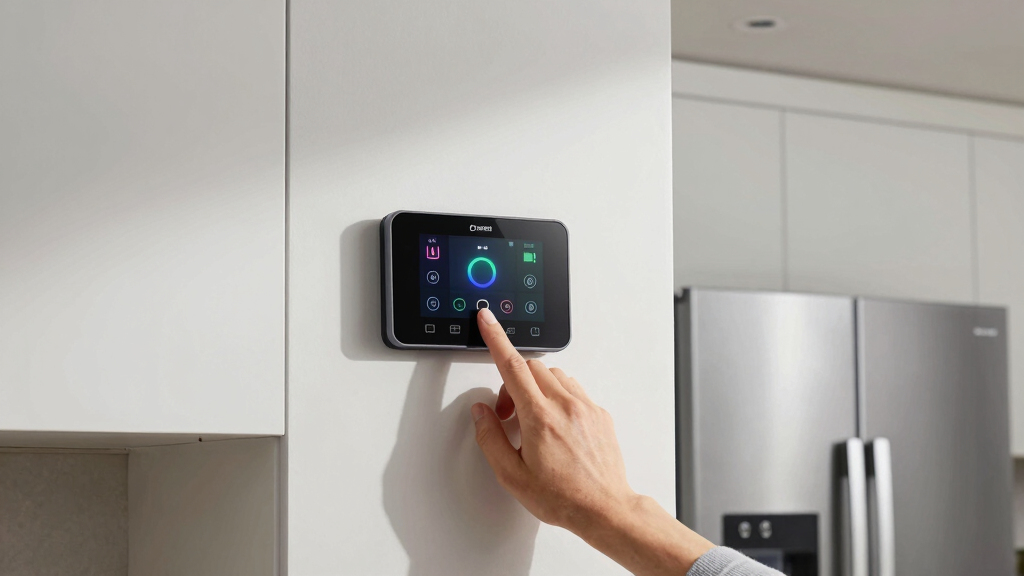

When searching for the best home energy monitors for HVAC tracking, key factors include real-time data accuracy, ease of integration, and scalability. The Emporia Vue 3 stands out as the overall best due to its comprehensive sensor setup and smart home compatibility. For those seeking a straightforward, budget-friendly option, the Meross Smart Home Energy Monitor offers reliable real-time power tracking without complex setup. Meanwhile, the Refoss Smart Home Energy Monitor with Open API appeals to tech-savvy users who want customization and local control. Every option involves tradeoffs between cost, installation complexity, and data granularity. Continue reading for a detailed breakdown of each product and how they compare across key criteria.

Get home appliances delivered free with Prime
- Fast, free delivery on millions of items
- Prime Video, Amazon Music and more included
- Member-only deals all year
Complete the kit


Key Takeaways
- The best monitors combine high sensor count with user-friendly setup for comprehensive HVAC tracking.
- Integration with smart home systems like Home Assistant or Z-Wave enhances automation capabilities but may increase complexity.
- Higher-priced options often provide more precise data and better scalability, ideal for detailed energy analysis.
- Budget models excel in real-time power monitoring but may lack advanced features like circuit-level tracking.
- Choosing a monitor depends heavily on whether the priority is ease of use, customization, or cost savings.
| Meross Smart Home Energy Monitor, Real-Time Power & Cost Tracking |  | Best Overall Home Energy Monitor for HVAC Tracking | Certification: ETL, UL 61010 | Supported Systems: Single-phase 2-wire, single-split phase 3-wire, 3-phase 4-wire Wye | Max Main Circuits: 200A | VIEW LATEST PRICE | See Our Full Breakdown |
| Aeotec Home Energy Meter 8 – Smart Electricity Monitor with Z-Wave Long Range |  | Best for Z-Wave Integration and Range | Model: Home Energy Meter 8 | Connectivity: Z-Wave Long Range | Clamp-On Sensors: 2x200A | VIEW LATEST PRICE | See Our Full Breakdown |
| SIEMENS Inhab Smart Home Energy Monitor with Circuit Sensors |  | Best Whole-Home and Circuit-Level Monitoring | Circuit Level Sensors: 16-50 Amp | Main Sensors: 2-200 Amp | Compatibility: USA and Canada | VIEW LATEST PRICE | See Our Full Breakdown |
| Eyedro Smart Home Energy Monitor 200A WiFi/Ethernet |  | Best for Whole-Home and Solar Monitoring with Easy Cloud Access | Sensor Quantity: 2 | Sensor Capacity: 200A | Connectivity: WiFi 2.4 GHz, Ethernet | VIEW LATEST PRICE | See Our Full Breakdown |
| Refoss Smart Home Energy Monitor with Open API, Home Assistant Integration, No Cloud |  | Best Privacy-Focused, Open-Source Energy Monitor | Model: EM16P | Weight: 4.24 pounds | Dimensions: 4.5 x 3.5 x 1.1 inches | VIEW LATEST PRICE | See Our Full Breakdown |
| Smart Home Energy Monitor with 16 50A Circuit Sensors |  | Best Overall for Detailed Circuit Monitoring | Number of sensors: 16 | Sensor current rating: 50A | Wi-Fi support: Dual-band 2.4G/5G | VIEW LATEST PRICE | See Our Full Breakdown |
| WiFi Home Energy Monitor with 3 80A CT Clamps |  | Best for High-Power Circuit Monitoring | Supports Circuits: Up to 3 | CT Clamps Included: 3 | Input Voltage: AC 100–240V | VIEW LATEST PRICE | See Our Full Breakdown |
| Refoss Smart Home Energy Monitor with 16 60A Circuit Sensors |  | Best for Privacy-Focused, Long-Term Monitoring | Number of sensors: 16 | Sensor current capacity: 60A | Supported systems: Single-phase, split-phase, 3-phase Wye | VIEW LATEST PRICE | See Our Full Breakdown |
| Emporia Vue 3 Home Energy Monitor – Smart Home Automation Module and Real-Time Electricity Usage Monitor |  | Best for Solar and Net Metering Integration | Compatibility: Smart Plugs, EV Chargers, Home Battery Systems, 3rd Party Thermostats | Sensor Count: 16 | Supported Systems: Single phase, single-split phase, 2-wire, 3-wire, 3-phase, 4-wire Wye | VIEW LATEST PRICE | See Our Full Breakdown |
| Emporia Energy Monitor with 16 Sensors and 4 Smart Plugs Bundle |  | Best Whole-Home Control Bundle | VIEW LATEST PRICE | See Our Full Breakdown | |||
| Smart Home Energy Monitor with 16 50A Circuit Sensors, Real-Time Power & Cost Tracking |  | Best for Multi-Circuit HVAC Monitoring in Rental or Shared Homes | Sensor Count: 16 | Sensor Current Rating: 50A | Supported Voltages: 120V, 240V, 415Y/240VAC | VIEW LATEST PRICE | See Our Full Breakdown |
| WiFi Home Energy Monitor with 2 x 120A CTs and Power Tracking |  | Best for Whole-Home and Solar Power Monitoring with Easy Setup | Current Rating: 120A per CT | Connectivity: WiFi | Compatibility: Smart Life app | VIEW LATEST PRICE | See Our Full Breakdown |
| home energy monitors for HVAC tracking | Connectivity |
|---|---|
| Meross Smart Home Energy Monit | WiFi, Open API, Web Control |
| Aeotec Home Energy Meter 8 | Z-Wave Long Range |
| SIEMENS Inhab Smart Home Energ | Mobile App |
| Eyedro Smart Home Energy Monit | WiFi 2.4 GHz, Ethernet |
| Refoss Smart Home Energy Monit | Built-in Web UI, Open API, MQTT |
| Smart Home Energy Monitor with | — |
| WiFi Home Energy Monitor with | — |
| Refoss Smart Home Energy Monit | — |
| Emporia Vue 3 Home Energy Moni | — |
| Emporia Energy Monitor with 16 | — |
| Smart Home Energy Monitor with | WiFi (2.4GHz) |
| WiFi Home Energy Monitor with | WiFi |
More Details on Our Top Picks
Meross Smart Home Energy Monitor, Real-Time Power & Cost Tracking
The Meross Smart Home Energy Monitor stands out for its circuit-level detail and integration with smart home systems like Home Assistant, making it a strong choice for tech-savvy homeowners who want granular control and data privacy. Compared with the Refoss EM16P, Meross offers more flexible data storage options and supports multiple circuits up to 16, which is ideal for larger or solar-equipped homes. Its local data storage and no cloud dependency are significant advantages for privacy-conscious users, though the setup can be complex for beginners. It’s best suited for those comfortable with DIY installation and home automation systems.
bestFor: Tech-savvy homeowners who want detailed circuit data and smart home integration.
notIdealFor: Users seeking a plug-and-play solution or less technical installation.
- Supports detailed circuit-level energy monitoring
- Integrates with Home Assistant for automation and solar management
- Stores data locally with no cloud or subscription fees
- Complex setup may challenge some users
- Limited to US electrical systems
Verdict: This pick makes the most sense for DIY enthusiasts seeking detailed, privacy-focused energy data with smart home automation.
Pros:- Supports detailed circuit-level energy monitoring
- Integrates with Home Assistant for automation and solar management
- Stores data locally with no cloud or subscription fees
Cons:- Complex setup may be challenging for some users
- Limited to US electrical systems
- Certification:ETL, UL 61010
- Supported Systems:Single-phase 2-wire, single-split phase 3-wire, 3-phase 4-wire Wye
- Max Main Circuits:200A
- Branch Circuits:16 circuits up to 60A
- Data Storage:Up to 5 years
- Connectivity:WiFi, Open API, Web Control
- Included Components:Wire harness, current transformers, insulation plugs, wire nuts, home energy monitor, WiFi antenna
- Warranty:2 years
- Item Weight:3.19 pounds
Our verdict“Best for homeowners who want detailed, customizable energy monitoring integrated with their smart home system.”
Aeotec Home Energy Meter 8 – Smart Electricity Monitor with Z-Wave Long Range
The Aeotec Home Energy Meter 8 is designed for users who want to incorporate energy monitoring into a Z-Wave-based smart home, especially with extensive wireless range. Unlike the Meross, it requires a Z-Wave hub to function, but offers the benefit of supporting two phases and measuring surplus power, making it ideal for homes with solar or backup systems. Its long-range Z-Wave capability extends connectivity up to a mile, providing flexibility in large properties or complex setups. However, the need for a Z-Wave hub and potential installation complexity may deter less technical users. It’s best suited for those with existing Z-Wave systems or willing to invest in one.
bestFor: Homeowners with Z-Wave hubs seeking long-range, secure energy monitoring.
notIdealFor: Users without a Z-Wave hub or those preferring WiFi-based solutions.
- Supports real-time energy monitoring and surplus power measurement
- Compatible with popular smart home systems like SmartThings and HomeAssistant
- Extended wireless range with Z-Wave Long Range technology
- Requires Z-Wave hub for operation
- Installation can be complex for non-technical users
Verdict: Ideal for Z-Wave users needing long-range energy monitoring and surplus power tracking.
Pros:- Supports real-time energy monitoring and surplus power measurement
- Compatible with popular smart home systems like SmartThings and HomeAssistant
- Extended wireless range with Z-Wave Long Range technology
Cons:- Requires Z-Wave hub for operation
- Potentially complex installation for some users
- Model:Home Energy Meter 8
- Connectivity:Z-Wave Long Range
- Clamp-On Sensors:2x200A
- Power Support:Supports 2-Phase Power
- Security:S2 and AES-128 encryption
- Range:Up to 1 mile / 1.7 km
Our verdict“Best suited for Z-Wave homeowners seeking secure, long-range energy data for integrated smart home setups.”
SIEMENS Inhab Smart Home Energy Monitor with Circuit Sensors
The SIEMENS Inhab Smart Home Energy Monitor provides comprehensive whole-home and circuit-level tracking, making it ideal for homeowners who want detailed insights via their mobile app. Unlike the Z-Wave or WiFi-only options, it installs directly into your electrical panel, offering a full picture of energy consumption. Its ability to monitor multiple circuits with adjustable amperage sensors is a significant advantage for detailed energy management. However, installation may require professional help, and it’s limited to North American markets. This model is best for those who prefer a dedicated energy management system integrated into their electrical infrastructure.
bestFor: Homeowners who want detailed circuit and whole-home energy insights, willing to handle professional installation.
notIdealFor: DIY users or those outside North America looking for simple plug-and-play solutions.
- Real-time energy monitoring with mobile app
- Customizable energy alerts and notifications
- Installations at circuit and whole-home levels for detailed insights
- Installation may need professional electrical help
- Limited to US and Canada markets
Verdict: Perfect for serious energy enthusiasts who want comprehensive, professional-grade monitoring of their entire home and circuits.
Pros:- Real-time energy monitoring with mobile app
- Customizable energy alerts and notifications
- Installations at circuit and whole-home levels
Cons:- Requires professional installation
- Limited to US and Canadian markets
- Circuit Level Sensors:16-50 Amp
- Main Sensors:2-200 Amp
- Compatibility:USA and Canada
- Connectivity:Mobile App
Our verdict“Best for those seeking detailed, professional-level energy monitoring directly integrated into their electrical system.”
Eyedro Smart Home Energy Monitor 200A WiFi/Ethernet
The Eyedro Home Energy Monitor offers a straightforward solution for whole-home and solar energy tracking, emphasizing ease of use and cloud-based insights. It supports real-time data for grid and solar systems with WiFi or Ethernet connectivity, making setup simpler than some circuit-based options like SIEMENS. The multi-sensor setup allows for detailed monitoring, but customer ratings hovering around 3.5 stars suggest some users find it lacking in user experience or reliability. It’s a solid choice for those wanting quick, cloud-based energy insights without extensive DIY installation, though it may not satisfy those seeking highly detailed or customizable data.
bestFor: Homeowners seeking easy-to-set-up solar and whole-home energy monitoring via cloud services.
notIdealFor: Users wanting local data control or advanced customization, or those seeking detailed circuit-level data.
- Provides real-time insights for home and solar systems
- Easy cloud access without subscription fees
- Flexible setup with WiFi and Ethernet
- Average customer ratings indicate potential reliability issues
- Requires multiple units for detailed solar/grid separation
Verdict: Best for users who prioritize quick setup and cloud-based energy insights over detailed customization.
Pros:- Provides real-time insights for home and solar systems
- Easy cloud access with no subscription fee
- Supports WiFi and Ethernet for flexible setup
Cons:- Average customer ratings suggest some reliability issues
- Requires multiple units for detailed solar/grid separation
- Sensor Quantity:2
- Sensor Capacity:200A
- Connectivity:WiFi 2.4 GHz, Ethernet
- Power Source:AC
- Included Components:Sensor module, two 200A sensors, power adapter, Ethernet cable
- Item Weight:1.54 pounds
- Dimensions:8 x 8 x 3 inches
Our verdict“Ideal for homeowners wanting straightforward, cloud-based energy monitoring for solar and grid use without complex installation.”
Refoss Smart Home Energy Monitor with Open API, Home Assistant Integration, No Cloud
The Refoss EM16P offers a compelling choice for users who prioritize data privacy and open-source flexibility. Unlike the Eyedro, it doesn’t rely on cloud services, instead providing local control and seamless integration with Home Assistant through open API and MQTT. Its ±1% accuracy at high currents makes it suitable for solar homes and those seeking precise circuit-level data. Nonetheless, setup may be intimidating for non-technical users, and it lacks Wi-Fi, relying instead on Ethernet or external antennas. This model is perfect for users comfortable with DIY tech and who want long-term data privacy.
bestFor: Tech-savvy homeowners wanting privacy and open API control for solar energy systems.
notIdealFor: Less technical users seeking simple, plug-and-play solutions or Wi-Fi connectivity.
- Local control with no reliance on cloud services
- Supports Home Assistant and AI automation
- Highly accurate circuit-level measurements
- Requires technical setup for open API and MQTT
- No built-in Wi-Fi, needs external antenna
Verdict: Best for energy enthusiasts who value privacy and want extensive customization with open-source tools.
Pros:- Local control and data privacy with no reliance on cloud services
- Seamless integration with Home Assistant and AI automation support
- Accurate real-time energy monitoring with circuit-level insights
Cons:- Requires technical setup for open API and MQTT
- Limited to specific circuit sensor capacities
- Model:EM16P
- Weight:4.24 pounds
- Dimensions:4.5 x 3.5 x 1.1 inches
- Supported Circuits:2 main circuits (200A each), 16 branch circuits (1–60A each)
- Accuracy:±1% (200A), ±2% at low current
- Connectivity:Built-in Web UI, Open API, MQTT
- Certification:ETL, UL 61010
- Warranty:2 years
Our verdict“Ideal for experienced users seeking privacy, open-source control, and detailed circuit monitoring without cloud dependence.”
Smart Home Energy Monitor with 16 50A Circuit Sensors
This model stands out for its ability to deliver detailed insights into individual appliance energy use with 16 sensors, making it ideal for homeowners who want granular control of their energy consumption. Unlike the Refoss Smart Home Energy Monitor, which emphasizes local control and long-term analytics, this monitor offers real-time alerts for abnormal usage but falls short on remote access via mobile apps. Its compatibility with various electrical systems and straightforward installation support comprehensive monitoring, but the need to access the circuit panel could be a barrier for less experienced users. The lack of mention of app compatibility limits remote management options, which could be a drawback for some.
Pros:- Provides detailed monitoring of individual appliances and circuits
- Supports real-time alerts for abnormal power consumption
- Compatible with multiple electrical system types and easy to install
Cons:- Requires circuit panel installation, which can be complex
- No built-in mobile app or remote access features
Best for: Homeowners seeking detailed, circuit-level energy data with flexible system support
Not ideal for: Renters or those uncomfortable with circuit panel installation
- Number of sensors:16
- Sensor current rating:50A
- Wi-Fi support:Dual-band 2.4G/5G
- Connection type:Wi-Fi and RJ45 wired
- Supported systems:Single-phase up to 240VAC, split-phase 120/240VAC, three-phase up to 415Y/240VAC
Our verdict“This monitor is best suited for energy-conscious homeowners wanting granular data and willing to handle installation complexity.”
WiFi Home Energy Monitor with 3 80A CT Clamps
This pick makes the most sense for users wanting to track multiple high-power circuits like HVAC, water heaters, or solar systems simultaneously. Compared with the Refoss Smart Home Energy Monitor, which offers long-term data storage, this device excels in real-time data via smartphone app and remote control, but it’s limited to circuits with 15A relays, which may restrict its use for larger appliances. Installation involves wiring into your breaker panel, so some technical skill is required. Its app compatibility with Smart Life and Tuya makes remote monitoring straightforward, yet the moderate customer rating suggests some users might find setup or app stability issues.
Pros:- Tracks multiple high-power circuits simultaneously
- Real-time energy data accessible via smartphone app
- Includes temperature alerts and remote control features
Cons:- Installation may require professional wiring
- Limited to 15A relay capacity, restricting larger loads
Best for: Homeowners with multiple high-power loads wanting real-time control via smartphone
Not ideal for: Users with complex wiring needs or unwilling to handle electrical installation
- Supports Circuits:Up to 3
- CT Clamps Included:3
- Input Voltage:AC 100–240V
- Max Relay Current:15A
- App Compatibility:Smart Life, Tuya
Our verdict“Ideal for tech-savvy homeowners who want real-time, multi-circuit control of high-power systems.”
Refoss Smart Home Energy Monitor with 16 60A Circuit Sensors
This model offers detailed circuit-level insights with 16 sensors and a focus on privacy, supporting local control without cloud dependency, unlike the Emporia Vue 3 which emphasizes extensive analytics and compatibility. Its long-term data storage (up to five years) and export capabilities make it a strong choice for those analyzing energy patterns over time. Installation involves working inside your breaker box, which might be demanding for some users, and it supports a range of systems including 3-phase Wye, but lacks built-in cloud services—ideal for privacy-conscious households. The external antenna improves connectivity, yet setup may be technical, especially for less experienced DIYers.
Pros:- Supports detailed, real-time monitoring of multiple circuits
- Local control ensures data privacy without reliance on the cloud
- Long-term data storage and export for analysis
Cons:- Installation complexity due to breaker box integration
- Limited to specific electrical systems, requiring technical setup
Best for: Homeowners prioritizing privacy and long-term energy data analysis
Not ideal for: Users who prefer cloud-based access or simple plug-and-play solutions
- Number of sensors:16
- Sensor current capacity:60A
- Supported systems:Single-phase, split-phase, 3-phase Wye
- Data storage duration:5 years
- Certifications:ETL
Our verdict“Best suited for privacy-minded users seeking long-term, detailed energy data without cloud dependencies.”
Emporia Vue 3 Home Energy Monitor – Smart Home Automation Module and Real-Time Electricity Usage Monitor
The Emporia Vue 3 supports solar integration and net metering, making it a strong choice for households aiming to maximize solar ROI. It offers comprehensive real-time energy data across multiple systems, similar to the Refoss but with UL certification for safety and reliability. Its ability to support critical loads with dedicated sensors enhances its utility, yet installation may be complex, especially for those unfamiliar with circuit panels. While it supports a broad range of systems, additional sensors for three-phase setups are sold separately, which could increase overall cost. Its focus on safety and automation makes it well-suited for solar users seeking detailed analytics.
Pros:- Supports solar and net metering systems
- UL-certified for safety and reliability
- Includes sensors for critical loads and detailed analytics
Cons:- Requires 2.4 GHz Wi-Fi and internet connection
- Installation can be complex for novices
- Additional sensors needed for some systems
Best for: Homeowners with solar panels wanting detailed, reliable energy monitoring and management
Not ideal for: Users seeking plug-and-play or very simple monitoring solutions
- Compatibility:Smart Plugs, EV Chargers, Home Battery Systems, 3rd Party Thermostats
- Sensor Count:16
- Supported Systems:Single phase, single-split phase, 2-wire, 3-wire, 3-phase, 4-wire Wye
- Warranty:1 year
- Certifications:CE, UL
Our verdict“Designed for solar-equipped homes needing a dependable, safety-certified system with detailed energy insights.”
Emporia Energy Monitor with 16 Sensors and 4 Smart Plugs Bundle
This bundle combines comprehensive circuit-level monitoring with smart plugs for remote device management, making it ideal for users seeking complete control over their home’s energy. Compared with the WiFi Home Energy Monitor with 3 80A CT Clamps, which focuses more on high-power circuits, this bundle emphasizes whole-home visibility and automation via the Emporia app. Its setup involves Wi-Fi network configuration, which can be straightforward for tech-savvy users but daunting for beginners. The inclusion of smart plugs adds flexibility for automating individual devices, but the overall system complexity might be excessive for simple needs.
Pros:- Provides detailed energy data for whole home and circuits
- Includes four smart plugs for remote device control
- Supports solar net metering and real-time management
Cons:- Setup requires Wi-Fi configuration and may be complex
- Potentially overwhelming for users seeking minimal setup
Best for: Users wanting combined circuit monitoring and device-level control via smart plugs
Not ideal for: Homeowners seeking only circuit-level data without device automation
Our verdict“Best for homeowners who want integrated circuit monitoring and remote device control in one package.”
Smart Home Energy Monitor with 16 50A Circuit Sensors, Real-Time Power & Cost Tracking
This energy monitor excels at providing detailed insights into multiple circuits simultaneously, making it a strong choice for households with complex HVAC setups or rental properties where tracking individual circuit costs is valuable. Unlike the WiFi Home Energy Monitor with 2 x 120A CTs, which offers broader power measurement for whole-home systems, this model focuses on granular circuit data, ideal for users who want to allocate energy costs precisely or manage diverse loads. Its support for smart home integrations like Home Assistant expands automation possibilities but requires a compatible setup and some technical know-how, which could be a hurdle for less tech-savvy users. The clamp-on sensors simplify installation in most circuit panels, but the limited support for only single-phase or three-phase configurations and the need for WiFi can restrict use in more complex or less connected homes. Overall, this pick makes the most sense for energy-conscious renters or property managers seeking circuit-level insights without extensive wiring upgrades.
Pros:- Supports real-time energy monitoring for multiple circuits, enabling detailed cost analysis
- Compatible with popular smart home systems like Home Assistant and MQTT for automation
- Easy to install with clamp-on sensors suitable for most circuit panels
Cons:- Requires WiFi and compatible smart home system to access full features
- Limited to single-phase and three-phase configurations, no Delta support
Best for: Rental property owners or shared households needing detailed circuit-level energy monitoring
Not ideal for: Homeowners seeking whole-home power tracking or those without compatible smart home setups
- Sensor Count:16
- Sensor Current Rating:50A
- Supported Voltages:120V, 240V, 415Y/240VAC
- Connectivity:WiFi (2.4GHz)
- Compatibility:Home Assistant, MQTT
- Warranty:1 year
- Product Dimensions:3.1 x 1.2 x 4.18 inches
- Item Weight:4.05 pounds
Our verdict“This monitor suits tech-savvy property managers or energy-conscious renters who want detailed circuit-level data and smart home integration.”
WiFi Home Energy Monitor with 2 x 120A CTs and Power Tracking
This model stands out for delivering precise, real-time data on overall home energy use, making it ideal for households with solar systems or those seeking straightforward, whole-home monitoring. Compared with the Smart Home Energy Monitor with 16 50A Circuit Sensors, which provides detailed circuit-level insights, this pick focuses on a more simplified setup that covers total energy consumption and power flow, including bi-directional measurement for solar integration. Its plug-and-play design with split-core CTs simplifies installation, especially for those new to energy monitoring. However, its reliance on WiFi and limited information about compatibility with various smart home ecosystems can restrict automation options. If you’re aiming for a comprehensive view of your entire home’s power, including solar, this monitor makes sense, but it may fall short if detailed circuit data is needed for troubleshooting or cost allocation.
Pros:- Accurate measurement of voltage, current, power, and total energy consumption
- Easy installation with split-core CTs and pluggable terminals
- Real-time data via a user-friendly app supports automation and load management
Cons:- Dependent on WiFi for full functionality, which may limit connectivity in some homes
- Limited details on compatibility with other smart home ecosystems beyond the app
Best for: Homeowners with solar panels or those seeking an easy-to-install, whole-home energy tracking solution
Not ideal for: Users wanting detailed circuit-specific data or advanced smart home integrations beyond basic app control
- Current Rating:120A per CT
- Connectivity:WiFi
- Compatibility:Smart Life app
- Features:Bi-directional power monitoring, configurable reporting, dynamic load balancing
Our verdict“This monitor offers a straightforward, accurate way to track whole-home energy and solar flow, perfect for solar owners or those new to energy monitoring.”