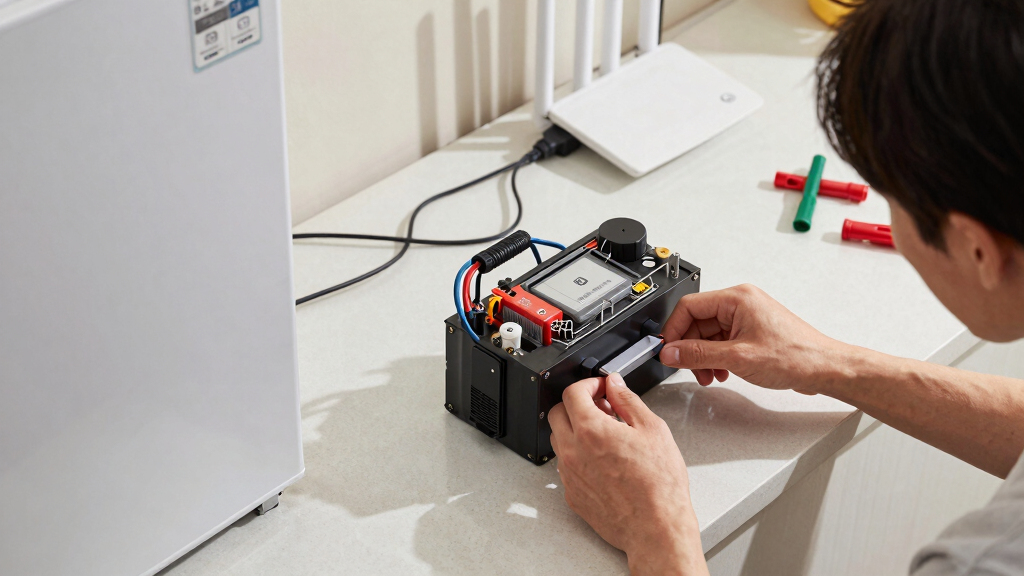

When selecting the best power stations for running a refrigerator and Wi-Fi, the key factors are capacity, output power, and reliability. The BLUETTI Elite 300 stands out for its massive 3014 Wh capacity and high surge power, making it ideal for extended outages. The PECRON E3800 offers robust LiFePO4 chemistry for longevity, while the Anker SOLIX C1000 provides a compact, versatile option for lighter needs. These units balance performance and portability but require tradeoffs in size, weight, or cost. Keep reading for a detailed breakdown of these options and how to choose the best power station for your needs.

Get home appliances delivered free with Prime
- Fast, free delivery on millions of items
- Prime Video, Amazon Music and more included
- Member-only deals all year
Complete the kit


Key Takeaways
- High-capacity models like the BLUETTI Elite 300 deliver extended runtime but are heavier and less portable.
- LiFePO4 batteries, as found in the PECRON E3800, offer longer lifespan and safer chemistry at a higher upfront cost.
- Power output and surge capacity are critical for running refrigerators without interruptions, especially during startup.
- Compact units like the Jackery Explorer 300 are easier to carry but may lack enough capacity for prolonged outages.
- Price and build quality vary widely; investing in a more durable, higher-capacity unit pays off for frequent or long-term use.
| BLUETTI Elite 300 Portable Power Station – 3014 Wh, 2400 W (4800 W Surge) |  | Best Overall for Versatile Home Backup and RV Use | Capacity: 3014 Wh | Battery Type: LiFePO4 (6000+ cycles) | Continuous Output Power: 2400 W | VIEW LATEST PRICE | See Our Full Breakdown |
| PECRON Portable Power Station E3800 with 3840Wh LiFePO4 Battery Backup |  | Best for Long-Term Reliability and High Power Capacity | Capacity: 3840Wh | Battery Type: LiFePO4 | Max Power Output: 4200W | VIEW LATEST PRICE | See Our Full Breakdown |
| Anker SOLIX C1000 Gen 2 Portable Power Station |  | Best for Compact, Fast-Charging Backup Power | Capacity: 1024Wh | Output: 2000W (3000W peak) | Recharging: Up to 1,600W AC; 600W solar | VIEW LATEST PRICE | See Our Full Breakdown |
| Anker SOLIX C2000 Gen 2 Portable Power Station, 2,048Wh, 2,400W |  | Best for High Capacity and Rapid Recharge in a Portable Package | Capacity: 2048Wh | Peak Output: 4000W | Recharge Time: 58 minutes | VIEW LATEST PRICE | See Our Full Breakdown |
| Jackery Explorer 300 Portable Power Station, 292Wh |  | Best for Ultra-Lightweight, Short-Term Camping Backup | Capacity: 292Wh | Outlets: 2 AC, 1 USB-C, 2 USB-A, 1 car port | Peak Surge Power: 600W | VIEW LATEST PRICE | See Our Full Breakdown |
| Jackery HomePower 3600 Plus Portable Power Station, 3584Wh |  | Best Overall for High-Capacity Home Backup | Capacity: 3584Wh | AC output: 3600W | Parallel output: 7200W | VIEW LATEST PRICE | See Our Full Breakdown |
| Jackery HomePower 3000 Portable Power Station, 3072Wh |  | Best Value with Reliable Capacity and Fast Recharging | Capacity: 3072Wh | Running output: 3600W | Surge output: 7200W | VIEW LATEST PRICE | See Our Full Breakdown |
| BLUETTI AC180 Portable Power Station, 1152Wh LiFePO4 Battery, 1800W Output |  | Best Compact for Moderate Power Needs | Battery capacity: 1152Wh | AC output: 1800W | Boost output: 2700W | VIEW LATEST PRICE | See Our Full Breakdown |
| UDPOWER S2400 Portable Power Station |  | Best for Heavy-Duty Use and Fast Recharge | Capacity: 2083Wh | Continuous output: 2400W | Surge output: 3000W | VIEW LATEST PRICE | See Our Full Breakdown |
| Librids Portable Power Station 640Wh, 1200W Surge, Solar Generator |  | Best for Compact, Emergency Backup | Capacity: 640Wh | Surge power: 1200W | Battery type: LiFePO4 | VIEW LATEST PRICE | See Our Full Breakdown |
| EBL 2400W Portable Power Station LiFePO4 Battery for Home Use |  | Best Overall for Heavy-Duty Home Backup | Capacity: 1843.2Wh | Max Power Output: 2400W | Weight: 55 Pounds | VIEW LATEST PRICE | See Our Full Breakdown |
| Anker SOLIX S2000 Portable Power Station, 2,010 Wh, 1,500 W |  | Best for Versatile Recharging and Fast UPS Switchover | Battery capacity: 2,010 Wh | Battery type: LFP | Continuous output: 1,500 W | VIEW LATEST PRICE | See Our Full Breakdown |
| Jackery Explorer 1000 V2 Portable Power Station |  | Best Compact and Efficient for Moderate Power Needs | Battery capacity: 1,070Wh | AC output: 1,500W | Charge cycles: 4,000 with 70% capacity | VIEW LATEST PRICE | See Our Full Breakdown |
| BLUETTI Elite 100 V2 Portable Power Station |  | Best Compact with Rapid Charging and Quiet Operation | Capacity: 1024Wh | AC Output: 1800W | Charge Time: ~70 minutes | VIEW LATEST PRICE | See Our Full Breakdown |
| power stations for running a refrigerator and Wi-Fi | Capacity | Battery Type | Weight |
|---|---|---|---|
| BLUETTI Elite 300 Portable Pow | 3014 Wh | LiFePO4 (6000+ cycles) | 58 lbs |
| PECRON Portable Power Station | 3840Wh | LiFePO4 | — |
| Anker SOLIX C1000 Gen 2 Portab | 1024Wh | — | 11.3 kg |
| Anker SOLIX C2000 Gen 2 Portab | 2048Wh | — | 41.7 lbs |
| Jackery Explorer 300 Portable | 292Wh | — | 7.5 lbs |
| Jackery HomePower 3600 Plus Po | 3584Wh | — | — |
| Jackery HomePower 3000 Portabl | 3072Wh | LiFePO4 | — |
| BLUETTI AC180 Portable Power S | — | LiFePO4 | — |
| UDPOWER S2400 Portable Power S | 2083Wh | LiFePO4 | — |
| Librids Portable Power Station | 640Wh | LiFePO4 | — |
| EBL 2400W Portable Power Stati | 1843.2Wh | LiFePO4 | 55 Pounds |
| Anker SOLIX S2000 Portable Pow | — | LFP | 35.7 lbs |
| Jackery Explorer 1000 V2 Porta | — | — | 23.8 lbs |
| BLUETTI Elite 100 V2 Portable | 1024Wh | — | 25 lbs |
More Details on Our Top Picks
BLUETTI Elite 300 Portable Power Station – 3014 Wh, 2400 W (4800 W Surge)
The BLUETTI Elite 300 stands out for its impressive capacity and high output, making it well-suited for powering a refrigerator and Wi-Fi during extended outages or RV trips. Its 3 kWh LiFePO4 battery provides enough energy to run essential appliances for hours, and with a 2400 W continuous output, it can handle most small to medium devices simultaneously. Compared to the Jackery Explorer 300, it offers significantly more capacity, though it weighs more at 58 lbs, which may challenge portability. The fast 78-minute recharge time and multiple recharging options (solar, AC, car) add to its flexibility, while the built-in UPS switch ensures seamless power transfer. However, its weight limits portability for some users, and runtime under full load is just over an hour, so it’s best for predictable, moderate power needs rather than extended outages.
Pros:- High 3014Wh capacity supports longer appliance runtimes
- Robust 2400W continuous power output handles multiple devices
- Fast 78-minute recharge with multiple input options
- Built-in UPS switch for uninterrupted power supply
Cons:- Heavy at 58 lbs, challenging for frequent portability
- Runtime under full load is limited to about 1 hour
Best for: Homeowners or RV enthusiasts needing reliable backup power with high capacity and multiple recharging options.
Not ideal for: Light outdoor users or those seeking ultra-portable solutions, due to its weight and size.
- Capacity:3014 Wh
- Battery Type:LiFePO4 (6000+ cycles)
- Continuous Output Power:2400 W
- Surge Power:4800 W
- AC Voltage:120 V
- Charging Time (0‑80%):78 minutes
- Weight:58 lbs
Our verdict“This pick is ideal for users needing substantial energy storage and reliable backup, especially in RV or home scenarios.”
PECRON Portable Power Station E3800 with 3840Wh LiFePO4 Battery Backup
The PECRON E3800 offers a substantial 3840Wh capacity paired with a 4200W maximum output, making it a top choice for sustained power during outages or off-grid living. Its durable LiFePO4 battery supports over 3500 cycles, far surpassing many competitors, and the multiple AC outlets and smart controls give it versatility for running a refrigerator and Wi-Fi simultaneously. Compared with the Anker SOLIX C2000, it provides a larger capacity and more power outlets, though it is heavier and more expensive. Its smart app and UPS support enable remote management, but the increased size and weight make it less portable, and the need for compatible solar panels for optimal solar charging could add complexity. This model excels where long-term, reliable power is paramount.
Pros:- Massive 3840Wh capacity supports multiple devices over extended periods
- High 4200W max output handles demanding appliances
- Over 3500 cycle lifespan ensures long-term durability
- Smart app control and UPS support for remote management
Cons:- Heavy and bulky, challenging for frequent transport
- Higher price point and dependency on compatible solar panels
Best for: Preppers, off-grid residents, or large households needing dependable, long-lasting backup power.
Not ideal for: Casual users seeking lightweight or portable solutions for occasional outdoor use.
- Capacity:3840Wh
- Battery Type:LiFePO4
- Max Power Output:4200W
- Cycle Life:3500+ cycles
- Input Charging Power:3200W (AC), 3000W (solar)
- UPS Support:Yes, 8-20ms
Our verdict“Best suited for those prioritizing long-term, high-capacity backup with reliable durability over portability.”
Anker SOLIX C1000 Gen 2 Portable Power Station
The Anker SOLIX C1000 provides a balanced mix of portability and power, with 1024Wh capacity and a 2000W rated output, making it suitable for running a refrigerator and Wi-Fi during shorter outages or while camping. Its ability to recharge via AC or solar in under 2 hours adds convenience. Compared to larger units like the PECRON E3800, it offers less capacity but excels in lightweight design and rapid recharge, ideal for users who prioritize mobility. The under-10 ms UPS switchover ensures seamless transitions, but its limited capacity means it’s best for moderate power needs or shorter outages. The limited solar input (600W) might slow recharging in off-grid scenarios if multiple devices are used frequently.
Pros:- Compact, lightweight design at just over 11 kg
- Fast recharge times with AC and solar inputs
- Under 10 ms UPS switchover for seamless power transfer
- Good for short-term backup and outdoor use
Cons:- Limited capacity may not support prolonged outages
- Only 600W solar input limits rapid recharging in off-grid situations
Best for: Campers, outdoor enthusiasts, or small households needing portable backup for short-term outages.
Not ideal for: Users requiring long-duration power backup or high-capacity support for multiple appliances simultaneously.
- Capacity:1024Wh
- Output:2000W (3000W peak)
- Recharging:Up to 1,600W AC; 600W solar
- Cycle Life:80% capacity after 4,000 cycles
- Weight:11.3 kg
- Dimensions:15.1 × 8.2 × 9.6 in
Our verdict“A solid choice for outdoor or short-term backup needs where portability is paramount.”
Anker SOLIX C2000 Gen 2 Portable Power Station, 2,048Wh, 2,400W
The Anker SOLIX C2000 offers a compelling blend of capacity and speed, with 2048Wh and a 2400W rated output, plus an impressive 58-minute full recharge time. Its expandability up to 4kWh makes it versatile for longer outages or larger appliances, outperforming smaller models like the C1000 for sustained use. It supports six recharge methods, providing flexibility in various scenarios. Compared to the PECRON E3800, it is more portable despite its large capacity, though the need to purchase an expansion battery to reach 4kWh adds extra cost. Its high output and rapid recharge make it suitable for users who want quick, reliable power on the go, but the single outlet limit may restrict simultaneous device use without additional adapters.
Pros:- Fast recharge in under an hour
- Expandable capacity up to 4kWh
- High 2400W rated output supports multiple appliances
- Multiple recharge options including AC and solar
Cons:- Requires additional purchase for full 4kWh capacity
- Limited to one main power outlet in specs
Best for: Travelers, emergency prepper, or busy households needing fast, high-capacity portable power.
Not ideal for: Users who need the absolute maximum capacity without concern for portability or who want multiple outlets for many devices at once.
- Capacity:2048Wh
- Peak Output:4000W
- Recharge Time:58 minutes
- Expandability:Up to 4kWh
- Number of Outlets:One main outlet
- Weight:41.7 lbs
Our verdict“Ideal for those who need quick, reliable, high-capacity power with flexibility for travel or emergency use.”
Jackery Explorer 300 Portable Power Station, 292Wh
The Jackery Explorer 300 is a compact, lightweight power source, making it perfect for short-term camping or emergency use where portability outweighs capacity. Its 292Wh capacity can support a small refrigerator or Wi-Fi device for a limited period, but it’s not designed for long outages or multiple devices simultaneously. Compared with larger models like the PECRON E3800, it sacrifices capacity for weight, but its over 4,000 cycle life ensures consistent performance over years. The built-in multiple outputs, including USB-C and car port, provide versatility, but its limited wattage means it may not run high-power appliances for extended periods.
Pros:- Very lightweight at 7.5 lbs for easy transport
- Long-lasting LiFePO4 battery with over 4,000 cycles
- Multiple versatile charging options
- Supports fast solar charging
Cons:- Limited capacity restricts runtime for larger appliances
- No included solar panel, requiring additional purchase
Best for: Outdoor adventurers, minimalists, or occasional backup users needing ultra-portability.
Not ideal for: Users seeking prolonged backup power or running high-wattage appliances continuously.
- Capacity:292Wh
- Outlets:2 AC, 1 USB-C, 2 USB-A, 1 car port
- Peak Surge Power:600W
- Charge Cycles:Over 4,000
- Charging Time:Approx. 2.8 hours with 100W solar
- Weight:7.5 lbs
Our verdict“Best suited for short-term, portable backup in outdoor or emergency scenarios where weight matters most.”
Jackery HomePower 3600 Plus Portable Power Station, 3584Wh
The Jackery HomePower 3600 Plus stands out for its impressive 3584Wh capacity and 3600W output, making it ideal for running a refrigerator and Wi-Fi during extended outages. Compared to the smaller Jackery HomePower 3000, it offers more power and expandability, supporting parallel 120V and 240V operation for larger appliances. Its multiple charging options—including hybrid AC+DC, solar, and gas—add versatility, though its large size and weight can make mobility challenging despite the wheeled design. This model is best suited for homeowners seeking a reliable, high-capacity backup that can be expanded if needed, but less so for those needing portability or lightweight solutions. The extensive capacity and multiple input options come with a tradeoff of size and initial setup complexity.
Pros:- High capacity and output for running household appliances
- Expandable design for longer backup durations
- Multiple charging methods increase flexibility
- Wheeled and telescopic handle for easier transport
Cons:- Large size and weight may hinder mobility despite wheels
- 240V operation requires parallel setup, adding complexity
Best for: Homeowners needing reliable, long-term backup for refrigerator and Wi-Fi in extended outages
Not ideal for: Campers or emergency responders who require ultra-portable power solutions due to its weight and size
- Capacity:3584Wh
- AC output:3600W
- Parallel output:7200W
- Voltage:120V; 240V in parallel
- Expandable capacity:Up to 21kWh per unit or 43kWh with multiple units
- Charging options:Hybrid AC+DC, AC, solar, gas generator
- Recharge time:2 hours hybrid AC+DC; 2.5 hours AC or gas; 4 hours solar
- Battery cycle life:6,000 cycles
Our verdict“This is a strong choice for home use where maximum capacity and expandability outweigh portability concerns.”
Jackery HomePower 3000 Portable Power Station, 3072Wh
The Jackery HomePower 3000 offers a solid 3072Wh capacity with 3600W continuous and 7200W surge output, making it suitable for powering a refrigerator and Wi-Fi during outages and outdoor events. Its LiFePO4 battery ensures durability with 4,000 cycles to 70% capacity, surpassing many competitors like the BLUETTI AC180. Its UPS switching time under 20ms makes it reliable for protecting sensitive electronics. Weighing 59.5 pounds, it’s heavier than some portable options like the UDPOWER S2400, limiting mobility for frequent transport. The multiple charging methods—including AC, hybrid, solar, and vehicle—offer versatility, but solar charging takes up to 9 hours with two panels. This pick is ideal for users who want high capacity and fast recharge times without the bulk of larger systems, but not suitable for those prioritizing ultra-light portability.
Pros:- High capacity with durable LiFePO4 battery
- Fast charging via AC and hybrid methods
- UPS switching within 20ms for sensitive electronics
- Multiple ports for diverse device charging
Cons:- Relatively heavy for frequent portability
- Solar charging still takes several hours with panels
Best for: Home backup users who need quick recharging and high capacity without frequent moving
Not ideal for: Campers or portable power users who require lightweight equipment for frequent transit
- Capacity:3072Wh
- Running output:3600W
- Surge output:7200W
- Battery type:LiFePO4
- Battery cycle life:4,000 cycles
- UPS switching time:≤20ms
- Charging time:2.2 hours via AC, 1.7 hours hybrid
- Solar charging:Up to 80% in 9 hours
Our verdict“This is best suited for homeowners seeking reliable, fast-charging backup power with durable batteries and ample outlets.”
BLUETTI AC180 Portable Power Station, 1152Wh LiFePO4 Battery, 1800W Output
The BLUETTI AC180 offers 1152Wh of capacity and 1800W continuous output, with a boost mode up to 2700W, making it suitable for short-term backup of a refrigerator and Wi-Fi. Compared to larger models like the Jackery HomePower 3000, it is more portable and easier to handle, yet still provides UPS functionality with a 20 ms response time, ensuring safe power for sensitive electronics. Its rapid AC charging—just 1 hour—and solar input of 500W add convenience, though its capacity limits longer outages. The 5-year warranty and included cables make it appealing for more casual or backup scenarios, but it’s less suited for extended power needs or heavy-duty appliances. This makes it a practical choice for users who prioritize portability over raw capacity.
Pros:- Lightweight and portable design
- Fast charging in just 1 hour
- UPS backup with quick response time
- 5-year warranty and included accessories
Cons:- Limited capacity for extended outages
- Solar charging can be slow for larger loads
Best for: Campers or small households needing portable, reliable backup for short outages
Not ideal for: Users with high power demands or planning for prolonged outages, due to limited capacity
- Battery capacity:1152Wh
- AC output:1800W
- Boost output:2700W
- Battery type:LiFePO4
- AC charging time:1 hour
- Solar input:500W
- UPS response time:20 ms
- Warranty:5 years
Our verdict“This is an ideal choice for portability-minded users needing reliable backup for shorter durations and moderate power loads.”
UDPOWER S2400 Portable Power Station
The UDPOWER S2400 delivers 2083Wh of capacity and 2400W continuous output, making it highly capable for running a refrigerator and Wi-Fi simultaneously during outages. Its 6 AC outlets and multiple USB and DC ports provide unmatched versatility, especially compared to smaller units like the BLUETTI AC180. The ultra-fast 1.3-hour AC recharge time is a significant advantage if quick turnaround is needed, and its LiFePO4 battery supports over 4000 cycles, ensuring long-term durability. Heavier at 41 pounds, it’s less suited for frequent, casual transport, but perfect for stable setups like RVs or emergency kits. If you value high power and rapid recharging above all, this model ticks all boxes, though portability is limited.
Pros:- High capacity with robust 2400W continuous output
- Extremely fast AC recharging in 1.3 hours
- Long-lasting LiFePO4 battery with over 4000 cycles
- Multiple outlets for diverse device charging
Cons:- Heavier than smaller portable units, limiting mobility
- Less suitable for frequent, casual transport
Best for: RVers or emergency preparedness kits that require high power and quick recharges for multiple devices
Not ideal for: Frequent travelers or those needing lightweight portable power for outdoor activities
- Capacity:2083Wh
- Continuous output:2400W
- Surge output:3000W
- Battery type:LiFePO4
- AC recharge time:1.3 hours
- Solar input:Up to 440W
- Charge cycles:4000+
- Ports:6 AC, USB, DC
Our verdict“This station is best for users who prioritize high power, rapid recharge, and durability over portability for stationary or semi-stationary use.”
Librids Portable Power Station 640Wh, 1200W Surge, Solar Generator
The Librids 640Wh offers a compact solution for occasional backup needs with a 1200W surge capacity and a durable LiFePO₄ battery rated for over 4000 cycles. Its 640Wh capacity limits extended use but is sufficient for short-term refrigerator and Wi-Fi operation during outages. It’s notably fast to recharge—around 1.5 hours—and provides multiple AC and USB ports, making it versatile for small-scale backup or outdoor activities. Its small size and lighter weight make it more portable than larger units like the Jackery HomePower 3000, but it’s less suited for prolonged outages or high-demand appliances. This model is ideal for users who need a reliable, portable solution for brief power interruptions but not for heavy-duty or long-term backup.
Pros:- Compact and lightweight design
- Fast recharge in about 1.5 hours
- Long-lasting LiFePO₄ battery with 4000+ cycles
- Multiple ports for versatile device charging
Cons:- Limited capacity not suitable for prolonged outages
- Not designed for heavy-duty appliances or long-term backup
Best for: Individuals seeking a portable, lightweight backup for brief outages or outdoor use
Not ideal for: Users requiring long-lasting power for extended outages or larger appliances
- Capacity:640Wh
- Surge power:1200W
- Battery type:LiFePO4
- Charge time:1.5 hours
- Ports:4 AC, USB
- Battery cycles:4000+
Our verdict“This is a practical, portable backup option perfect for short-term outages and outdoor use, but not for extended power needs.”
EBL 2400W Portable Power Station LiFePO4 Battery for Home Use
The EBL 2400W Power Station stands out for its high-capacity 1843.2Wh LiFePO4 battery, making it ideal for reliably powering a refrigerator and Wi-Fi over extended periods. Compared to smaller units like the Jackery Explorer 1000, it offers significantly more runtime for high-wattage appliances, but at the cost of increased weight—55 pounds makes portability a challenge. Its multiple ports—including USB-C and wireless charging—ensure versatility, yet the bulkiness can limit its use in mobile scenarios. This model is better suited for home or camping situations where weight is less critical than capacity and durability. The durable design with flame-retardant and shock-resistant features adds to its reliability, but the size and weight may deter users seeking lightweight portability.
Pros:- High-capacity 1843.2Wh battery suitable for prolonged use
- Multiple versatile ports including USB-C and wireless charging
- Durable, flame-retardant, shock-resistant construction
Cons:- Heavy at 55 pounds, less portable for frequent movement
- Relatively large size may be cumbersome in tight spaces
Best for: Homeowners needing robust backup power for refrigerator and Wi-Fi during outages or outdoor enthusiasts with space for a heavy, high-capacity unit
Not ideal for: Hikers or frequent travelers seeking a lightweight, portable solution due to its weight and size
- Capacity:1843.2Wh
- Max Power Output:2400W
- Weight:55 Pounds
- Dimensions:16.9″ x 11.8″ x 11″
- Battery Type:LiFePO4
- Charge Cycles:Over 3500
Our verdict“This power station is best for users prioritizing capacity and durability over portability, such as home backup or stationary outdoor use.”
Anker SOLIX S2000 Portable Power Station, 2,010 Wh, 1,500 W
The Anker SOLIX S2000 offers a compelling blend of high capacity and rapid recharge, making it suitable for running a refrigerator and Wi-Fi with minimal downtime. Its 2,010Wh LiFePO4 battery and 1,500W continuous output outperform smaller models like the Jackery Explorer 1000, especially for longer outages or higher power demands. The six recharging methods, including solar input up to 400W, provide flexibility, while the UPS switch in under 10 milliseconds ensures your devices stay powered without interruption. However, the absence of a 12V DC port limits some direct DC applications, and the actual runtime varies dramatically depending on the connected appliances. This pick makes the most sense for users who want reliable, versatile recharging options and fast, seamless backup power, but it may be overkill for very basic needs.
Pros:- High-capacity 2,010Wh LiFePO4 battery with up to 10,000 charge cycles
- Six recharging methods including solar with 400W input
- UPS switchover in under 10 milliseconds for seamless power
Cons:- No 12V DC port, limiting some direct DC use
- Runtime depends heavily on appliance power draw and conditions
Best for: Campers or emergency preparedness enthusiasts who need a reliable, fast-charging power station with multiple recharging options
Not ideal for: Users looking for a lightweight, ultra-portable unit for casual or infrequent use, given its 35.7-pound weight
- Battery capacity:2,010 Wh
- Battery type:LFP
- Continuous output:1,500 W
- Peak output:3,000 W
- Recharging methods:6 including solar up to 400W
- Weight:35.7 lbs
Our verdict“Ideal for those needing a versatile, fast-recharging power station with seamless backup capabilities for home or outdoor use.”
Jackery Explorer 1000 V2 Portable Power Station
The Jackery Explorer 1000 V2 is a well-rounded choice for powering a refrigerator and Wi-Fi, thanks to its 1,070Wh LiFePO4 battery and 1,500W AC output. Its lightweight design at only 23.8 pounds and foldable handle make it much easier to move around compared to larger units like the EBL. The multiple ports—including USB-C PD 100W—support diverse device charging, and the fast 1.7-hour charging time (or just 1 hour with emergency mode) makes it convenient for quick recharges. However, the solar panel compatibility is limited to Jackery panels only, and the one-hour fast charge involves toggling an app feature, which may not appeal to all users. It’s ideal for those who want a portable, quick-charging unit for moderate use, but it might fall short for extended outages or high-wattage appliances.
Pros:- Lightweight and portable at 23.8 lbs
- Fast charging in 1.7 hours with optional emergency mode
- Multiple ports including USB-C PD 100W
Cons:- Solar charging limited to Jackery panels only
- One-hour fast charge requires enabling app mode
Best for: Campers or urban dwellers seeking a lightweight, quick-charging power station for daily use and short-term outages
Not ideal for: Heavy-duty backup scenarios requiring prolonged runtime, due to its 1070Wh capacity
- Battery capacity:1,070Wh
- AC output:1,500W
- Charge cycles:4,000 with 70% capacity
- Weight:23.8 lbs
- Charging time:1.7 hours
- Ports:Multiple including USB-C PD
Our verdict“This model is best suited for users needing a portable, efficient power source for moderate, short-term power needs.”
BLUETTI Elite 100 V2 Portable Power Station
The BLUETTI Elite 100 V2 offers a compelling mix of speed, portability, and quiet operation. Its 1024Wh LiFePO4 battery and 1800W AC output can power a refrigerator and Wi-Fi reliably, with the added benefit of a rapid 70-minute recharge via AC or solar. The 10ms UPS backup provides seamless power in case of outages, making it suitable for sensitive electronics. Its 25-pound weight and quiet operation at 30dB make it a strong choice for those needing a lightweight, unobtrusive device. However, its 1800W output limits use with very high-wattage appliances, and it requires specific BLUETTI chargers for fastest car charging. Overall, this model fits well for users who need a compact, quick-recharge unit with reliable backup features but don’t require the highest wattage capacity.
Pros:- Fast 70-minute full recharge via AC or solar
- Compact and lightweight at 25 lbs
- Long-lasting LiFePO4 battery with 4,000+ cycles
Cons:- Limited to 1800W AC output, not suitable for high-wattage tools
- Requires specific BLUETTI chargers for fastest car charging
Best for: Urban residents or small households seeking a fast, quiet, and portable backup power source
Not ideal for: Users needing to run multiple high-wattage or heavy-duty appliances simultaneously for extended periods
- Capacity:1024Wh
- AC Output:1800W
- Charge Time:~70 minutes
- Battery Life Cycles:4,000+
- Weight:25 lbs
- Noise Level:30dB
Our verdict“This power station is ideal for those prioritizing quick recharge, portability, and quiet operation in smaller-scale applications.”

How We Picked
I evaluated each power station based on capacity, continuous and surge power output, build quality, and usability features like port options and charging methods. Reliability and safety features, such as battery chemistry and thermal management, also influenced the rankings. I prioritized units that excel in running a refrigerator and Wi-Fi for extended periods, balancing performance with portability and value. The products are ordered to highlight options for different needs—from heavy-duty, high-capacity models to compact, budget-friendly choices—reflecting their suitability for various use cases and user preferences.| power stations for running a refrigerator and Wi-Fi | Battery Type |
|---|---|
| BLUETTI Elite 300 Portable Pow | LiFePO4 (6000+ cycles) |
| PECRON Portable Power Station | LiFePO4 |
| Anker SOLIX C1000 Gen 2 Portab | — |
| Anker SOLIX C2000 Gen 2 Portab | — |
| Jackery Explorer 300 Portable | — |
| Jackery HomePower 3600 Plus Po | — |
| Jackery HomePower 3000 Portabl | LiFePO4 |
| BLUETTI AC180 Portable Power S | LiFePO4 |
| UDPOWER S2400 Portable Power S | LiFePO4 |
| Librids Portable Power Station | LiFePO4 |
| EBL 2400W Portable Power Stati | LiFePO4 |
| Anker SOLIX S2000 Portable Pow | LFP |
| Jackery Explorer 1000 V2 Porta | — |
| BLUETTI Elite 100 V2 Portable | — |
Factors to Consider When Choosing Best Power Stations For Running A Refrigerator And Wi-Fi
Choosing the best power station for running a refrigerator and Wi-Fi involves understanding your specific needs and how different features align with those. Beyond capacity and power output, factors like portability, battery chemistry, and expandability matter. A well-rounded decision accounts for how often you’ll use the station, where you’ll deploy it, and your budget. This guide covers key considerations to help you avoid common pitfalls and select a model that offers reliable performance over the long term.Capacity and Runtime
Capacity, measured in watt-hours (Wh), determines how long your refrigerator and Wi-Fi can run during an outage. Larger capacity units like the BLUETTI Elite 300 can sustain a fridge and Wi-Fi for several days, but they tend to be heavier and less portable. Smaller models may be more manageable but might only support a few hours of operation. Match your expected outage duration with the capacity to avoid running out of power prematurely. Consider also whether the station supports daisy-chaining or expansion batteries for longer runtimes if needed.
Power Output and Surge Capacity
Continuous wattage and surge capacity are vital for appliances like refrigerators, which require higher power during startup. Look for a station with at least 1000W surge capacity to handle the initial inrush current, especially for larger fridges. The Anker SOLIX C2000, for example, offers 2,400W surge, providing ample headroom. Underestimating these specs can lead to appliance shutdowns or damage. Always compare startup requirements with the power station’s surge rating to ensure compatibility.
Port Options and Charging Methods
Multiple output ports—including AC outlets, USB-A, USB-C, and DC carports—add flexibility for different devices. Fast-charging USB-C ports can help replenish smaller devices quickly, while AC outlets are essential for larger appliances. Additionally, consider how the station is charged—solar, wall outlet, or car—based on your typical usage scenario. Units like the PECRON E3800 support solar input, which is advantageous for off-grid or emergency situations.
Build Quality and Battery Chemistry
Safety and longevity hinge on the battery chemistry used. Lithium Iron Phosphate (LiFePO4) batteries, found in models like the BLUETTI AC180 and PECRON E3800, offer longer cycle life and enhanced thermal stability. Cheaper lithium-ion batteries may degrade faster and pose safety risks under stress. Investing in a durable, high-quality build pays off over time, especially if the power station will see frequent or extended use.
Price, Portability, and Expandability
While higher-capacity units cost more, they often provide better value for long-term use. Portability is key if you’ll be moving the station often; compact models like the Jackery Explorer 300 excel here but at the expense of capacity. Expansion options, such as additional batteries, allow customization for longer outages or higher power needs. Weigh these tradeoffs carefully based on your typical usage environment and budget constraints.
Frequently Asked Questions
How long can a power station run a refrigerator during an outage?
The runtime depends on the power station’s capacity and the refrigerator’s energy consumption. For example, a 300Wh unit might run a typical fridge (around 100W) for about 3 hours, while larger units like the BLUETTI Elite 300 with over 3000Wh can last several days. Always check the refrigerator’s startup and running wattages, as startup power can be significantly higher. Properly sizing your station ensures continuous operation during extended outages.
Can I run Wi-Fi devices and a refrigerator at the same time from one power station?
Yes, most power stations with multiple AC and USB ports can power both a Wi-Fi router and a refrigerator simultaneously, provided their combined wattage stays within the station’s output limits. It’s important to verify the surge and continuous power ratings to ensure the station can handle the startup burst of the fridge and the steady draw of Wi-Fi equipment. Proper circuit management prevents overloads and ensures reliable operation.
Is solar charging a good option for powering my refrigerator and Wi-Fi?
Solar charging is an excellent way to extend your power station’s runtime, especially if you experience frequent outages or want a more eco-friendly setup. However, solar panels typically take longer to recharge the station, so they’re best suited for supplementing grid power rather than replacing it entirely. Ensure your chosen power station supports solar input and that you have sufficient sunlight and panel capacity to meet your needs.
Should I prioritize capacity or portability when choosing a power station?
This depends on your typical usage scenario. For emergency preparedness at home, higher capacity units are usually preferable to run appliances longer. Conversely, if you plan to take the power station on camping trips or to remote locations, portability may outweigh sheer capacity. Balancing weight, size, and runtime ensures you select a model that fits your lifestyle and emergency plan.
How important is battery chemistry in choosing a power station?
Battery chemistry significantly impacts safety, lifespan, and overall reliability. LiFePO4 batteries, used in many high-end units, offer longer cycle life and better thermal stability, reducing the risk of overheating or degradation over time. Cheaper lithium-ion batteries may be less durable but can be suitable for short-term or infrequent use. Investing in quality chemistry pays off with better performance and safety in the long run.
Conclusion
For most users seeking a reliable solution to keep a refrigerator and Wi-Fi running during outages, the BLUETTI Elite 300 offers the best overall combination of capacity, power, and durability. If budget is a primary concern, the Jackery Explorer 300 provides a portable yet capable option suitable for short-term needs. For those who want long-term peace of mind and frequent use, investing in units with LiFePO4 batteries like the PECRON E3800 delivers added safety and longevity. Beginners or casual users should focus on portable, easy-to-use models, while emergency preparedness enthusiasts may prioritize high capacity and expandability. Ultimately, matching your specific needs with these features ensures a dependable power backup for your refrigerator and Wi-Fi in 2027.
Fall yard work Picks
leaf blowers
As an affiliate, we earn on qualifying purchases.