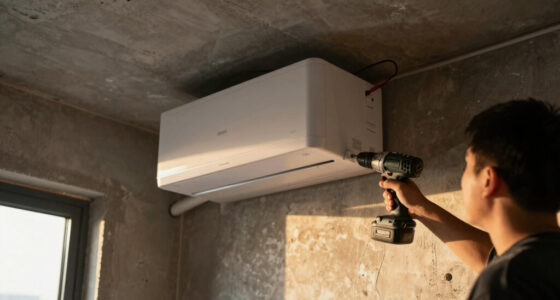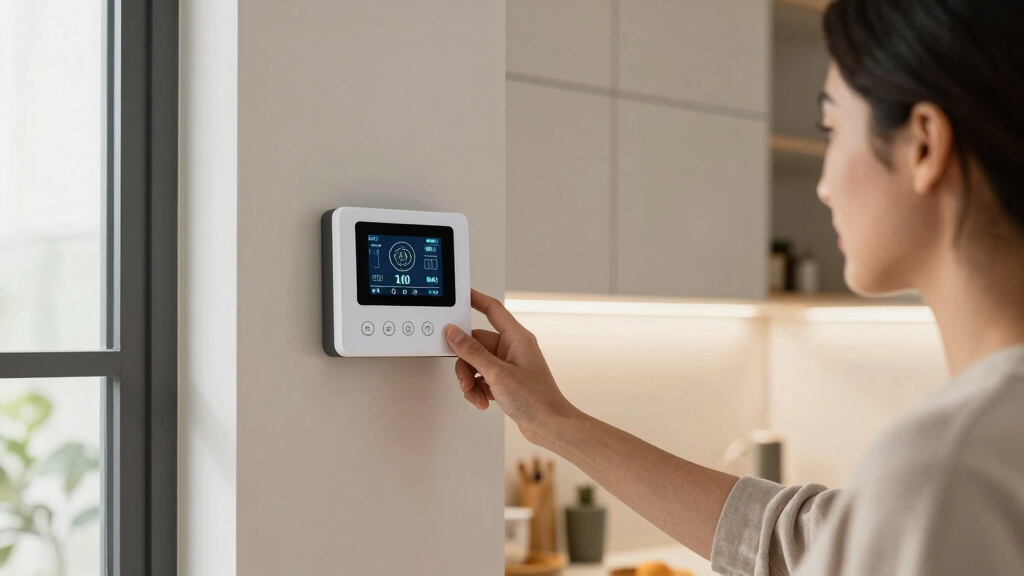

Choosing the best energy monitor for net metering requires balancing accuracy, ease of use, and integration capabilities. The Emporia Vue 3 Home Energy Monitor stands out as the overall top pick due to its comprehensive features and reliable performance. The Eyedro Smart Home Energy Monitor offers excellent connectivity options, making it ideal for more technical setups. Meanwhile, the Refoss EM16P provides strong API access and smart home integration for tech-savvy users. The main challenge lies in finding a monitor that combines precision with seamless data sharing, without overwhelming complexity. Keep reading for a detailed breakdown of these options to help you find the best fit for your energy setup.

Get home appliances delivered free with Prime
- Fast, free delivery on millions of items
- Prime Video, Amazon Music and more included
- Member-only deals all year
Complete the kit


Key Takeaways
- Top monitors offer a combination of high accuracy and broad connectivity options to support net metering needs.
- Integration with smart home platforms and open APIs is a key factor for advanced users looking to automate energy data.
- Price varies significantly, but investing in a more capable monitor can provide better long-term value through detailed insights.
- Installation complexity ranges from plug-and-play to circuit-level wiring, impacting ease of setup for different users.
- Monitoring multiple phases and high-current circuits is essential for larger or more complex solar systems.
| SEM-Meter Smart Home Energy Monitor with 16 50A Circuit Sensors |  | Best for Circuit-Level Monitoring and Multi-Phase Systems | Sensors: 16 x 50A Clamp-on | Supported Voltage: Single-phase up to 240VAC; Split-phase 120/240VAC; Three-phase up to 415Y/240VAC | Connectivity: 2.4GHz WiFi, MQTT, Home Assistant | VIEW LATEST PRICE | See Our Full Breakdown |
| Eyedro Smart Home Energy Monitor, 200A, Wi-Fi and Ethernet |  | Best for Basic Whole-House and Solar Monitoring with Wired Options | Sensors: Two 200A sensors | Connectivity: Wi-Fi and Ethernet | Supported Monitoring: Grid, solar, net metering | VIEW LATEST PRICE | See Our Full Breakdown |
| Siemens Inhab Smart Home Energy Monitor with Circuit-Level Sensors |  | Best for Detailed Circuit and Whole-Home Monitoring with Advanced Features | Main sensors: 2 x 200A CTs | Circuit sensors: 16 x 50A CTs | Monitoring: Whole-home and 16 circuits | VIEW LATEST PRICE | See Our Full Breakdown |
| Refoss Smart Home Energy Monitor with 16 60A Circuit Sensors and Local Control |  | Best for Privacy-Focused, Cloud-Free Monitoring with Extensive Circuit Coverage | Main sensors: 2 x 200A | Branch sensors: 16 x 60A | Supported systems: Single-phase, split-phase, 3-phase Wye | VIEW LATEST PRICE | See Our Full Breakdown |
| Emporia Vue 3 Home Energy Monitor |  | Best for Simple, User-Friendly Whole-Home Monitoring with Solar and Net Metering | Supported systems: Single phase, split phase, 2-wire, 3-wire, 3-phase Wye | Wi-Fi: 2.4 GHz | Sensor accuracy: ±2% | VIEW LATEST PRICE | See Our Full Breakdown |
| Eyedro 3-Phase Energy Meter 200A/600V 2.4GHz WiFi/Ethernet | 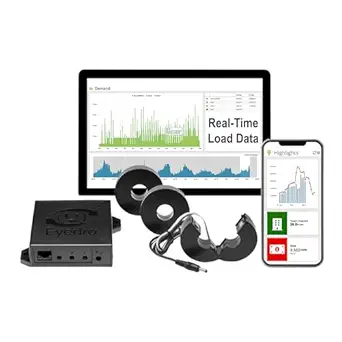 | Best Overall for Multi-Voltage, Non-Invasive Monitoring | Voltage Options: 600V Delta, 480V/277V Wye, 208V/120V, High‑Leg Delta | Connectivity: 2.4 GHz Wi‑Fi, Ethernet | Sensors Included: Split‑core CT sensors (200A) | VIEW LATEST PRICE | See Our Full Breakdown |
| Emporia Energy Monitor Bundle with 16 Sensors and 4 Smart Plugs |  | Best Value for Whole-Home and Circuit-Level Monitoring with Automation | Sensors: 16 | Smart plugs: 4 | Monitoring: Whole-home and up to 16 circuits | VIEW LATEST PRICE | See Our Full Breakdown |
| Refoss EM16P Smart Home Energy Monitor with Open API and Home Assistant Integration |  | Best for Local Control and Automation Integration | Model: EM16P | Main circuit sensors: 2, 2–200A each | Branch circuit sensors: 16, 1–60A each | VIEW LATEST PRICE | See Our Full Breakdown |
| Emporia Vue 3 Commercial 3‑Phase Smart Energy Monitor |  | Best for Commercial and High-Current Three-Phase Systems | Manufacturer: Emporia Corp. | Part Number: 999-00016 | Dimensions: 10 x 5 x 5 inches | VIEW LATEST PRICE | See Our Full Breakdown |
| energy monitors for net metering | Connectivity | Dimensions |
|---|---|---|
| SEM-Meter Smart Home Energy Mo | 2.4GHz WiFi, MQTT, Home Assistant | 3.1 x 1.2 x 4.18 inches |
| Eyedro Smart Home Energy Monit | Wi-Fi and Ethernet | 8 x 8 x 3 inches |
| Siemens Inhab Smart Home Energ | Wi-Fi and mobile app | 1.1 x 5.71 x 2.76 inches |
| Refoss Smart Home Energy Monit | Wi-Fi, Web UI, MQTT, Home Assistant | 4.5 x 3.5 x 1.1 inches |
| Emporia Vue 3 Home Energy Moni | — | — |
| Eyedro 3-Phase Energy Meter 20 | 2.4 GHz Wi‑Fi, Ethernet | — |
| Emporia Energy Monitor Bundle | — | — |
| Refoss EM16P Smart Home Energy | Wi-Fi, Open API, MQTT | — |
| Emporia Vue 3 Commercial 3‑Pha | — | 10 x 5 x 5 inches |
More Details on Our Top Picks
SEM-Meter Smart Home Energy Monitor with 16 50A Circuit Sensors
This monitor stands out for its extensive circuit-level monitoring with 16 clamp-on sensors, making it ideal for detailed energy management in multi-circuit or rental properties. Unlike the Emporia Vue 3, which focuses on whole-home monitoring, the SEM-Meter offers granular control and tracking across multiple circuits, supporting split and three-phase systems. Its support for local control via MQTT and Home Assistant appeals to privacy-conscious users who prefer to keep data in-house. The main tradeoffs include installation complexity—often requiring professional help—and reliance on a stable 2.4GHz WiFi network. While the high sensor count is a strength, the need for additional flexible sensors if only busbar access is available can be a limitation. Overall, this model is best suited for users needing detailed, customizable circuit-level insights and willing to handle more complex setup tasks.
Pros:- Includes 16 sensors for comprehensive circuit-level monitoring
- Supports local control via MQTT and Home Assistant for enhanced privacy
- Supports single, split, and three-phase systems for versatile applications
- High accuracy (1%) with real-time data and historical tracking
Cons:- Installation in circuit panel may require professional assistance
- Requires 2.4GHz WiFi network, limiting flexibility in some setups
Best for: Electrical contractors, rental property managers, or advanced homeowners needing detailed circuit data for net metering and energy optimization.
Not ideal for: Casual homeowners or beginners seeking simple, plug-and-play solutions without the need for panel access or professional installation.
- Sensors:16 x 50A Clamp-on
- Supported Voltage:Single-phase up to 240VAC; Split-phase 120/240VAC; Three-phase up to 415Y/240VAC
- Connectivity:2.4GHz WiFi, MQTT, Home Assistant
- Accuracy:1%
- Dimensions:3.1 x 1.2 x 4.18 inches
- Weight:4.05 pounds
Our verdict“This pick is best for technically skilled users who need detailed circuit data and privacy control for complex energy monitoring scenarios.”
Eyedro Smart Home Energy Monitor, 200A, Wi-Fi and Ethernet
The Eyedro monitor excels at providing straightforward, real-time energy data for entire households, with flexible connectivity through Wi-Fi or Ethernet. Compared with the Siemens Inhab, which offers detailed circuit monitoring, Eyedro’s strength lies in its simplicity and broad compatibility, including solar and net metering support. It’s a strong fit for users who want a single unit to track overall consumption or solar production without the complexity of multiple sensors. The main drawback is that separating grid and solar production requires two units, making it less convenient for those seeking integrated, single-unit solutions. Its dual connectivity options and cloud access via MyEyedro make it accessible for most users, but advanced circuit-level insights are limited.
Pros:- Supports both Wi-Fi and wired Ethernet for flexible connectivity
- Includes two 200A sensors suitable for large homes or solar setups
- Provides real-time monitoring of household energy, solar, and net metering
- Cloud access via MyEyedro without subscription fees
Cons:- Separating grid and solar production needs two units, adding complexity and cost
- Single-unit setup cannot monitor grid and solar simultaneously in one device
Best for: Homeowners seeking easy, reliable whole-house energy and solar monitoring with flexible wired or wireless connectivity.
Not ideal for: Energy enthusiasts who want detailed circuit-level data or a single device that separates grid and solar production without additional units.
- Sensors:Two 200A sensors
- Connectivity:Wi-Fi and Ethernet
- Supported Monitoring:Grid, solar, net metering
- Dimensions:8 x 8 x 3 inches
- Weight:1.54 pounds
Our verdict“Ideal for users needing straightforward, whole-house energy and solar tracking with flexible connectivity options.”
Siemens Inhab Smart Home Energy Monitor with Circuit-Level Sensors
This model offers a comprehensive approach by measuring energy at both the main panel and up to 16 individual circuits, making it suitable for detailed energy and production analysis. Unlike the Emporia Vue 3, which targets basic whole-home monitoring, the Siemens Inhab provides granular insights and supports advanced features like time-of-use management, peak demand control, and load shedding—key for optimizing net metering and solar excess. Its integration with a mobile app makes data accessible and actionable. The main tradeoff is the requirement for installation in a dedicated electrical panel, which can be a barrier for DIY users or those in rental properties. Additionally, it’s limited to North American markets, restricting availability for international users.
Pros:- Measures energy at the main panel and 16 circuits for detailed insights
- Includes personalized alerts, time-of-use, and demand management features
- Supports excess solar and net metering management
- Mobile app provides real-time data and notifications
Cons:- Requires installation in an electrical panel, limiting DIY options
- Available only in the US and Canada, restricting international use
Best for: Electricians or advanced homeowners interested in detailed circuit monitoring, energy management, and solar excess control.
Not ideal for: Casual users or renters who lack access to the main electrical panel or prefer plug-and-play solutions.
- Main sensors:2 x 200A CTs
- Circuit sensors:16 x 50A CTs
- Monitoring:Whole-home and 16 circuits
- Connectivity:Wi-Fi and mobile app
- Certifications:CE, UL
- Dimensions:1.1 x 5.71 x 2.76 inches
Our verdict“Best suited for users who need comprehensive circuit-level data coupled with advanced energy management features for net metering optimization.”
Refoss Smart Home Energy Monitor with 16 60A Circuit Sensors and Local Control
The Refoss EM16P excels in privacy-conscious setups with its local Web UI, MQTT, and WebSocket integrations, making it ideal for users who prefer to avoid cloud reliance. Supporting up to 18 circuits with two main sensors and 16 branch sensors, it rivals more complex systems like Siemens Inhab but with a focus on local control and automation. Its compatibility with various electrical systems and detailed data storage—up to 5 years—appeals to advanced users managing solar, net metering, or complex loads. However, sensor installation inside breaker panels can be challenging, and it requires a compatible electrical system—limiting ease of use for some homeowners. Its robust local control features make it a strong choice for tech-savvy users prioritizing data privacy.
Pros:- Supports local Web UI, MQTT, WebSocket, and Home Assistant for cloud-free control
- Tracks up to 18 circuits with ±1% accuracy
- Stores data for 5 years and supports CSV export
- Compatible with various electrical systems, including 3-phase Wye
Cons:- Installation involves placing sensors inside the breaker panel, requiring technical skill
- Requires a compatible electrical system; not suitable for all homes
Best for: Home automation enthusiasts and privacy-conscious users comfortable with sensor installation in breaker panels.
Not ideal for: Casual homeowners or those seeking a simple plug-and-play device without sensor setup complexity.
- Main sensors:2 x 200A
- Branch sensors:16 x 60A
- Supported systems:Single-phase, split-phase, 3-phase Wye
- Connectivity:Wi-Fi, Web UI, MQTT, Home Assistant
- Data retention:5 years
- Dimensions:4.5 x 3.5 x 1.1 inches
Our verdict“Ideal for users wanting detailed circuit data and full local control without reliance on cloud services.”
Emporia Vue 3 Home Energy Monitor
The Emporia Vue 3 makes a compelling case for straightforward energy tracking, especially for users who want to monitor solar production and net metering without extensive setup. Its clamp-on sensors are easy to install in a circuit panel, similar to the Siemens Inhab but with a more user-friendly approach. Unlike the other options, it does not support circuit-level insights, but it excels at providing real-time data, notifications, and automation features through its dedicated app. Its main limitation is the reliance on 2.4 GHz Wi-Fi and the need for an internet connection, which may be a concern for those seeking local-only control. Additionally, an optional 200A sensor must be purchased separately if monitoring large circuits. This monitor is best for homeowners seeking a balance between ease of use and solar/net metering support.
Pros:- Simple, plug-and-play installation in circuit panels
- Supports solar and net metering monitoring
- Provides real-time data, notifications, and automation via app
- UL and CE listed for safety and compliance
Cons:- Requires internet connection and Wi-Fi; no local control options
- Additional 200A sensor sold separately for large circuits
Best for: Homeowners wanting easy whole-home energy and solar monitoring with app-based automation and notifications.
Not ideal for: Energy professionals or users needing detailed circuit-level data or local control without internet dependency.
- Supported systems:Single phase, split phase, 2-wire, 3-wire, 3-phase Wye
- Wi-Fi:2.4 GHz
- Sensor accuracy:±2%
- Data retention:7 days (1-minute), 3 hours (3-second)
- Certifications:UL, CE
- Installation:Circuit panel with clamp-on sensors
Our verdict“Best suited for homeowners who want straightforward, reliable whole-house solar and net metering monitoring with app control.”
Eyedro 3-Phase Energy Meter 200A/600V 2.4GHz WiFi/Ethernet
This model stands out for its ability to monitor multiple voltage configurations, including delta and wye systems, making it highly versatile for complex setups. Compared with the Emporia Vue 3 Commercial, it offers more detailed real-time data and unlimited historical storage without a subscription, which is ideal for those needing comprehensive insights. However, it requires additional hardware to distinguish solar from grid usage, and the EU power adapter is sold separately, adding some inconvenience. The non-invasive split-core sensors simplify installation, and the cloud platform provides full history at no extra cost. This pick makes the most sense for property owners with varied electrical systems who prioritize detailed, long-term data without ongoing fees.
Pros:- Supports multiple voltage configurations, including delta and wye systems
- Non-invasive split-core sensor installation
- Unlimited cloud data storage with no subscription fees
- Provides real-time consumption, generation, and cost data
Cons:- Requires additional hardware to differentiate solar from grid usage
- EU power adapter is sold separately
- Installation may be complex for some users
Best for: Owners of commercial or large residential properties with multiple voltage configurations and a focus on detailed, long-term data.
Not ideal for: Homeowners with simple single-phase setups or those seeking plug-and-play solutions, as installation complexity may be a barrier.
- Voltage Options:600V Delta, 480V/277V Wye, 208V/120V, High‑Leg Delta
- Connectivity:2.4 GHz Wi‑Fi, Ethernet
- Sensors Included:Split‑core CT sensors (200A)
- Power Adapter:6VAC North American (EU sold separately)
- Data Storage:Full 24/7 usage history in cloud
- Software:MyEyedro platform – no subscription required
Our verdict“This is best suited for users with complex electrical systems who need detailed, long-term monitoring without ongoing costs.”
Emporia Energy Monitor Bundle with 16 Sensors and 4 Smart Plugs
This bundle makes sense for homeowners seeking a comprehensive view of their entire electrical usage, with the ability to monitor up to 16 circuits and control connected devices through smart plugs. Unlike the more specialized Refoss EM16P, it offers simple installation and an intuitive app that supports scheduling, trend analysis, and automation, making it ideal for users new to energy monitoring. The cloud-based data storage, however, means ongoing internet reliance, and circuit-level monitoring requires installing sensors in the main panel, which might be challenging for some. The inclusion of smart plugs adds convenience for device-level control, complementing the circuit data. This option is perfect for those wanting an all-in-one solution for home energy management with easy setup and automation features.
Pros:- Tracks whole-home and up to 16 circuits
- Includes four smart plugs with remote control capabilities
- Supports energy management automation and scheduling
- Compatible with solar net metering and smart home devices
Cons:- Data stored in the cloud, requiring internet reliance
- Circuit monitoring requires installing sensors in the main panel
- Limited to Wi-Fi connectivity; no local data access
Best for: Homeowners wanting a user-friendly, all-in-one system with both circuit monitoring and device control, including smart automation.
Not ideal for: Users preferring local control or with limited internet access, as it relies on cloud storage and Wi-Fi connectivity.
- Sensors:16
- Smart plugs:4
- Monitoring:Whole-home and up to 16 circuits
- Data frequency:Second-by-second
- App compatibility:iOS and Android
- Solar support:Yes
Our verdict“This bundle is ideal for homeowners seeking easy, comprehensive monitoring with automation and device control features.”
Refoss EM16P Smart Home Energy Monitor with Open API and Home Assistant Integration
This model excels for users who want complete control over their energy data without relying on cloud services. Its local web interface, Open API, and MQTT make it highly suitable for advanced automation and integration with systems like Home Assistant. Compared with the Emporia Vue 3, the Refoss EM16P provides more flexibility with data access and automation, though its installation demands access to the electrical panel and some technical skill. Its accuracy drops slightly at low current levels, which might matter for very precise measurements. This monitor is perfect for tech-savvy homeowners or professionals who prioritize local control, automation, and long-term data storage over plug-and-play convenience.
Pros:- Local web UI, Open API, and MQTT for direct control
- Native Home Assistant integration for automation
- Monitors up to 16 branch circuits plus two main circuits
- Stores daily data for up to five years
Cons:- Installation requires access to electrical panel, which can be complex
- Accuracy diminishes at very low currents
- No cloud-based monitoring, so remote access is limited
Best for: Home automation enthusiasts and professionals seeking local, open-source control over circuit data and automation integration.
Not ideal for: Less technical users or those unwilling to access their electrical panel for installation, as it requires some electrical work and setup knowledge.
- Model:EM16P
- Main circuit sensors:2, 2–200A each
- Branch circuit sensors:16, 1–60A each
- Connectivity:Wi-Fi, Open API, MQTT
- Data storage:Up to 5 years
- Certifications:ETL, UL 61010
Our verdict“This is best suited for users who want customizable, local control and automation with extensive long-term data storage.”
Emporia Vue 3 Commercial 3‑Phase Smart Energy Monitor
This model is geared toward larger systems, supporting three-phase setups up to 600A, making it suitable for commercial or industrial applications. Compared to the residential Vue models, it offers eight 50A branch sensors for detailed usage of major loads and real-time data via an app. It’s a solid choice for larger properties or small businesses that need precise, high-capacity monitoring. However, it requires additional sensors for higher-current circuits and only provides one-second resolution when the app is open, which could limit real-time analysis. Its UL and CE listings ensure safety compliance, but the installation is more involved, and its bulkier size may be a consideration for some panels. It makes the most sense for larger, multi-phase systems needing detailed, high-current monitoring with automation options.
Pros:- Supports single-phase, split-phase, and three-phase systems up to 600A
- Includes eight 50A branch sensors for detailed load tracking
- Real-time app monitoring with cloud data storage
- UL and CE safety certifications
Cons:- Additional sensors needed for higher-current circuits
- One-second data resolution only when app is active
- Requires hardwired installation and Wi-Fi connection
Best for: Commercial facilities or large homes with three-phase systems up to 600A requiring detailed load monitoring and automation.
Not ideal for: Small residential single-phase homes or users seeking simple plug-and-play solutions, due to installation complexity and size.
- Manufacturer:Emporia Corp.
- Part Number:999-00016
- Dimensions:10 x 5 x 5 inches
- Weight:3.63 pounds
- Monitoring:Up to 600A, three-phase
- Sensors:8 x 50A branch sensors
- Power Source:Hardwire
- Warranty:1 Year
Our verdict“This monitor is ideal for large-scale, three-phase systems where detailed, high-current load tracking and automation are priorities.”

How We Picked
The products in this roundup were selected based on their ability to accurately measure energy flow in net metering setups, ease of installation, and data accessibility. We prioritized models that support critical features like multi-phase monitoring, API access, and connectivity options such as Wi-Fi or Ethernet. Usability and build quality were also key factors, ensuring that the monitors are reliable over time. The ranking reflects a balance between performance, versatility, and value, aiming to help a range of users from beginners to advanced solar enthusiasts.Factors to Consider When Choosing Best Energy Monitors For Net Metering
When choosing the best energy monitor for net metering, it’s important to consider several factors that influence performance, usability, and future-proofing. A well-chosen monitor can provide accurate data, facilitate system adjustments, and support integration with other smart home devices. Avoiding common pitfalls such as underestimating the importance of multi-phase monitoring or ignoring data accessibility can save time and money. Here are key factors to keep in mind:Accuracy and Measurement Range
Precision in energy measurement is vital for net metering, as it directly impacts billing and system optimization. Look for monitors with high-quality sensors and the ability to handle your system’s voltage and current levels. Inaccurate data can lead to billing discrepancies or missed opportunities for system improvements. Consider models that specifically support your system’s phase count and current ratings for reliable results.
Connectivity and Data Accessibility
Having access to your energy data via Wi-Fi, Ethernet, or cloud platforms enhances your ability to track and analyze consumption. Open APIs or integration with platforms like Home Assistant or SmartThings can enable automation and detailed insights. Be cautious of monitors with limited connectivity options, as they may restrict your ability to use data effectively or require additional hardware for remote access.
Ease of Installation and Use
While plug-and-play monitors are ideal for DIY setups, larger systems often need circuit-level sensors that require wiring. Evaluate your technical comfort level and choose accordingly. Clear instructions, good build quality, and customer support also contribute to a smoother installation process. Remember, a complicated setup can discourage regular monitoring and data utilization.
Compatibility with Your System
Ensure the monitor supports your system’s electrical specifications, including phase count and maximum current. For multi-phase or commercial systems, selecting a monitor designed for higher loads and multiple phases is essential. Compatibility issues can result in inaccurate data or the need for costly modifications later.
Price and Long-term Value
Investing in a higher-quality monitor can be worthwhile if it provides detailed data, reliable connectivity, and future expandability. Cheaper models may lack accuracy or integration features, but a more expensive monitor often offers better support and longevity. Consider your specific needs and budget to find the right balance between cost and capabilities.
Frequently Asked Questions
Can I use a standard energy monitor for net metering?
While some standard energy monitors can measure overall consumption, they may not support the detailed, multi-phase measurement or data logging required for accurate net metering. For optimal results, choose a monitor that explicitly supports grid-tied systems and offers features like circuit-level sensors, open API, or multi-phase monitoring. This ensures precise data collection and seamless integration with your utility’s billing process.
What is the importance of API access in energy monitors?
API access allows you to retrieve detailed energy data programmatically, enabling integration with home automation systems, custom dashboards, or energy management tools. This feature is especially valuable for users who want to automate system adjustments or analyze energy flow in detail. Monitors without open APIs may still provide data, but often with limited flexibility or manual access, reducing long-term usability.
How difficult is it to install a circuit-level energy monitor?
Circuit-level monitors generally require wiring into your electrical panel, which can be complex for those without electrical experience. Proper installation involves safety precautions and understanding your system’s wiring. If you’re comfortable with basic electrical work, it can be a straightforward process, but for others, hiring a professional is recommended. Remember, a proper installation is key to accurate data and system safety.
Should I prioritize a monitor with smart home integration?
If you want to incorporate energy data into your smart home ecosystem, choose a monitor with built-in integration options or open APIs. This can automate responses like adjusting thermostats or controlling loads based on energy production and consumption. However, if you only need basic monitoring for billing purposes, simpler models may suffice, saving costs while still providing essential data.
Is higher current or phase support always better?
Not necessarily. Higher current capacity and multi-phase support are important for larger or more complex solar systems, ensuring accurate measurement across all circuits. For small residential setups, a monitor supporting single-phase, lower current ratings may be sufficient and more cost-effective. Assess your system’s size and complexity before selecting a model to avoid overspending or inadequate measurement.
Conclusion
For most homeowners seeking reliable, easy-to-use monitoring, the Emporia Vue 3 offers excellent overall performance and value. Those with more technical setups or larger systems may prefer the Eyedro Wi-Fi/ Ethernet models for their advanced connectivity and API options. Beginners should prioritize simple, plug-and-play solutions, while advanced users should look for models with multi-phase support and open APIs. Ultimately, your choice depends on system size, technical comfort, and whether detailed data integration is a priority.