
Editorial update log
November 17, 2026:
Deal update: RoundupForge price history now flags ASIN B075BF6V58 on amazon.com as below its typical tracked range. RF labels the deal as all_time_low.
Exact pricing remains intentionally gated through the live Grimfaste price module in the article.
Smart thermostats with voice control are often compared on more than whether they can change the temperature when asked. The real choice is whether you want a thermostat that doubles as a small home-monitoring hub or one that learns your routines and works smoothly with Google Home. Ecobee Smart Thermostat Premium has built-in Alexa, an air-quality monitor, and a remote sensor in the box; Google Nest Learning Thermostat (4th gen) emphasizes automatic scheduling, a redesigned display, and Google Assistant integration.

Get home appliances delivered free with Prime
- Fast, free delivery on millions of items
- Prime Video, Amazon Music and more included
- Member-only deals all year
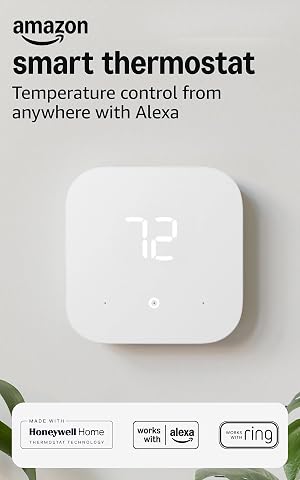
Amazon Smart Thermostat – Works with Alexa and Ring, C‑wire Required
- ✔ HVAC compatibility: Most 24V conventional forced air, heat pump, and radiant boiler systems
- ✔ Voice control: Alexa; requires an Alexa-enabled device
- ✔ C-wire: Required, or use optional power adapter kit

Honeywell Home RTH9585WF1004 Wi-Fi Smart Color Thermostat, 7 Day Programmable, Touch Screen, Energy Star, Alexa Ready, Gray
- ✔ Voice platforms: Alexa and Google Home
- ✔ Display: Customizable color touchscreen
- ✔ Programming: Seven-day schedules and vacation hold

Smart Thermostat with Voice Control and LCD Display
- ✔ Application: Electric heating
- ✔ Supply: 95–240V AC, 50/60Hz
- ✔ Voice platforms: Tmall and Home
Both can make everyday temperature changes easier, but their advantages serve different homes. Ecobee is the stronger fit if room-by-room comfort, Alexa access, or extra household monitoring matters. Nest is more appealing if you already use Google Home and want the thermostat to adapt to your schedule with less manual programming. The best value depends on which of those features you will actually use, as well as compatibility with your heating and cooling system.
At a Glance
| Criteria | ecobee Smart Thermostat Premium | Google Nest Learning Thermostat (4th gen) | Winner |
|---|---|---|---|
| Voice control | Built-in Alexa; works with Siri through supported Apple home setups | Google Assistant voice control; Google Home app integration | A |
| Learning and scheduling | Programmable schedules and occupancy features; less centered on automatic learning | Learns patterns and can adjust schedules automatically | B |
| Room comfort | Includes one SmartSensor; additional sensors can target other rooms | Works with compatible Nest temperature sensors, sold separately | A |
| Extra monitoring | Built-in air-quality monitoring and smoke-alarm listening features | No comparable built-in air-quality monitor or smoke-alarm listening feature | A |
| Smart-home fit | Strong Alexa and Apple Home options; also supports Google Assistant | Best fit with Google Home and compatible Google devices | Depends |
| Installation and compatibility | Broad system support, but some setups need a C-wire or Power Extender Kit | Compatibility varies; check system requirements and wiring before purchase | Depends |
| Value | Higher feature density if you use the sensor and monitoring tools | Worth the premium for Google integration and adaptive scheduling | Depends |
Amazon Smart Thermostat – Works with Alexa and Ring, C‑wire Required
For a household already built around Alexa, the Amazon Smart Thermostat makes voice control the most straightforward part of the decision. It works with Alexa and the Alexa app, and can connect with Echo devices for spoken temperature changes. The thermostat itself has no far-field microphone, though, so buyers need an Alexa-enabled device nearby; it is not a standalone voice terminal. That distinction matters if we expect to speak directly to the wall unit.Its compatibility is aimed at most 24V systems, including conventional forced air, heat pumps, and radiant boilers, while electric baseboard systems in the 110–240V range are excluded. The C-wire requirement is another practical gate: homes without one need to consider the optional power adapter. Honeywell also requires a C-wire, but it offers Google Home compatibility and richer on-device programming. Amazon’s advantage is a more focused Alexa setup, guided installation through its app, and ENERGY STAR certification. Its limitation is equally clear: 2.4 GHz Wi-Fi only and no direct Google Home voice support listed here.This pick makes sense when Alexa is already the household’s preferred assistant and the HVAC system fits. If we want a thermostat with more flexible voice ecosystem support or a prominent screen, Honeywell is the stronger alternative. Buyers with electric baseboard heat should skip this model and look at a thermostat specifically suited to that system, such as the third option, after checking its platform and installation requirements.
Pros:
- Works with Alexa app and compatible Echo devices for voice and remote control.
- Guided installation through the Alexa app helps organize setup.
- ENERGY STAR certified and uses Honeywell Home thermostat technology.
- Supports many 24V forced-air, heat-pump, and radiant-boiler systems.
Cons:
- Requires a C-wire or optional power adapter.
- Voice control requires a separate Alexa-enabled device; the thermostat has no microphone.
- Supports 2.4 GHz Wi-Fi only and is not compatible with 110–240V electric baseboard heat.
Best for: Alexa households with a compatible 24V HVAC system, an available C-wire or adapter, and an existing Echo or other Alexa-enabled device.
Not ideal for: Homes using electric baseboard heat, households without an Alexa device, or buyers who need 5 GHz Wi-Fi or Google Home voice control.
Bottom line: We rank it first for Alexa homes because it pairs a clear voice-control path with broad 24V system coverage, provided the wiring and external Alexa device are in place.
“We rank it first for Alexa homes because it pairs a clear voice-control path with broad 24V system coverage, provided the wiring and external Alexa device are in place.”
Honeywell Home RTH9585WF1004 Wi-Fi Smart Color Thermostat, 7 Day Programmable, Touch Screen, Energy Star, Alexa Ready, Gray
When we want voice control without committing to Alexa alone, the Honeywell Home RTH9585WF is the most flexible match in this lineup. Its stated support for Alexa and Google Home gives it an advantage over the Amazon model for households split between assistants or considering a change later. Voice operation is paired with app access and a customizable color touchscreen, so we can choose between spoken commands, a phone, and direct wall controls.The screen is more than a styling detail: it gives this model a visible, touch-based way to adjust temperature and review settings without reaching for a phone. Flexible seven-day programming, vacation holds, demand-response compatibility, and energy reports also make it a better fit for buyers who want scheduled control as well as voice commands. Compared with Amazon’s simpler Alexa-focused pitch, Honeywell offers more ways to manage routines, though that broader feature set may take more setup. Its description also flags installation as challenging for DIY beginners.We should check wiring and system type before choosing it. A C-wire is required, and the provided compatibility notes exclude electric baseboard heat and certain heating-only oil furnaces lacking a C-wire. Amazon shares the C-wire constraint, but its setup is presented as guided through the app. The Honeywell’s distinctive case is therefore assistant choice and an information-rich screen, not the easiest installation. The third thermostat is the more relevant comparison for electric heating, but it has a narrower stated voice-platform fit.
Pros:
- Supports voice control through Alexa and Google Home.
- Customizable color touchscreen provides direct control and a configurable display.
- Seven-day schedules and vacation holds support routine changes.
- Energy reports and demand-response compatibility add information beyond voice commands.
Cons:
- Requires a C-wire; an adapter may be needed in homes without one.
- Installation may be challenging for DIY beginners.
- Not compatible with electric baseboard heat or certain heating-only oil furnaces without a C-wire.
Best for: Households that want Alexa or Google Home voice control, a customizable touchscreen, and programmable schedules for a compatible system.
Not ideal for: DIY beginners seeking the simplest installation, homes without a C-wire, or households with electric baseboard heat.
Bottom line: We place it second because it offers the broadest stated voice-assistant choice and stronger scheduling controls, at the cost of a more involved installation and C-wire dependence.
“We place it second because it offers the broadest stated voice-assistant choice and stronger scheduling controls, at the cost of a more involved installation and C-wire dependence.”
Smart Thermostat with Voice Control and LCD Display
This LCD thermostat takes a different route from the two U.S.-oriented 24V models: it is described for electric heating and lists a 95–240V AC supply range. That makes it the most relevant option here for buyers whose system does not fit Amazon’s stated 24V compatibility or Honeywell’s exclusions. We should still verify the exact heater, wiring, and installation fit before buying, since the product details also specify mounting-hole spacing and a separate power module.Its voice feature uses Tmall and Home, rather than Alexa or Google Home. That platform choice is the main dividing line in this roundup. Buyers already using those services may value hands-free adjustments, while Alexa households will find the Amazon model more directly aligned and Google Home users have a clearer match in Honeywell. The LCD display adds weather, humidity, and PM2.5 information, along with stated ±0.5°C accuracy. Those readings may appeal to buyers who want climate and air-quality context at the thermostat, though they do not replace checking dedicated air-quality equipment where that is needed.The slim panel and capacitive controls suit a modern wall installation, but the installation dimensions are specific, and the IP20 rating means it is not intended for wet or moisture-prone locations. The product description does not name the same assistant breadth or scheduling and reporting tools as Honeywell. We rank it third because its electric-heating focus and display are distinctive, but its voice-platform availability and installation fit need more careful confirmation than the first two picks.
Pros:
- Designed for electric heating and lists a 95–240V AC supply range.
- Supports voice commands through Tmall and Home.
- LCD shows weather, humidity, and PM2.5 information.
- Slim panel with capacitive touch controls and a built-in sensor.
Cons:
- Voice-platform support may not suit buyers outside Tmall and Home ecosystems or regions.
- IP20 protection is not suited to moisture-prone locations.
- Specified installation center-hole spacing may limit placement or require adjustment.
Best for: Buyers with compatible electric heating who use Tmall or Home and want temperature control alongside weather, humidity, and PM2.5 readings.
Not ideal for: Alexa- or Google Home-centered households, damp locations, or buyers who cannot confirm the specified voltage and mounting dimensions.
Bottom line: We recommend it for compatible electric-heating setups only when its Tmall and Home voice platforms, voltage, and mounting requirements all match the home.
“We recommend it for compatible electric-heating setups only when its Tmall and Home voice platforms, voltage, and mounting requirements all match the home.”
As an Amazon Associate we earn from qualifying purchases.
Key Differences
The clearest difference is what each thermostat adds beyond remote temperature control. Ecobee includes a room sensor and adds air-quality readings and smoke-alarm listening. Those features can make it more useful in a home where bedrooms run hotter than the living room, or where household members want voice control and a quick view of indoor conditions. The included sensor makes room balancing available from the start, though a single sensor cannot solve every uneven-temperature problem.
Nest’s case is centered on convenience within Google’s ecosystem. Its learning features can reduce schedule setup, and Google Home integration is a natural fit for households already using Google speakers, displays, or routines. Ecobee can also work with Google Assistant, but its built-in voice experience is Alexa. If you want Google voice interaction at the thermostat itself, Nest is the more direct choice.
Neither thermostat can compensate for an incompatible HVAC system or poor sensor placement. Check system compatibility before buying, then weigh the features you will use routinely. Paying more for Ecobee makes sense when the sensor and monitoring tools earn their place in your home. Paying more for Nest makes sense when you value Google integration and schedule learning; if you mainly want voice temperature changes, a less expensive compatible thermostat may be better value.
Detailed Comparison
Ecobee wins for built-in voice flexibility: Alexa is available at the thermostat, and supported Apple Home configurations can add Siri control. Nest gives Google Assistant users a more direct match through the Google Home ecosystem. This is a moderate, household-dependent difference: pick Ecobee for Alexa at the device, or Nest if Google is already your preferred assistant. Both are easier to control by voice than a basic programmable thermostat, but voice support depends on the services and setup you use.
Learning and scheduling (Google Nest Learning Thermostat (4th gen) wins — moderate)
Nest wins for households that want the thermostat to learn routines and adjust its schedule with less hands-on programming. Ecobee offers scheduling and occupancy-related features, but its appeal is less about automatic learning. The gap is moderate: Nest may save setup effort over time, while Ecobee suits people who prefer to set schedules and use sensors to shape comfort. Learning is not a guarantee of lower bills; savings depend on the home, equipment, and temperature habits.
Ecobee wins on included room balancing because a SmartSensor comes in the box. It can help the thermostat respond to conditions in a room beyond the thermostat’s location, such as a bedroom. Nest supports compatible temperature sensors, but they are an added purchase. The practical gap is moderate: Ecobee offers a lower-friction start for homes with uneven room temperatures, while either system may require additional sensors for broader coverage.
Ecobee wins clearly with built-in air-quality monitoring and smoke-alarm listening features. Nest’s core advantage is temperature management and smart-home integration, not comparable household monitoring. The gap is major only if those tools matter to you; otherwise, it is a minor reason to choose between thermostats. Treat the air-quality readings as a useful signal, not a replacement for dedicated safety or air-quality equipment.
Smart-home fit (major difference)
The winner depends on the ecosystem. Nest has the cleaner fit for Google Home households, especially when routines and other Google devices are already in daily use. Ecobee is better suited to Alexa users and can also fit into supported Apple Home setups. This is a major difference for a home committed to one platform and a minor one for people who use the thermostat mostly on its own. Check which integrations are supported in your region and configuration.
Installation and compatibility (major difference)
There is no universal winner: both require a compatible heating and cooling system, and wiring needs vary by installation. Ecobee may need a C-wire or its included Power Extender Kit in some homes. Nest compatibility also depends on the system and wiring. The difference is practical rather than a product-quality contest: confirm your exact HVAC equipment and wiring before purchase, because a thermostat that cannot control your system has no value.
Value (moderate difference)
Value depends on which features earn regular use. Ecobee can justify its higher feature load for owners who will use the included sensor, built-in Alexa, and monitoring tools. Nest earns its price for Google Home households that want schedule learning and its ecosystem fit. The gap is moderate: if you only need voice temperature changes, paying for either premium feature set may be unnecessary. Compare current prices and verify sensor costs before deciding.
Pros:
- Alexa is built into the thermostat
- Includes a room sensor for comfort away from the thermostat
- Adds air-quality monitoring and smoke-alarm listening
- Supports multiple smart-home ecosystems
Cons:
- Automatic schedule learning is less central than on Nest
- Extra sensors can add to the total cost
- Some installations need a C-wire or Power Extender Kit
Google Nest Learning Thermostat (4th gen): Pros and Cons
Pros:
- Learns household patterns to help automate schedules
- Direct fit for Google Home and Google Assistant users
- Compatible temperature sensors can extend comfort coverage
Cons:
- Room sensors are an added purchase
- Lacks Ecobee’s built-in air-quality monitoring and smoke-alarm listening
- Less compelling for households centered on Alexa or Apple Home
Who Should Choose What
Choose ecobee Smart Thermostat Premium if:
- You want Alexa available on the thermostat itself.
- A room sensor included in the purchase would help address uneven temperatures.
- You will use air-quality readings or smoke-alarm listening features.
Choose Google Nest Learning Thermostat (4th gen) if:
- Your household already relies on Google Home and Google Assistant.
- You want the thermostat to learn your routine and reduce schedule adjustments.
- You prefer Google’s ecosystem and do not need Ecobee’s monitoring features.
Skip both if: Skip both premium models if you only need basic app or voice temperature control, or if your HVAC system is not compatible; compare a less expensive thermostat that supports your system and preferred assistant.
Value for Money
Paying more is worthwhile when a premium feature solves a recurring problem. Ecobee’s value is strongest when you will use its included room sensor and built-in monitoring, rather than buying it solely for voice control. Nest’s premium is easier to justify for Google Home households that want automatic schedule learning and a consistent Google experience. If you will not use those extras, a lower-priced voice-compatible model may deliver better value. Check current pricing, sensor availability, and HVAC compatibility before comparing totals.
Final Verdict
For most households choosing between these two, buy Ecobee Smart Thermostat Premium if room comfort and built-in Alexa or monitoring are the priorities. It gives you more useful hardware in the box, especially when the thermostat’s location does not reflect the temperature where people sleep or spend time.
Choose Google Nest Learning Thermostat (4th gen) if Google Home is already central to your household and you want schedule learning to do more of the routine work. The biggest deciding factor is ecosystem and feature use: Ecobee is the more versatile feature set, while Nest is the clearer Google-first choice. Do not pay either premium price just for occasional voice commands; first confirm compatibility and consider whether a simpler model meets that need.
Frequently Asked Questions
Which thermostat is better for Google Assistant?
Nest is the more direct fit for Google Home and Google Assistant households. Ecobee can also work with Google Assistant, but its built-in voice control centers on Alexa.
Does Ecobee include a room sensor?
Ecobee Smart Thermostat Premium includes one SmartSensor. It can help the thermostat account for temperature in another room, though homes with several problem rooms may need more sensors.
Does Nest Learning Thermostat include a temperature sensor?
Nest supports compatible temperature sensors, but verify what is included with the specific product and retailer listing. Additional sensors may increase the system’s total cost.
Will either thermostat lower my energy bill?
Either can support more controlled schedules and remote adjustments, but neither guarantees savings. Results depend on your HVAC system, insulation, settings, and how you use the thermostat.
Should I pay extra for a premium voice thermostat?
Pay extra when you will use features such as room sensing, schedule learning, or smart-home integration. If voice control is the only requirement, compare less expensive compatible models before choosing either premium option.