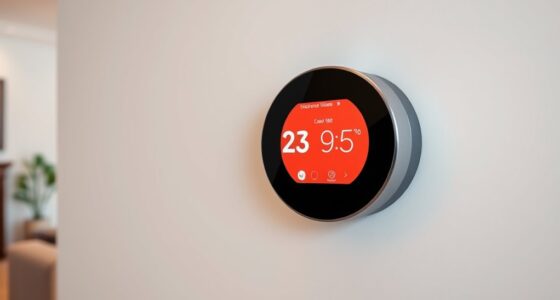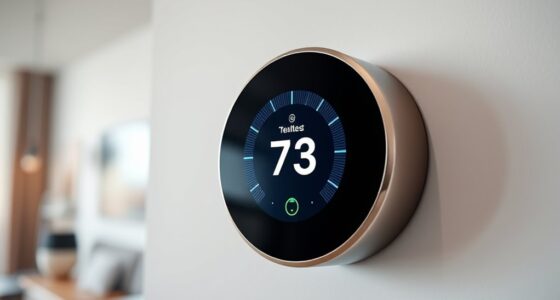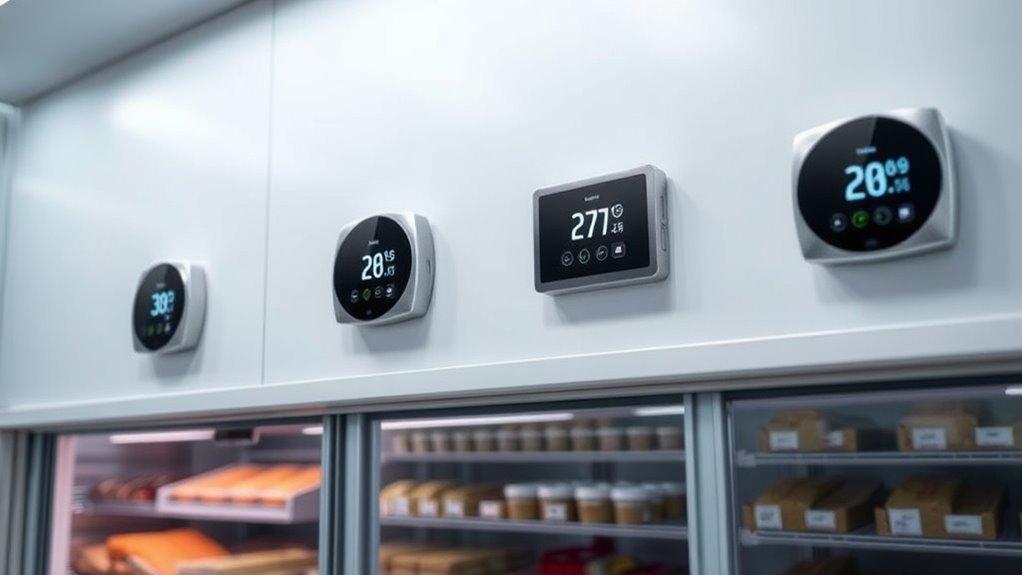

If you’re looking for the best smart thermostats for cold storage, I recommend models like ecobee, Nest, and Sensi which offer precise temperature control, easy DIY installation, and compatibility with smart home systems. Features like sensors, climate monitoring, and auto-scheduling help keep goods perfectly preserved. While installation can be straightforward, some systems require specific wiring or adapters. Keep exploring to find the perfect fit for your storage needs and guarantee your goods stay in ideal condition.
Key Takeaways
- Look for thermostats with precise temperature control and humidity monitoring to maintain optimal conditions for cold storage.
- Prioritize models with remote access and automation features for real-time adjustments and consistent environment management.
- Ensure compatibility with your existing HVAC system and support for multi-zone or area-specific climate control.
- Choose thermostats with reliable connectivity, energy efficiency, and features like sensors to prevent temperature fluctuations.
- Opt for units with easy installation, durable build, and proven performance in maintaining stable cold storage environments.
ecobee Smart Thermostat Essential – Wi-Fi Programmable Thermostat
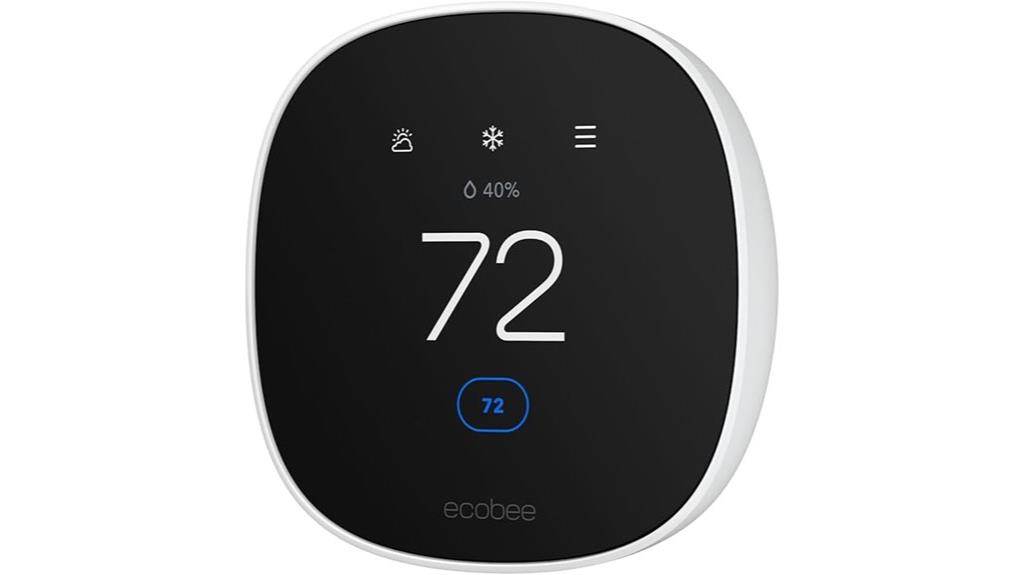
If you’re looking for an affordable, easy-to-install smart thermostat that can help reduce your energy bills, the ecobee Smart Thermostat Essential is an excellent choice. It’s Wi-Fi enabled, compatible with popular voice assistants, and features an intuitive LCD display and touchpad controls. Designed for various HVAC systems, including electric baseboard heaters and air conditioners, it offers auto-scheduling and auto-away modes to optimize energy use. Many users see savings of up to 23%, often recouping the cost within six months. Installation is straightforward for DIYers, and its modern design blends seamlessly into any home, making it a practical upgrade for efficiency-conscious homeowners.
Best For: homeowners seeking an affordable, easy-to-install smart thermostat that offers energy savings and seamless smart home integration.
Pros:
- Easy DIY installation with straightforward setup.
- Compatible with major voice assistants like Alexa, Google Assistant, and Siri.
- Significant energy savings potential, often recouping the cost within six months.
Cons:
- Limited scheduling flexibility, allowing only one schedule per season.
- Cannot set different schedules for different seasons without manual re-entry.
- Basic features like scheduling are restricted to 30-minute intervals, with no minute-by-minute customization.
Amazon Smart Thermostat
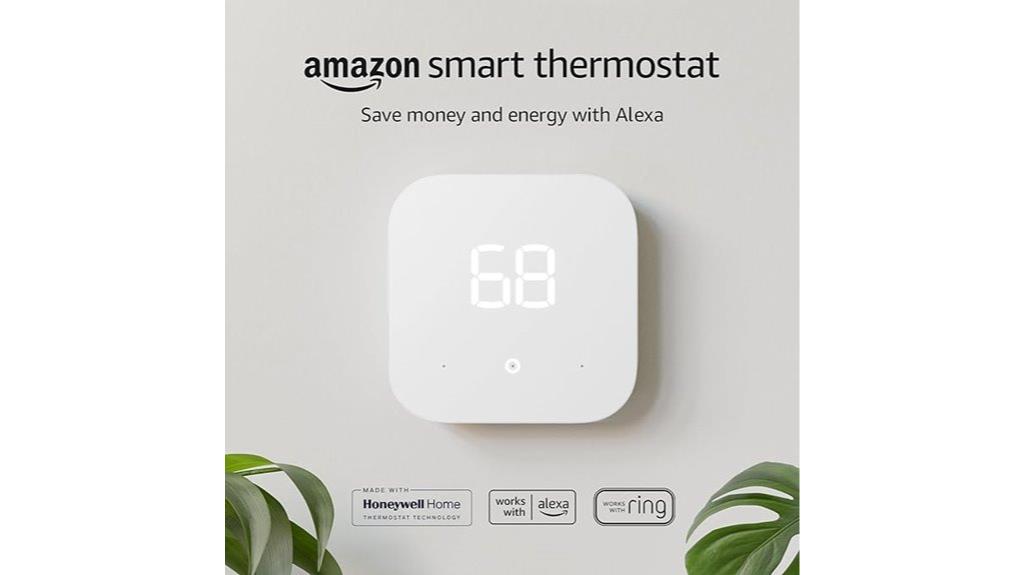
The Amazon Smart Thermostat stands out as an ideal choice for those seeking an easy and reliable upgrade from traditional thermostats, especially in cold storage environments. It supports C-wire installation and integrates seamlessly with Alexa and Ring devices, enabling voice control and smart home connectivity. Compatible Echo devices, like the Echo Dot, enhance usability by allowing remote adjustments and automation. This thermostat helps reduce energy costs, saving about $50 annually per EPA estimates. Amazon offers guided setup and customer support, ensuring a smooth experience. Built with Honeywell technology, it guarantees durability and trusted performance, making it a smart investment for maintaining excellent cold storage conditions.
Best For: those seeking an easy, reliable upgrade from traditional thermostats, especially in cold storage environments, with smart home integration and energy savings.
Pros:
- Seamless integration with Alexa, Ring, and compatible Echo devices for voice control and automation
- Supports C-wire installation for straightforward setup and reliable performance
- Helps reduce energy costs, with EPA estimates indicating savings of about $50 annually
Cons:
- May require a C-wire for optimal operation, which might not be available in all homes
- Compatibility limited to certain Echo devices and smart home ecosystems
- Advanced features and setup may be complex for users unfamiliar with smart thermostats
ecobee Smart Thermostat Premium with Sensors and Air Quality Monitor

The ecobee Smart Thermostat Premium with Sensors and Air Quality Monitor stands out as an ideal choice for cold storage facilities seeking precise climate control and energy savings. It can save up to 26% annually on heating and cooling costs and is ENERGY STAR certified. The included SmartSensors help reduce hot and cold spots by adjusting temperatures in key areas, while the built-in air quality monitor alerts you to poor air conditions and filter changes. It detects sudden temperature drops and open doors or windows, pausing HVAC to conserve energy. Its sleek design, vibrant display, and voice control options make it both functional and stylish, ensuring your goods stay perfectly preserved.
Best For: facilities seeking precise climate control, energy savings, and air quality management in cold storage environments.
Pros:
- Up to 26% annual savings on heating and cooling costs.
- Built-in air quality monitor with alerts and filter change reminders.
- Sleek design with a vibrant display and advanced occupancy sensing.
Cons:
- Requires a subscription for full security and monitoring features.
- Compatibility limited to 24VAC HVAC systems; may need additional adapters.
- Apple Home Hub needed for Siri voice control functionality.
ecobee Smart Thermostat Enhanced, Wi-Fi Programmable Thermostat

For those seeking to optimize energy use and maintain consistent comfort, the ecobee Smart Thermostat Enhanced stands out with its intelligent temperature adjustments and room-specific monitoring. It can save up to 26% annually on heating and cooling costs by automatically adjusting temperatures when you’re away and pre-cooling or pre-heating before you arrive. Its SmartSensor focuses on key areas, ensuring consistent comfort even in larger spaces. Compatible with Siri, Alexa, and Google Assistant, you can control it remotely via the ecobee app or voice commands. Easy to install, it works with most HVAC systems and is Energy Star certified, making it a reliable choice for efficient climate management.
Best For: homeowners seeking to enhance energy efficiency and maintain consistent comfort through smart, remote-controlled temperature management.
Pros:
- Saves up to 26% annually on heating and cooling costs through intelligent adjustments.
- Compatible with major smart home platforms like Siri, Alexa, and Google Assistant for seamless voice control.
- Easy to install with a Power Extender Kit and compatible with most HVAC systems, including those lacking a C-wire.
Cons:
- May require a Wi-Fi connection for full functionality and remote control features.
- Advanced features like SmartSensor may involve additional costs or setup.
- Compatibility may vary with some older or specialized HVAC systems.
Sensi Lite Smart Thermostat
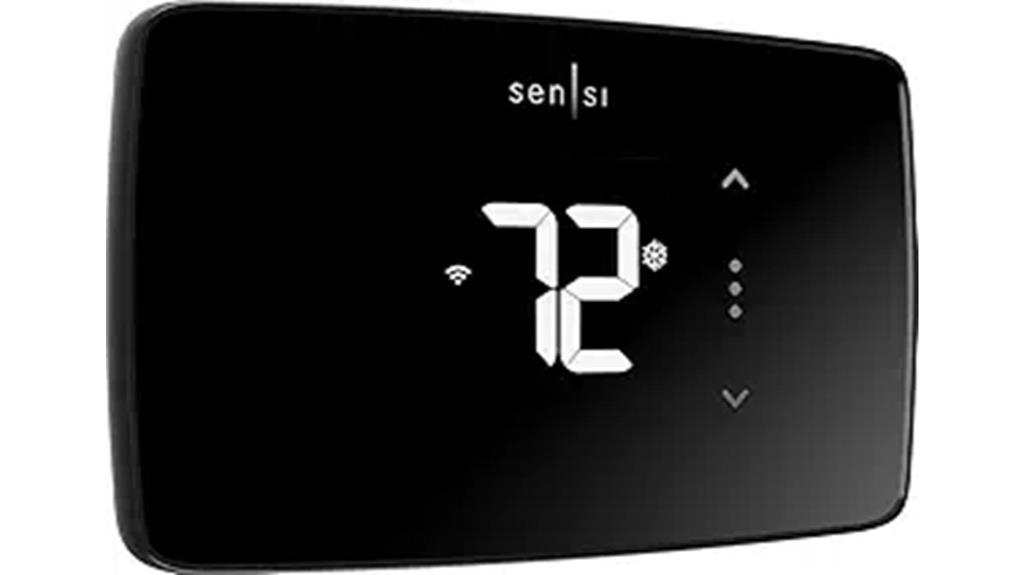
If you’re looking for an easy-to-install smart thermostat that works seamlessly with most HVAC systems, the Sensi Lite Smart Thermostat by Emerson stands out as a solid choice. It’s Energy Star certified, compact, and user-friendly, featuring an LCD display, backlight, and simple design. Compatible with boilers, heat pumps, air conditioners, and furnaces, it supports app control via Wi-Fi and integrates with Alexa, Google Assistant, and SmartThings. Setup is straightforward with step-by-step instructions and a built-in level. While it works well with most systems without a C-wire, heat pump setups may need additional wiring or adapters. Overall, it’s a reliable, energy-saving option for cold storage environments.
Best For: homeowners seeking an easy-to-install, energy-efficient smart thermostat compatible with a variety of HVAC systems without the need for a C-wire.
Pros:
- Simple DIY installation with clear instructions and built-in level
- Supports app control via Wi-Fi and integrates with Alexa, Google Assistant, and SmartThings
- Energy Star certified, offering approximately 23% HVAC energy savings
Cons:
- Wi-Fi connectivity issues reported after power outages or battery changes
- May require additional wiring or adapters for heat pump and complex systems
- Limited scheduling flexibility and app statistics, with some users experiencing setup challenges
Google Nest Thermostat, Programmable Wi-Fi Smart Thermostat
https://m.media-amazon.com/images/I/414Sw44kQXL._AC_SX679_.jpg
When it comes to optimizing temperature control in cold storage environments, the Google Nest Thermostat stands out with its advanced Wi-Fi connectivity and energy-saving features. It’s ENERGY STAR certified, helping reduce energy use by adjusting itself when the space is unoccupied. Supporting heating, cooling, and heat pump systems, it’s easy to install—typically within 30 minutes—and can be controlled remotely via the Google Home app or voice assistants like Google Assistant and Alexa. Its sleek design, touchscreen display, and compatibility with various HVAC systems make it a versatile choice. Plus, it monitors system health and suggests ways to save energy, keeping your goods perfectly preserved while lowering costs.
Best For: homeowners and cold storage operators seeking an energy-efficient, smart thermostat with remote control capabilities to maintain optimal temperature conditions.
Pros:
- Supports multiple HVAC systems including heating, cooling, and heat pumps, offering versatile compatibility.
- ENERGY STAR certified, promoting energy savings and cost reduction.
- Easy DIY installation typically completed within 30 minutes, with remote access via mobile app and voice controls.
Cons:
- Installation can be challenging for some users, especially with wiring or system compatibility issues.
- Limited offline functionality, making it less reliable during internet outages.
- Initial setup instructions are minimal, sometimes requiring online tutorials for troubleshooting.
Meross Smart Thermostat with Voice Control

The Meross Smart Thermostat with Voice Control stands out as an ideal choice for users seeking seamless integration and hands-free operation in their cold storage environments. It’s compatible with 95% of HVAC systems, including heat pumps and traditional heating and cooling setups, though not electric baseboard heaters. It requires a C-wire for installation and supports only 2.4GHz Wi-Fi. With customizable 7×24-hour schedules, it maintains consistent temperatures even without Wi-Fi. Plus, it integrates effortlessly with Apple Home, Alexa, Google, and SmartThings via Matter, allowing easy voice control and remote management through the Meross app.
Best For: homeowners with compatible HVAC systems seeking easy installation, customizable scheduling, and voice control integration for energy-efficient climate management.
Pros:
- Supports seamless integration with Apple Home, Alexa, Google, and SmartThings via Matter, enabling versatile voice control and automation.
- Offers customizable 7×24-hour schedules that function even without Wi-Fi, ensuring consistent comfort.
- Monitors heating and cooling usage through the app to help reduce energy bills and promote efficiency.
Cons:
- Requires a C-wire for installation; users without one will need to purchase an adapter.
- Compatible only with 2.4GHz Wi-Fi networks, limiting connectivity options.
- Not suitable for electric baseboard heaters, which may restrict use for some heating setups.
Honeywell Wi-Fi Smart Color Thermostat

The Honeywell Wi-Fi Smart Color Thermostat stands out as an excellent option for those managing cold storage environments, thanks to its advanced scheduling and remote control features. I appreciate its 7-day programmable schedule and customizable color touchscreen, which make it easy to tailor the climate settings. It supports various HVAC systems, including heat pumps, and integrates seamlessly with Alexa, Google Home, and SmartThings. I find the Wi-Fi connectivity and weather display particularly useful for remote management. While installation can be delicate, proper wiring makes setup straightforward. Overall, its intuitive interface, energy efficiency, and extensive controls make it a reliable choice for maintaining ideal cold storage conditions.
Best For: users seeking a versatile, Wi-Fi-enabled smart thermostat ideal for managing a variety of HVAC systems, including those in cold storage environments, with customizable controls and remote access.
Pros:
- Intuitive touchscreen interface with customizable color display for easy operation
- Seamless Wi-Fi connectivity and compatibility with Alexa, Google Home, and SmartThings for remote control and voice commands
- Supports 7-day programmable scheduling and energy-saving features, making it suitable for maintaining precise climate conditions
Cons:
- Installation can be delicate, requiring careful handling of wire connectors during setup
- Limited fan control options (ON, AUTO, CIRCULATING), which may not meet all user preferences
- Some features or app functionalities may be region-specific, potentially restricting use outside certain areas like the US
Emerson Sensi Touch Wi-Fi Smart Thermostat
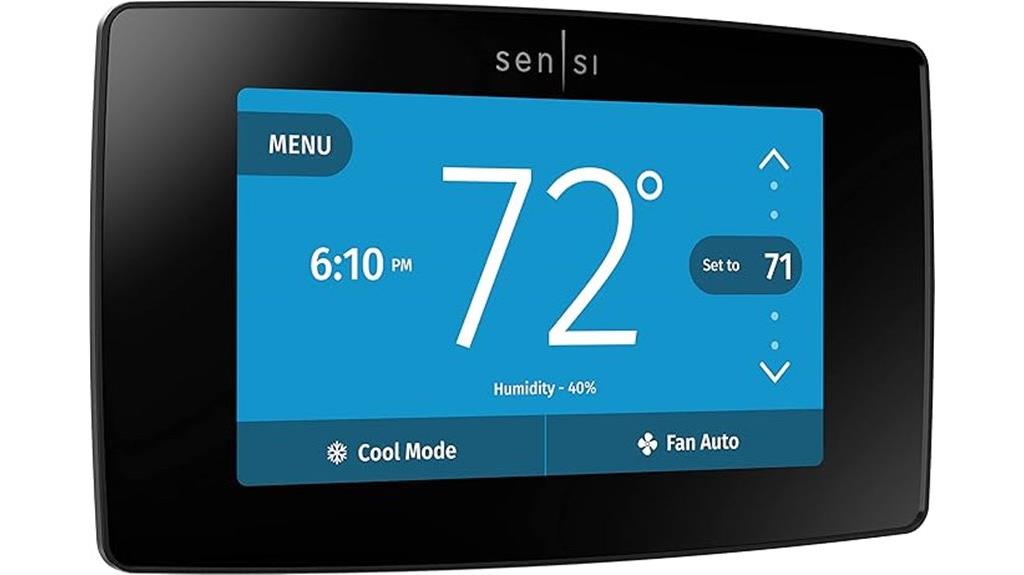
Are you looking for a smart thermostat that combines user-friendly control with energy savings? The Emerson Sensi Touch Wi-Fi Smart Thermostat might be just what you need. It features a large 4.3-inch color touchscreen and supports app, voice, and manual controls. With Energy Star certification, it helps save about 23% on HVAC energy through flexible scheduling and remote access. Compatible with various HVAC systems, it’s designed for easy DIY installation, provided you have a C-wire. The device offers useful features like filter alerts, geofencing, and detailed usage reports, all backed by Emerson’s trusted HVAC expertise. It’s a reliable choice for maintaining ideal cold storage conditions.
Best For: homeowners seeking an easy-to-install, energy-efficient smart thermostat with versatile control options and a modern touchscreen interface.
Pros:
- User-friendly 4.3-inch color touchscreen display for easy navigation and control
- Supports app, voice, and manual control, compatible with Alexa, Google Assistant, Apple HomeKit, and SmartThings
- Helps save approximately 23% on HVAC energy through scheduling, remote access, and detailed usage reports
Cons:
- Requires a C-wire for full functionality; no battery-only operation available
- Registration outside North America, especially in EU regions, can be challenging and limit features
- Basic compatibility with Apple HomeKit, with some functionalities potentially limited outside the US and Canada
Honeywell WiFi Smart Thermostat RTH8800WF2022

If you’re looking for a smart thermostat that seamlessly supports a variety of heating and cooling systems, the Honeywell WiFi Smart Thermostat RTH8800WF2022 stands out. It features a 7-day programmable touchscreen, is Alexa ready, and includes geofencing technology to enhance comfort and efficiency. Compatible with most heat/cool systems, including oil furnaces, it requires a C-wire power adapter—so check compatibility before buying. Using high scheduling and geofencing, users typically save 8-16% on energy bills. ENERGY STAR certified, it also offers monthly energy reports and personalized tips, making it a practical choice for maintaining ideal cold storage conditions while reducing costs.
Best For: homeowners seeking a versatile, energy-efficient smart thermostat compatible with a wide range of heating and cooling systems, including oil furnaces.
Pros:
- Supports most heat/cool systems, including oil furnaces, with a compatible C-wire adapter.
- Features a user-friendly 7-day programmable touchscreen and Alexa compatibility for voice control.
- Enhances energy savings with scheduling, geofencing, and monthly energy reports, potentially reducing bills by 8-16%.
Cons:
- Requires a C-wire power adapter; incompatible with heating-only oil systems lacking a C-wire.
- Setup may be complex for users unfamiliar with wiring or smart home devices.
- Geofencing and scheduling features depend on smartphone connectivity and user preferences.
Google Nest Learning Thermostat, 3rd Gen (2015)

For those managing cold storage environments, the Google Nest Learning Thermostat 3rd Gen (2015) offers a smart solution that learns your preferences and adjusts heating and cooling automatically. It programs itself by analyzing your behavior, saving you time and effort. The thermostat displays energy history, helping you identify usage patterns and optimize savings. Its Home/Away Assist feature automatically adjusts temperatures when you’re not home, reducing waste. You can control it remotely via the Nest app from anywhere. Designed with a sleek stainless steel finish, it integrates seamlessly into smart home systems and promotes energy efficiency, making it an excellent choice for maintaining ideal storage conditions.
Best For: those managing cold storage environments who want a smart, energy-efficient thermostat that learns preferences and adjusts settings automatically.
Pros:
- Learns user behavior to create an automatic, personalized schedule
- Helps reduce energy waste with Home/Away Assist and energy history insights
- Allows remote management via the Nest app from any location
Cons:
- Compatibility check recommended before purchase to ensure system integration
- May require a compatible HVAC system for full functionality
- The stainless steel finish and features may come at a higher cost compared to basic thermostats
Google Nest Learning Thermostat (4th Gen, 2024) with Temperature Sensor
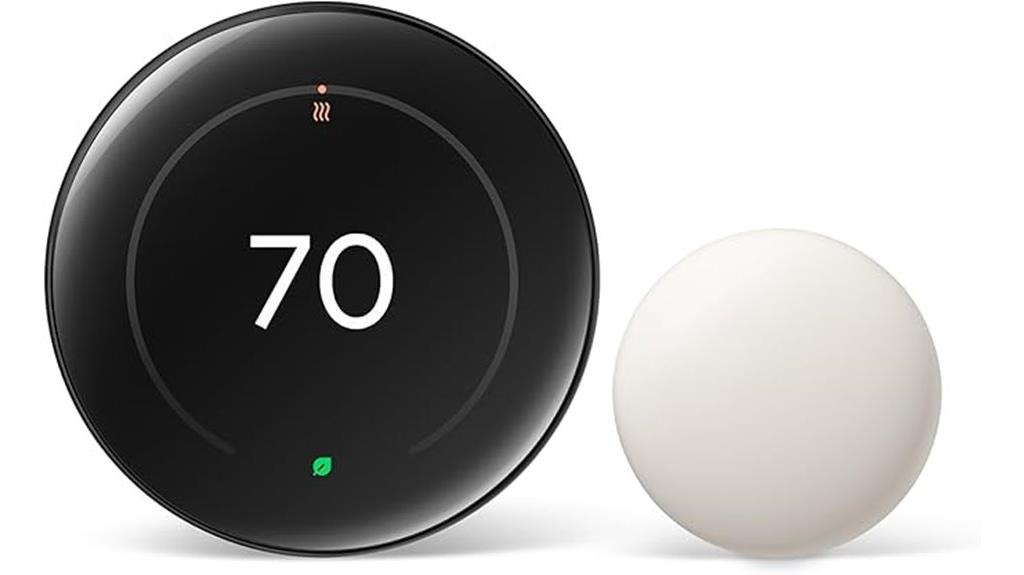
The Google Nest Learning Thermostat (4th Gen, 2024) with Temperature Sensor stands out as an ideal choice for cold storage facilities that require precise temperature control and energy efficiency. Its larger display with Dynamic Farsight makes monitoring easy from across the room, while customizable screens ensure clarity. Compatibility with most 24V systems and smart home platforms like Alexa, Google Assistant, and Apple HomeKit simplifies integration. The thermostat learns your habits, suggesting schedule adjustments to save energy—averaging 12% on heating and 15% on cooling bills. Using Nest Temperature Sensors, you can manage hot and cold spots, ensuring your goods stay at perfect temperatures effortlessly.
Best For: users seeking a smart, energy-efficient thermostat with precise control and seamless integration into existing smart home systems.
Pros:
- Large, easy-to-read display with Dynamic Farsight for quick monitoring from across the room
- Compatible with most 24V systems and major smart home platforms like Alexa, Google Assistant, and Apple HomeKit
- Learns user habits to optimize schedules, saving up to 12% on heating and 15% on cooling bills
Cons:
- Requires Wi-Fi connection for full functionality and remote control
- May be more expensive than basic thermostats, potentially limiting budget-conscious users
- Some users might find initial setup or configuration complex depending on existing HVAC systems
Sensi Smart Thermostat

The Sensi Smart Thermostat stands out as an excellent choice for those seeking reliable, DIY-friendly control over their cold storage environments. Its Wi-Fi connectivity, programmable settings, and compatibility with voice assistants like Alexa and Google Assistant make it versatile and easy to use. Designed for simple installation with no patching or painting needed, it fits standard thermostat spaces and often requires no C-wire. Features like filter alerts, humidity control, and auto changeover promote ideal preservation. Certified Energy Star, it helps save around 23% on energy bills. With an intuitive app, dependable performance, and a three-year warranty, Sensi delivers smart, efficient cold storage management with minimal hassle.
Best For: DIY enthusiasts and homeowners seeking reliable, programmable smart thermostat control for cold storage or HVAC systems with easy installation and energy savings.
Pros:
- Easy DIY installation with step-by-step app guidance and hardware included
- Compatibility with most HVAC systems and voice assistants like Alexa and Google Assistant
- Energy Star certified, helping save approximately 23% on energy bills
Cons:
- Limited detailed usage data and reporting features
- Occasional connectivity issues or difficulty adjusting settings remotely
- No support for Bixby or some other voice assistants
Honeywell Home Smart Thermostat
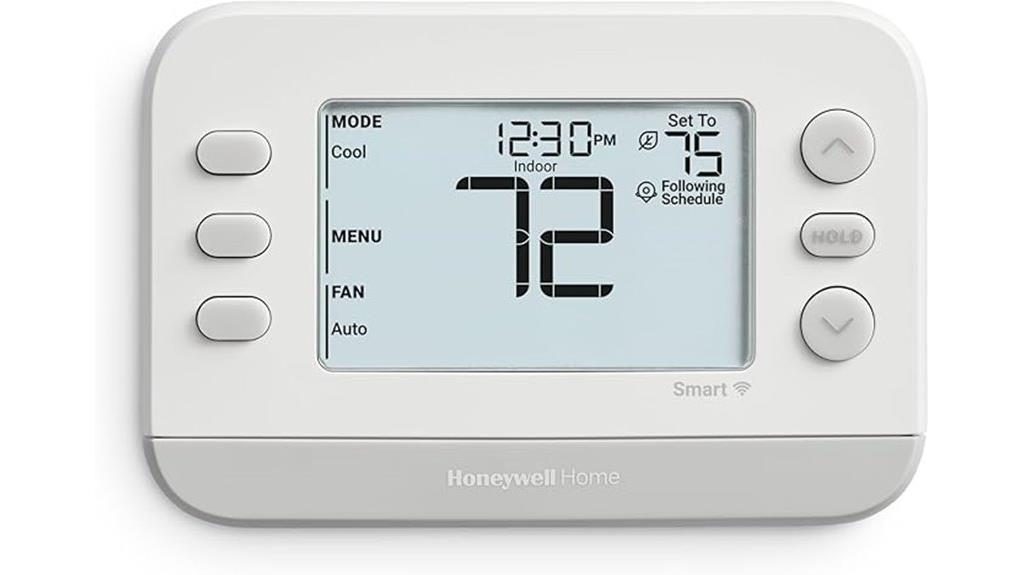
If you’re managing cold storage environments, the Honeywell Home X2S Smart Thermostat stands out with its extended low-heat setpoint of 32°F, ensuring safe operation even in frigid conditions. It’s ENERGY STAR certified and compatible with conventional and heat pump systems, offering flexible scheduling and remote control via WiFi. Matter certified, it integrates smoothly with platforms like Alexa, Google Assistant, and Apple HomeKit. Its compact design includes interchangeable decorative pieces, and features like humidity monitoring and filter reminders enhance convenience. While setup is straightforward with a C-wire, some users report WiFi connectivity issues. Overall, it’s a reliable choice for maintaining precise temperature control in cold storage.
Best For: those seeking an energy-efficient, smart thermostat with reliable temperature control in cold storage environments and compatibility with popular smart home platforms.
Pros:
- ENERGY STAR certified, ensuring energy savings and environmental friendliness
- Compatible with multiple smart home platforms via Matter certification (Alexa, Google, Apple)
- Extended low-heat setpoint of 32°F for safe operation in cold climates
Cons:
- Some users experience WiFi connectivity issues and frequent offline status
- Basic control options within Apple HomeKit may be limited and less customizable
- Setup can be challenging for some users due to vague instructions and wiring concerns
Smart Thermostat with Room Sensor and Touchscreen
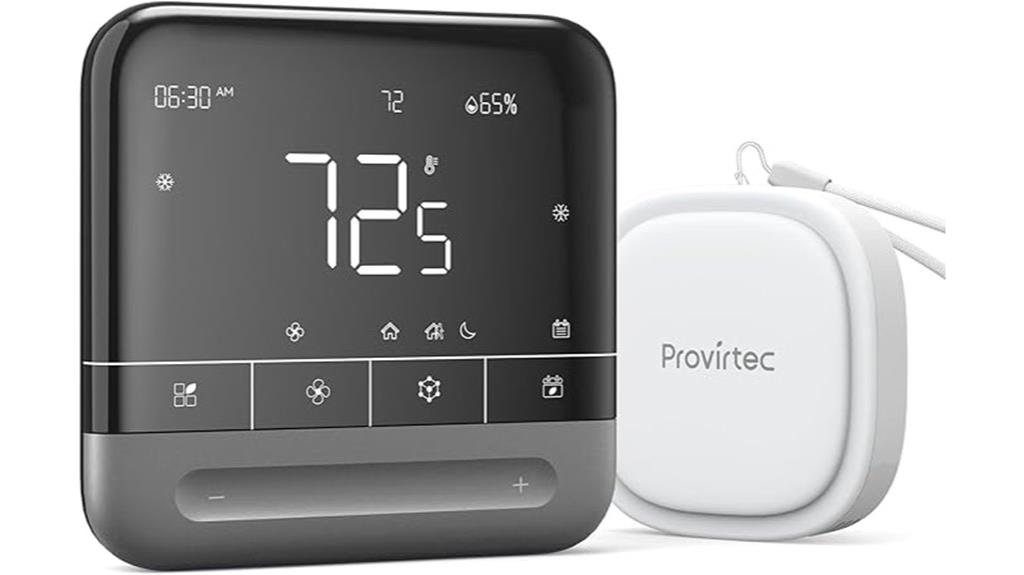
A smart thermostat with a room sensor and touchscreen is ideal for users seeking precise temperature control and easy operation, especially in environments like cold storage where maintaining consistent conditions is essential. It supports over 95% of 24VAC HVAC systems, including central air, heat pumps, and boilers, but requires a C wire. The 7-day programmable schedule and modes like Sleep, Home, and Away help optimize comfort and energy savings—up to 26% annually. Its large 3.95-inch touchscreen offers clear visibility, while app control via WiFi ensures remote management. This device combines user-friendly design with advanced monitoring, making it perfect for maintaining ideal storage conditions effortlessly.
Best For: homeowners and facility managers seeking precise, energy-efficient temperature control with easy-to-use touchscreen and remote app management in compatible 24VAC HVAC systems.
Pros:
- Supports 7-day programmable schedule and multiple modes (Sleep, Home, Away) for personalized comfort and energy savings.
- Large 3.95-inch touchscreen with intuitive sliding touch design for effortless user operation.
- Real-time monitoring and control via Prodigytec app, with WiFi connectivity and firmware updates for optimal performance.
Cons:
- Requires a C wire, which may not be available in all existing HVAC setups.
- Not compatible with high-voltage systems such as 110VAC, 120VAC, or 240VAC.
- Does not support S terminals for indoor/outdoor sensors, limiting some sensor options.
Factors to Consider When Choosing a Smart Thermostat for Cold Storage
When selecting a smart thermostat for cold storage, I consider key factors like temperature precision capabilities and how well it integrates with existing HVAC systems. Remote monitoring features and energy-saving technologies are also critical for efficient operation. Additionally, I look at ease of installation to guarantee a smooth setup process.
Temperature Precision Capabilities
Achieving precise temperature control in cold storage demands smart thermostats with a minimum accuracy of ±0.5°F, ensuring products stay safe and fresh. High-precision models use digital sensors with advanced calibration features to deliver consistent, reliable readings. Multiple sensor inputs or room sensors are often included to monitor temperature variations across different zones, helping maintain uniform conditions. Proper calibration and regular maintenance are critical; even the most accurate thermostat can drift without upkeep. Placement of sensors also plays a crucial role—positioning them correctly within the storage environment ensures accurate readings and prevents temperature fluctuations. Ultimately, selecting a thermostat with excellent temperature precision capabilities is essential for preserving the integrity of sensitive goods and avoiding spoilage or freezing.
Compatibility With HVAC Systems
Choosing a compatible smart thermostat for cold storage starts with verifying that it matches your HVAC system’s voltage and type, such as 24VAC commonly used in residential setups. It’s essential to confirm the device supports your specific heating equipment, like electric heaters or heat pumps, to maintain precise temperature control. Many cold storage environments rely on continuous power, so check if the thermostat requires a C-wire for reliable operation. Additionally, verify it can integrate with existing control systems, such as remote sensors or building management systems, for seamless operation. Ultimately, review the manufacturer’s compatibility list or support resources to ensure the thermostat can handle the temperature range and operational demands unique to cold storage facilities. Proper compatibility ensures efficient, reliable performance in preserving your goods.
Remote Monitoring Features
Have you considered how remote monitoring features can enhance the management of your cold storage? These features let you check and adjust temperature settings from anywhere using a smartphone or computer app, giving you greater control. Real-time alerts notify you immediately if temperatures deviate, helping you respond quickly to issues like freezer failures or power outages, preventing spoilage. Remote access also enables you to optimize energy use by making timely adjustments without needing to be physically present. Many systems provide detailed reports on usage and system status, supporting maintenance and operational decisions. However, reliable remote monitoring relies on a stable internet connection and secure data encryption to keep your sensitive information protected, ensuring peace of mind along with efficient management.
Energy Saving Technologies
When choosing a smart thermostat for cold storage, it’s essential to evaluate energy-saving features that can greatly reduce expenses and enhance efficiency. Modern thermostats incorporate auto-scheduling and occupancy sensing to optimize heating and cooling cycles. Auto-scheduling allows the system to adapt to your storage needs by adjusting temperatures based on time of day or usage patterns, preventing unnecessary energy use. Occupancy sensing detects when the area is empty and automatically reduces heating or cooling, saving energy without sacrificing preservation quality. These features work together to guarantee the system is only active when needed, minimizing waste. By prioritizing thermostats with these advanced energy-saving technologies, you can substantially cut operational costs while maintaining ideal conditions for your goods.
Ease of Installation
Installing a smart thermostat in cold storage can seem intimidating, but focusing on simplicity and clear instructions makes the process much easier. Look for models that provide detailed installation guides or video tutorials to streamline setup. It’s vital to verify if the device supports your existing wiring, especially if your cold storage has non-standard configurations. Confirm the thermostat is compatible with your HVAC system and includes accessories like a Power Extender Kit if needed, especially without a C-wire. Choose models with straightforward mounting options, such as built-in level tools or quick-connect terminals, to save time. Finally, opt for thermostats with user-friendly interfaces and remote control features, allowing adjustments without physical access during cold conditions. This makes installation smoother and more manageable.
Integration With Smart Ecosystems
Choosing a smart thermostat for cold storage means guaranteeing it seamlessly integrates with your existing smart home ecosystem. Compatibility with platforms like Alexa, Google Assistant, Apple HomeKit, and SmartThings allows for effortless control and automation. Support for Matter certification further enhances interoperability, future-proofing your setup across diverse devices. These integration features often include remote monitoring, scheduling, and energy management, customizable to your storage needs. Many thermostats also provide real-time alerts and notifications through their apps, enabling quick responses to temperature fluctuations or system issues. Voice control and automation routines improve ease of use, allowing hands-free adjustments tailored specifically to your cold storage environment. Overall, seamless ecosystem integration ensures your cold storage remains reliable, efficient, and easy to manage.
Power Supply Requirements
Selecting a smart thermostat for cold storage requires careful attention to its power supply needs to guarantee reliable operation. Most models need a C-wire for consistent power, but some come with a Power Extender Kit or run on batteries, which can be helpful if your system lacks a C-wire. High-voltage systems, like millivolt or 240V setups, usually aren’t compatible with standard low-voltage smart thermostats. Battery-powered models can operate without a C-wire but might have limited features or need regular battery changes. Some thermostats include power management features that help optimize energy use and extend battery life, especially in low-power modes. Ensuring the thermostat’s power requirements match your HVAC system is vital for consistent performance and avoiding system malfunctions.
Frequently Asked Questions
How Do Smart Thermostats Handle Power Outages in Cold Storage Environments?
Power outages in cold storage environments can be concerning, but I’ve found that smart thermostats often come with backup features like battery power or integrated generators. These systems automatically switch to backup mode, maintaining temperature control until power is restored. I recommend choosing a thermostat with reliable backup options to guarantee your goods stay preserved, even during unexpected outages. It’s all about safeguarding your inventory with smart, resilient technology.
Can Smart Thermostats Be Integrated With Existing Cold Storage Security Systems?
Imagine you’re managing a cold storage facility, and you want seamless security integration. I’ve seen smart thermostats, like Nest, successfully connect with existing security systems through open APIs, enabling centralized control. These integrations allow real-time temperature monitoring alongside security alerts, enhancing overall safety and efficiency. With compatible systems, you can automate responses, like adjusting climate settings if a security breach occurs, ensuring your goods stay preserved and secure effortlessly.
Do Smart Thermostats Require Special Calibration for Ultra-Low Temperature Storage?
When it comes to ultra-low temperature storage, I’ve found that smart thermostats often need special calibration to perform accurately. These environments are outside typical temperature ranges, so I adjust the sensors and settings to guarantee precise control. It’s vital to regularly check and fine-tune the calibration, especially in cold storage, to keep your goods perfectly preserved without risking temperature fluctuations.
Are There Specific Smart Thermostats Designed for Industrial Cold Storage Facilities?
Looking for a game-changer in cold storage? Yes, there are smart thermostats tailored for industrial use. These specialized devices are built to handle ultra-low temperatures and provide precise control, ensuring your goods stay perfect. I’ve found that choosing a thermostat designed specifically for cold storage not only boosts efficiency but also offers peace of mind. Investing in these solutions helps safeguard your inventory, making cold storage management smarter and more reliable.
How Do Smart Thermostats Adapt to Fluctuating External Temperatures Affecting Cold Storage?
When considering how smart thermostats adapt to fluctuating external temperatures, I focus on their advanced sensors and algorithms. These devices monitor both internal conditions and outside weather, adjusting cooling levels in real-time. I’ve seen how they proactively maintain stable temperatures, preventing spoilage or energy waste. This dynamic response ensures my cold storage stays consistent regardless of external changes, giving me peace of mind that my goods are always preserved ideally.
Conclusion
Choosing the right smart thermostat is like finding the perfect key to a locked treasure chest—your cold storage. With the right device, you’ll turn the dial to precisely preserve your goods, ensuring they stay fresh as a spring breeze. Don’t settle for less; let technology be your guardian in this chilly fortress. Once you pick the right thermostat, you’ll keep your treasures safe and sound, like a master chef guarding a secret recipe.