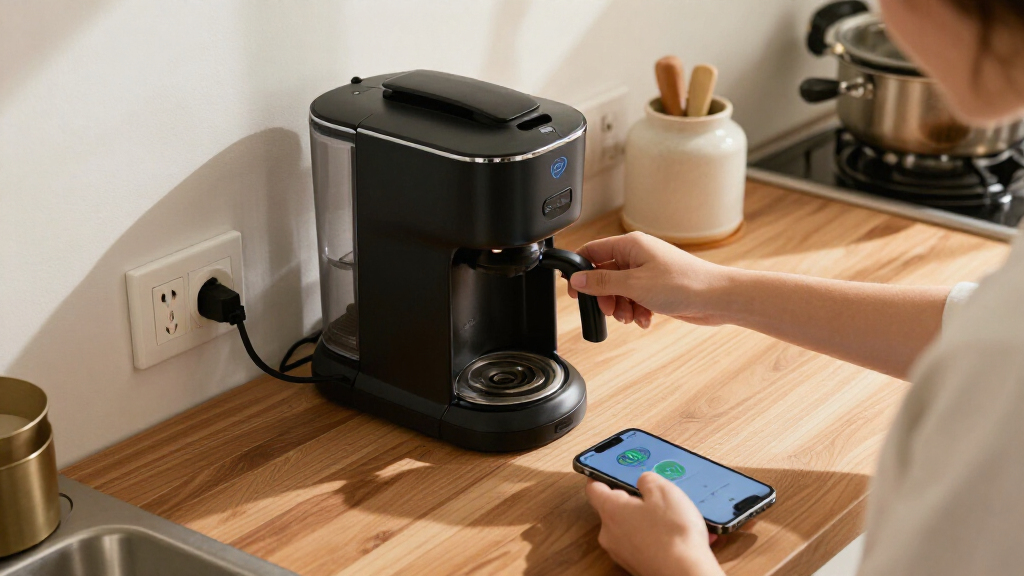
Smart plugs with energy monitoring let you track a device’s electricity use while adding remote control and schedules. I’d put the Kasa KP125M first for its Matter support and four-plug pack, while the Tapo P115 stands out for buyers who want a simple Wi-Fi option and the Minoston MP21ZP suits homes already using Z-Wave. The main tradeoffs are how much setup your smart-home system requires, how many outlets you need, and whether you want device-level usage data or just basic tracking. Multi-packs can cover more appliances at once, but a single plug may make more sense for a targeted measurement. Read on for how the 12 options compare and which one fits your setup.

Get home appliances delivered free with Prime
- Fast, free delivery on millions of items
- Prime Video, Amazon Music and more included
- Member-only deals all year
Complete the kit


Key Takeaways
- Kasa KP125M is the most balanced pick in this lineup: it combines energy monitoring, Matter support, and a four-plug pack.
- Tapo P115 appears in both two- and four-plug configurations, giving buyers a choice between a smaller trial and broader room coverage.
- Minoston MP21ZP is the specialist choice: its Z-Wave connection and repeater role make it a better match for a Z-Wave network than a Wi-Fi-first home.
- Protocol choice matters as much as monitoring: the lineup includes Matter, Wi-Fi, and Z-Wave options, so compatibility with your existing hub or platform can separate a convenient purchase from an awkward one.
- Many picks come in multi-packs, but the best bundle depends on how many appliances you want to measure; a pack is less useful if your outlets, network, or monitoring app cannot support your plan.
| Govee Smart Plug with Energy Monitoring, Wi-Fi and Bluetooth, 4-Pack |  | Best for Energy History | Model: H5086 | Pack size: 4 plugs | Maximum current: 15 A | VIEW LATEST PRICE | See Our Full Breakdown |
| Kasa Matter Smart Plug with Energy Monitoring, KP125M (4-Pack) |  | Best Overall for Matter Homes | Model: KP125M | Pack size: 4 plugs | Maximum current: 15 A | VIEW LATEST PRICE | See Our Full Breakdown |
| SONOFF S61s Matter Smart Plug with Energy Monitoring, 15A |  | Best for Electricity-Cost Tracking | Model: S61STPB | Connectivity: Matter over 2.4 GHz Wi-Fi | Maximum current: 15 A | VIEW LATEST PRICE | See Our Full Breakdown |
| Kasa Matter Smart Plug with Energy Monitoring, 15A/1800W, 2-Pack |  | Best Small Matter Starter Set | Model: KP125MP2 | Pack size: 2 plugs | Maximum current: 15 A | VIEW LATEST PRICE | See Our Full Breakdown |
| Tapo P115 Smart Wi-Fi Plug with Energy Monitoring, 4-Pack, 15A |  | Best for Smart Charging and Auto-Shutoff | Model: P115 | Pack size: 4 plugs | Maximum power: 1800 W | VIEW LATEST PRICE | See Our Full Breakdown |
| Minoston Z-Wave Smart Plug with Energy Monitoring, 800 Series, Repeater, and Alexa and Google Assistant Compatibility (MP21ZP) |  | Best for Z-Wave Mesh Coverage | Connectivity: Z-Wave; hub required | Z-Wave series: 800 | Energy monitoring: Yes | VIEW LATEST PRICE | See Our Full Breakdown |
| Emporia Energy Monitoring Smart Plug with Wi-Fi, App Control, Scheduling, and Alexa and Google Home Compatibility, 4-Pack |  | Best for Multi-Room Monitoring | Pack size: 4 plugs | Connectivity: 2.4 GHz Wi-Fi | Energy monitoring: Yes | VIEW LATEST PRICE | See Our Full Breakdown |
| SIXWGH Matter Smart Plug with Energy Monitoring, Timer, and Voice Control |  | Best for Matter Ecosystem Flexibility | Connectivity: Matter over 2.4 GHz Wi-Fi; Bluetooth-assisted pairing | Energy monitoring: Yes, via Smart Life (Tuya) app | Compatible ecosystems: Alexa, Apple Home, Google Home, SmartThings, Siri | VIEW LATEST PRICE | See Our Full Breakdown |
| AiSeek Smart Plug with Energy Monitoring, 15A, 2.4 GHz Wi-Fi, 4-Pack |  | Best for Four-Plug Everyday Tracking | Pack count: 4 plugs | Connectivity: 2.4 GHz Wi-Fi and Bluetooth | Energy monitoring: Yes, through SmartLife or Tuya | VIEW LATEST PRICE | See Our Full Breakdown |
| Tapo P115 Smart Wi-Fi Plug with Energy Monitoring, 15A, 2-Pack |  | Best for Clear Energy Stats and Charging Control | Pack size: 2 plugs | Connectivity: 2.4 GHz Wi-Fi | Energy monitoring: Yes, with statistics and charts | VIEW LATEST PRICE | See Our Full Breakdown |
| Tapo P110M Matter-Certified Smart Plugs with Energy Monitoring, 4-Pack, 15A |  | Best for Multi-Platform 4-Pack Coverage | Model: P110M | Pack size: 4 plugs | Connectivity: Matter and Wi-Fi | VIEW LATEST PRICE | See Our Full Breakdown |
| Eve Energy Outlet Matter Smart Outlet with Power Meter |  | Best for Local, Dual-Outlet Control | Model: 20ECN4101 | Number of outlets: 2, individually controlled | Power monitoring: Power meter | VIEW LATEST PRICE | See Our Full Breakdown |
| smart plugs with energy monitoring | Connectivity | Energy monitoring | Model | Pack size |
|---|---|---|---|---|
| Govee Smart Plug with Energy M | Wi-Fi and Bluetooth; 5 GHz Wi-Fi not supported | Power, current, and voltage; history up to 1 year | H5086 | 4 plugs |
| Kasa Matter Smart Plug with En | Matter and Wi-Fi; 2.4 GHz | — | KP125M | 4 plugs |
| SONOFF S61s Matter Smart Plug | Matter over 2.4 GHz Wi-Fi | Real-time power usage and electricity-cost tracking | S61STPB | — |
| Kasa Matter Smart Plug with En | Matter and 2.4 GHz Wi-Fi | — | KP125MP2 | 2 plugs |
| Tapo P115 Smart Wi-Fi Plug wit | 2.4 GHz Wi-Fi | Usage statistics and charts | P115 | 4 plugs |
| Minoston Z-Wave Smart Plug wit | Z-Wave; hub required | Yes | — | — |
| Emporia Energy Monitoring Smar | 2.4 GHz Wi-Fi | Yes | — | 4 plugs |
| SIXWGH Matter Smart Plug with | Matter over 2.4 GHz Wi-Fi; Bluetooth-assisted pairing | Yes, via Smart Life (Tuya) app | — | — |
| AiSeek Smart Plug with Energy | 2.4 GHz Wi-Fi and Bluetooth | Yes, through SmartLife or Tuya | — | — |
| Tapo P115 Smart Wi-Fi Plug wit | 2.4 GHz Wi-Fi | Yes, with statistics and charts | — | 2 plugs |
| Tapo P110M Matter-Certified Sm | Matter and Wi-Fi | — | P110M | 4 plugs |
| Eve Energy Outlet Matter Smart | Matter and Thread | — | 20ECN4101 | — |
More Details on Our Top Picks
Govee Smart Plug with Energy Monitoring, Wi-Fi and Bluetooth, 4-Pack
I’d choose the Govee four-pack when keeping a longer record of appliance use matters more than Matter support. Its app tracks power, current, and voltage, with up to a year of history, giving energy-conscious households more context than a basic on/off plug. You can also schedule plugs, control them remotely, and group them in the Govee Home app, while Alexa and Google Assistant provide voice control.
Compared with the Kasa KP125M four-pack, Govee offers a stated one-year monitoring history but lacks Matter integration, so it is less flexible for households mixing smart-home platforms. Its 15A rating suits common household devices, though it does not support 5 GHz Wi-Fi. I’d skip it if you want energy data inside a unified Matter setup or prefer not to rely on Govee’s app.
Pros:- Tracks power, current, and voltage, with data history up to one year
- Four plugs support group control and scheduling through the Govee Home app
- Works with Alexa and Google Assistant without a hub
- ETL- and FCC-certified
Cons:- Does not support 5 GHz Wi-Fi
- App-based energy monitoring and control rely on the Govee Home app
- Lacks Matter compatibility offered by the Kasa KP125M and SONOFF S61s
Best for: Households that want a four-plug set with detailed electrical readings and a year of energy history in one app
Not ideal for: Smart-home owners building around Matter, or anyone whose available Wi-Fi network only uses 5 GHz
- Model:H5086
- Pack size:4 plugs
- Maximum current:15 A
- Voltage:110 V
- Connectivity:Wi-Fi and Bluetooth; 5 GHz Wi-Fi not supported
- Energy monitoring:Power, current, and voltage; history up to 1 year
- Voice assistants:Alexa and Google Assistant
- Certifications:ETL, FCC, CA65, and SDOC
Our verdict“Choose Govee if you want long-term energy records across several devices and are comfortable managing them in its app.”
Kasa Matter Smart Plug with Energy Monitoring, KP125M (4-Pack)
The Kasa KP125M four-pack is my strongest all-round choice for buyers who want energy monitoring without committing to one smart-home ecosystem. Matter compatibility connects it with Apple Home, Alexa, Google Home, and SmartThings, while local Matter communication can keep compatible control working when internet access is unavailable. Its compact body is also less likely to cover the neighboring outlet than a bulkier plug.
Against the similarly Matter-ready SONOFF S61s, Kasa’s main advantage is a four-plug pack and a compact design; SONOFF instead specifies real-time electricity-cost tracking and a higher 1875W maximum. Kasa is rated for 15A and 1800W, so check the appliance load before connecting it. Its Wi-Fi is 2.4 GHz only, and buyers who need explicit cost tracking may prefer the SONOFF.
Pros:- Matter support spans Apple Home, Alexa, Google Home, and SmartThings
- Local Matter communication can support control without internet access
- Four plugs provide a consistent setup across multiple devices
- Compact shape helps preserve access to the neighboring outlet
Cons:- Limited to 2.4 GHz Wi-Fi
- Maximum load is 15A and 1800W
- The product data confirms energy monitoring but does not specify a history period or electricity-cost tracking
Best for: People outfitting several rooms who use Apple Home, Alexa, Google Home, or SmartThings and want one Matter-compatible plug standard
Not ideal for: Owners of appliances exceeding 1800W, or shoppers who specifically want stated electricity-cost tracking
- Model:KP125M
- Pack size:4 plugs
- Maximum current:15 A
- Maximum wattage:1800 W
- Operating voltage:120 V
- Connectivity:Matter and Wi-Fi; 2.4 GHz
- Compatible platforms:Apple Home, Amazon Alexa, Google Home, and Samsung SmartThings
- Safety and warranty:UL-certified flame-retardant design; 2-year limited warranty
Our verdict“Pick the KP125M four-pack for flexible Matter-based control and energy monitoring across a multi-device setup.”
SONOFF S61s Matter Smart Plug with Energy Monitoring, 15A
The SONOFF S61s makes the most sense when energy readings need to translate into a clearer view of running costs. Along with real-time power monitoring, it tracks electricity costs, a useful distinction for buyers comparing the ongoing draw of household appliances. Matter support brings it into Apple Home, Alexa, Google Home, and SmartThings without a hub, and the plug also supports scheduling and automation through eWeLink or a compatible Matter controller.
Compared with the Kasa KP125M, SONOFF specifies cost tracking and a 1875W maximum rather than Kasa’s 1800W rating; Kasa comes as a four-pack, while this listing includes one plug. The S61s also has overload protection and fire-resistant housing. Its 2.4 GHz Wi-Fi requirement and IP20 rating make it a poor choice for damp or dusty locations, and its energy features are more useful indoors.
Pros:- Tracks real-time power use and electricity costs
- Matter works with Apple Home, Alexa, Google Home, and SmartThings without a hub
- Supports app and physical control, scheduling, and automation
- Overload protection and fire-resistant housing
Cons:- Requires a 2.4 GHz Wi-Fi connection
- IP20 protection is limited against dust and moisture
- The listing includes one plug, unlike the Kasa and Govee four-packs
Best for: Smart-home users who want to monitor real-time consumption and electricity costs for an indoor appliance
Not ideal for: Buyers needing multiple plugs in one pack, 5 GHz Wi-Fi support, or protection for damp and dusty locations
- Model:S61STPB
- Connectivity:Matter over 2.4 GHz Wi-Fi
- Maximum current:15 A
- Maximum wattage:1875 W
- Operating voltage:120 V
- Energy monitoring:Real-time power usage and electricity-cost tracking
- Compatible platforms:Apple Home, Alexa, Google Home, and SmartThings
- Protection and certification:Overload protection, fire-resistant housing, IP20, ETL Listed, and CE
- Dimensions:2.36 × 1.5 × 2.13 in
Our verdict“Choose the SONOFF S61s if cost tracking and broad Matter control matter more to you than getting a multi-plug pack.”
Kasa Matter Smart Plug with Energy Monitoring, 15A/1800W, 2-Pack
I’d pick the Kasa KP125M two-pack for a smaller Matter-enabled setup: it offers the same platform flexibility and energy monitoring as the KP125M four-pack, without adding plugs you may not need. It works with Apple Home, Alexa, Google Home, and SmartThings, and compatible Matter devices can communicate locally when the internet is down. The compact design and UL-certified flame-retardant construction suit everyday indoor use.
The tradeoff is mainly pack size, not capability: compared with the Kasa KP125M four-pack, this version gives you two plugs instead of four, while sharing the 15A, 1800W limit and 2.4 GHz Wi-Fi requirement. It does not list a specific monitoring history or electricity-cost feature, unlike the SONOFF S61s, which explicitly tracks costs. I’d choose it for a couple of monitored devices, not a whole-home rollout.
Pros:- Matter compatibility covers four major smart-home platforms
- Local Matter communication can work without internet access
- Compact design helps keep the adjacent outlet accessible
- UL-certified flame-retardant design
Cons:- Two plugs may be insufficient for a multi-room setup compared with the Kasa four-pack
- Limited to 2.4 GHz Wi-Fi
- Maximum load is 15A and 1800W
Best for: Matter users who want to monitor and control two appliances without buying a larger multi-plug set
Not ideal for: People equipping several rooms or seeking explicit electricity-cost tracking or a stated energy-history period
- Model:KP125MP2
- Pack size:2 plugs
- Maximum current:15 A
- Maximum wattage:1800 W
- Operating voltage:120 V
- Connectivity:Matter and 2.4 GHz Wi-Fi
- Compatible platforms:Apple Home, Amazon Alexa, Google Home, and Samsung SmartThings
- Safety and warranty:UL-certified flame-retardant design; 2-year limited warranty
Our verdict“Choose this two-pack for a compact, Matter-compatible start with energy monitoring on a pair of appliances.”
Tapo P115 Smart Wi-Fi Plug with Energy Monitoring, 4-Pack, 15A
The Tapo P115 four-pack stands out for pairing energy monitoring with actions that can respond to how a device is used. Its usage charts and statistics help track consumption, while smart charging can stop a charge at a chosen battery level and auto-shutoff can turn off a device that exceeds the plug’s capacity. For households managing several chargers or scheduled appliances, those controls offer more than monitoring alone.
Compared with the Govee four-pack, Tapo adds smart-charging and capacity-based shutoff, while Govee specifies power, current, voltage, and up to one year of history. Tapo works with Alexa, Google Assistant, and SmartThings, but unlike the Kasa Matter plugs, the provided product data does not list Matter or Apple Home support. It also requires 2.4 GHz Wi-Fi and has a 15A, 1800W ceiling.
Pros:- Energy monitoring includes usage statistics and charts
- Smart charging can stop charging at a selected battery level
- Auto-shutoff can respond to devices exceeding the plug’s capacity
- Four-plug pack supports app and voice control through Alexa, Google Assistant, and SmartThings
Cons:- Supports 2.4 GHz Wi-Fi only
- Maximum output is 15A and 1800W
- Matter and Apple Home support are not listed, unlike the Kasa Matter options
Best for: Households managing several chargers or appliances that benefit from schedules, usage charts, and automatic shutoff
Not ideal for: Matter-focused homes, Apple Home users, or anyone who needs 5 GHz Wi-Fi or a load above 1800W
- Model:P115
- Pack size:4 plugs
- Maximum power:1800 W
- Operating voltage:110 V AC
- Connectivity:2.4 GHz Wi-Fi
- Energy monitoring:Usage statistics and charts
- Control compatibility:Tapo app, Alexa, Google Assistant, and SmartThings
- Automation features:Scheduling, smart charging, and auto-shutoff
- Certifications:ETL, FCC, and RoHS
Our verdict“Choose the Tapo P115 if automatic charging controls and capacity-based shutoff matter more than Matter compatibility or long-term data history.”
Minoston Z-Wave Smart Plug with Energy Monitoring, 800 Series, Repeater, and Alexa and Google Assistant Compatibility (MP21ZP)
I’d choose the Minoston MP21ZP when energy tracking is one part of a hub-based Z-Wave setup, not a reason to add Wi-Fi devices. It reports energy use and supports schedules and remote control through a compatible hub; its other advantage is acting as a Z-Wave repeater, which may help connect devices farther from the hub. The 800 Series radio, S2 security, and SmartStart pairing give it a more Z-Wave-focused profile than the Wi-Fi Tapo P115, which is simpler for an app-and-router setup. That focus brings a real tradeoff: you need a compatible hub, and the stated Long Range reach depends on hub support. I’d skip it if I wanted a plug that connects directly to Wi-Fi or Echo Plus.
Pros:- Energy monitoring, schedules, and remote switching are available through a compatible Z-Wave hub.
- Built-in repeater can help extend Z-Wave device coverage.
- Supports S2 authenticated security and SmartStart pairing.
- Works with a range of listed hubs, including SmartThings and Hubitat.
Cons:- Requires a compatible Z-Wave hub; it does not connect directly to Wi-Fi.
- Long Range coverage depends on a compatible hub.
- Alexa and Google Assistant control also require a hub.
Best for: Z-Wave hub owners who want appliance energy readings and a plug that can help extend their mesh.
Not ideal for: Buyers without a Z-Wave hub, or anyone who wants direct Wi-Fi setup or Long Range operation without checking hub compatibility.
- Connectivity:Z-Wave; hub required
- Z-Wave series:800
- Energy monitoring:Yes
- Security and pairing:S2 authenticated security; SmartStart
- Maximum range:Up to 1,300 ft with a Long Range-compatible hub
- Dimensions:1.14 x 1.89 x 1.89 in
- Warranty:2 years
Our verdict“Choose the Minoston if you already run Z-Wave and value mesh coverage alongside energy monitoring; skip it for a hub-free setup.”
Emporia Energy Monitoring Smart Plug with Wi-Fi, App Control, Scheduling, and Alexa and Google Home Compatibility, 4-Pack
The Emporia four-pack suits buyers who want to track several appliances across rooms without adding a hub. Its app supports energy monitoring, schedules, and remote control, while Alexa and Google Assistant provide voice operation. Compared with the single SIXWGH Matter plug, this set gives you four monitoring points, but it doesn’t list Matter support and is tied to 2.4 GHz Wi-Fi. The key limit is electrical load: although it allows a 15 A peak for up to one hour per day, its continuous rating is 10 A. I’d match it to compatible everyday appliances such as lamps or fans, rather than choosing it for equipment that draws a high continuous load. The push button also gives a local control option when using the app isn’t convenient.
Pros:- Four plugs provide multiple energy-monitoring points in one set.
- App supports scheduling and remote on-off control.
- Compatible with Alexa and Google Assistant.
- Push-button control is available on the plug.
Cons:- Requires a 2.4 GHz Wi-Fi connection.
- Continuous load is limited to 10 A, despite the short-duration peak rating.
- Does not list Matter support for cross-platform setup.
Best for: Households that want to monitor several 120 V appliances in different rooms through one Wi-Fi app.
Not ideal for: People with 5 GHz-only Wi-Fi or appliances that need more than 10 A continuously.
- Pack size:4 plugs
- Connectivity:2.4 GHz Wi-Fi
- Energy monitoring:Yes
- Continuous load:10 A
- Peak load:15 A for up to 1 hour per day
- Wattage:1,200 W
- Voice assistants:Amazon Alexa and Google Assistant
- Warranty:1 year
Our verdict“Pick the Emporia set to monitor several moderate-load appliances on Wi-Fi, but choose a higher continuous-load option for demanding equipment.”
SIXWGH Matter Smart Plug with Energy Monitoring, Timer, and Voice Control
The SIXWGH Matter plug is the most flexible fit here for buyers who use more than one major smart-home ecosystem: it lists Alexa, Apple Home, Google Home, SmartThings, and Siri compatibility, with no hub required. Energy readings are handled through the Smart Life app, while schedules, countdowns, and cycle timers add useful ways to automate a monitored appliance. Compared with the Tapo P115, SIXWGH makes Matter support its main differentiator; Tapo’s listed strengths instead include energy charts and overload shutoff. SIXWGH is rated up to 15 A and 1,800 W and includes overload protection, but it still needs 2.4 GHz Wi-Fi and has no stated ingress protection. I’d keep it for indoor use and skip it if a documented weather-resistant rating matters.
Pros:- Matter support spans several major smart-home ecosystems without requiring a hub.
- Energy monitoring is available through the Smart Life app.
- Multiple timer types and schedules support varied routines.
- Rated up to 15 A and 1,800 W, with overload protection.
Cons:- Requires 2.4 GHz Wi-Fi and does not support 5 GHz.
- Energy monitoring is tied to the Smart Life app.
- IP00 rating provides no stated ingress protection.
Best for: Smart-home owners who want one energy-monitoring plug to work across Matter-compatible platforms, including Apple Home and SmartThings.
Not ideal for: Buyers who need 5 GHz Wi-Fi, outdoor or damp-location protection, or energy monitoring outside the Smart Life app.
- Connectivity:Matter over 2.4 GHz Wi-Fi; Bluetooth-assisted pairing
- Energy monitoring:Yes, via Smart Life (Tuya) app
- Compatible ecosystems:Alexa, Apple Home, Google Home, SmartThings, Siri
- Operating voltage:125 V
- Automation:Schedules, countdown, cycle, random timers, and group control
- Safety feature:Overload protection
- Dimensions:2 x 2 x 2 in
Our verdict“Choose SIXWGH for broad Matter ecosystem compatibility and app-based energy tracking, provided indoor use and 2.4 GHz Wi-Fi fit your setup.”
AiSeek Smart Plug with Energy Monitoring, 15A, 2.4 GHz Wi-Fi, 4-Pack
For buyers who want several straightforward monitoring points, the AiSeek four-pack combines real-time energy tracking with schedules, timers, group control, and remote operation in the SmartLife app. It’s rated at 15 A and 1,800 W per plug, unlike the Emporia pack’s lower 10 A continuous-load rating, though both depend on 2.4 GHz Wi-Fi. Alexa and Google Assistant work through SmartLife rather than a direct Alexa connection, so setup includes an app-linking step. The stated fire-resistant materials and short-circuit and overload protection add useful safety features, but the product data does not list Matter support. I’d favor the Tapo P115 if I wanted a two-plug option with listed energy charts; AiSeek makes more sense when four monitoring points and group control take priority.
Pros:- Four plugs provide energy monitoring for multiple appliances.
- Supports real-time readings, timers, schedules, and group control.
- Each plug is rated up to 15 A and 1,800 W.
- Includes stated fire-resistant materials and short-circuit and overload protection.
Cons:- Requires a 2.4 GHz Wi-Fi connection.
- Alexa and Google Assistant setup requires linking through SmartLife.
- Matter support is not listed.
Best for: Households that want to monitor and schedule multiple standard-load appliances together through SmartLife.
Not ideal for: Buyers seeking Matter integration, 5 GHz Wi-Fi support, or a direct Alexa setup without linking SmartLife.
- Pack count:4 plugs
- Connectivity:2.4 GHz Wi-Fi and Bluetooth
- Energy monitoring:Yes, through SmartLife or Tuya
- Operating voltage:120 V
- Voice assistants:Amazon Alexa and Google Assistant
- Protection:Short-circuit and overload protection
- Warranty:2 years
Our verdict“Choose AiSeek when you need four 15 A monitoring plugs with group control, and accept the SmartLife setup and 2.4 GHz requirement.”
Tapo P115 Smart Wi-Fi Plug with Energy Monitoring, 15A, 2-Pack
The Tapo P115 two-pack is a strong fit when energy monitoring should help shape everyday habits, not just show a live reading. The Tapo app provides statistics and charts, and its smart-charging feature can stop power at a chosen battery limit—useful for compatible charging routines. Scheduling, voice control, and automatic overload shutoff round out the controls. Compared with the four-plug AiSeek, Tapo gives you fewer monitoring points, but its listed charts and charging feature make it more focused on interpreting and acting on energy use. It supports up to 1,800 W and requires 2.4 GHz Wi-Fi; buyers who need Matter or 5 GHz support should look elsewhere. I’d pick this over a larger pack when two well-supported outlets are enough.
Pros:- Tapo app includes energy-use statistics and charts.
- Smart charging can stop power at a chosen battery limit.
- Automatic overload shutoff and scheduling are included.
- Compact design helps preserve access to neighboring outlets.
Cons:- The two-pack provides fewer monitoring points than the Emporia and AiSeek four-packs.
- Requires 2.4 GHz Wi-Fi.
- Maximum output is 1,800 W.
Best for: People who want to review energy-use charts and automate charging for a couple of compatible devices.
Not ideal for: Buyers who need four or more monitoring points, Matter support, or a plug for 5 GHz-only Wi-Fi.
- Pack size:2 plugs
- Connectivity:2.4 GHz Wi-Fi
- Energy monitoring:Yes, with statistics and charts
- Operating voltage:125 V
- Voice assistants:Amazon Alexa and Google Assistant
- Safety feature:Automatic overload shutoff
- Certifications:ETL, FCC, RoHS
Our verdict“Choose the Tapo P115 if app-based energy charts and charging control matter more than getting four plugs in one set.”
Tapo P110M Matter-Certified Smart Plugs with Energy Monitoring, 4-Pack, 15A
The Tapo P110M suits households that want energy tracking across several devices without committing to one smart-home ecosystem. Its Matter support works with Alexa, Apple Home, Google Home, and SmartThings, while the Tapo app adds consumption statistics, bill estimates, schedules, and configurable power thresholds. Compared with the Eve Energy Outlet, this four-pack gives you individual plugs for more locations and does not list a required hub or Thread router; Eve instead offers two independently controlled outlets in one unit and local communication through Thread.
The P110M’s compact design is intended to keep neighboring sockets accessible, a practical advantage when several plugs share a power strip or wall plate. Its main limits are 2.4 GHz-only Wi-Fi and the need for compatible billing-system integration for some energy-management functions. It makes the most sense for buyers who value broad platform support and distributed monitoring over a built-in dual outlet.
Pros:- Matter compatibility supports Alexa, Apple Home, Google Home, and SmartThings.
- Energy monitoring includes consumption statistics and bill estimates.
- Schedules and configurable power thresholds enable automated power management.
- Compact form is designed to leave neighboring outlets accessible.
Cons:- Wi-Fi connectivity is limited to the 2.4 GHz band.
- Some energy-management functions depend on compatible billing-system integration.
Best for: Households wanting to monitor several appliances with one four-pack and control them through a mix of major Matter-compatible platforms.
Not ideal for: Buyers whose Wi-Fi setup relies on 5 GHz only, or who need every energy feature without connecting a compatible billing system.
- Model:P110M
- Pack size:4 plugs
- Connectivity:Matter and Wi-Fi
- Wi-Fi band:2.4 GHz
- Compatible platforms:Amazon Alexa, Apple HomeKit, Google Home, Samsung SmartThings
- Control methods:App, voice, scheduling, and remote control
- Certification:UL Certified
Our verdict“Choose the Tapo P110M if you want four individually placed, energy-monitoring plugs with broad Matter platform support and can work within its 2.4 GHz Wi-Fi limits.”
Eve Energy Outlet Matter Smart Outlet with Power Meter
The Eve Energy Outlet is the distinct choice here for buyers who want two separately controlled outlets in one device and prefer local smart-home communication. Its power meter tracks consumption, while Matter and Thread support connect it with Apple Home, Alexa, Google Home, and SmartThings. Unlike the Tapo P110M, which spreads monitoring across a four-pack of compact plugs, Eve concentrates two outlets at one location and specifies local operation without Eve cloud services, registration, or tracking.
That privacy-focused setup comes with a more demanding installation path: you need a compatible platform hub and Thread router, plus supported phone software. It is less convenient for buyers who want a simple Wi-Fi plug they can place anywhere, and the listed specs do not describe the detailed energy statistics or bill estimates available on the Tapo. I’d choose Eve for a hub-equipped home that values local control and outlet-level flexibility.
Pros:- Controls two outlets independently from one device.
- Matter and Thread support works with Apple Home, Alexa, Google Home, and SmartThings.
- Local communication does not require Eve cloud services, registration, or tracking.
- Power meter provides energy-use monitoring.
Cons:- Requires a compatible platform hub and Thread router.
- Phone setup requires iOS/iPadOS 16.4 or later or Android 8.1 or later.
- Compared with the Tapo P110M four-pack, it covers fewer separate locations.
Best for: Smart-home owners with a compatible hub and Thread router who want two independently controlled outlets and local communication without Eve cloud services.
Not ideal for: Buyers seeking a standalone Wi-Fi plug, a multi-location four-pack, or a setup that does not require a platform hub and Thread router.
- Model:20ECN4101
- Number of outlets:2, individually controlled
- Power monitoring:Power meter
- Connectivity:Matter and Thread
- Compatible platforms:Apple Home, Amazon Alexa, Google Home, SmartThings
- Required hub:Compatible platform hub and Thread router
- Certification:UL-certified
Our verdict“Choose the Eve Energy Outlet if you have the required hub and Thread router and want two individually controlled, locally connected outlets in one unit.”
How We Picked
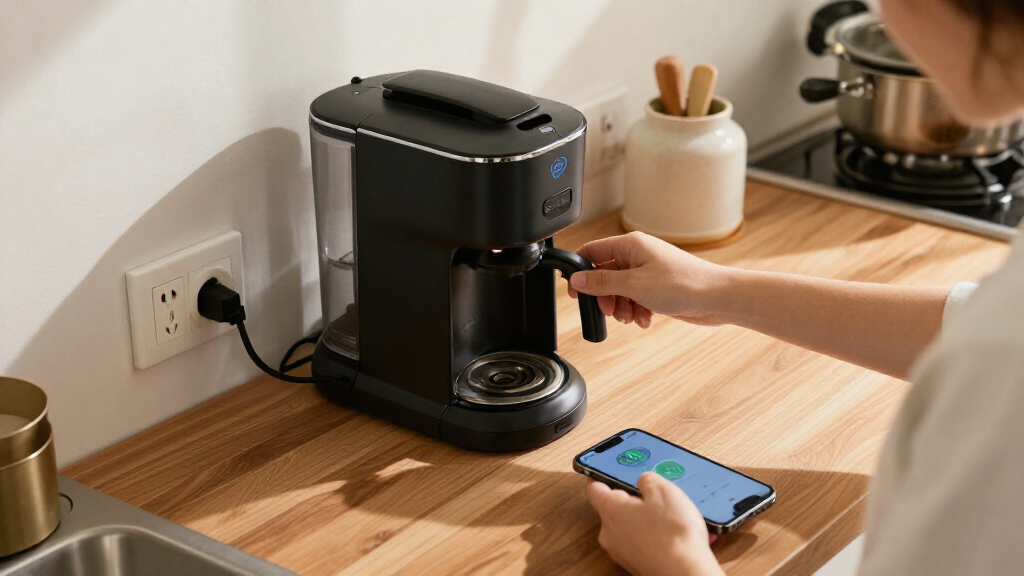
I ranked these plugs by how well they combine usable energy monitoring with straightforward control, broad smart-home fit, and a practical form factor. I gave extra weight to options that pair monitoring with a clearly stated protocol or platform compatibility, since a plug that cannot join a buyer’s existing setup is a poor fit even if its feature list looks strong. Pack size also mattered: a four-pack can make room-by-room tracking easier, while a two-pack or single plug may be a better first step.
The order reflects versatility and likely fit for more households, not a claim that every buyer needs the same platform. Matter-enabled Kasa options rank highly for their cross-platform approach; Tapo earns a strong place for its clear Wi-Fi format and multiple pack choices. More specialized products, including the Z-Wave Minoston and the Eve outlet, can be stronger for particular ecosystems or use cases, but their appeal is narrower. I also weighed stated electrical capacity, setup demands, and whether the product details make its role clear, while treating missing specifics as a reason not to overstate its advantages.
Factors to Consider When Choosing Smart Plugs With Energy Monitoring
Before choosing a model, match the plug to the appliance and the smart-home system you already use. Energy monitoring is only useful when the readings are accessible and relevant to your decisions; protocol compatibility, outlet layout, and the number of devices you want to track can matter just as much.
Choose a Protocol That Fits Your Existing Setup
Start with the hub, app, and voice assistant you already rely on, rather than buying based on a protocol label alone. Matter can help with cross-platform flexibility, but buyers should still confirm that the specific plug’s energy data is exposed in the app or platform they plan to use. Wi-Fi plugs avoid a dedicated hub, though they rely on a stable wireless network and may add more devices to it. Z-Wave models such as the Minoston are aimed at homes with a compatible Z-Wave controller, not shoppers who want a hub-free setup. A common mistake is assuming that basic on/off control means every monitoring feature will appear in every connected platform. Check the product’s supported ecosystem and monitoring interface before choosing.
Match the Plug’s Rating to the Appliance
A plug’s stated current and wattage limits are boundaries, not a suggestion to ignore the appliance label. Check both the device’s load and its operating pattern, especially for equipment with motors, heating elements, or a high startup draw. Several picks here state a 15A rating, but that does not make every smart plug interchangeable for every load. Avoid daisy-chaining plugs or using one where the outlet, plug body, or appliance cord would be strained. If you are unsure whether a particular appliance is suitable, check its manual and the smart plug’s specifications before connecting it. Energy monitoring should never come at the cost of electrical safety.
Decide What You Want the Energy Data to Tell You
Monitoring can answer different questions: how much a device uses while running, whether it draws power while idle, or how usage changes after a schedule adjustment. Think about the decision you want the readings to support before choosing an app or buying several plugs. A plug that reports usage is not automatically a complete home-energy system, and device-level readings may not explain the whole household bill. Check how the app presents historical data, whether it offers the time range you need, and whether you can export or compare readings if that matters to you. Do not assume every compatible smart-home platform will display the same energy information. If you only want to identify a few high-use appliances, start with a small number of monitored outlets.
Buy the Right Number of Plugs, Not Just the Biggest Pack
Four-packs from Govee, Kasa, Tapo, and Emporia can make it easier to monitor several devices, but the bundle is only useful if you have suitable outlets and a clear plan for each plug. Two-pack options are a lower-commitment way to compare appliances before expanding. Map your intended locations first: bulky adapters, neighboring sockets, and furniture can make some outlets hard to reach. Also check whether you want to measure devices in separate rooms, since Wi-Fi coverage and hub placement can affect reliability. Buying extra plugs does not improve the quality of the readings from each one. Choose a pack based on your actual monitoring plan and the space available around your outlets.
Weigh Hub-Free Convenience Against Network Management
Wi-Fi plugs are often appealing because they do not call for a separate smart-home hub, while Z-Wave models depend on a compatible controller and Matter products still need a suitable Matter-enabled setup. Convenience depends on what you already own, not simply on which connection sounds newest. A home with many Wi-Fi devices may benefit from limiting additional network traffic, while a Z-Wave network owner may prefer to keep compatible devices on that system. If you are building a smart home from scratch, choose a platform you can keep using as you add devices. Avoid mixing protocols without a reason; more apps and hubs can complicate routines and troubleshooting. Confirm setup requirements before purchasing a multi-pack.
Frequently Asked Questions
Will a Matter smart plug show energy use in every Matter-compatible app?
Not necessarily. Matter compatibility does not guarantee identical feature support across apps, and energy monitoring may be displayed differently or omitted by a particular platform. Check the plug’s supported features in the app you plan to use, along with any manufacturer app needed to view usage history. Basic switching may work even when energy data is not available in that interface. If energy readings are the main reason for buying, confirm that this exact function is supported before choosing a Matter plug.
Should I buy a four-pack if I only want to monitor one appliance?
A four-pack makes sense when you have several specific devices to track and enough suitable outlets to place the plugs. For a single appliance, a smaller pack or one plug can reduce unused hardware and let you learn whether the monitoring data is useful before expanding. Make sure each intended device is within the plug’s electrical rating, and think about whether your app can label or distinguish readings from multiple plugs. A larger bundle is not inherently a better value if the other plugs will sit unused. Start with the number of appliances you actually plan to compare.
Can I use an energy-monitoring smart plug with a heater or other high-draw appliance?
Only if the appliance’s electrical load falls within the plug’s stated limits and the manufacturer permits that kind of use. Do not rely on the 15A label alone: check the appliance’s current or wattage, the plug specifications, and any guidance about heating or motor loads. Some devices can draw more power at startup than during normal operation, and plugs or outlet locations can be unsuitable even when a number appears to match. Never use a smart plug as a substitute for a properly rated outlet or a safety device. When the fit is unclear, consult the appliance documentation or a qualified electrician.
Do I need a hub for these smart plugs?
It depends on the model and the network you choose. Wi-Fi options generally connect through your home network, while the Minoston Z-Wave plug requires a compatible Z-Wave controller. Matter products need a compatible Matter ecosystem, which may involve a controller or hub depending on your home setup. Confirm the requirements for the exact model rather than assuming that “smart plug” means hub-free. If you already own a hub, selecting a plug that works with it can simplify routines and reduce the number of separate apps.
Can a smart plug’s energy readings tell me exactly how much I will save?
Readings can help you identify how much a connected device uses, but they do not by themselves predict an exact bill reduction. Your actual savings depend on usage habits and your electricity rate, as well as whether you can change or reduce the appliance’s consumption. Compare readings over a consistent period and distinguish active use from standby draw where the app allows it. A schedule may cut unnecessary run time, but the plug cannot make an inefficient appliance efficient. Treat the data as a guide for decisions, not a guaranteed savings estimate.
Conclusion
For the broadest mix of protocol flexibility and multi-device coverage, I’d choose the Kasa KP125M as best overall. The Tapo P115 is my value pick for shoppers who want a straightforward Wi-Fi option and a choice of pack size, while the SONOFF S61s is a strong alternative for buyers who specifically want a Matter-enabled 15A plug. Beginners should start with a small Tapo pack or another option that matches their existing app, rather than buying more plugs than they can use. For a specific need, choose the Minoston MP21ZP if you already run Z-Wave and want its repeater role; consider the Eve Energy Outlet if its outlet format and Matter setup fit your home. The best choice is the one that gives you accessible energy data on the platform you already use and suits the appliance you plan to monitor.