When choosing a smart thermostat with humidity control, look for one that offers precise sensors and easy-to-use interfaces, such as touchscreen or mobile apps. Ensure it’s compatible with your home’s smart systems and voice assistants for seamless control. Focus on features that allow automatic adjustments to maintain ideal indoor moisture levels, improving comfort and efficiency. By selecting the right model, you can enhance your indoor climate and save energy—discover more tips on making the perfect choice.
Key Takeaways
- Ensure the thermostat has precise sensors for accurate humidity detection and regulation.
- Check for compatibility with your existing HVAC system and smart home devices like voice assistants.
- Prioritize user-friendly interfaces with real-time data display and easy control options.
- Confirm the thermostat offers automated humidity adjustments and support for humidifiers/dehumidifiers.
- Consider energy efficiency features that optimize both temperature and humidity for cost savings.

Choosing a smart thermostat with humidity control can significantly enhance your home’s comfort and energy efficiency. When you’re selecting a device with humidity control, it’s vital to take into account how it manages both temperature and moisture levels, creating a more comfortable environment while saving you money. One of the first things to look at is the energy efficiency features. A smart thermostat with humidity control helps maximize your HVAC system’s performance, preventing overuse and reducing energy waste. By maintaining ideal humidity levels alongside temperature, it can lower your heating and cooling costs. This means that you don’t have to run your system as often, which directly translates to increased energy efficiency and lower utility bills.
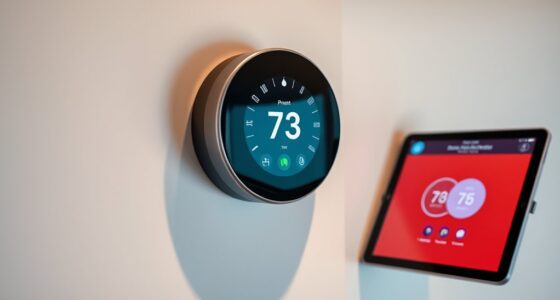
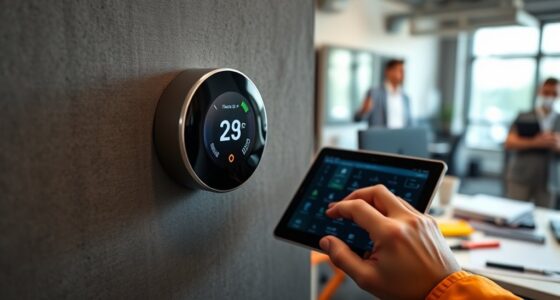
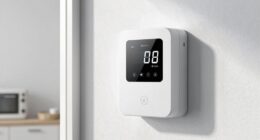
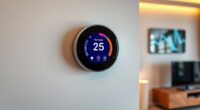
Next, pay close attention to the user interface. You want a device that’s intuitive and easy to operate, whether through a touchscreen, mobile app, or voice control. An accessible user interface ensures you can quickly adjust settings, monitor indoor conditions, and access smart features without frustration. Some thermostats offer detailed dashboards that display real-time data on temperature and humidity, giving you a clearer picture of your indoor environment. Others simplify controls to just a few essential options, which can be perfect if you prefer straightforward operation. The clarity of the interface influences how effectively you can manage humidity levels, so a well-designed, user-friendly interface makes a significant difference.
Choose a smart thermostat with an intuitive, user-friendly interface for easy humidity and temperature management.
When it comes to humidity control, look for models that feature precise sensors and automatic adjustments. These devices detect changes in moisture levels and respond by activating humidifiers or dehumidifiers as needed. This automatic regulation helps prevent issues like mold growth, condensation, or excessively dry air, all of which can impact your comfort and health. Additionally, some smart thermostats allow you to set preferred humidity ranges, giving you more control without constant manual adjustments. This convenience ensures your home stays within ideal comfort parameters, regardless of outdoor weather fluctuations.
Furthermore, compatibility with other smart home devices can enhance your experience. Many models integrate seamlessly with voice assistants like Alexa or Google Assistant, allowing you to control humidity and temperature with simple voice commands. This integration adds an extra layer of convenience, making it easier to fine-tune your indoor climate without interrupting your daily routine. Incorporating residential and commercial applications can also help in selecting systems that are designed for larger or more complex environments, ensuring optimal performance across different settings.
Frequently Asked Questions
Can Smart Thermostats Be Integrated With Existing Home Automation Systems?
Yes, smart thermostats can be integrated with your existing home automation system. You just need to check compatibility questions first, ensuring the thermostat works with your smart hub or platform. Most popular brands now support major systems like Alexa, Google Home, or Apple HomeKit. Once connected, you can control temperature and humidity, set schedules, and automate routines effortlessly, making your home more comfortable and energy-efficient.
Do Humidity Control Features Increase the Energy Efficiency of Smart Thermostats?
Humidity control features can boost your smart thermostat’s energy efficiency because humidity sensors help maintain ideal indoor moisture levels. When humidity stays balanced, your heating and cooling systems don’t have to work as hard, saving energy. By actively managing both temperature and humidity, you create a comfortable environment while reducing energy consumption, ultimately lowering your utility bills and enhancing overall home efficiency.
Are There Specific Brands Known for Better Humidity Regulation?
Did you know that Nest and Ecobee are top brands praised for their humidity regulation? You’ll find that their reputation for accurate sensor calibration helps maintain consistent indoor moisture levels. These brands stand out because they prioritize precise humidity control, which improves comfort and energy efficiency. If you’re choosing a smart thermostat, you can trust Nest and Ecobee to deliver reliable humidity regulation backed by strong brand reputation.
How Accurate Are Humidity Sensors in Smart Thermostats?
Humidity sensors in smart thermostats are generally accurate, but their precision depends on proper humidity sensor calibration and sensor responsiveness. You should regularly calibrate your device to verify accurate readings, especially if you notice fluctuations. Good quality thermostats have responsive sensors that quickly adapt to changes in humidity, maintaining comfort. Keep the sensors clean and check calibration periodically for peak performance, ensuring your home stays comfortable and energy-efficient.
What Is the Typical Installation Process for Smart Thermostats With Humidity Control?
You start by turning off your power, then remove your old thermostat. Next, follow the installation steps in the user manual, ensuring compatibility considerations like wiring and HVAC system type. Connect the new thermostat’s wires to the compatible terminals, mount it on the wall, and turn the power back on. Finally, configure settings and connect it to your Wi-Fi. Always double-check compatibility to avoid installation issues.
Conclusion
Choosing a smart thermostat with humidity control can transform your home comfort. Imagine a winter night where, thanks to your thermostat, your living room stays cozy and humidity stays just right, preventing dry skin and static. Like Sarah, who finally found relief from her allergy symptoms after installing a smart thermostat that manages both temperature and humidity. Don’t wait—upgrade today and enjoy a healthier, more comfortable home tailored perfectly to your needs.