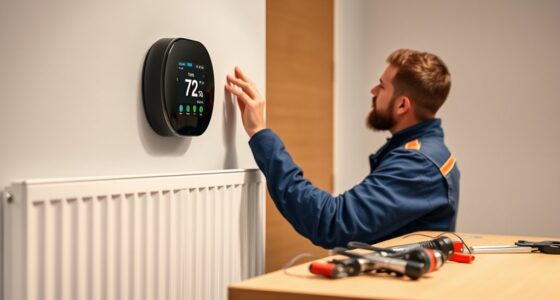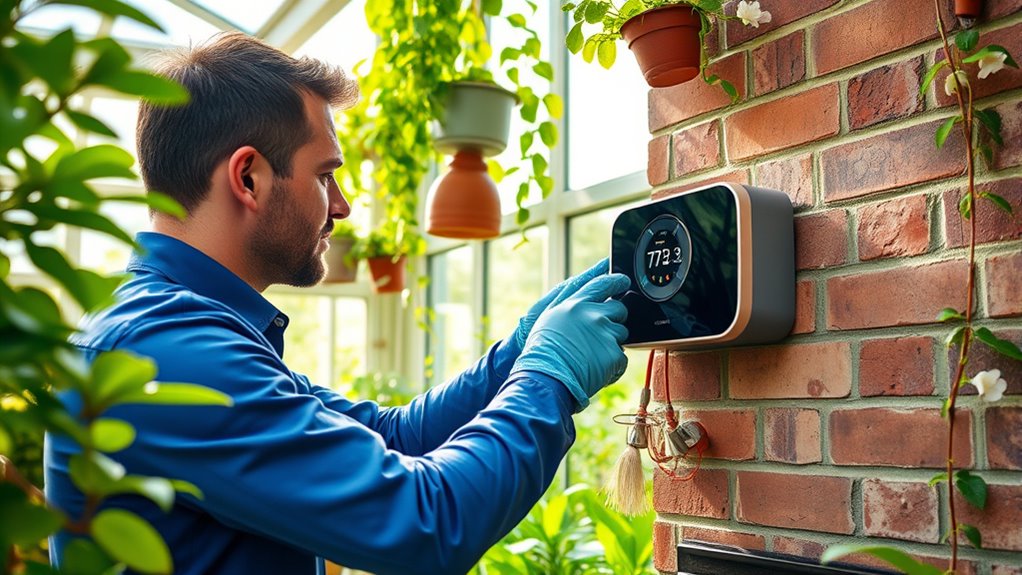
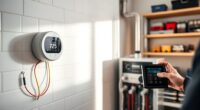
To install a smart thermostat in your greenhouse or conservatory, choose a model that suits your needs, ensuring it’s compatible with your existing systems. Position it where it reflects typical temperatures, avoiding direct sunlight or drafts for accurate readings. Follow manufacturer instructions for proper installation and pairing with your Wi-Fi or automation system. Once set up, you can easily adjust settings remotely or automate climate schedules. Keep exploring to learn more about optimizing your greenhouse climate control effectively.
Key Takeaways
- Position the thermostat where it accurately reflects typical greenhouse temperatures, avoiding direct sunlight, drafts, or heat sources.
- Ensure easy access for manual adjustments and consider remote control features for convenient management.
- Select models with clear displays and simple interfaces for straightforward setup and daily operation.
- Configure automation settings, such as schedules and weather-based adjustments, to maintain consistent growing conditions.
- Verify compatibility with existing climate control systems and consider integration with home automation for enhanced control.
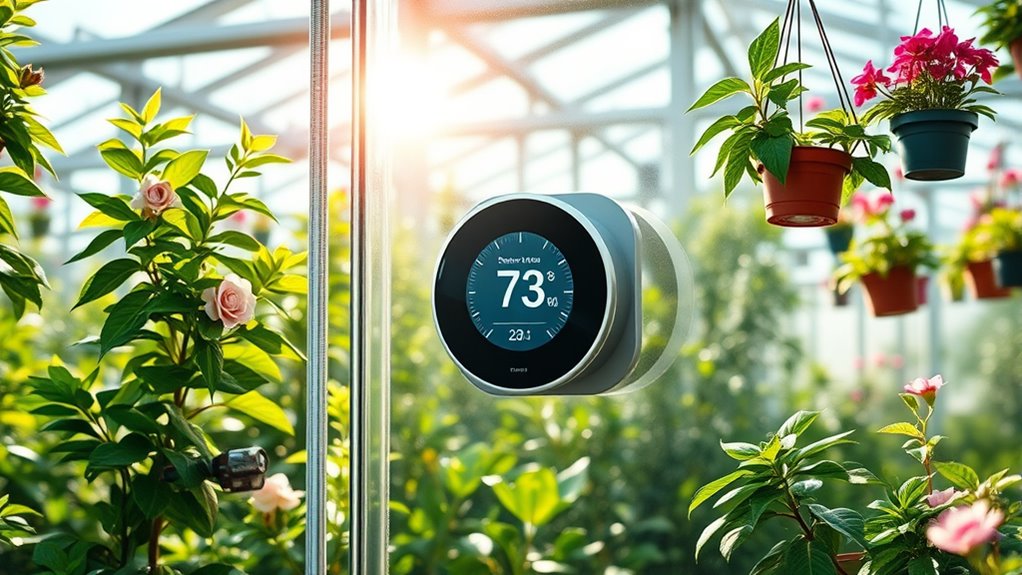
Installing a smart thermostat can significantly improve your home’s comfort and energy efficiency. When you bring this technology into a greenhouse or conservatory, you gain precise control over temperature and humidity, helping your plants thrive while reducing energy costs. A key advantage of smart thermostats is their ability to deliver energy savings, which is especially valuable if you’re trying to manage the often fluctuating climate inside your greenhouse. You’ll find that many models come with intuitive user interfaces, making it easy to set, adjust, and monitor your climate settings without hassle. This straightforward control helps you create ideal growing conditions while minimizing unnecessary energy use.
Smart thermostats enhance greenhouse comfort and efficiency with intuitive controls and energy-saving features.
When installing a smart thermostat in your greenhouse, first consider its placement. You want it in a spot that accurately reflects the typical temperature of the space, away from direct sunlight, drafts, or heat sources that could skew readings. Once installed, the user interface becomes your main point of interaction. Look for models with clear, responsive screens and simple navigation menus. Many thermostats allow you to customize settings directly on the device or through a dedicated app on your phone or tablet. This flexibility means you can tweak temperatures or set schedules remotely, ensuring your plants are always in a stable environment without constantly being physically present.
The user interface plays a vital role in how effectively you manage your greenhouse climate. A well-designed interface should be intuitive, with easily understandable icons and straightforward options for adjusting temperature, humidity, and schedules. Some smart thermostats also provide real-time data, graphs, and alerts—features that help you track energy consumption and identify potential issues before they become serious problems. These insights can lead to significant energy savings over time by highlighting inefficiencies or unnecessary heating or cooling. Moreover, selecting a thermostat with high contrast displays can improve visibility in various lighting conditions often found in greenhouses.
Furthermore, many smart thermostats are compatible with home automation systems if you want to integrate your greenhouse control with other smart devices. This allows for more sophisticated automation routines—like adjusting temperatures based on weather forecasts or time of day—which can further optimize energy use. The ability to set automatic schedules based on your plant’s needs or external conditions ensures the environment stays consistent, reducing the risk of temperature swings that can stress your plants.

Inkbird WiFi ITC-308 Digital Temperature Controller Thermostat Remote Monitoring Controlling Home Brewing Fermentation Breeding Incubation Greenhouse
WIFI smart controller: Supports both IOS and Android; WIFI connection supports 2.4 GHz Wi-Fi with INKBIRD APP to…
As an affiliate, we earn on qualifying purchases.
As an affiliate, we earn on qualifying purchases.
Frequently Asked Questions
How Do Smart Thermostats Impact Humidity Control in Greenhouses?
Smart thermostats improve humidity regulation in your greenhouse by adjusting temperature settings to maintain ideal moisture levels. This precise control helps prevent issues like mold or dryness, supporting healthy plant growth. As a result, you’ll notice better plant health, fewer diseases, and more consistent yields. With real-time monitoring, you can easily fine-tune humidity, ensuring your plants thrive in a stable environment and reducing manual adjustments.
Can Smart Thermostats Integrate With Existing Greenhouse Automation Systems?
Nearly 80% of greenhouse operators face compatibility issues when integrating smart thermostats with existing automation systems. You can successfully connect them, but integration challenges often arise due to outdated hardware or incompatible protocols. To avoid this, check compatibility and consider professional assistance. This guarantees seamless control over temperature and humidity, improving plant health and energy efficiency, ultimately making your greenhouse environment more reliable and easier to manage.
What Are the Best Practices for Calibrating Smart Thermostats in Different Climates?
To guarantee accurate climate adaptation, you should regularly perform sensor calibration on your smart thermostat. Start by comparing its readings with a reliable thermometer, then adjust settings accordingly. Consider the climate’s variability and recalibrate seasonally or after significant weather changes. Proper sensor calibration guarantees your system responds correctly to temperature fluctuations, maintaining ideal conditions for plant growth and energy efficiency in different climates.
How Do Outdoor Weather Conditions Affect Smart Thermostat Performance?
Outdoor weather conditions, like a rollercoaster ride, can shake up your smart thermostat’s performance. Strong winds can interfere with sensors, just as gusts challenge a kite’s stability, so wind resistance becomes vital. Solar shading helps reduce temperature swings caused by direct sunlight, ensuring your thermostat stays accurate. Keep an eye on these factors to maintain reliable control, even when the weather tries to throw a wrench in your climate management.
Are There Specific Smart Thermostat Models Designed for Greenhouse Environments?
Yes, some smart thermostats are specifically designed for greenhouse environments. These models feature specialized sensor integration that monitors temperature, humidity, and light levels more accurately. They help you optimize energy efficiency by adjusting heating and cooling based on real-time data. Look for thermostats with these features to guarantee reliable performance in greenhouse conditions, making it easier to maintain ideal growing environments while saving energy.
Inkbird WiFi ITC-308 Digital Temperature Controller Thermostat Remote Monitoring Controlling Home Brewing Fermentation Breeding Incubation Greenhouse
WIFI smart controller: Supports both IOS and Android; WIFI connection supports 2.4 GHz Wi-Fi with INKBIRD APP to…
As an affiliate, we earn on qualifying purchases.
As an affiliate, we earn on qualifying purchases.
Conclusion
By installing smart thermostats in your greenhouse or conservatory, you’ll effortlessly maintain the perfect environment, just like a gentle gardener tending to delicate blooms. These devices adapt to your needs, saving energy and ensuring healthy plants year-round. Imagine stepping into a space where technology and nature dance in harmony—no more guesswork, only lush, thriving greenery. Embrace this modern marvel, and watch your green haven flourish, as if by magic, in a world that moves faster than a horse-drawn carriage.

Inkbird ITC-308 Digital Temperature Controller 2-Stage Outlet Thermostat Heating and Cooling Mode Carboy Homebrew Fermenter Greenhouse Terrarium 110V 10A 1100W
【Easy to use】 Supports °C/°F display.
As an affiliate, we earn on qualifying purchases.
As an affiliate, we earn on qualifying purchases.

vine Smart Thermostat for House, WiFi Thermostats for Home Compatible with Alexa and Google Assistant, 7day x 8period Programmable, Energy Star Certified, C-Wire Required
【Do a Simple Check】Please scan the QR code to do a check if vine thermostat is compatible with…
As an affiliate, we earn on qualifying purchases.
As an affiliate, we earn on qualifying purchases.