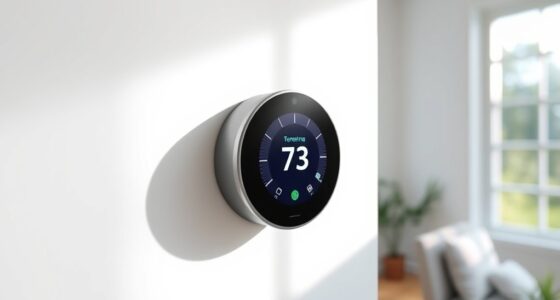
To set up backup heating with a smart thermostat, make certain your system is compatible with a secondary power source like a generator or batteries. Regularly maintain your furnace, check thermostat calibration, and consider smart features that allow remote control and alerts. Test the backup functions frequently to make sure they activate during outages. Proper setup and upkeep keep your home warm and comfortable, and if you continue exploring, you’ll find step-by-step guidance to maximize your system’s reliability.

Get home appliances delivered free with Prime
- Fast, free delivery on millions of items
- Prime Video, Amazon Music and more included
- Member-only deals all year
Key Takeaways
- Ensure your backup heating system is compatible with your smart thermostat’s wiring and control capabilities.
- Regularly calibrate your thermostat for accurate temperature detection and reliable activation of backup heat.
- Schedule routine furnace maintenance and test the backup system periodically for proper operation during outages.
- Utilize smart thermostat features like remote control and alerts to monitor and activate backup heating as needed.
- Integrate your backup system with a power source like a generator to maintain functionality during power outages.

Have you ever experienced a power outage during cold weather? It’s a frustrating situation that leaves your home uncomfortably cold and your heating system useless until power returns. That’s why setting up a backup heating system with a smart thermostat is a smart move. These systems ensure your home stays warm even when your primary heating source goes offline. To get started, you’ll want to focus on proper furnace maintenance, which is vital for reliable backup performance. Regularly inspecting your furnace, replacing filters, and scheduling professional tune-ups can prevent breakdowns and improve efficiency. When your furnace runs smoothly, your backup system can kick in seamlessly, providing consistent heat during outages.
Next, pay attention to thermostat calibration. Your smart thermostat must accurately detect indoor temperature to activate backup heating at the right time. If it’s miscalibrated, you might find your home too cold or unnecessarily warm, wasting energy and reducing comfort. Many smart thermostats automatically calibrate themselves, but it’s still wise to double-check their readings. You can do this by comparing the thermostat’s displayed temperature with a reliable handheld thermometer. If discrepancies exist, recalibrate the thermostat according to the manufacturer’s instructions to guarantee it responds accurately. Proper calibration guarantees your backup system activates precisely when needed, preventing cold spots and unnecessary energy use.
Calibrate your smart thermostat regularly to ensure accurate temperature detection and reliable backup heating activation.
Integrating your backup heating system with a smart thermostat offers notable advantages. Many models allow you to set specific schedules, monitor energy consumption, and receive alerts if the system detects issues. This way, you can proactively address problems before they escalate, ensuring your backup system is always ready when needed. Additionally, smart thermostats often feature Wi-Fi connectivity, allowing remote control via smartphone apps. This means that during a power outage, if you have a generator or alternative power source, you can manually activate or adjust your backup heating system from anywhere. This level of control helps you stay ahead of the cold, reducing discomfort and potential damage from frozen pipes.
Finally, don’t forget to test your backup heating system regularly. Periodic testing guarantees it activates correctly and maintains a warm environment during outages. Combining this with routine furnace maintenance, accurate thermostat calibration, and understanding backup heating system requirements can greatly improve your home’s resilience against winter power failures. In the end, investing in a smart thermostat-enabled backup heating system provides peace of mind, knowing you’ll stay warm no matter what winter throws your way. Proper setup and maintenance are key to making sure your home remains cozy, even when the power’s out.
smart thermostat with backup heating
As an affiliate, we earn on qualifying purchases.
As an affiliate, we earn on qualifying purchases.
Frequently Asked Questions
How Do I Choose the Best Backup Heating System for My Home?
You should compare fuel options like electric, gas, or propane, considering availability and costs in your area. Think about installation considerations such as space, venting, and compatibility with your existing system. Choose a backup that’s reliable and easy to operate when needed. A smart thermostat can help you manage both primary and backup systems efficiently, ensuring your home stays warm during outages or extreme weather.
Can I Control Backup Heating Remotely via Smart Thermostats?
Sure, you can control your backup heating remotely with smart thermostats—just imagine having a secret lair where you command your heat from afar! Thanks to smart integration, you get a remote control that lets you turn the heat on or off whenever you want. Whether you’re at work or on vacation, managing your backup heating system becomes effortless, giving you comfort and peace of mind with a simple tap.
What Safety Features Should I Look for in Backup Heating Systems?
You should prioritize safety features like fire safety mechanisms and an emergency shutoff. Guarantee your backup heating system has automatic shutoff in case of overheating or malfunction, reducing fire risks. Look for systems with built-in fire detection or alerts, and verify that emergency shutoff controls are easily accessible. These features protect your home and loved ones, offering peace of mind during cold weather while maintaining safety standards.
How Often Should I Maintain or Service My Backup Heating System?
Imagine a winter storm knocks out power, and your backup heating system kicks in. To guarantee it works reliably, you should follow your seasonal checklist and adhere to a maintenance schedule. Typically, you should service your backup system at least once a year, preferably before the coldest months. Regular inspections, filter changes, and safety checks keep it running efficiently, preventing unexpected breakdowns and ensuring safety when you need it most.
Are There Energy-Efficient Options for Backup Heating Systems?
Yes, you can choose energy-efficient backup heating options like solar-powered systems, which boost solar efficiency and reduce utility bills. Renewable options, such as heat pumps or biomass heaters, also offer eco-friendly alternatives. These systems use less energy, lowering your carbon footprint while providing reliable warmth during outages. Investing in these options guarantees your backup heating remains sustainable and cost-effective, especially with advancements in renewable technology.
generator compatible smart thermostat
As an affiliate, we earn on qualifying purchases.
As an affiliate, we earn on qualifying purchases.
Conclusion
By thoughtfully setting up backup heating systems with smart thermostats, you gently guarantee comfort doesn’t waver when unforeseen chills arrive. It’s like having a quiet confidant ready to lend a hand, so you can relax knowing warmth will always be within reach. With a little planning, you create a cozy haven that softly guards against life’s unpredictable cold snaps. Embrace the peace of mind that comes with a smart, reliable backup, and let your home warmly welcome every season.
As an affiliate, we earn on qualifying purchases.
As an affiliate, we earn on qualifying purchases.
Cold & flu season Picks
humidifiers
As an affiliate, we earn on qualifying purchases.