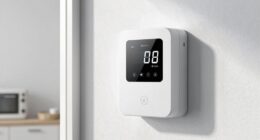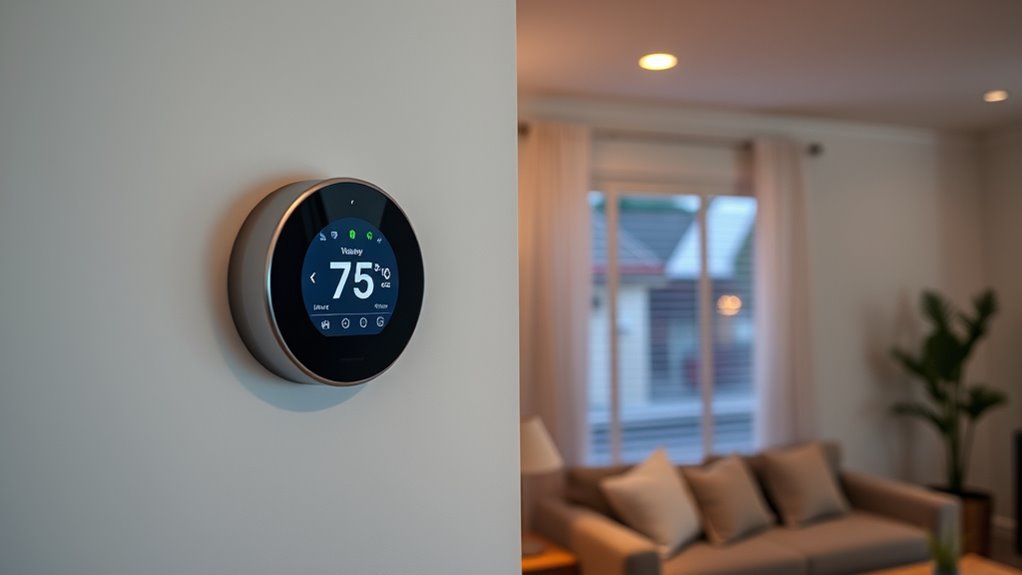

Using smart thermostats combined with smart home scenes lets you automate responses to weather changes effortlessly. You can set scenes to automatically adjust your home’s temperature based on forecasted or real-time weather, improving comfort and saving energy. These systems learn your preferences over time and adapt accordingly, ensuring your home stays comfortable without manual tweaks. Keep exploring to discover how to fully harness these features and optimize your home’s climate management during weather events.
Key Takeaways
- Automate temperature adjustments with scenes based on weather forecasts to enhance comfort and energy efficiency.
- Activate pre-set scenes that respond to weather changes, like increasing warmth during cold snaps.
- Customize scenes for occupancy patterns, switching automatically between energy-saving and comfort modes.
- Use real-time weather data to trigger scene changes, reducing manual adjustments and energy waste.
- Integrate learning algorithms that adapt scene settings over time for optimal comfort and efficiency.

Have you ever wondered how smart thermostats and home scenes can transform your living space? When you integrate these devices, you access a new level of comfort and control, especially during weather events. Smart thermostats are designed to adapt to your lifestyle, providing energy efficiency and user customization that traditional thermostats simply can’t match. During extreme weather, this means you can automatically adjust your home’s temperature to keep things comfortable without wasting energy or running up your utility bills.
Imagine a cold snap hitting your area. Instead of manually cranking up the heat and worrying about forgetting to turn it down later, your smart thermostat can detect the drop in temperature and activate a pre-set home scene. You might have a scene configured to increase the temperature gradually, ensuring your home stays warm without sudden spikes that waste energy. Once the weather warms up again, the thermostat can switch to a more energy-efficient setting, enhancing power consumption while maintaining comfort. The ability to create these customized scenes means you’re always in control, tailoring your home’s response to weather conditions with just a few taps or even voice commands.
User customization is a key advantage here. You can set specific parameters that match your preferences, such as temperature ranges, schedules, or even occupancy patterns. If you know you’ll be away during a cold spell, you can activate a scene that reduces heating to save energy, then automatically switches back on when you’re returning home. During hot weather, your smart thermostat can work with scenes to crank up the AC before you arrive, ensuring a cool welcome without wasting energy cooling an empty house. This level of control means you’re not just reacting to the weather but proactively managing your home environment, making it more efficient and cost-effective.
Furthermore, many smart thermostats learn from your habits over time, fine-tuning their responses to weather changes and your daily routines. You’ll find yourself spending less time fiddling with settings and more enjoying the comfort of an intelligently managed home. The seamless integration with smart home scenes allows for automation that reacts to weather events in real time, reducing manual adjustments. Many smart thermostats utilize learning algorithms to optimize comfort and efficiency, adapting to your lifestyle automatically. This proactive approach helps you conserve energy by preventing unnecessary heating or cooling, which can be especially beneficial during unpredictable weather seasons.
In essence, using smart thermostats with customizable home scenes transforms your house into a responsive, energy-conscious environment. You gain confidence in your ability to manage your comfort and costs, all while benefiting from a more eco-friendly lifestyle. Weather events no longer have to catch you off guard; instead, your smart home adapts effortlessly, providing ideal comfort and efficiency at all times.
Frequently Asked Questions
Can Smart Thermostats Predict Upcoming Weather Changes Automatically?
Smart thermostats can’t predict weather changes on their own, but their weather forecast integration allows them to respond automatically. They use real-time weather data to adjust your home’s temperature proactively, thanks to their thermostat predictive capabilities. This means you benefit from smarter climate control without needing to manually change settings, as your thermostat anticipates upcoming weather shifts based on integrated forecasts, enhancing comfort and energy efficiency effortlessly.
How Do Smart Home Scenes Adjust During Extreme Weather Conditions?
Imagine a gentle nudge guiding your home through weather shifts. When extreme conditions hit, your smart home scenes automatically adjust the thermostat using temperature sensors, ensuring comfort and safety. These scenes optimize settings for energy savings and prevent strain on your system. You effortlessly stay cozy or cool, while your smart devices handle the adjustments seamlessly, giving you peace of mind during unpredictable weather.
Are Smart Thermostats Compatible With All Types of Weather Alerts?
Smart thermostats generally have good weather alert compatibility and can integrate with various weather alert systems. However, their compatibility depends on your specific thermostat model and its features. You should check if your thermostat supports integration with weather alerts from your local providers or smart home platforms. When properly set up, this guarantees your thermostat responds automatically to weather alerts, keeping your home comfortable and energy-efficient.
Do Smart Home Scenes Require Manual Setup for Weather Events?
Think of your smart home scene as a symphony; manual customization is like tuning each instrument. You usually need to set up scene automation for weather events, so your thermostat responds appropriately. While some systems offer automatic updates, many require you to manually tailor scenes to activate during specific weather conditions. This way, you ensure your home stays comfortable without constantly adjusting settings yourself.
How Secure Is the Data When Integrating Weather Info With Smart Thermostats?
Your data security is generally strong when integrating weather info with smart thermostats, thanks to data encryption protocols that protect your information. However, privacy concerns can arise if the manufacturer collects or shares your data without clear consent. To stay safe, choose devices with robust security measures, review privacy policies, and keep firmware updated. This way, you minimize risks and maintain control over your personal data.
Conclusion
By integrating smart thermostats with smart home scenes, you can proactively protect your home during weather events. For instance, imagine setting your system to automatically lower the thermostat and activate storm shutters when a severe storm is forecasted. This seamless automation not only enhances safety but also saves energy and reduces stress. Embrace these smart technologies to create a resilient, comfortable home that responds intelligently to changing weather conditions.