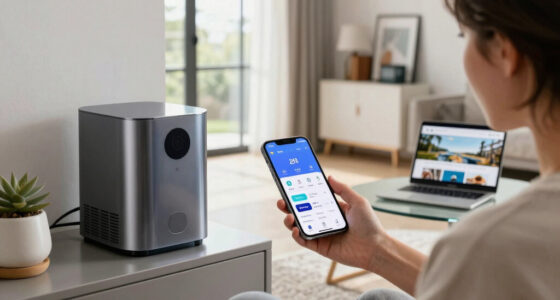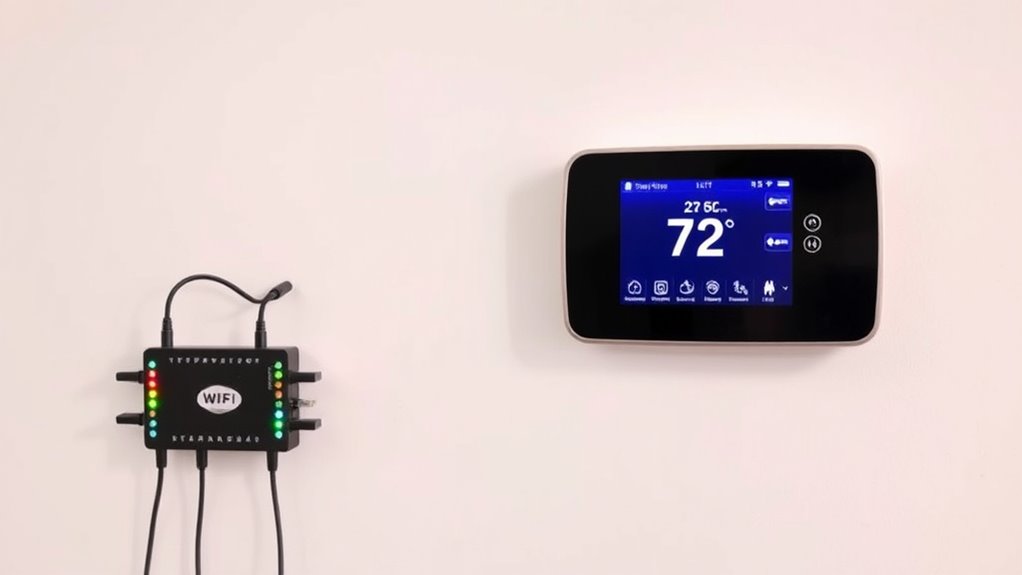

If you’re choosing a smart thermostat, Wi-Fi offers fast data transfer and easy smartphone control, but it can use more power and be vulnerable to security issues. Zigbee and Z-Wave are better for low-power operation and mesh networks, improving reliability in crowded wireless environments. Zigbee operates on a separate frequency from Wi-Fi, reducing interference, while Z-Wave focuses on secure, stable connections. Exploring these options further can help you find the best fit for your home.
Key Takeaways
- Wi-Fi offers high-speed data transfer ideal for remote control and cloud integration, while Zigbee and Z-Wave focus on low power and reliability.
- Zigbee supports mesh networking for better coverage and stability, whereas Wi-Fi relies on a single connection and Z-Wave uses a simpler network structure.
- Zigbee and Z-Wave consume less power, making them suitable for battery-operated thermostats, unlike Wi-Fi which may drain batteries faster.
- Z-Wave operates on a dedicated frequency with less interference, similar to Zigbee, but typically supports fewer devices than Zigbee’s mesh network.
- Wi-Fi provides easier setup with existing home networks, whereas Zigbee and Z-Wave require smart hubs for communication.

Have you ever wondered how your smart thermostat communicates with your other devices or your home’s Wi-Fi network? Understanding these protocols can help you choose the right system, especially if you’re focused on energy efficiency and security features. Wi-Fi is the most common method, allowing your thermostat to connect directly to your home’s existing network. It offers high data transfer speeds and easy integration with smartphones and cloud services. However, because Wi-Fi relies on your home’s internet, it can be vulnerable to security breaches if not properly protected. That’s why many models include security features like encryption and regular firmware updates. Also, Wi-Fi can consume more energy, which might impact your device’s overall energy efficiency, especially if you have multiple devices constantly connected.
In contrast, Zigbee operates on a low-power, mesh network that’s designed specifically for smart home devices. You won’t need to worry about it hogging your Wi-Fi bandwidth or draining your device’s battery. Zigbee devices communicate with each other through a network of interconnected nodes, which enhances reliability and range. This protocol excels at energy efficiency because it minimizes power consumption, extending the lifespan of your devices. Security features are robust too, with AES-128 encryption protecting your data and preventing unauthorized access. Since Zigbee operates on a separate frequency from Wi-Fi, it reduces interference, which can be especially beneficial in crowded wireless environments, ensuring your thermostat remains connected and responsive. Additionally, Zigbee’s dedicated network design helps improve overall system stability and security. Furthermore, the low-power nature of Zigbee makes it particularly suitable for battery-operated devices, ensuring long-term operation without frequent replacements.

LuxHeat 20sqft Floor Heating Mat Kit - 120v in Floor Heating System - Complete Electric Radiant Heated Flooring System Includes Alarm, UDG Programmable Thermostat w/GFCI & Flooring Sensor
LUXURY AND COMFORT - Enjoy the Warmth of LuxHeat's easy-to-install Electric Floor Heating System. Heating Kit Includes: 20...
As an affiliate, we earn on qualifying purchases.
Frequently Asked Questions
Which Protocol Offers the Best Energy Efficiency for Smart Thermostats?
When choosing a protocol for your smart thermostat, energy efficiency is key. Zigbee and Z-Wave prioritize low power consumption, helping extend battery life if your thermostat runs on batteries. Wi-Fi tends to use more power, which can drain batteries faster. So, if you want longer battery life and lower power consumption, Zigbee or Z-Wave are better options. Wi-Fi is more suitable if power supply isn’t a concern.
How Secure Are Wi-Fi, Zigbee, and Z-Wave Connections?
You might wonder about the security of these protocols. Wi-Fi uses strong encryption standards like WPA3, but it can be vulnerable to network breaches if not properly secured. Zigbee and Z-Wave also implement encryption, but their lower power and simpler design can lead to potential network vulnerabilities. Overall, your security depends on proper setup, regular updates, and using robust passwords to protect your smart thermostat’s connections.
Can These Protocols Be Integrated With Voice Assistants?
You can definitely achieve voice assistant integration with these protocols, but compatibility varies. Wi-Fi-based thermostats often work smoothly with popular voice assistants like Alexa or Google Assistant because of broad protocol compatibility. Zigbee and Z-Wave devices may require a hub or bridge, but they also support voice control once connected. Check your device’s specs to verify it supports your preferred voice assistant, making integration seamless and convenient.
What Is the Typical Installation Complexity for Each Protocol?
When considering installation complexity, Wi-Fi thermostats usually have the simplest setup, often just connecting to your existing network with minimal challenges. Zigbee and Z-Wave require you to install a hub or bridge, which can add installation challenges and more steps for user setup. Zigbee’s mesh network can be more complex initially, while Z-Wave’s straightforward pairing process tends to make user setup easier, though both need some technical familiarity.
Are There Any Compatibility Issues Between Protocols and Existing Smart Home Devices?
Imagine your smart home as a bustling city where devices communicate like busy streets. You might face protocol interoperability issues, causing devices to speak different languages. Wi-Fi, Zigbee, and Z-Wave often struggle with device ecosystem compatibility, making integration tricky. Ensuring your thermostat works smoothly with existing devices requires checking compatibility and choosing protocols that harmonize within your smart home network, avoiding frustration and dead ends.

LuxHeat 20sqft Electric Radiant Floor Heating System - 120v Heated Tile Floor Kit - Includes UWG5 WiFi Programmable Thermostat w/GFCI, Tile Uncoupling Membrane, Heating Cable, Sensor & Alarm
LUXURY AND COMFORT - Enjoy the warmth of LuxHeat's easy to install electric floor heating system. Electric floor...
As an affiliate, we earn on qualifying purchases.
Conclusion
So, as you consider your thermostat options, it’s interesting how Wi-Fi, Zigbee, and Z-Wave each have their quirks. Coincidentally, the choice often comes down to what your smart home already uses—your existing devices may just guide you. Whether you want seamless integration or reliable connectivity, knowing these protocols helps you make a smarter decision. After all, your perfect temperature control might just depend on the protocol that unexpectedly fits your home’s rhythm.

Warming Systems - 15 Sqft Electric Radiant Floor Heating Cable Kit – 120V Heated Tile Floor System with UWG5 Programmable Thermostat, Sensor, Installation Monitor & 25 Year Warranty, Made in the USA
COMPLETE ELECTRIC RADIANT FLOOR HEATING KIT – Includes 15 sq ft heating cable (60 ft) with installation cable...
As an affiliate, we earn on qualifying purchases.

LuxHeat 20sqft Electric Radiant Floor Heating System - 120v Heated Tile Floor Kit - Includes UDG4 Programmable Thermostat w/GFCI, Heating Cable, Uncoupling Membrane, Flooring Sensor & Alarm
LUXURY AND COMFORT - Enjoy the warmth of LuxHeat's easy to install electric floor heating system. Electric floor...
As an affiliate, we earn on qualifying purchases.