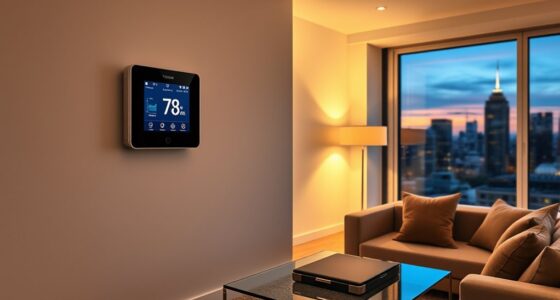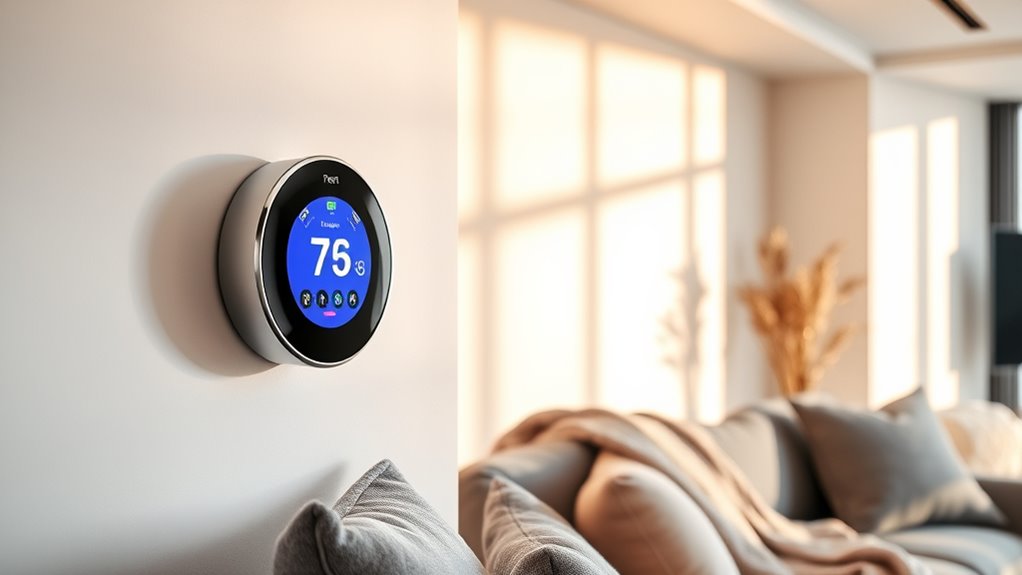

Smart thermostats apply the science of thermal comfort by learning your habits and adjusting the temperature to keep you feeling comfortable while saving energy. They monitor environmental factors like temperature, humidity, and occupancy, making real-time decisions to optimize your home climate. These devices anticipate needs based on your routines, automatically regulating heating and cooling. If you’re curious about how they create just the right environment for you, keep exploring how these smart systems work behind the scenes.

Get home appliances delivered free with Prime
- Fast, free delivery on millions of items
- Prime Video, Amazon Music and more included
- Member-only deals all year
Key Takeaways
- Smart thermostats optimize thermal comfort by learning user preferences and adjusting temperatures accordingly.
- They analyze environmental data and occupancy patterns to maintain ideal indoor conditions.
- These devices balance comfort with energy efficiency through adaptive scheduling and predictive adjustments.
- Sensors monitor temperature, humidity, and presence to create responsive climate control tailored to occupants.
- Incorporating ergonomic design and aesthetic elements enhances environmental harmony and user satisfaction.

Have you ever wondered how smart thermostats can enhance your comfort at home? These devices do more than just regulate temperature; they actively improve your living environment while helping you save energy. By learning from your user behavior, smart thermostats adapt to your routines, making adjustments that optimize both comfort and efficiency. This means you don’t have to constantly fiddle with the settings or worry about wasting energy when you’re not home. Instead, the thermostat anticipates your needs, adjusting heating or cooling to match your schedule, which reduces unnecessary energy consumption and lowers utility bills.
Smart thermostats learn your routines to optimize comfort and save energy effortlessly.
Energy efficiency is a key benefit of smart thermostats, especially when they analyze patterns in your daily activities. For instance, if you typically leave for work at a certain time, the thermostat will gradually lower the temperature before you leave, ensuring your home isn’t heated or cooled when it’s empty. When you return, it warms up or cools down just in time for your arrival. This intelligent scheduling minimizes energy waste and aligns your comfort preferences with eco-friendly practices. Over time, these devices learn your habits, fine-tuning their behavior to maximize efficiency without sacrificing comfort.
Your user behavior plays a critical role in how well a smart thermostat can optimize your environment. Simple actions like adjusting the temperature manually or setting specific schedules help the device understand your preferences better. Many models come with features like geofencing, which detects when you’re home or away based on your smartphone’s location, allowing automatic adjustments. By actively engaging with the device—whether through voice commands, app controls, or manual tweaks—you influence its learning process. The more you interact, the better it can tailor its behavior to suit your lifestyle, providing a personalized experience that balances comfort and energy savings.
Furthermore, smart thermostats often come with sensors and algorithms that monitor not just temperature but also humidity and occupancy. These sensors help the device make smarter decisions, like turning off the heat when rooms are unoccupied or adjusting airflow for better comfort. This integration of user behavior data and environmental sensing creates a seamless experience, where your home’s climate adjusts intuitively to your needs. Additionally, incorporating antique elements into your decor can add a touch of character and charm, creating a welcoming environment that complements the smart technology. As a result, you enjoy a consistent, comfortable environment that responds dynamically to your daily routines, all while reducing energy consumption.
Frequently Asked Questions
How Do Smart Thermostats Learn Individual Temperature Preferences?
Smart thermostats learn your temperature preferences through personalization algorithms and user behavior tracking. As you adjust the thermostat or it detects your daily routines, it records these actions. Over time, it identifies patterns and automatically adjusts settings to match your comfort needs. This continuous learning process helps the thermostat create a personalized environment, ensuring ideal comfort while also saving energy based on your habits and preferences.
Can Smart Thermostats Improve Energy Efficiency During Vacations?
Think of your smart thermostat as a vigilant guardian, watching over your home even when you’re away. During vacations, it can optimize energy savings by adjusting temperatures remotely, like a conductor fine-tuning an orchestra from afar. With remote temperature control, you prevent unnecessary heating or cooling, ensuring your system runs efficiently. This way, you save energy, cut costs, and return to a cozy home without wasting a single watt.
Are Smart Thermostats Compatible With All Heating and Cooling Systems?
Smart thermostats are not compatible with all heating and cooling systems due to compatibility issues. You’ll need to check your system’s specifications and confirm proper system integration before installation. Some systems, like older or specialized units, may require additional hardware or may not work with certain smart thermostats. It’s best to consult your system’s manufacturer or a professional to verify compatibility and ensure seamless integration.
How Secure Is Data Collected by Smart Thermostats?
You should know that the data collected by smart thermostats is generally secure, but privacy concerns remain. Manufacturers often use data encryption to safeguard your information from unauthorized access, which helps keep your usage patterns private. However, it’s wise to review privacy policies and ensure your device has updated security features. Staying informed about data security practices helps you feel more confident that your personal information stays protected.
Do Smart Thermostats Require Professional Installation?
Smart thermostats typically don’t require professional assistance for installation, but it depends on your home’s setup. If your current wiring is straightforward, you can usually do it yourself by following the manufacturer’s instructions. However, if your installation requires new wiring, compatibility checks, or you’re uncomfortable working with electrical components, it’s best to seek professional assistance. Ensuring proper installation can prevent issues and optimize your thermostat’s performance.
Conclusion
Understanding thermal comfort helps you create a cozy home, and smart thermostats make it easy. Did you know that using a smart thermostat can reduce energy bills by up to 12%? That means you save money while staying comfortable. By optimizing your heating and cooling, you’re not only enhancing your home’s comfort but also helping the environment. So, embrace smart technology and enjoy a perfect indoor climate—all while cutting costs and energy use effortlessly.
Fall yard work Picks
leaf blowers
As an affiliate, we earn on qualifying purchases.