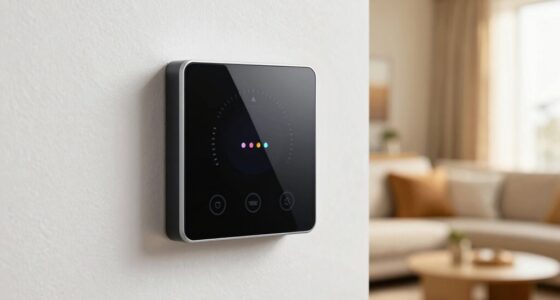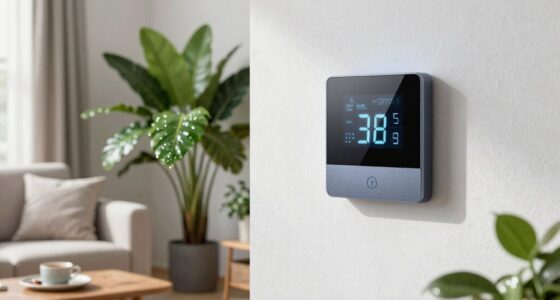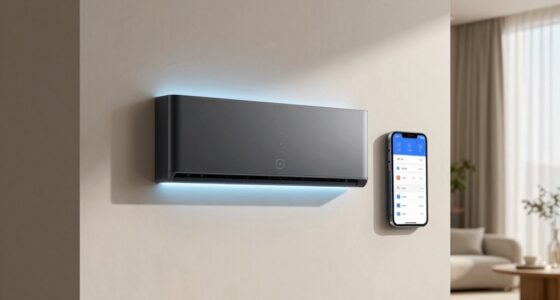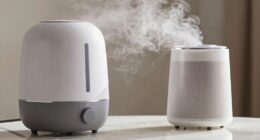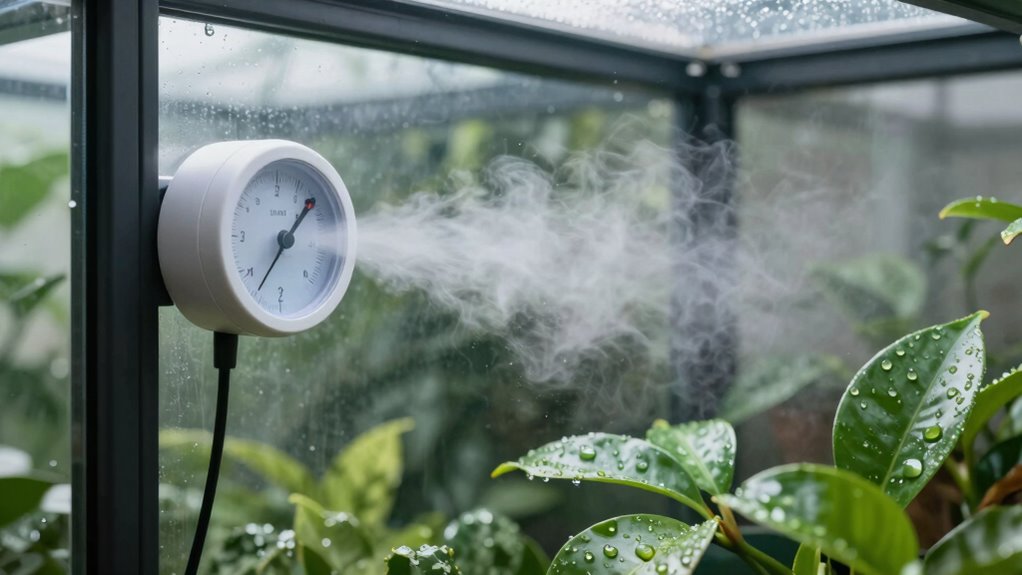
Your automatic humidity control system adjusts indoor moisture levels daily by responding to sensor data that detects changes in humidity, outdoor weather, and indoor activities like cooking or showers. It actively increases or decreases moisture to keep conditions comfortable and healthy. External factors like temperature shifts and indoor routines constantly influence these adjustments. If you want to understand exactly how these systems adapt to your environment each day, there’s more to uncover.
Key Takeaways
- Adjusts indoor moisture levels based on real-time sensor data to maintain optimal humidity.
- Responds to daily environmental changes like weather, outdoor air, and indoor activities.
- Modifies humidity setpoints seasonally to ensure consistent comfort and health.
- Activates dehumidifiers or humidifiers automatically to counteract moisture fluctuations.
- Calibrates and fine-tunes sensor accuracy to prevent overcorrection and ensure stable indoor conditions.
How Do Automatic Humidity Control Systems Detect Changes?
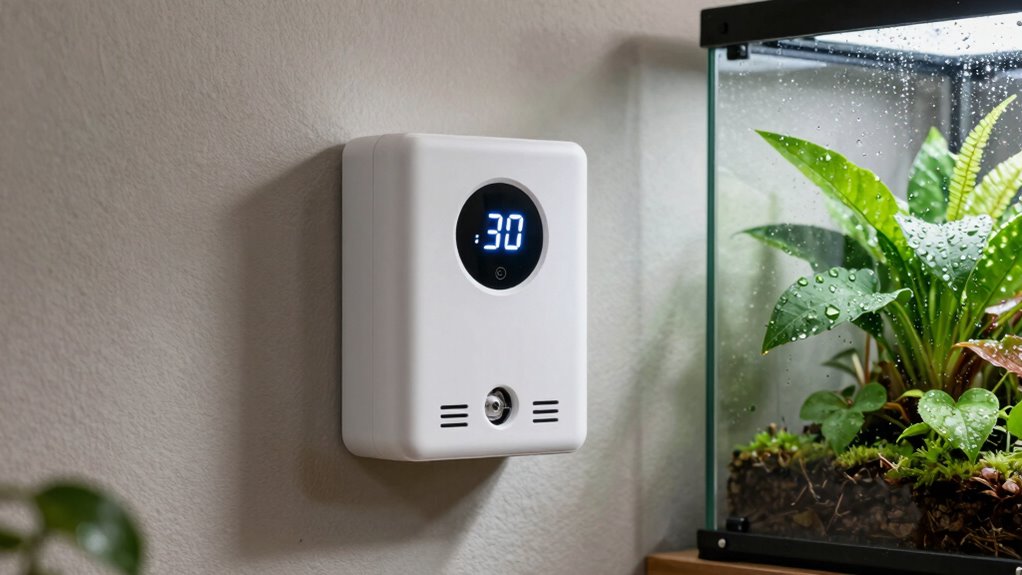
Automatic humidity control systems rely on sensors to detect changes in moisture levels. Humidity sensors measure the amount of moisture in the air and send data to the system’s control unit. These sensors can be digital or analog, providing real-time readings that reflect current humidity. The control algorithms process this data to determine whether the indoor environment needs more moisture or less. If the humidity drops below a set threshold, the system activates humidifiers; if it rises too high, it triggers dehumidifiers. This continuous feedback loop ensures consistent indoor humidity. By combining accurate humidity sensors with sophisticated control algorithms, the system can respond swiftly and precisely to any moisture level changes, maintaining ideal comfort and preventing damage caused by improper humidity levels. Additionally, sensor accuracy plays a crucial role in the system’s ability to make precise adjustments, and implementing advanced calibration techniques can further enhance sensor reliability. Regular maintenance and calibration of sensors are essential to sustain their performance over time, ensuring the system remains responsive to environmental changes.
What Factors Cause Daily Fluctuations in Indoor Humidity?
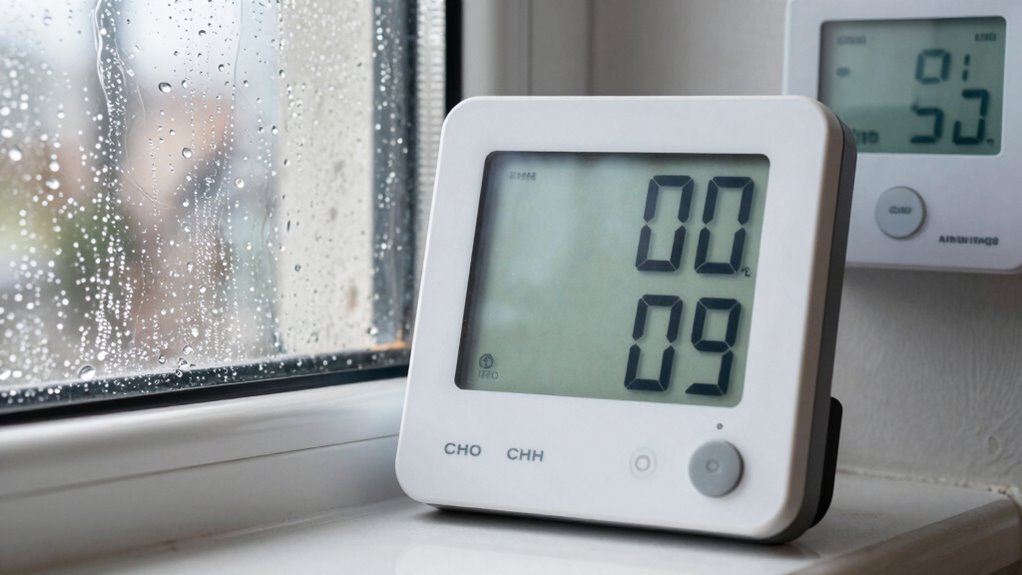
Several factors can cause indoor humidity levels to fluctuate throughout the day, even when your automatic control system is actively managing moisture. External conditions like weather changes influence indoor humidity, as humidity levels often rise during rainy days and fall during dry spells. Activities such as watering indoor plants introduce moisture, temporarily increasing humidity. Your HVAC system’s operation impacts moisture levels—running frequently or shutting off affects the balance. Additionally, opening windows or doors allows outside air to alter humidity. Internal sources like cooking or showers also contribute to daily variations. Microplastics in dust can also carry particles that affect air quality and humidity levels inside your home, as these particles may influence the airborne particles that interact with moisture in the air. Moreover, humidity sensors themselves can sometimes produce fluctuating readings due to environmental interference, impacting the automatic control system’s response. External factors like weather fluctuations can also influence sensor accuracy, leading to additional variability in humidity readings. Changes in air temperature throughout the day can also cause sensor readings to shift, further affecting humidity control.
How Do Indoor Activities and Occupant Behavior Impact Humidity Levels?
How Do Indoor Activities and Occupant Behavior Impact Humidity Levels?
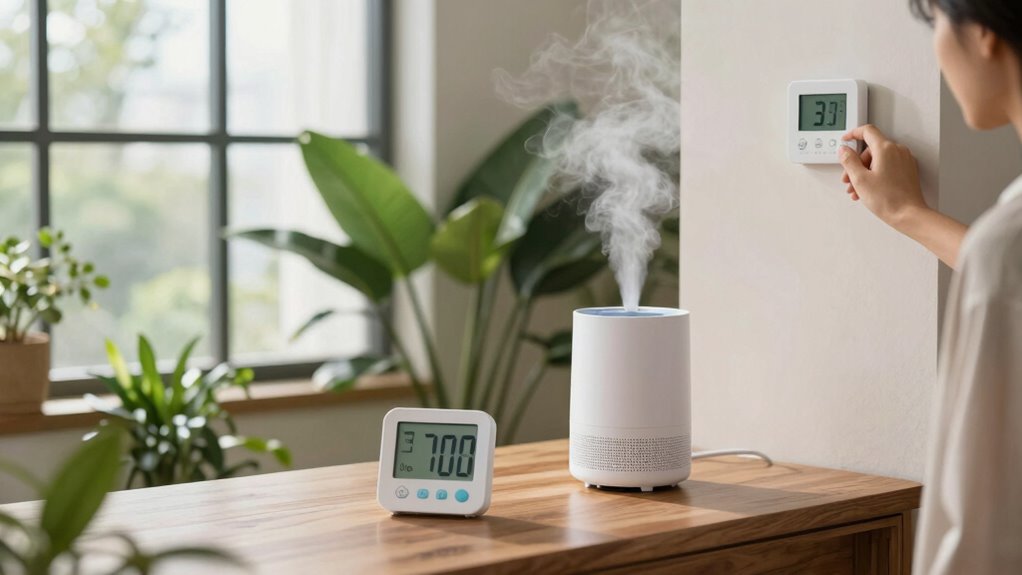
Have you ever noticed your home’s humidity levels change after cooking or taking a shower? These activities release moisture into the air, increasing indoor humidity. When outdoor air enters your home, it can also affect humidity levels—air that’s humid adds moisture, while dry air reduces it. Occupant behaviors like drying clothes indoors or using humidifiers directly influence humidity as well. Additionally, plant transpiration contributes moisture; houseplants release water vapor through their leaves, subtly elevating humidity. Your daily routines and the way you manage indoor air quality play a big role in humidity fluctuations. Being aware of these behaviors helps you better understand how your environment impacts humidity, and in turn, how automatic humidity control systems respond to maintain a comfortable indoor climate. Recognizing how environmental factors and indoor air quality influence humidity levels can help you optimize your home’s climate management. Moreover, understanding indoor environmental dynamics can guide the use of automated systems to better adapt to these natural fluctuations. For example, incorporating natural pools and landscaping that support biodiversity can also influence indoor humidity by affecting the overall microclimate around your home.
How Does Weather Affect Your Humidity Management?

Weather plays a significant role in how you manage indoor humidity because outdoor conditions directly influence the moisture levels inside your home. Changes in outdoor climate, such as temperature and humidity, impact your humidity control system’s effectiveness. Seasonal shifts, like winter’s cold, dry air or summer’s hot, humid days, cause fluctuations that automatic systems must adapt to. These variations can lead to unexpected increases or decreases in indoor moisture. To better understand, consider how:
Outdoor weather significantly influences indoor humidity levels and the effectiveness of climate control systems.
- Cold weather reduces indoor humidity naturally
- Hot, humid days raise moisture levels indoors
- Wind and rain increase outdoor moisture exposure
- Heating and cooling systems alter indoor conditions
- Seasonal shifts demand adjustments for optimal comfort
Understanding weather’s impact on humidity and how urban greening can influence local microclimates can help optimize your control systems for consistent indoor comfort. Additionally, awareness of whole-home water system efficiencies can prevent unintended effects on indoor air quality and humidity levels. It’s also important to recognize that climate variability can challenge even advanced automatic humidity control systems, requiring regular monitoring and adjustments.
How Do Humidity Systems Adjust Moisture for Comfort and Health?
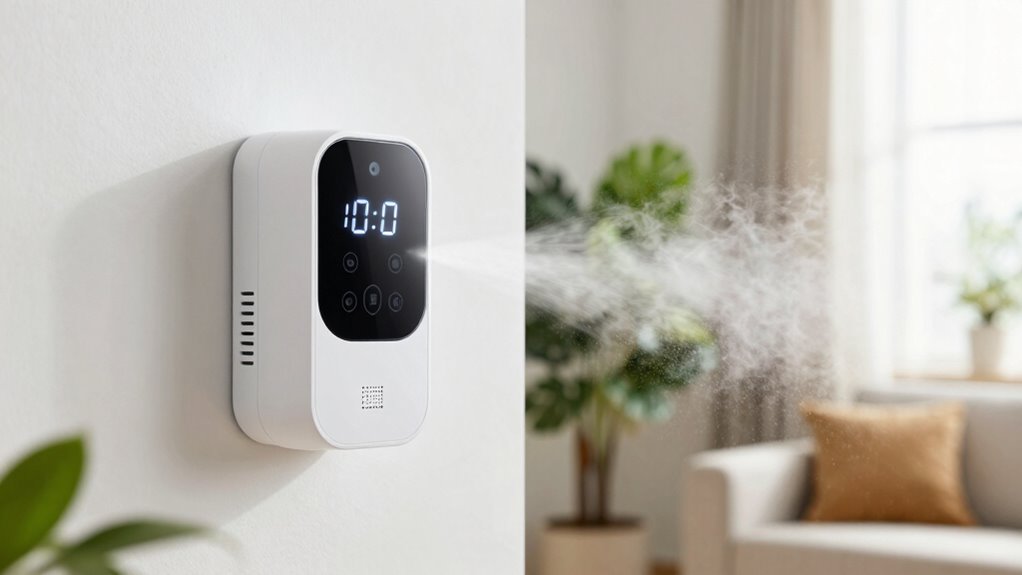
Your humidity system detects moisture levels with sensors and automatically adjusts to maintain a comfortable environment. These adjustments help prevent issues like dryness or excess humidity, promoting better health and comfort. As a result, you experience a more consistent indoor climate that supports your well-being. Additionally, maintaining proper humidity levels can enhance overall comfort and contribute to a healthier living space. Proper use of DIY tools and understanding safety tips can ensure your system functions effectively and safely. Incorporating smart home automation features can further optimize humidity control for your daily routines. Regular monitoring of indoor environments helps ensure the system responds accurately to changing conditions, providing a more reliable climate control for your home. Using sensors and automation can also help you prevent damage caused by improper humidity levels, protecting your belongings and structure.
Sensors Detect Moisture Levels
How do humidity systems know when to add or remove moisture? They rely on moisture sensors that continuously monitor indoor humidity levels. These sensors detect subtle changes in moisture and send data to the control system. Proper humidity calibration guarantees readings are accurate, preventing overcorrection. Advanced sensors can differentiate between transient spikes and genuine needs for moisture adjustment. Here are key aspects of these sensors:
- Precise detection of moisture fluctuations
- Integration with humidity calibration processes
- Real-time data transmission
- Sensitivity to environmental changes
- Compatibility with various humidity control systems
Additionally, these sensors often utilize automotive performance parts principles to ensure reliable operation under different conditions. This sensor technology ensures that humidity adjustments are both accurate and responsive to environmental variations, maintaining optimal indoor humidity levels.
Automated Humidity Adjustment
Automatic humidity systems actively adjust moisture levels by interpreting data from sensors and responding in real time. They continuously monitor indoor conditions, seamlessly balancing humidity for your comfort and health. Whether it’s maintaining ideal moisture for indoor plants or activating dehumidification processes during humid days, these systems adapt instantly. Imagine the relief of a consistent, comfortable environment—no more dry air or excessive dampness. The table below captures the emotions tied to this adjustment:
| Comfort | Health | Peace of Mind |
|---|---|---|
| Cozy warmth | Better breathing | Stress relief |
| Fresh air | Fewer allergies | Confidence in control |
| Balanced moisture | Fewer mold issues | Serenity |
| Vibrant plants | Improved immune response | Relaxation |
This technology transforms your space into a haven of stability and well-being.
Benefits for Health and Comfort
By continuously monitoring indoor air conditions, humidity systems respond swiftly to maintain ideal moisture levels, directly benefiting both health and comfort. Proper humidity levels improve indoor air quality by reducing dust, mold, and allergens, creating a healthier environment. Additionally, maintaining perfect moisture helps prevent dry skin, respiratory irritation, and static electricity, enhancing your overall comfort. These systems also support energy efficiency by reducing the workload on heating and cooling devices, lowering energy bills.
- Enhance respiratory health by controlling mold and dust mites
- Reduce discomfort caused by dry or overly humid air
- Minimize static electricity and skin irritation
- Improve sleep quality through stable humidity
- Lower energy consumption by optimizing climate control
What Settings Change Daily in Your Humidity Control Device?
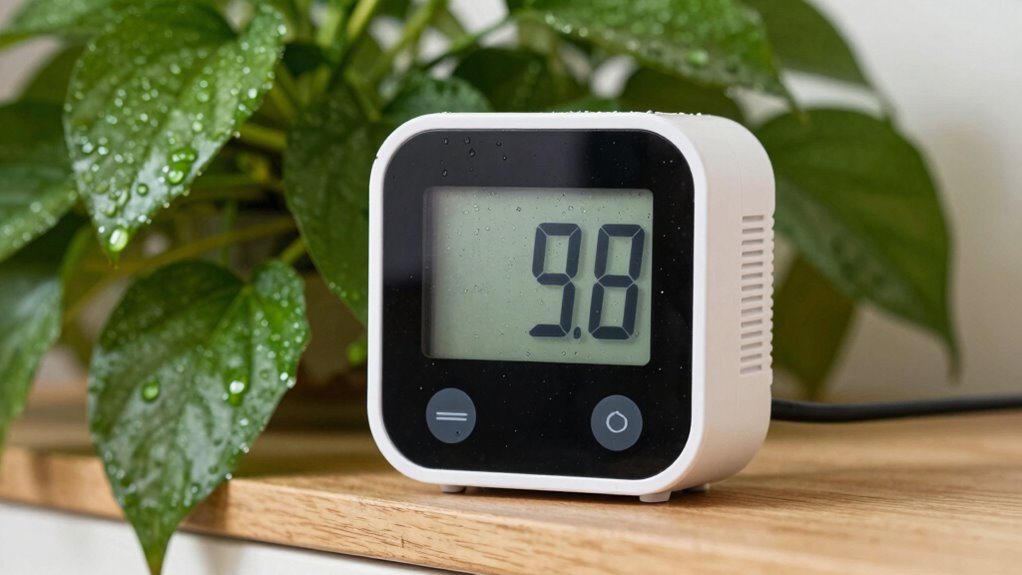
Your humidity control device adjusts its settings regularly to maintain ideal conditions, especially as outdoor weather and indoor activities change throughout the day. Seasonal humidity changes influence these adjustments, prompting the device to modify its target levels to keep your environment comfortable. Additionally, the device’s humidity sensor calibration ensures accurate readings, which are vital for proper regulation. If the sensor drifts over time, the device might mistakenly detect excess or insufficient moisture, causing unnecessary adjustments. Daily, your humidifier or dehumidifier may tweak the humidity setpoint slightly to adapt to these fluctuations. This ongoing process helps prevent issues like mold growth, dryness, or excess moisture, keeping your indoor climate stable and comfortable regardless of seasonal shifts.
How Does Real-Time Monitoring Keep Your Indoor Environment Balanced?
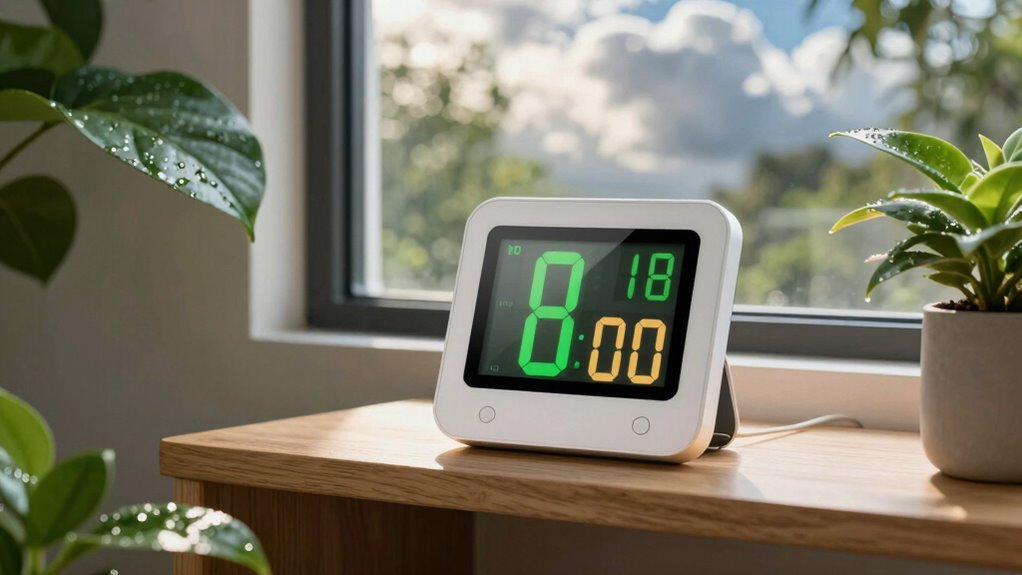
Ever wonder how your indoor climate stays so stable despite changing weather conditions? Real-time monitoring plays a vital role by continuously adjusting humidity levels to maintain ideal indoor air quality. It tracks factors like temperature, moisture, and air flow, instantly responding to fluctuations. This dynamic process ensures your space remains comfortable and healthy.
Key benefits include:
- Maintaining consistent humidity levels for better indoor air quality
- Reducing energy waste by avoiding overworking heating or cooling systems
- Detecting and correcting imbalances quickly
- Improving overall energy efficiency
- Creating a healthier, more comfortable environment
With real-time data, your humidity control system adapts seamlessly, helping you save energy while ensuring your indoor air quality stays at its best.
Frequently Asked Questions
Can Automatic Humidity Control Systems Prevent Mold Growth Effectively?
Yes, automatic humidity control systems can effectively prevent mold growth. By using humidity sensors, these systems monitor indoor moisture levels and adjust humidity automatically. Keeping humidity within ideal ranges discourages mold development and maintains a healthier environment. Regularly maintaining and calibrating the sensors ensures consistent mold prevention, making your space safer and more comfortable. This proactive approach helps prevent mold issues before they become severe.
How Energy-Efficient Are These Humidity Control Systems Daily?
Like a vigilant guardian, automatic humidity control systems optimize energy savings by adjusting to daily fluctuations. They consume less power compared to manual systems, which often run continuously. These systems respond precisely to environmental changes, preventing unnecessary energy use. As a result, you benefit from consistent comfort while reducing energy bills. Their adaptability makes them highly energy-efficient, ensuring you save daily without sacrificing the ideal humidity level in your space.
Do Humidity Levels Impact Indoor Air Quality Beyond Comfort?
Humidity levels directly impact indoor air quality and your health benefits. When humidity is too high, it promotes mold, dust mites, and bacteria growth, leading to respiratory issues and allergies. Conversely, low humidity can cause dry skin and irritation. By maintaining ideal humidity, automatic systems improve air quality, reducing health risks. You’ll breathe easier and enjoy a healthier environment, making humidity control essential for overall well-being beyond just comfort.
Are There Specific Rooms Where Humidity Control Is More Critical?
You should prioritize humidity control in your basement and kitchen. Did you know that basements can have moisture levels five times higher than living spaces, creating mold risks? Similarly, excess kitchen condensation can lead to mold and damage. Automatic humidity control keeps these areas dry and safe by adjusting moisture levels daily, preventing mold growth and improving air quality. So, focus on these critical rooms for ideal indoor health.
How Often Should Maintenance or Calibration Be Performed on These Systems?
You should perform sensor calibration and maintenance regularly, ideally every six months, to guarantee your automatic humidity control system works accurately. Frequent maintenance helps prevent sensor drift, which can cause incorrect humidity adjustments. Keep an eye on system performance and schedule maintenance more often if you notice fluctuations or issues. Proper calibration and upkeep ensure consistent comfort and protect sensitive environments like labs or storage areas.
Conclusion
Understanding what automatic humidity control actually changes daily helps you realize it’s all about balance. These systems constantly monitor indoor conditions, adjusting moisture levels to keep your environment comfortable and healthy. As weather shifts and your activities vary, your humidity system adapts in real-time, debunking the myth that it’s static. With this technology, you can trust that your indoor air remains consistent, proving that smart control truly makes a difference every single day.