
Heated floors can raise your energy bills, but how much depends on your system type, insulation, and usage habits. Electric systems heat quickly but may cost more long-term, while hydronic setups are often more efficient for larger areas. Using smart thermostats, zoning, and proper insulation can considerably lower costs. Your climate also matters—colder regions and poor insulation increase expenses. To understand how to optimize your heating system and save money, keep exploring these key factors.

Get home appliances delivered free with Prime
- Fast, free delivery on millions of items
- Prime Video, Amazon Music and more included
- Member-only deals all year
Key Takeaways
- Operating costs depend on system type, energy prices, insulation, and usage habits.
- Electric systems respond quickly but may have higher long-term energy costs; hydronic systems are often more efficient for large areas.
- Smart thermostats and zoning can significantly reduce energy consumption and costs.
- Better insulation minimizes heat loss, lowering energy bills and improving efficiency.
- Climate and local energy rates heavily influence the overall cost-effectiveness of heated floors.
Products Worth Considering

Philips Hue Bridge Pro Starter Kit with 4 A19 E26 Color Smart Bulbs

eufy Security SoloCam E42 4-Camera Kit, 4K Solar Security Camera System

Philips Hue Play Floor Lamp, RGBWWIC LED, 53 Inch, Black
As an affiliate, we earn on qualifying purchases.
How Do Heated Floors Use Energy?
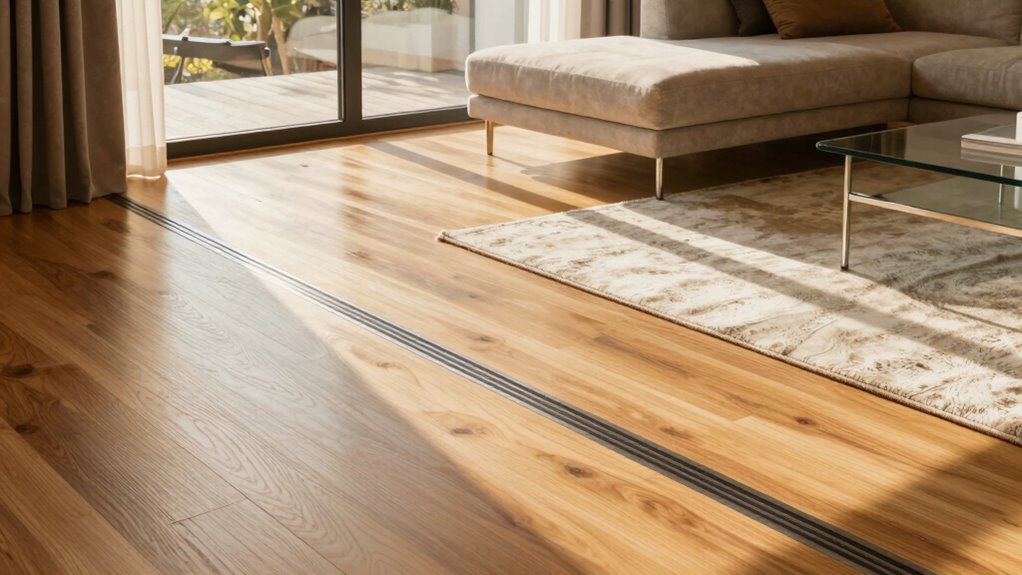
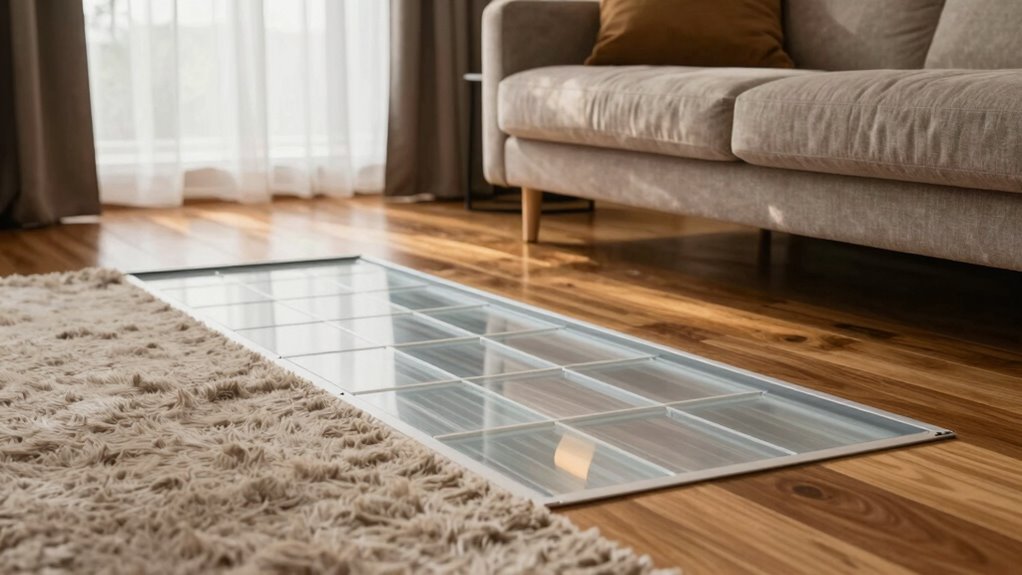
Have you ever wondered how heated floors actually use energy? When you turn on the system, it warms the floor surface, which then radiates heat into the room. The energy consumption depends on the type of system—electric or hydronic—and how efficiently it runs. Smart thermostats play a key role, allowing you to control temperature precisely and reduce energy waste by adjusting settings based on your schedule. Solar integration can further cut costs by harnessing renewable energy to power your heated floors, making the process more eco-friendly. These systems continuously monitor and respond to your adjustments, ensuring *best* comfort without unnecessary energy use. Overall, understanding how your heated floors operate helps you manage energy consumption more effectively.
What Factors Affect Heated Floor Energy Costs?
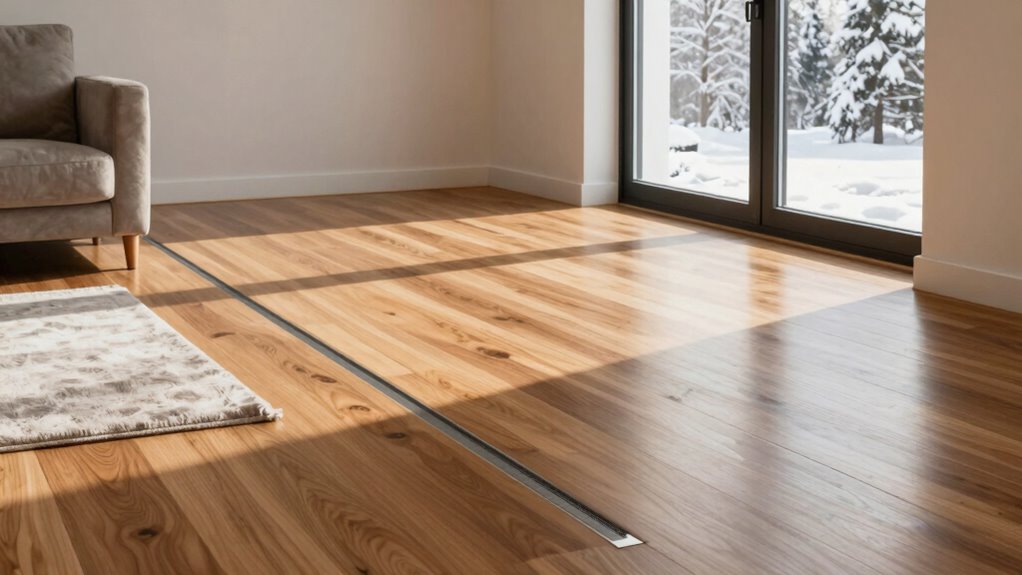
Several factors influence how much energy heated floors consume. First, the use of smart thermostats allows you to program and adjust heating schedules precisely, reducing unnecessary energy use. Second, zoning controls enable you to heat only specific areas, preventing waste in unoccupied spaces. Third, insulation quality impacts energy efficiency; well-insulated rooms retain heat better, lowering costs. Additionally, the thermostat settings and how consistently you maintain them play a role. Properly utilizing smart thermostats and zoning controls can notably cut energy consumption. When you optimize these features, you ensure heated floors operate efficiently, saving you money while maintaining comfort. Open-plan living spaces also tend to require more careful energy management to prevent heat loss. It’s also beneficial to consider insulation quality in your overall energy strategy, as it can significantly influence costs. Improving fabric technology and adopting sustainable practices can further enhance energy efficiency and reduce environmental impact. Being aware of energy consumption patterns can help you fine-tune your system for maximum savings, especially when you understand how thermal performance varies across different building designs. Keep these factors in mind to maximize energy savings and get the most out of your heated flooring system.
Types of Heated Floor Systems and Their Energy Use

When choosing a heated floor system, you’ll find electric and hydronic options each have different energy use profiles. Electric systems tend to be simpler to install but may cost more to operate, while hydronic systems often provide better efficiency over time. Understanding these differences helps you select the most energy-efficient option for your home. Additionally, considering the type of bedding and mattress toppers you use can also impact your overall comfort and energy efficiency. Proper insulation and projector technology choices can further optimize energy consumption in your home. Being aware of safety tips for portable oil radiators can also help prevent unnecessary energy waste and ensure safe operation. Recognizing the energy consumption patterns of different heating systems enables better management of your household energy use, especially when integrated with a smart thermostat to optimize settings and reduce costs.
Electric vs. Hydronic Heating
Are you wondering how different heated floor systems compare in energy efficiency? Electric and hydronic systems each have pros and cons. Electric systems heat quickly and are simple to install, making them ideal for smaller spaces. Hydronic systems, on the other hand, use water heated by a boiler, which can be more energy-efficient for larger areas or whole-home heating. To maximize efficiency, you can use smart thermostats and energy monitoring to control and optimize your system. Here are key differences:
- Electric systems are generally more responsive but can cost more to operate long-term.
- Hydronic systems tend to be more energy-efficient for extensive areas or continuous use.
- Smart thermostats help you fine-tune temperature settings, saving energy and reducing costs.
- Properly installed heated floor systems can improve overall energy efficiency and comfort in your home.
Energy Efficiency Factors
Have you ever wondered how the type of heated floor system impacts energy use? Your choice influences efficiency and operating costs. Electric systems tend to use more energy but respond quickly, especially when paired with smart thermostats that optimize temperature settings. Hydronic systems, often more energy-efficient, can incorporate renewable energy sources like solar thermal or geothermal, reducing reliance on grid power. The insulation beneath the flooring also matters; better insulation minimizes heat loss, saving energy. Additionally, integrating outdoor living features like fire pits or landscaping can improve overall energy efficiency by creating comfortable outdoor spaces that reduce indoor heating needs. Using energy-efficient design principles can further enhance the overall sustainability of your heating system. Incorporating renewable energy options like solar or geothermal can significantly lower your environmental impact. Smart thermostats help regulate your system’s performance, ensuring it runs only when needed and adjusting to your schedule. Overall, selecting a system compatible with renewable energy and using smart controls can remarkably lower your energy consumption, making heated floors a more sustainable and cost-effective heating solution.
What’s the Real Cost to Operate Heated Floors?

Understanding the true cost of operating heated floors involves more than just the initial installation price. Historical trends show that energy prices fluctuate, affecting ongoing costs. Technological advances have improved efficiency, but you still need to weigh some key factors:
- Monthly energy consumption based on your heating habits.
- Local electricity or fuel rates, which vary by region.
- Maintenance and potential repairs that add to overall expenses.
- Proper system sizing and filter maintenance can also influence overall efficiency and operating costs. Additionally, energy-saving tips can help reduce long-term expenses. Being aware of energy price fluctuations can further assist in planning for future costs. It’s also important to consider how system efficiency impacts your monthly bills and overall energy use.
While newer systems are more efficient, you might still see higher bills if your energy rates are high or if the system runs frequently. Staying aware of these factors helps you budget accurately and maximize your investment’s value over time.
Tips to Lower Your Heated Floor Energy Bills
To cut down on your heated floor energy bills, start by optimizing your thermostat settings and scheduling. Use smart thermostats to automatically adjust temperatures based on your daily routine, ensuring you don’t heat unused spaces. Implement zoning systems to target specific rooms, reducing energy waste in unoccupied areas. Consider lowering your thermostat during nighttime or when you’re away, without sacrificing comfort. The table below summarizes effective strategies:
| Strategy | Benefit |
|---|---|
| Smart thermostats | Precise control, automation, energy savings |
| Zoning systems | Focus heat where needed, avoid waste |
| Adjusting schedules | Saves energy without discomfort |
| Lowering temperature | Reduces overall energy consumption |
Additionally, incorporating home automation can further optimize your heating system for maximum efficiency. Exploring energy-efficient heating options can also help you achieve long-term savings and reduce your environmental impact. For example, understanding how shipwreck preservation techniques can influence insulation and material choices might inspire innovative ways to improve energy efficiency in your home. Incorporating thermal insulation materials can significantly enhance your home’s energy retention and reduce heating costs over time, especially when combined with energy-saving practices.
Debunking Myths About Heated Floor Costs
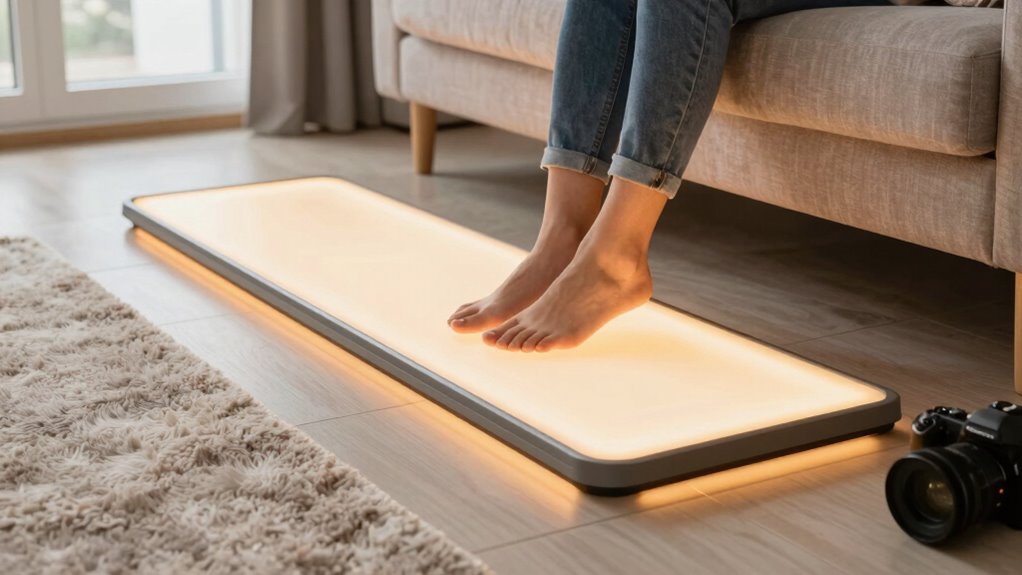
Many people assume that heated floors are prohibitively expensive to install and operate, but this isn’t always the case. Looking at historical trends, costs have decreased as technology improved, making installation more affordable. The market growth for heated flooring systems has also expanded, increasing competition and driving prices down. Here are some myths debunked:
- High installation costs are unavoidable – modern systems are more affordable than ever.
- Operating costs are too high – advancements in efficiency reduce energy bills.
- Heated floors aren’t a good investment – market growth indicates rising demand and value. Technological innovations continue to reduce costs and improve performance, making heated floors an increasingly accessible option. Additionally, the increasing availability of innovative heating technologies helps lower overall expenses and enhances user satisfaction.
Understanding these facts helps you see that heated floors can be a cost-effective upgrade, especially with ongoing technological and market advancements.
How Climate and Insulation Impact Heating Expenses
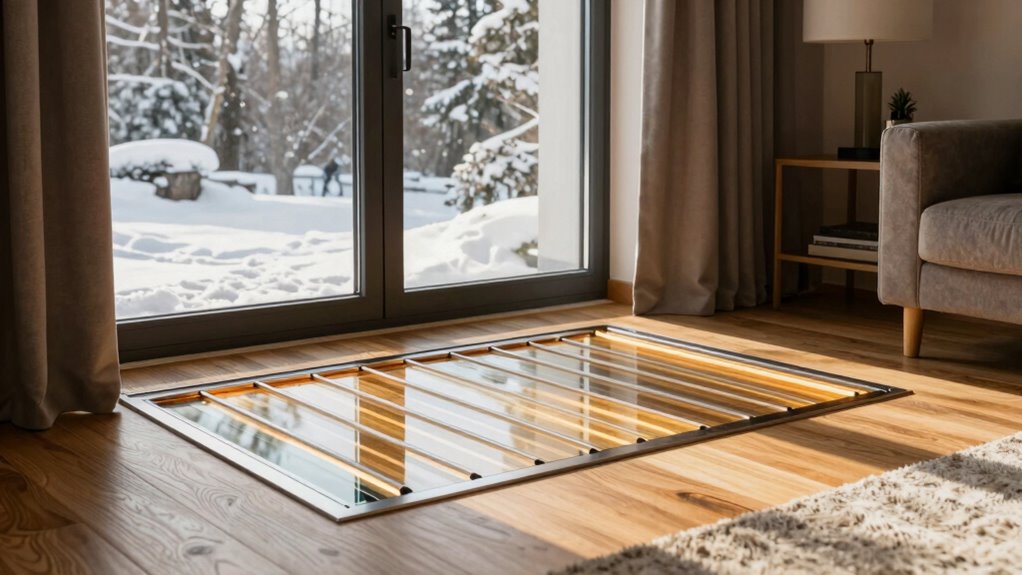
Your climate plays a big role in how much heated floors cost to run; colder regions require more energy to stay warm. Proper insulation helps keep that heat inside, reducing your energy bills considerably. Understanding how both factors influence your heating needs can help you save money and stay comfortable.
Climate Influence on Heating
Have you ever wondered how the climate around you influences your heating costs? Colder climates mean you’ll spend more on heating, while milder weather reduces expenses. Your location also affects your choice of energy sources, like renewable energy, which can lower your carbon footprint. To understand this better, consider these points:
- Temperature Extremes: Colder areas require more heated floor energy, increasing costs.
- Seasonal Changes: Longer winters mean prolonged heating needs.
- Energy Source: Using renewable energy can reduce overall costs and environmental impact, especially in climates with high heating demands.
Your climate shapes heating needs, and choosing eco-friendly energy options can help you manage costs and reduce your carbon footprint.
Insulation’s Role in Efficiency
Ever wonder how insulation can make or break your heating costs? It all comes down to thermal resistance, which measures how well insulation materials prevent heat transfer. High thermal resistance means less heat escapes, making heated floors more efficient and cost-effective. Choosing the right insulation materials for your home is essential, especially if you live in a colder climate. Proper insulation reduces the workload on your heating system, lowering energy bills and ensuring consistent warmth. Without adequate insulation, heat can leak through floors or walls, forcing your heating system to work harder. So, investing in quality insulation not only improves comfort but also considerably cuts down on your heating expenses by maintaining better energy efficiency.
Are Heated Floors More Cost-Effective Than Other Heating Options?
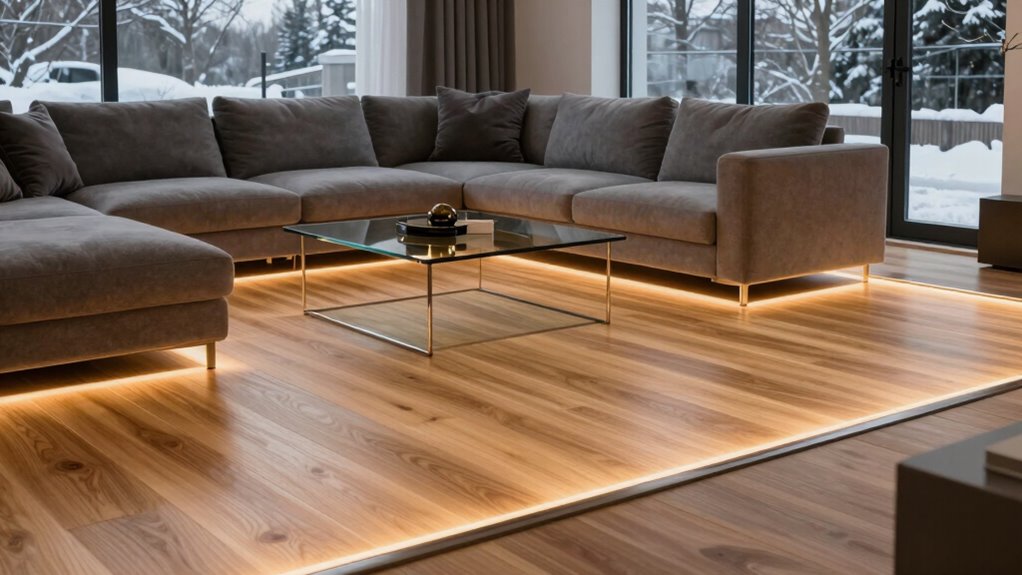
Heated floors can be a cost-effective heating option, but whether they save you money compared to traditional systems depends on several factors. First, their efficiency depends on proper insulation and installation. Second, using smart thermostats helps optimize energy use, reducing costs. Third, maintenance costs for radiant systems are typically lower than for furnaces or boilers, saving you money over time. However, initial installation can be more expensive, so it’s essential to weigh upfront costs against long-term savings. If you live in a colder climate or want consistent warmth, heated floors may be more economical. Ultimately, their cost-effectiveness depends on your home’s design, energy prices, and how well you manage and maintain the system over time.
What Should You Consider Before Installing Heated Floors?
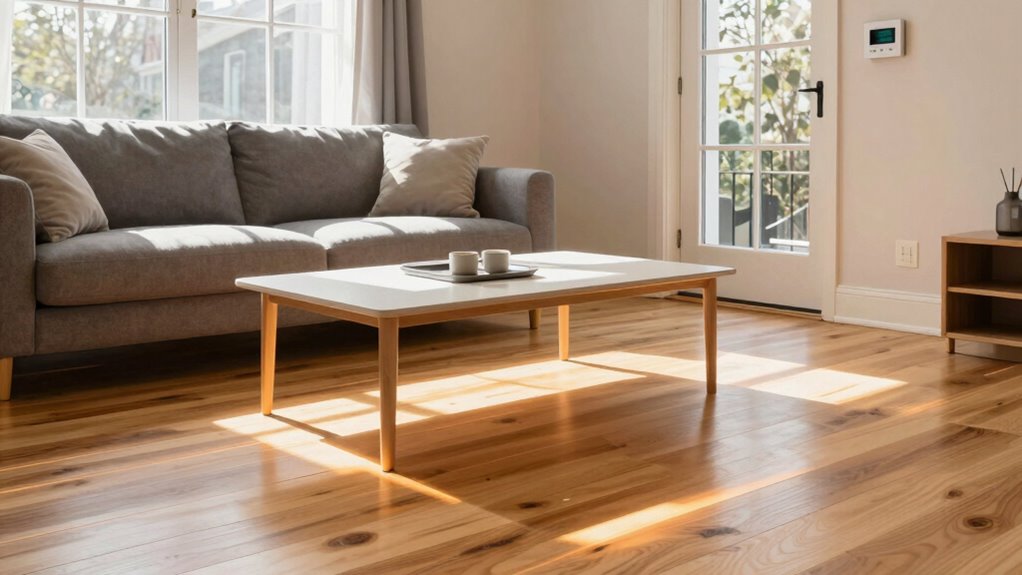
Before installing heated floors, it’s important to evaluate your home’s insulation and existing flooring. Proper insulation guarantees efficient heat distribution and can reduce energy costs, making the investment more worthwhile. Consider how the heated floors will fit into your interior design—some flooring materials work better with radiant heating, while others may require costly modifications. Installation challenges are also vital; for example, concrete or tile floors typically accommodate radiant heat more easily than carpeted areas. You should assess whether your current flooring supports the system or if upgrades are needed. Additionally, think about the layout of your space and possible disruptions during installation. Planning ahead helps avoid surprises and ensures your heated floors enhance both comfort and aesthetic appeal without unexpected hurdles.
Frequently Asked Questions
How Long Do Heated Floor Systems Typically Last?
Heated floor systems typically last about 20 to 30 years, depending on the type and maintenance. To maximize their lifespan and energy efficiency, you should keep up with regular inspections and minor repairs. Proper maintenance reduces energy consumption and prevents early failure, ensuring your system continues to operate efficiently for decades. Investing in quality installation and routine upkeep helps you enjoy warm floors without frequent replacements or high energy costs.
Can Heated Floors Be Used in Outdoor Settings?
Sure, heated floors can be used outdoors—if you enjoy battling the elements. You’ll need outdoor installation options designed for weather resistance, because standard systems just aren’t built for rain, snow, or freezing temperatures. These specialized systems are crafted to withstand outdoor conditions, making them perfect for patios or walkways. Just remember, not all heated floor systems are suitable outside, so choose one explicitly rated for outdoor use to keep your toes warm and dry.
Do Heated Floors Increase Home Insurance Premiums?
Heated floors generally don’t directly increase your home insurance premiums. However, the insurance impact depends on premium factors like the system’s safety, installation quality, and potential fire risk. If your insurer views your heated flooring as a safety concern or if it’s a newer, less tested technology, it might influence your premiums slightly. Always check with your insurance provider to understand how your specific setup could affect your coverage costs.
Are There Health Risks Associated With Heated Floor Systems?
You might worry about health risks, but heated floors generally aren’t harmful if installed properly. They help with indoor air quality by reducing dust and allergens, and moisture control prevents mold growth. However, make sure your system maintains a safe temperature to avoid burns or discomfort. Proper installation and maintenance are key to enjoying cozy warmth without health concerns, giving you peace of mind and a healthier home environment.
How Quickly Do Heated Floors Heat up a Room?
Heated floors typically warm up a room within 30 minutes to an hour, depending on the system and insulation levels. Their thermal efficiency means they distribute heat evenly, making rooms feel cozy quickly. While installation costs can be higher initially, the efficient heat transfer can lower ongoing energy expenses. You’ll notice the room warms up faster and stays comfortable longer, making the investment worthwhile for long-term comfort and energy savings.
Conclusion
Ultimately, understanding your heated floors means understanding your energy use, your costs, and your savings. It’s about evaluating your climate, your insulation, and your options. It’s about balancing comfort with cost, efficiency with expense, and investment with savings. By doing so, you decide whether heated floors are a smart choice for your home. Because when you know the facts, you make the right choice — for your comfort, your budget, and your future.