
When choosing a smart thermostat with remote sensors, you want a device that can accurately monitor multiple areas of your home for optimal comfort and efficiency. The Google Nest Learning Thermostat stands out as the best overall for its intuitive features and seamless integration, while the ecobee Smart Thermostat Premium shines for its premium build and advanced sensor capabilities. One common tradeoff in this category is balancing affordability against advanced features like multiple sensors or smart home compatibility. Continue reading for a detailed breakdown of each option’s strengths and limitations, helping you find the best fit for your home setup.

Get home appliances delivered free with Prime
- Fast, free delivery on millions of items
- Prime Video, Amazon Music and more included
- Member-only deals all year
Complete the kit


Key Takeaways
- Top picks balance sensor quantity with ease of setup, making it easier to manage multiple rooms.
- Premium models like ecobee offer more advanced sensor options but come with a higher price tag.
- Compatibility with smart home ecosystems varies, impacting integration for voice control and automation.
- Battery life and ease of installation differ significantly, influencing user experience and maintenance.
- Price ranges reflect feature sets, with more expensive options generally offering better sensor versatility and build quality.
| Google Nest Thermostat – Smart Thermostat for Home – Programmable Wi-Fi Thermostat – Charcoal |  | Best Overall for Versatile Remote Control and Compatibility | Connectivity: Wi-Fi 802.11b/g/n 2.4 GHz, 802.11a/n 5 GHz; Bluetooth Low Energy | Compatibility: Works without C wire in most homes; check system compatibility before purchase | Features: Energy saving scheduling, HVAC monitoring, remote control, voice control | VIEW ON AMAZON | See Our Full Breakdown |
| Google Nest Thermostat – Smart Wi-Fi Programmable Thermostat for Home – Snow |  | Best for Automated Energy Saving with Voice Support | Connectivity Protocol: Wi-Fi | Compatibility: Works without C wire in most homes; check system compatibility online | Voice Control: Yes, with Google Assistant and Alexa | VIEW ON AMAZON | See Our Full Breakdown |
| Google Nest Learning Thermostat (4th gen) + Nest Temperature Sensor (2nd gen) – Silver |  | Best for Custom Comfort and Learning Preferences | Model: 4th generation | Includes: Nest Temperature Sensor (2nd gen) | Display Size: 60% larger | VIEW ON AMAZON | See Our Full Breakdown |
| Honeywell Home T9 WiFi Smart Thermostat with 1 Smart Room Sensor, Touchscreen Display, White |  | Best Multi-Room Control with Easy DIY Setup | Sensor Range: up to 200 ft | Compatibility: Forced air, hot water, steam, heat pumps with electric backup | C-Wire Required: Yes | VIEW ON AMAZON | See Our Full Breakdown |
| Amazon Smart Thermostat |  | Best for Easy DIY Installation and Alexa Integration | Compatibility: Works with Alexa and Ring | C-wire required: Yes | Energy Savings: Estimated $90/year | VIEW ON AMAZON | See Our Full Breakdown |
| ecobee Smart Thermostat Essential – WiFi Thermostat, Energy Star Certified |  | Best Overall for Versatile Energy Savings and Ease of Installation | Compatibility: Most 24 VAC HVAC systems, including gas, oil, electric, dual fuel, heat pump, and boilers | SmartSensor: Optional, measures temperature and movement in rooms (sold separately) | Indoor Humidity Detection: Yes | VIEW ON AMAZON | See Our Full Breakdown |
| Google Nest Learning Thermostat (4th gen) + Nest Temperature Sensor (2nd gen) – Obsidian |  | Best for Learning and Adaptive Comfort in Smart Homes | Model: 4th gen | Color: Obsidian | Includes: Nest Temperature Sensor (2nd gen) | VIEW ON AMAZON | See Our Full Breakdown |
| Sensi Smart Thermostat, Wi-Fi, DIY, Alexa, Energy Star Certified, ST55 |  | Best for Budget-Conscious DIY Installers Needing Reliable Control | Compatibility: Most HVAC systems, no C-wire needed in many cases | Energy Savings: Approximately 23% | Certification: Energy Star | VIEW ON AMAZON | See Our Full Breakdown |
| Sensi Lite Smart Thermostat, WiFi, Alexa, DIY, Energy Star Certified, ST25 | 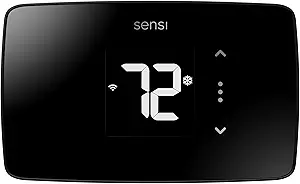 | Best for Minimalist DIY Users Wanting Privacy and Basic Control | Controller Type: Amazon Alexa, Google Assistant, Hand Control, SmartThings | Additional Features: Data Privacy, Easy DIY Install, Energy Savings, Programmable | Specific Uses: Air Conditioner, Boiler, Furnace, Heat Pump | VIEW ON AMAZON | See Our Full Breakdown |
| Sensi Touch 2 Smart Thermostat Wi-Fi, Alexa, Energy Star Certified, ST76 |  | Best for Room Sensor Integration and HVAC Monitoring | Compatibility: Room Sensors (sold separately) | Energy Savings: Approx. 23% | Certification: Energy Star | VIEW ON AMAZON | See Our Full Breakdown |
| Honeywell Home X8S Premium Smart Wi-Fi Thermostat with Sensor, Video Doorbell Access, Humidity Control, 5″ Touchscreen, Alexa & Matter Compatibility |  | Best Overall | Display: 5-inch touchscreen | Connectivity: Wi-Fi 2.4/5 GHz, 802.11ax/ac/a/b/g/n | Compatibility: Up to 3 heat/2 cool systems, hot water heat, forced air | VIEW ON AMAZON | See Our Full Breakdown |
| ecobee Smart Thermostat Premium – WiFi, Siri & Alexa Built-In, Smart Sensor |  | Best Value | Energy Savings: Up to 26% on energy bills | Air Quality Monitoring: Built-in air quality monitor with alerts | SmartSensor Value: $50 | VIEW ON AMAZON | See Our Full Breakdown |
| TQX Matter Over WiFi Thermostat with Occupancy and Remote Sensor |  | Best for Tech Enthusiasts | Connectivity: WiFi, Matter-enabled | Sensor Technology: Millimeter wave occupancy detection | Remote Sensors: Up to 5 (additional 4 available separately) | VIEW ON AMAZON | See Our Full Breakdown |
| ecobee Smart Thermostat Enhanced, Programmable WiFi Thermostat |  | Best for Simplicity | Compatibility: Most HVAC systems | Connectivity: WiFi | Warranty: 3 years | VIEW ON AMAZON | See Our Full Breakdown |
| smart thermostat with remote sensor | Compatibility | Connectivity |
|---|---|---|
| Google Nest Thermostat | Works without C wire in most homes; check system compatibility before purchase | Wi-Fi 802.11b/g/n 2.4 GHz, 802.11a/n 5 GHz; Bluetooth Low Energy |
| Google Nest Thermostat | Works without C wire in most homes; check system compatibility online | — |
| Google Nest Learning Thermosta | Most 24V systems, no C wire needed | Wi-Fi, Matter compatible |
| Honeywell Home T9 WiFi Smart T | Forced air, hot water, steam, heat pumps with electric backup | — |
| Amazon Smart Thermostat | Works with Alexa and Ring | — |
| ecobee Smart Thermostat Essent | Most 24 VAC HVAC systems, including gas, oil, electric, dual fuel, heat pump, and boilers | — |
| Google Nest Learning Thermosta | Most 24V systems, no C-wire needed in most homes | Wi-Fi, Matter compatible |
| Sensi Smart Thermostat | Most HVAC systems, no C-wire needed in many cases | — |
| Sensi Lite Smart Thermostat | — | — |
| Sensi Touch 2 Smart Thermostat | Room Sensors (sold separately) | Wi-Fi, Bluetooth |
| Honeywell Home X8S Premium Sma | Up to 3 heat/2 cool systems, hot water heat, forced air | Wi-Fi 2.4/5 GHz, 802.11ax/ac/a/b/g/n |
| ecobee Smart Thermostat Premiu | Works with 95% of HVAC systems | — |
| TQX Matter Over WiFi Thermosta | Conventional, Heat pump, PTAC, Fan coil systems | WiFi, Matter-enabled |
| ecobee Smart Thermostat Enhanc | Most HVAC systems | WiFi |
More Details on Our Top Picks
Google Nest Thermostat – Smart Thermostat for Home – Programmable Wi-Fi Thermostat – Charcoal
The Google Nest Thermostat stands out as a well-rounded choice for those seeking a reliable, remotely controllable smart thermostat with broad compatibility. Its energy-saving scheduling, HVAC monitoring, and seamless integration with smart home platforms make it a strong contender against simpler options like the Amazon Smart Thermostat, which lacks a display and advanced scheduling. However, it requires a system compatibility check before purchase and lacks a lock feature, which could be a concern for households with young children or shared spaces. Compared to the Honeywell T9, it offers more advanced HVAC monitoring, but the T9’s multi-room sensors provide finer control in larger homes. This pick makes the most sense for users who want a flexible, feature-rich device that can adapt to different HVAC systems and integrate with various smart assistants.
Pros:- Energy-efficient with scheduling and HVAC monitoring
- Remote control via smartphone or voice commands
- Compatible with various smart home platforms
Cons:- Requires system compatibility check before purchase
- Lock feature not available, reducing control for shared environments
Best for: Homeowners who want a versatile, widely compatible smart thermostat with remote access and HVAC monitoring capabilities
Not ideal for: People with incompatible HVAC systems or those seeking a budget-friendly, no-frills device without Wi-Fi or HVAC insights
- Connectivity:Wi-Fi 802.11b/g/n 2.4 GHz, 802.11a/n 5 GHz; Bluetooth Low Energy
- Compatibility:Works without C wire in most homes; check system compatibility before purchase
- Features:Energy saving scheduling, HVAC monitoring, remote control, voice control
- Color:Charcoal
Our verdict“This thermostat is best for users who prioritize compatibility, remote control, and HVAC monitoring in a comprehensive package.”
Google Nest Thermostat – Smart Wi-Fi Programmable Thermostat for Home – Snow
The Google Nest Thermostat – Snow excels for users who want remote control combined with voice compatibility via Google Assistant and Alexa, making it easy to manage your home’s climate from anywhere. Its HVAC monitoring and energy-saving features, like scheduling and the Savings Finder, make it comparable to the Amazon Smart Thermostat in terms of automation, but with the added benefit of voice control. Its main tradeoff lies in the potential need for additional accessories for certain HVAC systems and the absence of a lock feature, which could be a concern in multi-user households. Unlike the Honeywell T9, which offers multi-room sensors, this model focuses on simplicity and voice control, making it ideal for those who prefer hands-free operation and system health monitoring in a straightforward package.
Pros:- Easy remote control and voice compatibility
- Supports clean energy initiatives with Nest Renew
- HVAC monitoring and energy-saving features
Cons:- May require additional accessories for some HVAC systems
- No lock feature for temperature control
Best for: Tech-savvy homeowners seeking remote, voice-controlled energy management with HVAC monitoring
Not ideal for: Users with complex HVAC systems requiring extensive sensor setups or those who prefer physical control interfaces
- Connectivity Protocol:Wi-Fi
- Compatibility:Works without C wire in most homes; check system compatibility online
- Voice Control:Yes, with Google Assistant and Alexa
- Remote Control:Yes, via smartphone, tablet, or laptop
- HVAC Monitoring:Yes
- Energy Saving Features:Scheduling, Savings Finder, Nest Renew
Our verdict“Ideal for users prioritizing seamless voice control and HVAC monitoring over multi-room sensor customization.”
Google Nest Learning Thermostat (4th gen) + Nest Temperature Sensor (2nd gen) – Silver
The Google Nest Learning Thermostat (4th gen) paired with the Nest Temperature Sensor offers a sophisticated solution for those who want a thermostat that adapts to their routines. Its ability to learn behaviors and optimize energy savings—up to 31%—makes it a strong choice compared to basic models like the Amazon Smart Thermostat, which lacks learning capabilities. The larger display and seamless integration with various voice assistants enhance user experience, but the installation may be complex for some. While the learning feature is a major advantage, it requires a Wi-Fi connection for full functionality. This model is especially suitable for households with uneven heating or cooling needs, where personalized, automated adjustments matter most.
Pros:- Learns user preferences for optimal comfort and energy savings
- Large, easy-to-read display with dynamic Farsight
- Compatible with a wide range of heating and cooling systems
Cons:- Installation may be complex for some users
- Requires Wi-Fi for full feature access
Best for: Homeowners who want a smart, learning thermostat that manages hot and cold spots with remote sensors
Not ideal for: People who prefer simple, manual thermostats or have limited Wi-Fi setup skills
- Model:4th generation
- Includes:Nest Temperature Sensor (2nd gen)
- Display Size:60% larger
- Compatibility:Most 24V systems, no C wire needed
- Connectivity:Wi-Fi, Matter compatible
- Control:Google Home app, Alexa, Siri, Google Assistant
Our verdict“Best suited for those who want a smart, adaptive thermostat that learns household patterns and manages temperature zones effectively.”
Honeywell Home T9 WiFi Smart Thermostat with 1 Smart Room Sensor, Touchscreen Display, White
The Honeywell T9 is a flexible choice for those who want to fine-tune comfort across multiple rooms using remote sensors. Its support for up to three sensors allows targeted heating and cooling, unlike the basic Amazon Smart Thermostat, which has no sensor options. The large touchscreen makes manual adjustments straightforward, and the included power adapter simplifies installation for homes with a C-wire. However, it doesn’t support electric baseboard heat and may be incompatible with some oil systems, limiting its use in certain homes. Its limited compatibility with electric heating options means it’s better suited for forced-air and hydronic systems, especially in larger residences where multi-room control is valuable.
Pros:- Supports remote control and voice assistants
- Multi-room sensors optimize comfort based on occupancy
- Easy DIY installation with included power adapter
Cons:- Not compatible with electric baseboard heat
- Limited to certain heating types, such as oil systems
Best for: Homeowners seeking multi-room temperature management with straightforward installation
Not ideal for: Users with electric baseboard or oil heating systems that aren’t compatible with the T9
- Sensor Range:up to 200 ft
- Compatibility:Forced air, hot water, steam, heat pumps with electric backup
- C-Wire Required:Yes
- Display:Touchscreen
Our verdict“Great for larger homes needing multi-room sensor control, provided their HVAC system is compatible.”
Amazon Smart Thermostat
The Amazon Smart Thermostat offers a straightforward, DIY-friendly approach to smart heating control, especially for Alexa users. Its lack of a display simplifies installation, and the guided app makes setup accessible even for novices. While it supports scheduling and automatic adjustments, it doesn’t include remote sensors or a touchscreen, which limits its ability to manage multiple rooms or provide detailed temperature feedback. Compared with the Google Nest Thermostat, it’s less feature-rich, but its simple design appeals to those who want quick setup and basic remote control. It’s particularly well-suited for smaller homes or spaces where a simple, budget-conscious solution is desired.
Pros:- Easy to install with guided app instructions
- Remote control via Alexa app
- Supports scheduling and automatic temperature adjustments
Cons:- Requires C-wire for installation
- No display or touchscreen onboard
Best for: DIY enthusiasts looking for a straightforward, Alexa-compatible thermostat with remote control capabilities
Not ideal for: Users wanting multi-room sensor support or a display for manual adjustments
- Compatibility:Works with Alexa and Ring
- C-wire required:Yes
- Energy Savings:Estimated $90/year
- Installation:DIY with app guidance
Our verdict“Best for users seeking a simple, Alexa-compatible thermostat that’s quick to install and operate without extra sensors or screens.”
ecobee Smart Thermostat Essential – WiFi Thermostat, Energy Star Certified
This model stands out as an excellent choice for homeowners who want a balance of energy savings and straightforward setup. Unlike the Google Nest Learning Thermostat, which learns your routines but can be pricier and more complex to set up, the ecobee Essential offers a simpler DIY installation, especially for homes without a C-wire. While it doesn’t include the SmartSensor, which can enhance room-specific comfort, its compatibility with major smart home ecosystems and energy-saving features make it versatile. The color touchscreen enhances usability, but some advanced functions require additional accessories and online checks, which could complicate installation for tech novices. Overall, this pick works well for those seeking a budget-friendly, flexible smart thermostat that doesn’t sacrifice smart home compatibility or ease of use.
Pros:- Saves up to 23% on annual energy costs, reducing utility bills
- Easy DIY installation without requiring a C-wire or professional help
- Compatible with major smart home platforms like Apple HomeKit, Google Assistant, and Alexa
- User-friendly color touchscreen and remote app control
Cons:- SmartSensor and trim kit sold separately, adding extra cost
- Requires online compatibility checks, which may be confusing for some users
- Some advanced features need additional accessories or app setup
Best for: Homeowners looking for a cost-effective, easy-to-install smart thermostat with broad smart home compatibility.
Not ideal for: Tech enthusiasts seeking advanced features like built-in occupancy sensing or integrated sensors included in higher-end models.
- Compatibility:Most 24 VAC HVAC systems, including gas, oil, electric, dual fuel, heat pump, and boilers
- SmartSensor:Optional, measures temperature and movement in rooms (sold separately)
- Indoor Humidity Detection:Yes
- Schedule Assistant:Yes
- Time of Use:Yes
- Installation:DIY, no C-wire needed
Our verdict“A flexible, cost-effective choice for homeowners who want energy savings and broad smart home compatibility without complex installation.”
Google Nest Learning Thermostat (4th gen) + Nest Temperature Sensor (2nd gen) – Obsidian
This thermostat excels at adapting to your routines, making it ideal for those who prefer a set-it-and-forget-it approach. Compared to the ecobee Essential, which relies more on manual scheduling and optional sensors, the Nest Learning Thermostat automatically adjusts based on your habits, saving energy without constant input. The included Nest Temperature Sensor enhances room-specific comfort, but its higher price and Wi-Fi dependence might not appeal to budget-conscious users. Its large display with Dynamic Farsight offers a modern aesthetic, yet setup can be complex for those unfamiliar with smart devices. Overall, it’s suited for users seeking a sophisticated, self-learning system that minimizes manual adjustments over time.
Pros:- Learns user routines for automatic comfort adjustments and savings
- Includes additional sensors to manage multiple rooms effectively
- Controls easily via Google Home app or voice commands
- Large, vibrant display with dynamic Farsight for quick info
Cons:- Requires Wi-Fi for full functionality, risking connectivity issues
- Setup can be complex without prior smart device experience
- Higher price point compared to basic models like Sensi
Best for: Homeowners who want a smart thermostat that learns their preferences and adapts automatically, with room sensors for better comfort control.
Not ideal for: Users on a tight budget or those who prefer simple, manual control without ongoing learning features.
- Model:4th gen
- Color:Obsidian
- Includes:Nest Temperature Sensor (2nd gen)
- Compatibility:Most 24V systems, no C-wire needed in most homes
- Display:60% larger with Dynamic Farsight
- Connectivity:Wi-Fi, Matter compatible
Our verdict“Ideal for those seeking a smart, self-learning thermostat that enhances comfort with minimal manual input, especially with room sensors.”
Sensi Smart Thermostat, Wi-Fi, DIY, Alexa, Energy Star Certified, ST55
This model offers a straightforward approach for those who value simplicity and affordability. Unlike the Google Nest, which has learning features and a more modern interface, the Sensi ST55 focuses on core functionality, providing remote control and energy savings of about 23%. Its traditional design appeals to those who want a familiar look, and installation is simplified by clear instructions and built-in levels. However, it lacks advanced learning or occupancy sensing, making it less suitable for users wanting automatic adaptation. The need for a Wi-Fi connection to unlock full features can be a drawback for less tech-savvy users. Overall, this is a solid, reliable choice for DIY enthusiasts who prioritize basic smart control and energy efficiency.
Pros:- Easy DIY installation with clear instructions and built-in level
- Provides remote access and control via Wi-Fi and Alexa
- Energy Star certified, saving approximately 23% on HVAC costs
- Traditional thermostat look fits standard wall spaces
Cons:- Requires Wi-Fi connection to access full features
- May not be compatible with all HVAC systems, especially non-standard setups
- Lacks advanced features like occupancy sensing or learning algorithms
Best for: Homeowners seeking a simple, reliable, and easy-to-install smart thermostat that works well with Alexa and offers good energy savings.
Not ideal for: Tech-savvy users seeking advanced features like occupancy sensing or integrated learning capabilities.
- Compatibility:Most HVAC systems, no C-wire needed in many cases
- Energy Savings:Approximately 23%
- Certification:Energy Star
- Features:Remote access, usage reports, maintenance alerts
- Installation:DIY with instructions
Our verdict“A dependable, budget-friendly choice for homeowners wanting basic smart control and energy savings without complex features.”
Sensi Lite Smart Thermostat, WiFi, Alexa, DIY, Energy Star Certified, ST25
This compact, sleek thermostat is perfect for users who prioritize privacy and straightforward operation. Compared to the larger Sensi Touch or Nest models, the Sensi Lite offers essential features like remote control and scheduling, but with a simpler, minimalist design. It supports voice control via Alexa and Google Assistant, and its easy DIY installation with step-by-step instructions makes it accessible. However, it requires a common wire (C-wire) for most HVAC setups, which can be a hurdle for some. Its basic look might not appeal to those who want a more integrated or high-tech aesthetic. This pick is best for consumers who want a no-frills, privacy-focused thermostat that still offers energy savings and smart control.
Pros:- Easy DIY installation with clear, step-by-step instructions
- Supports voice control via Alexa and Google Assistant
- Compact, sleek design fits well in small or minimal spaces
- Energy Star certified, saving around 23% on HVAC costs
Cons:- Requires a common wire (C-wire) for most setups
- Limited to basic scheduling and control features, no learning capabilities
- Design may be too simple for users wanting a more integrated look
Best for: Tech-conscious users who want a simple, privacy-focused thermostat with easy DIY installation and voice control.
Not ideal for: Users with non-standard HVAC systems or those seeking advanced features like occupancy sensing or learning routines.
- Controller Type:Amazon Alexa, Google Assistant, Hand Control, SmartThings
- Additional Features:Data Privacy, Easy DIY Install, Energy Savings, Programmable
- Specific Uses:Air Conditioner, Boiler, Furnace, Heat Pump
- Temperature Control Type:Automatic or Programmable
- Connectivity Technology:Wi-Fi
- Power Source:Battery or C-wire
Our verdict“A practical, privacy-oriented choice for users who want basic smart control and energy savings in a sleek, minimalist package.”
Sensi Touch 2 Smart Thermostat Wi-Fi, Alexa, Energy Star Certified, ST76
The Sensi Touch 2 stands out for users who want to leverage room sensors for precise climate control. Unlike the ecobee Essential or Nest Learning, which include sensors or learn routines, this model supports room sensors sold separately, enabling targeted comfort and energy savings. Its user-friendly app facilitates DIY installation, and it provides HVAC performance monitoring along with maintenance alerts. However, the need to purchase sensors separately adds to the cost, and setup can be intimidating without some technical knowledge. It’s best suited for homeowners who already plan to use sensors or want to monitor HVAC efficiency actively, rather than those seeking a fully integrated, all-in-one system.
Pros:- Supports room sensors for targeted comfort and energy savings
- Easy DIY installation with guided app setup
- Monitors HVAC system performance and provides maintenance alerts
- Compatible with Alexa and other smart home systems
Cons:- Room sensors are sold separately, increasing overall cost
- Setup can be challenging without some technical knowledge
- Requires C-wire for installation in most cases
Best for: Homeowners who want to optimize comfort with room sensors and monitor HVAC performance without high upfront costs.
Not ideal for: Users seeking an all-in-one, sensor-included thermostat or those with limited technical experience during setup.
- Compatibility:Room Sensors (sold separately)
- Energy Savings:Approx. 23%
- Certification:Energy Star
- Connectivity:Wi-Fi, Bluetooth
- Installation:DIY, requires common wire
Our verdict“A flexible choice for users who want room-specific control and HVAC monitoring, provided they’re comfortable with additional sensor purchases and setup complexity.”
Honeywell Home X8S Premium Smart Wi-Fi Thermostat with Sensor, Video Doorbell Access, Humidity Control, 5″ Touchscreen, Alexa & Matter Compatibility
The Honeywell Home X8S stands out for its customizable 5-inch touchscreen, which allows for a personalized user experience that surpasses the more basic interfaces of products like the ecobee Smart Thermostat Enhanced. It offers comprehensive humidity and ventilation controls, making it ideal for those wanting precise climate management. Its wireless sensors support targeted comfort, and it integrates with popular voice assistants, including Alexa and Matter, providing versatile control options. However, it’s limited to certain HVAC systems and requires a C-wire or adapter, which could complicate installation for some users. Compared to the ecobee, which emphasizes air quality and energy savings, the X8S prioritizes customization and security features like video doorbell integration. This makes it best suited for homeowners seeking a high level of control and security integration.
Pros:- Customizable display with color and style options
- Supports remote control and voice assistants
- Includes wireless sensors for targeted comfort
- Energy-efficient and ENERGY STAR certified
Cons:- Does not support electric baseboard heating
- Requires C-wire or adapter for installation
- Compatibility limited to certain HVAC systems
Best for: Homeowners who want a customizable, security-integrated thermostat with targeted comfort and advanced controls.
Not ideal for: Renters or those with electric baseboard heating, as it doesn’t support electric baseboard systems or require a C-wire.
- Display:5-inch touchscreen
- Connectivity:Wi-Fi 2.4/5 GHz, 802.11ax/ac/a/b/g/n
- Compatibility:Up to 3 heat/2 cool systems, hot water heat, forced air
- Sensor Range:up to 200 ft
- C-wire:Required (adapter included)
- Energy Certification:ENERGY STAR
Our verdict“This thermostat is best for those who prioritize customization, security, and advanced controls in their smart home setup.”
ecobee Smart Thermostat Premium – WiFi, Siri & Alexa Built-In, Smart Sensor
The ecobee Smart Thermostat Premium offers a compelling balance of energy savings and smart features, supporting both Siri and Alexa built-in, which simplifies voice control in comparison to the ecobee Smart Thermostat Enhanced. It includes a SmartSensor, allowing for room-specific comfort, and its advanced learning routines adapt to your schedule. Unlike the X8S, which emphasizes security and security integrations, the Premium model focuses on air quality and energy efficiency, with features like a built-in air quality monitor. The need for a subscription for some features and the separate sale of smart doorbell cameras are tradeoffs. This pick makes the most sense for budget-conscious homeowners who want a comprehensive, easy-to-install thermostat that combines comfort, energy savings, and air quality monitoring.
Pros:- Saves up to 26% on energy costs annually
- Built-in air quality monitor and alerts
- Supports voice control via Siri and Alexa
- Includes SmartSensor for targeted comfort
Cons:- Requires ecobee Smart Security subscription for some features
- Siri control needs an Apple Home hub
- SmartDoorbell Camera sold separately
Best for: Energy-conscious homeowners seeking an all-in-one smart thermostat with built-in voice control and room-specific comfort features.
Not ideal for: Users who prefer a fully integrated security system or those unwilling to pay for a subscription for certain features.
- Energy Savings:Up to 26% on energy bills
- Air Quality Monitoring:Built-in air quality monitor with alerts
- SmartSensor Value:$50
- Compatibility:Works with 95% of HVAC systems
- Warranty:3-year industry-leading warranty
- Voice Control:Built-in Siri and Alexa
Our verdict“This thermostat offers excellent value for those wanting energy savings, air quality monitoring, and integrated voice control in one package.”
TQX Matter Over WiFi Thermostat with Occupancy and Remote Sensor
The TQX Matter Over WiFi Thermostat excels in its use of millimeter wave occupancy detection, providing highly accurate occupancy sensing that surpasses traditional motion sensors, similar to the ecobee Smart Sensor. Its compatibility with Matter-enabled smart speakers enables easy remote control, and it can pair with up to five remote sensors for broader coverage. The adjustable display brightness based on occupancy ensures a more comfortable environment. However, it doesn’t regulate individual room temperatures independently, which could be a limitation for users wanting zone-specific control. Its dependency on compatible smart-home ecosystems restricts its use for those with non-Matter setups. This product makes the most sense for tech-savvy homeowners who want advanced occupancy detection and remote control capabilities without complex installation.
Pros:- Advanced millimeter wave occupancy detection
- Easy remote control via smart-home app
- Adjusts display brightness based on occupancy
- Supports up to 5 remote sensors
Cons:- Does not regulate individual rooms independently
- Requires compatible smart-home ecosystem
- Limited to certain HVAC system types
Best for: Homeowners with existing Matter-compatible smart home systems seeking precise occupancy detection and remote control.
Not ideal for: Those needing independent room-by-room regulation or with incompatible HVAC systems, as it doesn’t support line voltage systems.
- Connectivity:WiFi, Matter-enabled
- Sensor Technology:Millimeter wave occupancy detection
- Remote Sensors:Up to 5 (additional 4 available separately)
- Display:Light-sensor for brightness adjustment
- Compatibility:Conventional, Heat pump, PTAC, Fan coil systems
- System Limitations:Not compatible with 120V/240V line voltage systems
Our verdict“Ideal for tech enthusiasts wanting innovative occupancy sensing and flexible remote control within a compatible smart home ecosystem.”
ecobee Smart Thermostat Enhanced, Programmable WiFi Thermostat
The ecobee Smart Thermostat Enhanced offers straightforward, reliable energy savings with automatic adjustments based on occupancy, making it suitable for those new to smart thermostats. It supports remote control via the app and integrates with major smart home systems, similar to the ecobee Smart Thermostat Premium, but without the built-in air quality monitor or advanced learning routines. Its SmartSensors, sold separately, provide room-specific comfort, but this can be a drawback for users wanting an all-in-one solution. Installation is straightforward with included accessories, yet some users might find setup challenging if they’re unfamiliar with smart home integrations. This model makes sense for homeowners seeking a simple, energy-efficient thermostat without extra frills.
Pros:- Saves up to 26% on energy costs annually
- Supports remote control via smartphone
- Compatible with major smart home systems
- Easy DIY installation with included accessories
Cons:- SmartSensors sold separately
- Requires compatible HVAC system
- Setup may be complex for non-technical users
Best for: Homeowners seeking a reliable, easy-to-install smart thermostat focused on energy savings and basic remote control.
Not ideal for: Users wanting integrated air quality monitoring or advanced adaptive routines without purchasing additional sensors.
- Compatibility:Most HVAC systems
- Connectivity:WiFi
- Warranty:3 years
- Includes:Power Extender Kit, Trim Kit
Our verdict“This thermostat is best for those who want a straightforward, energy-efficient device without the need for integrated sensors or advanced features.”

How We Picked
This lineup was curated based on a combination of performance, usability, build quality, sensor functionality, and integration capabilities. We prioritized thermostats that include remote sensors capable of improving temperature accuracy across different zones in a home. Devices were evaluated on ease of installation, app usability, compatibility with popular smart home systems, and overall value for their feature set. Ranking was determined by assessing how well each product balances sensor flexibility with user experience, ensuring that both budget-conscious and advanced users find suitable options.| smart thermostat with remote sensor | Connectivity |
|---|---|
| Google Nest Thermostat | Wi-Fi 802.11b/g/n 2.4 GHz, 802.11a/n 5 GHz; Bluetooth Low Energy |
| Google Nest Thermostat | — |
| Google Nest Learning Thermosta | Wi-Fi, Matter compatible |
| Honeywell Home T9 WiFi Smart T | — |
| Amazon Smart Thermostat | — |
| ecobee Smart Thermostat Essent | — |
| Google Nest Learning Thermosta | Wi-Fi, Matter compatible |
| Sensi Smart Thermostat | — |
| Sensi Lite Smart Thermostat | — |
| Sensi Touch 2 Smart Thermostat | Wi-Fi, Bluetooth |
| Honeywell Home X8S Premium Sma | Wi-Fi 2.4/5 GHz, 802.11ax/ac/a/b/g/n |
| ecobee Smart Thermostat Premiu | — |
| TQX Matter Over WiFi Thermosta | WiFi, Matter-enabled |
| ecobee Smart Thermostat Enhanc | WiFi |
Factors to Consider When Choosing Smart Thermostat With Remote Sensors
Choosing the right smart thermostat with remote sensors involves considering several factors that impact comfort, energy savings, and ease of use. Understanding your home’s layout and your specific needs can help narrow down options. Features like sensor quantity, compatibility with smart home systems, and ease of installation are key. Beyond specs, it’s important to consider how intuitive the app is and whether the device’s design suits your aesthetic preferences. Being aware of potential tradeoffs such as higher costs for more sensors or complex setups will help you make a confident decision.Sensor Quantity and Placement
The number of remote sensors and their placement directly influence how well your thermostat can manage temperature across different rooms. More sensors enable better zoning and comfort, especially in larger or multi-story homes. However, adding multiple sensors often increases the overall cost and setup complexity. Consider your home’s size and layout to decide how many sensors are necessary; for small homes, one or two sensors might suffice, while larger homes benefit from more comprehensive coverage.
Compatibility and Ecosystem Integration
Ensure your chosen thermostat works seamlessly with your existing smart home ecosystem, whether that’s Google Assistant, Alexa, Apple HomeKit, or others. Compatibility affects how easily you can automate and control your system via voice or routines. Some thermostats, like ecobee, excel in ecosystem integration with multiple sensors and smart devices, while others may have limited compatibility. Choosing a device aligned with your smart home setup can reduce frustration and maximize automation potential.
Ease of Installation and User Interface
Proper installation and an intuitive app experience are vital for long-term satisfaction. Some thermostats are designed for DIY installation, with straightforward wiring and setup guides, while others may require professional help. The user interface, both on the device and within the app, impacts daily operation—look for clear controls, easy scheduling, and reliable remote access. Devices with complicated setups or confusing apps can diminish the benefits of remote sensors.
Build Quality and Design
Since a thermostat is often a visible part of your home, its appearance and build quality matter. Premium models typically feature sleek designs and durable materials, which blend better with modern decor. Cheaper models may compromise on aesthetics or feel less sturdy, but they can still deliver excellent core functionality. Weigh your aesthetic preferences against budget constraints to find a device that complements your space.
Cost and Value for Features
Higher-priced thermostats usually come with additional sensors, advanced compatibility, and smarter features, but this isn’t always necessary for every home. Balance your budget with your desire for automation and zoning capabilities. Sometimes, investing in a more expensive model results in greater energy savings and convenience, which can justify the initial cost. Conversely, budget options can still provide core smart features and remote sensing, suitable for simpler setups.
Frequently Asked Questions
Can I add remote sensors to any smart thermostat?
Not all smart thermostats support remote sensors, so it’s important to verify compatibility before purchasing. Many advanced models, like ecobee and certain Nest models, allow multiple sensors to be added for better zoning control. If remote sensors are a priority, choose a device explicitly designed to support them, which can significantly improve temperature accuracy in different rooms. Always check the manufacturer’s specifications to ensure your chosen thermostat can accommodate the number of sensors you need.
How many remote sensors should I consider for my home?
The ideal number depends on your home’s size, layout, and how many zones you want to control independently. For small homes or single-zone apartments, one or two sensors may be enough to cover key living areas. Larger or multi-story homes benefit from multiple sensors placed strategically in bedrooms, living rooms, or hallways to ensure consistent comfort. Overloading with sensors can increase costs and complexity, so plan based on your specific needs.
Are remote sensors easy to install myself?
Most remote sensors are designed for DIY setup, with straightforward pairing via the thermostat’s app or hub. Installation typically involves placing them in desired rooms and connecting them wirelessly, but some setups may require minimal wiring or power considerations. Clear instructions and user-friendly apps significantly ease this process. If you’re not comfortable with technical setups, professional installation can ensure optimal placement and pairing, especially for complex multi-sensor arrangements.
Will remote sensors improve energy efficiency?
Yes, remote sensors can help optimize heating and cooling by providing more accurate temperature readings across different zones, preventing unnecessary energy use. With better data, your thermostat can adjust HVAC operation more precisely, reducing waste and lowering utility bills. However, the actual savings depend on proper sensor placement and the thermostat’s ability to interpret multiple readings effectively. Investing in a model with advanced zoning features maximizes these energy benefits.
What should I prioritize: more sensors or smart features?
Prioritizing depends on your home’s layout and your comfort preferences. If uneven temperatures are an issue, more sensors will offer better zoning and comfort. If you’re looking for automation, voice control, or integration with other smart devices, focusing on smart features might be more beneficial. Ideally, choose a device that balances both, but if you must pick, consider your primary goal: comfort or smart home integration.
Conclusion
For those seeking an all-around excellent experience, the Google Nest Learning Thermostat remains the top choice thanks to its ease of use and reliable automation. ecobee models are ideal for users who want the most advanced remote sensing and zoning capabilities, especially in larger homes. Beginners or budget-conscious buyers may prefer simpler, more affordable options like the Amazon Smart Thermostat, which still offers remote sensor support. For homeowners with specific needs—such as extensive multi-room control or premium design—investing in higher-end models guarantees more versatility and durability. Your choice should reflect your home’s size, your smart home ecosystem, and your budget to ensure long-term satisfaction.