To improve temperature readings in sunlit rooms, place your thermometer away from windows and direct sunlight, ideally in a shaded spot. Consider using heavy curtains or window films to block sunlight and reduce heat gain. Add insulation to walls and windows, and make certain your ventilation system’s working well. Creating airflow with fans can also help. If you want more tips on managing indoor temperatures effectively, you’ll find plenty of helpful strategies ahead.
Key Takeaways
- Install heavy curtains or blackout shades to block direct sunlight and reduce temperature fluctuations.
- Place the thermometer in a shaded area away from windows and heat sources for accurate readings.
- Utilize fans to enhance airflow and ensure better temperature distribution throughout the room.
- Apply removable window films or use reflective materials to minimize solar heat gain.
- Regularly check insulation and ventilation systems to maintain consistent indoor temperatures.

When you’re trying to get accurate temperature readings in sunlit rooms, it can be tricky due to the heat from direct sunlight. The sun’s rays can skew your thermometer, making it seem like the room is hotter than it really is. To tackle this, you need effective shade solutions and good airflow management.
First, consider installing window treatments that block out the sun’s rays. Heavy curtains or blackout shades can notably reduce the amount of heat entering the room. If you prefer something less permanent, you might try using removable window films designed to reflect sunlight. These solutions can help maintain a more consistent temperature, giving you a better reading.
Next, think about the placement of your thermometer. If it’s directly in sunlight, even the best shade solutions won’t help. Instead, place the thermometer away from windows and direct sunlight. A shaded area inside the room will provide a more accurate reading. You could even consider using a small fan to circulate air around the thermometer, which can help cool it down further. Additionally, understanding solar heat gain can help you better plan your shading and cooling strategies.
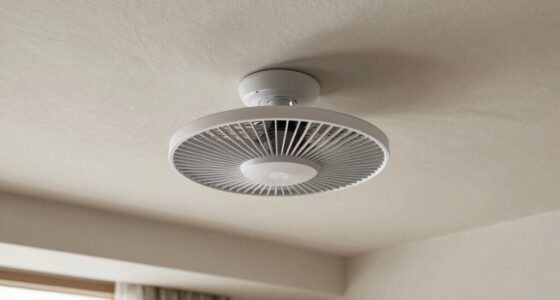
Airflow management is essential, especially in rooms that get a lot of sunlight. Make sure to keep doors and windows open during cooler parts of the day, like early mornings or late evenings. This will help create a cross-breeze that can lower the overall temperature in the room. If you have ceiling fans, use them to enhance airflow. A fan can disperse heat and promote a more uniform temperature throughout the space, making your readings more reliable. Incorporating proper ventilation can significantly improve indoor comfort and temperature accuracy, especially when combined with air circulation techniques. Understanding indoor environmental factors can help you make more effective adjustments. To further optimize temperature control, consider adding insulation to your walls and windows, which can reduce heat transfer. By making small adjustments and being mindful of the conditions, you’ll be able to achieve more accurate temperature readings in sunlit rooms. With the right strategies in place, managing temperature becomes less of a challenge, allowing you to create a more comfortable environment.
blackout curtains for sunlight blocking
As an affiliate, we earn on qualifying purchases.
As an affiliate, we earn on qualifying purchases.
Frequently Asked Questions
Can Temperature Fluctuations Affect Indoor Air Quality?
Yes, temperature fluctuations can definitely affect indoor air quality. When temperatures vary, it can lead to inconsistent humidity levels, impacting comfort and health. You should focus on humidity control to maintain a balanced environment. Implementing effective ventilation strategies can help circulate air and reduce pollutants. By keeping temperatures stable, you not only enhance air quality but also create a more comfortable space for everyone in your home.
What Materials Are Best for Insulating Sunlit Rooms?
To effectively insulate sunlit rooms, consider using reflective window films, thermal curtains, and insulating shades. These materials can greatly reduce heat gain. Reflective films bounce sunlight away, while thermal curtains trap heat inside during colder months. Insulating shades offer an extra layer of protection against temperature fluctuations. By choosing energy-efficient materials, you not only improve comfort but also lower energy costs. So, make those adjustments to keep your space cool and cozy!
How Do Plants Impact Room Temperature?
Plants can greatly impact room temperature by using various plant types for heat absorption and humidity levels. When you choose leafy plants, they not only provide shade but also help cool the air. By strategically placing them near windows, you can enhance shading techniques that reduce direct sunlight exposure. This natural approach helps maintain a more comfortable environment, making your space feel cooler and more inviting while improving air quality as well.
Are There Specific Types of Thermometers for Sunlit Areas?
Yes, specific types of thermometers suit sunlit areas. In fact, studies show that reflective surfaces can raise temperature readings by up to 10 degrees. Digital thermometers are your best bet, as they often come with features to minimize sunlight interference. Look for models with shields or those designed for outdoor use, which can handle direct sunlight better. By choosing wisely, you can get accurate readings even in bright conditions.
How Often Should I Calibrate My Temperature Sensors?
You should calibrate your temperature sensors at least once a year to maintain sensor accuracy. However, if you notice significant temperature fluctuations or after any physical impact, consider recalibrating more often. Frequent calibration helps guarantee your readings remain reliable, especially in areas with varying environmental conditions. Keep an eye on performance; if something feels off, trust your instincts and recalibrate sooner rather than later. Staying proactive leads to better results!
reflective window film for heat reduction
As an affiliate, we earn on qualifying purchases.
As an affiliate, we earn on qualifying purchases.
Conclusion
By taking simple steps like using reflective window films, installing shades, or repositioning your thermostat, you can transform your sunlit room into a comfortable oasis. Imagine walking into a space where the warmth of sunlight dances on the walls, but the air feels cool and inviting. With these adjustments, you’ll not only enhance your temperature readings but also create a serene environment where you can relax and unwind, free from the discomfort of overheating.
indoor thermometer with accurate readings
As an affiliate, we earn on qualifying purchases.
As an affiliate, we earn on qualifying purchases.
oscillating fan for room airflow
As an affiliate, we earn on qualifying purchases.
As an affiliate, we earn on qualifying purchases.