The key to avoiding regret when choosing a mini split is ensuring proper sizing based on your space’s specific needs. Focus on calculating the right capacity by considering factors like square footage, insulation, and sun exposure. An undersized unit won’t cool or heat effectively, while an oversized one wastes energy and wears out faster. Getting it right maximizes efficiency, comfort, and savings. Stay with us to discover the essential sizing rule that can make all the difference.
Key Takeaways
- Always perform a detailed load calculation considering square footage, insulation, and climate for accurate sizing.
- Avoid default or rule-of-thumb sizes; rely on professional assessment for precise capacity.
- Ensure the unit is neither too small nor too large to prevent inefficiency and discomfort.
- Consider specific home features like windows, ceiling height, and sun exposure in sizing decisions.
- Consult with HVAC professionals to ensure optimal system size and prevent costly mistakes.

Are you unsure how to determine the right size for your mini split system? It’s a common concern, but understanding the mini split sizing rule can prevent costly mistakes and ensure your home stays comfortable. Getting the size right isn’t just about fitting the unit into your space; it directly impacts energy efficiency and installation costs. An undersized system struggles to heat or cool effectively, leading to higher utility bills and uneven temperatures. On the other hand, an oversized unit cycles on and off frequently, wasting energy and increasing wear and tear. The key is to find a balance that matches the specific demands of your space.
Choosing the right mini split size ensures efficiency, comfort, and cost savings by preventing energy waste and unnecessary expenses.
The mini split sizing rule emphasizes that your system should be based on the square footage and insulation quality of your home, but it also involves more detailed calculations. Proper sizing improves energy efficiency because a well-matched unit consumes less electricity to maintain your desired comfort level. It will operate smoothly without excessive cycling, which not only saves you money but also extends the lifespan of your system. When you choose a unit that’s too powerful, it short-cycles, wasting energy and increasing installation costs because the system has to be larger and more complex. Conversely, a unit that’s too small will run constantly, pushing up your energy bills and possibly causing discomfort due to inconsistent temperatures. Understanding how Proper sizing impacts your system can help prevent these issues.
Calculating the right size involves more than just a quick estimate. Consider factors like ceiling height, window placement, sun exposure, and insulation levels. These elements influence how much heating or cooling your home needs. Taking the time to perform these calculations can seem tedious but ultimately saves you from regret. It also helps ensure energy efficiency by matching the system’s capacity more closely to your home’s actual needs. Proper sizing also enhances cost savings because a correctly sized system uses less electricity and operates more effectively. When your mini split is properly sized, it operates efficiently, reducing energy waste and lowering ongoing costs. Proper sizing also impacts installation costs because a system that’s too large or too small may require modifications or additional units, adding to the overall expense. Additionally, consulting with a professional can help you navigate these calculations more accurately and avoid common sizing mistakes.
In the end, following the mini split sizing rule means you’re making an informed choice that maximizes energy efficiency and minimizes installation costs. It ensures your investment pays off over time through lower energy bills, fewer repairs, and increased comfort. Don’t skip this crucial step; instead, take the time to assess your space carefully or consult a professional. Proper sizing isn’t just a technical detail—it’s the foundation for a reliable, efficient, and cost-effective mini split system that meets your needs today and for years to come.

Casio HS-8VA Mini 6-Function Calculator
- Compact Size: Measures 4 x 2.25 x 0.3 inches
- Lightweight Design: Weighs only 1.23 ounces
- Large LCD Display: 8-digit clear, easy-to-read screen
As an affiliate, we earn on qualifying purchases.
As an affiliate, we earn on qualifying purchases.
Frequently Asked Questions
How Long Does It Take to Install a Mini Split System?
Typically, installing a mini split system takes about 4 to 8 hours, depending on factors like the system’s size and your home’s layout. During this installation timeline, you’ll notice improved energy efficiency as the unit is properly set up. You can expect a professional to handle the process efficiently, ensuring your mini split operates at its best. Keep in mind, more complex setups might take longer, but most installations are completed within a day.
Are Mini Splits Suitable for Large Commercial Spaces?
Mini splits are suitable for large commercial spaces, especially when you need efficient zoning. Notably, mini splits can be scaled with multiple units, providing up to 16 zones for ideal commercial efficiency. This setup allows you to target specific areas, reduce energy waste, and improve comfort. If you plan to heat or cool a big space, mini splits offer a flexible, cost-effective solution tailored to your needs.
What Maintenance Is Required for Mini Split Units?
You need to regularly replace or clean the air filter to keep your mini split functioning efficiently and maintain good air quality. Additionally, you should check and clean the condensate drain to prevent blockages and water damage. Regular maintenance, including inspecting components and clearing debris, ensures your mini split runs smoothly and prolongs its lifespan. Staying on top of these tasks helps avoid costly repairs and keeps your system operating at peak performance.
Can Mini Splits Operate Efficiently in Extreme Weather?
Mini splits can operate efficiently in extreme weather, thanks to their energy efficiency and climate adaptability. In very hot or cold conditions, modern units are designed to handle temperature variations, maintaining comfort while using less energy. However, for peak performance, you should choose a model rated for your climate zone. Regular maintenance also helps guarantee your mini split remains efficient and reliable during extreme weather events.
What Are the Common Signs My Mini Split Needs Repairs?
You might notice your mini split’s energy efficiency drops or noise levels increase, signaling it needs repairs. Strange sounds, uneven cooling, or higher energy bills are common signs. These issues indicate the system struggles to operate smoothly, affecting performance and comfort. Catching these signs early helps preserve energy efficiency and keeps noise levels manageable, preventing costly repairs later. Regular maintenance also ensures your mini split runs at its best and lasts longer.
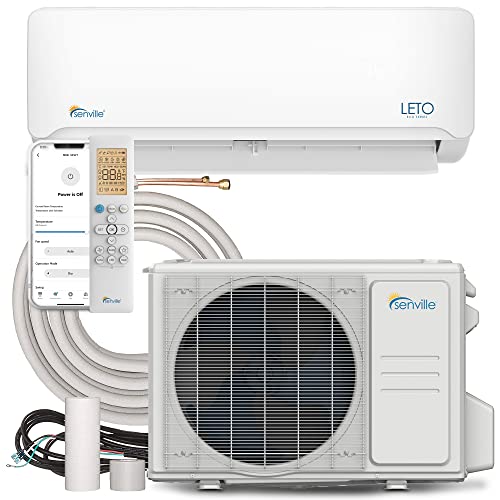
Senville LETO Mini Split Air Conditioner, Heat Pump, White, 9000 BTU
- Voice Control Compatibility: Alexa enabled for remote control
- All-Season 4-in-1 System: Cooling, heating, dehumidifying, fan
- Efficient Heat Pump: Operates down to 5F/-15C
As an affiliate, we earn on qualifying purchases.
As an affiliate, we earn on qualifying purchases.
Conclusion
Just like finding the right pair of shoes that fit perfectly, choosing the right mini split size guarantees comfort and efficiency. Stick to the sizing rule, and you’ll avoid the headache of over- or under-sizing. It’s a simple step that saves you from regret, making your cooling or heating experience smooth and satisfying. When you select the right size, you’ll feel as confident as a captain steering a steady course through calm waters.

Rellytech Mini Split AC/Heating System, 12000 BTU, 19 SEER2 115V/110V
- Cooling & Heating Capacity: 12000 BTU cooling, 12500 BTU heating
- Coverage Area: Up to 750 sq. ft.
- Temperature Range: 61℉ to 88℉
As an affiliate, we earn on qualifying purchases.
As an affiliate, we earn on qualifying purchases.

Mini Split Wall Mounting Bracket Kit,Universal Air Conditioner Heat Pump System Unit 7000-18000 BTU, Mini Split-System Air Conditioners for Central AC/Heat Pumps Systems (White, 3" x 10 ft)
- Complete Installation Kit: Includes line set cover and mounting brackets
- Universal Compatibility: Fits 7,000-15,000 BTU mini split units
- Durable Components: ABS and PVC materials for longevity
As an affiliate, we earn on qualifying purchases.
As an affiliate, we earn on qualifying purchases.