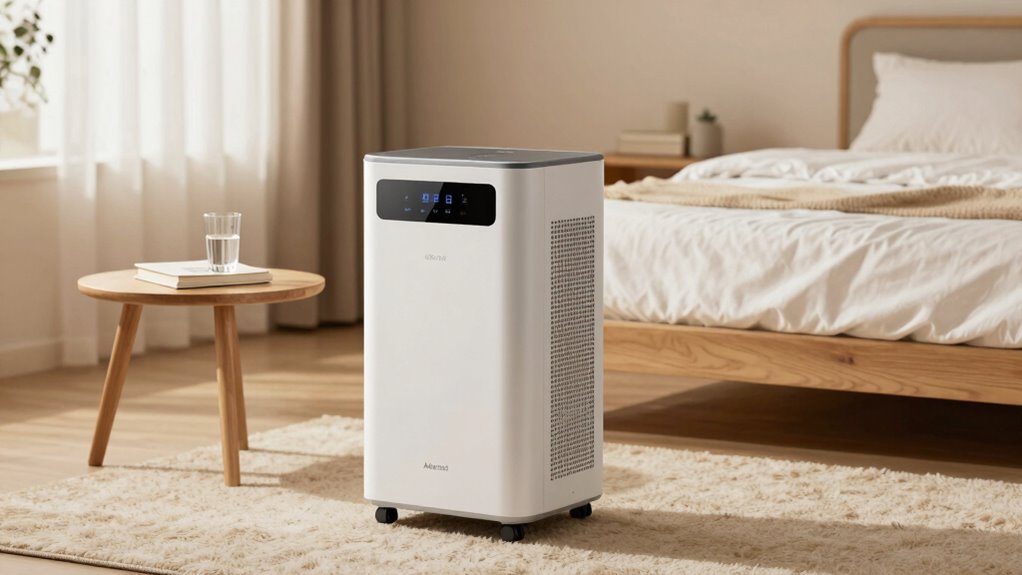

When shopping for a portable bedroom AC, you’ll notice a key tradeoff: units with higher cooling power tend to be louder, which can disturb your sleep. Quieter models often lack the capacity to cool large rooms effectively or operate well during extreme heat. Finding a balance between noise levels and cooling ability can be tricky, but understanding these tradeoffs helps you choose what’s best for your comfort. Keep in mind, there’s more to take into account for a peaceful, effective cool down.
Listen free for 30 days with Audible
Thousands of audiobooks and originals — cancel anytime.
As an affiliate, we earn on qualifying purchases.
Key Takeaways
- Higher cooling capacity units tend to generate more noise, complicating quiet bedroom environment choices.
- Quieter AC models often have lower BTU ratings, which may be insufficient for larger rooms.
- Energy-efficient, quiet units may struggle during extreme heat, limiting cooling effectiveness.
- Noise-reducing features can add cost and complexity, making selection more challenging.
- Balancing noise levels and cooling performance requires prioritizing personal comfort and specific room needs.

When choosing a portable bedroom air conditioner, you often have to weigh the tradeoff between noise levels and cooling performance. On one hand, a quieter unit lets you sleep undisturbed, but it might not deliver the cooling capacity you need on hot summer nights. On the other hand, a more powerful AC can cool your room quickly but tends to generate more sound, making it harder to relax or sleep peacefully. This tradeoff is especially tricky because many models that prioritize energy efficiency also tend to be quieter, but they may struggle to keep up with intense heat, especially in larger bedrooms.
Cooling capacity is a key factor in your decision. If you want rapid and effective cooling, you’ll need a unit with higher BTU ratings, but these often come with increased noise levels. Conversely, units designed for quieter operation typically have lower BTUs, which might not be enough to cool a larger space efficiently. You’ll find that some models try to strike a balance by offering adjustable fan speeds or eco modes that boost energy efficiency while minimizing noise. However, even these features can’t fully eliminate the noise tradeoff—it’s a compromise you’ll need to accept. Understanding cooling capacity can help you choose a unit that best fits both your comfort and performance needs. Additionally, considering sound insulation features in the design can improve overall comfort, especially for sensitive sleepers. Incorporating noise-reducing technology in portable ACs is also becoming more common, which can help mitigate some of the noise without sacrificing cooling power.
Energy efficiency plays a significant role in this dilemma. More efficient units consume less power, which reduces your energy bills and environmental impact. Many portable ACs with high energy efficiency are designed to operate quietly because they use advanced compressor technology and sound insulation. Yet, their cooling capacity might fall short during extreme heat, especially if your room is larger or poorly insulated. In such cases, you might be tempted to choose a less efficient, louder model that can handle the heat better, but that means higher electricity costs and increased noise.
Additionally, understanding noise tradeoffs can help you make a more informed choice, especially as some models now incorporate noise-reducing features to improve comfort. Ultimately, your choice depends on your priorities. If you value a peaceful sleeping environment, you might opt for a quieter, lower-capacity unit, accepting that it may not cool as swiftly or effectively during peak heat. If cooling performance is paramount, you might lean toward a more powerful, noisier model, understanding it could disturb your sleep. The key is to look for models that balance these factors—perhaps one with adjustable settings, good energy efficiency ratings, and a moderate cooling capacity. Remember, no perfect solution exists; it’s about finding the best compromise for your comfort, energy costs, and noise tolerance.
quiet portable bedroom air conditioner
As an affiliate, we earn on qualifying purchases.
As an affiliate, we earn on qualifying purchases.
Frequently Asked Questions
How Does Room Size Affect Portable AC Noise Levels?
Room size impacts portable AC noise levels because larger rooms may require the unit to work harder, increasing noise due to lower ventilation efficiency. Sound insulation also plays a role; well-insulated rooms can trap noise, making the AC seem louder, while poorly insulated spaces let sound escape, reducing perceived noise. To minimize disturbances, choose an AC suited to your room size and guarantee good ventilation and insulation.
Are Quieter Portable ACS Less Effective at Cooling?
Quieter portable ACs aren’t necessarily less effective at cooling, especially when they feature vibration dampening technology that reduces noise without sacrificing performance. These units often have adjustable fan speeds, allowing you to balance noise levels and cooling power. By choosing a model with efficient fan control and vibration dampening, you get effective cooling without the loud noise, making them suitable for bedrooms and other quiet spaces.
What Noise Levels Are Considered Acceptable for Bedrooms?
For bedrooms, noise levels around 40-50 decibels are generally acceptable, creating a peaceful sleep environment. Imagine a portable AC in a well-insulated room, where sound dampening minimizes disturbance—this helps uphold comfort. If your AC exceeds 55 decibels, it might disrupt sleep. Prioritizing models with sound insulation features ensures quieter operation, enabling restful nights without sacrificing cooling performance.
Do Brand Names Impact the Noise Performance of Portable ACS?
Brand names can impact the noise performance of portable ACs because reputable brands often provide detailed noise specifications and invest in quieter technology. When you choose a well-known brand, you’re more likely to get accurate noise level information and a unit designed for quieter operation. However, always check customer reviews and specific noise specs, as even trusted brands can have models with higher noise levels.
How Can I Reduce Noise Without Sacrificing Cooling Power?
You can cut noise without losing cooling power by focusing on sound insulation and fan speed. Imagine whispering secrets through a pillow—sound insulation acts like that pillow, muffling the noise. Keep your fan on a lower speed to reduce sound, but guarantee it still cools effectively. It’s a balancing act, like walking a tightrope, but with the right setup, you’ll stay cool and quiet, no sweat.
high BTU portable AC for large rooms
As an affiliate, we earn on qualifying purchases.
As an affiliate, we earn on qualifying purchases.
Conclusion
When choosing a portable bedroom AC, remember that noise levels often come with a tradeoff in cooling power. Nearly 70% of users find quieter units less effective, making it tricky to find the perfect balance. It’s frustrating to sacrifice comfort for silence—or vice versa. Keep in mind, the right choice depends on what matters most to you. Don’t settle—find a unit that strikes the best balance for your peaceful, cool sanctuary.
energy-efficient portable AC with noise reduction
As an affiliate, we earn on qualifying purchases.
As an affiliate, we earn on qualifying purchases.
adjustable fan speed portable air conditioner
As an affiliate, we earn on qualifying purchases.
As an affiliate, we earn on qualifying purchases.
Fall Picks
fall essentials
As an affiliate, we earn on qualifying purchases.