When choosing between programmable and smart thermostats, consider your needs. Programmable models offer simple scheduling and reliable control without internet, often at a lower cost. Smart thermostats provide advanced features like learning habits, remote access, and real-time energy reports, boosting your convenience and savings. Both can improve comfort and reduce energy bills, but your decision depends on how much automation and tech integration you want. Keep exploring to find the ideal fit for your home.
Key Takeaways
- Programmable thermostats offer basic scheduling, while smart thermostats learn habits and adjust automatically for optimal comfort and energy savings.
- Smart thermostats provide remote control and detailed energy reports, enhancing convenience and ongoing cost monitoring.
- User interfaces differ: programmable models have simple displays; smart models feature intuitive touchscreens and mobile app integration.
- Both types reduce energy costs; smart thermostats often maximize savings through adaptive learning and automation.
- Choice depends on user preferences for simplicity and budget versus advanced features and remote control capabilities.
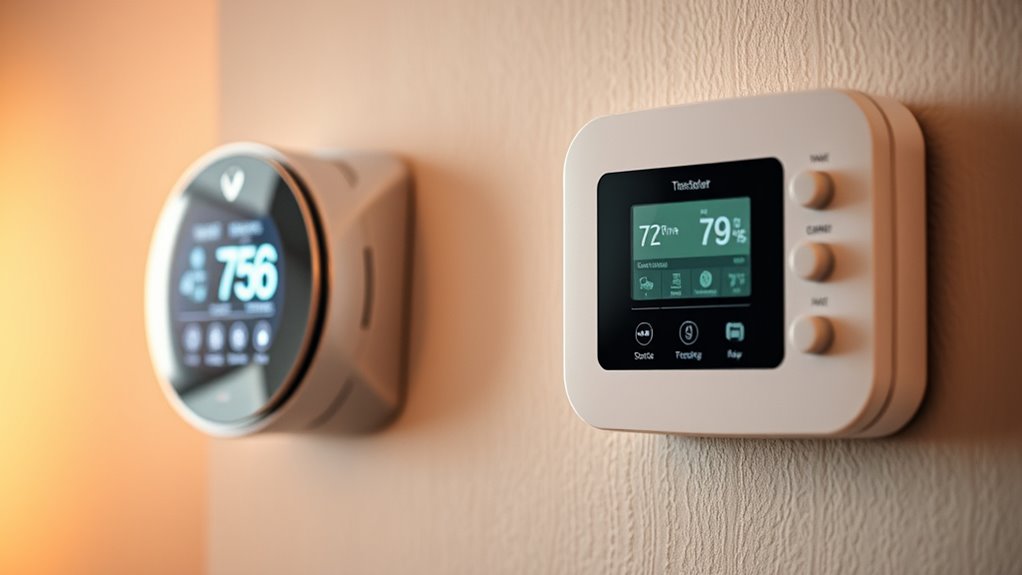
Choosing the right thermostat can substantially impact your home’s comfort and energy efficiency. When you’re trying to decide between a programmable and a smart thermostat, understanding how each affects energy savings and ease of use is vital. Both options aim to optimize your heating and cooling systems, but they do so in different ways. A programmable thermostat allows you to set schedules based on your routine, so your HVAC system runs only when needed. This can lead to noticeable energy savings, especially if your schedule is consistent. You can program it to lower the temperature when you’re away or asleep, then raise it before you return home or wake up. The user interface on these models is generally straightforward, often featuring a digital display and simple buttons or dials that let you customize your settings easily. Additionally, many programmable thermostats are designed with user-friendly interfaces, making setup and adjustments simple for all users.
A programmable thermostat helps save energy by scheduling your HVAC system based on your routine.
Smart thermostats, on the other hand, take things a step further by connecting to your Wi-Fi and learning your habits over time. They adapt to your schedule, adjusting temperatures automatically, which can maximize energy savings without requiring daily input. Many smart thermostats come with mobile apps that give you remote control over your home’s climate, so you can tweak settings from anywhere. Their user interface is usually more sophisticated, often featuring intuitive touchscreens and easy-to-navigate menus, making it simple to set preferences or view energy reports. This connectivity helps you better understand your energy consumption, empowering you to make more informed decisions that save money in the long run.
When comparing the two, consider how much control you want and how much effort you’re willing to put into managing your home’s temperature. If you prefer a device with minimal fuss, a smart thermostat’s learning capabilities and remote access can be very appealing. Plus, many models offer energy reports that help you identify patterns and optimize your usage further. However, if you prefer something simple and reliable without relying on internet connectivity, a programmable thermostat may suit your needs better. Its user interface is typically less complex, and it can still deliver significant energy savings when programmed correctly.
Ultimately, both types aim to improve your home’s energy efficiency and comfort, but your choice depends on your lifestyle, tech comfort level, and budget. Both can help you reduce energy costs and enhance convenience, but smart thermostats tend to offer more advanced features and greater flexibility. Whichever you pick, knowing how to effectively use the user interface and set essential schedules is key to maximizing your energy savings and enjoying consistent comfort at home.

Honeywell Home RTH7600D 7-Day Programmable Touchscreen Thermostat
- Large Touchscreen Display: Easy temperature and schedule adjustments
- Home and Away Settings: Save energy when not home
- Hold Settings: Temporary and permanent hold options
As an affiliate, we earn on qualifying purchases.
As an affiliate, we earn on qualifying purchases.
Frequently Asked Questions
Can Programmable Thermostats Learn User Preferences Over Time?
Yes, programmable thermostats can learn your preferences over time through learning algorithms. They analyze your schedule and temperature adjustments, automatically adapting to your habits for better user customization. This means you don’t have to manually set your preferences every day. As a result, your home stays comfortable while saving energy, and the thermostat becomes more intuitive, providing a personalized experience that evolves with your lifestyle.
Are Smart Thermostats Compatible With All HVAC Systems?
Smart thermostats aren’t compatible with all HVAC systems, so you’ll need to verify your system’s compatibility first. When they work with your setup, you get better energy savings and user customization options. These devices can adapt to your routines and preferences, helping you save money on energy bills. Always confirm compatibility with your HVAC system to ensure smooth operation and maximize the benefits of a smart thermostat.
Do Smart Thermostats Require Professional Installation?
Think of installing a smart thermostat as opening a new chapter in your home’s story. While some models might need professional installation to navigate wiring and compatibility, many are designed for easy setup, letting you customize settings effortlessly. Consider installation considerations carefully—if you’re comfortable with DIY projects, you might handle it yourself. Otherwise, a professional guarantees your thermostat works seamlessly, giving you peace of mind and tailored comfort at your fingertips.
How Secure Are Smart Thermostats From Hacking Risks?
Smart thermostats are generally secure, but you should stay aware of privacy concerns. Manufacturers use encryption protocols to protect your data from hacking risks, making it harder for unauthorized users to access your information. To enhance security, regularly update your device’s software, use strong passwords, and enable two-factor authentication. Being proactive helps safeguard your privacy while enjoying the convenience of smart technology.
Can Both Types Be Integrated With Home Automation Systems?
Yes, both programmable and smart thermostats can be integrated with home automation systems, enhancing your energy savings and user convenience. Smart thermostats often connect seamlessly via Wi-Fi, allowing remote control and automation through apps. Programmable thermostats can also work with certain home automation setups, but may require additional hubs or systems. Integration streamlines temperature management, making your home more energy-efficient and convenient, whether you prefer advanced automation or scheduled adjustments.

Sensi Smart Thermostat, Wi-Fi, DIY, Alexa, Energy Star Certified, ST55
- Privacy Protected: Won’t sell your personal data
- Easy DIY Installation: Includes level and step-by-step app guide
- Universal Compatibility: Works with most HVAC systems without c-wire
As an affiliate, we earn on qualifying purchases.
As an affiliate, we earn on qualifying purchases.
Conclusion
Ultimately, choosing between programmable and smart thermostats depends on your lifestyle. While some believe smart thermostats can transform your home into a more energy-efficient haven, others argue the simplicity of programmable models is enough. The truth is, technology can’t replace your intuition and habits. Embrace the device that feels right for you, and you might find that the real power lies in how you use it—proving that sometimes, human touch beats tech every time.

Amazon Smart Thermostat, Save money and energy, Works with Alexa and Ring, C-wire required
- Smart Alexa Thermostat: Easy upgrade from traditional thermostats
- Automated Comfort Zones: Adjusts heating and cooling automatically
- Energy and Cost Savings: Includes rebate information from energy providers
As an affiliate, we earn on qualifying purchases.
As an affiliate, we earn on qualifying purchases.
Sensi Smart Thermostat, Wi-Fi, DIY, Alexa, Energy Star Certified, ST55
- Privacy Protected: Won’t sell your personal data
- Easy DIY Installation: Includes level and step-by-step app guide
- Universal Compatibility: Works with most HVAC systems without c-wire
As an affiliate, we earn on qualifying purchases.
As an affiliate, we earn on qualifying purchases.