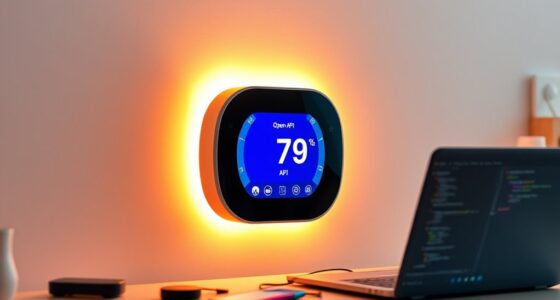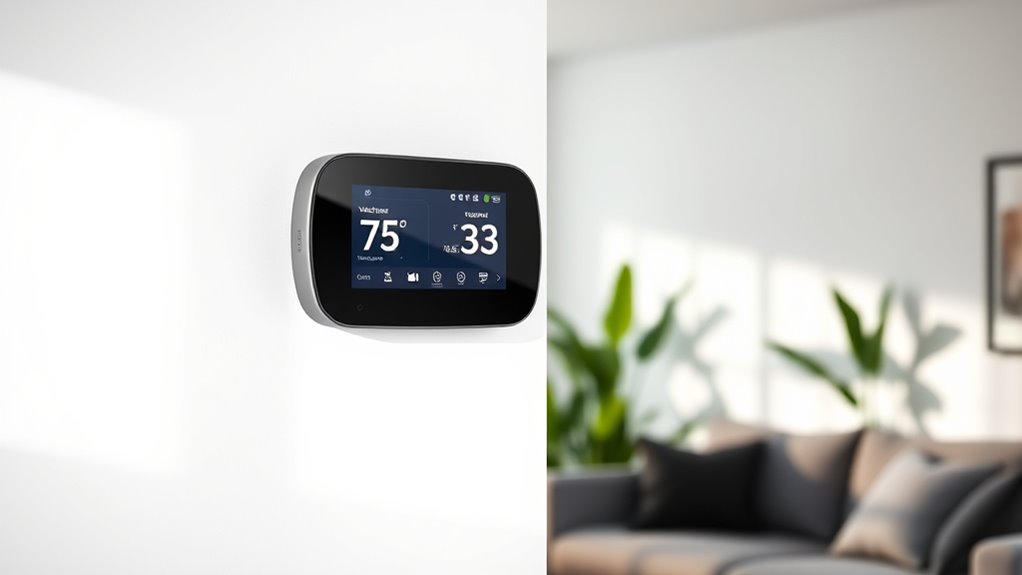

In 2025, look for smart thermostats with advanced energy-saving features like learning algorithms and occupancy sensors that automatically optimize temperature settings. Choose models with intuitive interfaces, touchscreens, and mobile apps for easy control, plus voice command support for extra convenience. Confirm they display real-time data on current temperatures, humidity, and energy use for transparency. Also, prioritize devices with seamless connectivity to smart home systems, allowing you to manage everything effortlessly—there’s more to uncover about the latest features.

Get home appliances delivered free with Prime
- Fast, free delivery on millions of items
- Prime Video, Amazon Music and more included
- Member-only deals all year
Key Takeaways
- Advanced energy-saving algorithms that learn and adapt to household routines for optimal efficiency.
- Intuitive user interfaces with mobile app control, voice command support, and customizable displays.
- Real-time data transparency showing indoor/outdoor temperature, humidity, and energy consumption.
- Robust scheduling and automation features tailored to daily routines and occupancy patterns.
- Seamless connectivity with smart home systems and remote control capabilities for convenience and energy management.
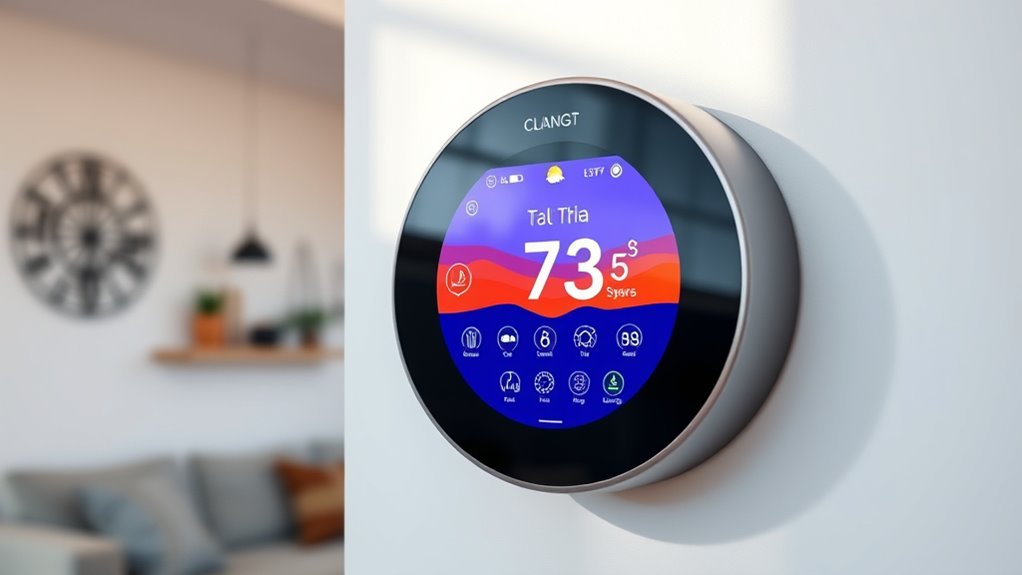
Smart thermostats have revolutionized how you manage home comfort by offering advanced features that make it easier to save energy and customize your environment. One of the key benefits is energy savings, which helps you cut costs on utility bills while reducing your carbon footprint. To achieve this, many smart thermostats include intelligent algorithms that learn your schedule and preferences, automatically adjusting temperatures for maximum efficiency. These devices often feature sensors that detect occupancy or temperature fluctuations, allowing them to fine-tune heating and cooling when you’re home or away. The result is a more responsive system that minimizes unnecessary energy use without sacrificing comfort.
Another important aspect worth taking into account is the user interface. A user-friendly interface makes it simple to set up and control your thermostat, even if you’re not tech-savvy. Look for models that offer intuitive touchscreens or mobile app integrations, giving you quick access to temperature adjustments, scheduling, and energy reports. The app should be straightforward, with clear menus and easy-to-understand settings, so you don’t have to spend extra time figuring out how to optimize your home environment. Some thermostats also support voice commands through virtual assistants like Alexa, Google Assistant, or Siri, adding another layer of convenience.
In addition to ease of use, a good user interface often includes customizable displays that show relevant data at a glance. You might see current indoor and outdoor temperatures, humidity levels, or energy consumption stats. This transparency helps you understand how your habits impact energy use and make informed decisions to improve efficiency. The best smart thermostats also offer scheduling features that sync seamlessly with your daily routine. You can set different temperatures for mornings, evenings, or when you’re away, ensuring your home remains comfortable without wasting energy.
Connectivity is another essential feature tied to the user interface. Many models support Wi-Fi, allowing you to control your thermostat remotely through your smartphone or tablet. This means you can adjust settings even when you’re not home, preventing energy waste and ensuring comfort upon your return. Some thermostats also integrate with smart home systems, providing centralized control over multiple devices. This integration can streamline your home automation, making daily routines easier to manage and optimize for energy savings. Additionally, incorporating recycled materials into the design of these devices can support environmentally sustainable choices.
Ultimately, when choosing a smart thermostat in 2025, prioritize models that combine a sleek, easy-to-navigate user interface with intelligent features aimed at maximizing energy savings. The right device will empower you to manage your home environment effortlessly, saving money while maintaining the comfort you deserve.
Products Worth Considering

Sonos One (Gen 2) Two-Room Set Voice-Controlled Smart Speaker with Alexa (2-Pack, Black)

Google Nest Learning Thermostat Pro Edition (4th Gen, 2024) with Temperature Sensor, Polished Silver

Levoit Core 400S-P Smart Air Purifier for Large Rooms up to 1718 ft²
As an affiliate, we earn on qualifying purchases.
Frequently Asked Questions
How Secure Are Smart Thermostats Against Hacking?
Smart thermostats have improved security, but cybersecurity concerns still exist. Hackers can potentially access your device if you don’t use strong passwords or keep firmware updated. To protect your data privacy, enable two-factor authentication and regularly update your device. While manufacturers work to enhance security, staying vigilant helps prevent unauthorized access, ensuring your smart thermostat remains secure and your personal information stays private.
Can Smart Thermostats Work With Solar-Powered Heating Systems?
Yes, smart thermostats can work with solar-powered heating systems. Thanks to solar integration, you can synchronize your smart thermostat with solar panels to optimize energy savings. This pairing helps you manage your home’s temperature efficiently, reducing reliance on grid power and maximizing renewable energy use. With smart control, you gain greater grid independence and greener, more cost-effective heating, making your energy efforts more effective and eco-friendly.
Do Smart Thermostats Require Professional Installation?
You don’t necessarily need a professional for smart thermostat installation; many models support DIY setup, saving you money. However, consider your comfort with wiring and technical tasks, as improper installation could lead to issues. If you’re unsure, professional installation might be worth the cost considerations, ensuring ideal performance and avoiding potential damage. Always check the manufacturer’s instructions and compatibility to decide if you can handle it yourself or need expert help.
How Do Smart Thermostats Impact Energy Bills Long-Term?
Smart thermostats considerably impact your energy bills long-term by boosting energy savings and reducing costs. They learn your schedule, optimize heating and cooling, and adjust settings automatically, preventing unnecessary energy use. Over time, these features lead to consistent cost reductions and lower utility bills. Plus, remote control options help you fine-tune your system, ensuring you save money while maintaining comfort. Investing in a smart thermostat pays off through ongoing energy efficiency.
Are Smart Thermostats Compatible With All Home Automation Systems?
You might think all smart thermostats work with every home automation system, but that’s not always true. Many models are compatible with popular platforms like Alexa, Google Home, or Apple HomeKit, but some may not support certain devices or ecosystems. Always check the device compatibility before you buy, and verify your home automation setup can integrate the thermostat seamlessly, so you get the most out of your smart home.
Conclusion
As you choose a smart thermostat in 2025, focus on features like AI learning, energy reports, and seamless integration. Imagine installing one that adapts to your schedule, saving you hundreds annually—like a homeowner who reduced energy bills by 30% within the first year. By prioritizing these features, you’ll enhance comfort, cut costs, and make your home smarter. Don’t settle—pick a model that evolves with your needs and keeps you ahead in home automation.