
TL;DR

Get home appliances delivered free with Prime
- Fast, free delivery on millions of items
- Prime Video, Amazon Music and more included
- Member-only deals all year
Ideal Home reviewer Sarah Handley tested Dreo’s 720S electric heater for 10 days and reported that it can switch between focused heat and 360-degree room distribution. In her tests, it raised the temperature of an 18-square-metre living room by 4°C in 10 minutes; performance varied in a larger open-plan space.
Dreo’s Smart Whole Room Heater 720S can direct warmth toward a person or distribute it around a room, according to a 10-day home test published by Ideal Home. Reviewer Sarah Handley reported that the 2,000W ceramic fan heater raised the temperature in her 18-square-metre living room by 4°C in 10 minutes, while warming a larger kitchen-diner more slowly.
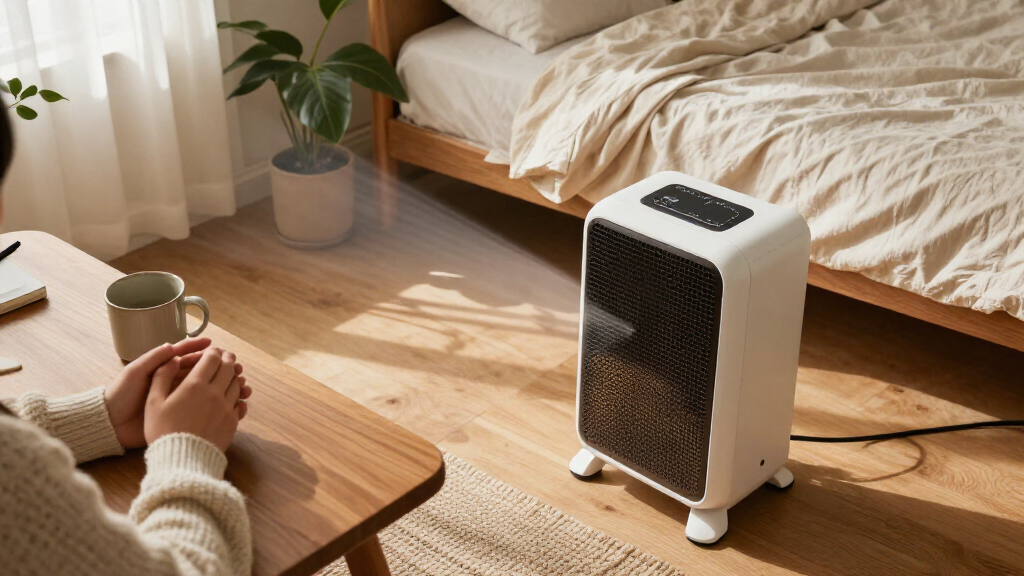
The 720S switches between focused heating, which sends warm air through its front grille, and a whole-room mode. In the latter, the top section rises by about four centimetres and the heater distributes air in all directions. It does not oscillate, but its 3.1-kilogram weight makes it possible to reposition by hand, Handley wrote.
Handley tested the heater for 10 days in the living room and kitchen-diner of her 1970s three-bedroom home. In the 18-square-metre living room, she recorded a 4°C increase after 10 minutes in whole-room mode. In the 22-square-metre open-plan kitchen-diner, the temperature rose by 2°C over 20 minutes. Those figures describe her test conditions, not a guaranteed result for other homes.
The heater has three power levels—1,100W, 1,400W and 2,000W—as well as Eco and fan-only modes. Eco mode lets users set a target temperature between 5°C and 35°C, with the heater adjusting its output in response to the target and the ambient temperature. Controls are available on the unit, through a remote, or in the Dreo app; the product also works with Google Home and Alexa, according to the review.
One Heater, Two Heating Patterns
The two heating patterns give the 720S different potential uses: focused warmth for someone sitting nearby, and broader air distribution when the aim is to warm a room. That flexibility may appeal to households that want a portable heater for more than one setting, rather than a device intended only for personal use or only for room heating.
The review’s measurements also show why results depend on the space. The smaller living room warmed more quickly than the larger kitchen-diner, and Handley found that placing the heater farther into the room helped make use of its all-direction airflow. In practice, where a heater can be positioned, the room’s size and layout, and its starting temperature may affect the experience.
Energy use is another consideration. The review lists the 720S at up to 2,000W and estimates a running cost of 53p per hour using an October 2026 energy price cap. That is the publication’s estimate based on that stated tariff, not a fixed cost: actual charges depend on the user’s electricity rate and the setting and duration of use. The heater’s Eco mode can adjust output to a temperature target, but the supplied material does not establish how much energy a typical household would save.
Products Worth Considering

Bose Lifestyle Ultra Compact Wireless Smart Home Speaker Bundle, Black

LEVOIT Vital 200S-P Smart Air Purifier for Large Rooms up to 1875 ft², Quiet 27 dB Operation, AHAM VERIFIDE Certified, Air Quality Monitor,

Google Nest Learning Thermostat (4th Gen) with Nest Temperature Sensor (2nd Gen), Silver
As an affiliate, we earn on qualifying purchases.
How the 720S Is Set Up
The 720S is a ceramic fan heater measuring 22 by 30 by 22 centimetres, according to the review. Ideal Home lists its recommended room size as up to 25 square metres and its recommended retail price as £119.99. The model launched at the end of September, the report says.
Handley said there was no assembly beyond installing batteries in the remote. The unit needs to be plugged into a wall socket, which affects where it can be placed. For her living-room test, she moved it onto a round console table and farther into the room; she cautioned that this left a cable to watch for. The review says a handle on the side is intended for carrying, and the heater switches off if lifted by that handle during use.
The product includes eight safety features, the review reports, including tip-over protection, a child lock, cool-touch housing and overheat protection. These are product features described in the source; the review does not provide independent certification details or comparative safety testing.
“In whole room mode, the heater managed to increase the temperature in my 18m2 living room by 4°C in just 10 minutes.”
— Sarah Handley, Ideal Home reviewer
What the Home Test Cannot Establish
The reported temperature changes come from one reviewer’s home over 10 days. The source does not give details such as outdoor temperatures, starting room temperatures, insulation levels, thermostat placement, or whether other heating was running. Those omissions make it difficult to compare the figures directly with tests in different homes or to predict how quickly the heater will warm a particular room.
The review lists a recommended maximum room size of 25 square metres, but its supplied test results cover rooms of 18 and 22 square metres only. It does not report a test at the stated maximum. The material also provides no independent verification of the manufacturer’s coverage claim, no comparison with other heaters under matched conditions, and no measured energy use over a typical period.
The source gives the £119.99 recommended retail price and a 53p-per-hour running-cost estimate based on the October 2026 energy price cap. It does not establish the price currently available from retailers or the cost for households on other tariffs. Long-term reliability, app support over time, and how the safety features perform beyond the review’s use are also not addressed.
Check Price and Room Conditions
The supplied report does not announce a follow-up test or a further product update. Readers considering the heater can check current retailer pricing and compare the model’s power rating and stated room suitability with their needs. They should treat the review’s temperature changes and running-cost estimate as test-specific reference points, not promises of performance or a universal electricity cost.
For anyone relying on the app or voice controls, the review confirms compatibility with the Dreo app, Google Home and Alexa, but does not detail setup requirements or any subscription costs. The report also does not compare the 720S with other Dreo heaters or competing models. Those questions remain outside the published test.
Key Questions
Can the Dreo 720S heat a room as well as a person?
According to Ideal Home, yes. It has a focused mode that sends heat through the front grille and a whole-room mode that raises the top section and distributes air in all directions.
How quickly did it warm the rooms in the review?
Reviewer Sarah Handley reported a 4°C increase in 10 minutes in an 18-square-metre living room. In a 22-square-metre kitchen-diner, the temperature rose by 2°C in 20 minutes. These are results from her home test, not guaranteed performance figures.
What controls and settings does the heater offer?
The 720S has three heat levels—1,100W, 1,400W and 2,000W—plus Eco and fan-only modes. It can be controlled on the unit, with the remote, or through the Dreo app, and the review lists Google Home and Alexa compatibility.
How much does the Dreo 720S cost to run?
Ideal Home gives an estimate of 53p per hour, calculated using the October 2026 energy price cap. The cost for an individual household will depend on its electricity tariff and how long and at what setting the heater runs.
What safety features are listed?
The review says the heater has eight safety features, including tip-over protection, a child lock, cool-touch housing and overheat protection. The report does not provide independent safety-test results.
Source: idealhome.co.uk