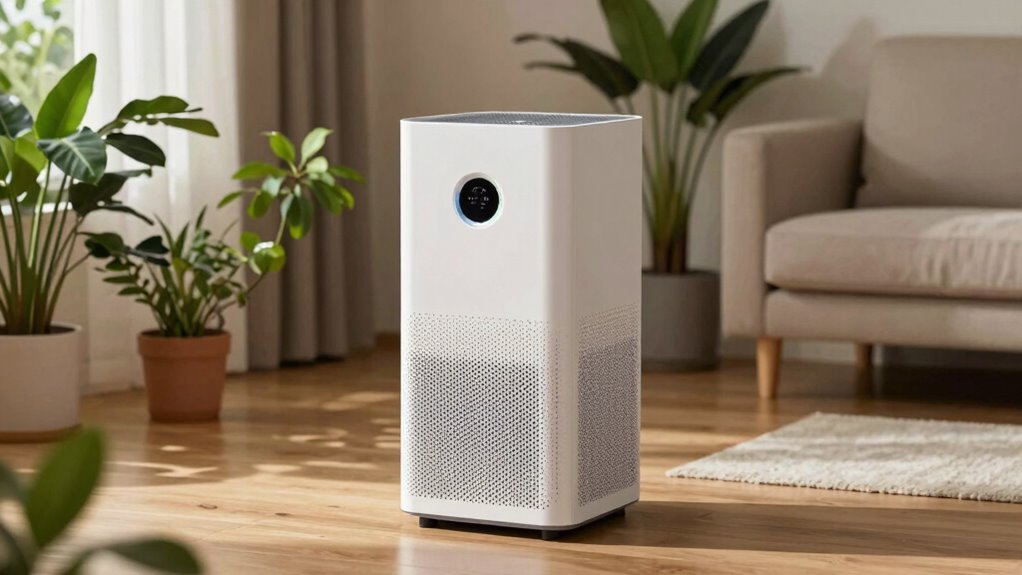
Most people overestimate how much energy an air purifier uses. In reality, most models consume between 50 to 200 watts, which is quite low compared to other household devices. Your actual energy cost depends on how often and at what settings you run it. Using energy-efficient models and adjusting the fan speed can keep costs minimal. Want to learn simple ways to lower your energy bills while maintaining clean air? Keep exploring for more tips.
Key Takeaways
- Modern air purifiers typically use between 50 to 200 watts, which is lower than many assume.
- Energy consumption varies mainly with fan speed, room size, and filter maintenance, not just device power rating.
- Using sensors and energy-saving modes can significantly reduce electricity costs during operation.
- Proper placement and limited operation times help minimize energy use without sacrificing air quality.
- Regular filter maintenance ensures efficiency, preventing unnecessary power drain and extending device lifespan.
How Much Energy Does an Air Purifier Usually Use?
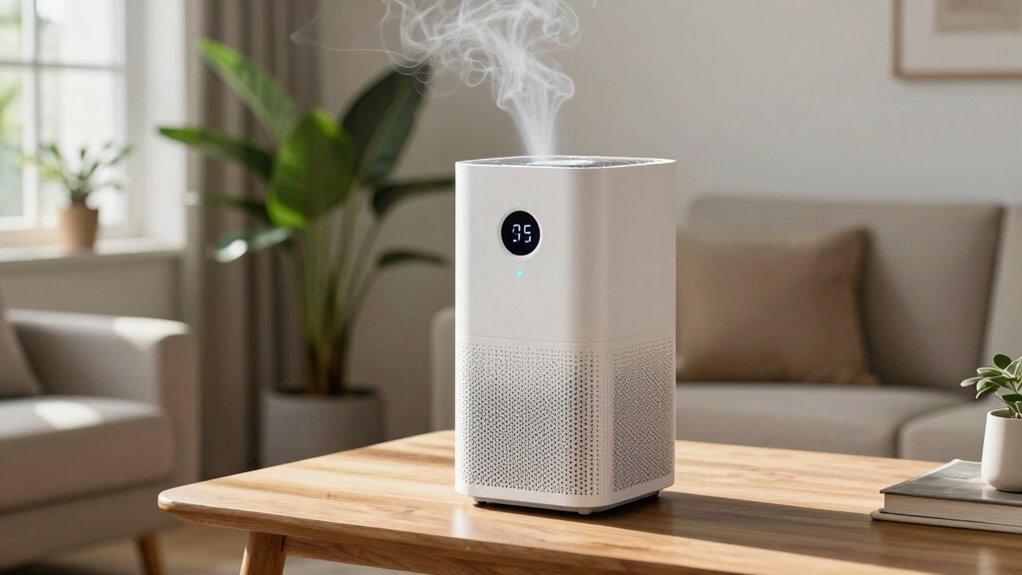
Ever wondered how much energy your air purifier consumes during operation? Typically, air purifiers use between 50 to 200 watts, depending on the model and settings. The more powerful the unit, the higher its energy use, especially when running continuously. Good air quality relies on consistent operation, but it also means your device needs proper filter maintenance. Dirty or clogged filters force the purifier to work harder, increasing energy consumption. Regular filter replacement or cleaning keeps the purifier running efficiently, which can reduce power usage over time. Keep in mind that energy use varies by the purifier’s design and how often you run it. To save on electricity, choose energy-efficient models and maintain filters regularly, ensuring ideal performance without unnecessary energy costs. Additionally, understanding projector technology can help you select more energy-efficient devices for home cinemas.
What Factors Affect Your Air Purifier’s Power Consumption?
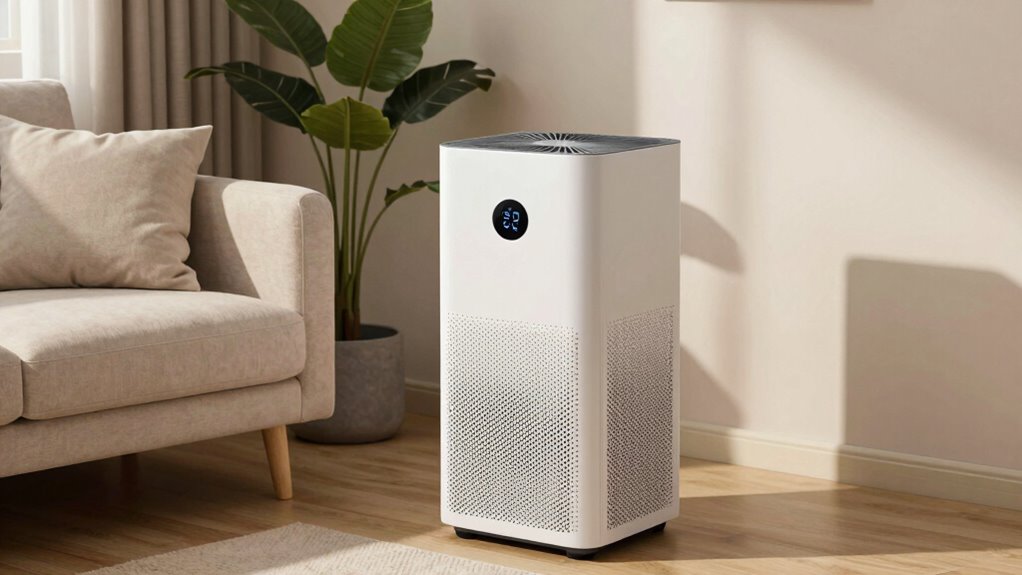
What exactly influences how much power your air purifier consumes? Several factors determine its energy use, especially related to air quality and noise levels. First, the size of the room affects power needs—larger spaces require more powerful units. Second, the purifier’s fan speed impacts consumption; higher speeds use more energy and produce louder noise levels. Third, the filter type and its maintenance can influence efficiency, with clogged filters forcing the unit to work harder. Additionally, microplastics in dust can impact filter performance and lifespan, affecting overall energy consumption. Proper filter maintenance ensures optimal performance and energy efficiency, preventing unnecessary power drain. The design and technology incorporated into the unit, such as energy-saving modes, also play a crucial role in reducing power consumption. Furthermore, advanced sensor technology can help monitor air quality more precisely, allowing the device to operate only when needed and thus conserve energy. Incorporating smart sensors that detect specific pollutants can further optimize operation and reduce unnecessary energy use. Ultimately, the overall design and technology, such as smart sensors that adjust operation based on air quality, help optimize power use. These elements combined determine how efficiently your air purifier runs, affecting both energy costs and noise levels in your environment.
Compare Energy Use Across Different Air Purifier Models
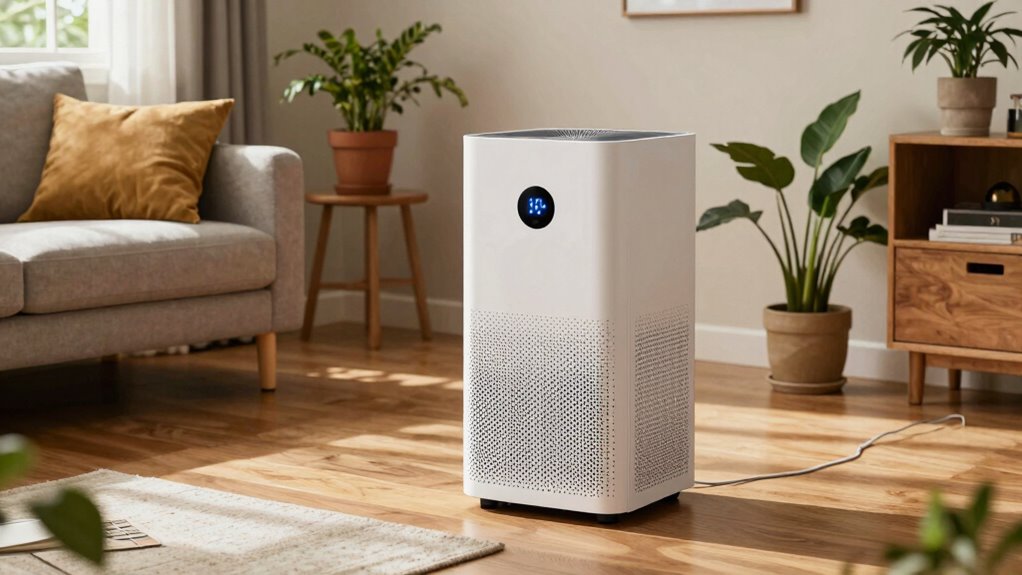
When comparing different air purifier models, it’s important to look at their energy consumption to find the most efficient option. Check each model’s wattage and energy rating, as lower power usage often means lower costs over time. Consider how air purifier maintenance might affect overall efficiency; easier-to-maintain filters can keep the device running smoothly without unnecessary energy drain. Noise levels are also a factor, since quieter models often operate at lower fan speeds, reducing energy use. Some models are designed for high performance while consuming less power, making them ideal for long-term savings. Additionally, understanding sound healing science can help you appreciate how quieter devices contribute to a more peaceful environment. Incorporating energy-efficient practices can further optimize your device’s performance and reduce your overall energy footprint. Moreover, choosing models with advanced power management features can enable you to better regulate energy consumption according to your needs. Evaluating energy ratings provided by manufacturers can also assist in making informed decisions about which air purifier offers the best efficiency for your space. By evaluating these aspects side by side, you can choose an air purifier that balances energy efficiency, ease of maintenance, and acceptable noise levels.
How Your Usage Habits Impact Energy Costs
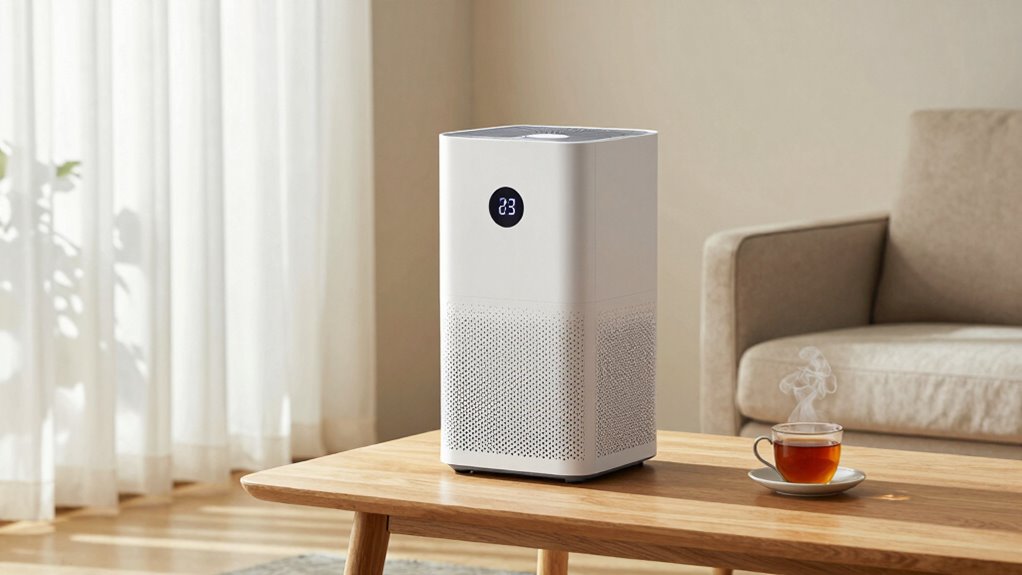
Your daily habits can markedly affect how much energy your air purifier consumes. Using it continuously or at high fan speeds increases costs, especially in large rooms or poor placements. Adjusting your usage based on room size and turning it off when not needed can help save energy.
Frequency of Use
How often you run your air purifier directly influences your energy costs. If you keep it on constantly, your energy bills will be higher, but your air quality stays consistently improved. To optimize costs, consider your needs and maintenance routines. Here are some tips:
- Use it during peak allergy seasons or when air quality drops.
- Turn it off when air quality is good or when you’re not home.
- Schedule regular maintenance to keep it running efficiently.
- Avoid unnecessary runs by monitoring air quality with a sensor.
Balancing usage with maintenance routines helps lower energy consumption without sacrificing air quality. Being mindful of when and how long you run your purifier ensures you’re not wasting energy, saving money, and maintaining a healthier environment.
Fan Speed Settings
Have you considered how your fan speed settings affect your energy bills? Running your air purifier at higher speeds consumes considerably more energy, increasing costs. While higher speeds quickly improve air quality, they also generate more air purifier noise, which might be disruptive. Conversely, lower speeds use less energy and operate more quietly, but may take longer to clean the air effectively. Your choice of fan speed can also impact the air purifier’s aesthetics—some models look sleeker at lower settings, blending better into your space. Adjusting the fan speed based on your needs helps balance air quality, noise levels, and energy consumption. Additionally, understanding noise machine benefits can help you create a peaceful environment that complements your air purifier usage. Being aware of household safety tips can also ensure your device is used safely and efficiently. Considering energy-efficient appliances can further optimize your overall household energy consumption and reduce costs. Recognizing how usage habits influence energy consumption can help you make more informed decisions about device operation.
Room Size and Placement
Did you know that the size of the room and where you place your air purifier can greatly influence your energy costs? If you place it in a corner or a small space, it may work harder, increasing energy use and noise levels. Proper placement guarantees efficient air circulation, reducing strain on the unit and lowering maintenance needs. Larger rooms might require a more powerful purifier, which consumes more energy. To optimize your setup, consider these tips:
- Choose a size appropriate for your room’s square footage.
- Position the purifier centrally for maximum coverage.
- Avoid placing it near walls or furniture that block airflow.
- Regularly clean or replace filters to maintain efficiency and minimize noise.
Smart placement minimizes energy consumption and extends your air purifier’s lifespan.
How Settings and Fan Speeds Change Power Consumption

When you increase your air purifier’s settings, it uses more energy to clean the air effectively. Faster fan speeds boost airflow but also raise power consumption, so finding the right balance helps save energy. Adjusting settings thoughtfully lets you maintain air quality without wasting unnecessary electricity. Proper care and adjustment can also extend the lifespan of your device, making it more efficient over time.
Higher Settings Consume More
Increasing the fan speed or selecting higher settings on your air purifier directly boosts its energy consumption. When you crank up the settings, you’ll notice increased air purifier noise, which can be distracting. Higher settings also mean the motor works harder, leading to faster wear and increased maintenance costs over time. Additionally, running your air purifier at higher speeds may contribute to overall energy inefficiency, impacting your utility bills and environmental footprint. Consider these points: 1. Higher settings demand more power, raising energy bills. 2. Increased noise levels may disturb your comfort. 3. The motor experiences more strain, potentially shortening its lifespan. 4. Frequent adjustments can lead to higher maintenance costs due to wear and tear. Properly managing fan speeds can help optimize both energy use and device longevity, saving money in the long run. It’s also helpful to understand how air purifier efficiency varies with different settings to make smarter choices for energy savings, especially when considering the natural air quality in your environment. Additionally, understanding the power consumption patterns of your device can further enhance energy management and cost savings.
Fan Speed Impact
Ever wondered how adjusting your air purifier’s fan speed impacts its energy use? When you set it to higher speeds, your device consumes more power, which increases energy costs. Running at lower speeds can save you money and reduce energy consumption, but it might slow down air filtering. Keep in mind, higher fan speeds often lead to increased noise levels, which can be distracting. Regular filter maintenance helps your purifier operate efficiently, regardless of the fan setting. Dirty filters cause the fan to work harder, using more energy and increasing noise. To balance cost and performance, choose a fan speed that maintains good air quality without excessive power use or noise. Proper filter care guarantees your air purifier runs smoothly at any speed. Additionally, understanding air purification efficiency can help you optimize your settings for both cost savings and effective air cleaning. Being aware of the energy consumption of your device can also guide you toward more sustainable usage habits. Monitoring energy use can further assist in making informed decisions to reduce overall power consumption and save money.
Optimal Power Balance
Have you ever wondered how to find the best balance between energy use and air purification performance? Achieving this involves adjusting settings and fan speeds to optimize power consumption while maintaining good air quality. Lower fan speeds save energy and are suitable when air quality is acceptable, especially if you’re using renewable energy sources. Higher speeds improve air purification but increase power consumption. To strike the right balance, consider these strategies:
- Use the lowest effective fan speed for your current air quality needs.
- Schedule run times during peak renewable energy availability.
- Adjust settings based on real-time air quality feedback.
- Regularly maintain your purifier for maximum efficiency.
- Be aware of filter maintenance as it directly impacts the purifier’s energy efficiency and performance.
Do Bigger or More Powerful Air Purifiers Use More Electricity?
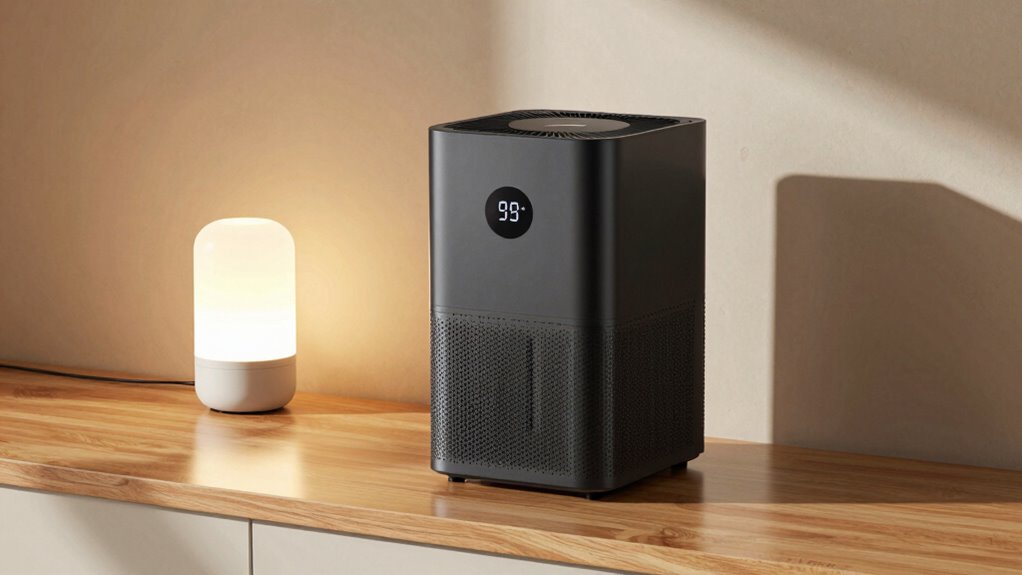
Bigger or more powerful air purifiers generally consume more electricity because they need to operate at higher fan speeds and handle larger volumes of air. They often run longer and require more frequent air purifier maintenance to keep filters clean and sensors functioning properly. Larger units also tend to have advanced air quality sensors that adjust fan speed automatically, which can increase energy use if the purifier runs at high speeds often. The power consumption depends on the unit’s size and features. Consider this table:
| Feature | Impact on Power Use |
|---|---|
| Larger size | Higher energy consumption |
| Advanced air quality sensors | Can increase or decrease power use |
| Continuous operation | Consumes more electricity over time |
Understanding these factors helps you evaluate whether a bigger or more powerful purifier fits your energy budget.
Estimate Your Monthly Electricity Bill for Running an Air Purifier

To estimate your monthly electricity bill, you need to take into account your air purifier’s power usage and how long you run it each day. By understanding these factors, you can accurately calculate the overall energy costs. Let’s walk through the steps to find out what running your air purifier truly costs you each month.
Power Usage Factors
Understanding how much electricity your air purifier consumes can help you estimate your monthly energy costs. Several factors influence power usage, impacting both air quality and air filtration efficiency.
- Purifier wattage: Higher wattage models generally use more energy, but may filter air faster.
- Fan speed settings: Running the purifier on higher speeds increases power consumption.
- Run time: The longer you operate the purifier daily, the more energy it uses.
- Energy efficiency: Modern units with energy-saving features consume less power without sacrificing air quality.
Being aware of these factors lets you optimize your usage, balancing clean air with lower electricity bills. Accurate estimates depend on understanding how these power usage factors interact with your specific model and usage habits.
Calculating Monthly Cost
Estimating your monthly electricity bill for running an air purifier involves identifying its power consumption and multiplying that by your average daily usage. Typically, air purifiers consume between 50 to 200 watts, depending on their size and features. To get an accurate estimate, check the device’s wattage label and decide how many hours you run it daily. For example, running a 100-watt purifier for 8 hours daily results in 0.8 kilowatt-hours (kWh) per day. Multiplying that by your local electricity rate gives your monthly cost. Remember, a higher energy expense can be justified by improved air quality and effective pollutant removal. By calculating these costs, you can balance the benefits of cleaner air with your energy budget.
Tips to Reduce Energy Use While Keeping Indoor Air Clean
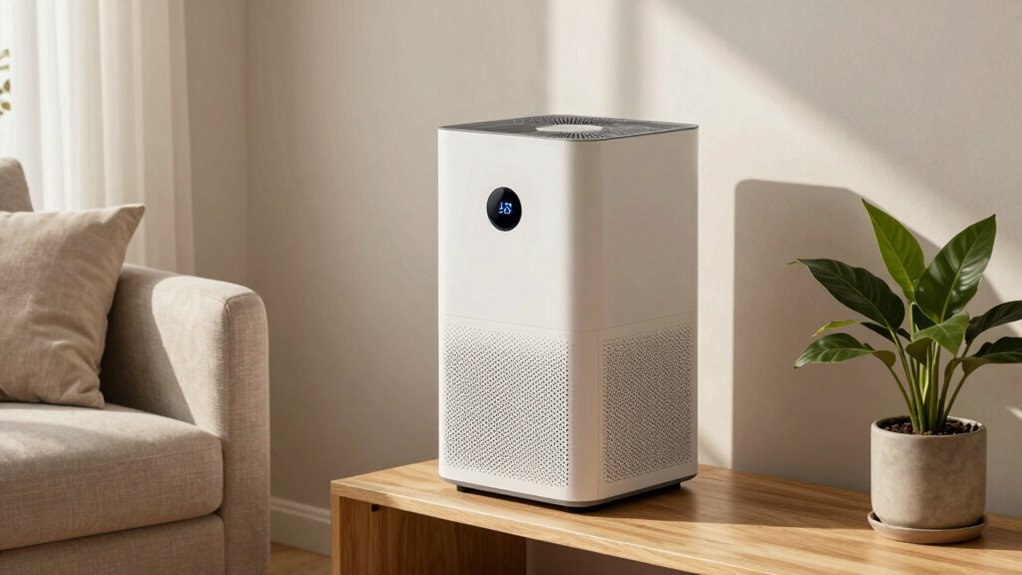
Reducing energy consumption while maintaining clean indoor air is achievable with simple adjustments. Regular air purifier maintenance ensures it runs efficiently, preventing unnecessary power use. Use air quality sensors to monitor your indoor air; if levels are good, you can safely turn the purifier down or off temporarily. Additionally, setting your purifier on a lower or energy-saving mode when possible helps cut costs. Proper placement away from walls and furniture maximizes airflow and efficiency. Keep filters clean and replace them as recommended to maintain peak performance. Finally, consider running your air purifier only when needed, such as during allergy season or high pollution days, rather than continuously. These strategies help you save energy without sacrificing indoor air quality.
Common Myths About Air Purifier Energy Efficiency
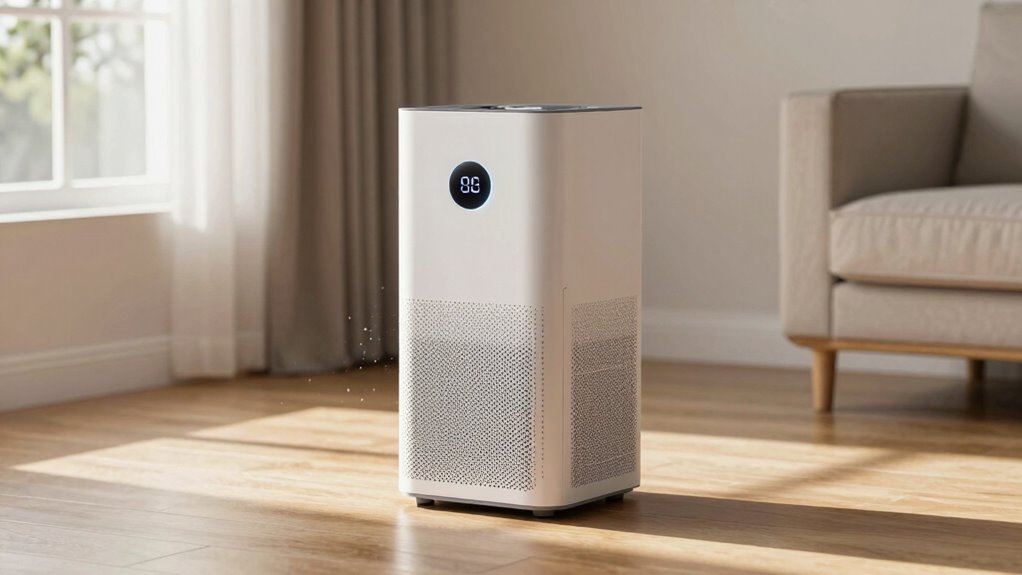
Many people believe that running an air purifier always consumes a large amount of energy, but this isn’t necessarily true. Some think that high noise levels mean higher energy use, but many models operate quietly without significant power. Others assume that frequent filter replacements drain your budget and increase energy costs, but modern filters often last longer and require less frequent changes. The myth that all air purifiers are energy hogs isn’t accurate; efficiency varies widely depending on the unit and settings. A quieter air purifier doesn’t necessarily mean it’s less efficient, and a well-maintained filter can keep your device running smoothly without adding to your energy bill. Understanding these myths helps you choose a more efficient, cost-effective air purifier.
Are Energy-Efficient Air Purifiers Worth the Investment?
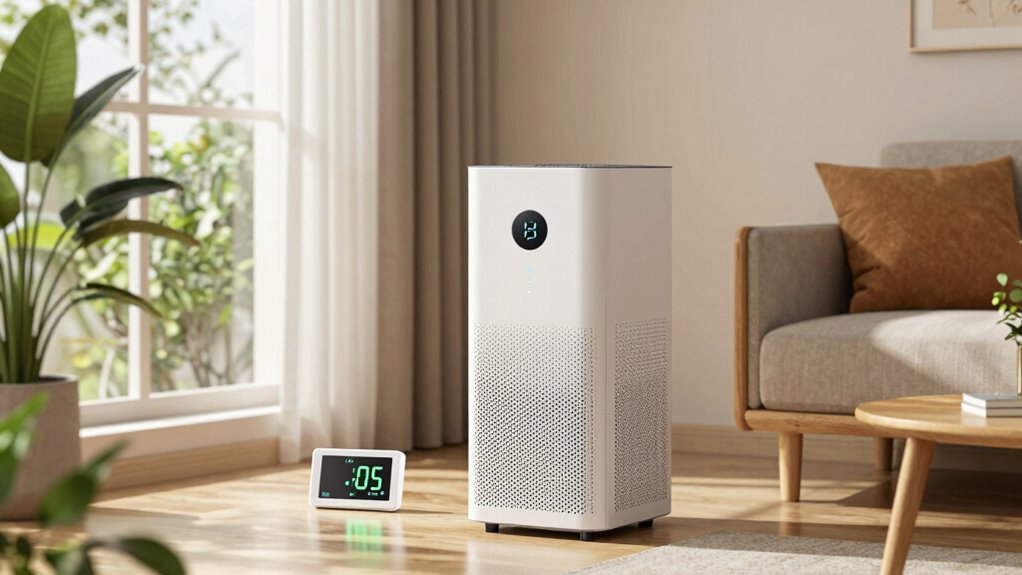
Investing in an energy-efficient air purifier can be a smart choice if you want to save money over time while maintaining clean indoor air. These models typically consume less power, leading to lower energy bills. Plus, their design often simplifies air purifier maintenance, making filter replacement easier and more affordable. To determine if it’s worth the investment, consider these points:
Choosing energy-efficient air purifiers saves money and simplifies maintenance for cleaner indoor air.
- Reduced energy costs over the lifespan of the device
- Longer-lasting filters that save you money on replacements
- Lower noise levels, making it suitable for continuous use
- Improved air quality without considerably increasing your energy bill
While initial costs might be higher, the savings on energy and maintenance can make an energy-efficient air purifier a worthwhile investment.
Frequently Asked Questions
How Long Should I Run My Air Purifier Each Day to Save Energy?
You should run your air purifier for about 4 to 8 hours daily to balance air quality and energy savings. Use the purifier’s auto mode if available, so it adjusts based on air quality, reducing unnecessary energy use. Keep doors and windows closed during operation for maximum efficiency. Regularly replacing filters also guarantees peak performance, helping you maintain good air quality without wasting energy.
Do Air Purifiers With HEPA Filters Consume More Energy?
Oh, absolutely, HEPA filters turn your air purifier into a power-hungry beast. In reality, they do consume slightly more energy, but it’s usually negligible, especially if you keep up with filter maintenance. Regularly replacing filters guarantees peak performance and prevents unnecessary power consumption. So, don’t fret—your purifier’s power use isn’t a secret conspiracy; it’s just a tiny price for cleaner air, with minimal impact on your energy bill.
Can Placing an Air Purifier in a Larger Room Reduce Its Efficiency?
Placing an air purifier in a larger room can reduce its efficiency because of increased room size and airflow challenges. As the room size exceeds the purifier’s recommended capacity, efficiency loss occurs, meaning it may not effectively clean the air. To maintain peak performance, choose an air purifier suited for your room size, ensuring it can circulate and filter the air thoroughly without sacrificing filtration quality.
What Is the Typical Lifespan of an Energy-Efficient Air Purifier?
Coincidentally, your energy-efficient air purifier typically lasts around 5 to 10 years, depending on maintenance costs and brand variations. You’ll find some models last longer with proper filter changes and regular cleaning. Brands with higher quality components may extend lifespan, while cheaper options might need replacement sooner. By investing in a reputable brand and maintaining it well, you guarantee your air purifier keeps working efficiently for many years.
How Do Smart Features Affect an Air Purifier’s Overall Energy Consumption?
Smart features, like automation and real-time monitoring, boost an air purifier’s energy efficiency through smart technology and energy optimization. When you enable these features, the device adjusts its operation based on air quality, running only when needed. While some smart functions may increase power use slightly, overall, they help reduce unnecessary energy consumption, making your air purifier more eco-friendly and cost-effective in the long run.
Conclusion
Understanding the true energy cost of your air purifier is like peeling back layers of an onion—you might find surprises beneath the surface. By choosing the right model, adjusting settings wisely, and practicing mindful usage, you can keep your air clean without draining your wallet. Remember, a little effort now can save you from a shock later, making your air purifier a savvy investment that breathes easier for both your indoor air and your budget.